Sudan.
السودان
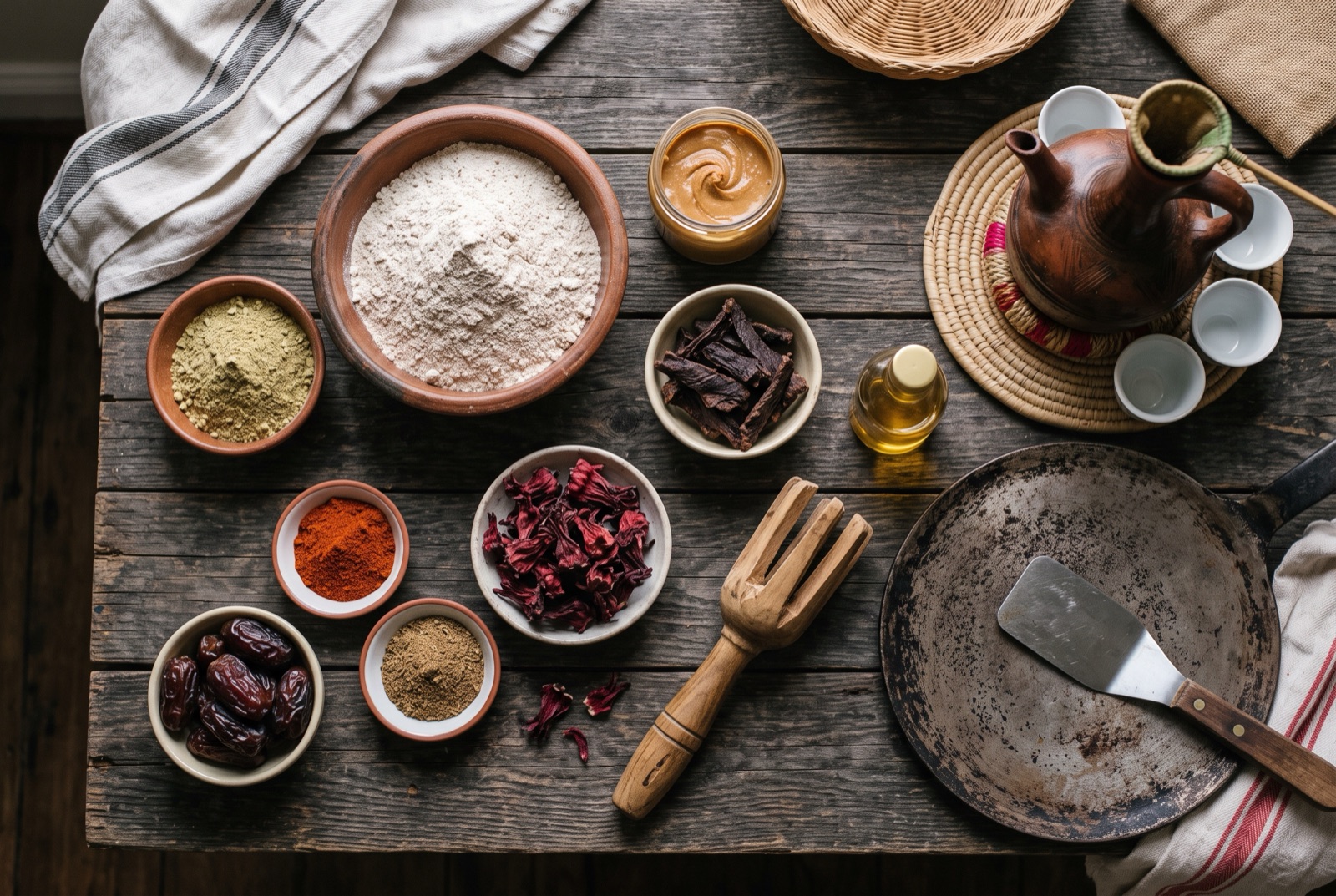
Sudanese cooking is a sorghum culture. The grain, called dura at home, is ground and turned into two very different staples — asida, a stiff dough beaten smooth in the pot and turned out as a mound on a shared tray, and kisra, a fermented batter baked into sheets barely thicker than paper — and neither one is seasoned. Flavor is the job of mullah, the huge family of stews poured over the mound or scooped up with the bread: meat and tomato thickened with powdered dried okra, with peanut butter, or with fermented milk, cooked until the pot turns glossy and clings to a spoon. The working fat is sesame oil, the heat comes from shata chilli powder, and the aromatic that defines the whole kitchen is cumin, used at volumes that would alarm a Levantine cook. Around that core sits a table of small cold dishes — fried eggplant crushed with peanut butter, yogurt salads, sharp raw-onion relishes — plus a deep repertoire of dried and preserved foods, and drinks made from hibiscus, baobab and fermented sorghum.

- Continent
- AfricaNorth Africa
- Recipes in atlas
- 10
- Must-try dishes
- 3
- Pantry staples
- 10
Start with the classics.
Must tryThe dishes that explain the Sudan kitchen fastest — if you cook only a few things from this page, cook these.
Inside the Sudan kitchen.
Everything starts with what the sorghum is made into. For asida, boiling salted water gets flour rained into it and is then beaten hard with a wooden mufraka until the dough leaves the sides of the pot clean; it is shaped in a wet bowl, tipped onto a tray, and given a crater in the top to hold stew. For kisra, the same flour is slackened into a batter, left to sour for a day or two, and spread across a hot flat plate with a straight wooden strip in one fast sweep, then peeled off in a tangy translucent sheet. Kisra belongs to the same fermented-batter family as Ethiopian and Eritrean injera, but it is a different animal: sorghum rather than teff, thin and pliable rather than thick and spongy, sour but not sharply so.
Mullah is where the seasoning lives, and Sudanese cooks classify stews by what thickens them rather than by what protein is in them. Mullah waika leans on weika, dried okra ground to a fine powder, which turns a thin broth ropey and glossy; mullah dakwa uses peanut butter; mullah rob uses fermented milk; tagalia starts from onions fried down almost to jam. The prized texture is the one that draws a thread between spoon and pot — a quality other cuisines would consider a flaw and Sudanese eaters consider the point, because a stew that hangs on the bread is a stew that reaches the mouth.
Drying is the other structural habit, shaped by heat, distance and livestock herding. Beef is cut into strips and hung in the sun to become sharmout; okra is dried and pounded into weika; Nile fish is dried into kajaik; peanuts and sesame from Kordofan and Darfur are pressed for oil or ground into dakwa. These are not emergency rations but first-choice ingredients with their own flavor — sharmout tastes concentrated and faintly gamy in a way fresh beef never does, and cooks buy it deliberately.
Plenty of the table is shared rather than exclusive. Breakfast in Khartoum is ful medames and tamiya, exactly as in Cairo, mashed at the table with sesame oil and white cheese. Jebena coffee, roasted in the pan with ginger and poured through a grass filter, is common ground with Ethiopia and Eritrea. Agashe, meat pressed in a peanut and chilli crust and grilled, arrived with West African communities settled along the old pilgrimage route to Mecca and is a first cousin of Nigerian suya. Red Sea trade brought cardamom, cinnamon and rice cookery to the coast.
Sweets and drinks follow the calendar rather than the meal. Basbousa, the semolina cake soaked in lemon syrup that Egypt, the Levant, Turkey and Greece all claim in their own versions, appears for Eid alongside date and peanut sweets. Ramadan runs on cold drinks made in advance: helo-murr, sheets of fermented spiced sorghum dissolved in water; gongolez, baobab pulp soaked to a tart white cream; karkade, hibiscus steeped and sweetened. Grilled meat is its own culture, sold from butcher shops where you choose the cut and it comes back minutes later fried as shaiyah in a hot pan.
Signature pantry.
10 staplesThe ingredients this cuisine cannot function without.
- sorghum flour (dura)
- dried okra powder (weika)
- peanut butter (dakwa)
- cumin
- sesame oil
- sun-dried beef (sharmout)
- fermented milk (rob)
- shata chilli powder
- dates
- hibiscus (karkade)
How people eat in Sudan.
Meals are served on a single round tray, the sinia, set on a low table or a mat, with everyone sitting close and eating from the section in front of them with the right hand — bread torn into scoops, or fingers pressed into the asida and dipped into the stew. Nobody starts before the eldest, and refusing an invitation to join a tray already in progress is genuinely awkward, so passers-by are pulled in as a matter of course. Lunch, eaten in the mid-afternoon, is the main meal; breakfast tends to be late and bean-based, and dinner light. During Ramadan the custom becomes literal: families carry mats and food out to the roadside and flag down strangers to break the fast with them.
Regional kitchens.
Sudan cooks 4 distinctly different ways depending on where you stand — here is what changes between them.
- R1Khartoum and the Three Towns
- Where the Blue and White Niles meet, and where the national repertoire gets standardised — ful and tamiya carts, butcher-shop shaiyah, and juice stands pressing gongolez and karkade. Omdurman is also the home of gurasa, the thick wheat pancake eaten instead of kisra.
- R2The Nubian North
- Date-palm country along the Nile toward Dongola and the Egyptian border, sharing recipes, wedding rituals and even vocabulary with Nubian villages on the other side of the frontier. Dates go into everything from breakfast to sweets, and river fish is dried for storage.
- R3Kordofan and Darfur
- The western belt of millet, peanuts, gum arabic and cattle. Peanut butter appears in stews and salads far more heavily here, millet flour often replaces sorghum in asida, and dried meat is a herding staple rather than a specialty.
- R4The Red Sea Coast and the East
- Port Sudan and Beja country, where grilled and stewed fish enter the menu and Arabian and Eritrean influence is strongest. Coffee is spiced with ginger and cardamom and served in tiny cups from a long-necked jebena pot.
All Sudan recipes.
10 recipes and counting
Sudan1 hr 7 min
Agashe
Sudanese Peanut-Crusted Grilled Beef
Sudan2 hr 30 min
Basbousa
Sudanese Semolina Cake in Lemon Syrup
Sudan4 hr 20 min
Gongolez
Sudanese Baobab Fruit Drink
Sudan40 min
Kamounia
Sudanese Cumin Liver and Lung Fry
Sudan24 hr 45 min
Kisra
Sudanese Fermented Sorghum Crepe
Sudan1 hr 45 min
Mullah Waika
Sudanese Dried Okra Stew
Sudan55 min
Salata Aswad
Sudanese Fried Aubergine and Peanut Salad
Sudan30 min
Shaiyah
Sudanese Quick-Fried Spiced Beef
Sudan2 hr 50 min
Sharmout Abiad
Sudanese Dried Meat and Yogurt Soup
Sudan35 min
Sudanese Asida
Beaten Sorghum Dough
Keep traveling.
Sudan sits in North Africa, and its kitchen shares borders as well as ingredients with Algeria and Cameroon.
 Algeria
 Cameroon