New Zealand.
Aotearoa
New Zealand cooking is Polynesian underneath and British in its habits, and the interesting part is where the two press against each other. Māori arrived by canoe with kūmara, taro and the earth oven and adapted them to a colder, wetter country than any their ancestors had farmed; the settlers who followed from the 1840s brought sheep, wheat, dairy herds and a fixed idea of what Sunday dinner looked like. Both are still on the table, usually in the same tray — kūmara roasting alongside potatoes under a leg of lamb, and nobody in the house calls that fusion. The country's real advantage is raw material rather than technique: grass-fed lamb and beef, an enormous dairy industry, cold clean water holding green-lipped mussels, crayfish, pāua and whitebait, and orchards and vineyards through Hawke's Bay, Marlborough and Central Otago. Seasoning stays deliberately narrow, roasting and steaming do most of the work, and the highest compliment a New Zealand cook pays an ingredient is to leave it more or less alone.

- Continent
- OceaniaAustralasia
- Recipes in atlas
- 10
- Must-try dishes
- 5
- Pantry staples
- 10
Start with the classics.
Must tryThe dishes that explain the New Zealand kitchen fastest — if you cook only a few things from this page, cook these.
New Zealand5 hr
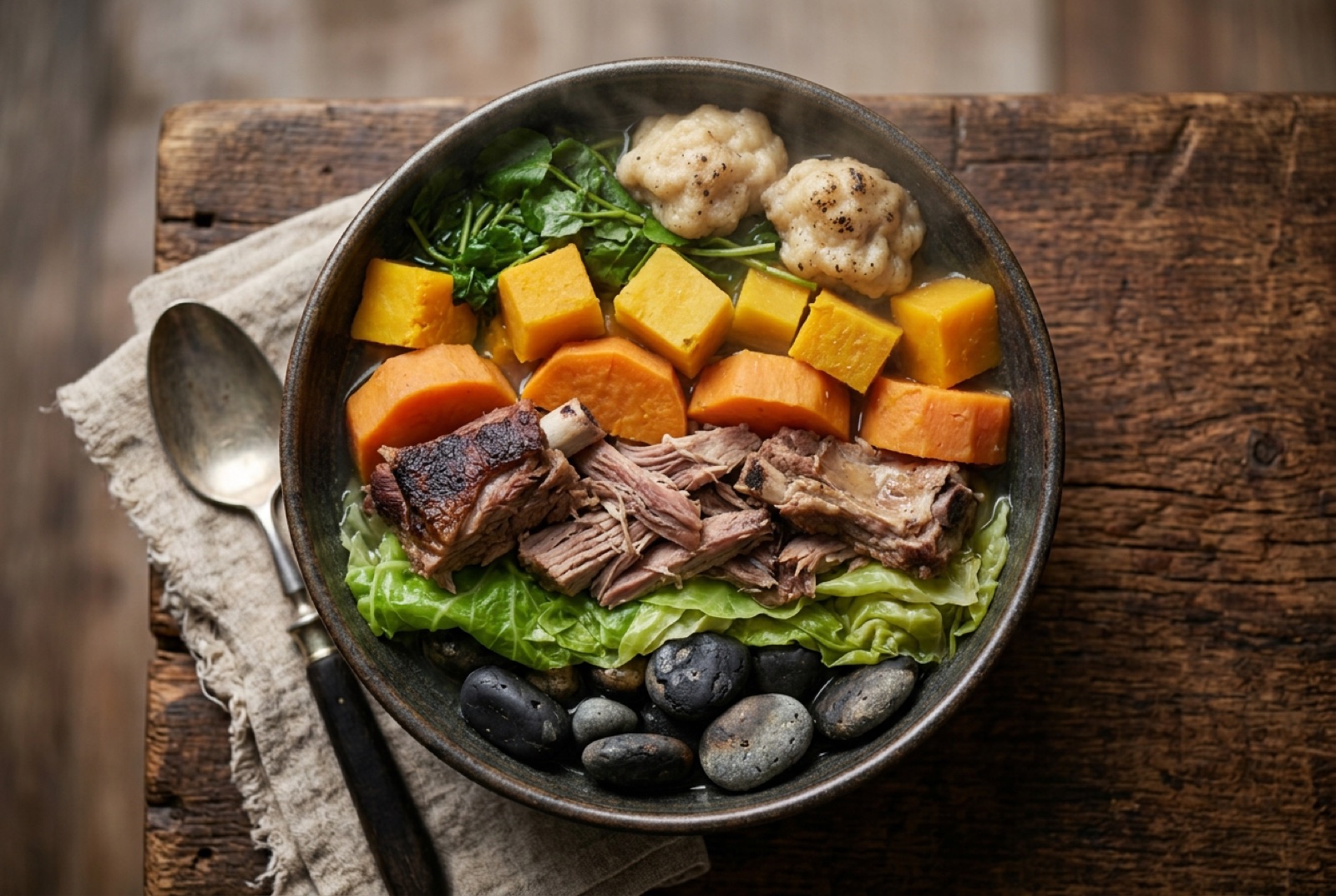
Hāngī
Māori Earth Oven Feast
New Zealand2 hr 30 min
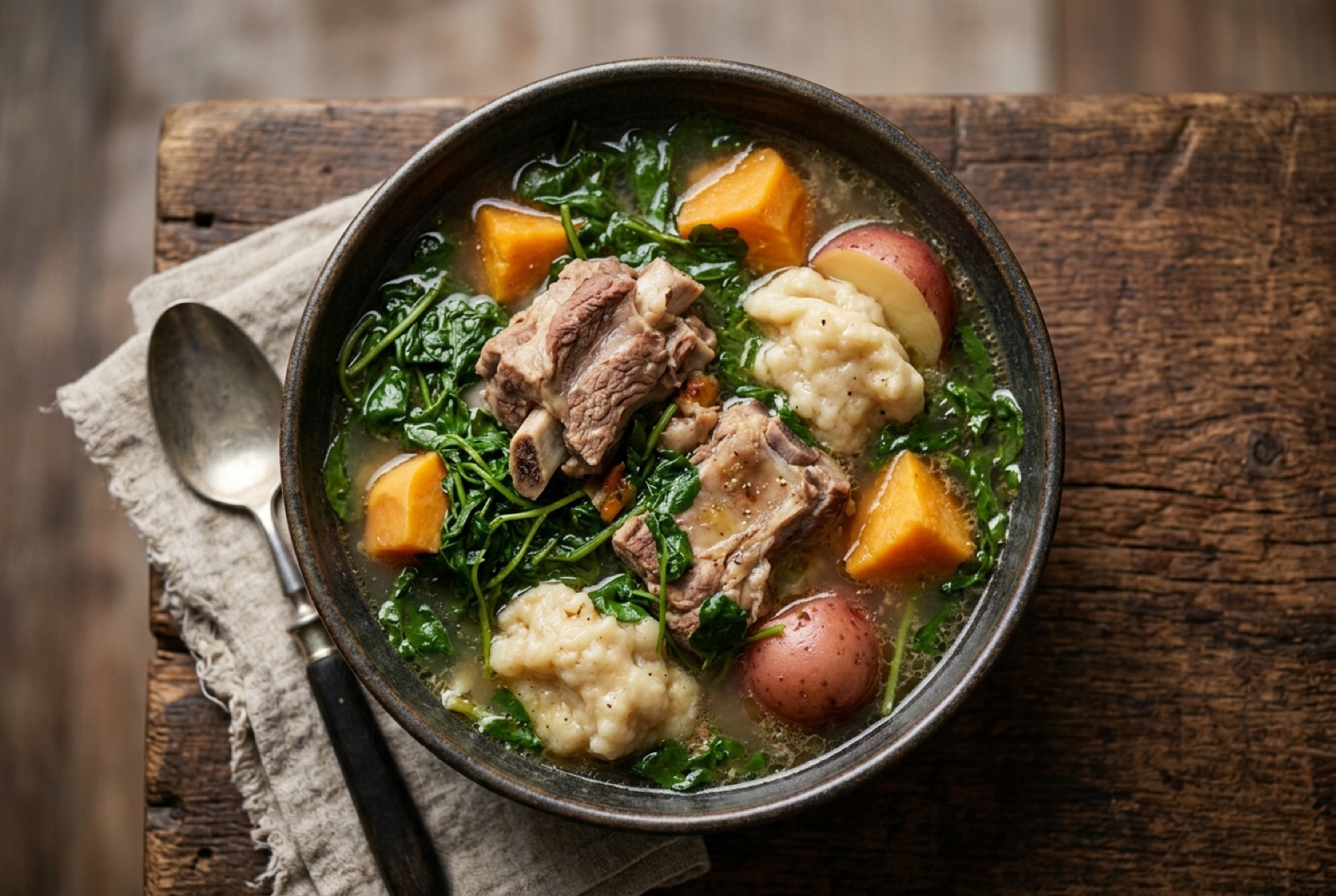
Boil Up
Māori Pork and Watercress Broth
New Zealand6 hr 25 min
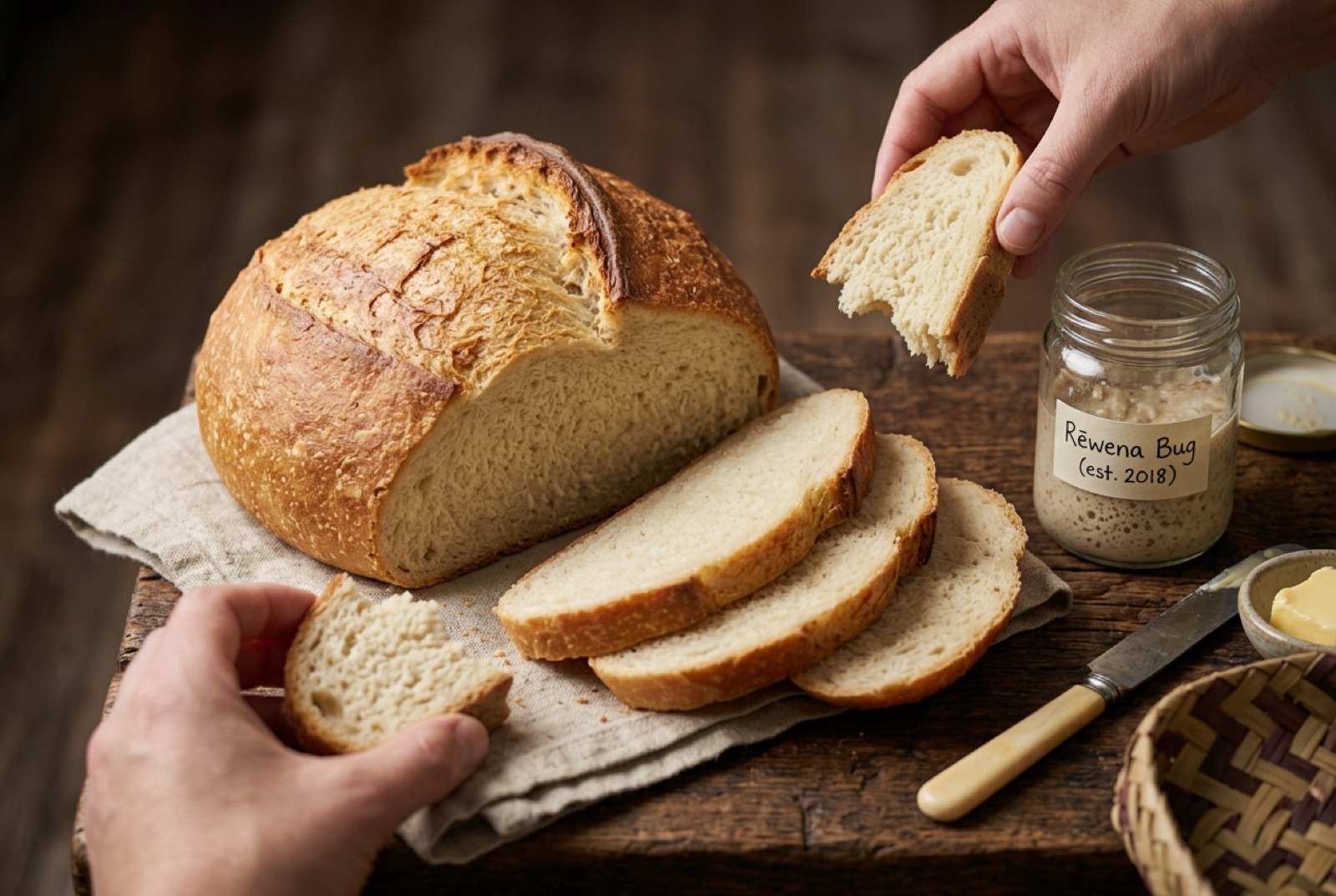
Rēwena Parāoa
Māori Potato Sourdough Bread

New Zealand27 min
Steamed Green-Lipped Mussels in Wine and Garlic

New Zealand3 hr 35 min
Mince and Cheese Pie
Kiwi Bakery Pie
Inside the New Zealand kitchen.
Māori kai is not a historical layer under the food; it is cooked weekly in ordinary kitchens. Hāngī — meat and vegetables stacked on fire-heated stones in a pit, covered with wet sacking and earth and steamed for hours — is a cousin of the Hawaiian imu, the Samoan umu and the Fijian lovo, adapted to a volcanic country, and in Rotorua the fire step is skipped entirely because the ground is already boiling. Boil up is the everyday version of the same instinct: pork bones simmered with kūmara and potato, an armful of watercress or pūhā thrown in at the end, and doughboy dumplings steamed on top under a tight lid. Rēwena parāoa, the potato-sourdough bread raised with a live starter called a bug, is baked from cultures kept going on kitchen benches for decades and passed between households in jars. These dishes carry weight — they feed tangi, marae welcomes and lean weeks — and treating them as rustic curiosities misses the point completely.
The pastoral layer is the loud one. Refrigerated shipping, first sailed successfully from Port Chalmers to London in 1882, turned the country into Britain's meat and butter supplier and set the grass-fed export pattern that still shapes farming. Sheep outnumbered people by more than twenty to one in the early 1980s, and roast lamb with mint sauce — thin and vinegary, never the jelly — is the inherited Sunday centrepiece, though flock numbers have halved since and a leg is now a considered purchase. Dairy is unavoidable: butter in everything, cream on everything, and a baking canon of Anzac biscuits, afghans, lolly cake, louise slice and pavlova, whose ownership Australia disputes and always will.
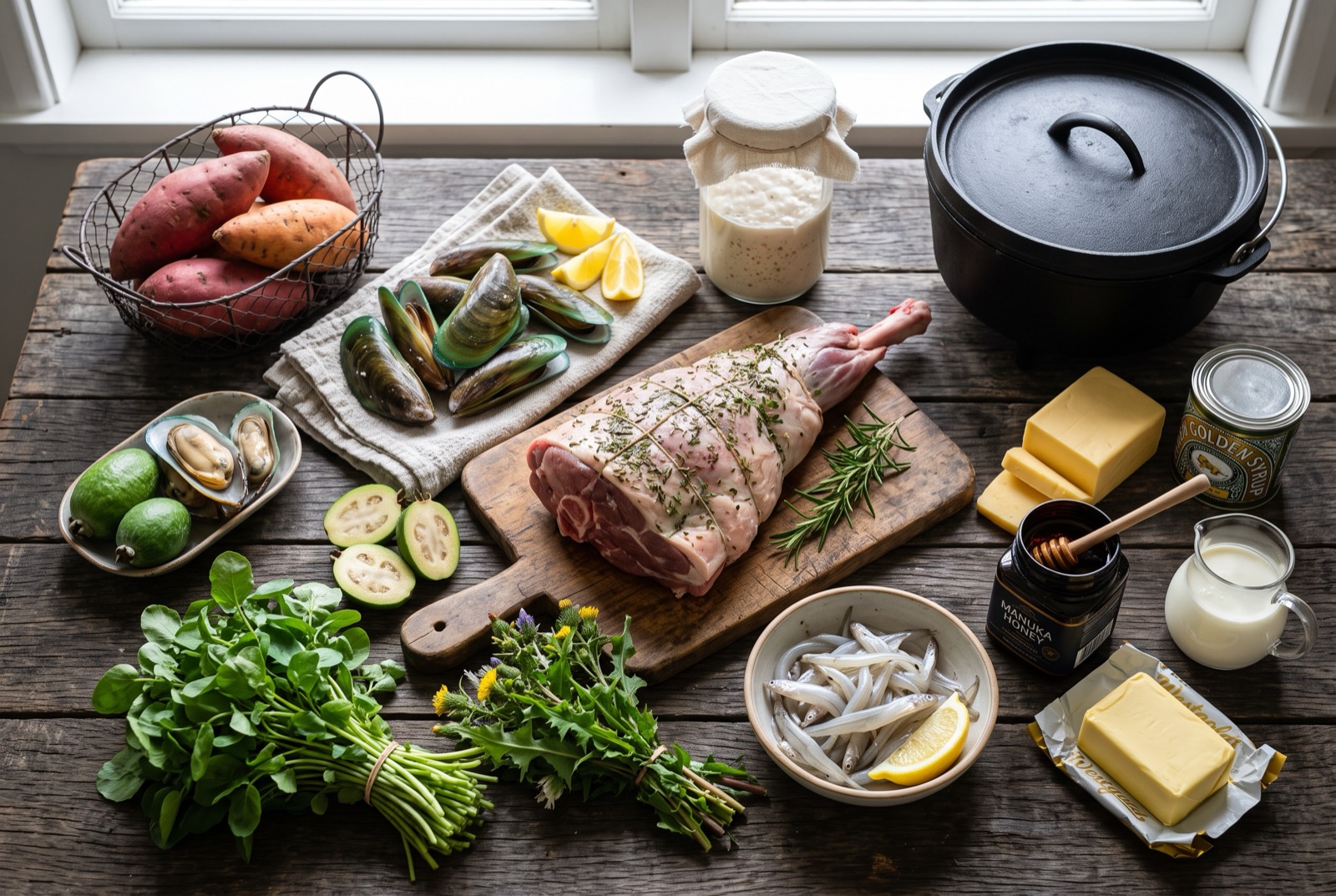
Kaimoana is where the country is genuinely distinctive. Green-lipped mussels, found wild only around New Zealand, are rope-grown in the Marlborough Sounds and arrive grit-free and far larger than any European mussel. Whitebait — juvenile īnanga netted at West Coast river mouths for a few weeks each spring — is the most expensive wild food here and the most contested, since most of the species involved are now threatened. Crayfish, pāua, snapper, blue cod and smoked kahawai fill out the rest.
The everyday street food is the pie: fine beef mince in gravy stiff enough to hold when cut, under melted cheddar and a puff lid, sold from warmers in every dairy and service station. Alongside it runs the café habit New Zealand exported with Australia — flat whites, serious espresso in small towns — plus Pacific Island, Chinese, Indian and Vietnamese kitchens that have quietly become part of the ordinary week.
Signature pantry.
10 staplesThe ingredients this cuisine cannot function without.
- kūmara (New Zealand sweet potato)
- grass-fed lamb
- green-lipped mussels
- butter and cream
- watercress and pūhā (sow thistle)
- whitebait (īnanga)
- mānuka honey
- sharp cheddar
- golden syrup
- feijoa
How people eat in New Zealand.
Eating is casual almost everywhere and formal in one specific place. On a marae, food follows the pōwhiri, a karakia is said before anyone starts, and cooked kai and the heads of guests are kept firmly apart — nobody sits on a table or a bench that food will touch. Elsewhere the rules loosen: an invitation to lunch comes with "bring a plate", meaning bring food to share, and often BYO for drinks. Barbecues run through the long summer, Christmas dinner is as likely to be cold ham and new potatoes outside as a roast, and morning tea with something baked is a real institution rather than a nicety. Guests take their shoes off at the door, leftovers get sent home in containers, and tipping is not expected.
Regional kitchens.
New Zealand cooks 4 distinctly different ways depending on where you stand — here is what changes between them.
- R1Te Tai Tokerau (Northland) and Auckland
- The warmest growing country and the oldest kūmara ground, with oysters from the Bay of Islands and Kaipara and scallops off the east coast. Auckland is the largest Polynesian city in the world, so Sāmoan, Tongan and Cook Islands cooking is everyday food here rather than a specialty.
- R2Rotorua and the central North Island
- Te Arawa country, where geothermal steam vents and boiling pools are used to cook kai without any fire at all — an unbroken practice older than any oven in New Zealand. Hāngī is taken more seriously here than anywhere, and trout from the lakes cannot legally be sold, only caught and given away.
- R3Hawke's Bay and Gisborne
- The orchard and vineyard belt: stone fruit, apples, sweetcorn and squash on the Heretaunga plains, with Chardonnay and Syrah from the gravels at Gimblett. Long dry summers make this the closest the country comes to Mediterranean growing conditions.
- R4Marlborough, Nelson and the West Coast
- The Sounds supply most of the world's green-lipped mussels alongside salmon farms and Sauvignon Blanc, while Nelson grows hops, apples and berries. Over the Alps the West Coast is whitebait country, where river-mouth stands are inherited within families and the spring season is defended fiercely.
All New Zealand recipes.
10 recipes and counting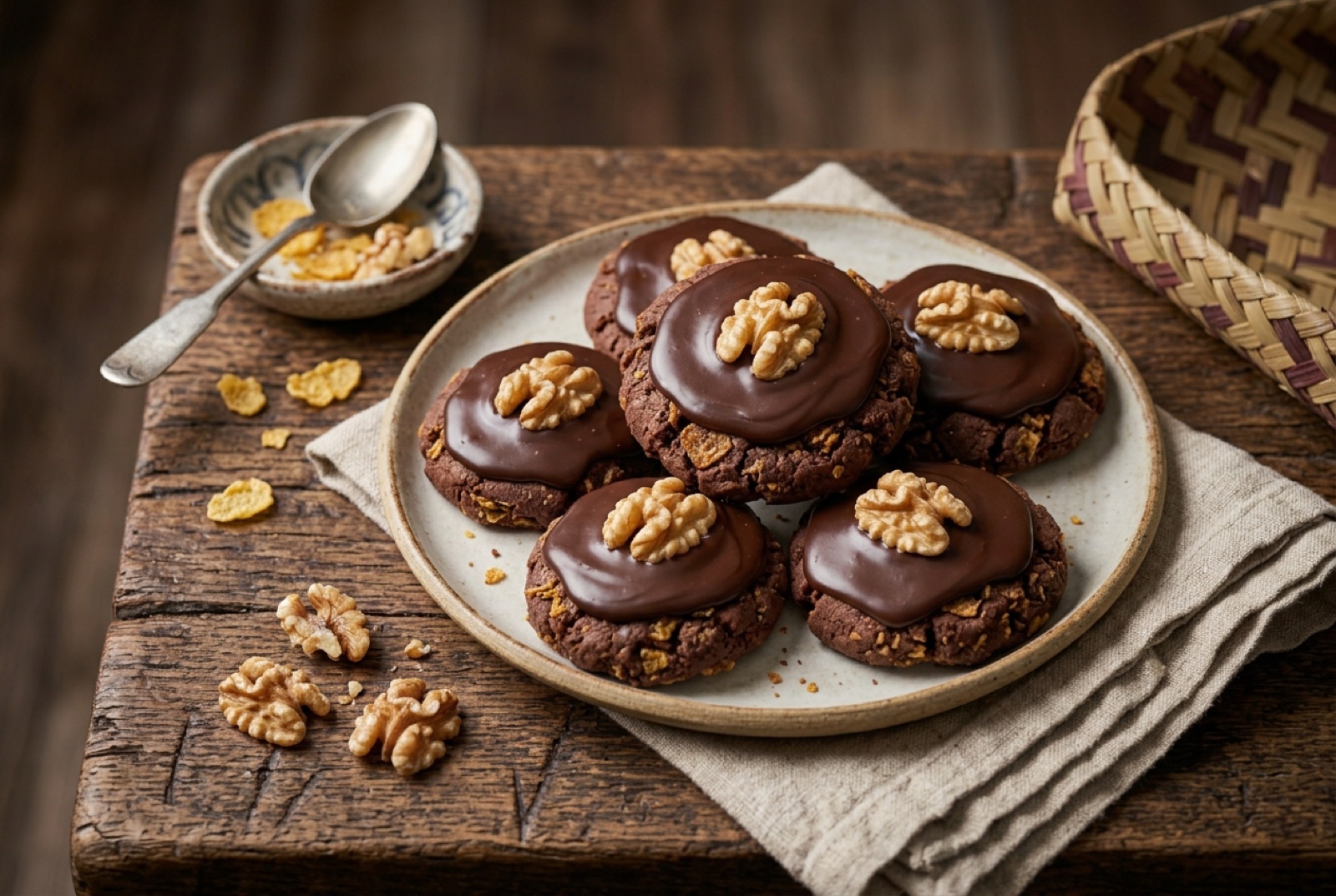
New Zealand1 hr 5 min
Afghan Biscuits
New Zealand Cocoa Cornflake Biscuits
New Zealand2 hr 30 min
Boil Up
Māori Pork and Watercress Broth
New Zealand5 hr
Hāngī
Māori Earth Oven Feast
New Zealand3 hr 35 min
Mince and Cheese Pie
Kiwi Bakery Pie
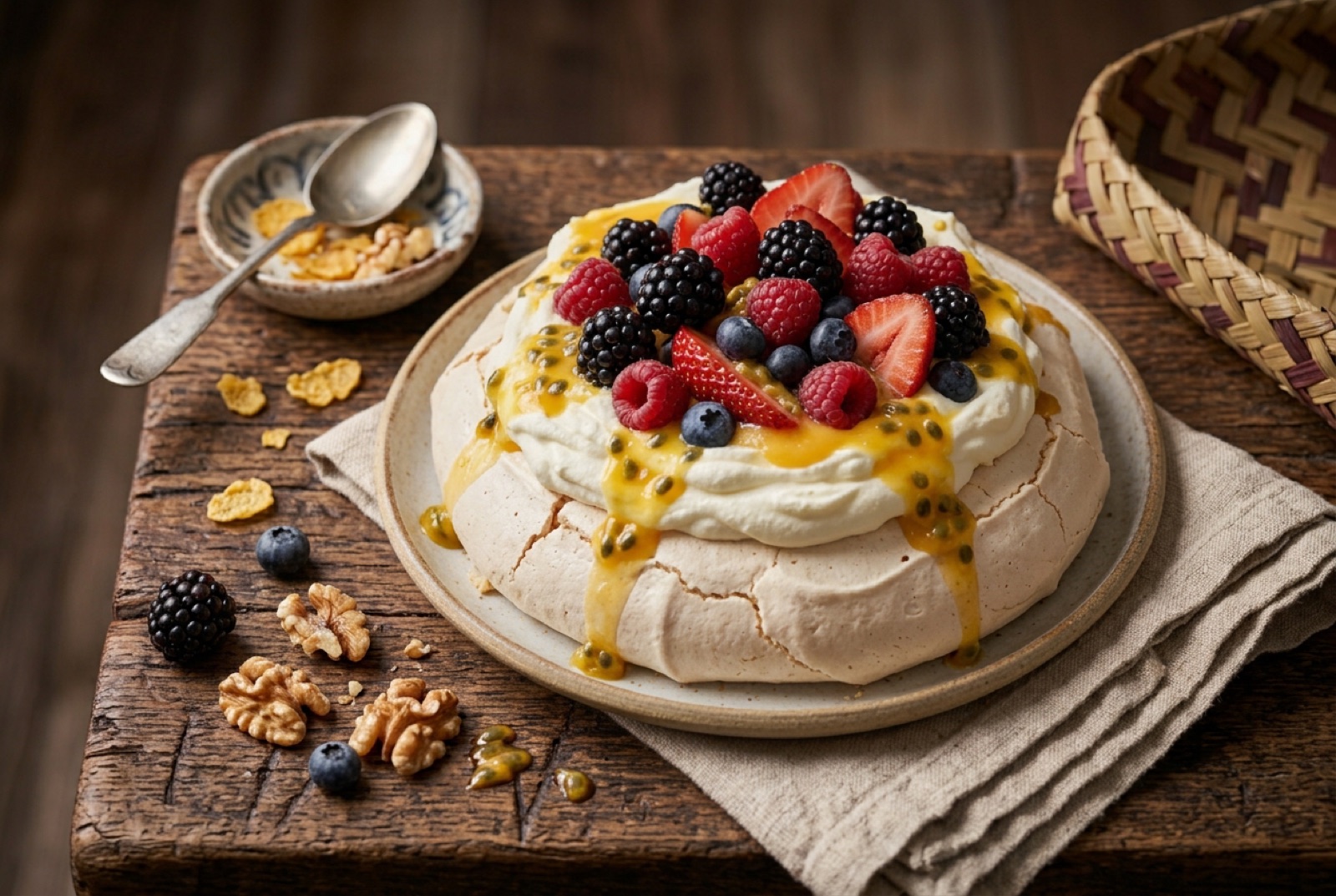
New Zealand5 hr 40 min
Pavlova
New Zealand Meringue Cake
New Zealand6 hr 25 min
Rēwena Parāoa
Māori Potato Sourdough Bread

New Zealand2 hr 15 min
Roast Lamb with Kūmara
Kiwi Sunday Roast

New Zealand3 hr 15 min
Smoked Kahawai Pâté
New Zealand Smoked Fish Dip
New Zealand27 min
Steamed Green-Lipped Mussels in Wine and Garlic

New Zealand22 min
Whitebait Fritters
West Coast Tiny Fish Omelettes
Keep traveling.
New Zealand sits in Australasia, and its kitchen shares borders as well as ingredients with Australia and Albania.
 Australia
 Albania