Canada.
Canada
Canadian cooking is regional before it is national. There is no single mother sauce and no founding cookbook — there is a cold country where food had to keep, travel and feed people who worked outdoors, and a series of kitchens layered on top of each other: Indigenous foodways that predate the state by millennia, French habitant cooking in the St. Lawrence valley, British and Irish baking, Jewish delicatessens in Montreal, Ukrainian and Polish prairie farms, Lebanese and Greek shops in the Maritimes, and Chinese, South Asian and Caribbean cooking that reshaped every large city after the 1960s. What ties it together is a set of instincts rather than a set of dishes: sugar that comes from a tree, preservation by smoking, curing and pickling, generous fat and warm spice in winter food, and an unembarrassed appetite for things that are hot, salty and served in large portions. The best Canadian food is honest and specific — a city, a market stall, a family recipe — and Canadians argue about the details constantly.

- Continent
- North AmericaNorth America
- Recipes in atlas
- 10
- Must-try dishes
- 3
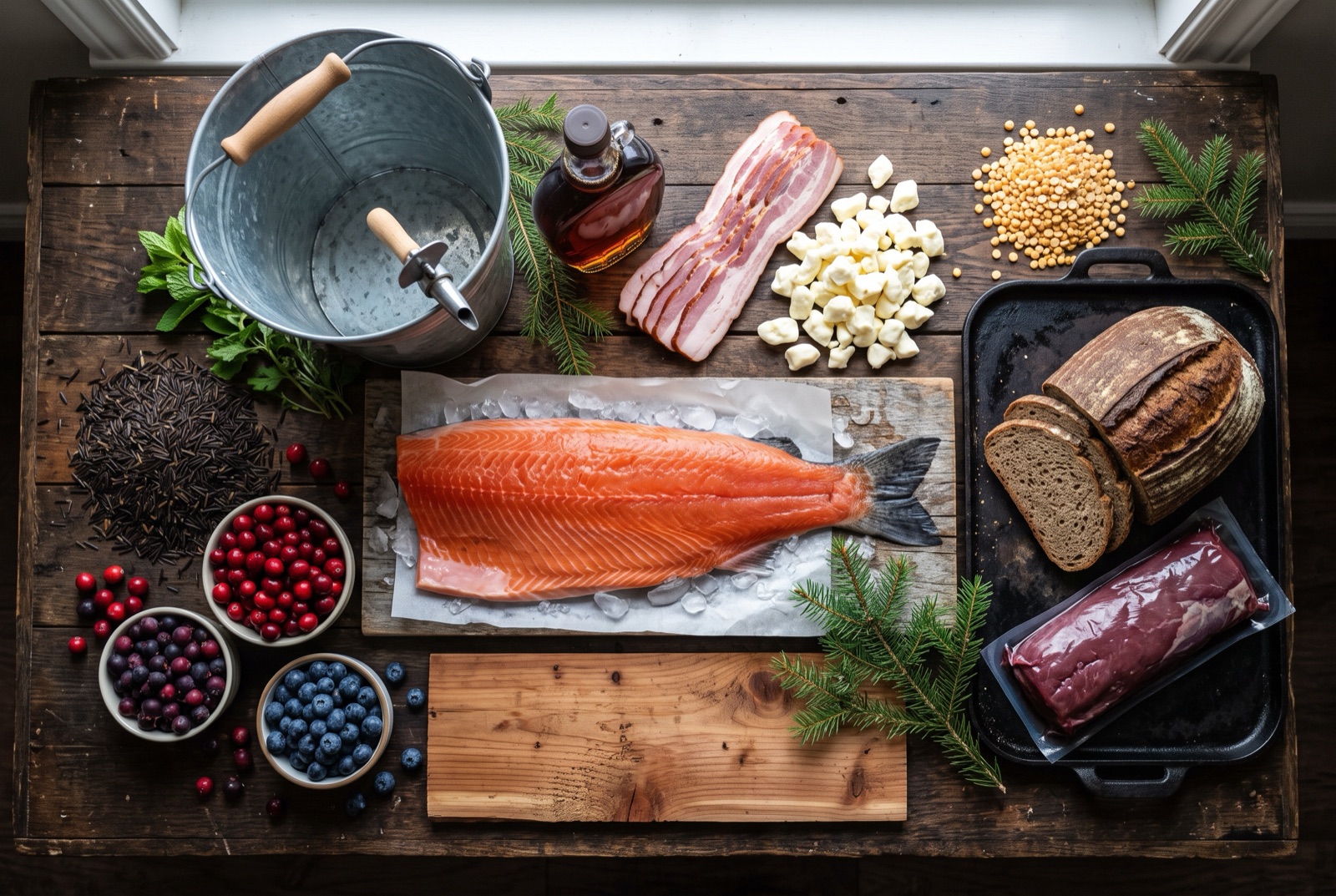
- Pantry staples
- 10
Start with the classics.
Must tryThe dishes that explain the Canada kitchen fastest — if you cook only a few things from this page, cook these.
Inside the Canada kitchen.
Start with maple, because it is the one ingredient the country genuinely gave the world. Sap runs in late winter when nights freeze and days thaw, and it takes roughly forty litres of it to boil down to one litre of syrup — which is why the sugar shack (cabane à sucre) is both an industry and a spring ritual in Québec and eastern Ontario. Maple is used the way other cuisines use honey or molasses: in baking, in cures for pork and salmon, glazed over roasted vegetables, poured on snow to make taffy. It is sweet but not one-dimensional, carrying mineral and caramel notes that survive heat, which is why it works in savoury food and not only on pancakes.
The second pillar is preservation. Long winters and long distances made smoking, curing and pickling practical rather than fashionable. Atlantic Canada salts and dries cod and smokes herring; the Prairies cure and smoke pork and make kielbasa in volume; British Columbia smokes salmon two ways, cold for silky lox-style slices and hot for firm flakes, on a tradition that Indigenous nations of the Pacific coast have practised for thousands of years. Montreal built an entire food culture on curing — brisket buried in coriander, pepper and garlic for a week, then smoked and steamed — that runs parallel to New York pastrami without being the same thing.
Québec is the closest thing Canada has to a codified regional cuisine. Habitant cooking is French in structure but shaped by hard winters and cheap protein: pork fat, root vegetables, dried peas, warm baking spices used in savoury dishes, and herbes salées, a jar of herbs preserved in salt that seasons soups all winter. Cloves and cinnamon in a meat pie make sense here in a way they do not in most of North America. Québec also gave the country its dairy backbone — cheddar in curd form, squeaky and fresh, sold in bags at the roadside.
Indigenous foodways are not a historical footnote but a living kitchen: bison, venison, moose and caribou; Pacific and Arctic fish; wild rice harvested by canoe in Ontario and Manitoba; berries, especially saskatoons and blueberries; and bannock, a flatbread that spread across First Nations and Métis communities after wheat flour arrived through the fur trade — a food born of colonial rationing that communities made entirely their own. Three Sisters planting of corn, beans and squash still underpins a great deal of eastern cooking.
Finally, the cities rewrote everything. Toronto and Vancouver are among the most immigrant-dense food cities on earth, and their contributions are not "fusion" so much as parallel traditions cooked at full strength: Cantonese and Sichuan in Vancouver and Richmond, Punjabi and Sri Lankan in Toronto and Surrey, Portuguese chicken and Jamaican patties in Toronto's west end, Lebanese donair shops that reshaped Halifax. A working definition of Canadian food in 2026 includes all of it.
Signature pantry.
10 staplesThe ingredients this cuisine cannot function without.
- maple syrup
- cheese curds
- wild salmon
- back bacon
- yellow split peas
- wild rice
- saskatoon and blueberries
- bison and venison
- cranberries
- rye bread
How people eat in Canada.
Meals are informal and portions are large; a shared platter in the middle of the table is normal, and refusing a second helping usually needs to be said twice. Breakfast is the most ritualised meal — eggs, back bacon, toast and endless drip coffee at a diner counter, or pancakes drowned in real syrup, with the sugar shack version served family-style on long benches in March. Dinner is early by European standards, often between five and seven. Alcohol laws vary by province, so what arrives with the meal changes as you cross a border. Two habits are near-universal: coffee is ordered by shorthand, and food from a highway stand, chip truck or hockey rink concession is treated with genuine affection rather than apology.
Regional kitchens.
Canada cooks 4 distinctly different ways depending on where you stand — here is what changes between them.
- R1Québec
- The most defined regional kitchen in the country: habitant pork and root-vegetable cooking, warm spices in savoury pies, fresh cheese curds, and the spring sugar shack. Poutine and tourtière both start here.
- R2Atlantic Canada
- Cold-water seafood — lobster, scallops, mussels and salt cod — plus a Maritime sweet tooth and, in Halifax, the donair, a Lebanese-Canadian invention that became Nova Scotia's official food.
- R3Ontario and the Prairies
- Butter tarts, peameal bacon and Toronto's market cooking meet prairie wheat, Ukrainian perogies and cured sausage. Wild rice and saskatoon berries come from the lakes and grasslands here.
- R4British Columbia and the Pacific Coast
- Wild salmon smoked cold and hot, spot prawns and Dungeness crab, orchard fruit from the Okanagan, and a Cantonese restaurant scene in Vancouver and Richmond that rivals anywhere outside Asia.
All Canada recipes.
10 recipes and counting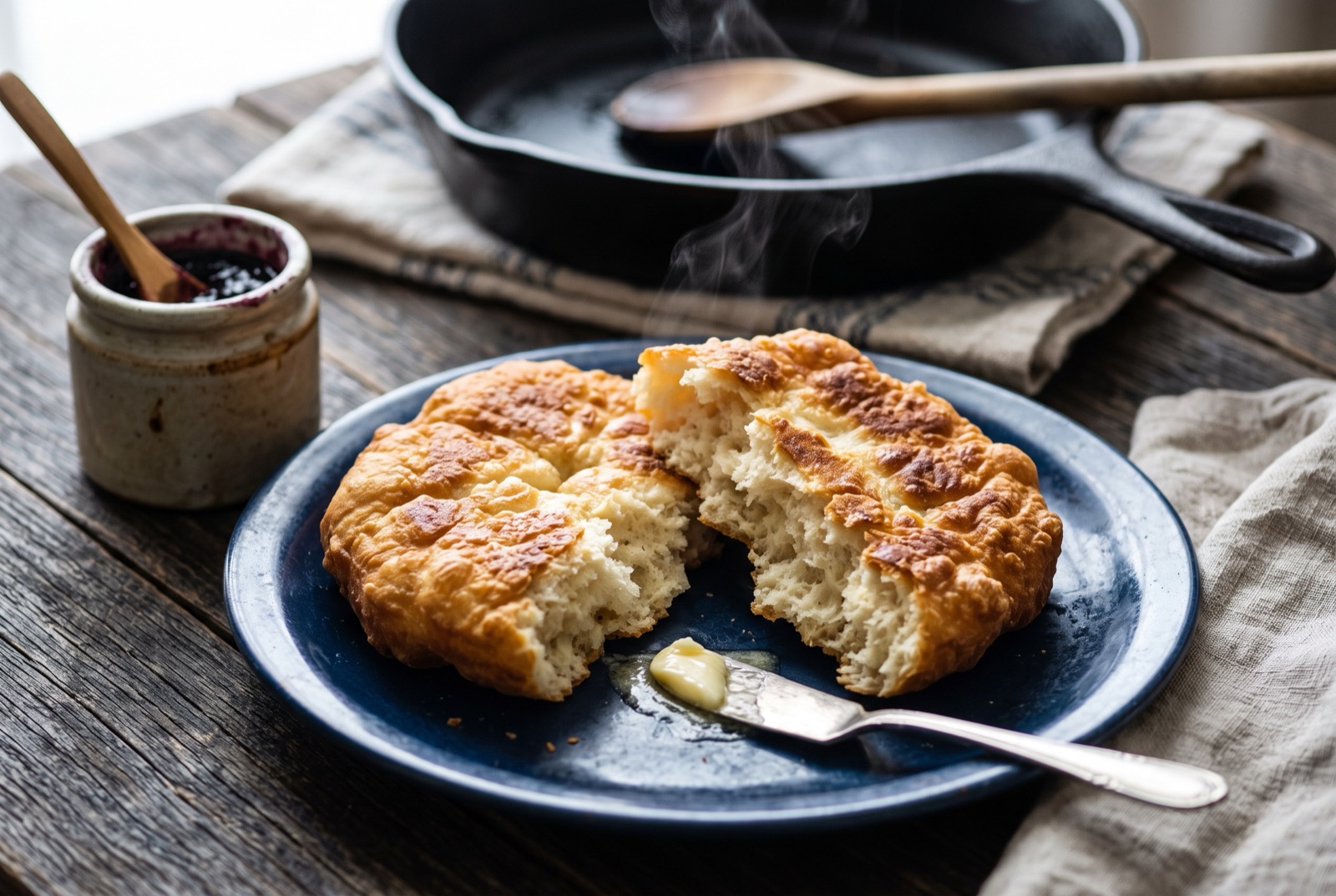
Canada30 min
Bannock
Pan-Fried Canadian Flatbread
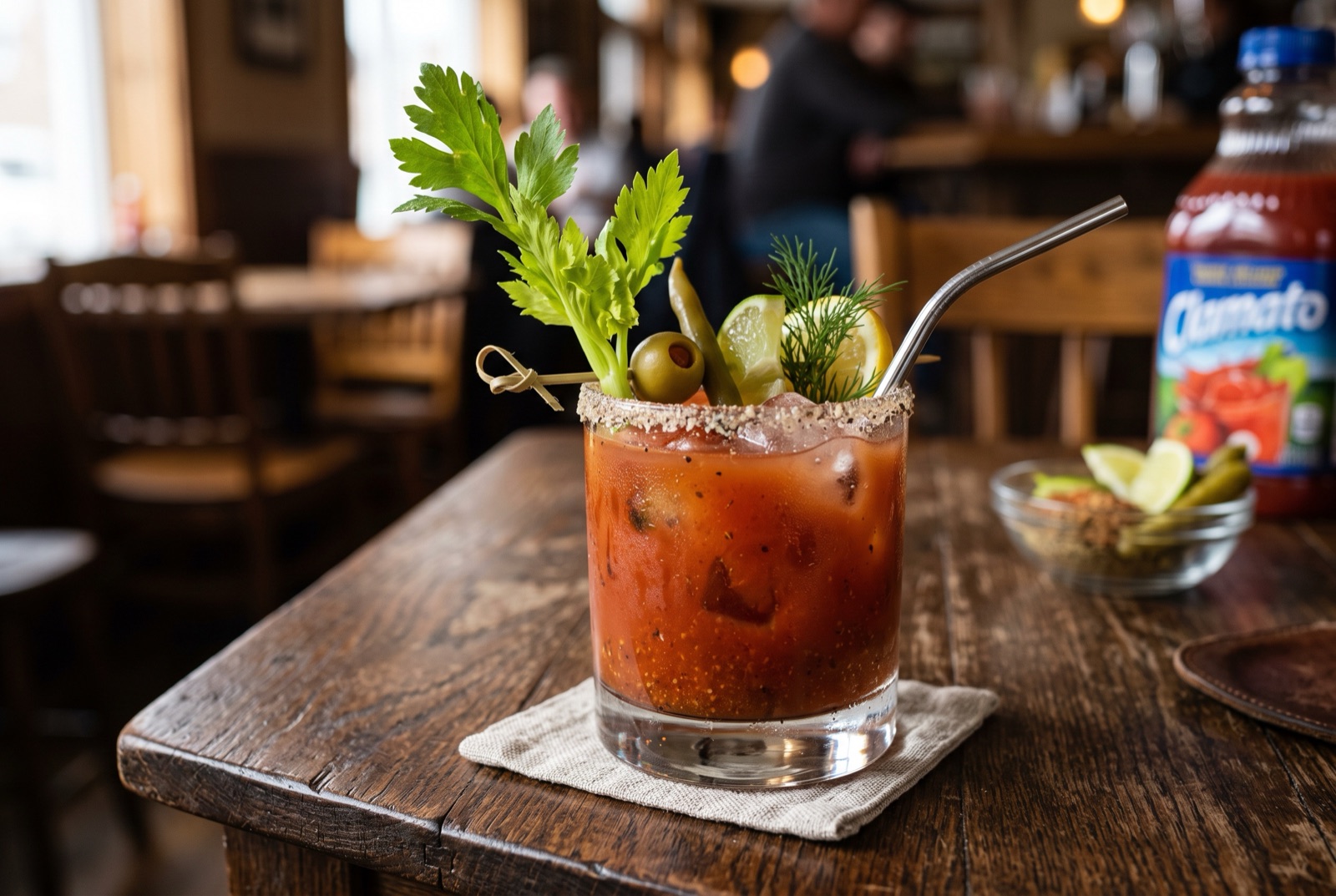
Canada5 min
Bloody Caesar
Canadian Clamato and Vodka Cocktail
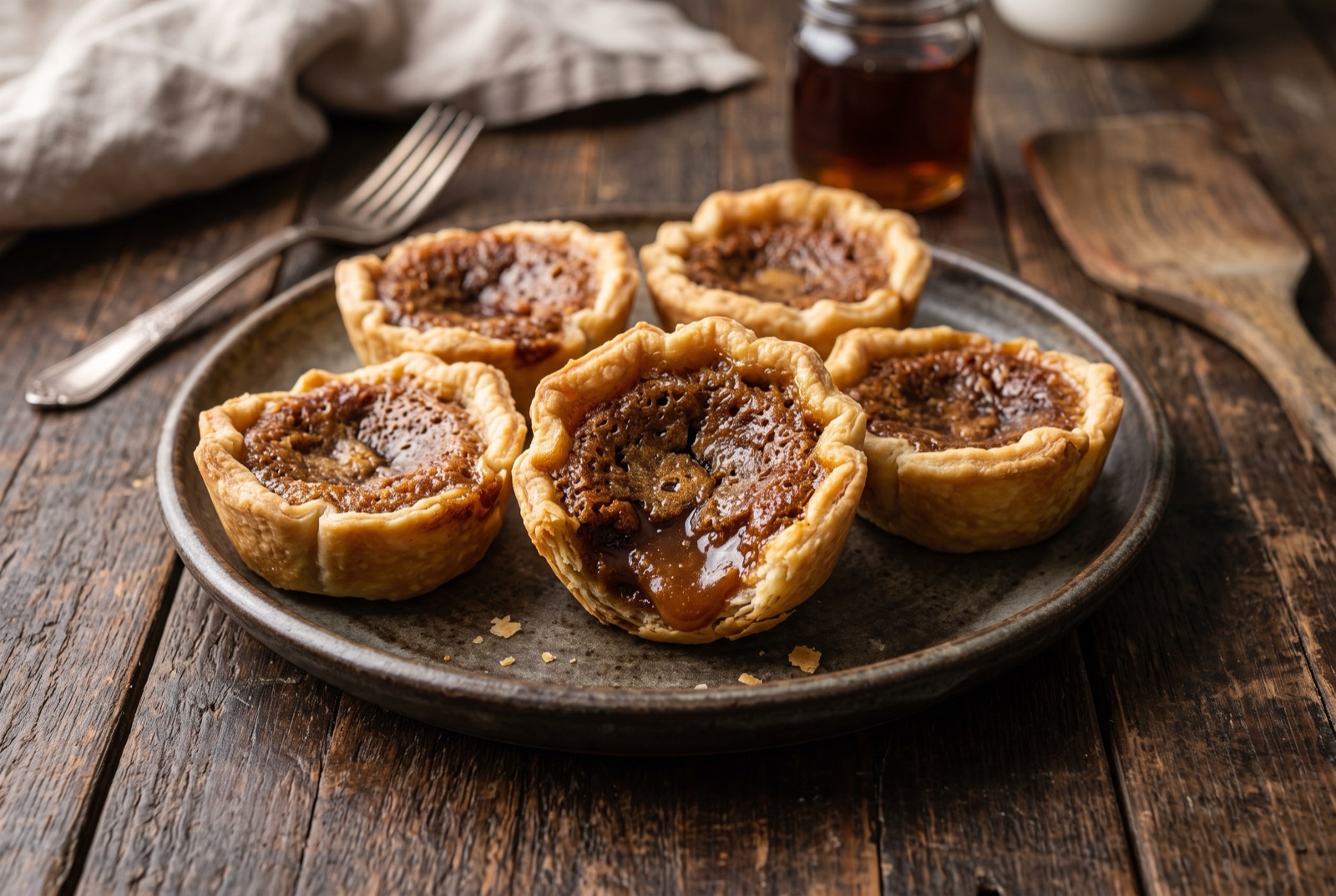
Canada1 hr 55 min
Butter Tarts
Runny Brown Sugar Tartlets
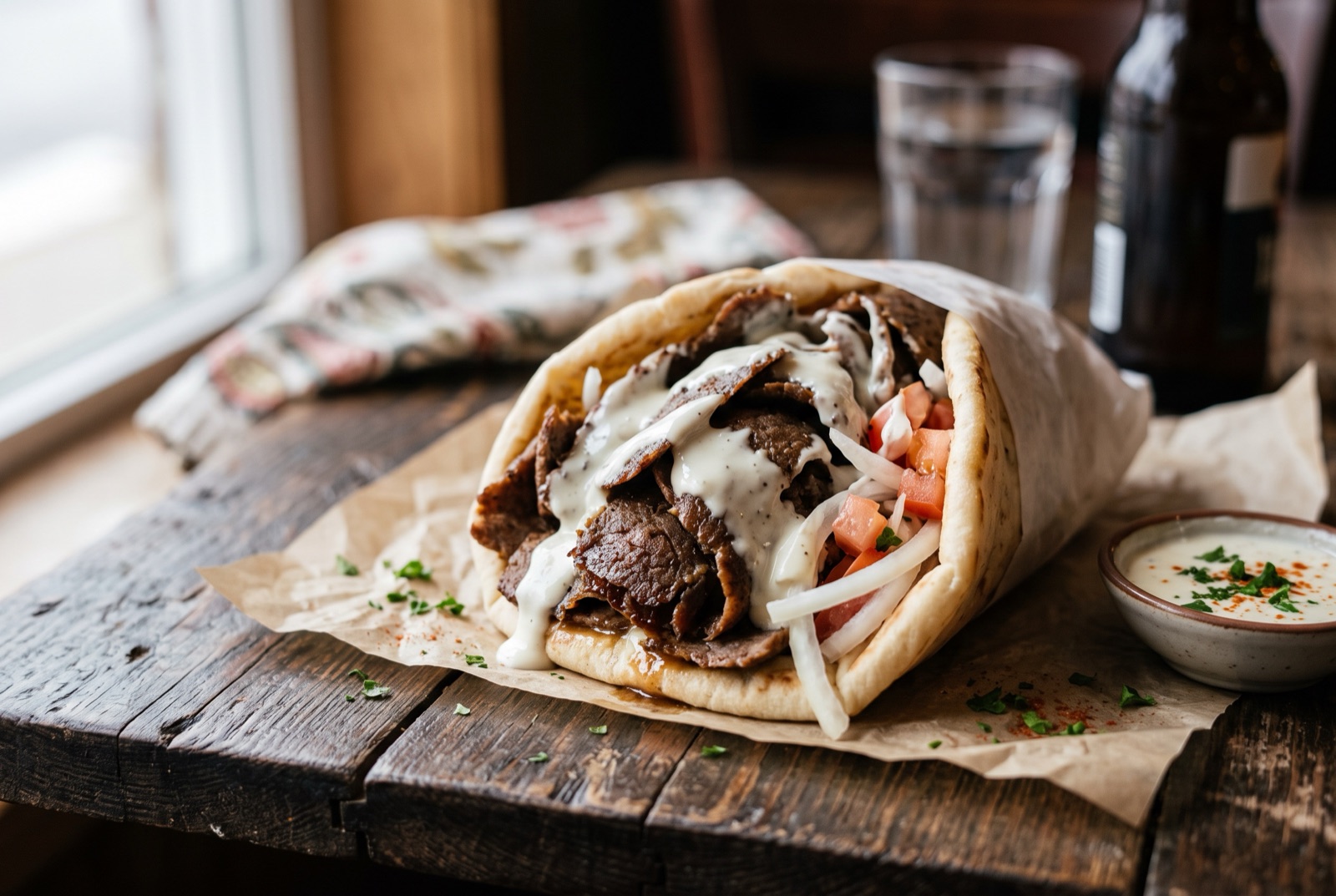
Canada5 hr 30 min
Halifax Donair
Spiced Beef with Sweet Garlic Sauce
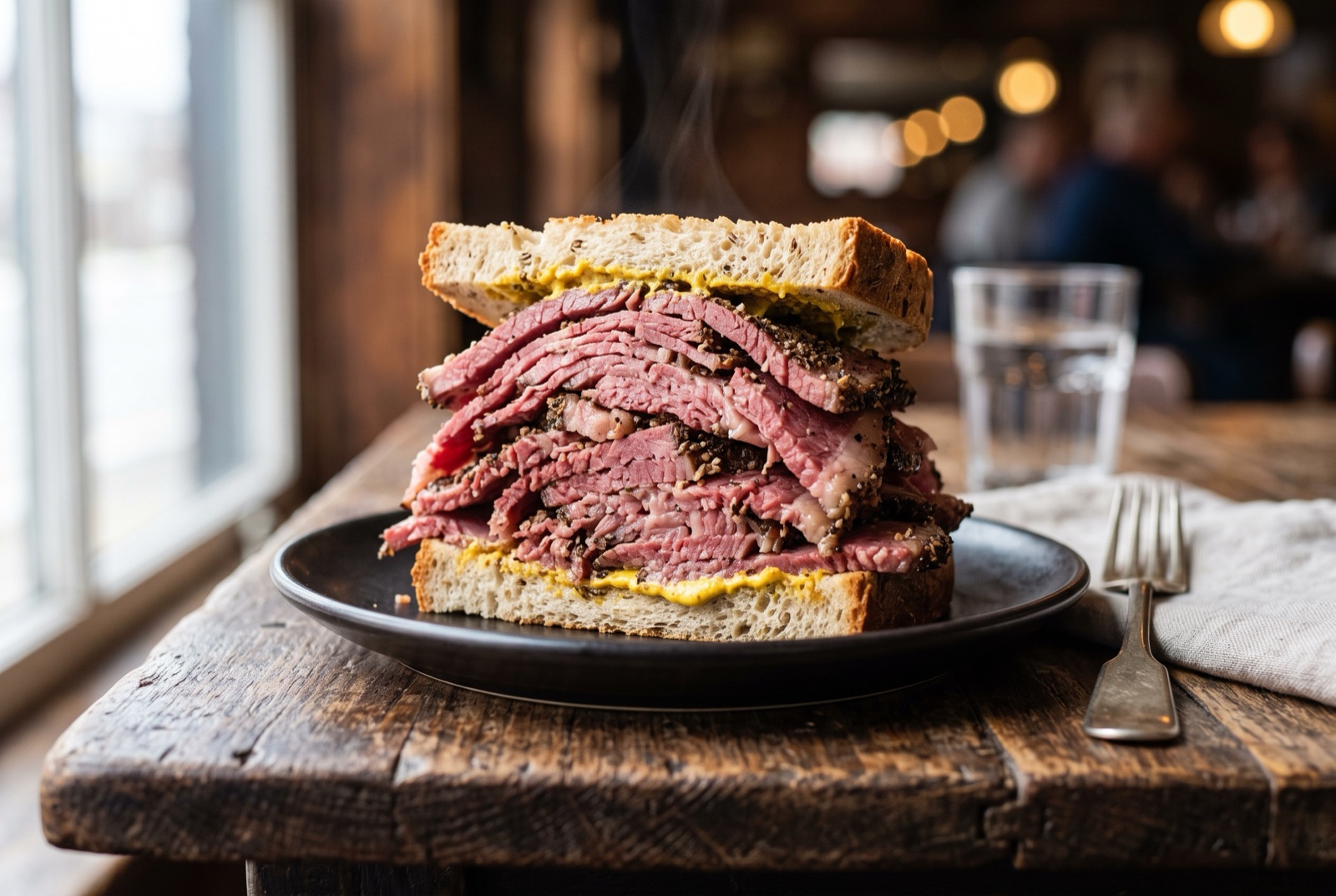
Canada176 hr 45 min
Montreal Smoked Meat Sandwich
Cured Brisket on Rye
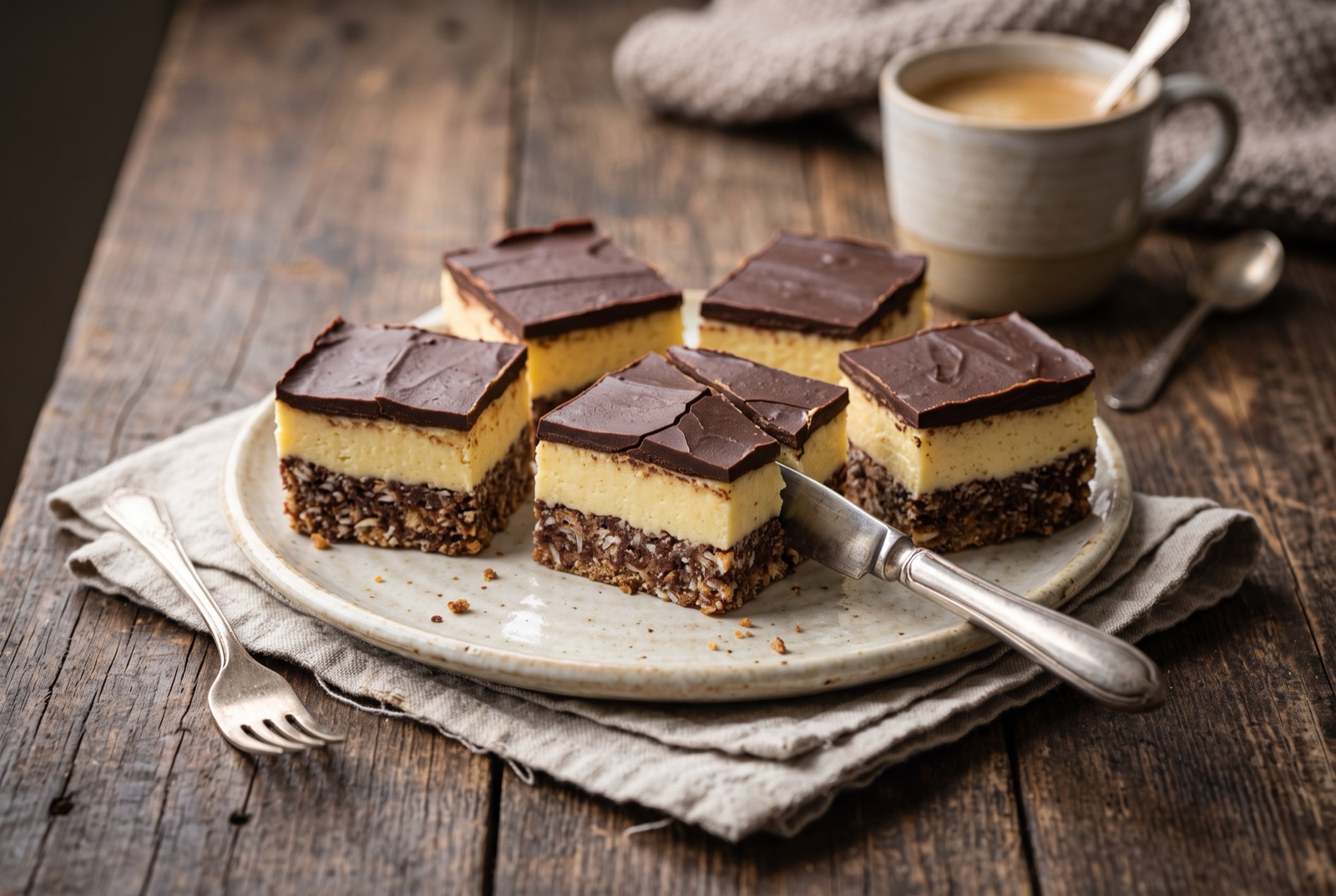
Canada3 hr 10 min
Nanaimo Bars
No-Bake Coconut Custard Squares
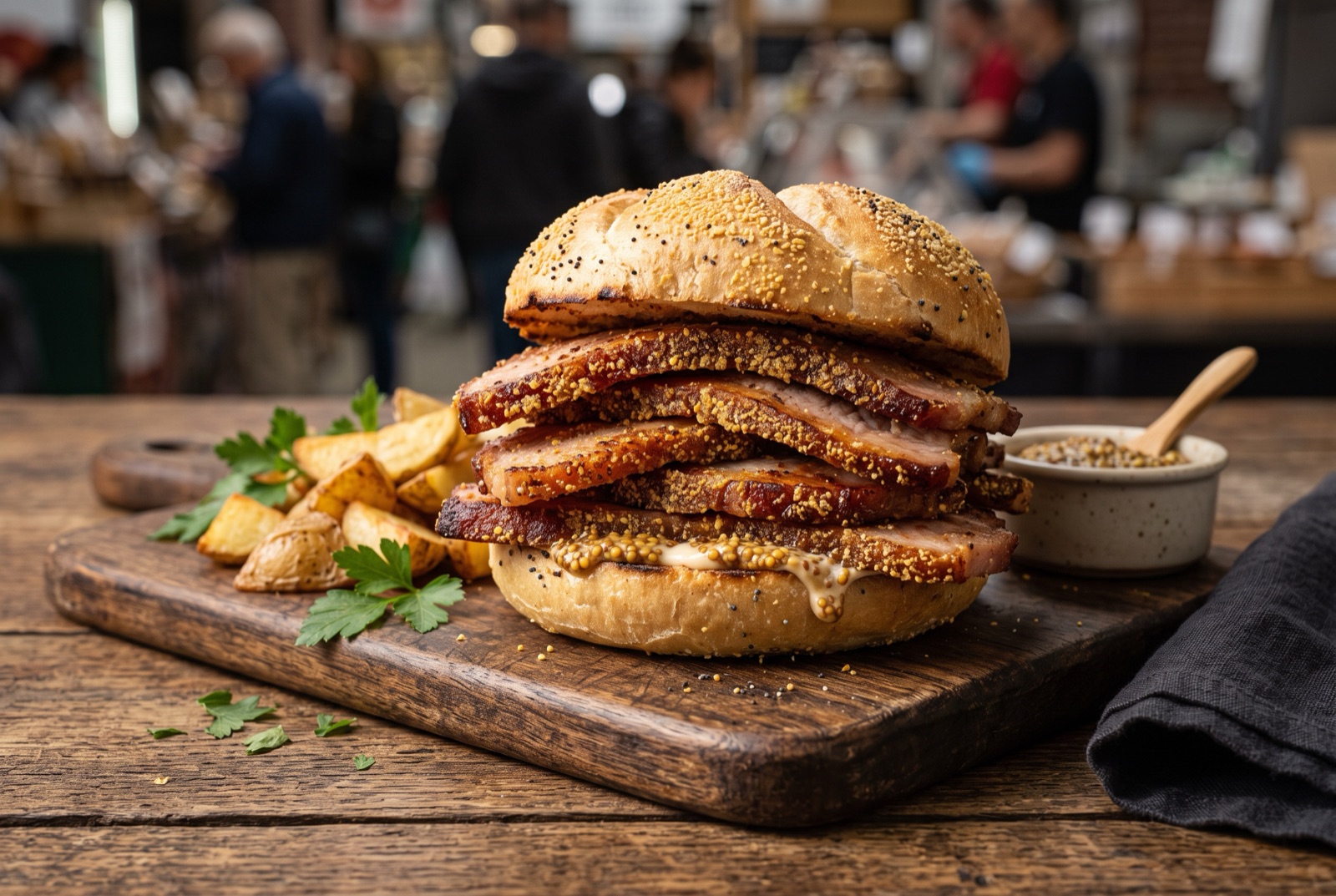
Canada72 hr 40 min
Peameal Bacon Sandwich
Cornmeal-Crusted Back Bacon Bun
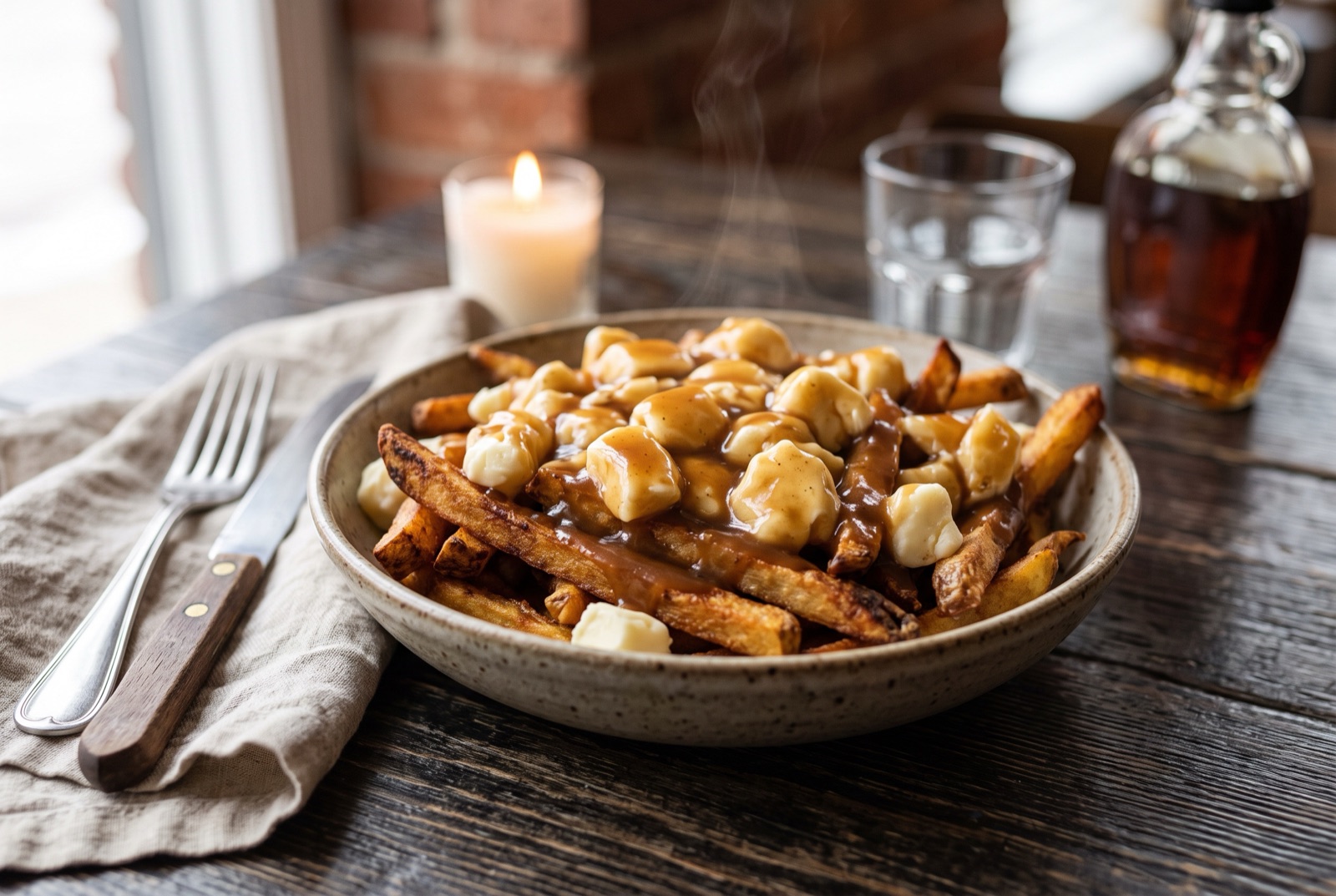
Canada1 hr 20 min
Poutine
Fries with Cheese Curds and Gravy
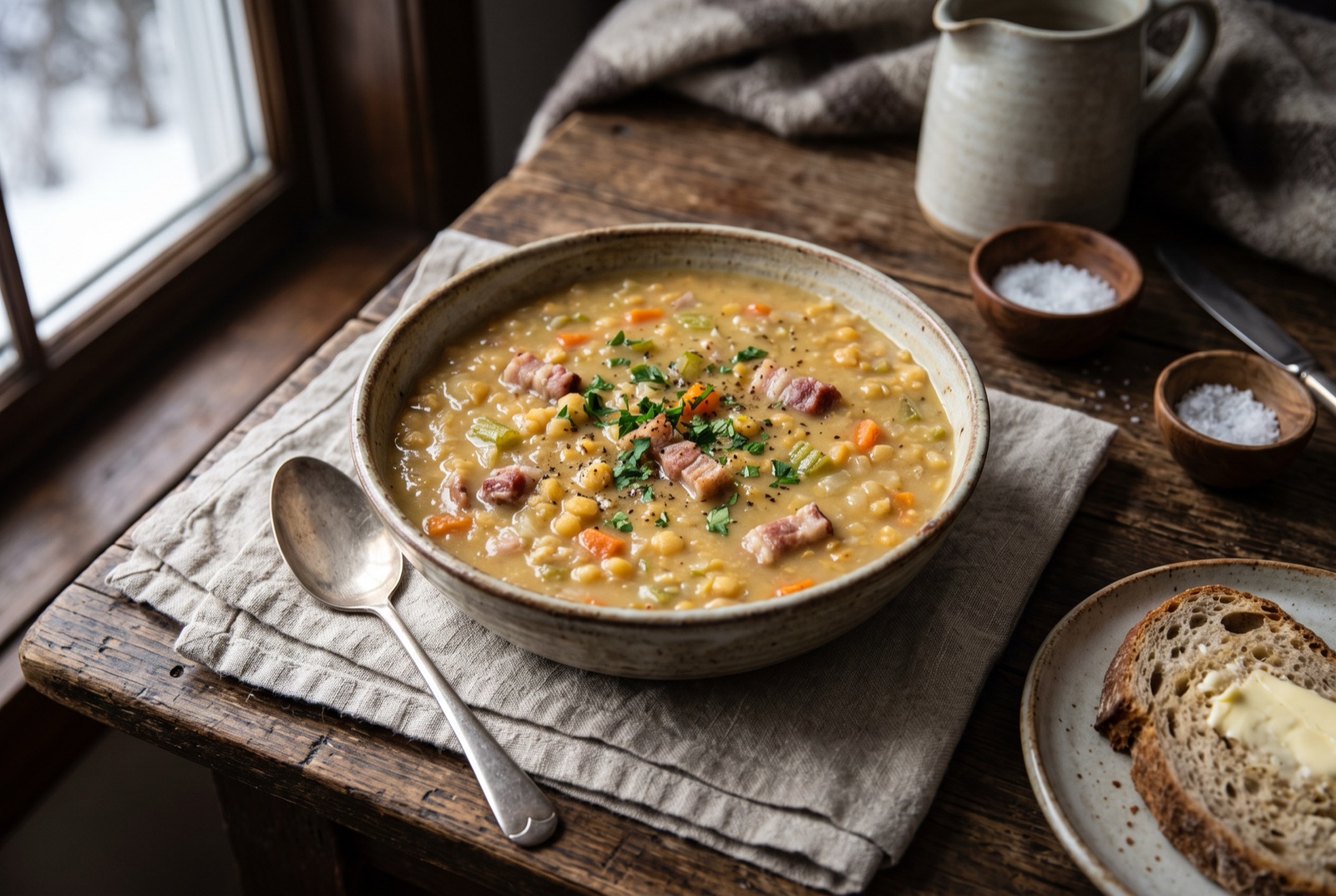
Canada2 hr 30 min
Soupe aux Pois
Québécois Yellow Split Pea Soup
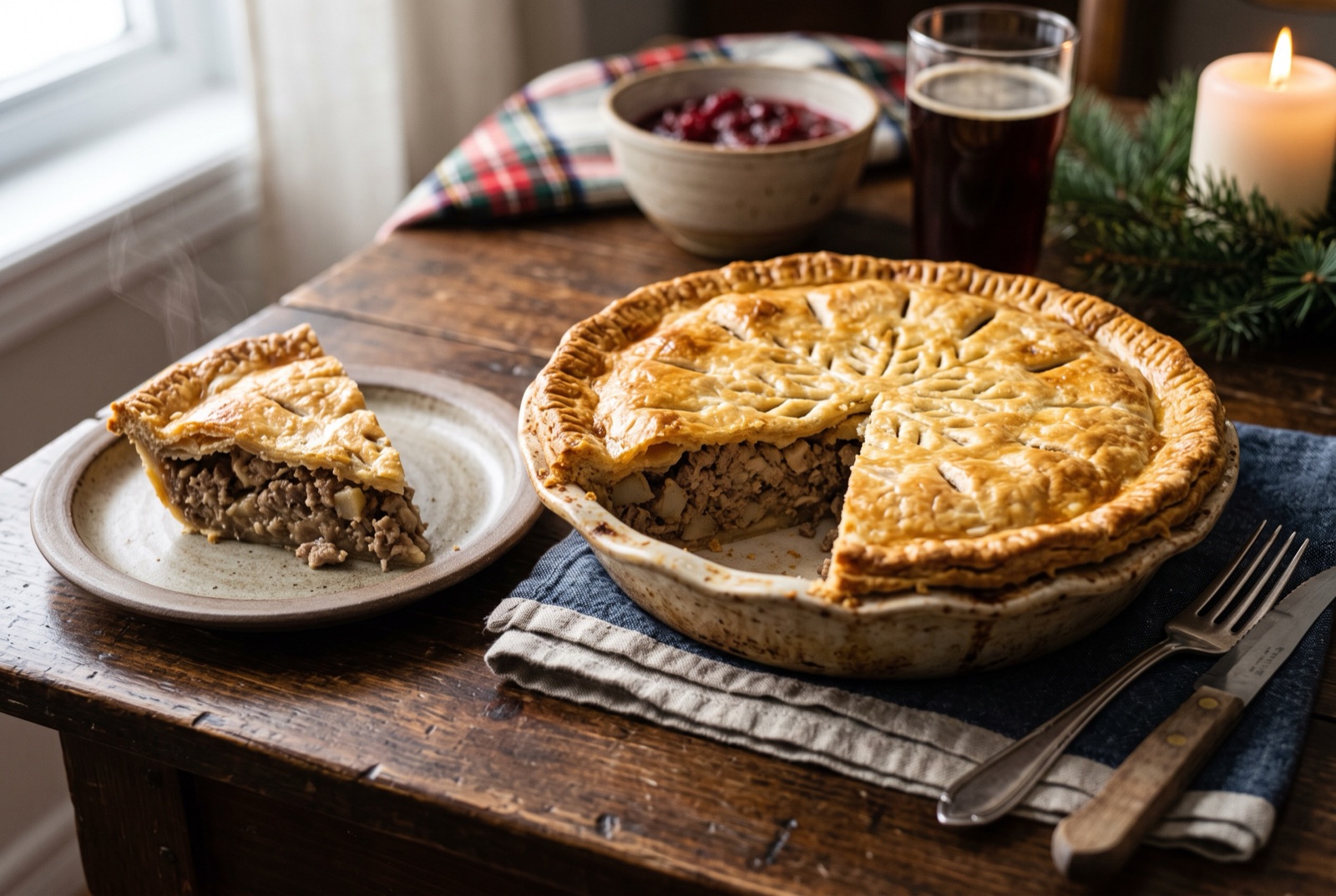
Canada3 hr 15 min
Tourtière
Québec Spiced Meat Pie
Keep traveling.
Canada sits in North America, and its kitchen shares borders as well as ingredients with Costa Rica and Cuba.
 Costa Rica
 Cuba
Cuba