Bangladesh.
বাংলাদেশ
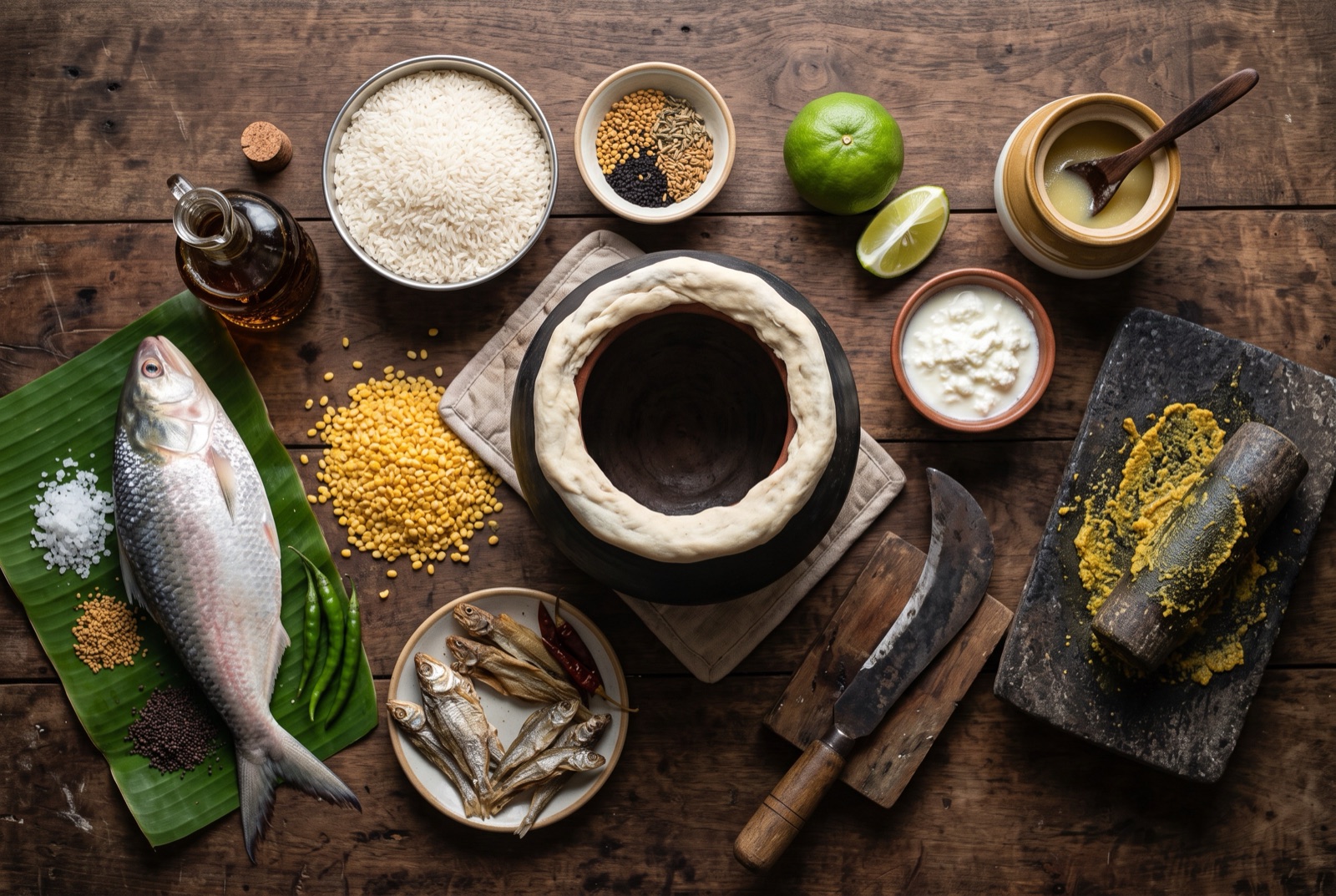
Bangladesh eats what the delta gives it. The country sits on the silt of the Ganges, Brahmaputra and Meghna, which means rice in standing water, fish in the same water, and a kitchen organised around both. A plate here is rice first — everything else is an accompaniment measured against it, from a thin dal to a fish curry to a spoonful of mustard-hot chutney. The seasoning signature is sharp rather than heavy: raw mustard oil poured over food at the table, ground mustard seed used as a paste instead of a sprinkle, green chiles slit whole and dropped in for perfume rather than pulverised for heat. Spice blends are used with restraint compared with the North Indian kitchen, and there is no assumption that a curry needs cream or tomato to be finished. What Bangladeshi cooking does have in abundance is contrast — sour against oily, bitter against sweet, one bite of fried dried fish against a mouthful of plain rice — and a course structure that deliberately walks the eater through those contrasts in a fixed order.

- Continent
- AsiaSouth Asia
- Recipes in atlas
- 10
- Must-try dishes
- 3
- Pantry staples
- 10
Start with the classics.
Must tryThe dishes that explain the Bangladesh kitchen fastest — if you cook only a few things from this page, cook these.
Inside the Bangladesh kitchen.
Rice is not a side dish here, it is the meal, and Bangladeshis distinguish between rices the way other cuisines distinguish between wines. Everyday parboiled rice is coarse, cheap and made to soak up gravy. Kalijira and chinigura — tiny, intensely aromatic short grains — are reserved for polao, biryani and milk puddings, and cooks will insist that no basmati substitute smells the same. Beyond the plate of rice there is muri (puffed rice) sold by the bag for snacking, chira (flattened rice) soaked in milk for breakfast, and panta bhat, yesterday's rice left overnight under water to sour gently, which is both village survival food and the ceremonial dish of Pohela Boishakh, the Bengali New Year.
Fish outranks meat. Ilish, the hilsa, is the national fish and the object of a genuine seasonal obsession — bony, oily, and prized enough that a single good specimen can cost a day's wages during the monsoon run. Rui, katla, pabda, chingri (prawns) and tiny puti fish fill in the rest of the week, and along the coast shutki — sun-dried fish — is pounded into fierce, pungent relishes that split opinion even among Bangladeshis. The classic treatments are few and precise: bhapa (steamed in a mustard paste), jhol (a thin, clear-tasting gravy), jhal (a hotter, tighter one), and paturi (wrapped in banana leaf).
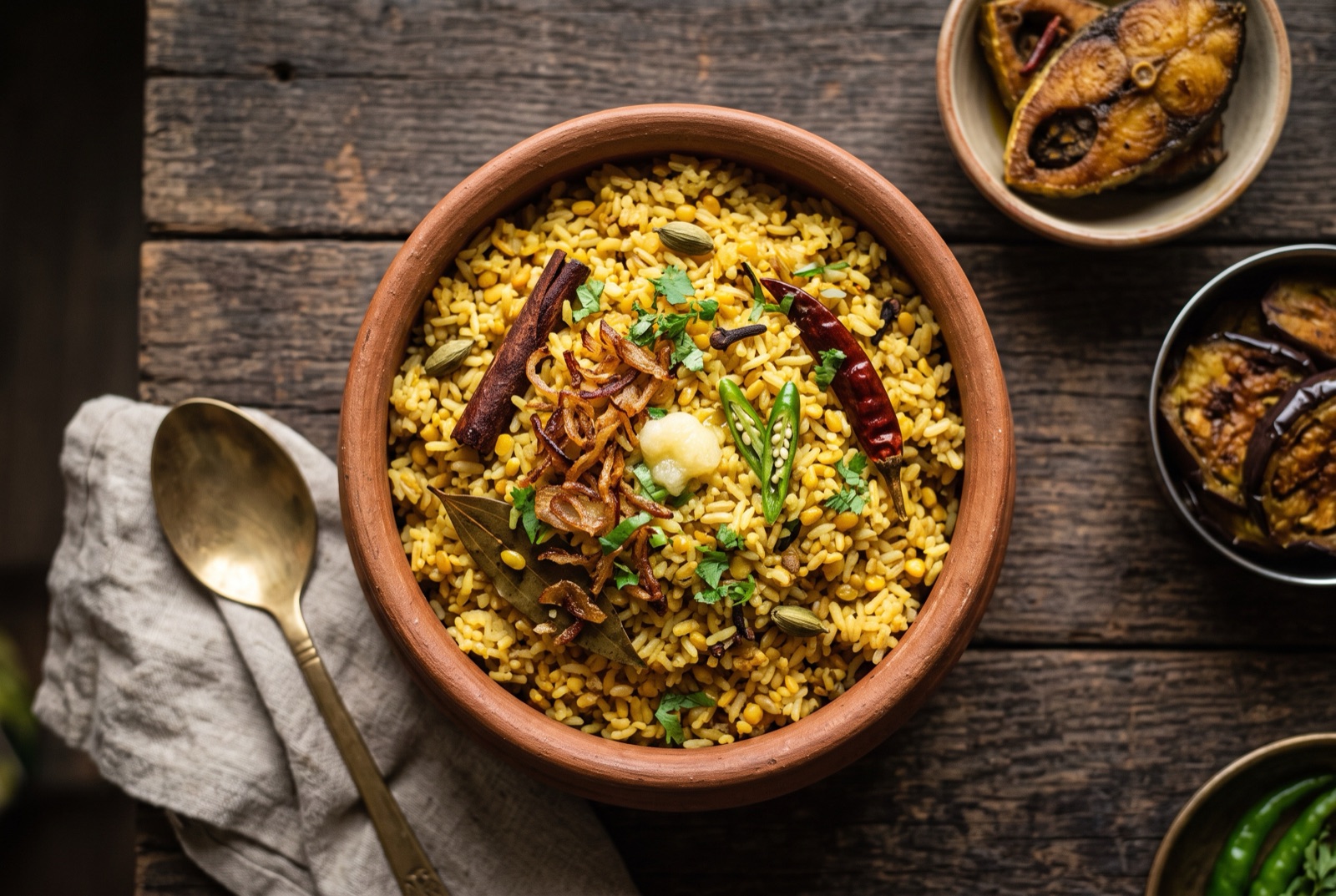
The defining technique in the meat kitchen is bhuna. It is not a sauce and not a spice mix, despite what restaurant menus abroad suggest — it is the act of frying meat and masala together over a long, patient heat until every drop of added water has gone and the oil separates out and coats the meat in a dark, glossy film. Beef bhuna, mutton bhuna and even bhuna khichuri all take their name from that same evaporating stage. Because most of the country is Muslim, beef and mutton are the celebration meats, and Eid al-Adha turns them into a national cooking event.
Mustard runs through everything: mustard oil as the default cooking fat and finishing condiment, black and yellow mustard seed ground with green chile into the paste that defines bhapa dishes, and panch phoron — the five-seed blend of cumin, fenugreek, nigella, fennel and mustard or radhuni — dropped whole into hot fat to open a dish. Sourness comes from tamarind, lime, green mango and, in Sylhet, from shatkora, a thick-skinned bitter citrus used for its peel rather than its juice.
Regional differences are real. Dhaka's old city cooks a rich Mughal-descended repertoire — kacchi biryani, morog polao, glazed kababs, bakarkhani bread — that has little to do with village food. Sylhet cooks with shatkora and satkora-scented beef and exports both its people and its restaurant tradition to Britain. Chattogram, on the Bay of Bengal, is the hottest and most seafood-driven kitchen in the country, home of mezban beef. And across the north and the rice belt, the daily meal is quieter than any of these: rice, dal, a fried vegetable, one fish, and chile on the side.
Signature pantry.
10 staplesThe ingredients this cuisine cannot function without.
- mustard oil
- hilsa (ilish) fish
- panch phoron
- green chiles
- kalijira and chinigura rice
- moong dal
- shutki (dried fish)
- shatkora citrus
- ghee
- chhana (fresh curd cheese)
How people eat in Bangladesh.
A Bangladeshi meal is served all at once but eaten in a set order, and skipping the order is the giveaway of a foreigner. You start with rice and a little ghee or a bitter vegetable, move to dal, then to vegetables, then fish, then meat, and finish with something sour or sweet — a chutney, a yogurt, a milk sweet. Everything is eaten with the fingers of the right hand, rice mixed with gravy and gathered into a small mound before it reaches the mouth. Guests are served more than they can eat on purpose; refusing a second helping outright is awkward, so people leave a little on the plate instead. Tea comes after, never during, and often sweet and milky enough to count as dessert.
Regional kitchens.
Bangladesh cooks 4 distinctly different ways depending on where you stand — here is what changes between them.
- R1Dhaka and Old Town
- The Mughal-descended city kitchen: kacchi biryani cooked in sealed pots for weddings, morog polao, spice-glazed kababs and bakarkhani bread. Richer, sweeter and more perfumed than anything cooked in the villages.
- R2Sylhet
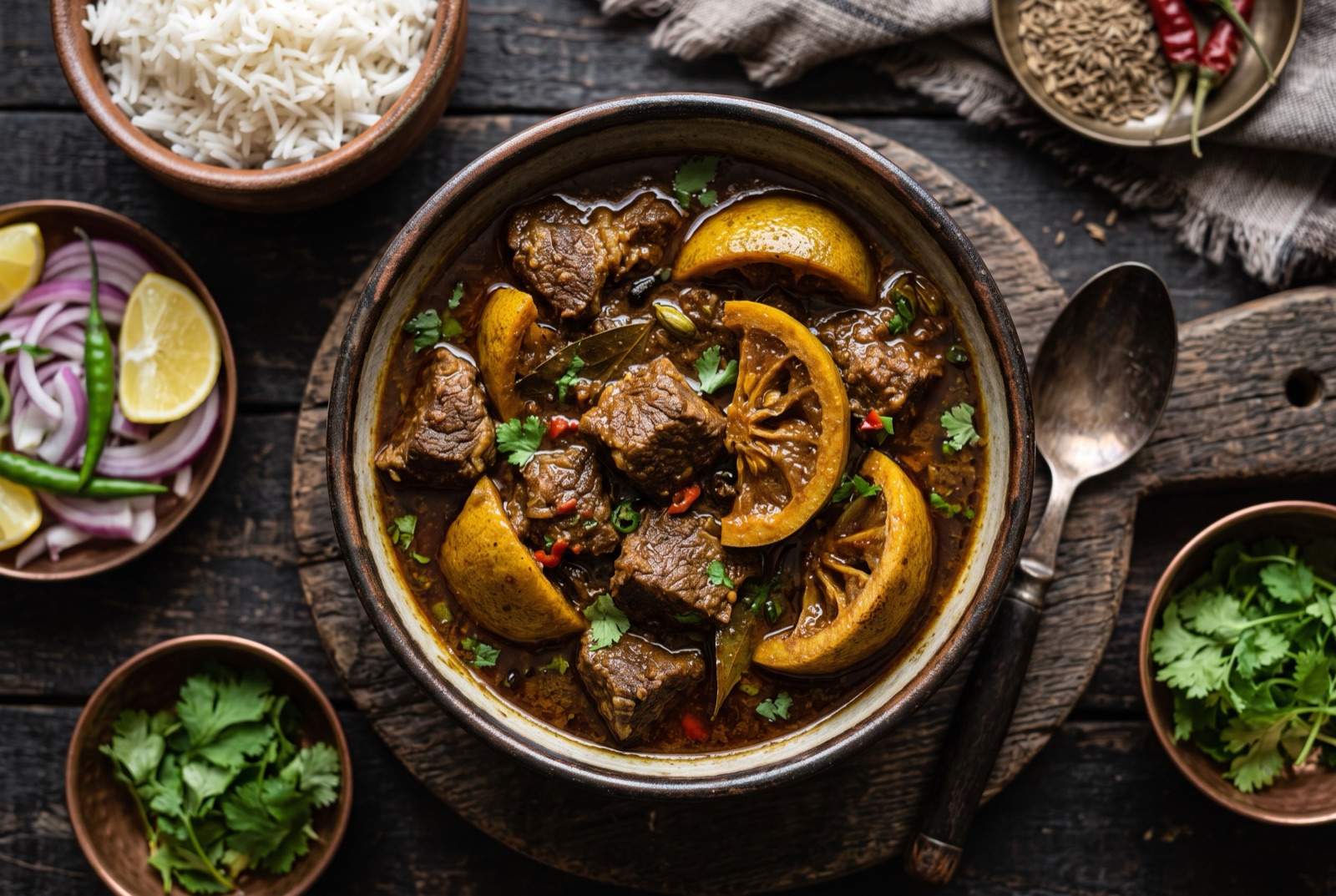
- Tea-garden country in the northeast, and the source of most Bangladeshi restaurants in Britain. Its signature is shatkora, a bitter citrus cooked peel and all into beef curries.
- R3Chattogram and the Coast
- The spiciest region, facing the Bay of Bengal. Sea fish, dried shutki relishes, and mezban — the communal beef feast served to entire neighbourhoods on long rows of mats.
- R4The Delta and Rice Belt
- Barisal, Khulna and the great river plains, where freshwater fish and rice dominate every meal. Thin jhol curries, mustard pastes and panta bhat belong here more than to any city.
All Bangladesh recipes.
10 recipes and counting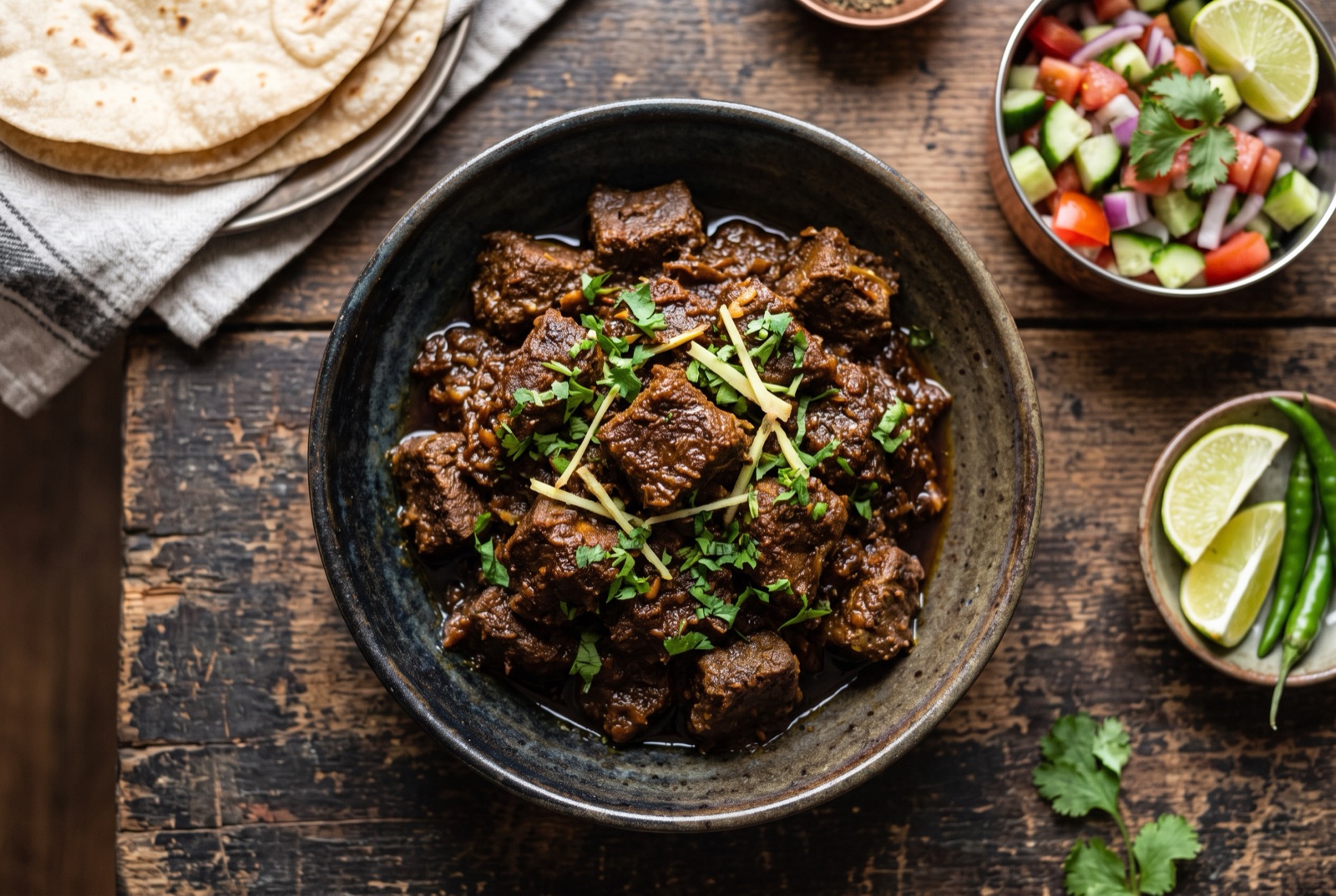
Bangladesh2 hr 5 min
Beef Bhuna
Bangladeshi Dry-Roasted Spiced Beef
Bangladesh2 hr
Beef Shatkora
Sylheti Beef with Bitter Citrus
Bangladesh1 hr
Bhuna Khichuri
Bengali Rice and Lentil Pilaf
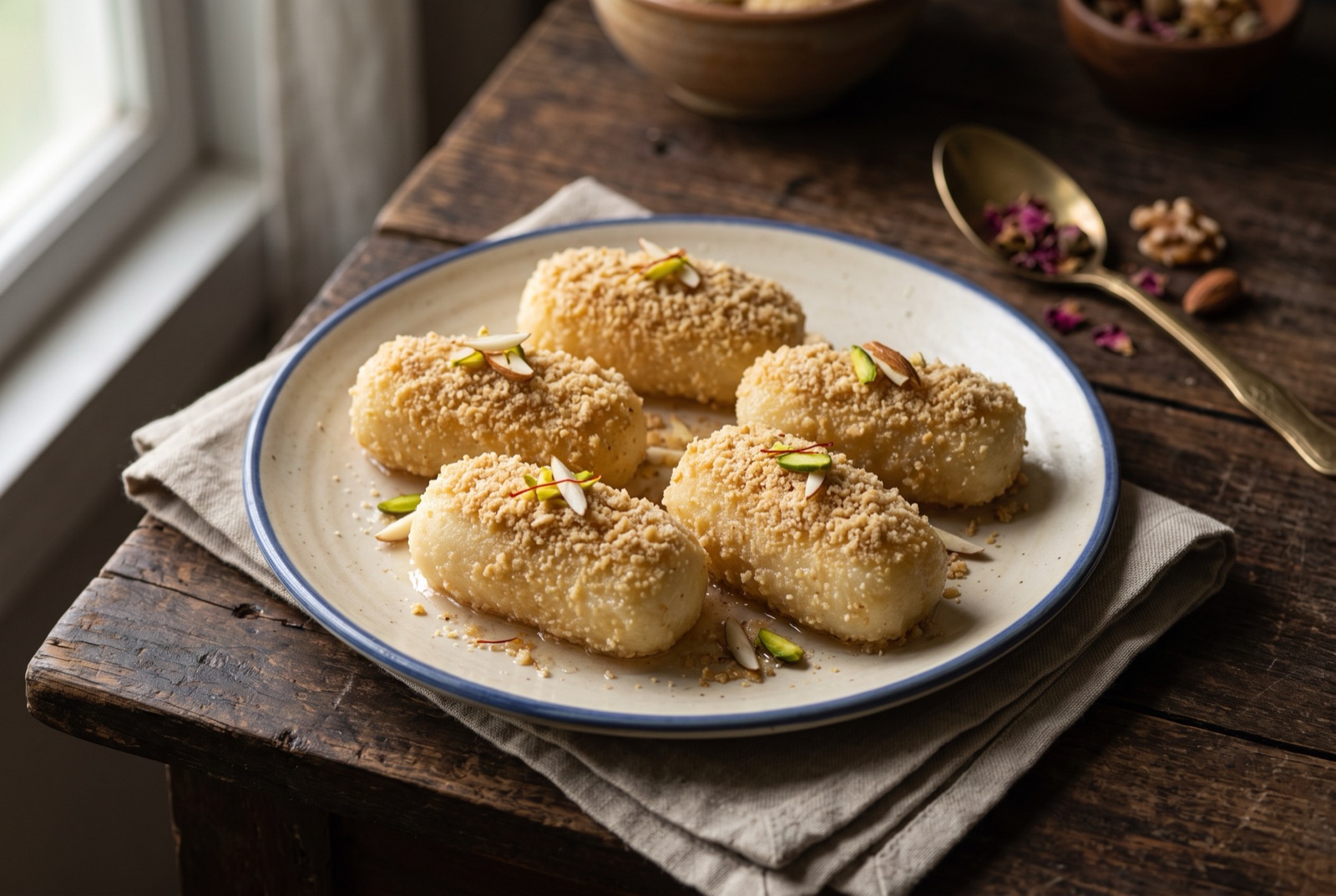
Bangladesh3 hr 30 min
Chomchom
Porabari Syrup-Soaked Cheese Sweet
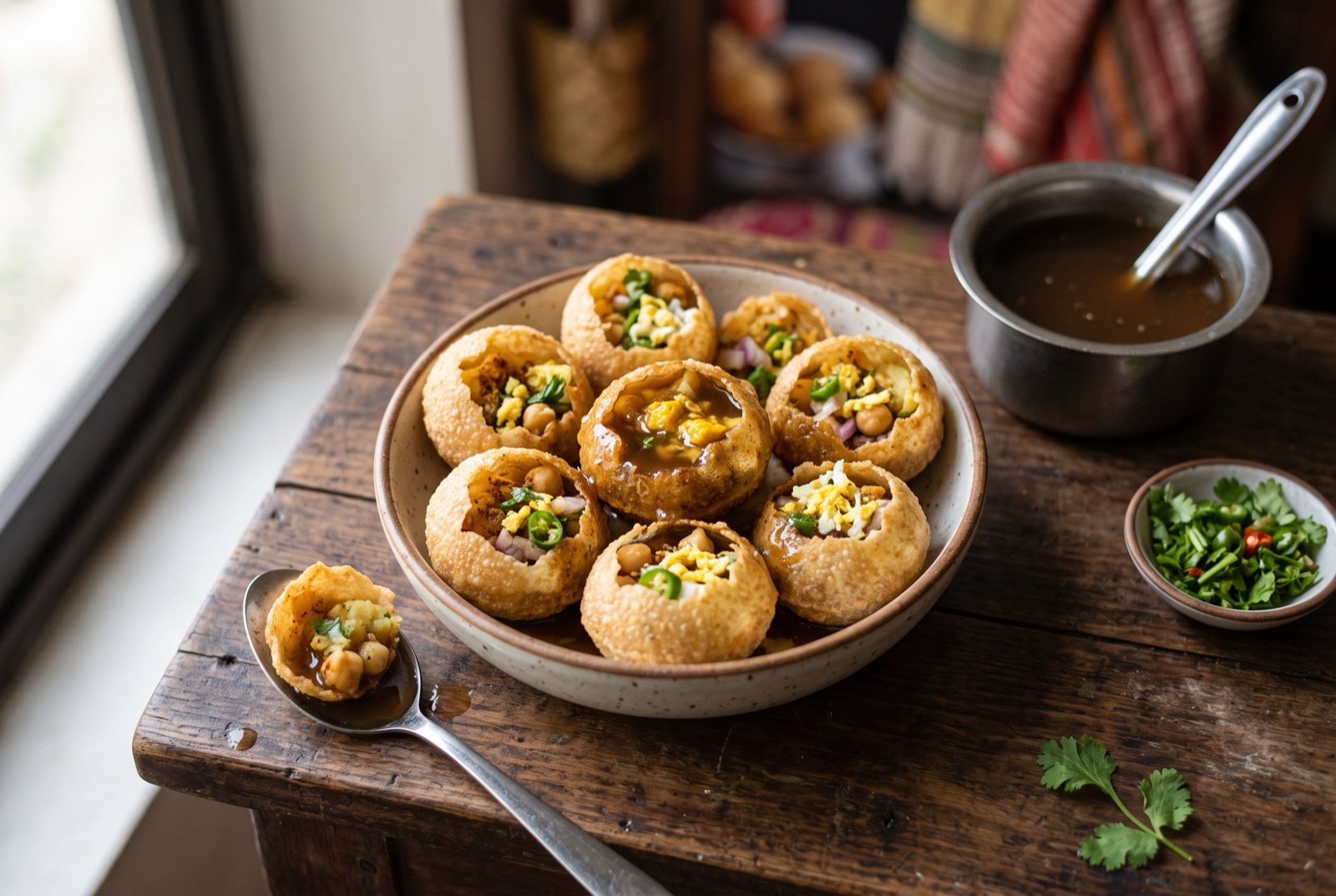
Bangladesh2 hr 15 min
Fuchka
Bangladeshi Crisp Shells with Spiced Filling
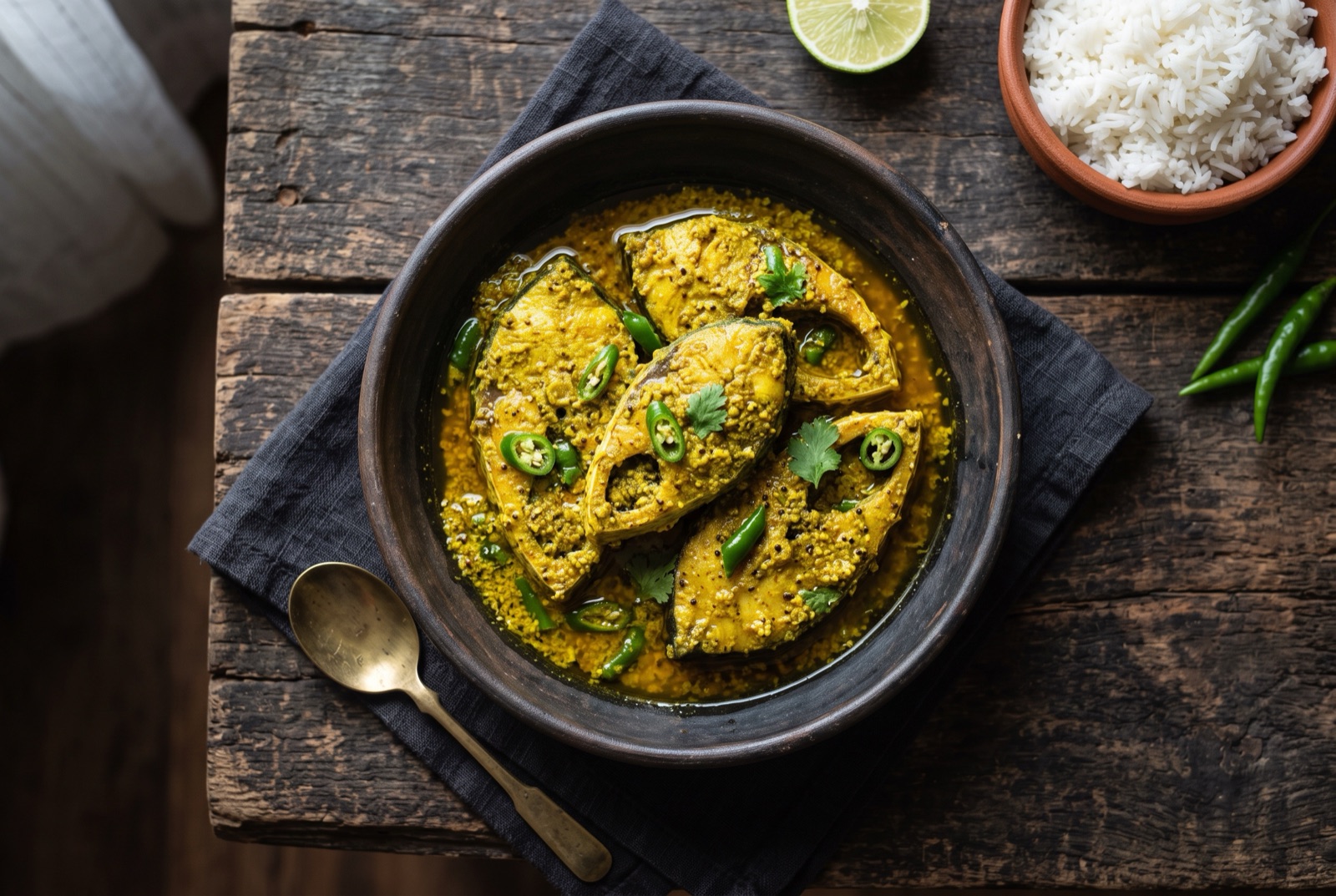
Bangladesh1 hr 5 min
Ilish Bhapa
Hilsa Steamed in Mustard Paste
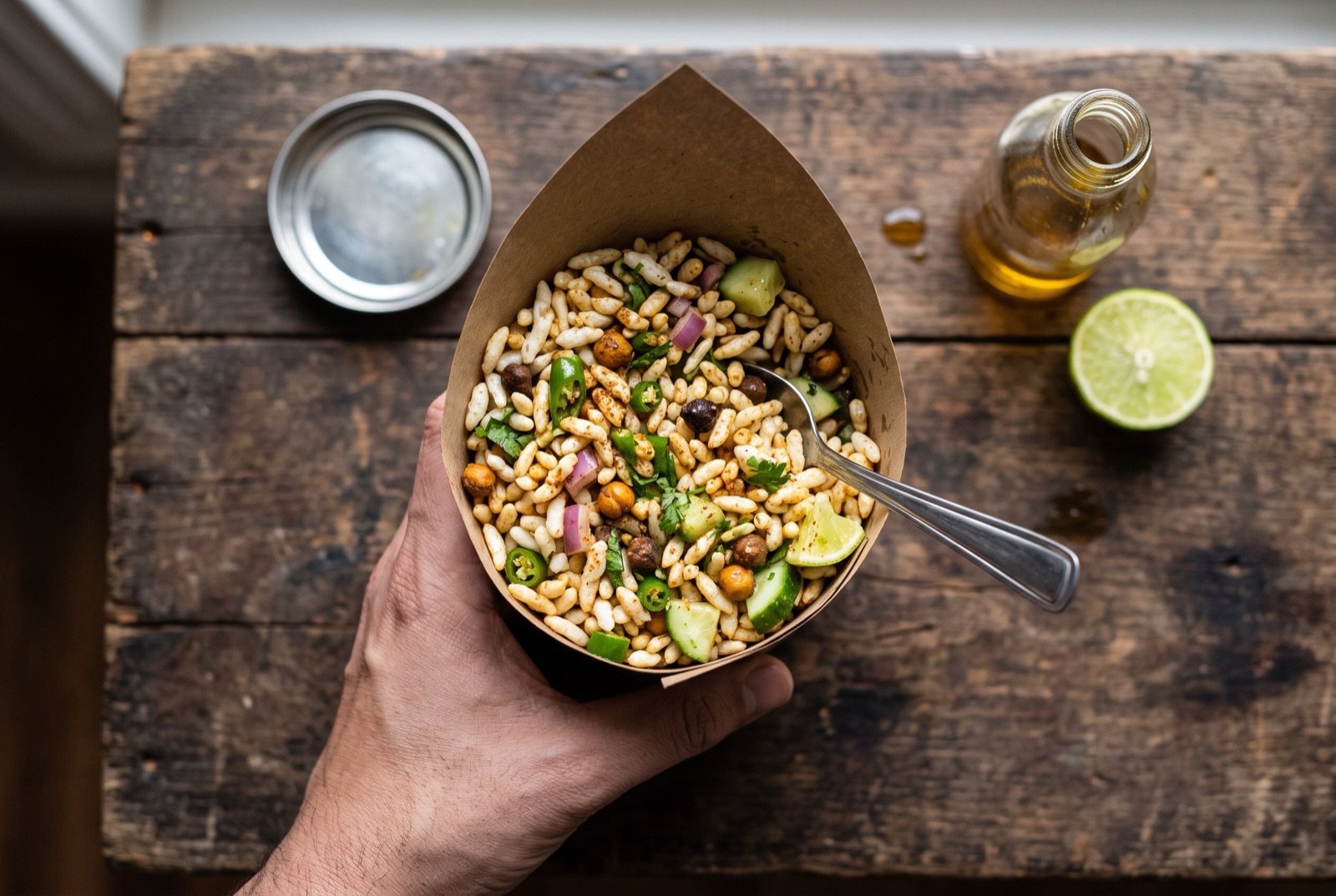
Bangladesh15 min
Jhal Muri
Bengali Spicy Puffed Rice Snack
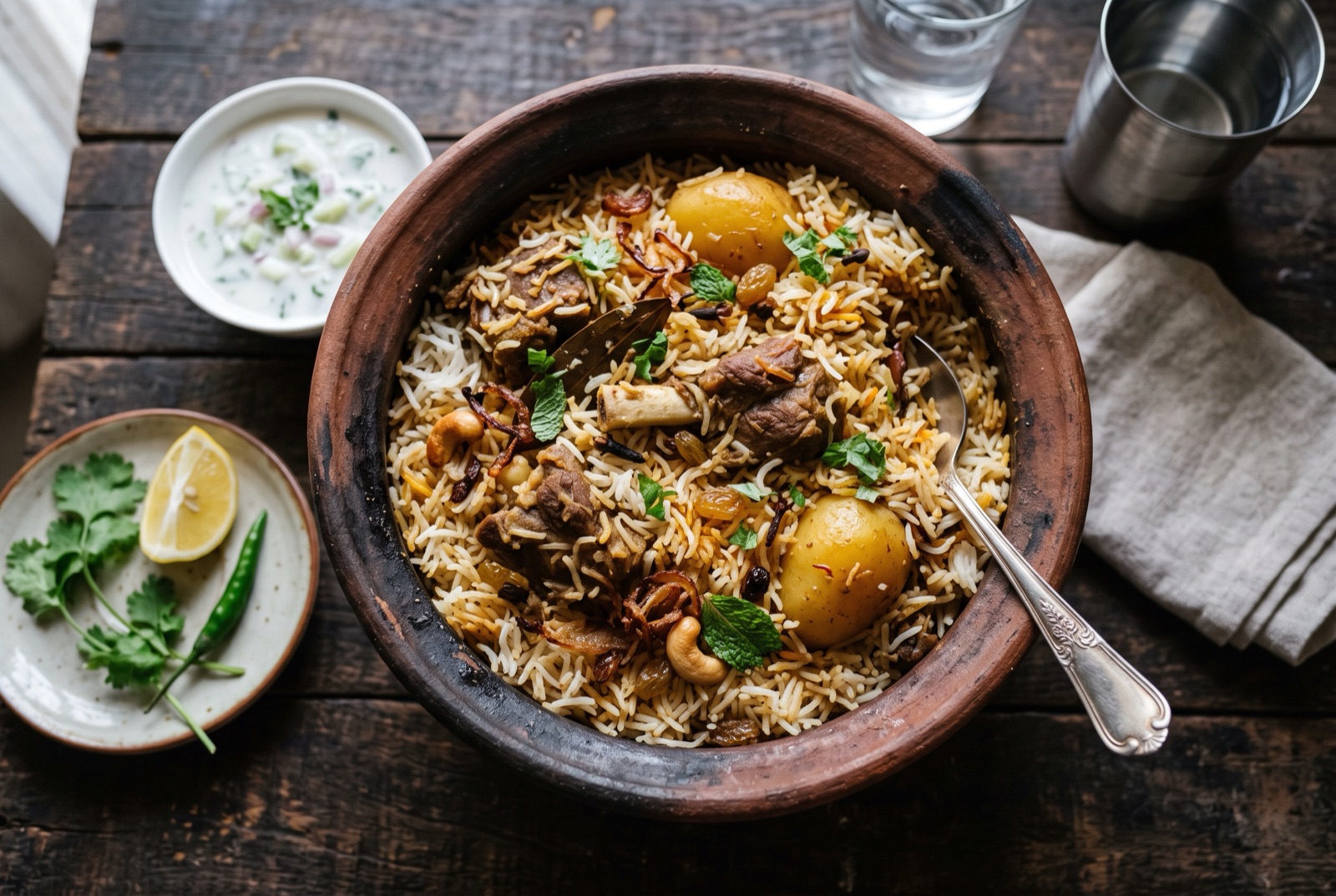
Bangladesh8 hr 25 min
Kacchi Biryani
Dhaka Wedding Mutton and Rice
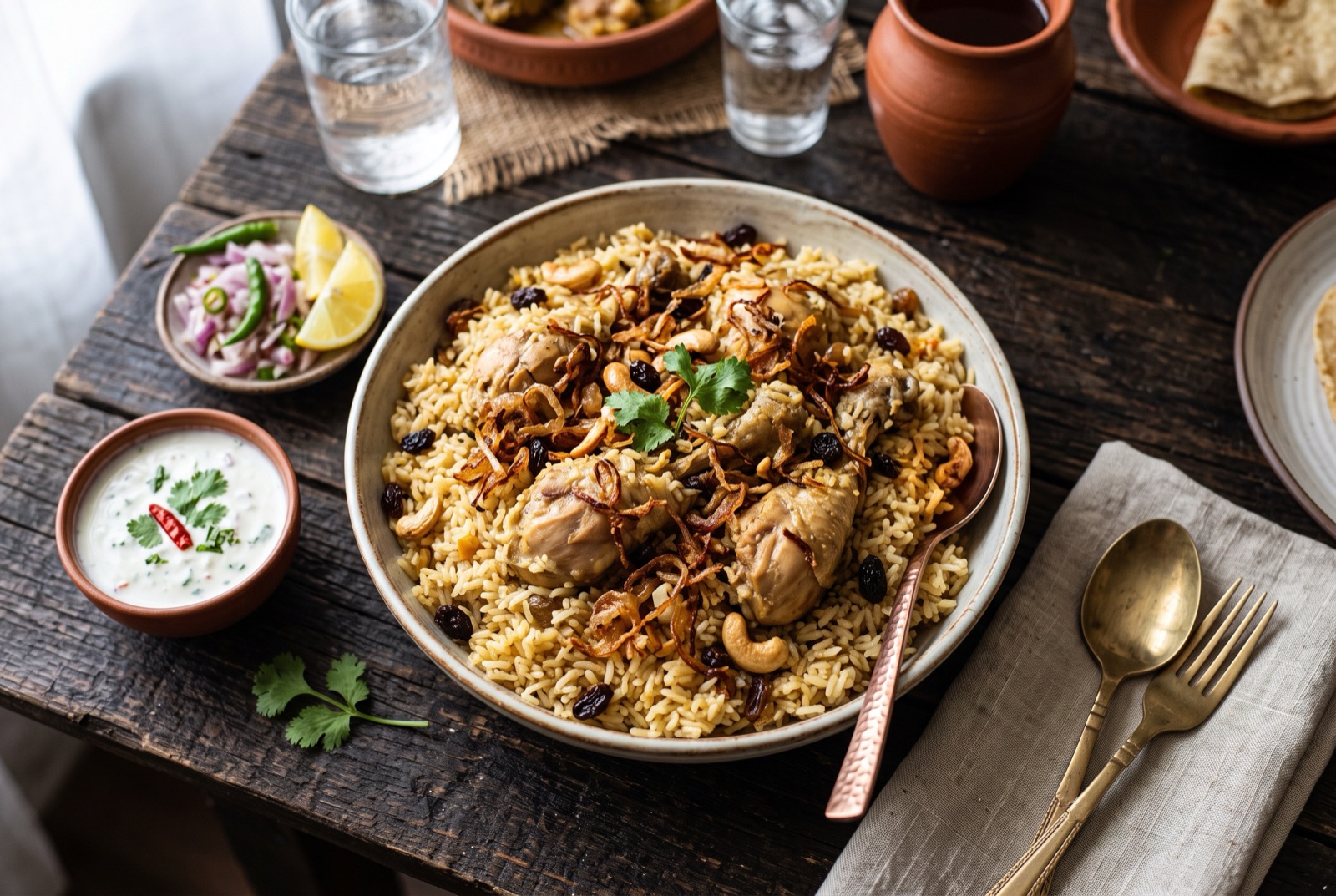
Bangladesh2 hr
Morog Polao
Bangladeshi Chicken Pilaf with Fried Onion
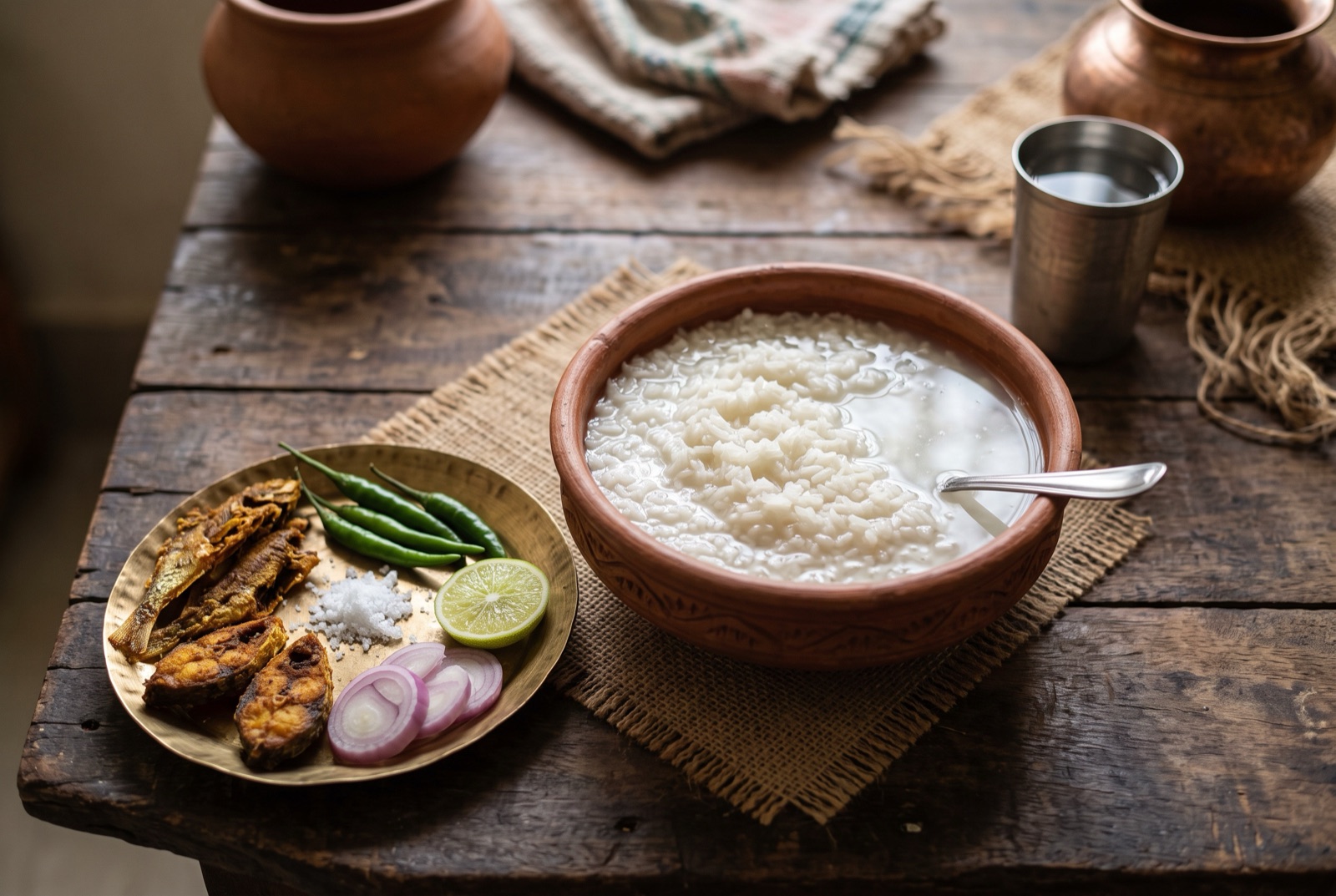
Bangladesh10 hr 30 min
Panta Bhat
Bengali Fermented Rice in Water
Keep traveling.
Bangladesh sits in South Asia, and its kitchen shares borders as well as ingredients with Armenia and Cambodia.
 Armenia
 Cambodia