Egypt.
مصر
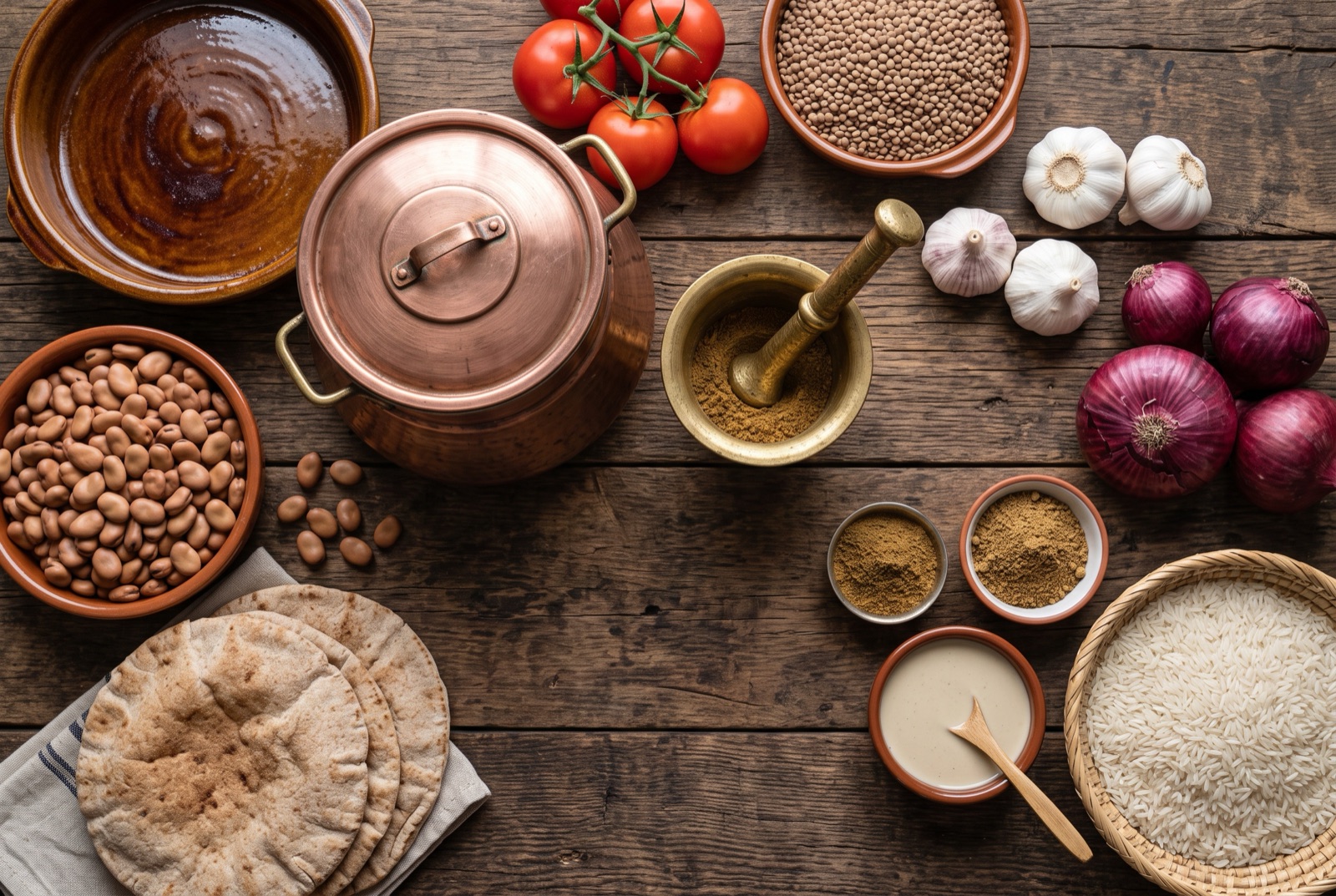
Egyptian cooking is field food that learned to feed a city. The backbone is what the Nile valley grows in quantity — fava beans, lentils, rice, wheat, onions, tomatoes and garlic — turned into dishes that are cheap to build, filling enough to work on, and seasoned hard enough that nobody notices how little meat is involved. Cumin and coriander do most of the aromatic work, garlic is fried until it hisses and then poured over things, and vinegar or lemon cuts through at the end so a plate of starch never tastes heavy. Meat appears, but usually as a headline over a base of bread or rice rather than as the centre of the plate. What makes the food recognisably Egyptian is not a spice blend but a set of habits: layering starches on top of each other without apology, finishing a dish with something loud at the very last second, and treating bread as a utensil rather than a side.

- Continent
- AfricaNorth Africa
- Recipes in atlas
- 10
- Must-try dishes
- 3
- Pantry staples
- 10
Start with the classics.
Must tryThe dishes that explain the Egypt kitchen fastest — if you cook only a few things from this page, cook these.
Inside the Egypt kitchen.
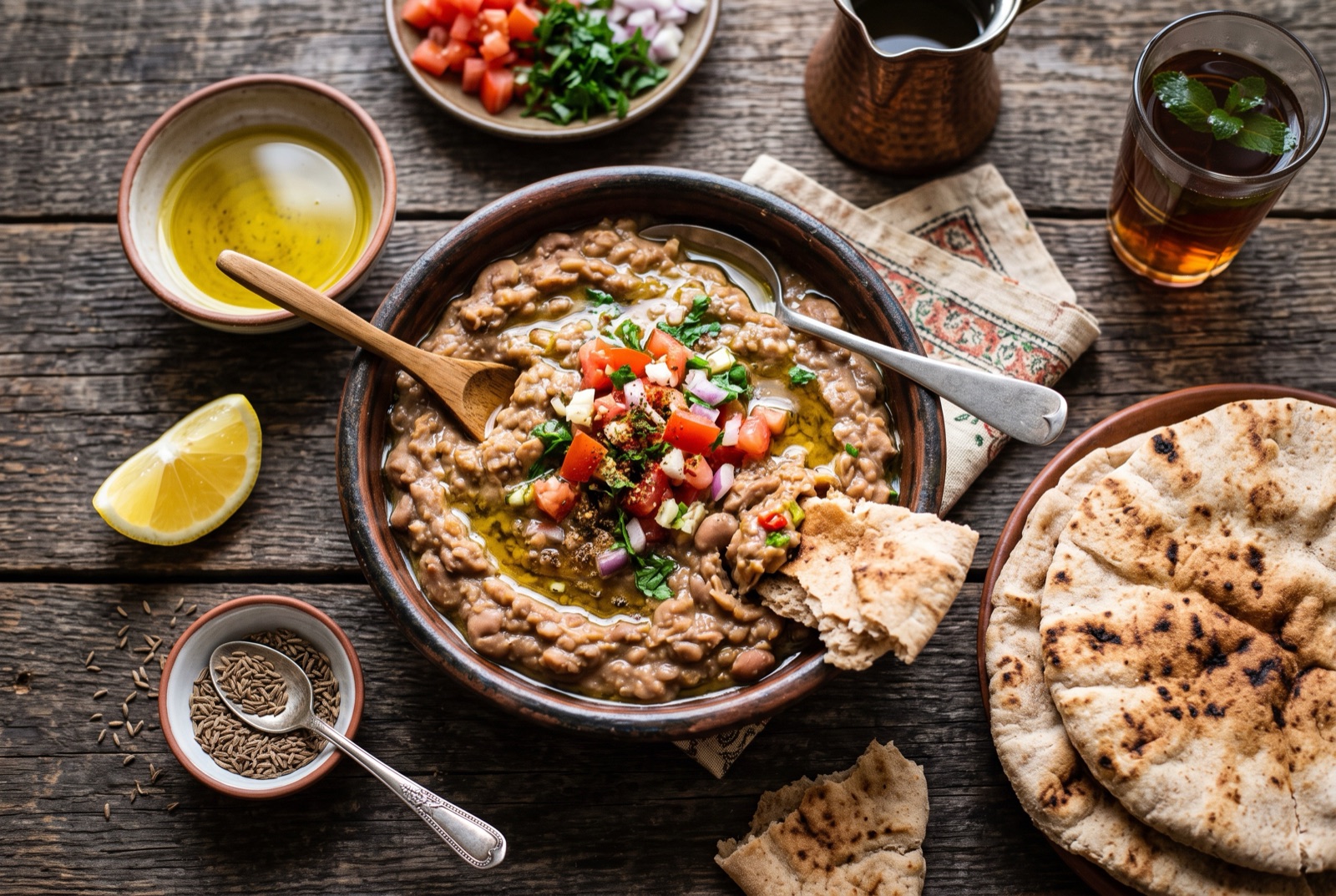
Start with the fava bean, because Egypt does. Ful medames — beans stewed overnight until they collapse — is breakfast for tens of millions of people, and the same bean, soaked and ground raw, becomes ta'ameya, the falafel that Egypt makes green with dill and leek instead of pale with chickpeas. Lentils, rice and macaroni stack up in koshari, a bowl invented by people making a full meal out of the cheapest things in the pantry. This is a cuisine where legumes and grains are the main event and everything else is seasoning.
The seasoning technique to understand is the tasha (also called taqleya): garlic, usually with ground coriander, fried in fat until it is fragrant and just turning gold, then poured into a finished pot while it is still spitting. It goes into molokhia, into lentil soup, into stewed greens. The point is aroma delivered late — garlic cooked into a dish from the start tastes soft and sweet, while garlic added at the end tastes sharp and green. Egyptian cooks do both, and knowing which one a dish needs is most of the skill.
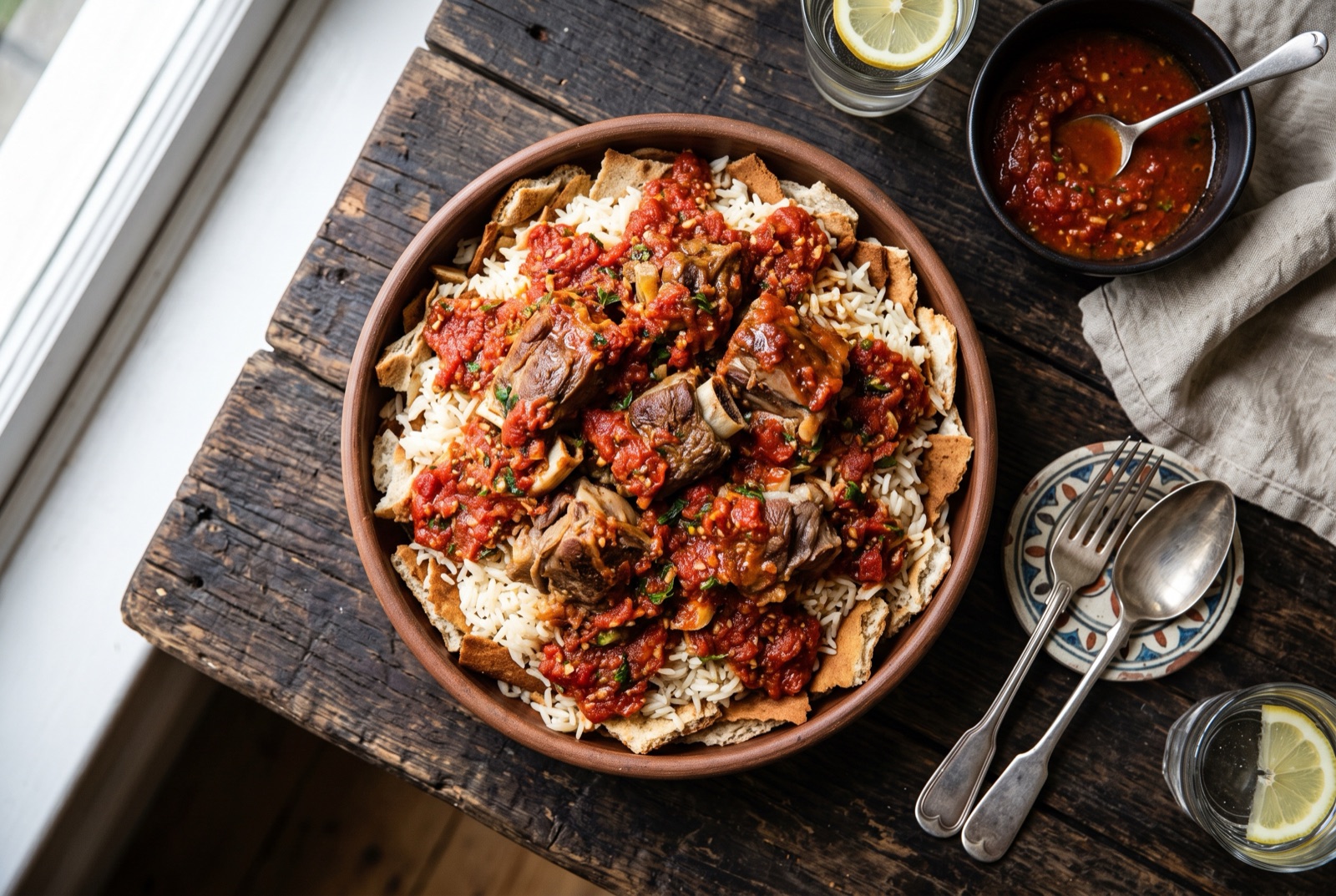
Bread is structural. Aish baladi — the word aish literally means life — is a coarse wholemeal pocket loaf baked on bran in a fierce oven, and it doubles as spoon, plate and thickener. Torn stale bread lines the bottom of fattah under rice and lamb. Split loaves are packed with spiced mince to make hawawshi. Bread soaks up sauce that would otherwise be wasted, which in a country that has subsidised loaves for generations is not a metaphor.
Geography splits the plate. Alexandria and the Mediterranean coast cook fish: sayadeya, where rice takes on the colour of deeply browned onions and the flavour of fish stock. The Nile Delta grows the vegetables that get hollowed out and stuffed for mahshi. Upper Egypt leans on slow-cooked meat, pigeon and heavier grain dishes. Nubian cooking in the far south carries flavours shared with Sudan. Cairo eats all of it, at once, at street level.
Sweets follow the Ottoman line — pastry, syrup, nuts, milk — but the one that is genuinely Egyptian in feel is om ali, a hot bread-and-milk pudding baked with nuts and coconut that turns leftovers into a dessert people order in restaurants. It is the same instinct as the rest of the cuisine: take something plain and cheap, treat it seriously, and it becomes the thing you miss when you leave.
Signature pantry.
10 staplesThe ingredients this cuisine cannot function without.
- dried fava beans
- brown lentils
- cumin
- ground coriander
- garlic
- rice
- tomato
- onion
- tahini
- baladi bread
How people eat in Egypt.
Meals are shared from the middle of the table and eaten with bread rather than cutlery — a torn piece of aish baladi pinched around a mouthful does the work of a fork. Breakfast is the substantial meal for anyone doing physical work, usually ful and ta'ameya eaten early and standing up. The main meal comes in the afternoon, after work and before evening, and it is expected to be big. Guests are fed past the point they say stop, and refusing a second serving twice is normal politeness before accepting on the third offer. During Ramadan the rhythm inverts entirely: iftar at sunset is the largest table of the year, and dishes like fattah and mahshi appear because they scale to a crowd.
Regional kitchens.
Egypt cooks 4 distinctly different ways depending on where you stand — here is what changes between them.
- R1Cairo and the Nile Valley
- The street-food capital: koshari counters, ta'ameya carts and hawawshi bakeries. Dishes here are built for speed, volume and a low price per plate.
- R2Alexandria and the Coast
- Mediterranean cooking with a Greek and Italian accent. Fish is grilled or buried in onion-stained rice, and seafood is bought whole and cooked plainly.
- R3The Delta
- Egypt's vegetable garden. Courgettes, peppers, cabbage and vine leaves get hollowed and stuffed for mahshi, and dairy from buffalo herds turns into cheese and cream.
- R4Upper Egypt and Nubia
- Slower, heavier cooking from the south: clay-pot stews, pigeon, and grain dishes that share a border and a spice cupboard with Sudan.
All Egypt recipes.
10 recipes and counting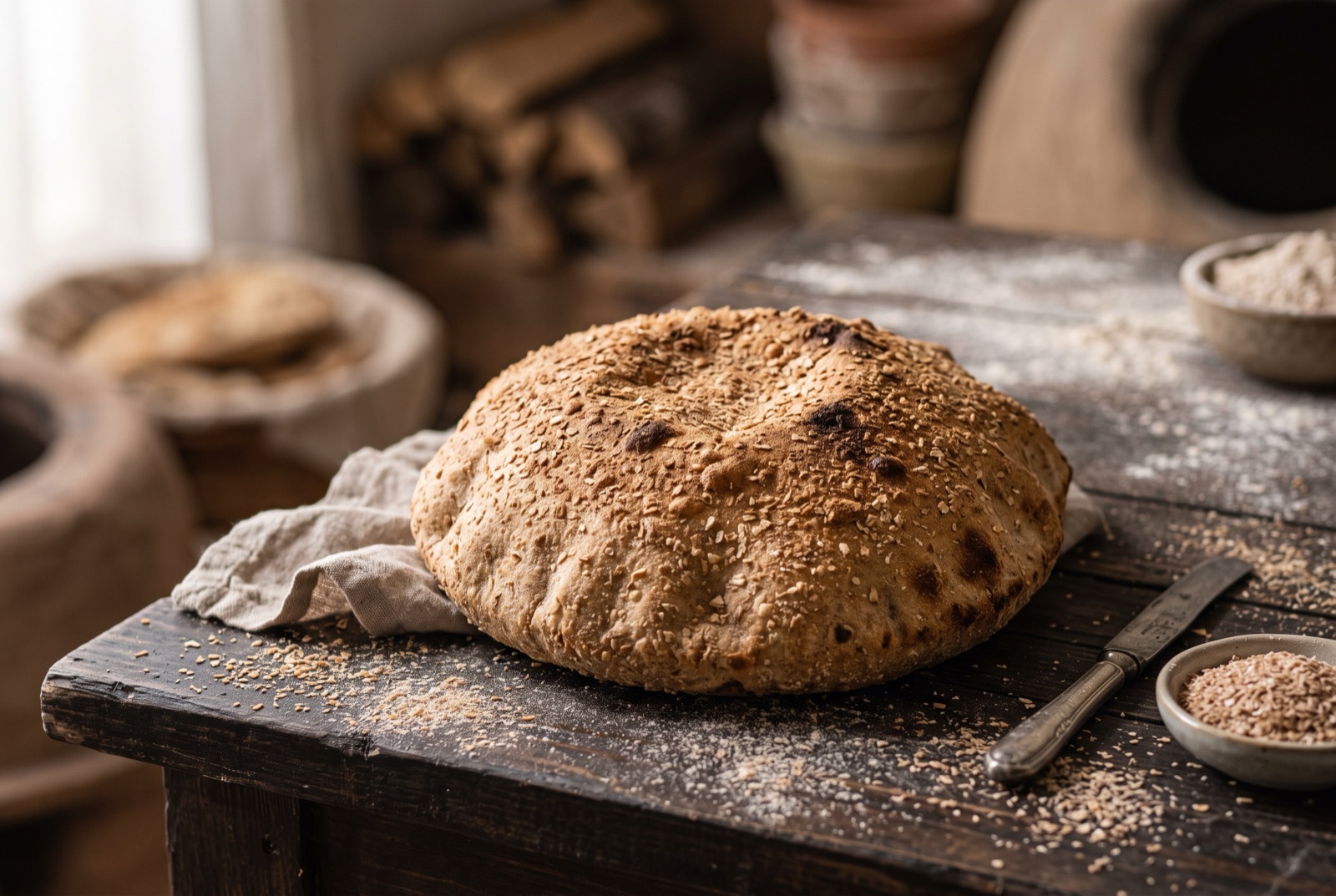
Egypt3 hr 10 min
Aish Baladi
Egyptian Wholewheat Pocket Bread
Egypt2 hr 45 min
Fattah
Egyptian Bread, Rice and Lamb Layers
Egypt14 hr 40 min
Ful Medames
Egyptian Slow-Cooked Fava Beans
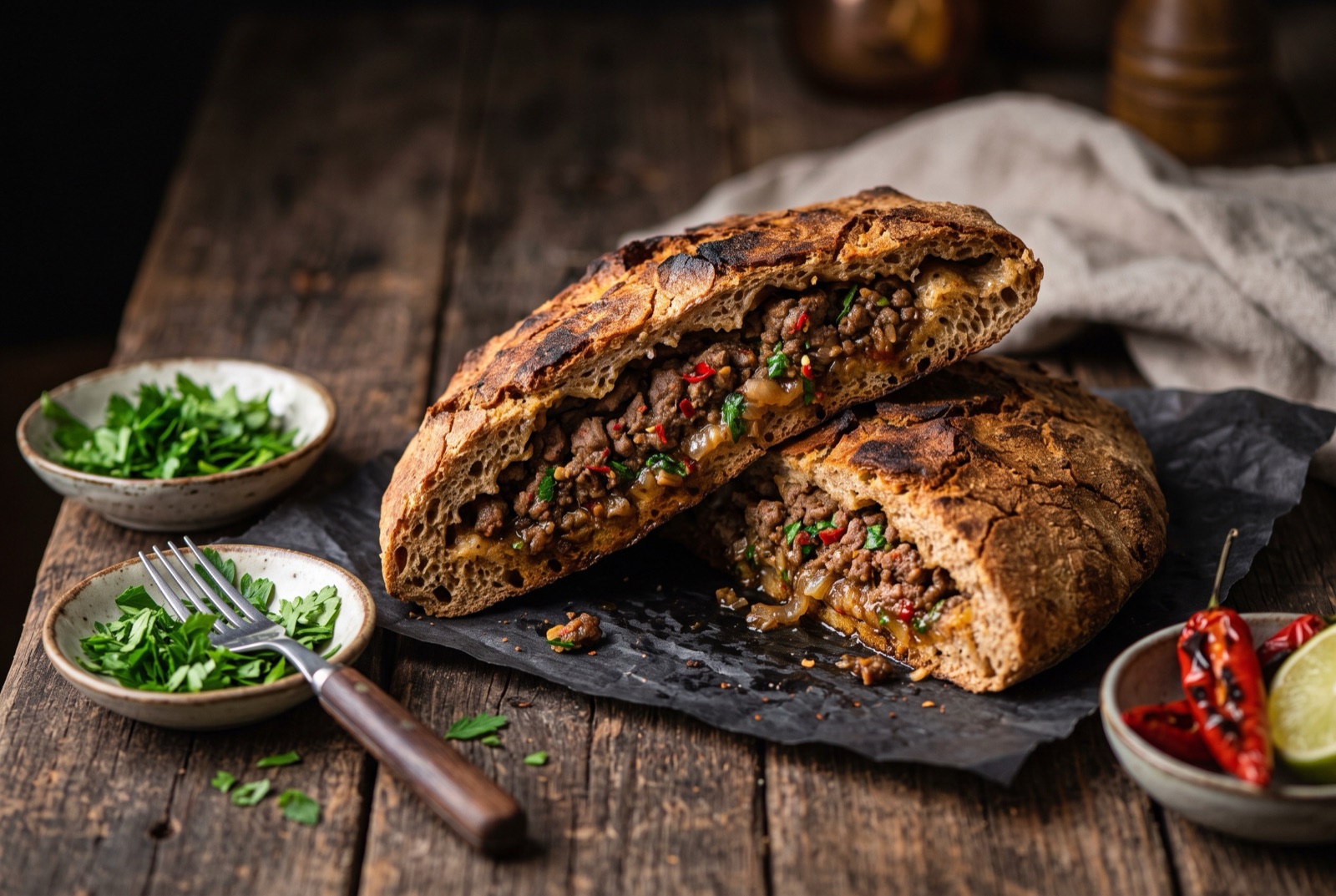
Egypt50 min
Hawawshi
Egyptian Spiced Meat Stuffed Bread
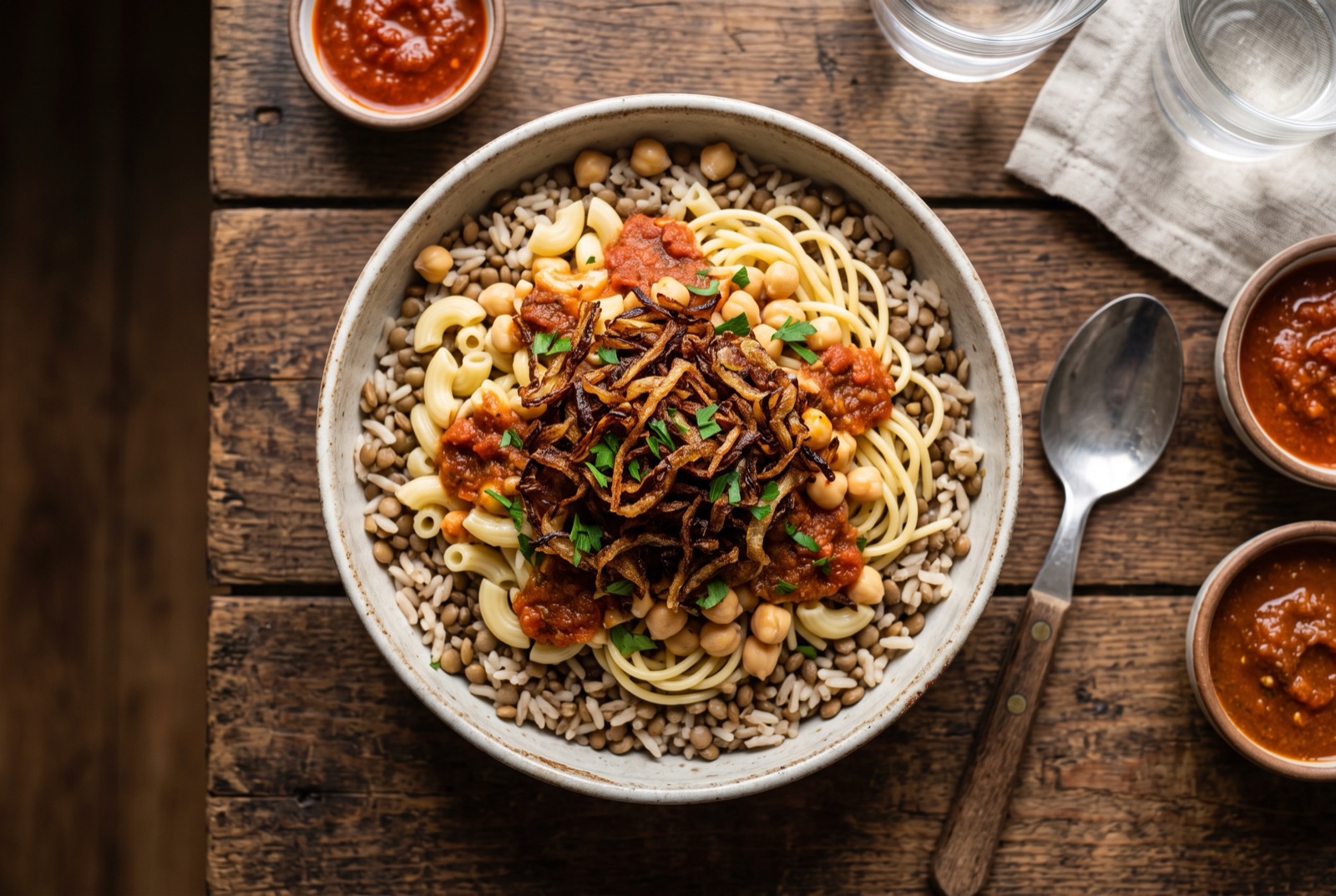
Egypt1 hr 5 min
Koshari
Egyptian Rice, Lentil and Pasta Bowl
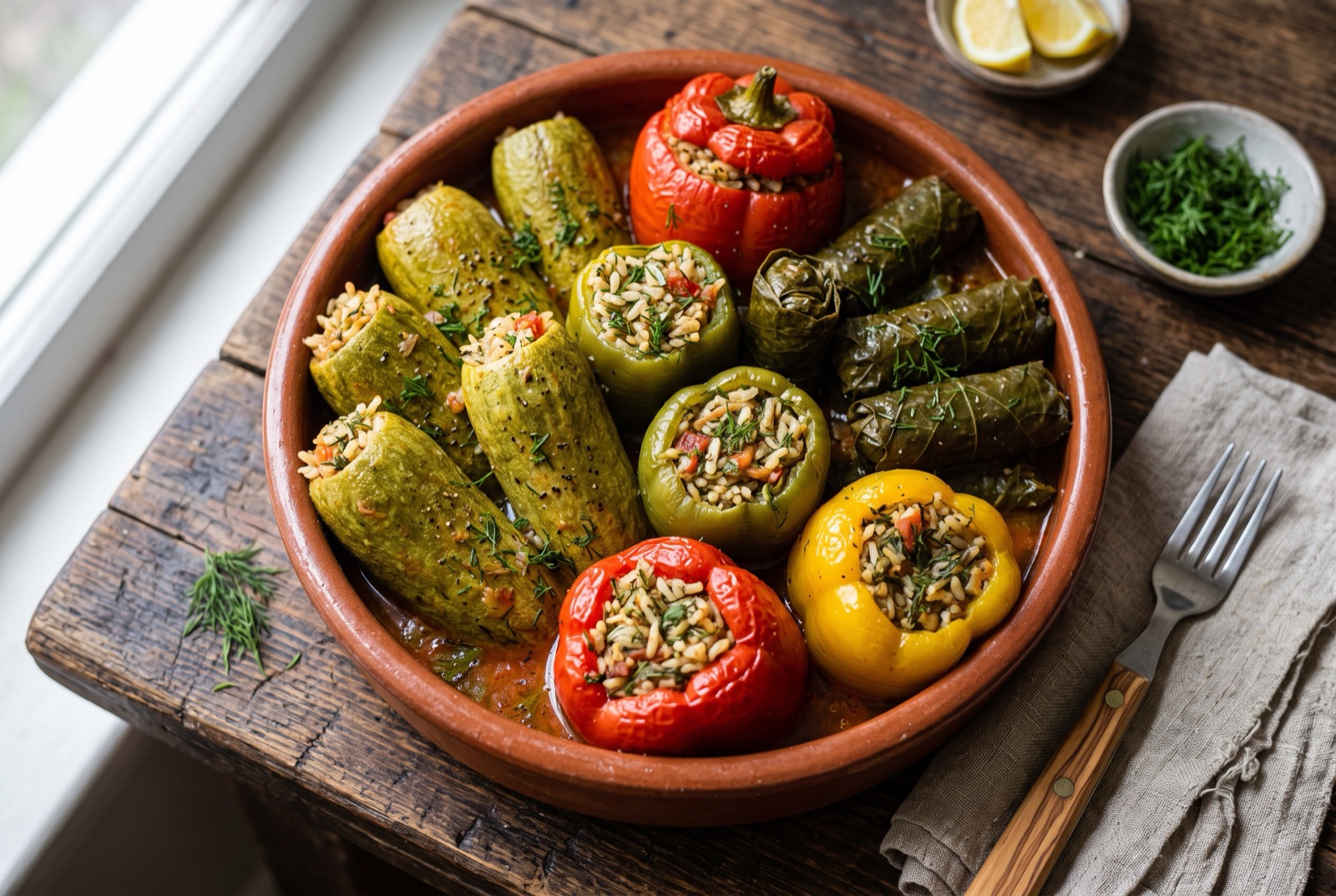
Egypt2 hr 5 min
Mahshi
Egyptian Stuffed Vegetables in Tomato Broth
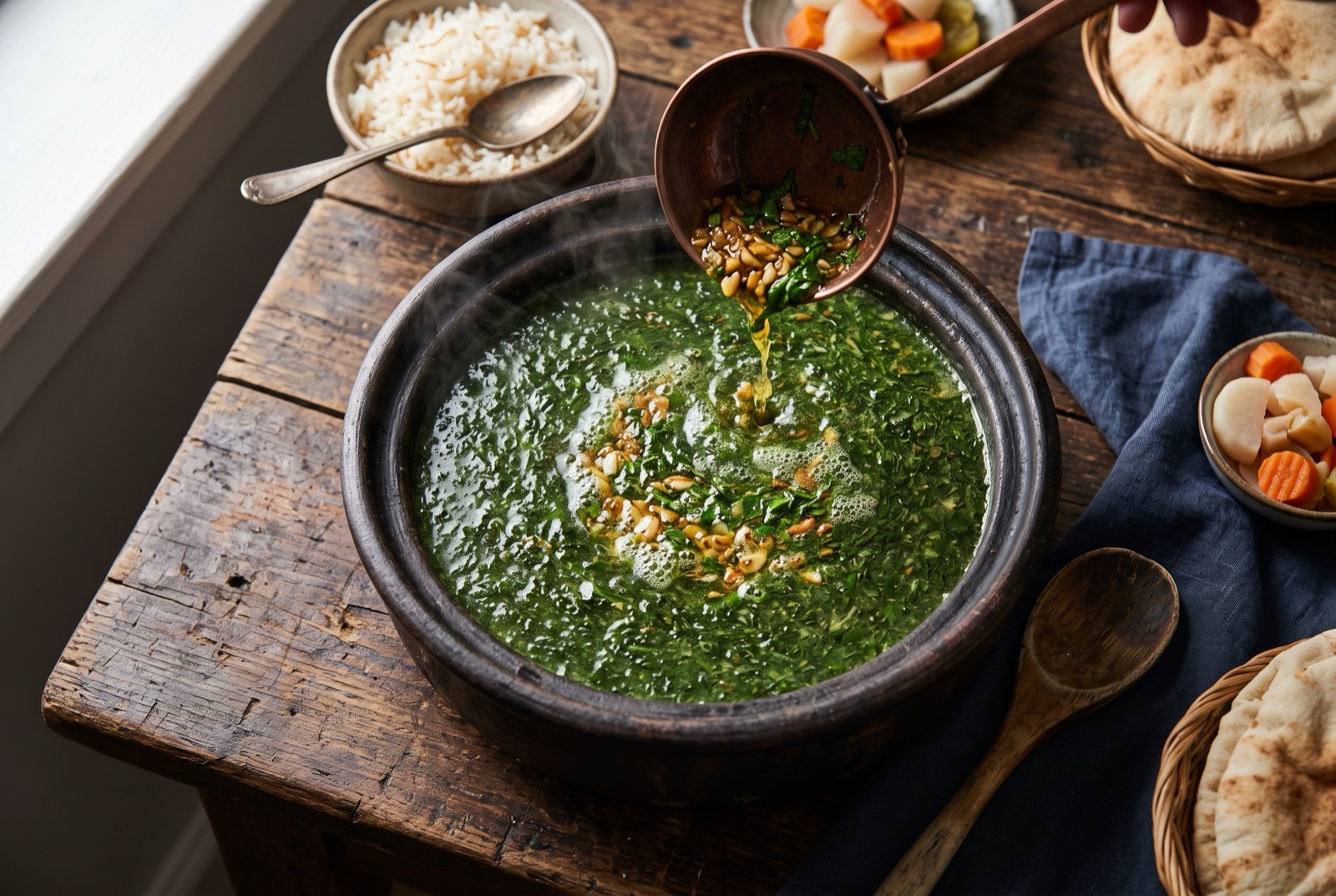
Egypt1 hr 30 min
Molokhia
Egyptian Jute Leaf Soup with Garlic Tasha
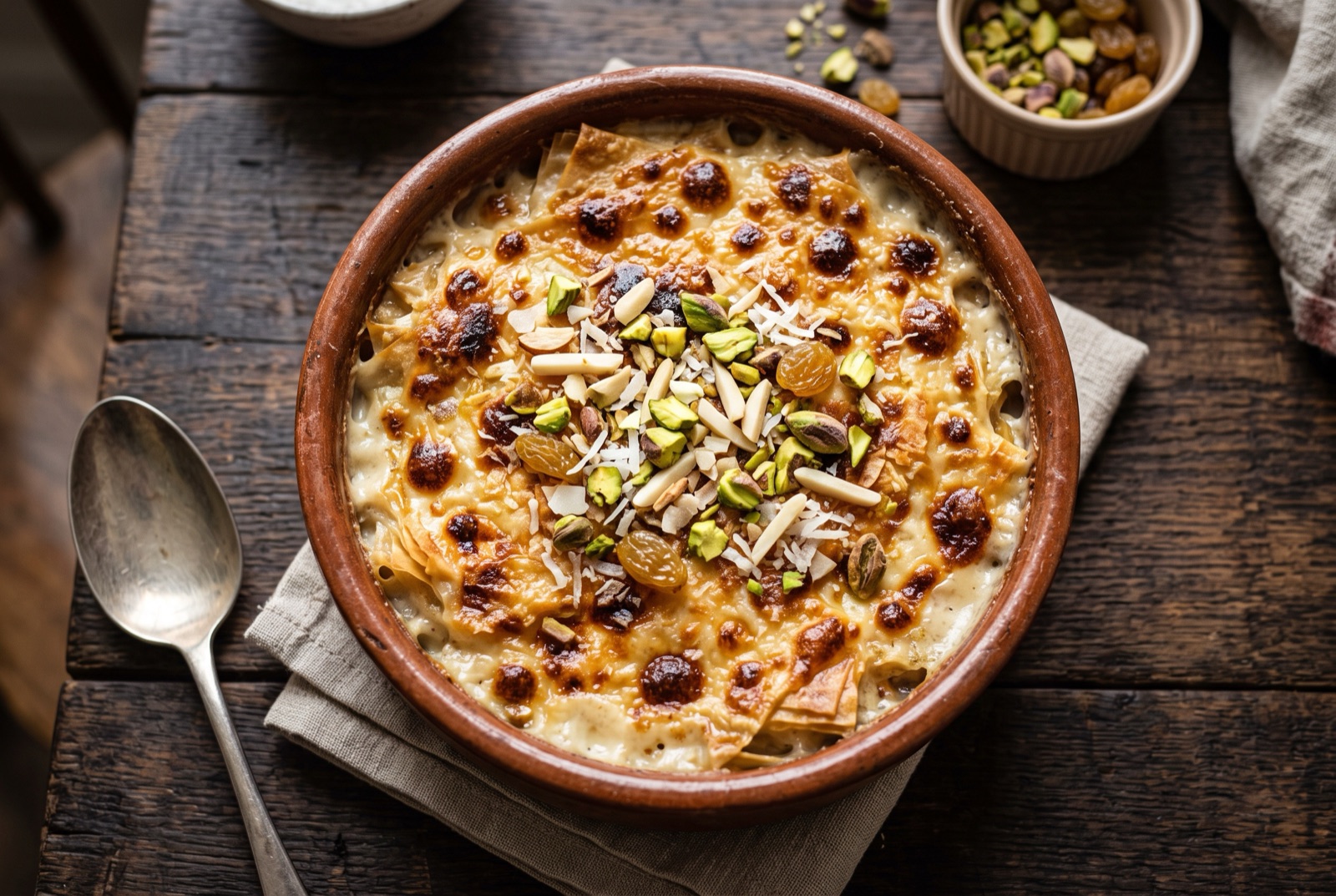
Egypt1 hr 15 min
Om Ali
Egyptian Bread Pudding with Nuts and Cream
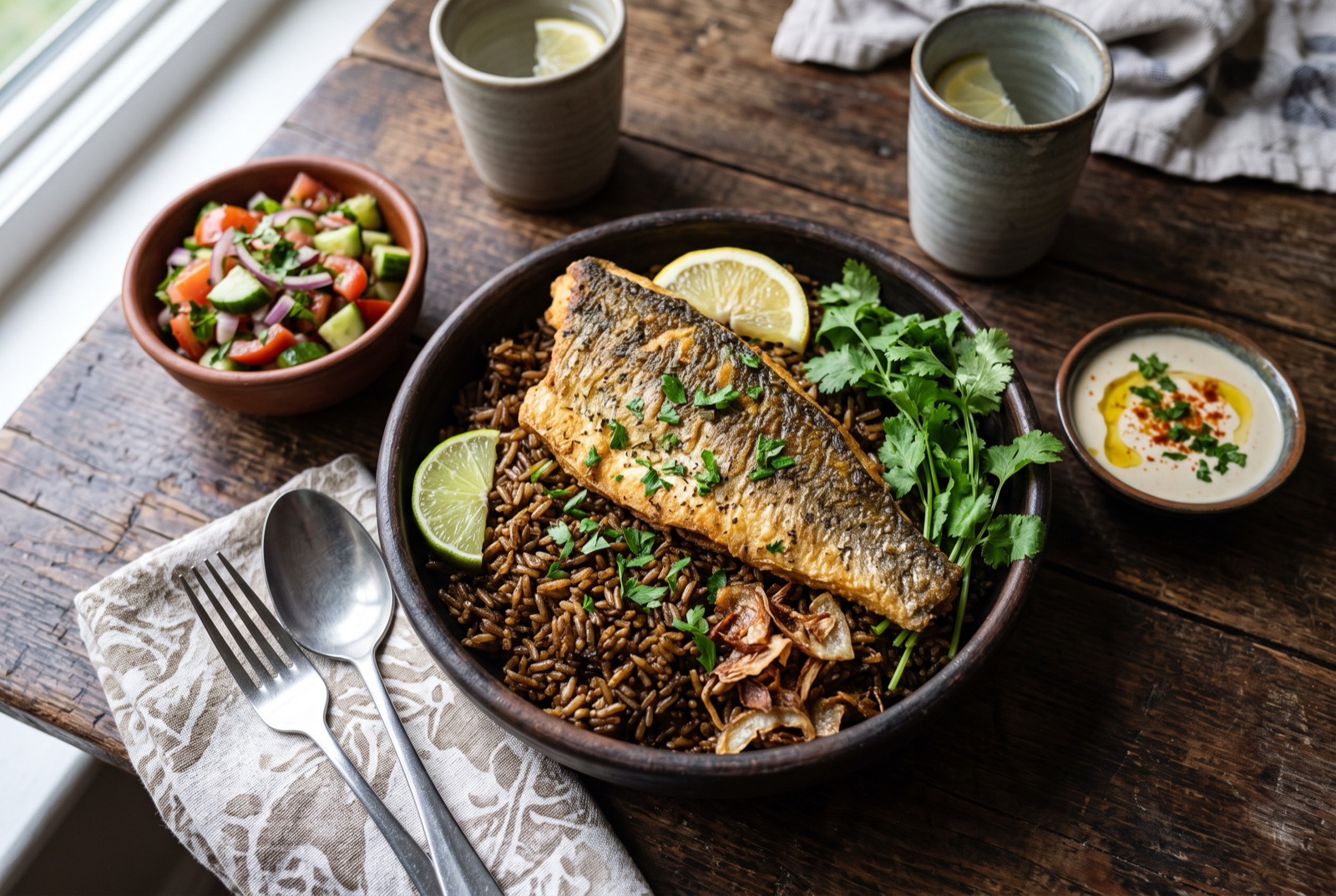
Egypt1 hr 35 min
Sayadeya
Alexandrian Fisherman's Rice with Fish
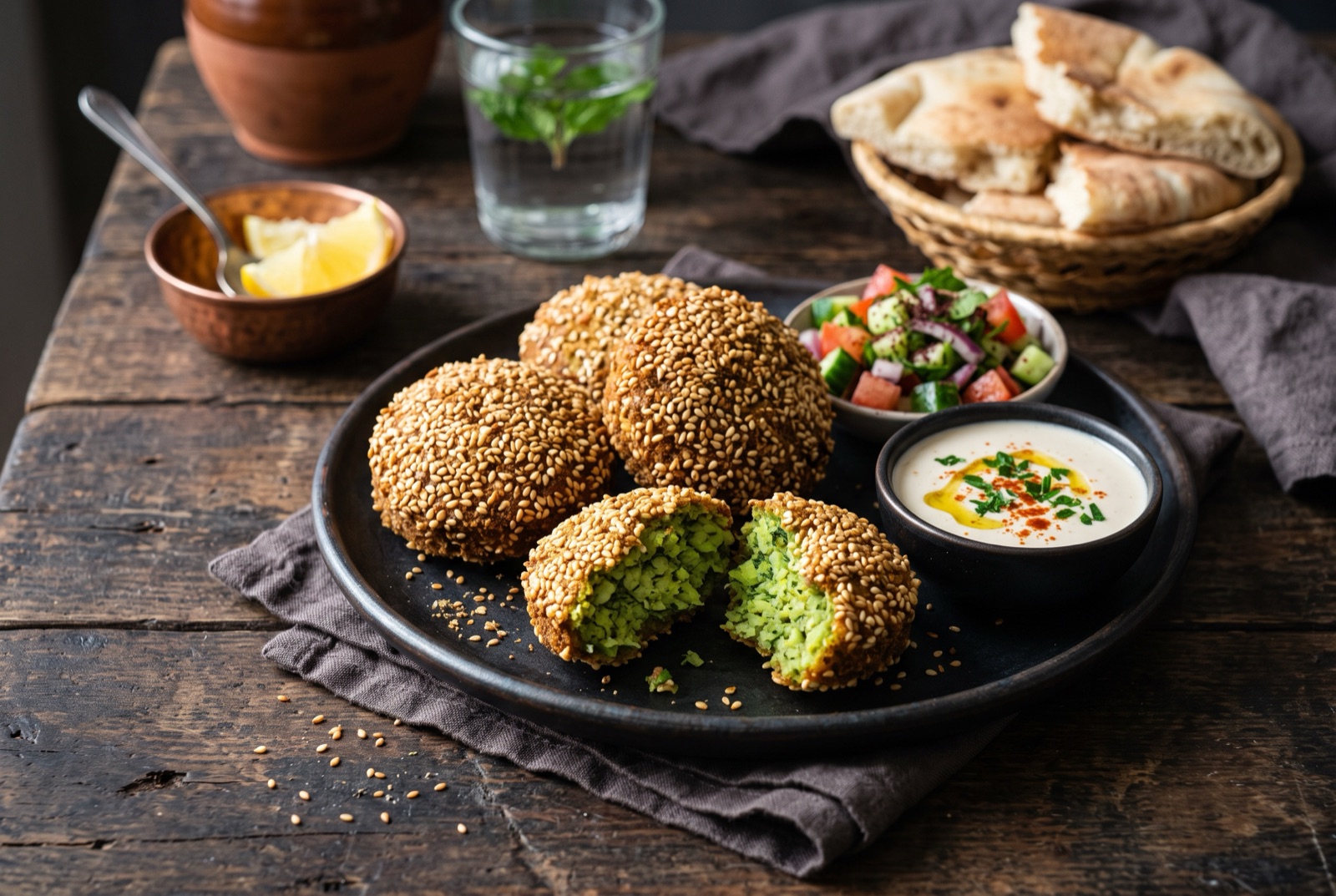
Egypt1 hr 45 min
Ta'ameya
Egyptian Fava Bean Falafel
Keep traveling.
Egypt sits in North Africa, and its kitchen shares borders as well as ingredients with Algeria and Cameroon.
 Algeria
 Cameroon