Om Ali.
Egyptian Bread Pudding with Nuts and Cream
أم علي · Umm ʿAlī · say it: oom AH-lee
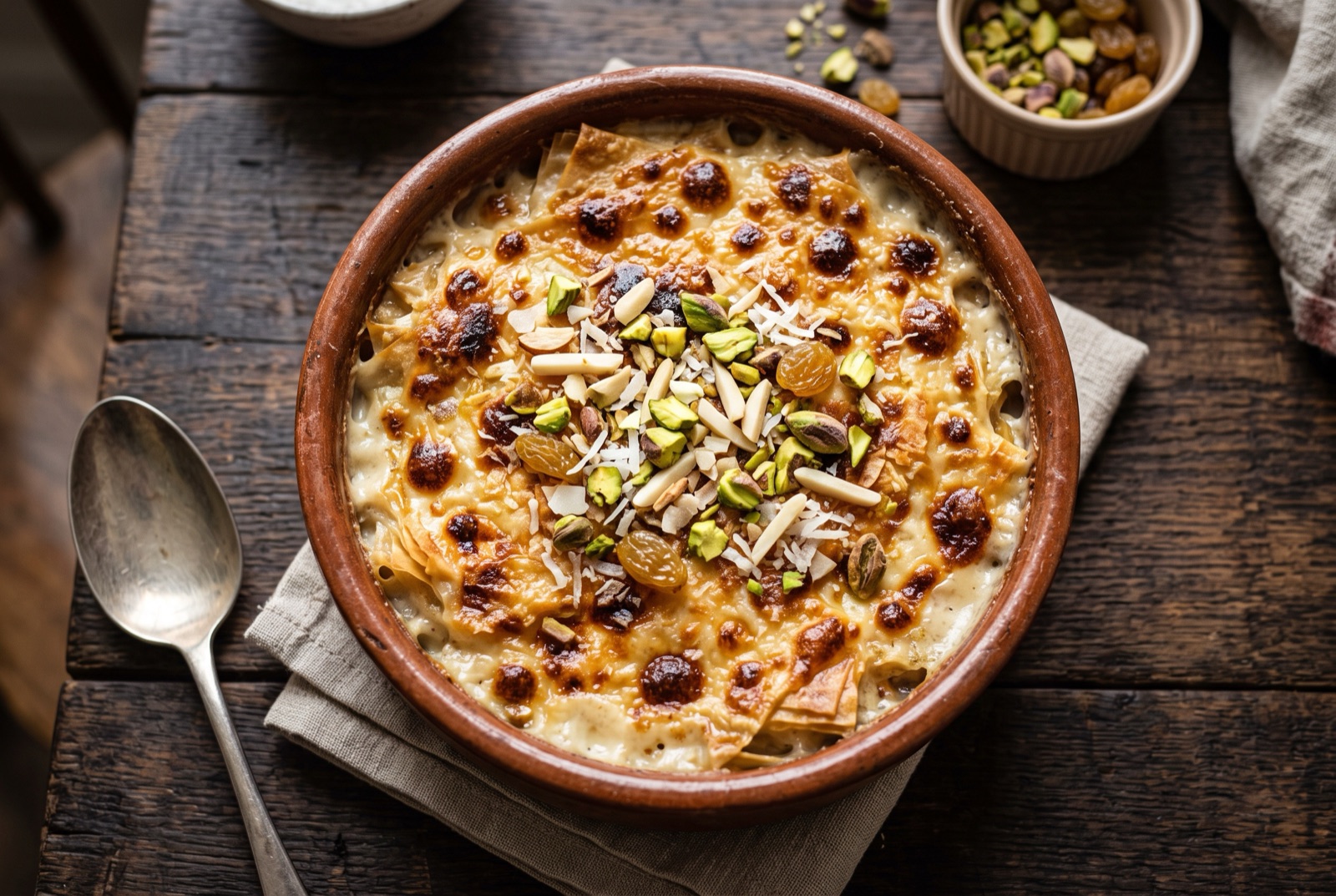
Om Ali is a hot milk pudding built on torn pastry rather than sponge or rice. Puff pastry or filo is baked until it is dry and crackling, broken into a dish with pistachios, almonds, coconut and raisins, flooded with sweetened milk and then baked again under a layer of cream until the surface blisters dark and the edges bubble. Underneath, the pastry goes soft and custardy without dissolving, so each spoonful has both textures. It is warm, sweet, milky and nutty rather than sugary-sharp, it takes about fifteen minutes of actual work, and it is meant to be served straight from the dish while it is still too hot to eat politely.

- Gate
- Egypt
- Prep
- 15 min
- Cook
- 50 min
- Total time
- 1 hr 15 min incl. 10 min rest
- Serves
- 6
- Status
- Easy
- Nutrition / serving · estimated
- Calories 640 kcal
- Protein 13 g
- Carbs 58 g
- Fat 40 g
- Fiber 3 g
- Sugar 34 g
- Sodium 230 mg
Why this recipe works.
- Bakes the pastry to a genuine crisp first, which is what stops the finished pudding turning into a milky paste.
- Heats the milk before it goes over the pastry, so the pudding sets in the oven instead of slowly warming through.
- Toasts the nuts separately, a small step that changes them from decoration to something you can actually taste.
- Comes together in about fifteen minutes of work and uses ingredients that live in the cupboard.
Ingredients.
10 itemsThe base
The filling
The milk
The top
Equipment
- Shallow baking dish, about 25 x 20 cm
- Baking tray
- Saucepan
Instructions.
Bake the pastry dry
Heat the oven to 200°C. Unroll the puff pastry onto a lined tray, prick it all over with a fork and bake for 18 to 20 minutes, until it is deep gold, risen and completely dry — a corner should crackle and shatter rather than bend when you press it.
Tip Colour is not enough on its own. If the middle still feels soft, give it another 4 minutes; that softness turns to slime later.
Toast the nuts and coconut
Spread the pistachios, almonds and coconut on a second tray and toast for 5 to 6 minutes in the same oven, shaking once. Pull them out as soon as the coconut turns pale gold and the kitchen smells nutty — coconut goes from toasted to burnt in under a minute.
Heat the milk
Warm the milk with the sugar and cinnamon in a saucepan over medium heat, stirring until the sugar dissolves. Take it off as soon as it steams and small bubbles ring the edge of the pan; do not let it boil. Stir in the rose water if using.
Fill the dish
Break the cooled pastry into rough walnut-sized pieces straight into a shallow baking dish. Scatter the toasted nuts, coconut and raisins through the layers as you go, keeping a spoonful of nuts back for the top.
Soak
Pour the hot milk slowly over the pastry until the liquid comes level with the top of it, and press everything down with the back of a spoon. Leave it 2 minutes — the pastry should darken and swell but still hold its edges rather than collapsing into mush.
Tip Stop pouring when the milk reaches the top of the pastry, even if you have milk left. Extra liquid is the main cause of a sloppy pudding.
Cream and bake
Spread the cream over the surface in an uneven layer, leaving a few gaps, and scatter the reserved nuts on top. Bake at 200°C for 20 to 25 minutes, until the cream has blistered into dark gold patches and the milk is bubbling thickly around the edges of the dish.
Rest briefly and serve hot
Let the dish stand for 10 minutes so the middle sets enough to spoon, then serve it hot straight from the dish. The spoon should meet a crisp top, a soft custardy middle, and whole pieces of pastry that still have some chew.
Tip Any longer than about twenty minutes and the top loses its crackle, so bring it to the table as soon as it stops spitting.
Tips from our kitchen.
- Bake the pastry until it is dry all the way through and crackles when pressed. Any soft, doughy patches turn slimy once the milk goes on.
- Break the pastry into pieces roughly the size of a walnut. Crumbs sink and turn to sludge; large sheets stay stubbornly dry in the middle.
- Heat the milk until it steams with small bubbles at the rim, but never let it boil. Boiled milk catches on the pan base and the burnt note carries through the whole dish.
- Press the pastry down into the milk with the back of a spoon and give it two minutes to drink before the dish goes in the oven.
- Use a shallow, wide dish rather than a deep one. Depth means a soggy bottom layer and a dry top.
- Bake at a high enough heat to blister the cream in about 20 minutes. Low and slow gives you warm milk and a pale, flabby surface.
Substitutions.
- Puff pastry → Filo pastry, brushed with melted butter and baked; or croissants, torn and dried
- Filo gives a lighter, shatteringly thin result closer to the original rougag. Stale croissants make a richer, more bread-like pudding.
- Qeshta or clotted cream → Double cream whipped to soft peaks, or mascarpone loosened with a little milk
- The top layer needs to be thick enough to sit on the surface rather than sink. Pouring cream disappears into the milk and you lose the blistered crust.
- Pistachios and almonds → Any mix of hazelnuts, walnuts, cashews or pine nuts — or toasted oats and extra coconut for a nut-free version
- The nut-free version works but loses the crunch, so add a little more coconut and toast it well.
Variations.
- Om Ali bil qeshta
- The restaurant version: a thicker layer of proper qeshta spread edge to edge before baking, so the surface browns into a mottled crust rather than patches.
- Individual dishes
- Assembled in small clay or metal ramekins and baked for 12 to 14 minutes, which is how it is usually served in Egypt and gives more crisp top per portion.
- Om Ali with condensed milk
- Replace the sugar with 150 ml of sweetened condensed milk stirred into the hot milk. Sweeter, denser and noticeably more caramel in flavour.
Storage & reheating.
Om Ali is best within twenty minutes of leaving the oven, while the top is still crisp and the middle is molten. Leftovers keep 2 days refrigerated and set firm as they cool; reheat in a 180°C oven for 10 minutes with a splash of milk poured over to loosen it, and the top re-crisps reasonably well. Do not use a microwave, which makes the pastry rubbery. It does not freeze — the milk separates and the pastry turns to paste on thawing. You can, however, bake the pastry days ahead and store it in a tin.
Serve with
Nothing much — it is rich enough on its own. A glass of unsweetened mint tea or Turkish coffee alongside cuts the sweetness.
The story behind Om Ali.
The name means Ali's mother, and the story most often attached to it involves thirteenth-century Cairo court politics — a dish supposedly ordered to celebrate the death of a rival. That account circulates in cookbooks, restaurant menus and family retellings, but it has no solid documentary footing and is best treated as folklore that has attached itself to a popular sweet rather than as history. What can be said with confidence is that the dish is thoroughly Egyptian in practice, served in homes and restaurants nationwide and understood as the country's signature dessert.
In structure it belongs to the wide family of bread-and-milk puddings that exist wherever there is stale bread and dairy, from British bread and butter pudding to Levantine aish el saraya. What separates the Egyptian version is what goes on top and inside: qeshta, the thick clotted cream skimmed from simmered buffalo or cow milk, spread over the surface before the final bake, and a heavy load of nuts, coconut and raisins folded through. The original base was rougag, a thin sheet of unleavened dough dried until brittle; puff pastry replaced it in most kitchens because it is sold ready-made and behaves the same way once it has been baked hard.
It is a dessert with an occasion attached. Om Ali turns up at Ramadan iftar tables, at family gatherings, and on almost every Egyptian restaurant menu, usually arriving in an individual clay or metal dish still spitting at the edges. Because it is assembled from things that keep — pastry, nuts, dried fruit, milk — it is also the dessert people make when guests appear without much warning, which may be the most accurate explanation of why it is everywhere.
Questions, answered.
Why did my om ali come out soggy?
The pastry was not baked dry enough before the milk went on, or too much milk was used. Bake the pastry until it crackles under a finger and looks dry all the way through, and pour in only enough hot milk to come level with the top of the pastry rather than covering it — it will soak up more than you expect during the bake.
Can I use filo instead of puff pastry?
Yes, and it is arguably closer to the original, which used thin dried sheets of unleavened dough called rougag. Brush the filo sheets with melted butter, bake until golden and brittle, then crumple them into the dish. The result is lighter and more delicate than the puff pastry version, which is denser and richer.
Is om ali the same as bread and butter pudding?
They share a mechanism — starch soaked in sweetened dairy and baked — but not much else. Om ali uses baked pastry rather than sliced bread, contains no eggs, is loaded with nuts, coconut and raisins, and is finished with a thick layer of clotted-style cream that blisters under high heat. It is also served much hotter and looser.
Can I make om ali dairy-free?
It works with oat or almond milk, which have enough body to hold up, plus a coconut cream layer on top instead of qeshta. Use a puff pastry made with vegetable fat and check it contains no butter. The flavour shifts noticeably towards coconut, but the texture and the blistered top come out much the same.
How far ahead can I prepare it?
Bake the pastry up to three days ahead and keep it in an airtight tin, and toast the nuts at the same time. Assembly and baking take about 25 minutes from cold, so the practical approach is to have everything ready and put the dish in the oven when you sit down to the main course.
You might also like.
All recipes →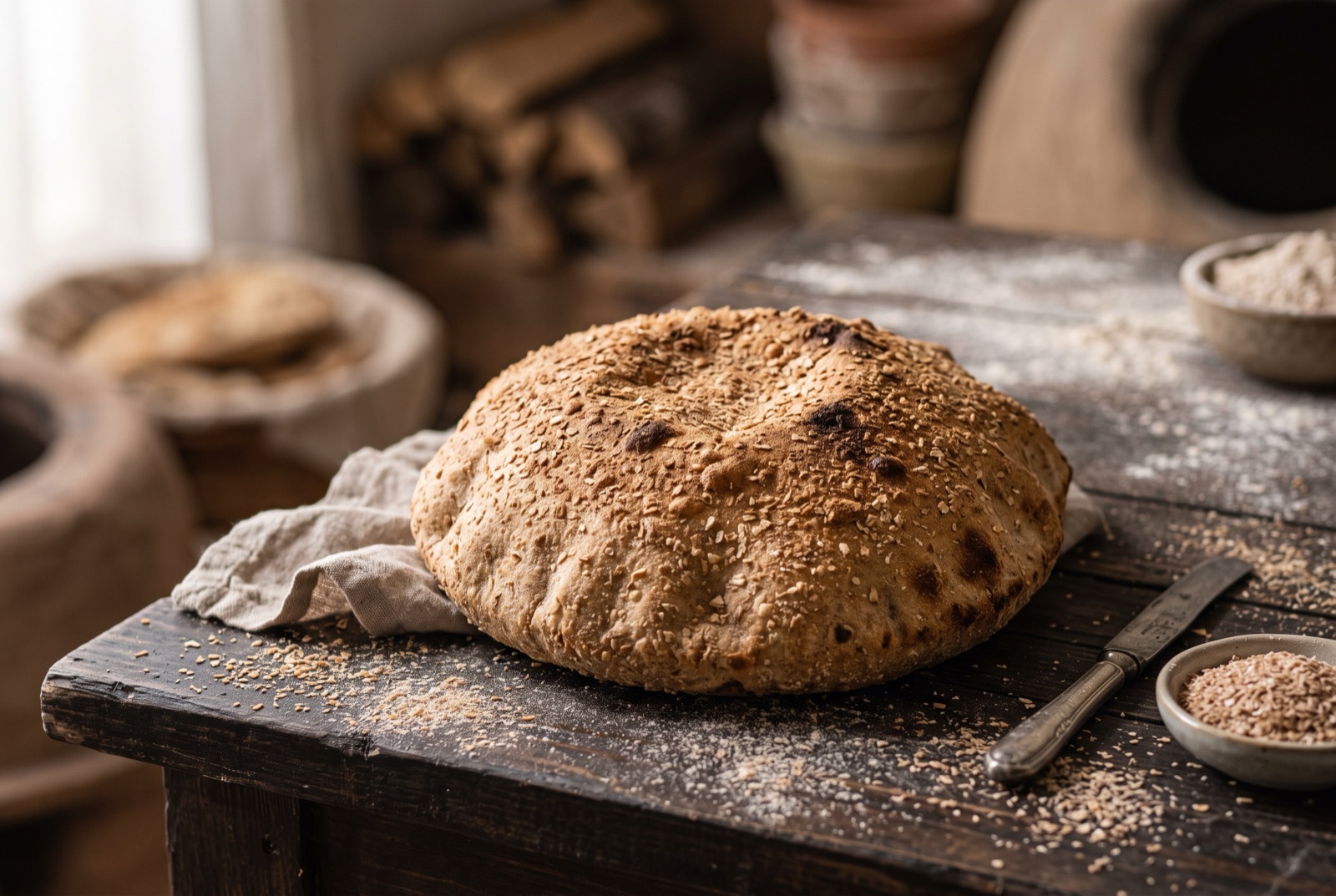
Keep exploring Egypt.
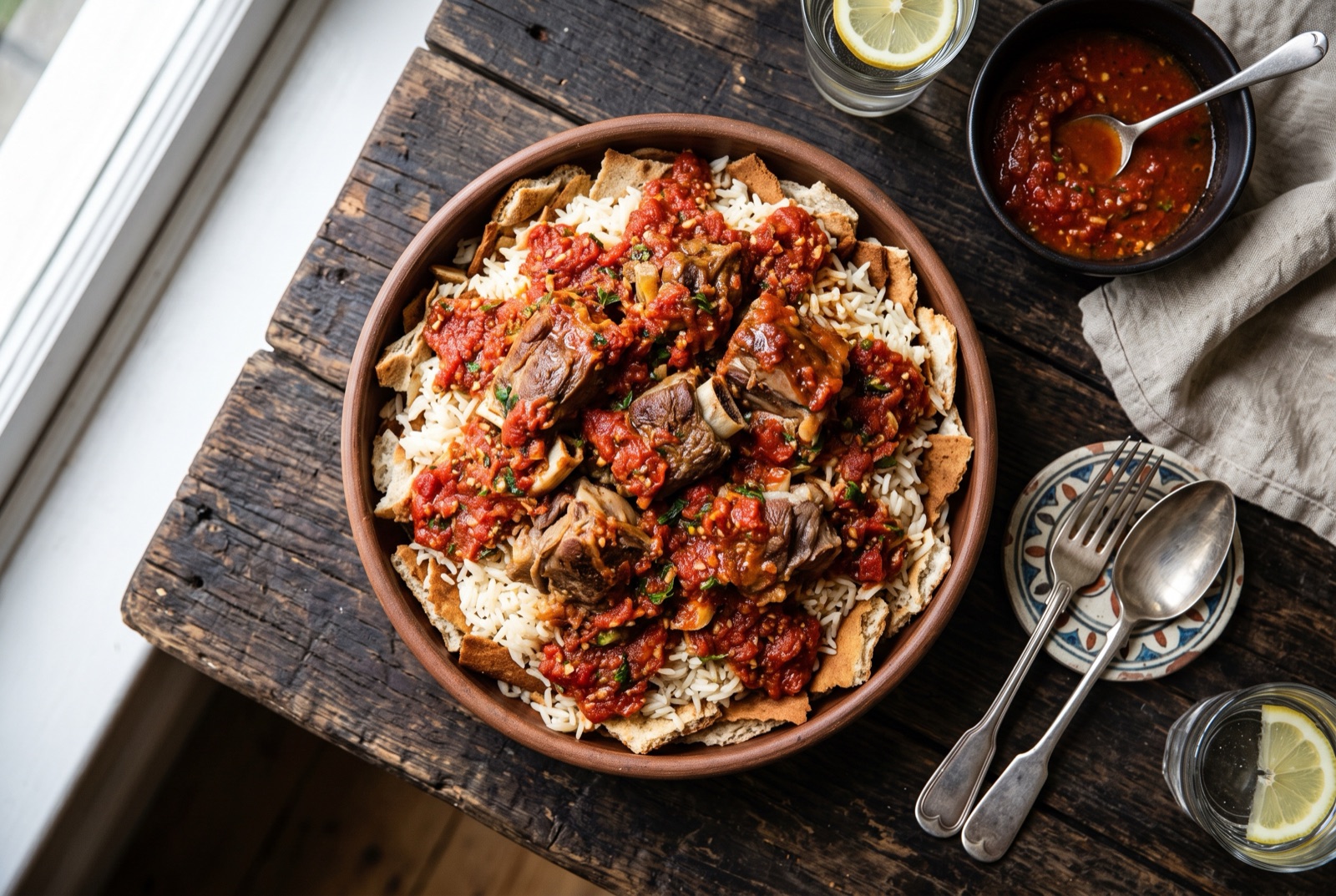
Egypt has 9 more dishes in the atlas — Aish Baladi and Fattah, and 7 more.
Recipe by The DishRoute Kitchen · published August 20, 2026 · updated August 20, 2026