Ethiopia.
ኢትዮጵያ
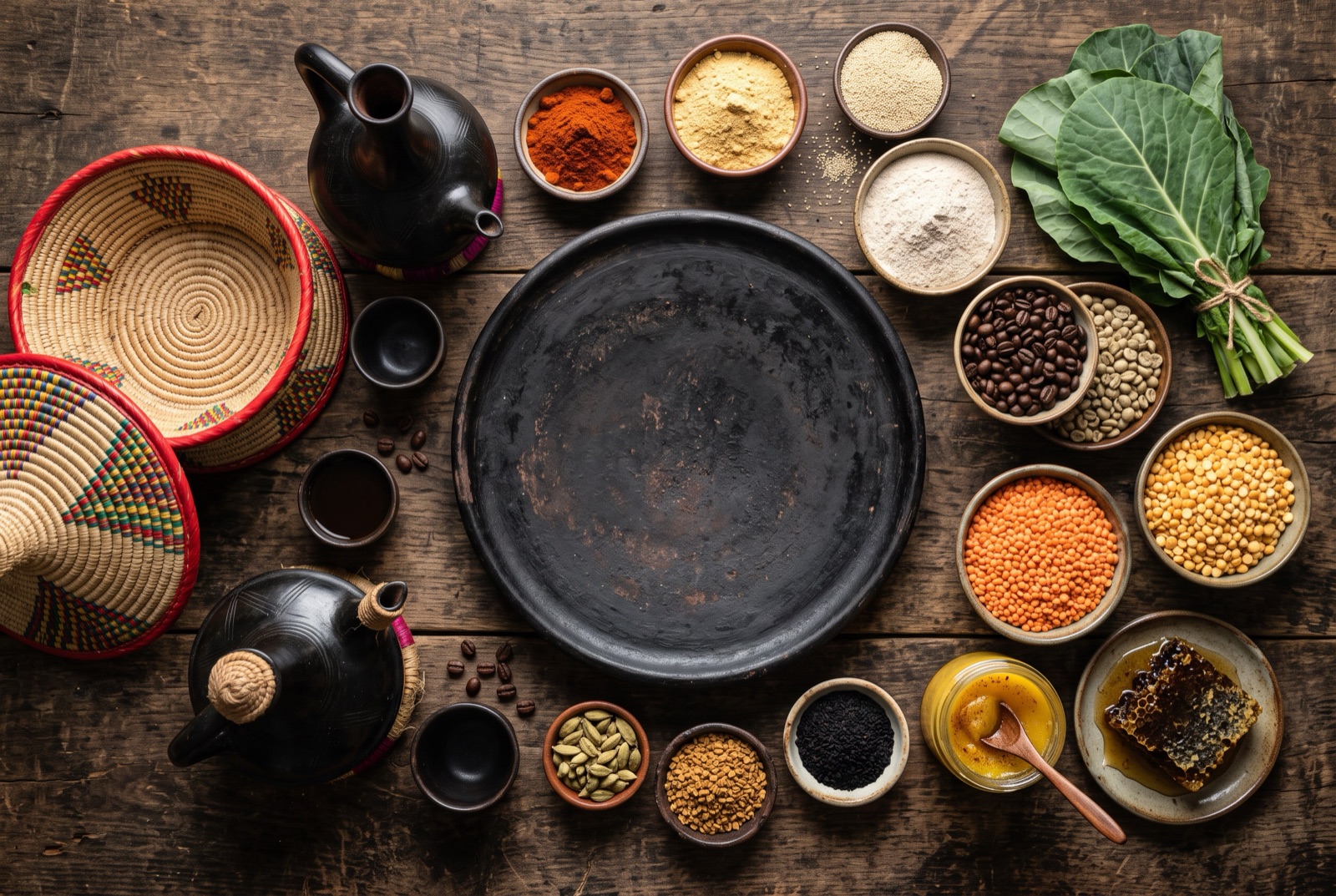
Ethiopian cooking is organised around a single object: injera, the wide sour flatbread of fermented teff that arrives as plate, cutlery and side dish at the same time. Stews — wat — are ladled straight onto it, and everyone tears pieces from the near edge to scoop. Two seasoning registers set the flavour axis. Berbere, dried chilli ground with fenugreek, korarima, ajwain and a dozen more spices, gives the red stews their heat and their depth; alicha is the mild register, built on turmeric, ginger and green chilli with no chilli powder at all. Fat carries as much identity as spice, and it is usually niter kibbeh, butter clarified with aromatics until it smells of cardamom and wild herbs. Because the Orthodox calendar sets aside more than half the year for fasting from every animal product, the country also holds one of the deepest vegan repertoires anywhere: lentils, split peas, chickpea flour and greens treated with the seriousness other kitchens reserve for meat.

- Continent
- AfricaHorn of Africa
- Recipes in atlas
- 10
- Must-try dishes
- 3
- Pantry staples
- 10
Start with the classics.
Must tryThe dishes that explain the Ethiopia kitchen fastest — if you cook only a few things from this page, cook these.
Inside the Ethiopia kitchen.
Start with the grain. Teff is a tiny highland cereal grown mostly in Ethiopia and Eritrea, and its flour ferments into the batter that becomes injera. The batter sours for two to three days, powered by a saved liquid starter called ersho, then goes onto a wide clay griddle, the mitad, poured in a spiral from the rim inwards. It cooks on one side only, and steam pushing up through the fermented batter leaves the surface covered in small craters — the "eyes" that tell a cook the sheet is right. The result is soft, tangy and slightly rubbery, and its sourness is not incidental: it is the acid that balances the fat and chilli of everything served on top.
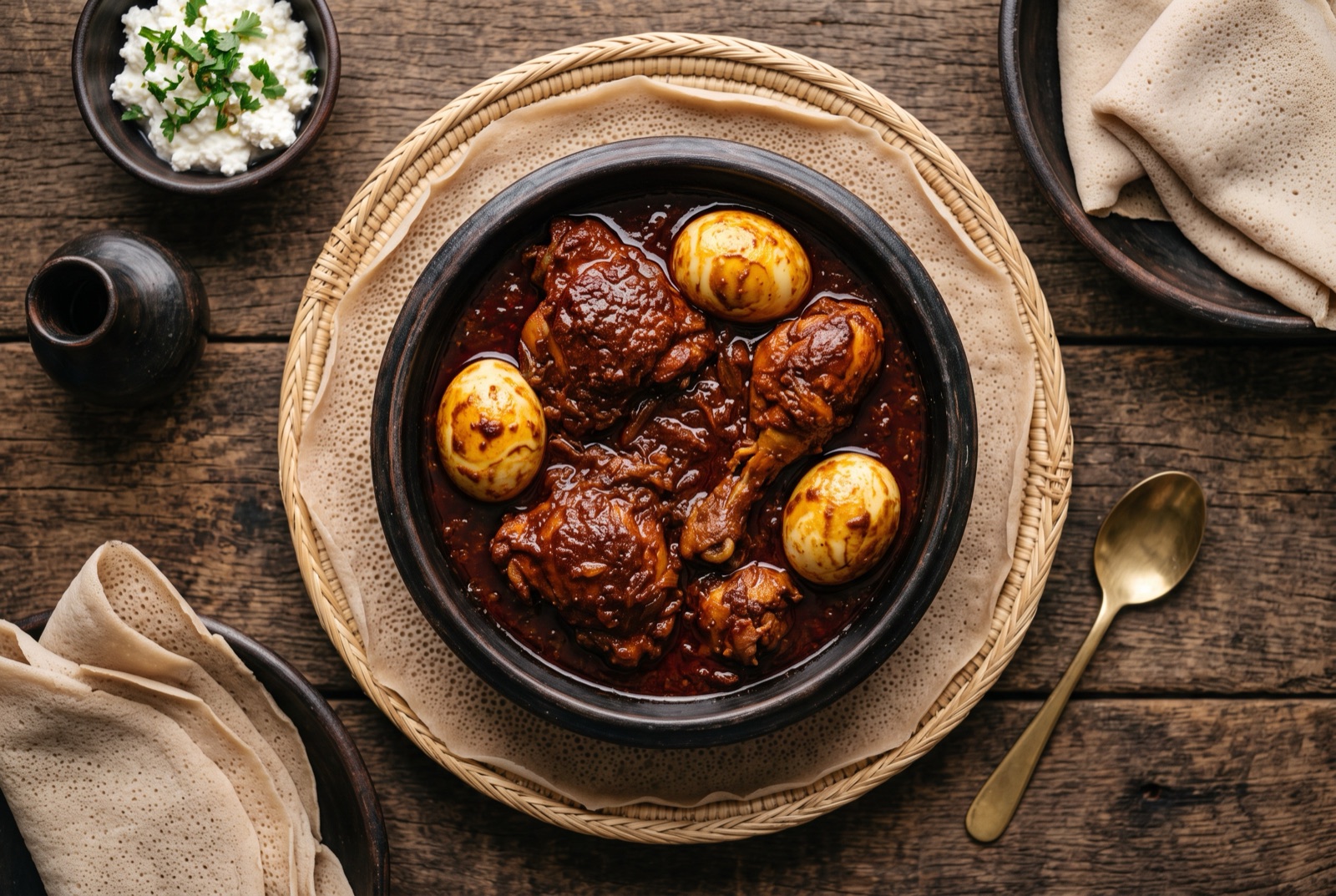
The stews divide into two families. Key wat is the red kind, where berbere is fried into onions until the mixture darkens and the fat rises to the surface — doro wat and misir wat both belong here. Alicha is the yellow kind, where turmeric, ginger and slit green chillies do the work and the finished stew tastes gentler and more aromatic. Both start the same way, with a mountain of finely chopped onion cooked down in a dry pan before any fat goes in, which is the single most characteristic move in the whole cuisine. That dry stage collapses the onions into a sweet paste and is why an Ethiopian stew tastes thick without any flour, cream or stock.
Fasting is the other structural force. Wednesdays and Fridays, the fifty-five days of Lent, and several other periods in the Orthodox Tewahedo calendar exclude meat, dairy and eggs entirely, which is why the everyday plate in much of the country is beyaynetu: a circle of small vegan stews — shiro, misir wat, gomen, cabbage and potato alicha, split peas, beetroot — spooned around one sheet of injera. Restaurants build their whole weekday trade on it, and a fasting plate is never treated as the lesser option.
Regional variation runs deeper than the injera-and-wat picture suggests. The Gurage people of the south build their kitchen on enset, the false banana whose fermented pulp becomes kocho, a dense bread eaten with kitfo and fresh cheese. Tigray, sharing a border and much of its cooking with Eritrea, makes tihlo — roasted barley dough rolled into balls and dipped into stew with a wooden spear. Harar and the Muslim east lean on trade-route spicing and pastry, while the Afar and Somali lowlands are pastoralist, with camel and goat milk, rice and meat rather than teff. Pasta appears everywhere, a genuine leftover of the brief Italian occupation of the late 1930s.
Drinks close the circle. Ethiopia is the botanical home of Coffea arabica, and coffee is prepared as a ceremony rather than a beverage: green beans roasted in the room, ground by hand, brewed in a clay jebena and poured in three successive rounds. Alongside it are the fermented drinks — tella, a cloudy home-brewed barley or sorghum beer, and tej, honey wine bittered with gesho twigs and served in a round-bottomed glass flask.
Signature pantry.
10 staplesThe ingredients this cuisine cannot function without.
- teff
- berbere
- niter kibbeh (spiced clarified butter)
- red lentils and split peas
- chickpea and broad bean flour (shiro)
- collard greens
- korarima (Ethiopian cardamom)
- fenugreek
- honey
- coffee
How people eat in Ethiopia.
Meals are communal in the most literal sense: one sheet of injera is laid over a woven mesob or a shared tray, the stews are spooned onto it in a ring, and everybody eats from the same surface with the right hand, tearing bread from the edge nearest them rather than reaching across. Cutlery is absent by design, and so are individual plates. Gursha — placing a rolled mouthful directly into someone else's mouth — is a gesture of affection between family and close friends, and refusing it is unkind rather than polite. Fasting days shape what appears on the tray more than any menu does. Coffee follows, brewed on the spot and poured in three rounds, and leaving before the third round is considered a small insult.
Regional kitchens.
Ethiopia cooks 4 distinctly different ways depending on where you stand — here is what changes between them.
- R1Amhara and Tigray highlands
- Teff country and the heartland of the injera-and-wat table, from doro wat at Easter to the vegan fasting platters eaten most weekdays. Tigray shares much of its repertoire with neighbouring Eritrea and adds tihlo, roasted barley dough eaten with a wooden spear.
- R2Gurage and the enset belt
- South of Addis Ababa the staple is not teff but enset, the false banana whose buried, fermented pulp becomes kocho. This is the home of kitfo, eaten with kocho and fresh ayib cheese rather than injera.
- R3Oromia and Harar
- The coffee heartland, where arabica grows wild in the forests and the ceremony is a daily fixture. Harar, a walled Muslim trading city in the east, cooks with a lighter hand on chilli and a heavier one on aromatic spice and pastry.
- R4Afar and Somali lowlands
- Hot, dry pastoralist country where camel and goat supply both milk and meat, and rice, thin fermented flatbreads and grilled meat replace the highland stew platter.
All Ethiopia recipes.
10 recipes and counting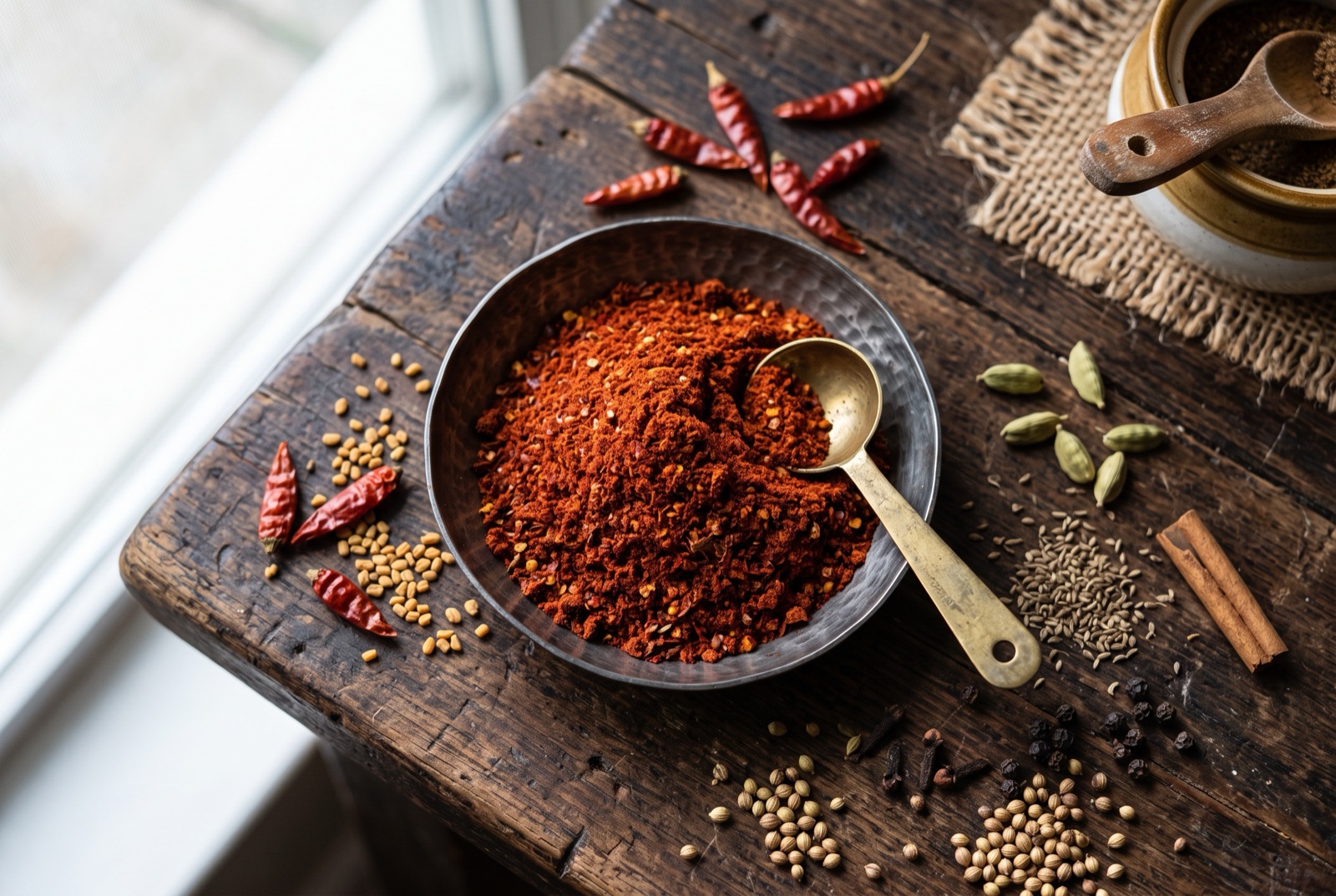
Ethiopia1 hr 5 min
Berbere
Ethiopian Red Chilli Spice Blend
Ethiopia3 hr 10 min
Doro Wat
Ethiopian Berbere Chicken Stew
Ethiopia30 min
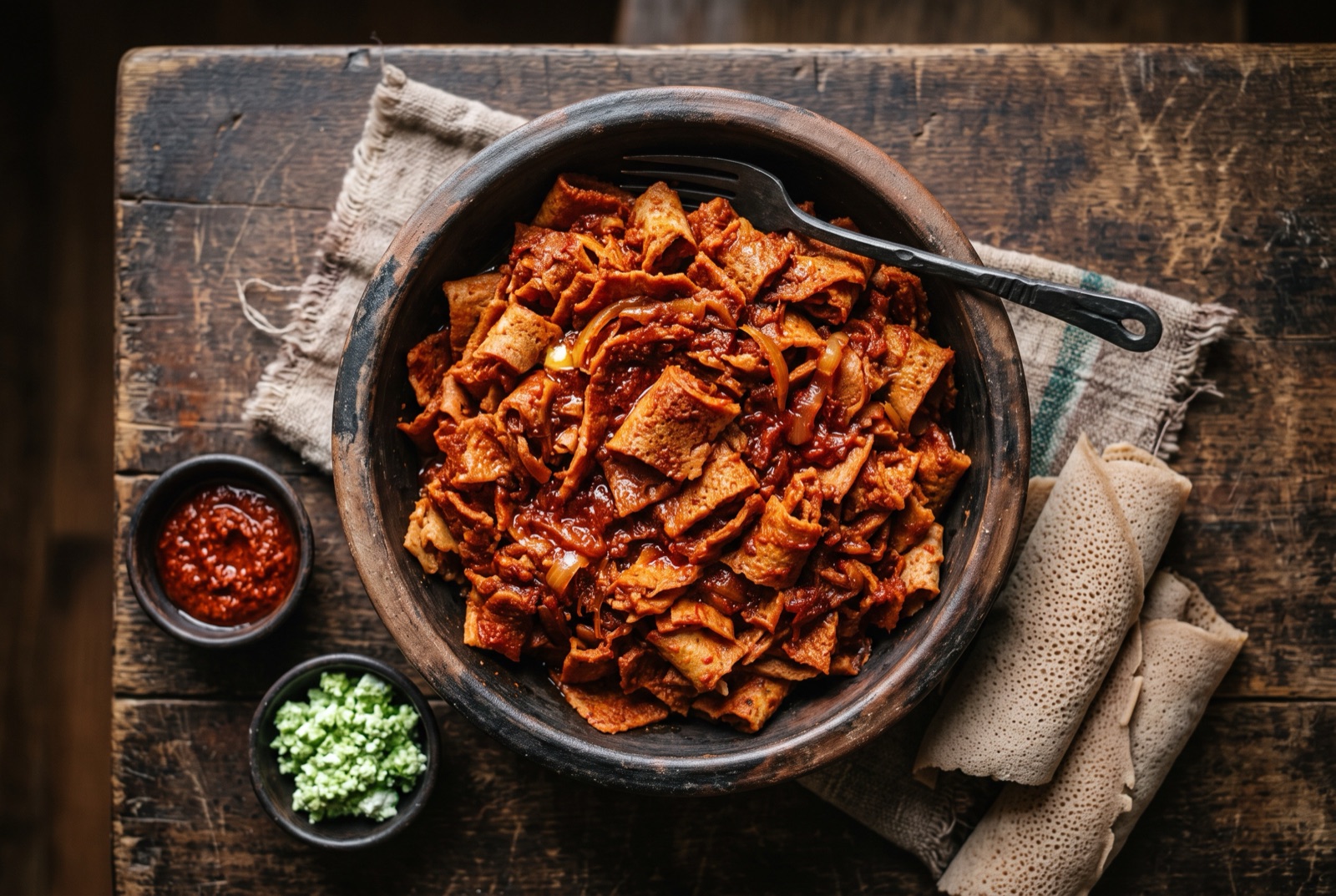
Firfir
Ethiopian Torn Injera in Berbere Sauce
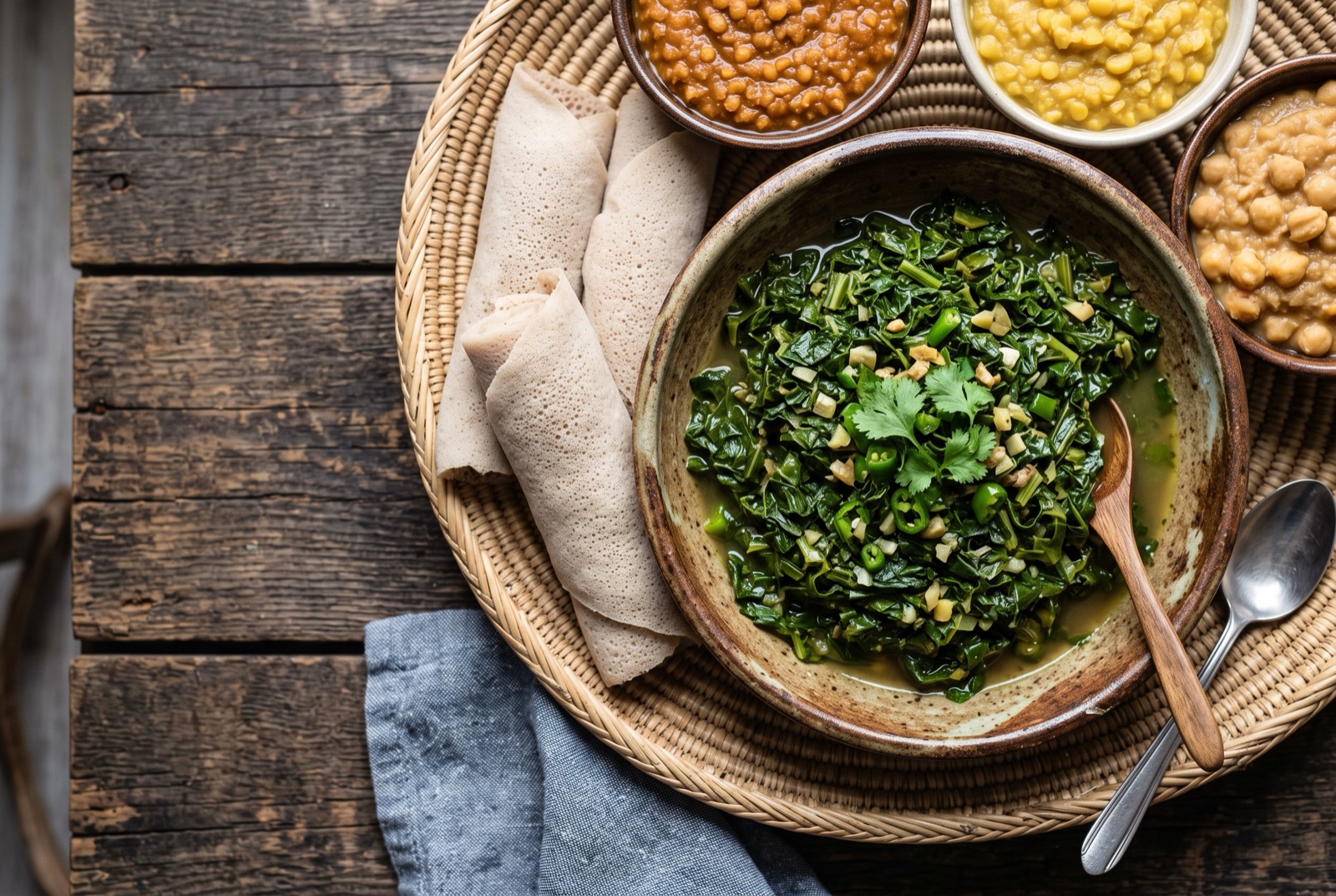
Ethiopia1 hr 5 min
Gomen
Ethiopian Braised Collard Greens
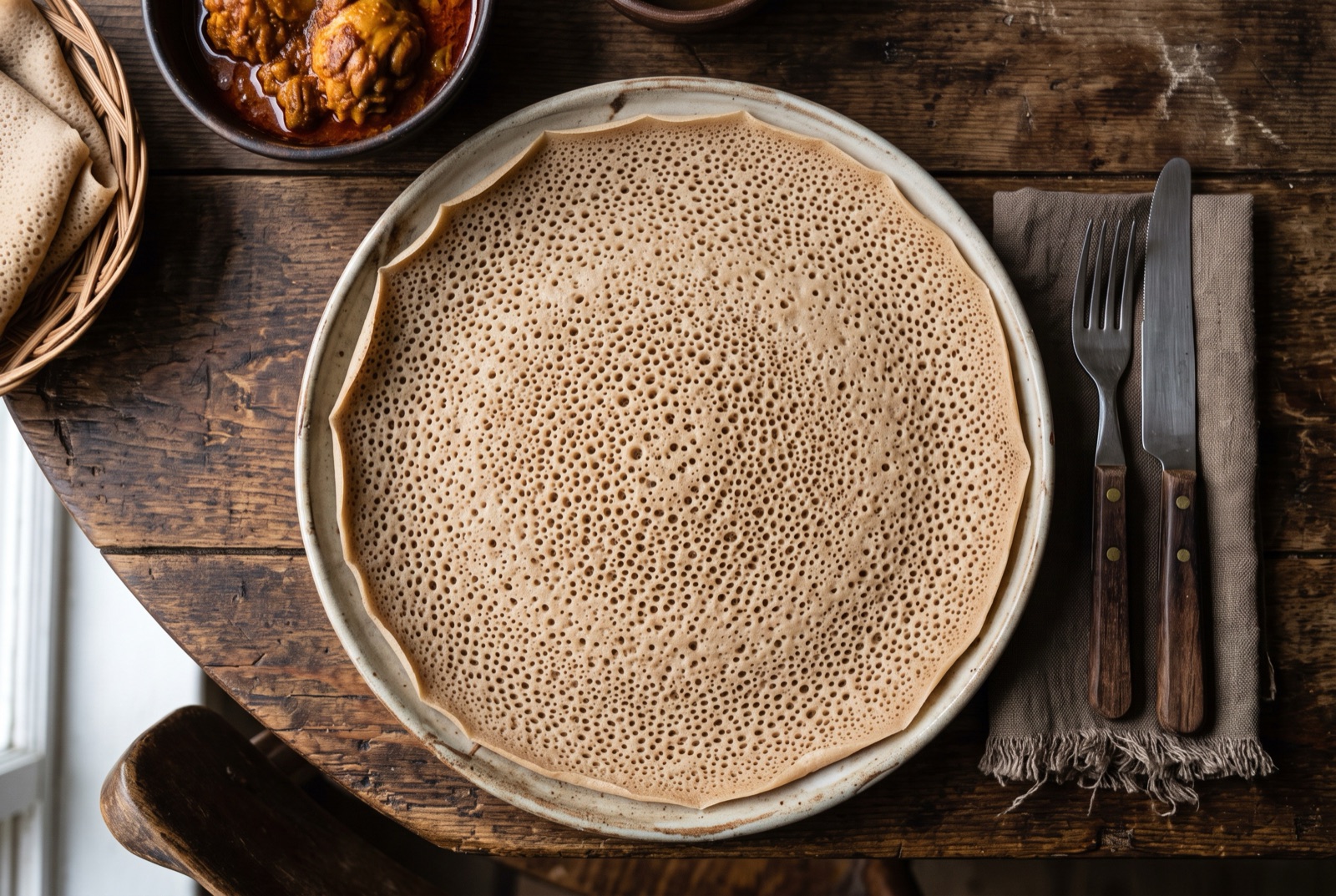
Ethiopia73 hr
Injera
Ethiopian Teff Sourdough Flatbread
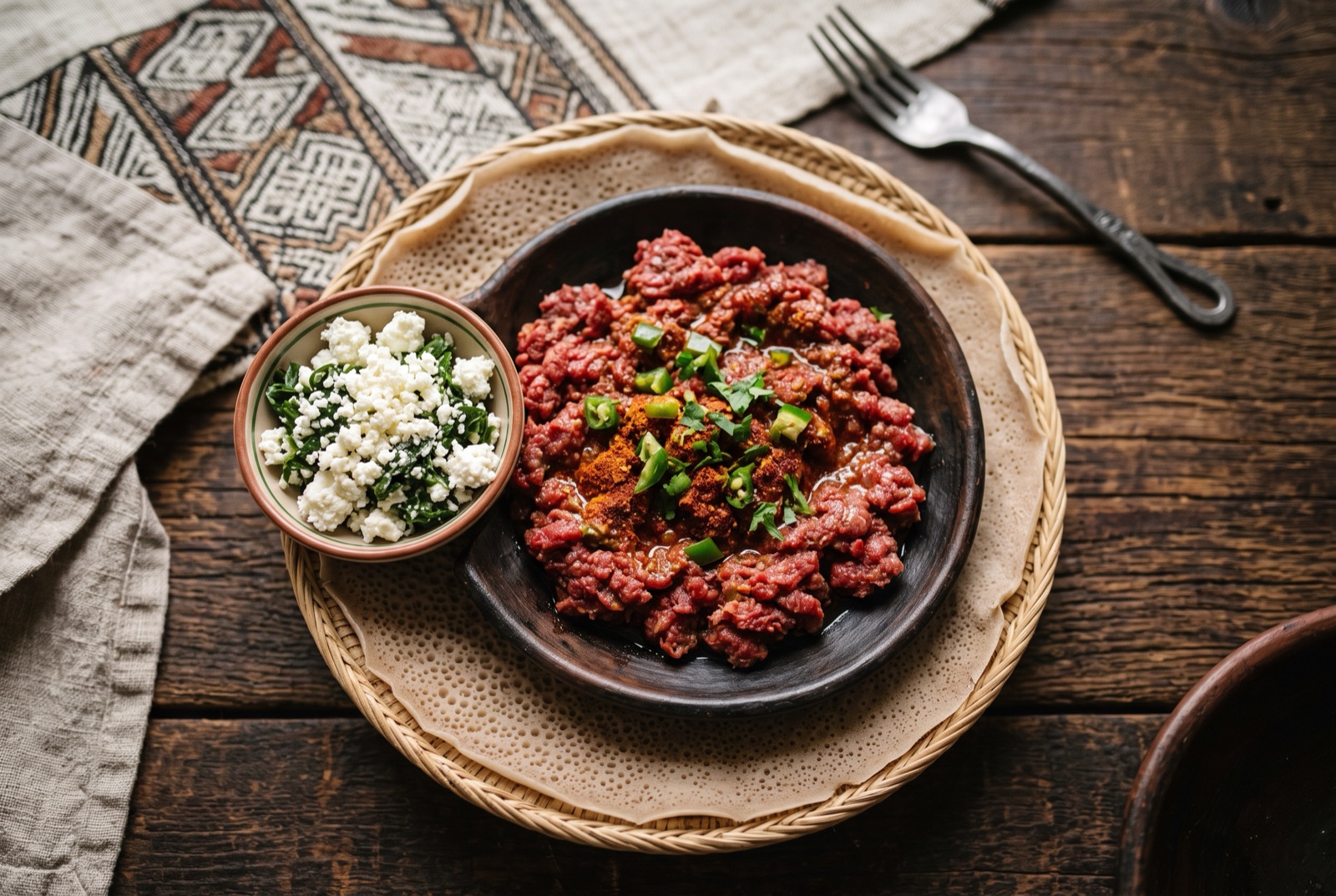
Ethiopia40 min
Kitfo
Ethiopian Minced Beef with Spiced Butter
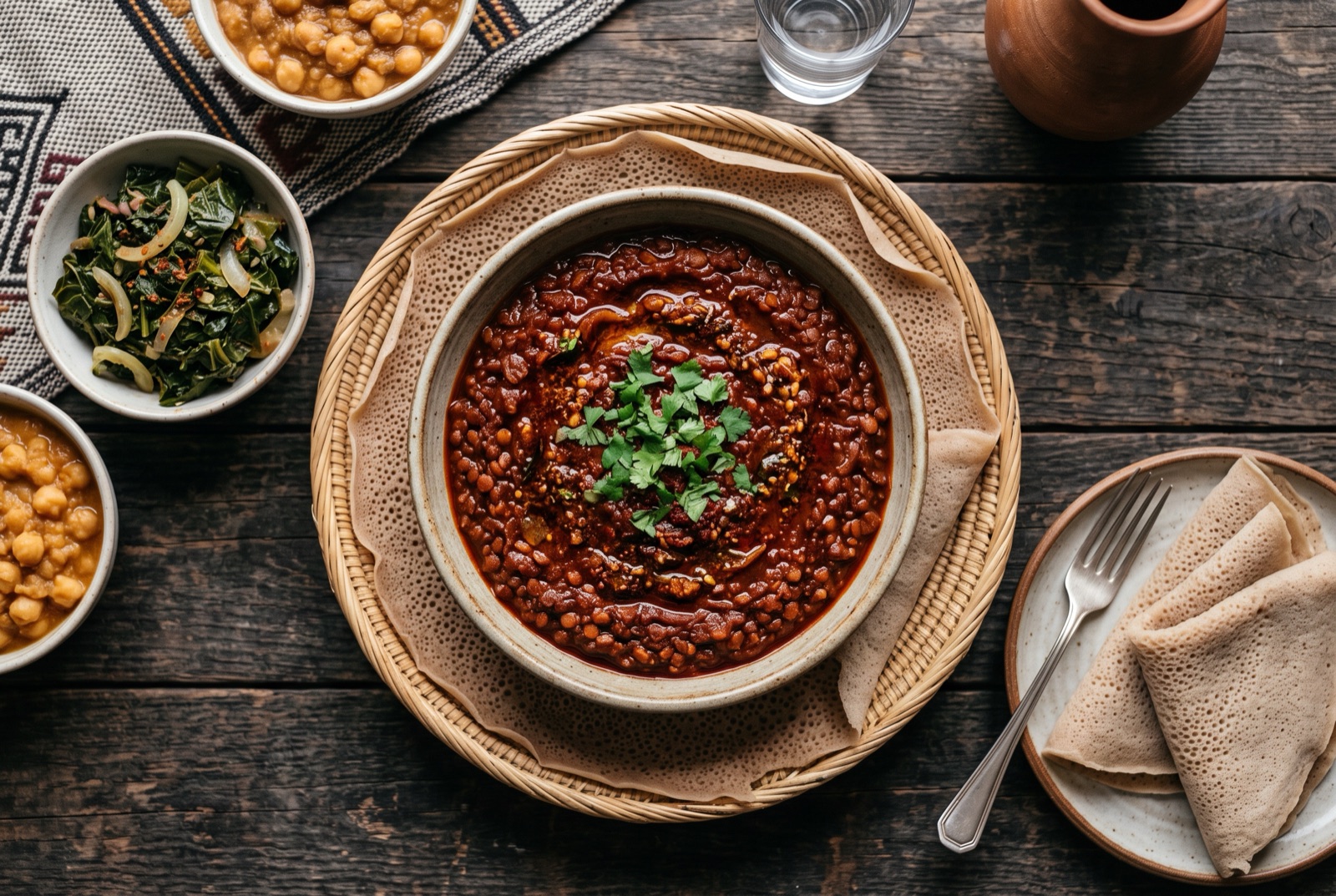
Ethiopia1 hr 10 min
Misir Wat
Ethiopian Red Lentil Stew
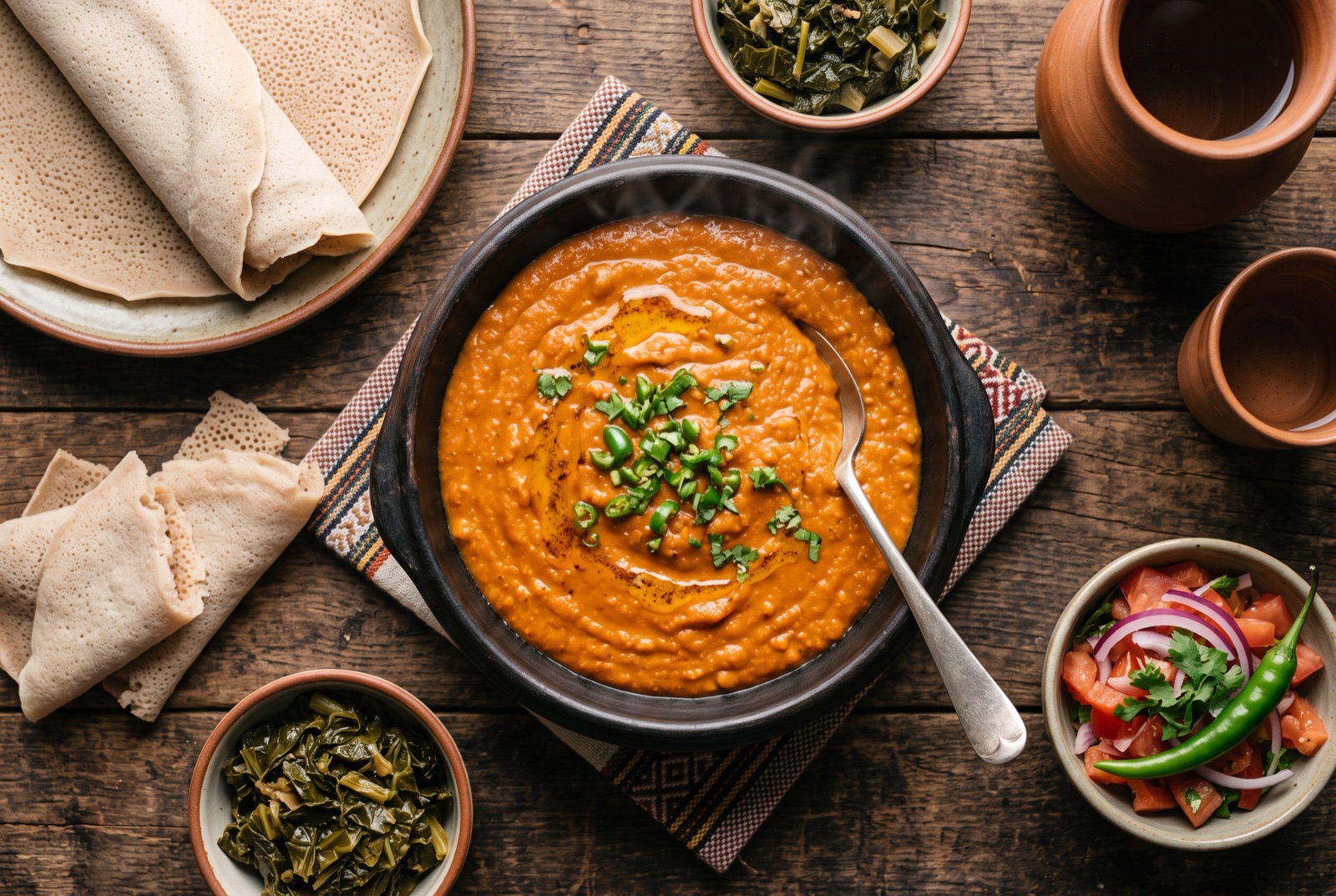
Ethiopia35 min
Shiro Wat
Ethiopian Spiced Chickpea Flour Stew
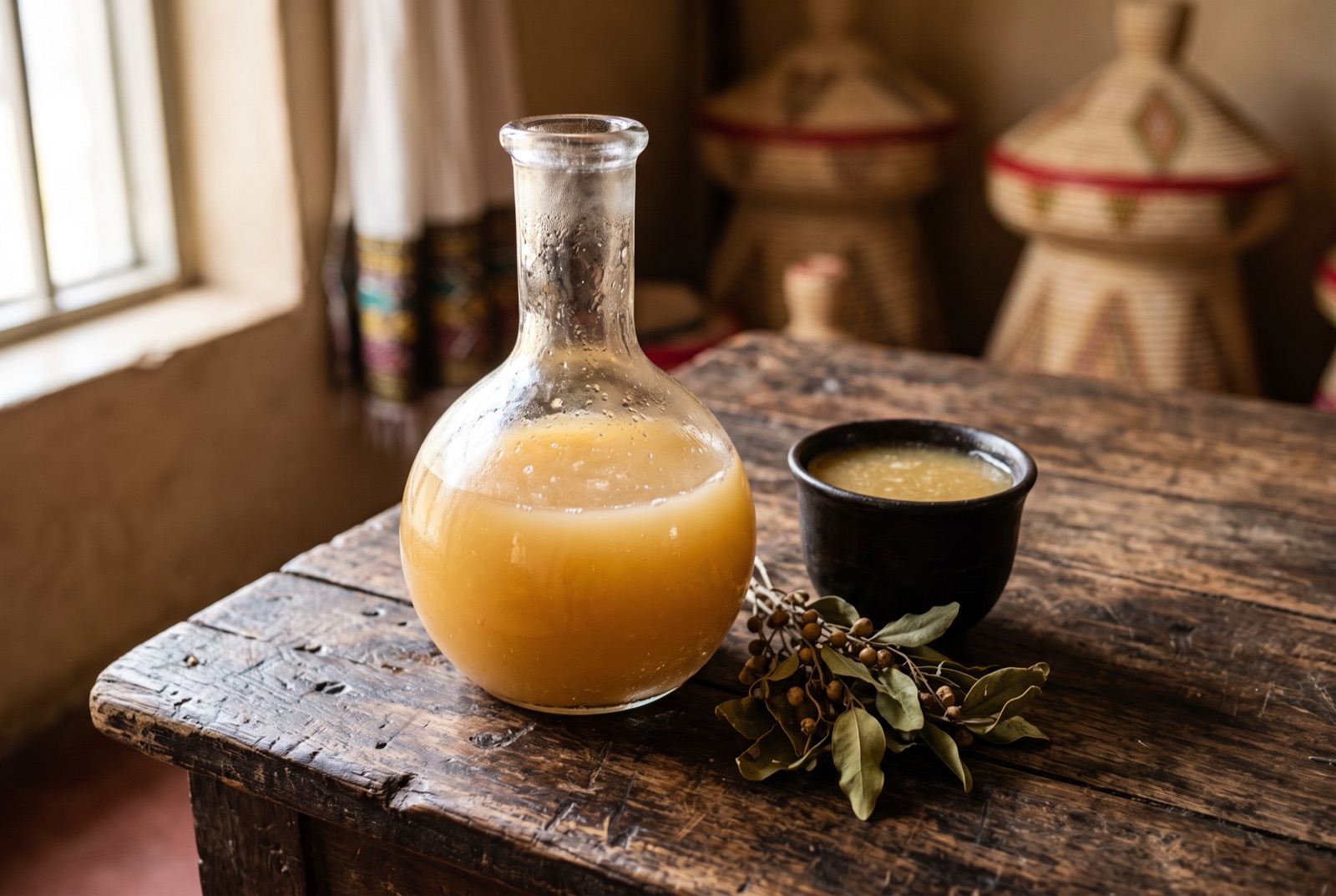
Ethiopia336 hr 40 min
Tej
Ethiopian Honey Wine Fermented with Gesho
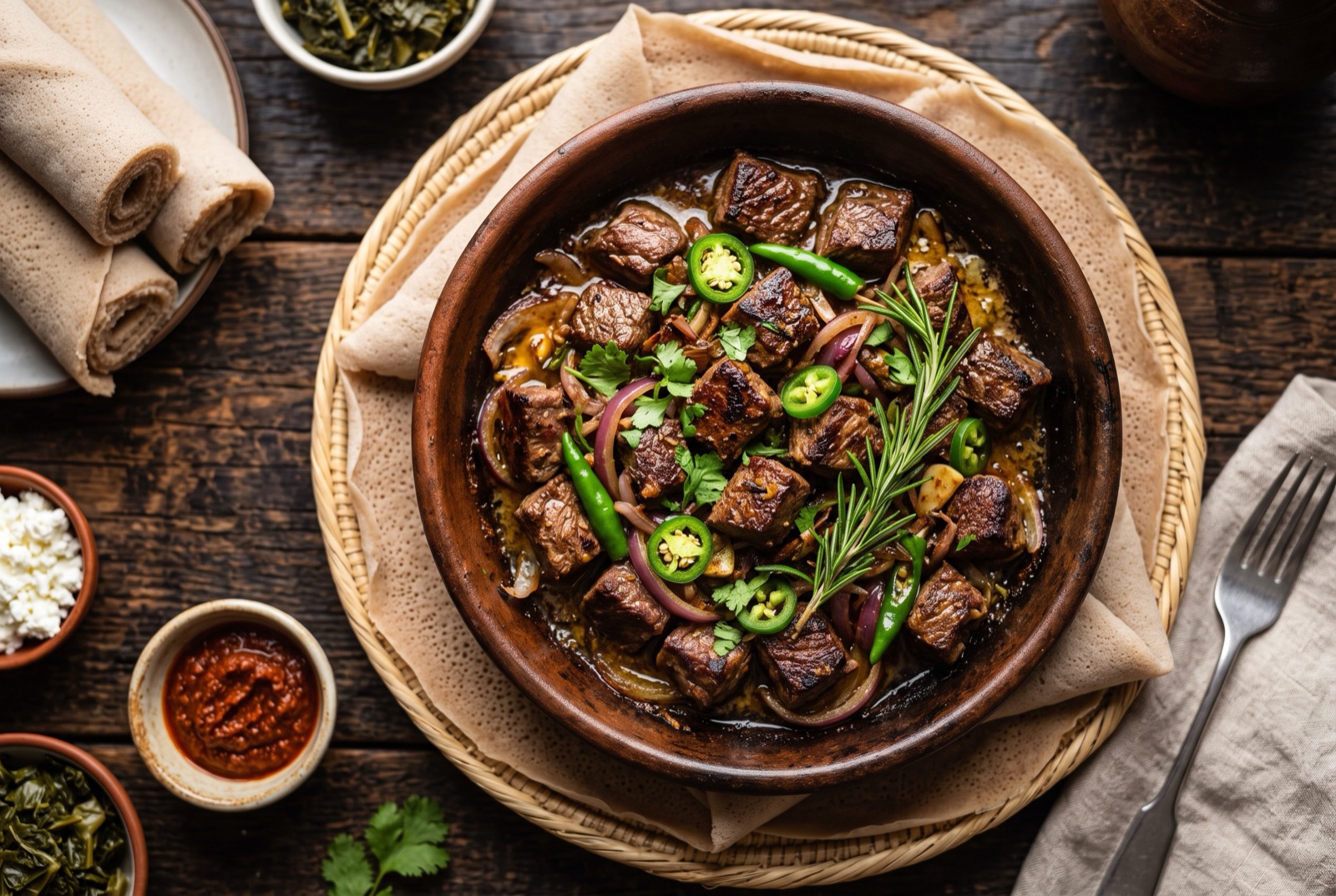
Ethiopia35 min
Tibs
Ethiopian Sautéed Lamb with Rosemary
Keep traveling.
Ethiopia sits in Horn of Africa, and its kitchen shares borders as well as ingredients with Algeria and Cameroon.
 Algeria
 Cameroon