Berbere.
Ethiopian Red Chilli Spice Blend
በርበሬ · Berbere · say it: ber-BEH-reh
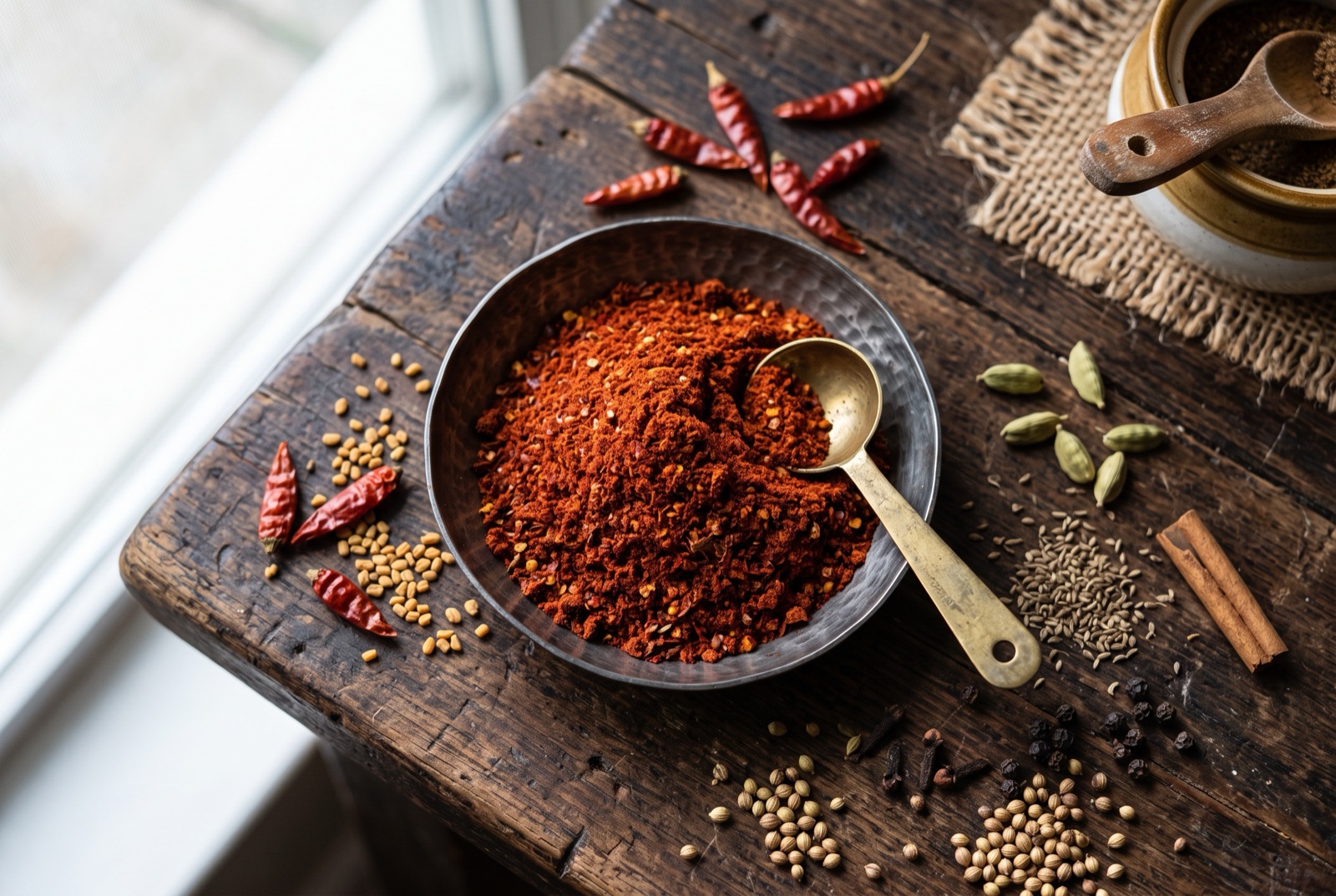
Berbere is a ground blend rather than a single spice: mild dried red chilli forms the bulk, and around it sit fenugreek, korarima, coriander, ajwain, nigella, ginger, garlic, cinnamon, cloves, allspice and black pepper, in proportions that shift from one mill to the next. Properly made it is hot, but the heat arrives with company — bitter fenugreek underneath, warm cardamom and cinnamon above, a resinous ajwain note running through the middle. Shop-bought versions are often mostly paprika and salt, which is why stews made with them taste flat and one-note. Grinding your own takes about forty minutes of actual work and changes doro wat, misir wat and shiro more than any other single decision you can make.

- Gate
- Ethiopia
- Prep
- 25 min
- Cook
- 10 min
- Total time
- 1 hr 5 min incl. 30 min rest
- Serves
- 16
- Status
- Medium
- Nutrition / serving · estimated
- Calories 30 kcal
- Protein 1 g
- Carbs 5 g
- Fat 1 g
- Fiber 3 g
- Sodium 440 mg
Why this recipe works.
- Toasts each spice group separately rather than all at once, because fenugreek and chilli burn at completely different rates.
- Names honest substitutes for korarima and besobela instead of pretending they are on every supermarket shelf.
- Makes enough for a season of Ethiopian cooking and stores for six months without fading.
- Lets you control the heat, which matters because the chillies available outside Ethiopia vary enormously.
Ingredients.
17 itemsThe chilli base
Toasted whole spices
Ground spices
Equipment
- Dry heavy frying pan
- Spice grinder or a powerful blender
- Fine sieve
- Airtight glass jar
Instructions.
Prepare the chillies
Snap the stem off each dried chilli and shake out most of the seeds, then tear the pods into pieces roughly 2 cm across. Wear gloves if you have sensitive skin — 100 g of chillies is enough to leave your fingers burning for hours.
Tip Leave a small proportion of seeds in if you want more heat, but never all of them: seed-heavy berbere tastes harsh and grinds gritty.
Toast the chillies
Warm a dry heavy pan over medium-low heat and toast the chilli pieces for 3–4 minutes, turning constantly, until they smell fragrant and toasty and have softened enough to bend without snapping. Tip them onto a plate the moment any of them start to darken.
Tip A scorched chilli is bitter and there is no fixing it afterwards. Pull the pan off the heat if it is moving too fast.
Toast the fenugreek alone
In the same pan, toast the fenugreek seeds by themselves for 30–40 seconds, shaking constantly, until they turn one shade darker and smell nutty and faintly of maple. Tip them out immediately, because they go bitter within seconds of that point.
Toast the remaining whole spices
Toast the coriander, korarima, ajwain, nigella, peppercorns and cloves together for 2 minutes, shaking the pan, until the coriander turns a shade darker and the mixture smells sharply aromatic. Spread everything on a plate and leave it to cool completely, about 30 minutes.
Grind and sieve
Grind the cooled chillies and whole spices together in small batches until fine, sieving each batch into a bowl and returning the coarse residue to the grinder. Repeat until almost nothing is left in the sieve.
Tip Let the grinder rest between batches. A hot motor warms the spices and turns the powder into a paste.
Blend in the ground spices
Whisk the paprika, cayenne, dried ginger, garlic powder, cinnamon, allspice, nutmeg, dried basil and salt into the ground mixture until the colour is completely even with no streaks. Taste a pinch on a damp fingertip: heat first, then bitterness, then a sweet warm finish.
Store it properly
Transfer to an airtight jar, label it with the date, and keep it in a dark cupboard away from the hob. Let it sit for a day before first use — the flavours settle and the raw edge of the freshly ground chilli softens.
Tips from our kitchen.
- Toast the fenugreek separately and briefly. It goes from nutty to acridly bitter in about thirty seconds, and once it does the whole batch is ruined.
- Remove most of the chilli seeds before grinding. They add harsh heat without flavour and make the powder gritty.
- Let everything cool completely before grinding. Warm spices smear the blade and turn the blend into a damp paste that clumps in storage.
- Grind in small batches and sieve between them, returning the coarse bits to the grinder. This is what gives commercial berbere its fine, even texture.
- Taste the finished blend on a wet fingertip. It should register heat, then bitterness, then sweetness — if the heat arrives alone, add more fenugreek and cardamom.
- Label the jar with the date. Berbere does not spoil but it fades, and after eight months you will need noticeably more of it for the same effect.
Substitutions.
- Ethiopian mareko fana chillies → A mix of Kashmiri and guajillo chillies, plus cayenne to bring the heat up
- Kashmiri gives the deep red colour with modest heat, guajillo adds fruitiness. Ethiopian chillies are hotter than either, so cayenne closes the gap without dulling the colour.
- Korarima → Green cardamom pods, with a small pinch of ground black cardamom if you have it
- Korarima is smokier and more camphorous than green cardamom. Black cardamom overshoots on smoke used alone, so a little alongside the green gets closer than either does by itself.
- Besobela and koseret → Dried basil and dried oregano
- A genuine approximation rather than an equivalent. Ethiopian and Eritrean grocers and several online spice sellers stock both, and they are worth ordering once if you cook this food regularly.
Variations.
- Mild berbere
- Built mostly on Kashmiri chilli and sweet paprika with the cayenne dropped entirely, keeping the colour and aromatics while removing most of the heat. What many households make for children.
- Awaze
- Not a variation of the powder but what it becomes: berbere slackened into a thick paste with tej, dry wine or water, sometimes with garlic and ginger. Used as a dip for grilled meat and a finish for tibs.
- Mitmita
- A separate blend, smaller and hotter — bird's eye chilli, korarima, cloves and salt, ground coarse and orange rather than deep red. Used raw as a dressing rather than fried into stews.
Storage & reheating.
Keep berbere in an airtight jar in a dark cupboard, never above the hob and never in the fridge, where condensation will clump it. It stays at full strength for about six months and remains usable for a year, gradually losing its top notes while the raw heat persists — an old blend tastes harsher, not milder. If the powder feels damp or forms a solid cake, spread it on a tray in a very low oven for ten minutes and re-sieve it. Making half quantities twice a year beats making a large batch once.
Serve with
Nothing on its own — it is a building block. Fry it into onions and fat for any wat, or slacken it with wine into awaze for grilled meat.
The story behind Berbere.
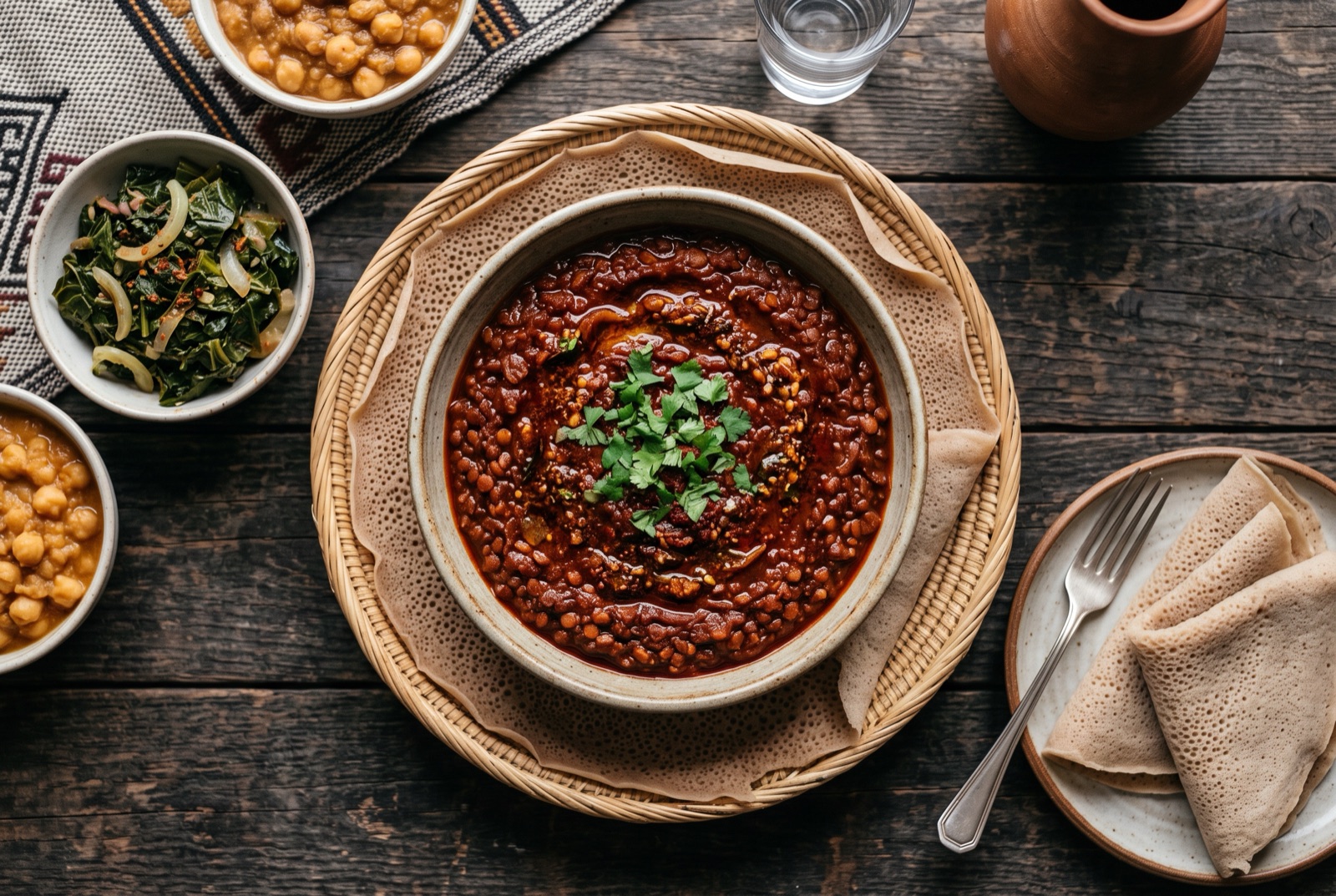
Berbere is the seasoning that defines the red half of Ethiopian cooking. Every key wat — doro wat, misir wat, sega wat — begins with it fried into collapsed onions until the fat runs red, and the dishes that do not use it, the turmeric-based alicha family, are defined precisely by its absence. Its ingredients are a record of the trade that passed through the Horn of Africa: chilli arrived from the Americas through Portuguese and Ottoman routes and became dominant, while cardamom, cloves, cinnamon and black pepper travelled the Red Sea and Indian Ocean networks that Ethiopian and Arab merchants had worked for centuries.
Several of its components grow nowhere else in any quantity. Korarima, sometimes called Ethiopian or false cardamom, is a large brown pod with a smokier, more camphorous flavour than green cardamom. Besobela is Ethiopian sacred basil, dried and used as a spice rather than a herb. Koseret is a dried aromatic leaf with no European equivalent, more often used in niter kibbeh than in the blend itself. Rue seed and leaf, tenadam, appear in some family recipes and are divisive even in Ethiopia. Outside the country these are the ingredients you will struggle to source, and their absence is the main gap between a homemade blend and one from an Addis Ababa mill.
The traditional process is largely about the chillies. They are dried in the sun, sometimes for days, stems and much of the seed removed, and often sun-dried again after an initial grind so the blend keeps without clumping. Households make berbere in bulk once or twice a year, and the resulting quality varies enough that people have opinions about whose is best. Commercial blends sold abroad range from excellent to little more than coloured salt — reading the ingredient list, where one exists, is the only defence. Making it yourself removes the question, and it also lets you set the heat, since the chilli you can buy in most places is considerably milder than what Ethiopian mills use.
Questions, answered.
How hot is berbere compared to other chilli blends?
A homemade blend along these lines sits somewhere between mild curry powder and cayenne pepper — clearly hot but not punishing, because the chilli is diluted by fifteen other ingredients. Authentic Ethiopian berbere is usually hotter, since the chillies grown there carry more heat than Kashmiri or guajillo. Adjust the cayenne up or down; nothing else in the recipe needs to change.
What is korarima and do I really need it?
Korarima, or Ethiopian cardamom, is the seed pod of a plant native to the Horn of Africa. It tastes like green cardamom with a smokier, slightly camphorous edge, and it is one of the flavours that makes berbere recognisably Ethiopian rather than generically chilli-based. Green cardamom is a reasonable substitute and the blend will still be good, but if you cook this food often it is the one specialist ingredient worth tracking down.
Can I use shop-bought berbere instead of making it?
Yes, and much of Ethiopia does — the flour mill blends the spices for you. The problem is quality abroad, where jars labelled berbere are often mostly paprika, salt and cayenne with little aromatic content. If the ingredient list is short and paprika appears first, expect flat results and compensate with extra cardamom and fenugreek in the pot. Blends from Ethiopian or Eritrean grocers are usually far better than supermarket ones.
Why does my berbere taste bitter?
Almost certainly over-toasted fenugreek, which turns acrid very quickly, or scorched chillies. Fenugreek needs about thirty seconds in a dry pan and should smell nutty, like burnt sugar at most; past that it is unrecoverable. Chillies should be toasted only until they smell fragrant and turn slightly pliable, never until they darken. Both are worth toasting separately from everything else for this reason.
How much berbere should I use in a stew?
Far more than feels reasonable if you are used to European spicing. A doro wat for six people takes 60 to 80 g, roughly six to eight tablespoons, because it is functioning as the body of the sauce rather than as a seasoning. For lighter dishes such as shiro or tibs, one to two tablespoons is enough. Always fry it into hot fat for several minutes before adding liquid, or it will taste raw.
You might also like.
All recipes →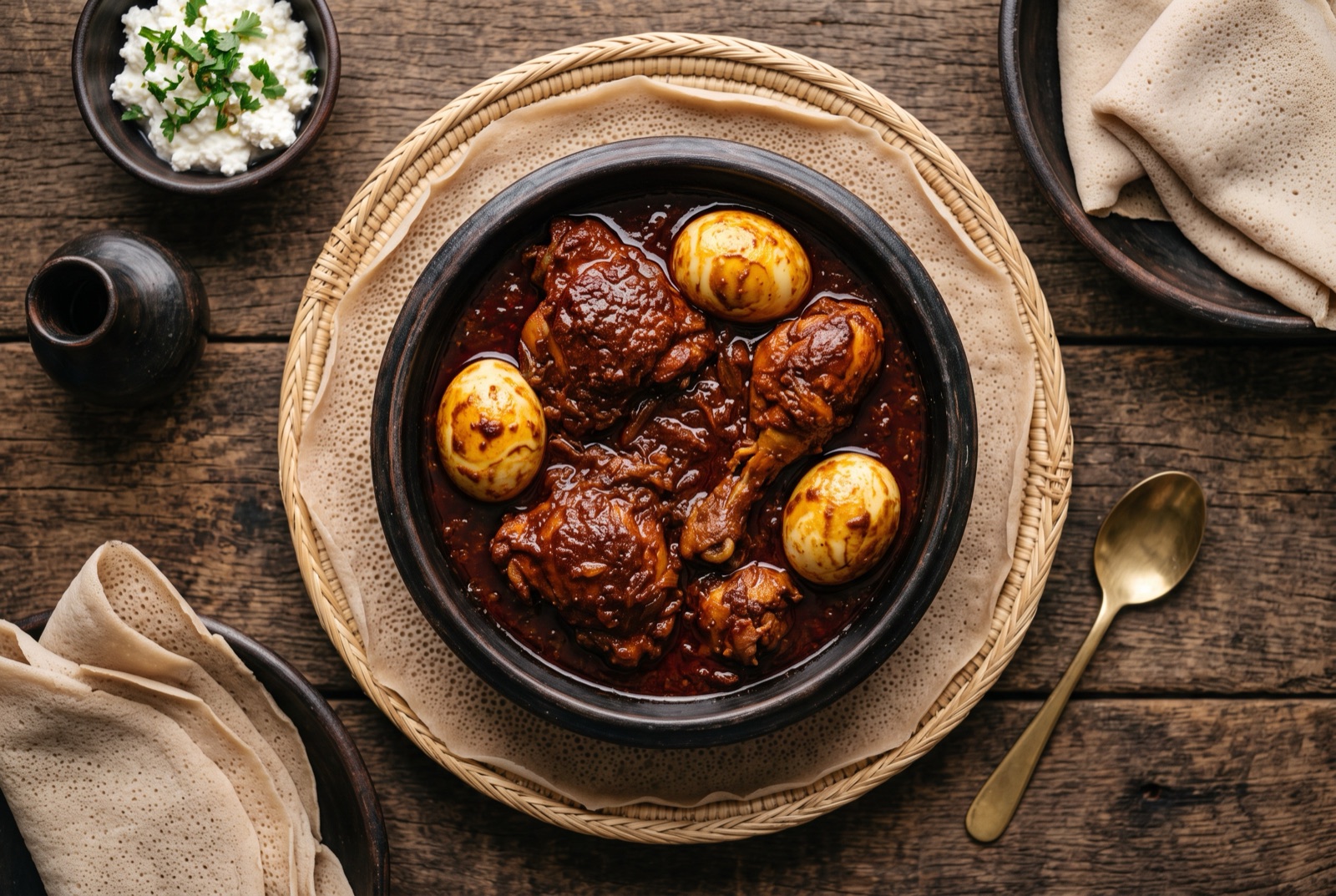
Keep exploring Ethiopia.
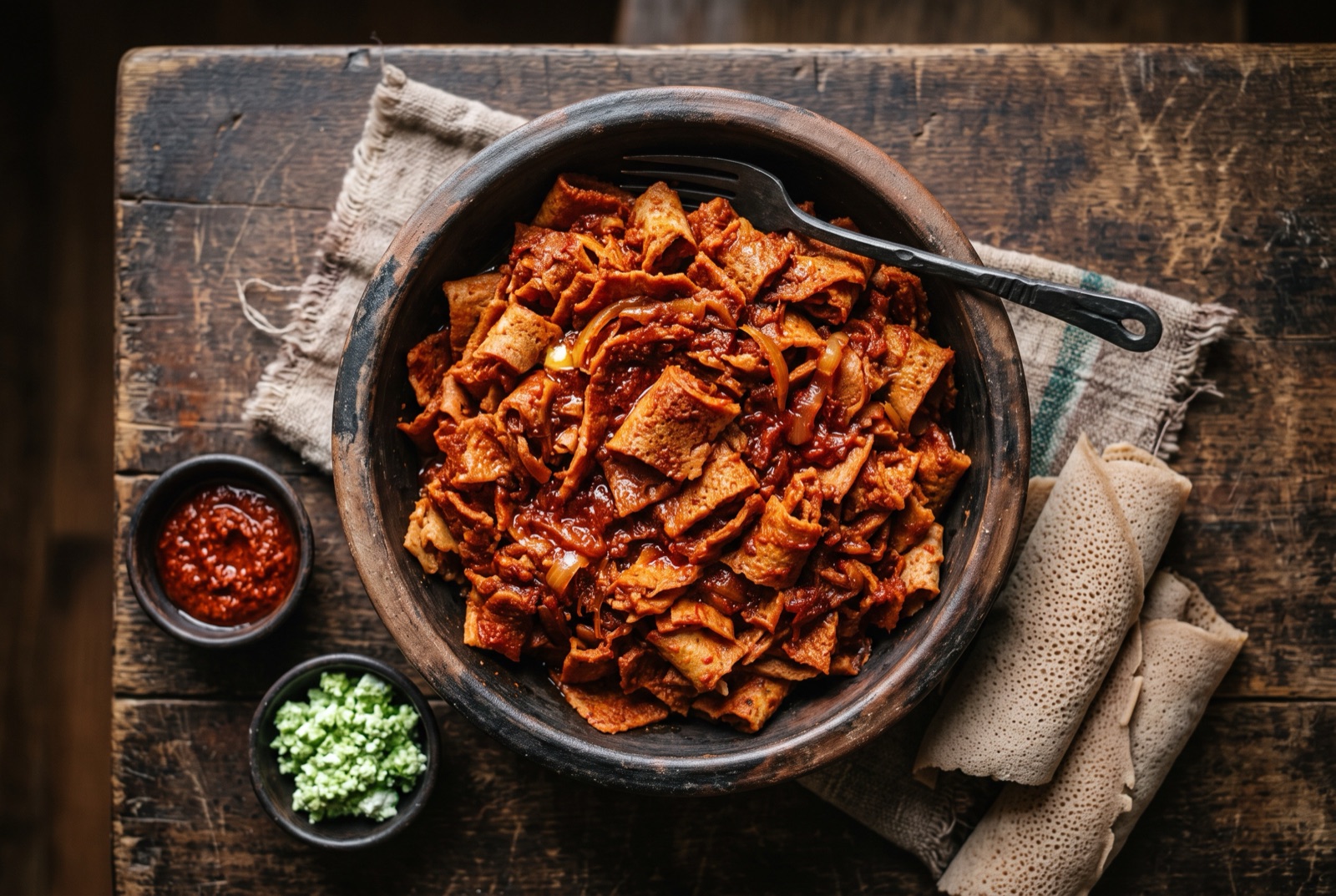
Ethiopia has 9 more dishes in the atlas — Doro Wat and Firfir, and 7 more.
All Ethiopia recipes Chili flakes recipes Cardamom recipes Paprika recipes sauceveganvegetariandairy freegluten freenut freeRecipe by The DishRoute Kitchen · published August 20, 2026 · updated August 20, 2026