Georgia.
საქართველო
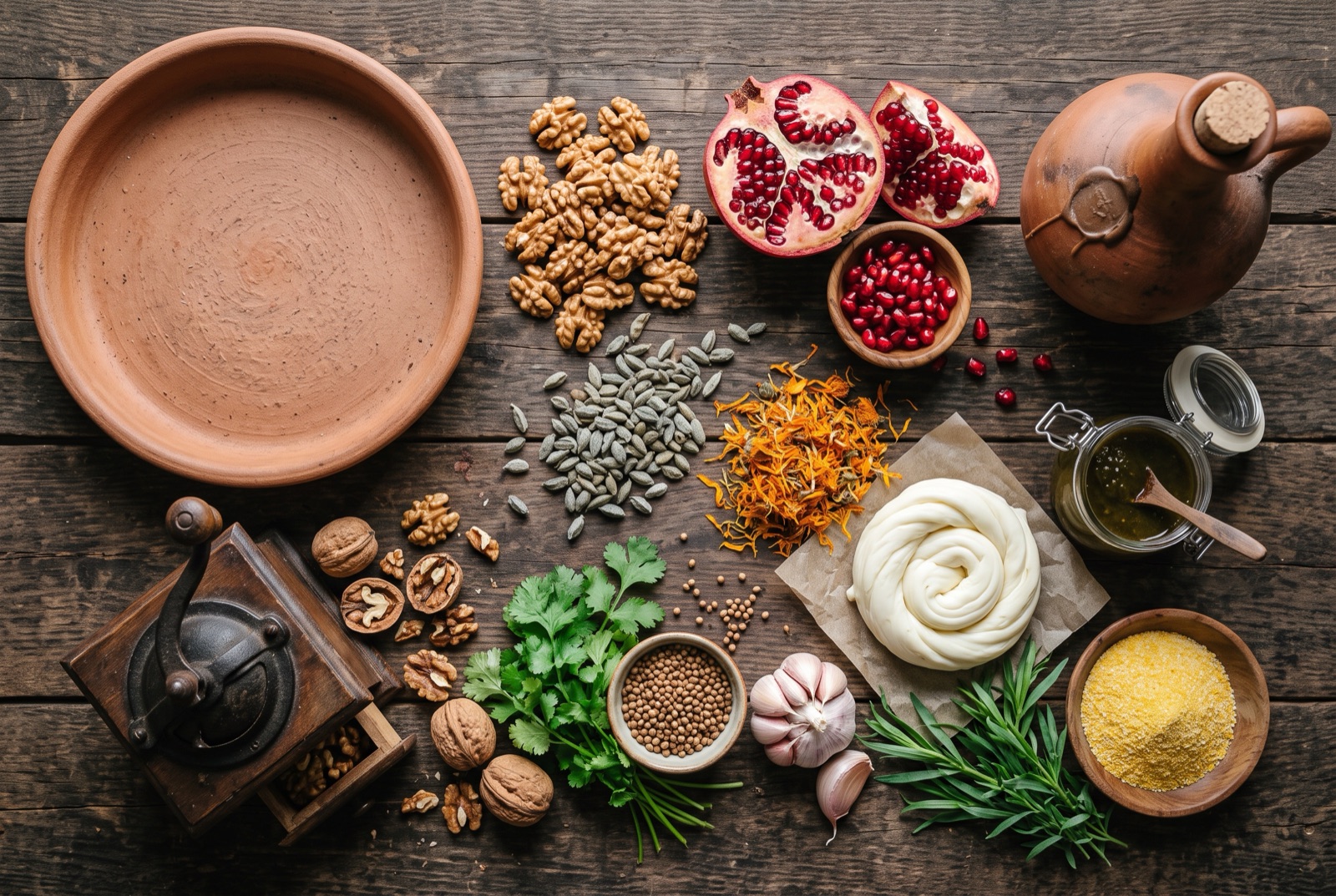
Georgian cooking is built on two pillars that almost no other cuisine leans on so heavily: ground walnuts and fresh herbs by the fistful. Walnuts are not a garnish here — pounded with garlic, vinegar and spice they become a sauce base the way tomatoes are in Italy or coconut is in Kerala, thickening soups, coating cold poultry and binding vegetable pâtés. Alongside them come coriander leaf, tarragon, basil and summer savory used in volumes that startle visitors, plus two spices that mark a dish as unmistakably Georgian: blue fenugreek (utskho suneli) and dried marigold petals sold as imeretian saffron. Sourness comes from unripe plums, pomegranate and sun-dried fruit leather rather than lemon. The result is food that tastes rich and green at the same time — creamy without cream, sharp without acid burn. It is also one of the great vegan cuisines by accident: the Orthodox fasting calendar removed meat and dairy from the table for months each year, and cooks answered with walnuts, beans and vegetables rather than apology.

- Continent
- AsiaCaucasus
- Recipes in atlas
- 10
- Must-try dishes
- 3
- Pantry staples
- 10
Start with the classics.
Must tryThe dishes that explain the Georgia kitchen fastest — if you cook only a few things from this page, cook these.
Inside the Georgia kitchen.
Start with the walnut. Georgian cooks buy them by the kilo, grind them to a paste in a hand mill or food processor, and use that paste as the structural element of a dish rather than a topping. In satsivi the paste is loosened with poultry broth into a cold, clinging sauce. In pkhali it is bound with garlic and vinegar and pressed into small mounds. In kharcho a spoonful thickens the soup and gives it body no roux could. When the paste sits, an amber walnut oil weeps out at the edges — Georgians consider that oil a sign of good nuts and often spoon it back over the finished plate.
The spice cabinet is small but non-negotiable. Blue fenugreek (utskho suneli) is milder and more floral than the Indian fenugreek most kitchens know, and substituting the wrong one makes a dish taste bitter and medicinal. Dried marigold petals add colour and a faint resinous note. Ground coriander seed appears in nearly every savoury dish, usually alongside its own fresh leaf. Khmeli suneli is the pre-mixed blend of all of these plus summer savory and dried herbs; it is genuinely traditional, not a shortcut, and a good jar solves most of the sourcing problem at once.
Sourness is a technique, not a squeeze of lemon. Tkemali, a sauce of sour green or red plums with garlic and pennyroyal, sits on Georgian tables the way ketchup does elsewhere. Tklapi is fruit purée dried into leathery sheets and torn into soups to sour them. Pomegranate seeds and juice finish cold dishes. Wine vinegar sharpens walnut pastes. None of these is interchangeable with citrus — they all bring fruit sugar and tannin along with the acid.
Bread and cheese are their own economy. Shoti, the canoe-shaped loaf slapped onto the wall of a clay tone oven, is torn rather than sliced. Sulguni is the elastic brined cheese that stretches when melted; imeruli is its fresher, saltier, crumblier cousin. Between them they fill every khachapuri in the country, and the regional shapes — round Imeretian, boat-shaped Adjarian, butter-layered Megrelian — are a reliable way to tell where you are standing.
Regional splits are real. The western provinces, closer to the Black Sea, cook hotter and drier: chilli-forward ajika paste, cornmeal mchadi and elastic ghomi porridge instead of bread, more sulguni, more walnut. The east, around Kakheti and Tbilisi, leans on wheat bread, grilled meat, and the country's densest concentration of vineyards. And clay matters everywhere: ketsi pans for frying chicken flat, small pots for lobio, and qvevri — buried clay vessels used for wine since long before anyone wrote the practice down.
Signature pantry.
10 staplesThe ingredients this cuisine cannot function without.
- walnuts
- blue fenugreek (utskho suneli)
- dried marigold petals
- coriander (leaf and seed)
- sulguni cheese
- tkemali sour plum sauce
- pomegranate
- garlic
- tarragon
- cornmeal
How people eat in Georgia.
Georgians do not serve courses; they build a table. Cold walnut dishes, pickles, bread and cheese go down first and stay put while hot food arrives on top of them, so plates end up stacked two deep by the end of the night. A proper supra is run by a tamada, the toastmaster, who sets the order of toasts — to peace, to family, to the departed — and nobody drinks wine outside of a toast, which is why glasses go up so often and get drained so completely. Beer is for toasting enemies, a joke everyone still honours. Bread is torn by hand and used as a utensil. Refusing food is difficult and refusing a toast is close to impossible, so pace matters more than willpower.
Regional kitchens.
Georgia cooks 4 distinctly different ways depending on where you stand — here is what changes between them.
- R1Adjara (Black Sea coast)
- Humid, subtropical and cheese-obsessed. Home of the boat-shaped khachapuri finished with a raw yolk and a slab of butter, plus fish, citrus and the country's tea plantations.
- R2Samegrelo (Mingrelia)
- The spiciest corner of Georgia. Chilli-heavy ajika, elastic ghomi cornmeal porridge eaten with sulguni stirred through, and walnut sauces used more aggressively than anywhere else.
- R3Kakheti (the east)
- Georgia's wine country, where grapes still ferment in buried qvevri clay vessels. Grilled meats, wheat breads from the tone oven, and churchkhela made in every village at harvest.
- R4Khevsureti and the mountains
- Cold, high and meat-driven. Khinkali were born in these valleys as shepherd food — coarse minced lamb and broth sealed inside thick dough sturdy enough to be eaten by hand.
All Georgia recipes.
10 recipes and counting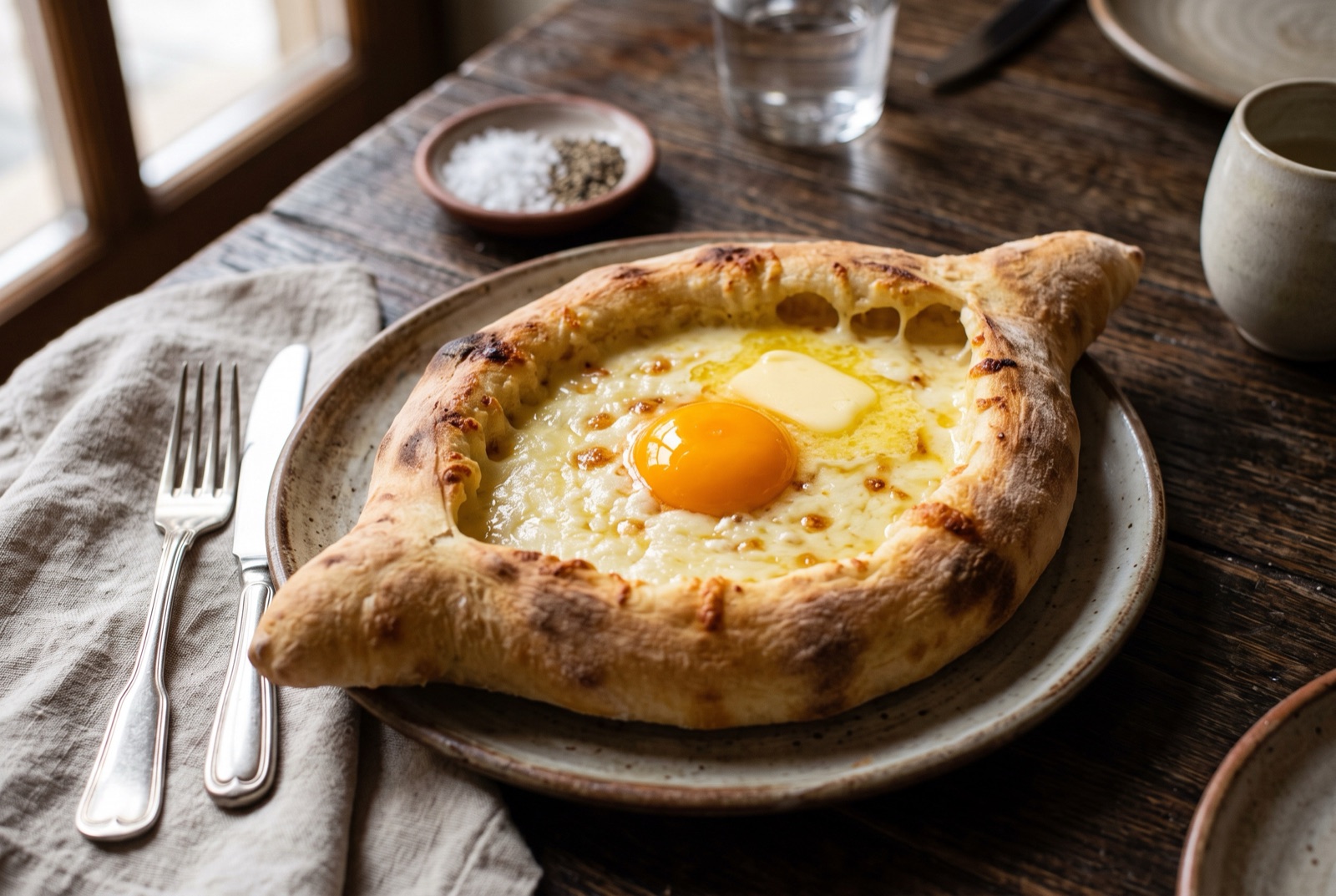
Georgia2 hr 15 min
Adjarian Khachapuri
Boat-Shaped Georgian Cheese Bread
Georgia2 hr 25 min
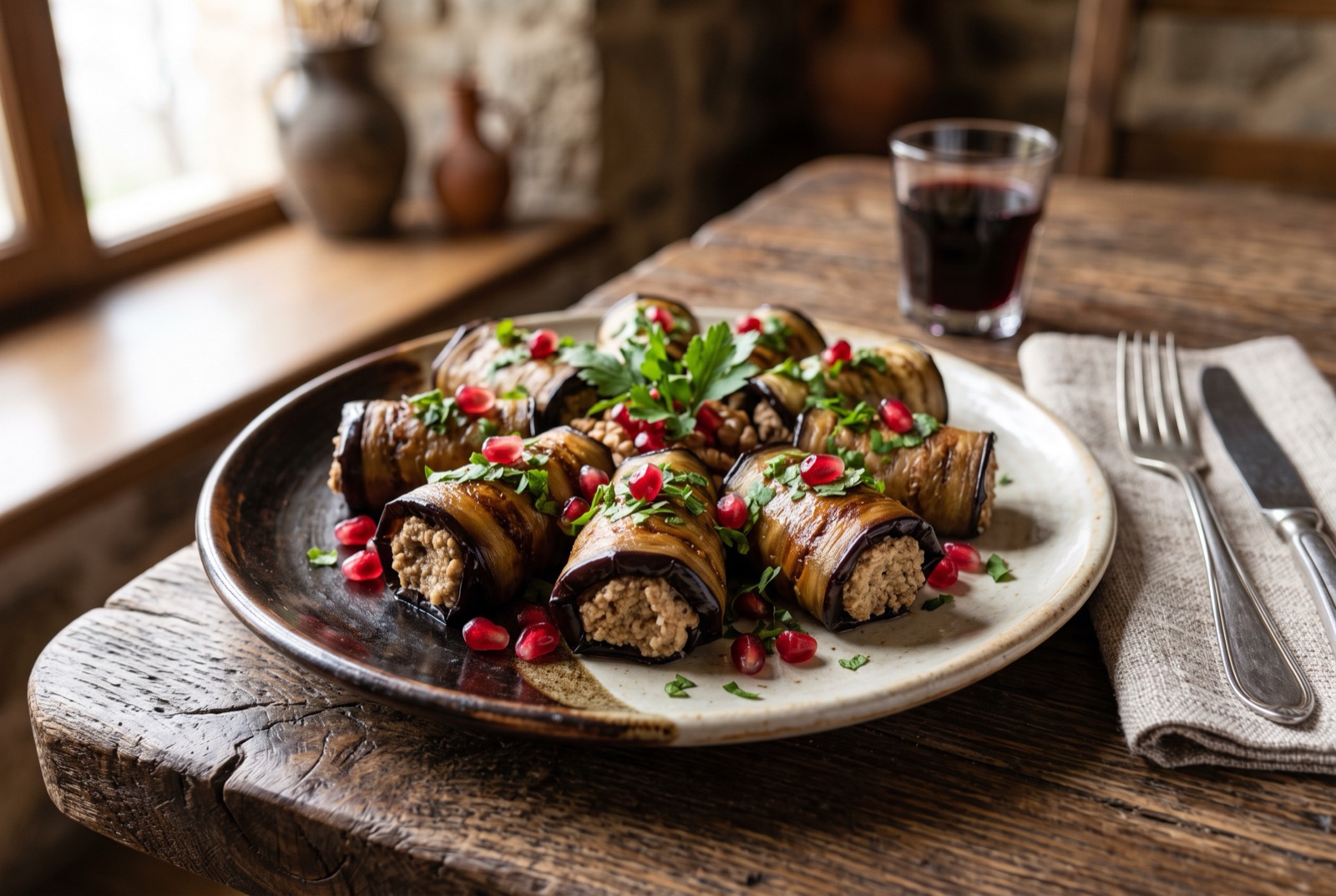
Badrijani Nigvzit
Georgian Eggplant Rolls with Walnut Paste
Georgia1 hr 5 min
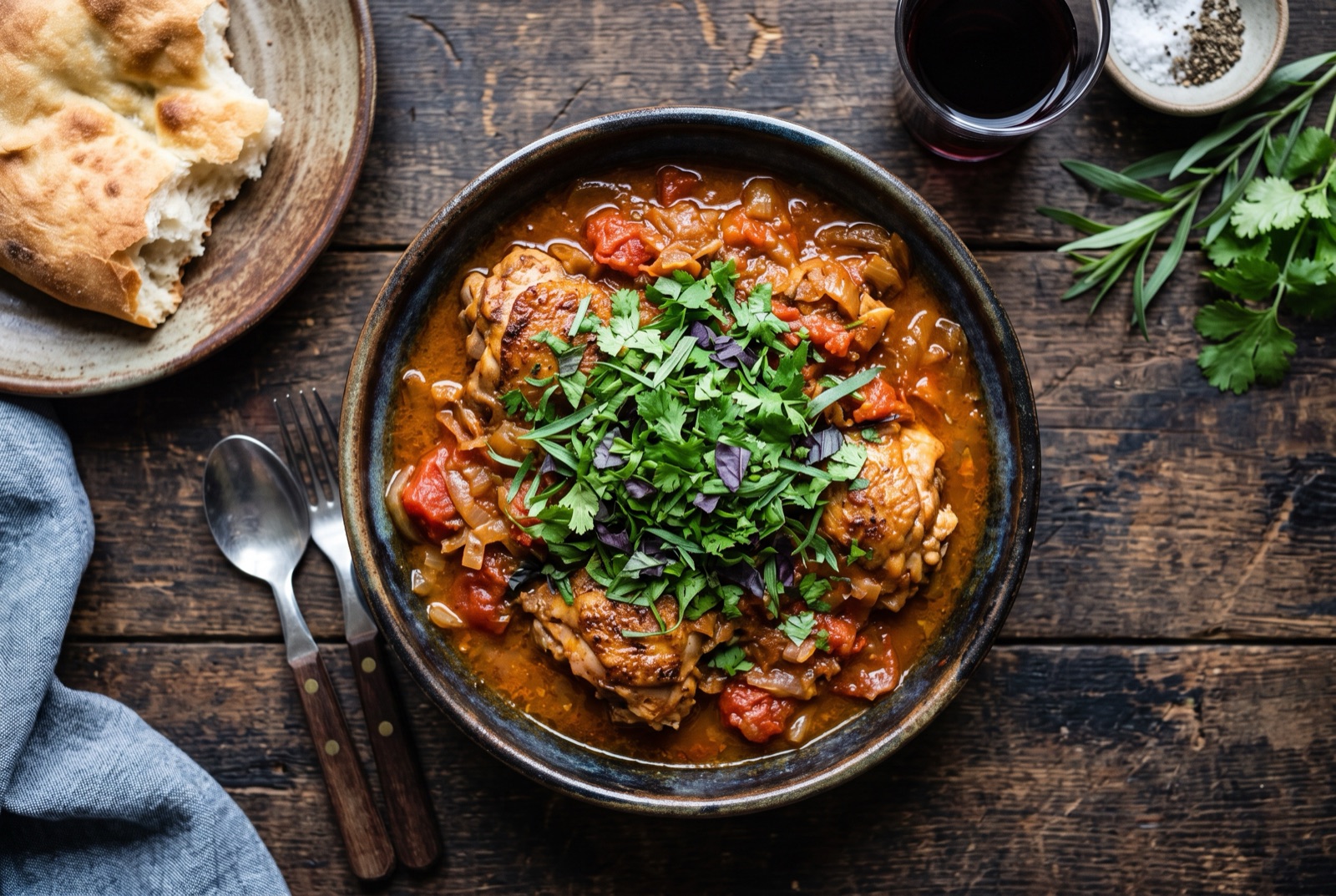
Chakhokhbili
Georgian Chicken and Tomato Herb Stew
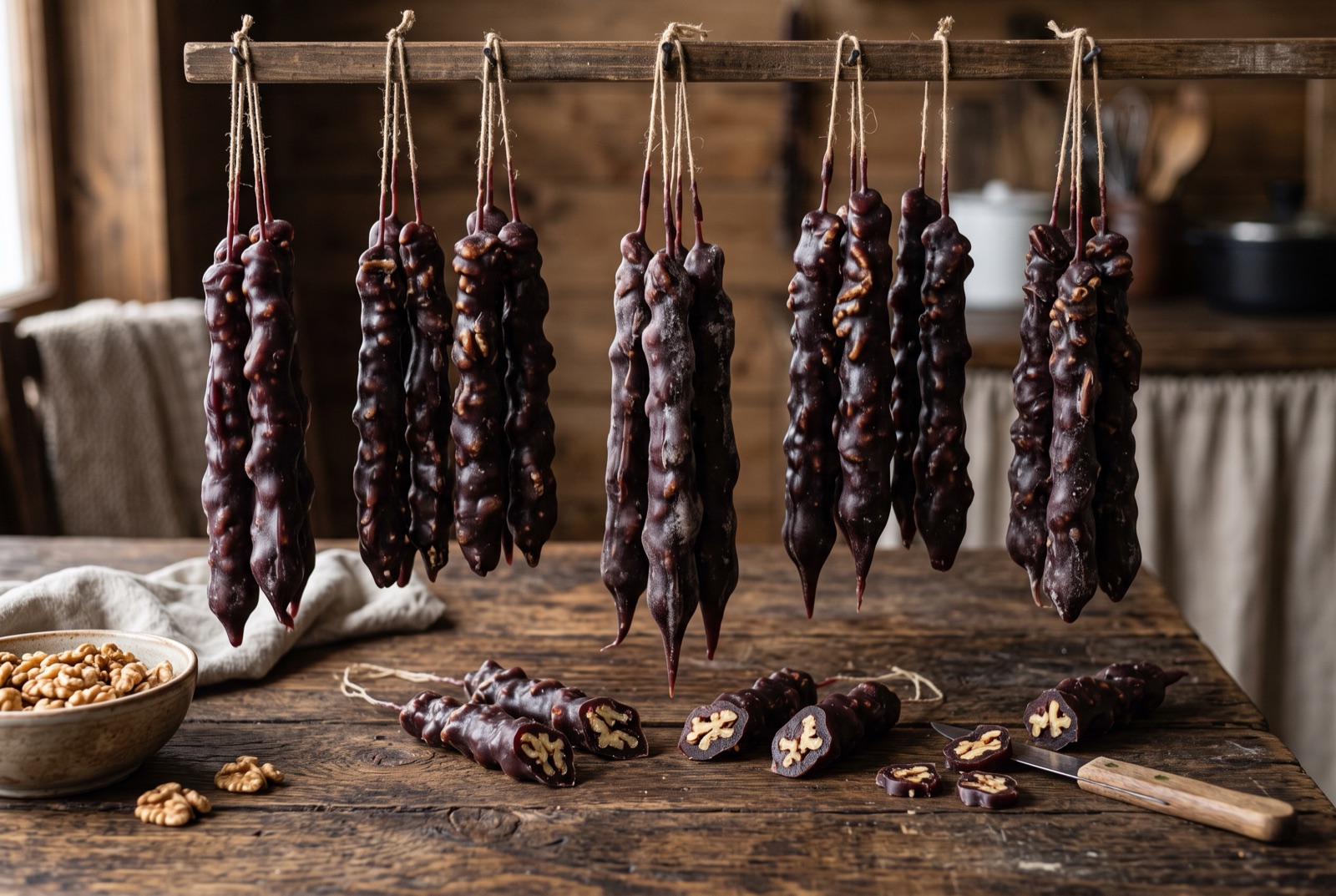
Georgia25 hr 40 min
Churchkhela
Georgian Grape Must and Walnut Candy
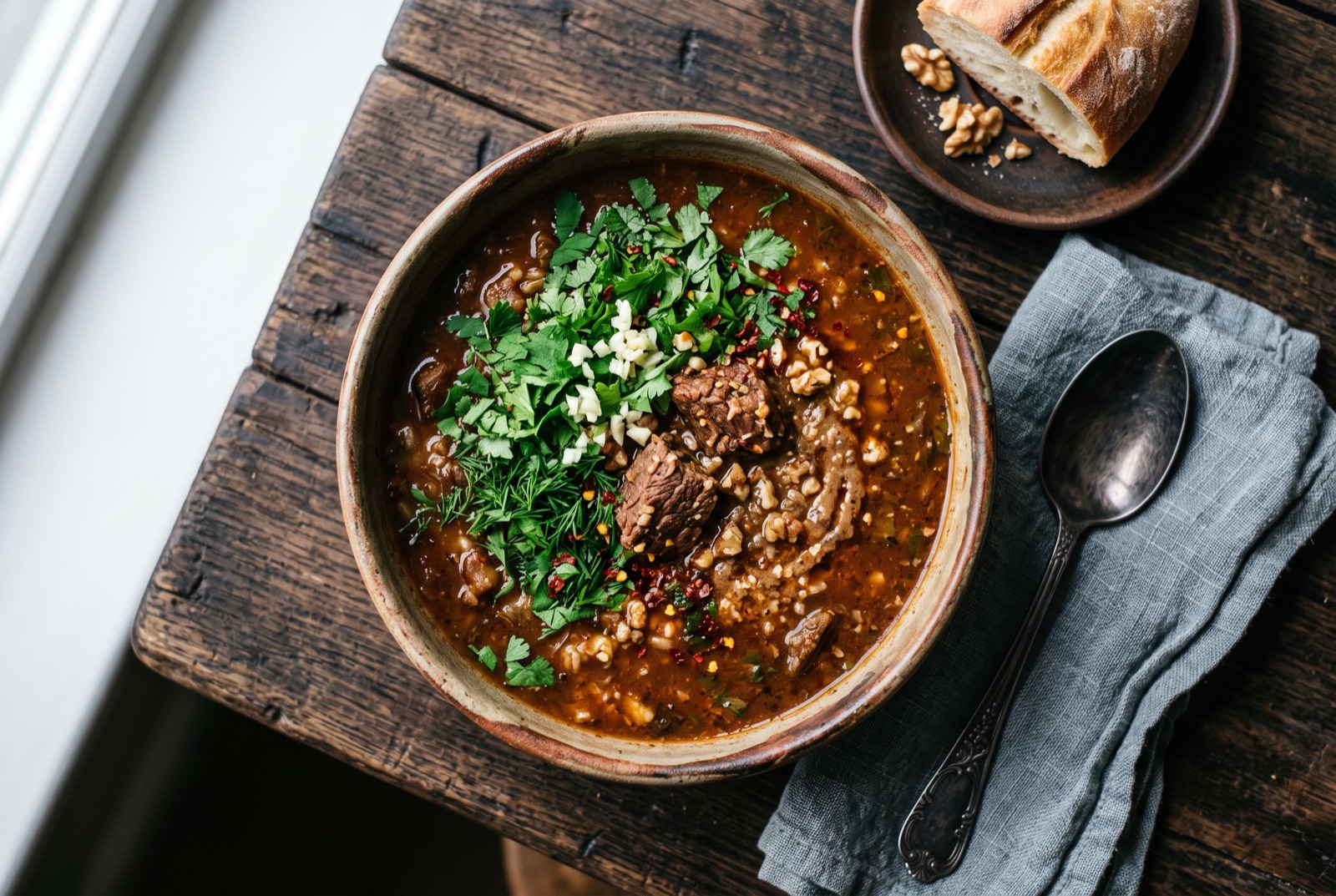
Georgia2 hr 35 min
Kharcho
Georgian Beef, Walnut and Sour Plum Soup
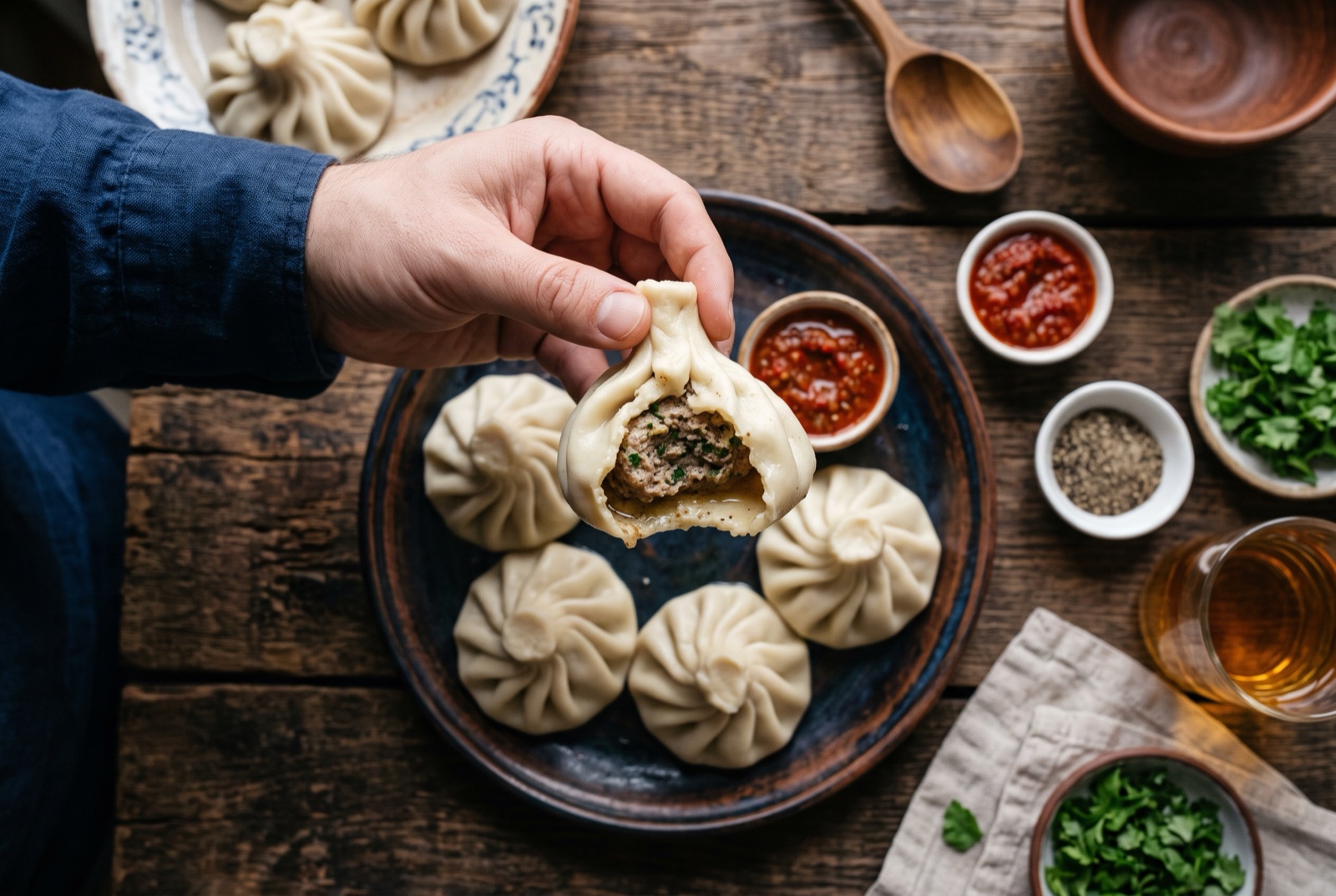
Georgia1 hr 55 min
Khinkali
Georgian Twisted Soup Dumplings
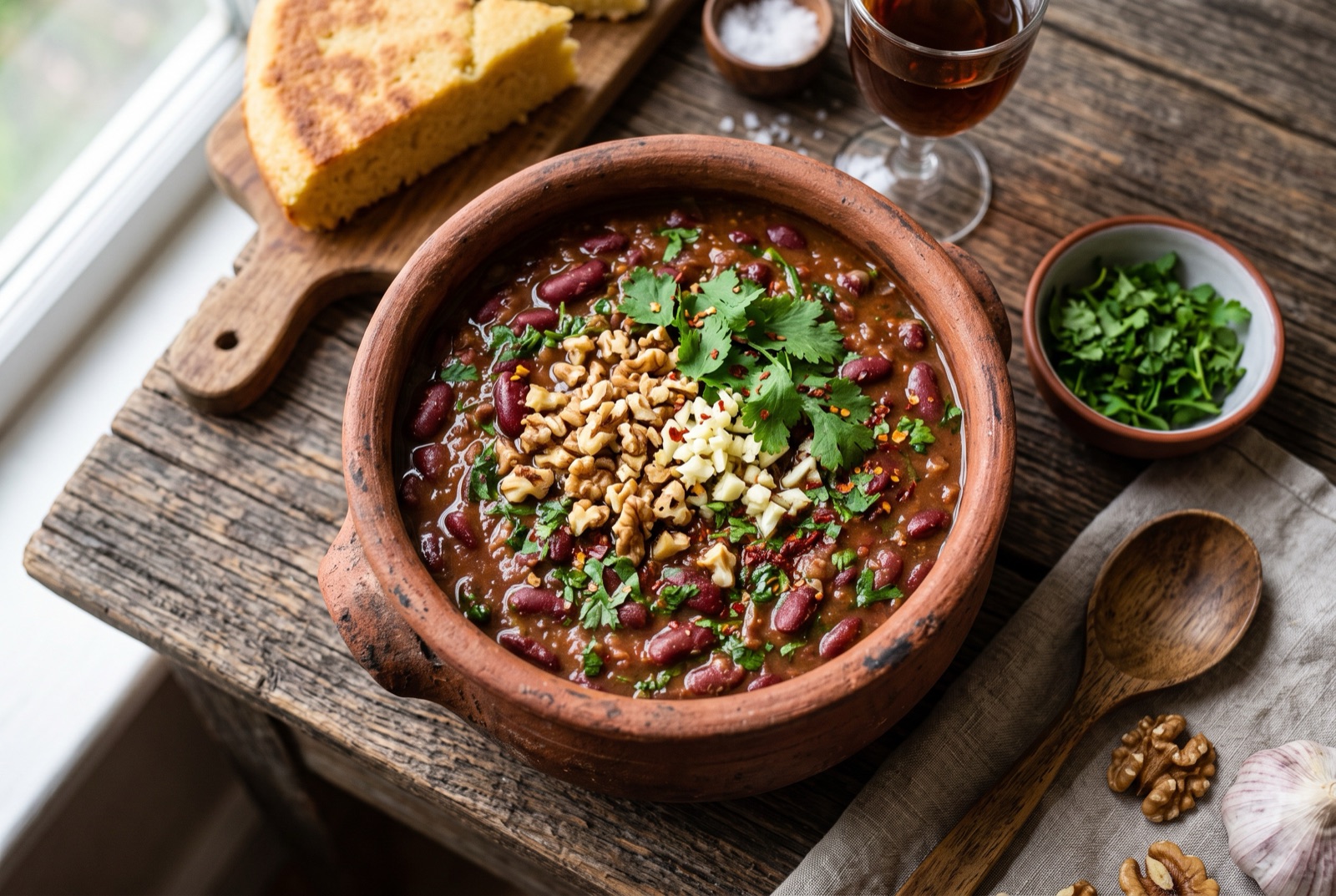
Georgia10 hr 5 min
Lobio
Georgian Spiced Kidney Bean Stew
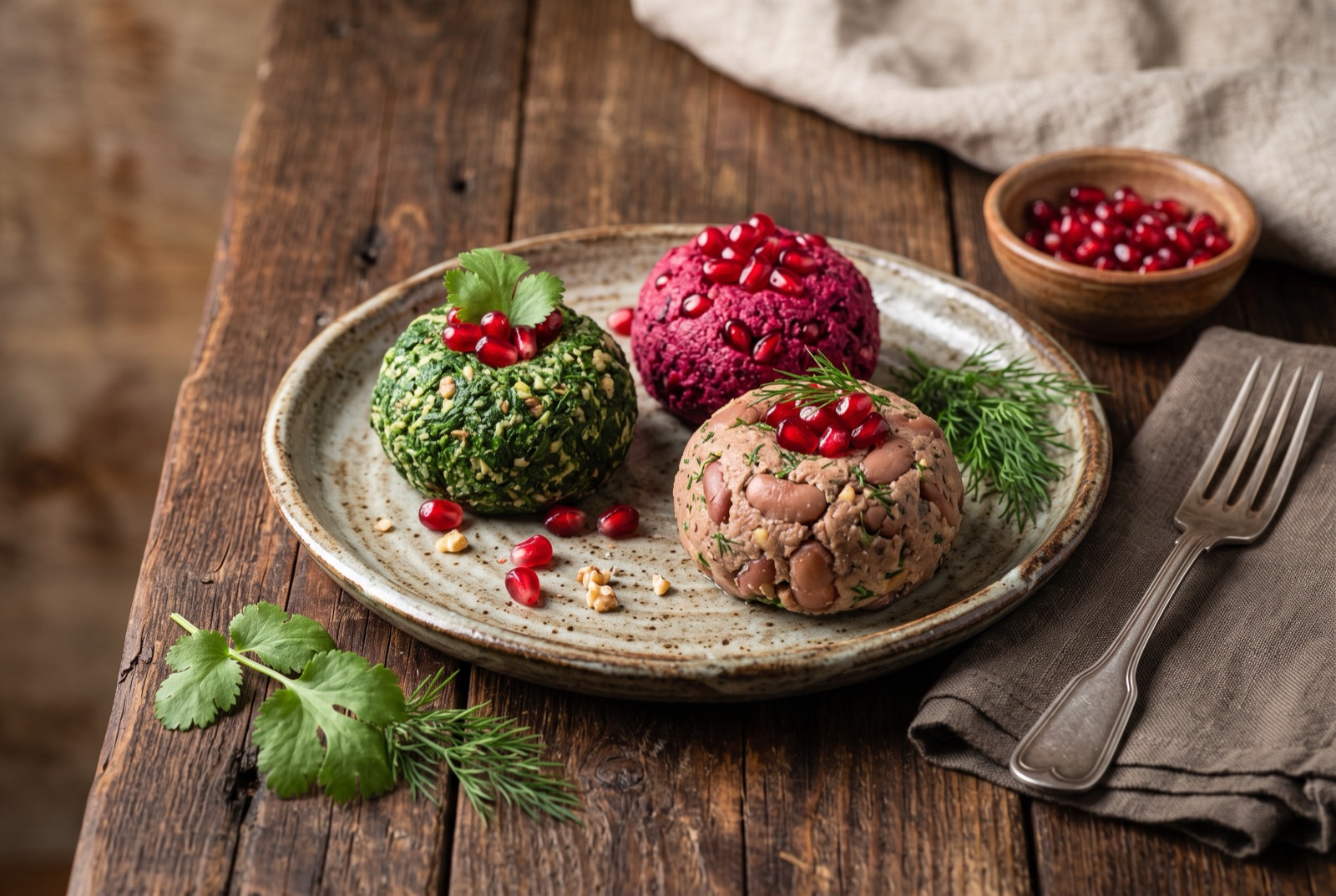
Georgia5 hr 30 min
Pkhali
Georgian Walnut and Vegetable Pâtés
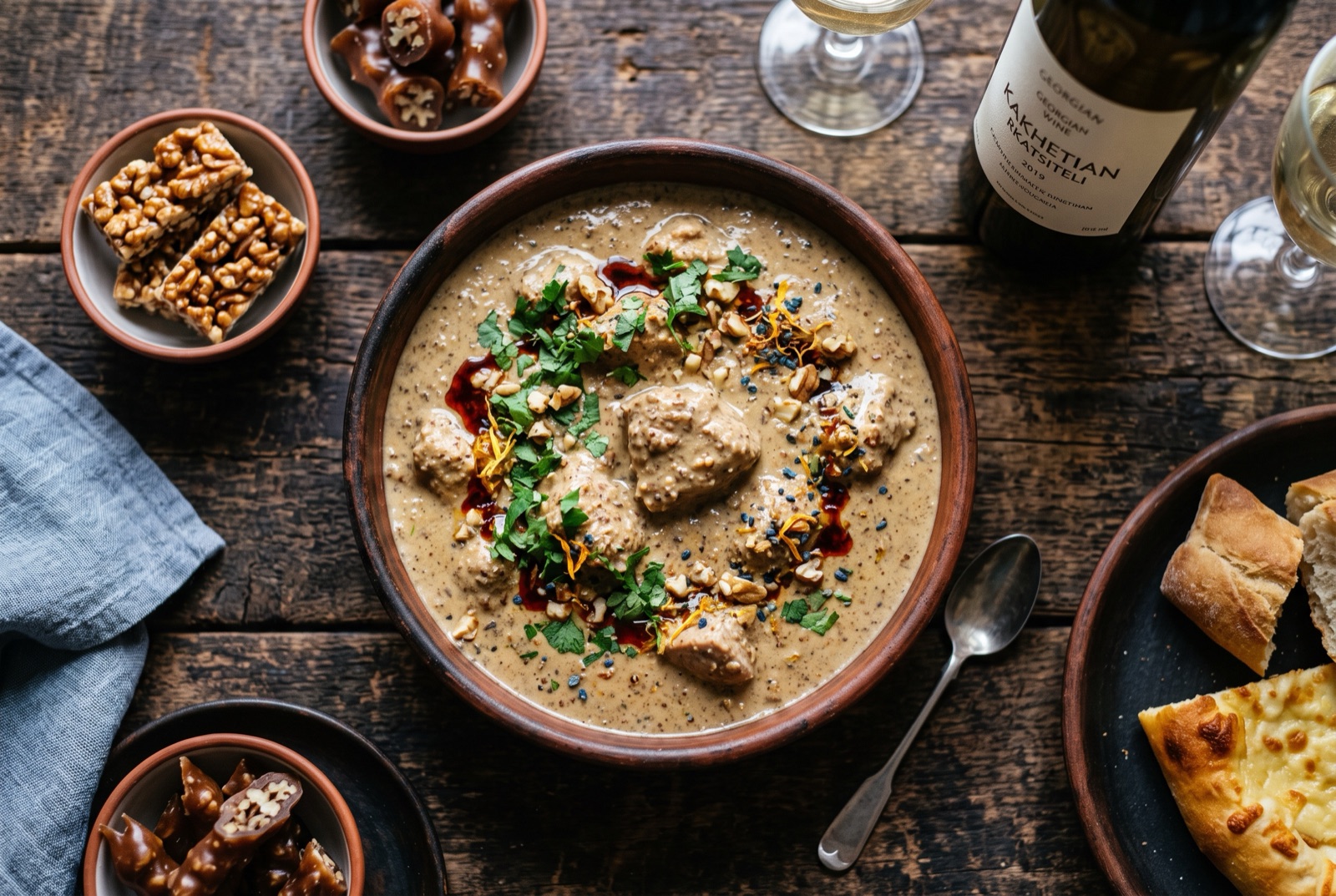
Georgia14 hr 10 min
Satsivi
Georgian Turkey in Cold Walnut Sauce
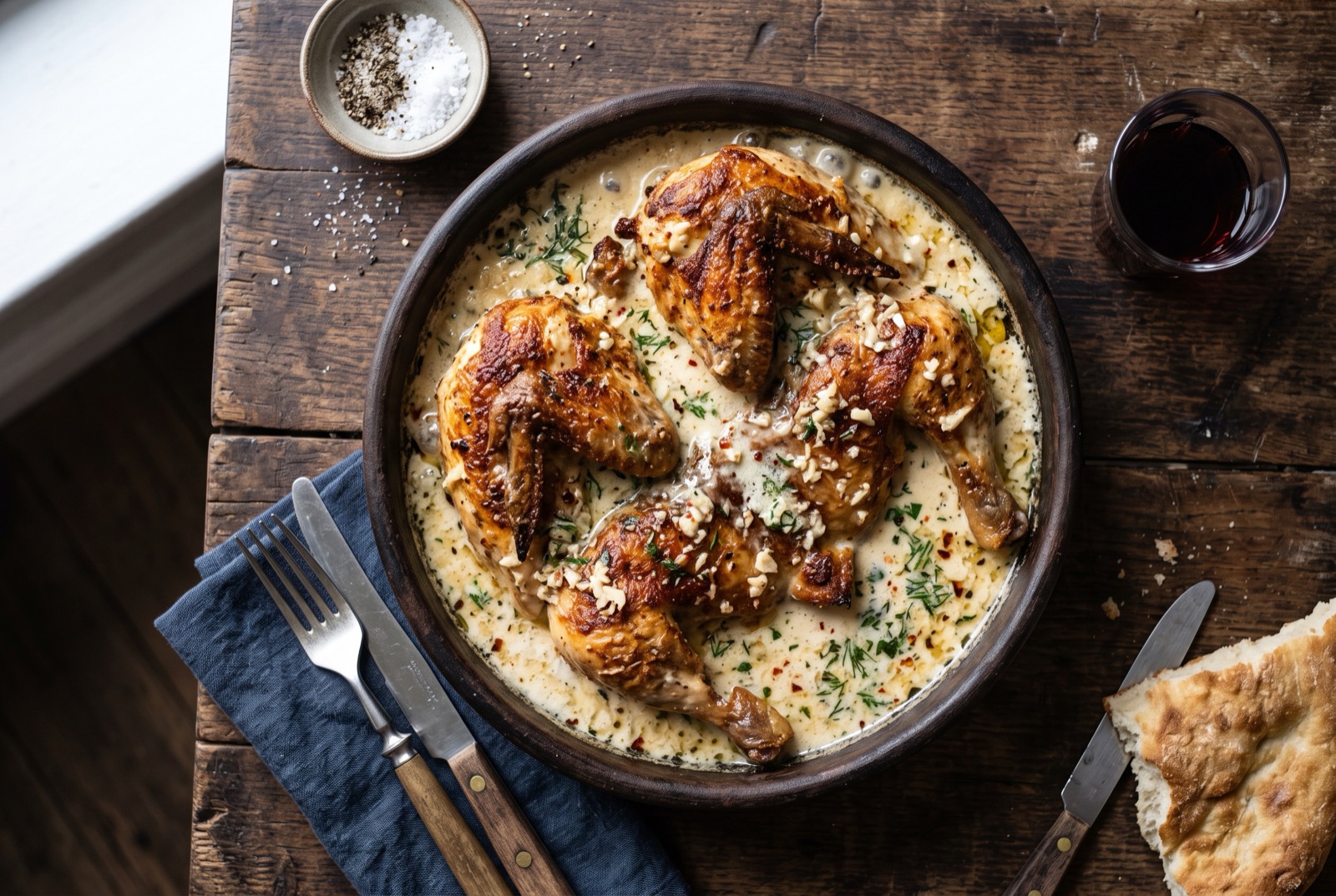
Georgia1 hr 25 min
Shkmeruli
Georgian Chicken in Garlic Milk
Keep traveling.
Georgia sits in Caucasus, and its kitchen shares borders as well as ingredients with Armenia and Bangladesh.
 Armenia
 Bangladesh