Kharcho.
Georgian Beef, Walnut and Sour Plum Soup
ხარჩო · say it: KHAR-cho
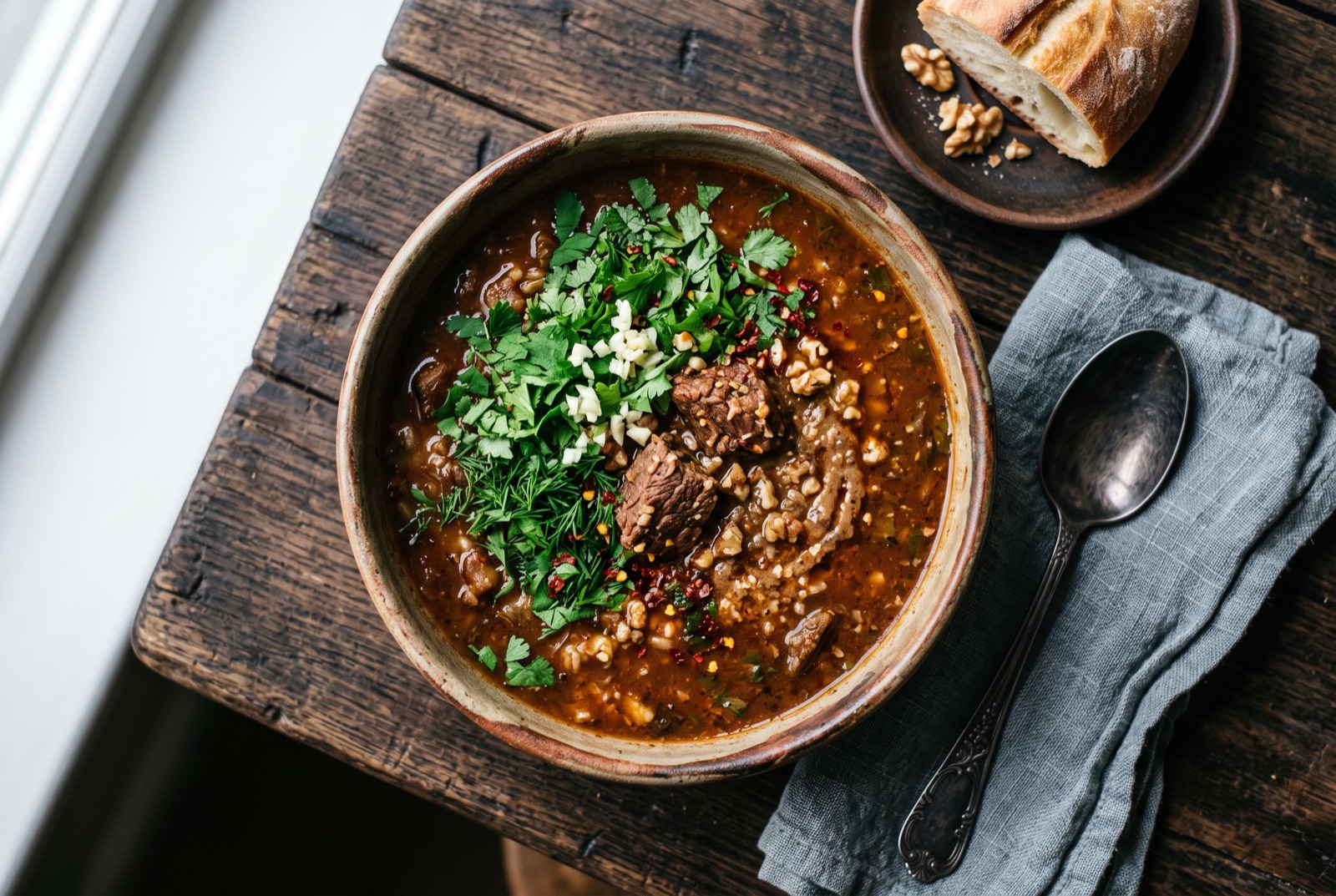
Kharcho is a beef soup built on sourness and walnut fat rather than stock alone. Chunks of beef simmer until they surrender, rice goes in to give body, and then two things arrive that separate kharcho from every other beef broth: a paste of finely ground walnuts, which thickens the soup and turns it opaque and slightly oily on top, and tklapi, sheets of sun-dried sour plum purée torn in to sour it. The result is heavy, tart, deeply garlicky and the colour of terracotta, with coriander leaf stirred in at the end by the fistful. Georgians eat it as a full meal with bread, and it is the standard cure for both cold weather and the previous night's wine.

- Gate
- GeorgiaSamegrelo
- Prep
- 25 min
- Cook
- 2 hr 10 min
- Total time
- 2 hr 35 min
- Serves
- 6
- Status
- Medium
- Nutrition / serving · estimated
- Calories 560 kcal
- Protein 38 g
- Carbs 27 g
- Fat 33 g
- Fiber 4 g
- Sodium 900 mg
Why this recipe works.
- Walnuts and rice do the thickening, so the soup has body without flour, cream or a stock cube.
- The souring step is explained with three ranked substitutes, since tklapi is genuinely hard to buy outside the Caucasus.
- Beef is simmered long enough to give gelatine to the broth, and the recipe says what that broth should look like when it is ready.
- Clear about the Soviet tomato-paste version and why this recipe does not follow it.
Ingredients.
16 itemsFor the broth
For the soup
To finish
Equipment
- Large heavy pot
- Food processor or nut grinder
- Ladle and skimmer
Instructions.
Start the broth cold
Put the beef in a large pot with the cold water, bay and peppercorns and bring it slowly to a bare simmer. Skim off every bit of grey foam that rises in the first fifteen minutes — the broth should go from cloudy to almost clear as you work.
Tip Starting in cold water draws out more gelatine and makes skimming easier.
Simmer the beef until it gives
Cover partly and cook at the barest simmer for 90 minutes to 2 hours, until a piece of beef falls apart when pressed with a fork and the broth has body — it should feel slightly sticky between finger and thumb. Lift the meat out and shred it coarsely.
Fry the onions
While the beef cooks, soften the chopped onions in the oil over medium-low heat for 15 minutes until they are completely limp and beginning to turn gold at the edges. Do not rush them to brown — you want sweetness, not colour.
Loosen the walnut paste
Grind 200 g of walnuts in short pulses until they clump and glisten with oil, then whisk in two ladles of the hot broth until you have a smooth, pourable cream with no visible lumps.
Build the soup
Return the shredded beef to the pot with the fried onions, rice, torn tklapi, coriander seed, blue fenugreek, marigold and chilli. Simmer 15 minutes, then stir in the walnut cream and cook 10 minutes more, until the soup turns opaque terracotta and beads of amber oil sit on the surface.
Tip Stir along the bottom regularly from here — the walnut paste catches and scorches easily.
Season for sourness first
Taste. It should be clearly sour with a fruity edge before you add any salt; if it is flat, add more tklapi or a spoonful of plum sauce and give it 3 minutes. Only then salt it, and adjust the chilli.
Finish off the heat and let it stand
Take the pot off the heat, stir in the crushed garlic and all the chopped coriander, cover, and leave 10 minutes before serving. Lift the lid at the table — the smell of hot garlic and coriander coming off the pot is the point of doing it this way.
Tips from our kitchen.
- Use a gelatinous cut — shin, chuck or short rib on the bone. Lean stewing steak gives a thin broth no amount of walnut will rescue.
- Skim the broth hard in the first fifteen minutes. Everything you leave in turns the finished soup muddy and slightly bitter.
- Grind the walnuts to a paste that clumps and glistens, then slacken it with hot broth before it goes into the pot, or it will sit in lumps.
- Add the rice only in the last 20 minutes. Left in longer it blows out and turns the soup to porridge overnight.
- Taste for sourness before adding salt. Kharcho should make you flinch slightly on the first spoonful, then settle.
- The garlic and coriander go in with the pot off the heat, then the lid on for ten minutes — this is where the smell comes from.
Substitutions.
- Tklapi (dried sour plum sheet) → 3 tbsp tkemali sour plum sauce, or 8 dried prunes blitzed with 1 tbsp vinegar, or 2 tbsp pomegranate molasses
- Ranked best to worst. All bring fruit acidity rather than clean sharpness. Do not substitute lemon juice alone — it sours without adding any body.
- Blue fenugreek and marigold → 2 tsp khmeli suneli blend
- The pre-mixed Georgian blend contains both plus summer savory, and is the easier single purchase if you are only cooking this once.
- Beef shin → Lamb shoulder on the bone
- A common variation in the mountains. Lamb needs about 20 minutes less simmering and gives a stronger, gamier broth.
Variations.
- Kharcho po-megrelski
- The Mingrelian home version: more walnut, a spoonful of ajika chilli paste, and less rice, so the soup is thick enough to stand a spoon in.
- Chicken kharcho
- Built on a chicken carcass instead of beef, cooked in under an hour. Lighter and paler, and the usual weeknight compromise in Georgian homes.
- The Soviet canteen version
- Tomato paste for sourness, more rice, minimal walnut. Widespread across the former USSR and still what most Russian menus mean by kharcho — worth knowing, not worth copying.
Storage & reheating.
Kharcho keeps 3 days refrigerated and thickens considerably as the rice swells — loosen it with hot water or broth when reheating rather than serving it as sludge. Reheat gently and stir in a fresh handful of coriander at the end, since the original herbs fade overnight. It freezes for 2 months, but freeze it before the rice goes in if you can: reheated frozen rice in soup goes soft and mealy, while the walnut broth itself survives perfectly well.
Serve with
Torn bread, a saucer of extra crushed garlic for anyone who wants more, and pickled chillies on the side.
The story behind Kharcho.
Kharcho comes from Samegrelo in western Georgia, the province with the most aggressive palate in the country — more chilli, more garlic, more walnut than anywhere else. The full traditional name, kharcho suneli dzrokhis khortsi, translates roughly as beef soup with suneli spices, and the dish as made at home in Mingrelia is thicker and hotter than the version that spread across the Soviet Union under the same name.
That spread caused lasting confusion. Soviet canteen cookbooks standardised a kharcho made with tomato paste, more rice and far less walnut, and that recipe is still what many people outside Georgia mean by the word. It is not a fake so much as a different dish wearing the same name — cheaper, thinner, and missing the walnut body that makes the original what it is. Adding to the confusion, there is also kharcho po-megrelski and a chicken version, and none of these are the same as the ubiquitous Russian-menu soup.
The sour element is the part worth chasing. Tklapi is fruit leather: sour plums cooked down, spread thin on a board and dried in the sun into sheets that Georgian households hang up for the winter. Torn into hot broth it dissolves and gives an acidity that carries fruit and tannin along with it, not the clean sharpness of lemon. Where tklapi is unavailable, tkemali plum sauce is the closest thing, and pomegranate molasses or dried prunes plus vinegar will get you a defensible approximation. What no substitution should do is reach for tomato paste as the souring agent — that is the Soviet fork in the road, and the walnut version is a considerably better soup. Georgians finish the pot with crushed garlic and a huge amount of coriander leaf off the heat, then leave it to stand for ten minutes, which is when the layers stop being separate.
Questions, answered.
What is tklapi and what can I use instead?
Tklapi is sour plum purée dried in thin sheets, essentially savoury fruit leather, torn into soups to sour them. It brings fruit and tannin alongside the acidity. The best substitutes in order are tkemali plum sauce, blitzed dried prunes with a little vinegar, or pomegranate molasses. Lemon juice alone gives sharpness with none of the body.
Is kharcho supposed to be this thick?
Yes. Between the ground walnuts and the rice it should be closer to a stew than a broth, thick enough that a spoon leaves a brief trail. If yours is soupy, simmer it uncovered for another ten minutes or add another handful of ground walnuts loosened with broth.
Why does my kharcho taste bitter?
Two likely causes: old walnuts, which go rancid and bitter and cannot be hidden in a soup built on them, or too much ordinary fenugreek used in place of blue fenugreek. Taste a walnut before grinding half a bowl of them, and if you only have standard fenugreek, halve the quantity the recipe calls for.
Can I make kharcho without a pressure cooker?
That is the normal way — the beef simply needs 90 minutes to two hours at a bare simmer until it falls apart at a fork. A pressure cooker gets you there in about 40 minutes but gives a slightly less clear broth. Either way, skim thoroughly in the first fifteen minutes.
How much garlic and coriander is right?
More than most non-Georgian recipes suggest. Four to six crushed cloves and a full 40 g bunch of coriander for a pot serving six is normal, added off the heat so neither cooks away. If it smells strongly of both when you lift the lid, you are in the right territory.
You might also like.
All recipes →
Keep exploring Georgia.
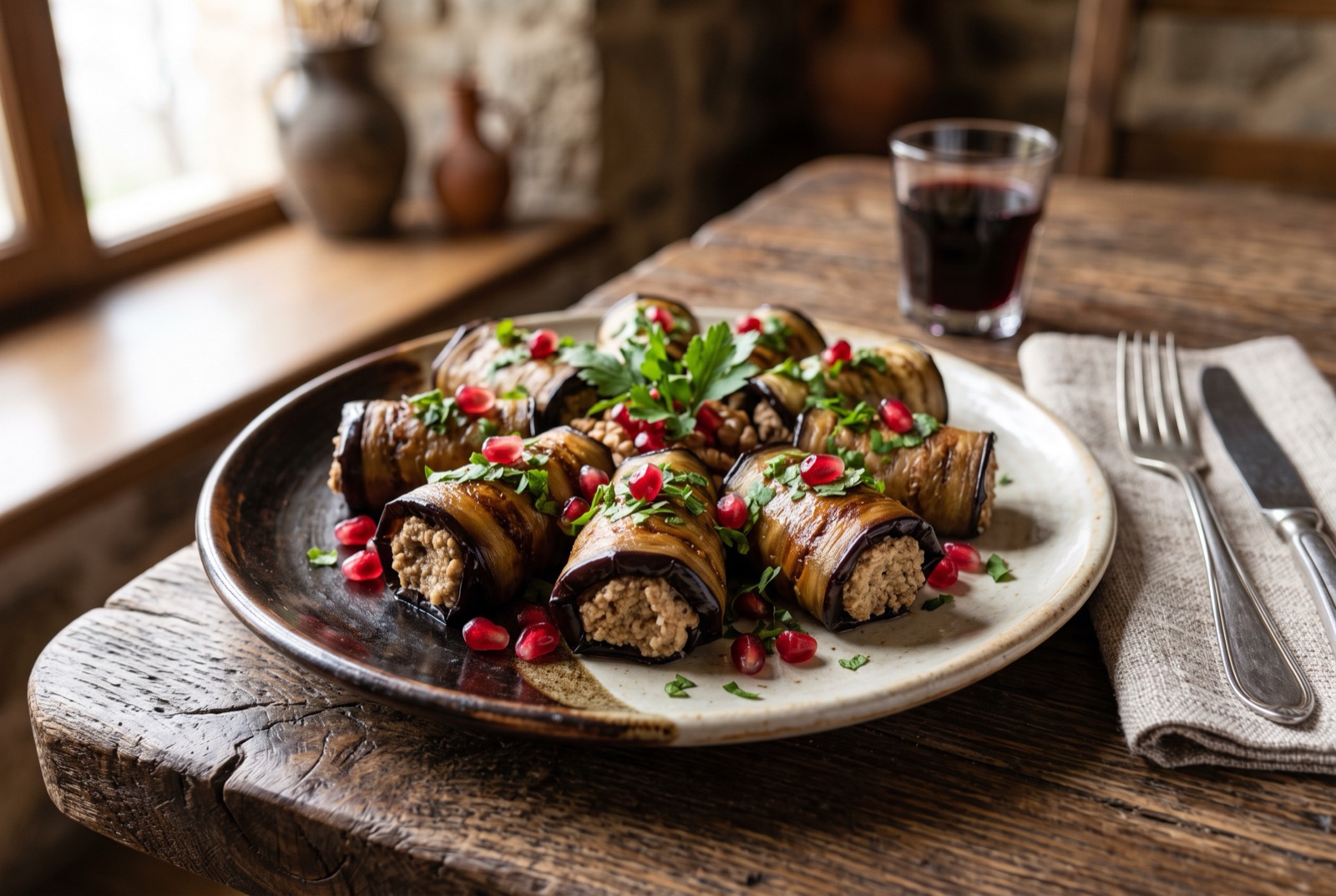
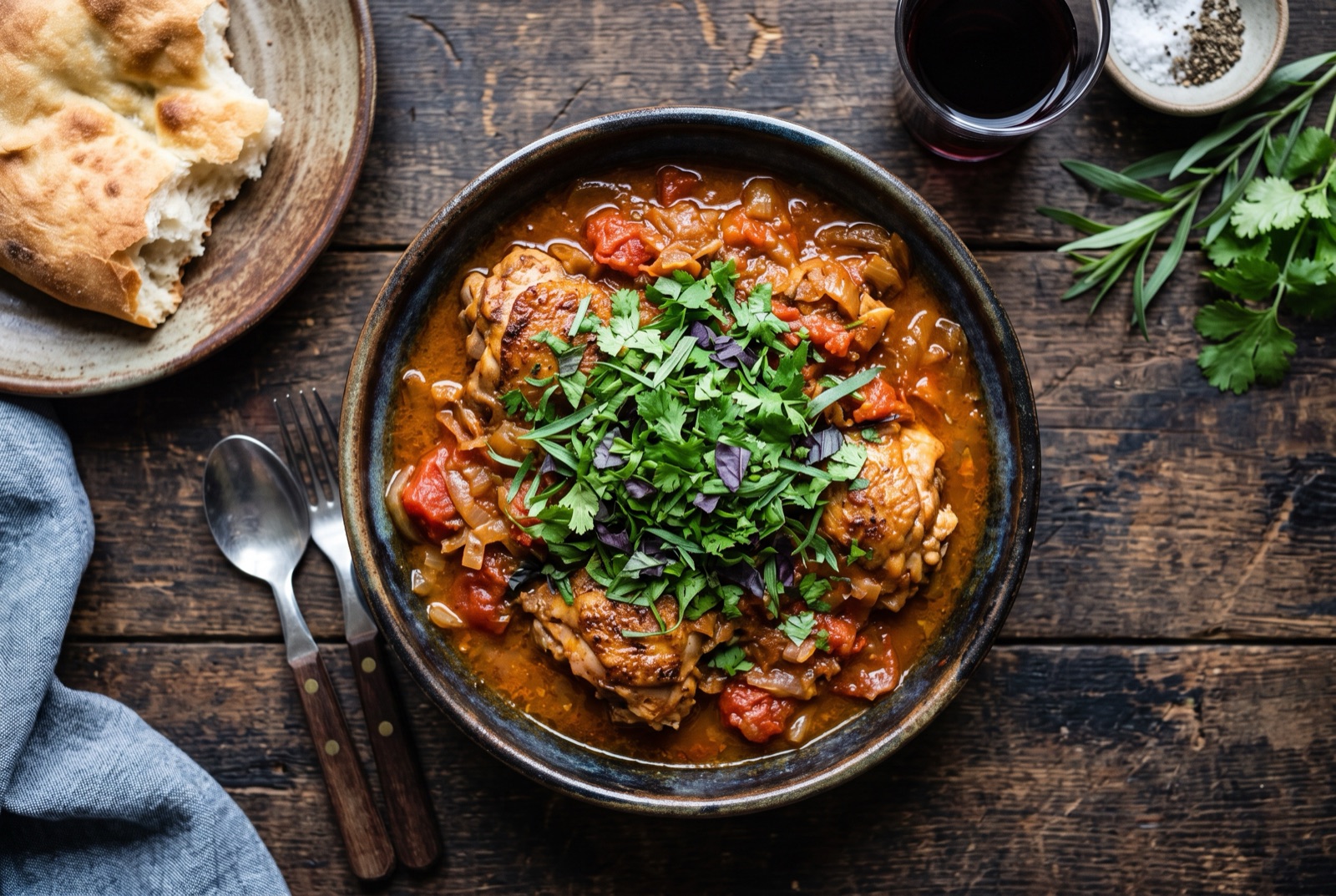
Georgia has 9 more dishes in the atlas — Adjarian Khachapuri and Badrijani Nigvzit, and 7 more.
Recipe by The DishRoute Kitchen · published August 20, 2026 · updated August 20, 2026