Algeria.
الجزائر
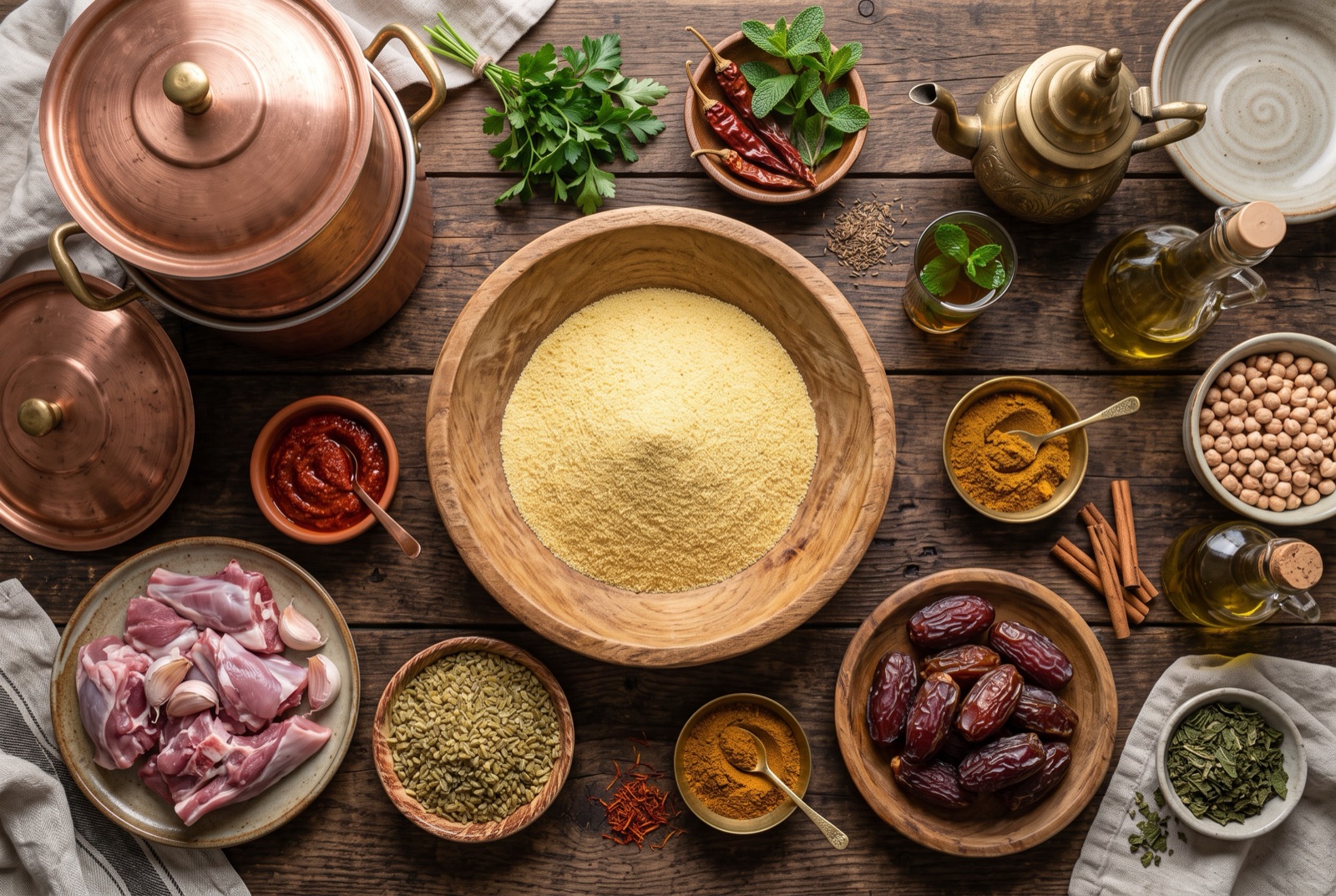
Algerian cooking runs on two sauces and a grain. Nearly every stew in the repertoire is either a marqa hamra, a red sauce built on tomato, paprika and a little chilli, or a marqa beida, a pale sauce where onion, cinnamon and black pepper do all the seasoning and nothing is browned at all. Whichever one is on the stove, something starchy waits underneath it: steamed couscous, torn flatbread, hand-cut noodles, chickpeas, or a wedge of semolina loaf. The spicing is warm rather than fiery. Cinnamon turns up in savoury food constantly, dried mint carries the soups, and cumin belongs more to street food and eggs than to the family stew. Chilli heat is offered on the side as harissa rather than stirred through the pot, which surprises visitors who arrive expecting Maghreb food to burn. What holds it all together is patience — onions softened without colour, meat simmered until it gives way at a spoon, and a cook who tastes the sauce far more often than the meat.

- Continent
- AfricaMaghreb
- Recipes in atlas
- 10
- Must-try dishes
- 3
- Pantry staples
- 10
Start with the classics.
Must tryThe dishes that explain the Algeria kitchen fastest — if you cook only a few things from this page, cook these.
Inside the Algeria kitchen.
Learn the two sauces and most of the country opens up. The red one, marqa hamra, starts with onion softened in oil, then tomato paste fried until it darkens and smells sweet rather than metallic, then paprika, a scrape of chilli, garlic and meat, loosened with water and left alone. The white one, marqa beida, refuses colour entirely: grated onion goes into oil over low heat and must stay pale, and the seasoning comes from cinnamon, black pepper, sometimes a strand of saffron, with the sauce thickened by chickpeas and long simmering instead of browning. Cooks judge both by the same signal — the sauce is ready when a film of orange or clear fat rises at the edge of the pot and the liquid clings to the back of a spoon.
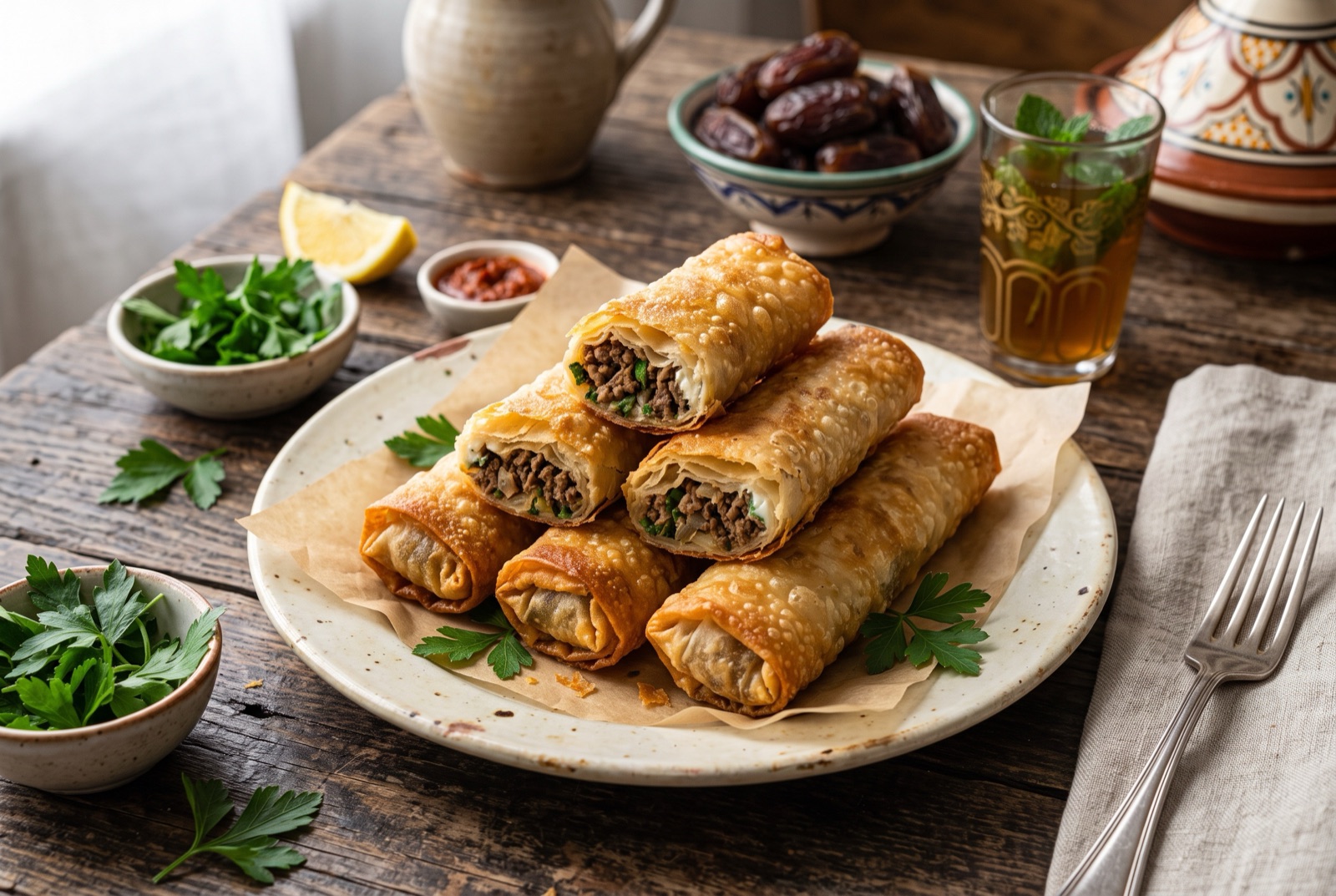
Semolina is the national flour. Coarse grades are rolled by hand into couscous, medium grades go into bread and the syrup-soaked cakes of Ramadan, and fine grades are worked into the elastic doughs that become mhadjeb, msemen and the tissue-thin dioul sheets used for bourek. Wheat also arrives green and smoked as frik, the cracked freekeh that gives chorba its body and its faintly burnt aroma. Rice appears, but as a guest; bread and semolina are the hosts.
The kitchen carries its history openly. Three centuries of Ottoman rule left dolma, bourek and a taste for cinnamon in meat dishes. Andalusian refugees who crossed after 1492 brought almonds, orange-blossom water and the pastry work that Tlemcen and Algiers still specialise in. Amazigh cooking, older than any of it, holds the line on couscous, barley, olive oil, wild greens and the clay tajine plate used for baking bread. French colonial rule left the baguette, the coffee habit and the flan, absorbed without much ceremony. Spanish influence lingers in the west, where Oran's karantika keeps a Spanish name.
A meal is usually one substantial dish rather than a sequence. Salads and small fried things may open it, the tajine or couscous arrives in a shared platter, and bread does the work of cutlery for anything with sauce. Fruit closes almost every ordinary meal; the elaborate pastries — kalb el louz, baklawa, makrout, griwech — belong to Ramadan, weddings and the two Eids, when trays of them are made in quantities that only make sense if you plan to give most of them away.
Regional lines are clear. Algiers cooks pale, Ottoman-inflected food and hand-cut rechta. Kabylia leans on olive oil, barley and greens. Constantine is famous for its pastry and its chorba, and the oases south of it produce the dates that sweeten everything. Oran and the west sit closest to Spain and Morocco and eat the most street food, sardines and chickpea flour included. The Sahara adds its own bread, taguella, baked directly in hot sand.
Signature pantry.
10 staplesThe ingredients this cuisine cannot function without.
- semolina
- freekeh (frik)
- chickpeas
- lamb
- dried mint
- cinnamon
- ras el hanout
- olive oil
- dates
- harissa
How people eat in Algeria.
Food arrives in one big platter and everybody eats from the section directly in front of them, using the right hand and a torn piece of bread rather than reaching across. Hosts refill your plate without asking, and refusing the first refill is expected politeness rather than an actual refusal. Coffee and mint tea come after the meal, not with it, usually with something sweet and small. Ramadan reorganises the whole table: the fast breaks with dates and a bowl of chorba, bourek is fried in batches all evening, and the sweets appear near midnight. Guests are seated first and served first, and leaving a plate completely bare is read as a sign that you were not given enough.
Regional kitchens.
Algeria cooks 4 distinctly different ways depending on where you stand — here is what changes between them.
- R1Algiers and the Algérois
- The capital cooks the country's most refined food: pale cinnamon-scented sauces, tiny hand-rolled meatballs, and hand-cut rechta noodles steamed over broth. Ottoman habits sit closest to the surface here.
- R2Kabylia and the Amazigh highlands
- Mountain cooking built on olive oil, barley and wheat couscous, wild greens and dried figs. Dishes like berkoukes, the hand-rolled pea-sized pasta, come from this kitchen.
- R3The Aurès, Constantine and the Ziban oases
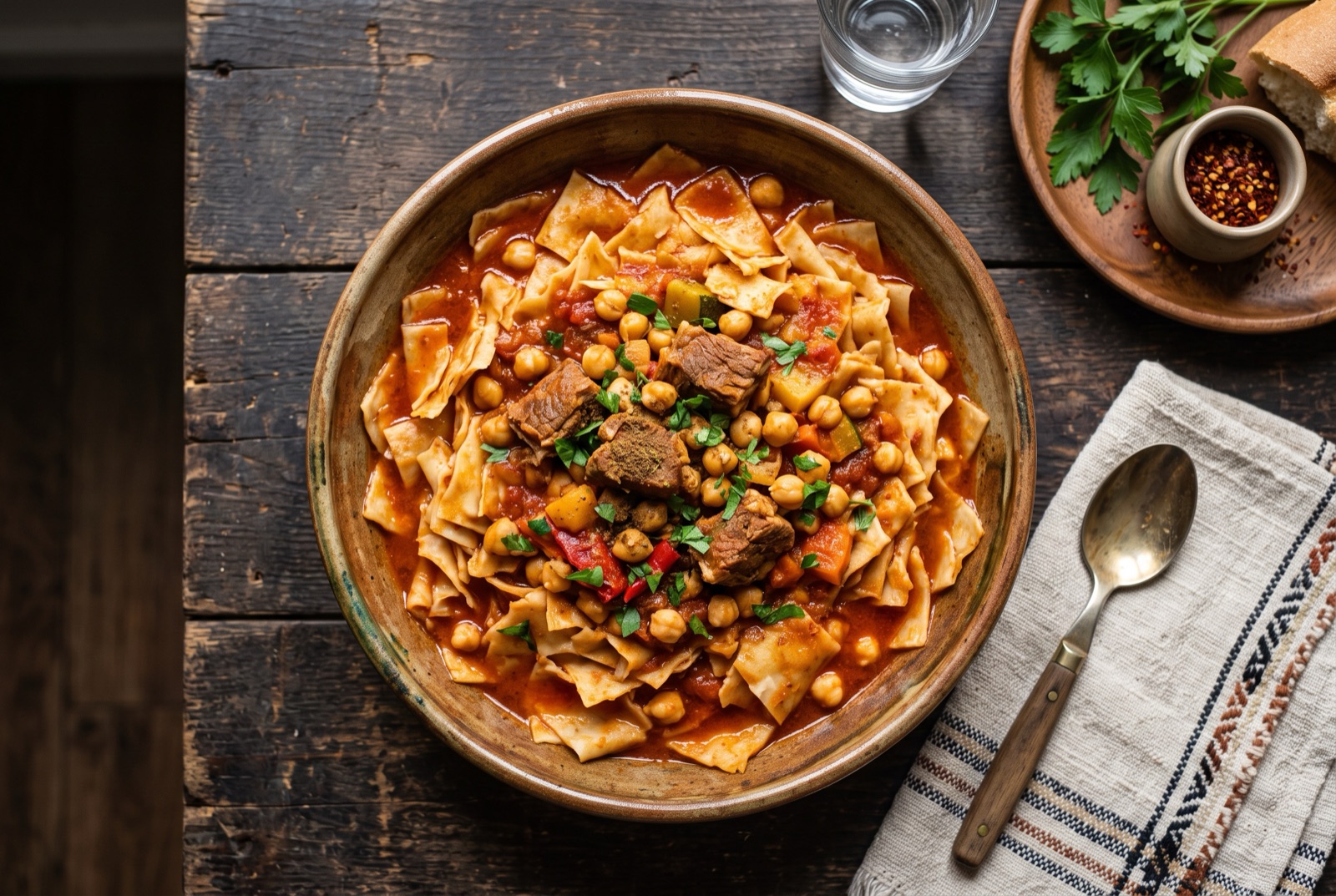
- The northeast layers flatbread into sauce — chakhchoukha around Biskra, trid in the Aurès — while Constantine is known nationally for its pastry work and its chorba. The oases below supply Algeria's dates.
- R4Oran and the west
- The Oranie faces Spain and Morocco and eats accordingly: grilled sardines, chickpea-flour karantika sold from carts, and more street food than anywhere else in the country.
All Algeria recipes.
10 recipes and counting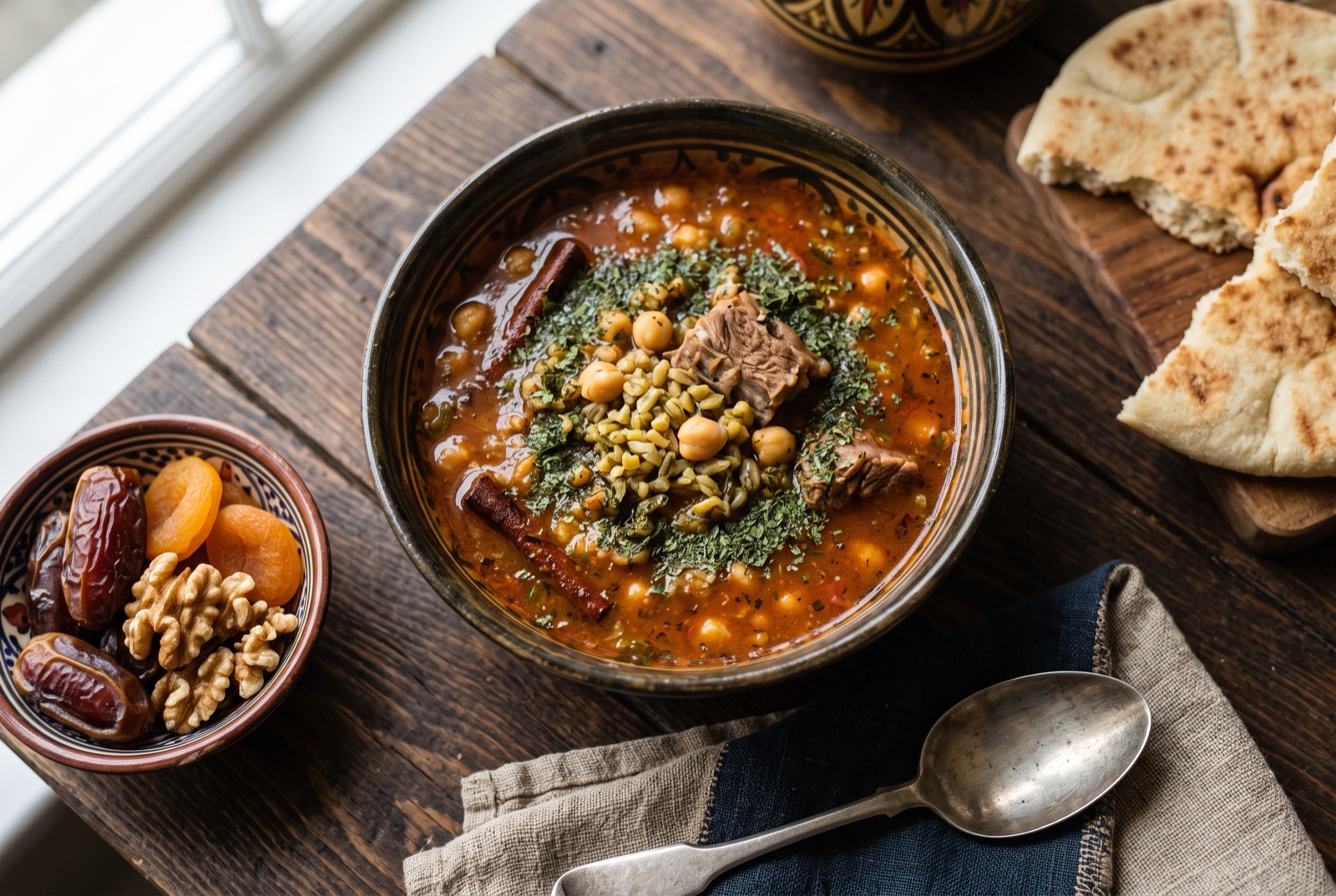
Algeria1 hr 30 min
Algerian Chorba Frik
Lamb and Freekeh Soup
Algeria1 hr
Bourek
Algerian Fried Meat and Cheese Cigars
Algeria3 hr 10 min
Chakhchoukha
Biskra Torn Flatbread in Lamb Sauce
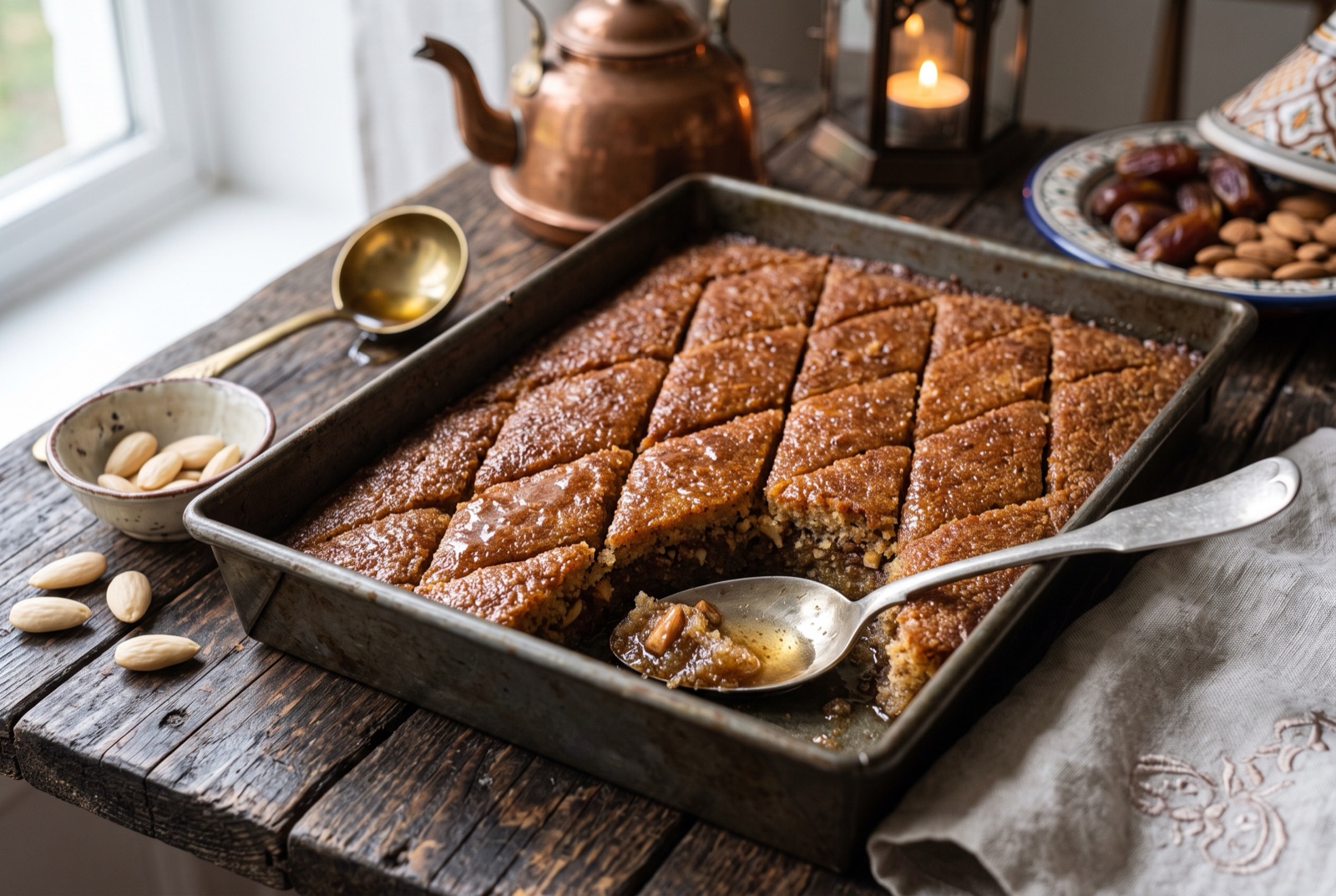
Algeria2 hr 15 min
Kalb el Louz
Algerian Almond Semolina Syrup Cake
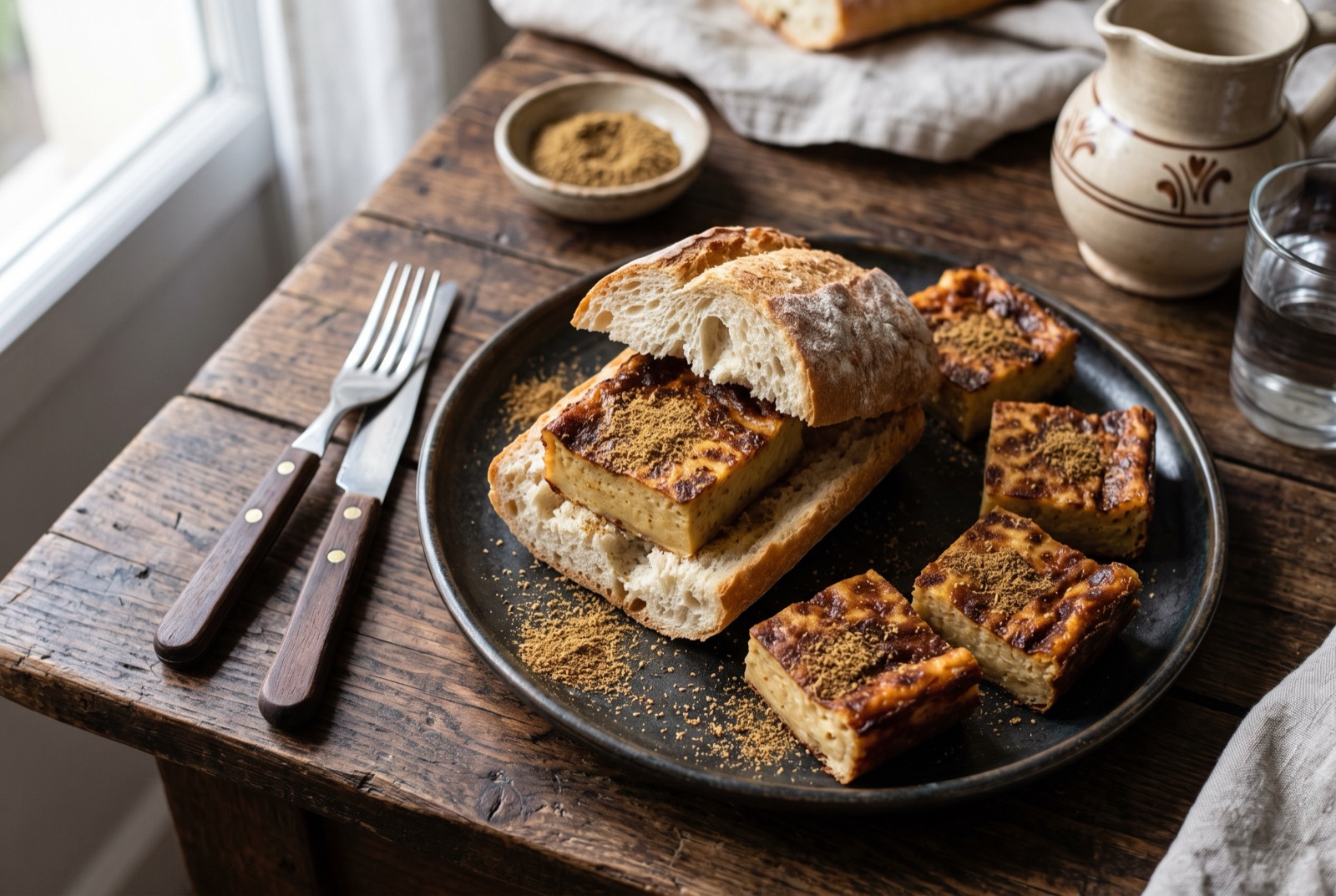
Algeria1 hr 30 min
Karantika
Oran Baked Chickpea Flour Flan
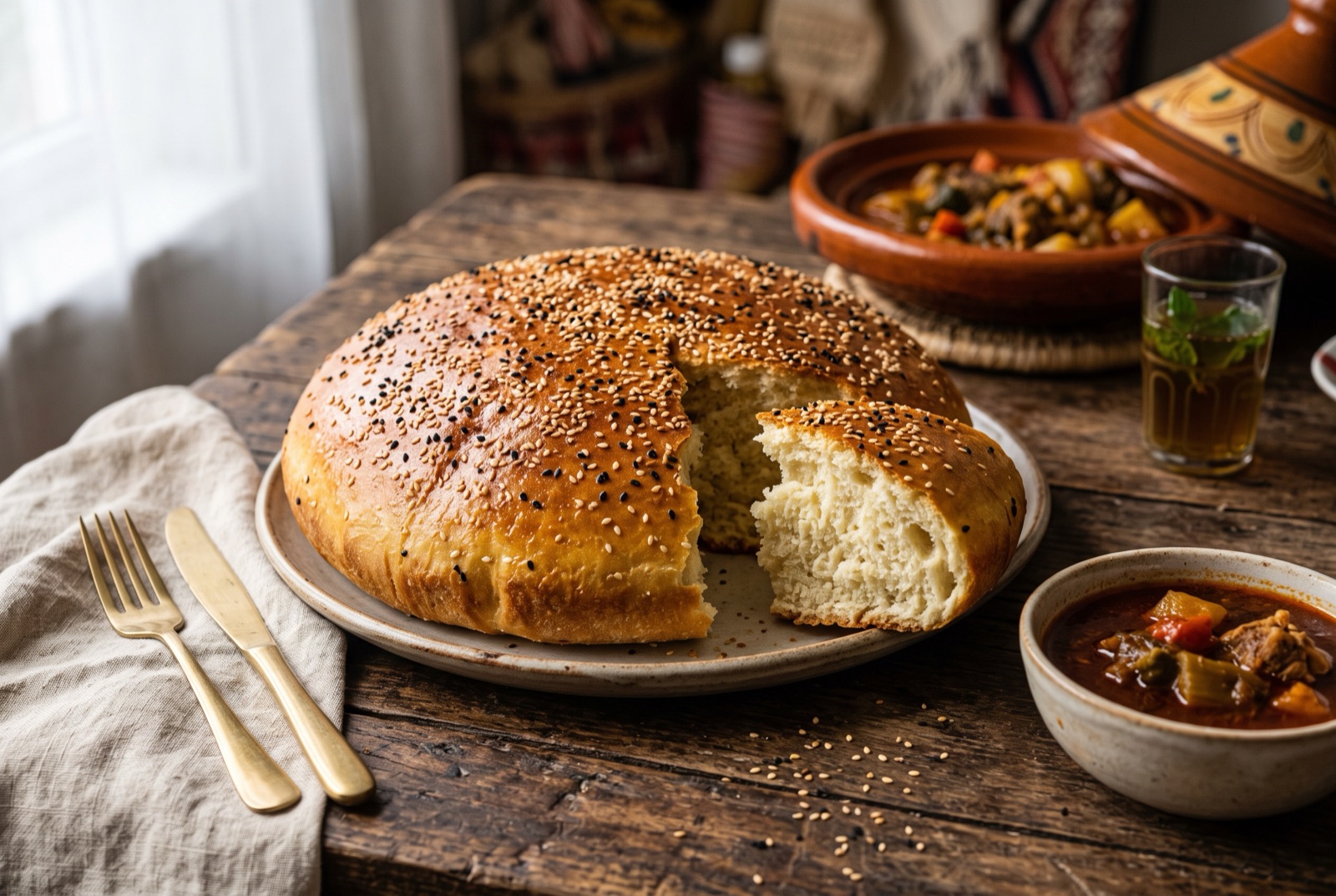
Algeria2 hr 25 min
Khobz Dar
Algerian Semolina House Bread
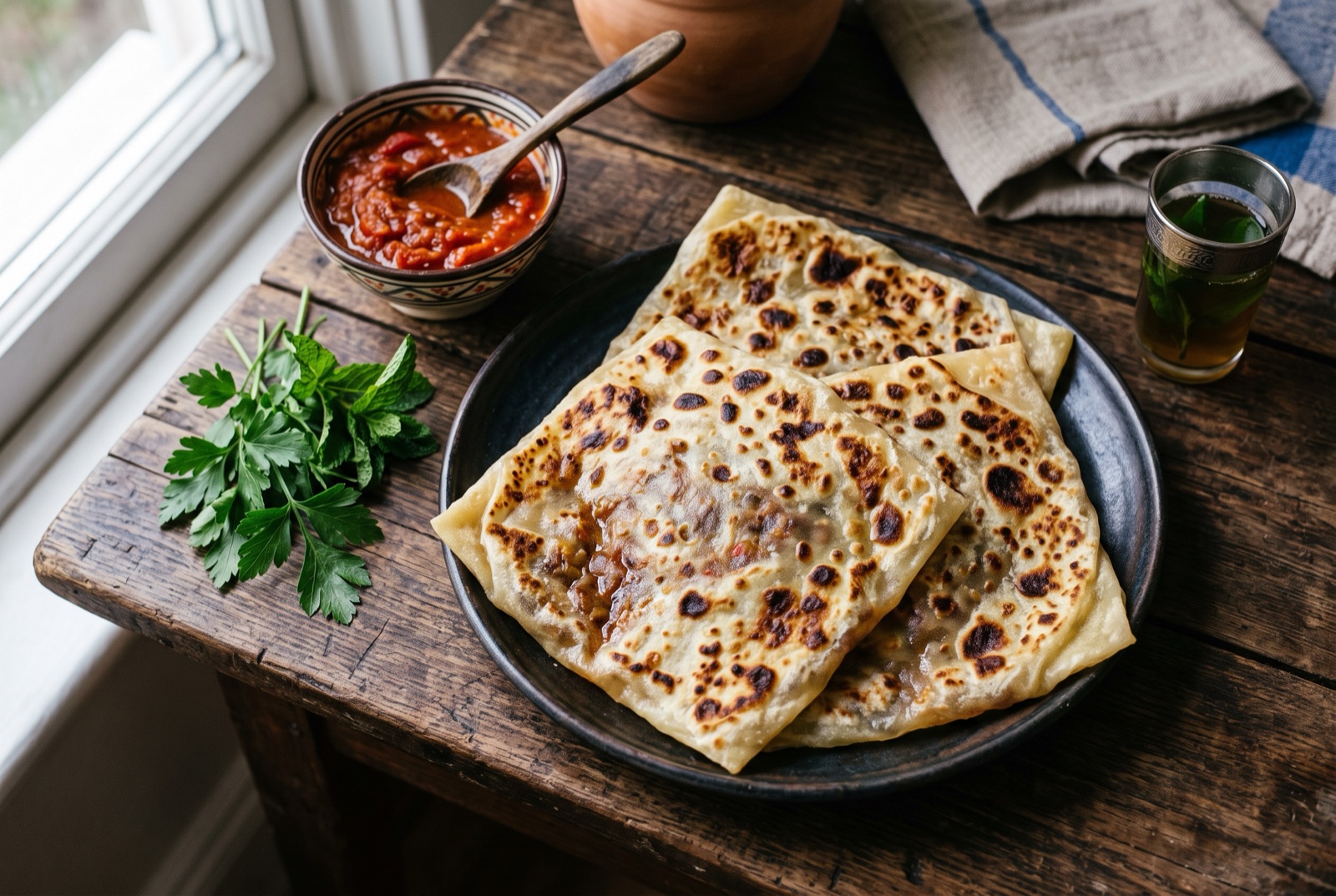
Algeria2 hr
Mhadjeb
Algerian Stuffed Semolina Crepes
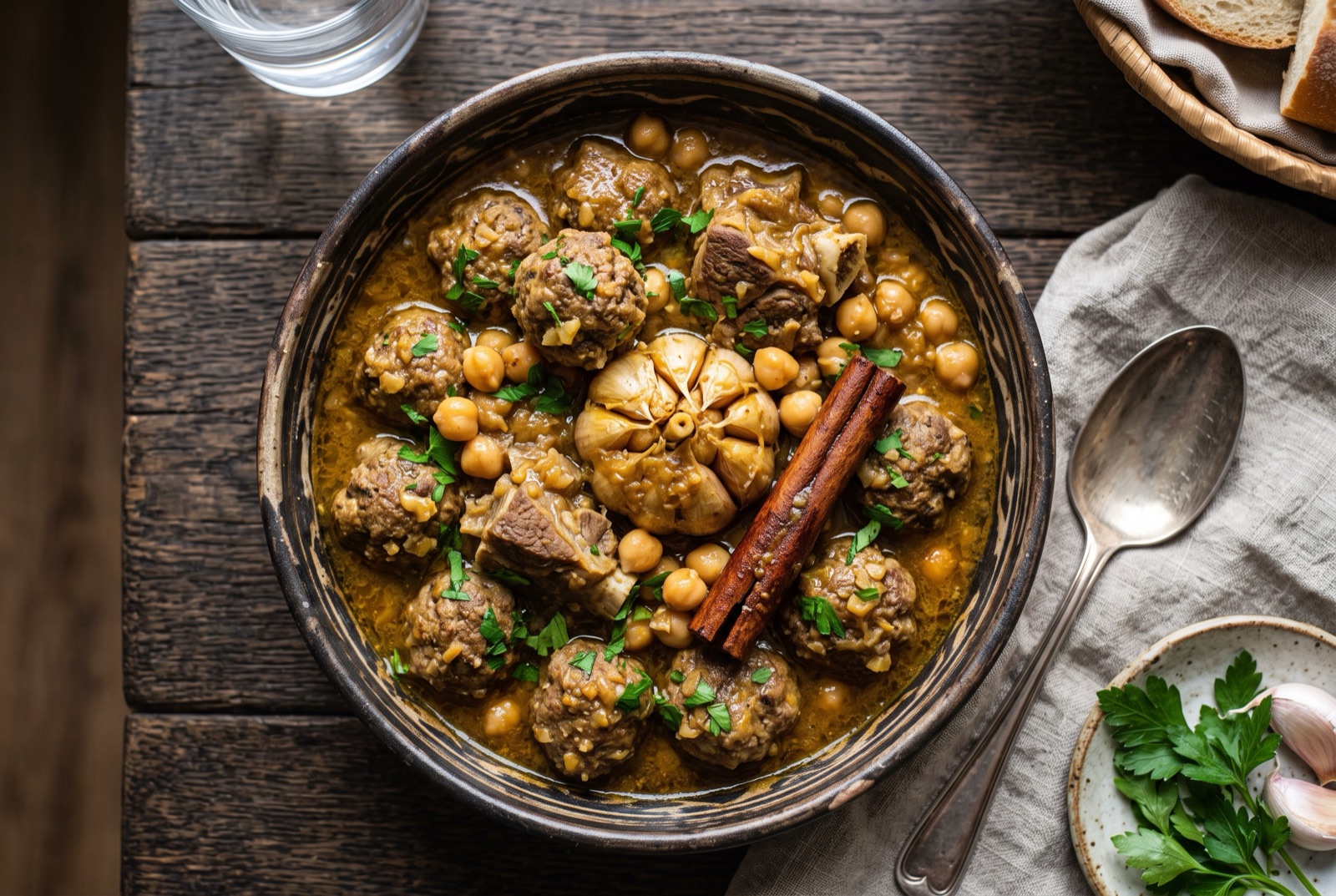
Algeria1 hr 45 min
Mtewem
Algerian Garlic Meatball and Lamb Stew
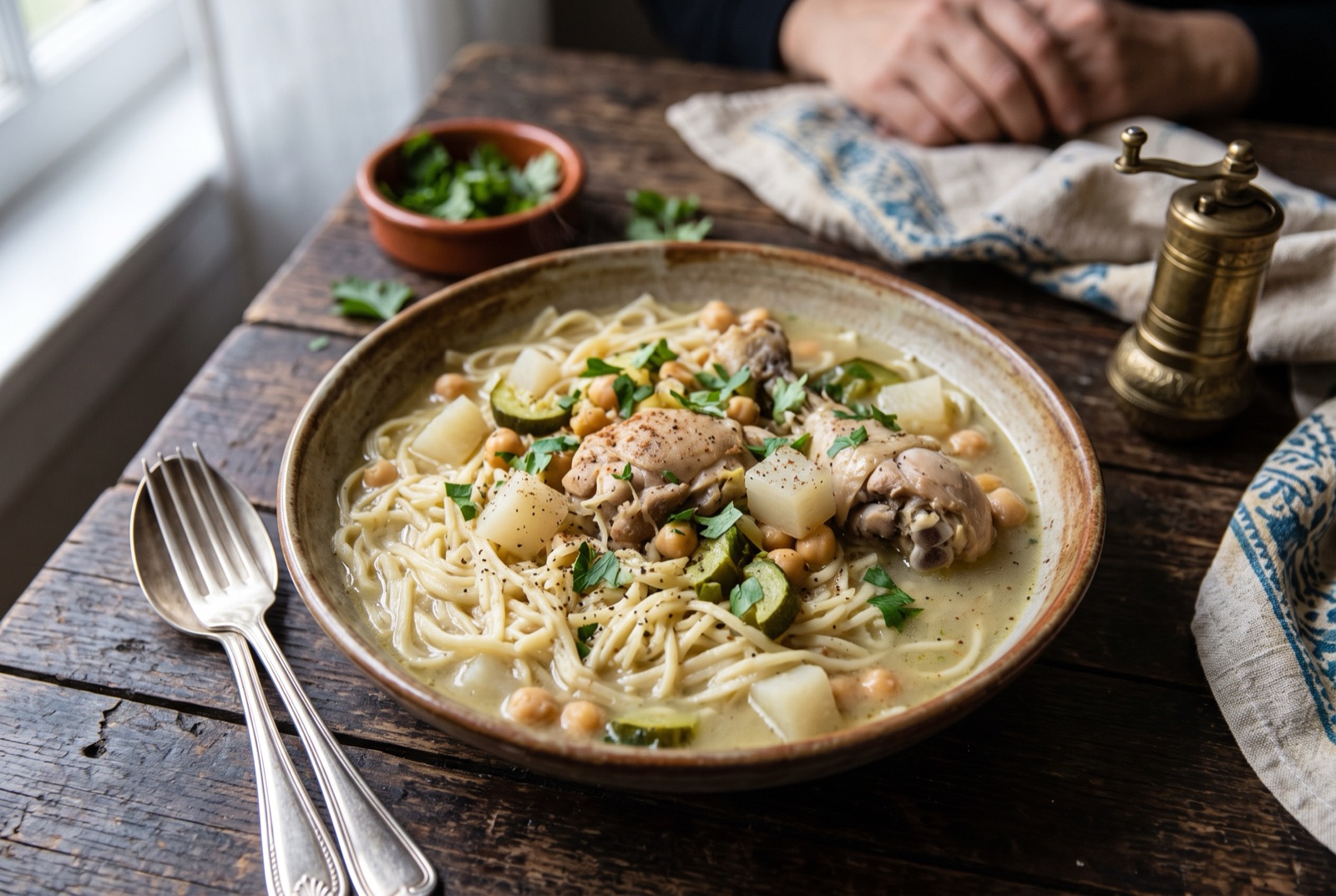
Algeria2 hr 35 min
Rechta
Algiers Steamed Noodles in White Chicken Broth
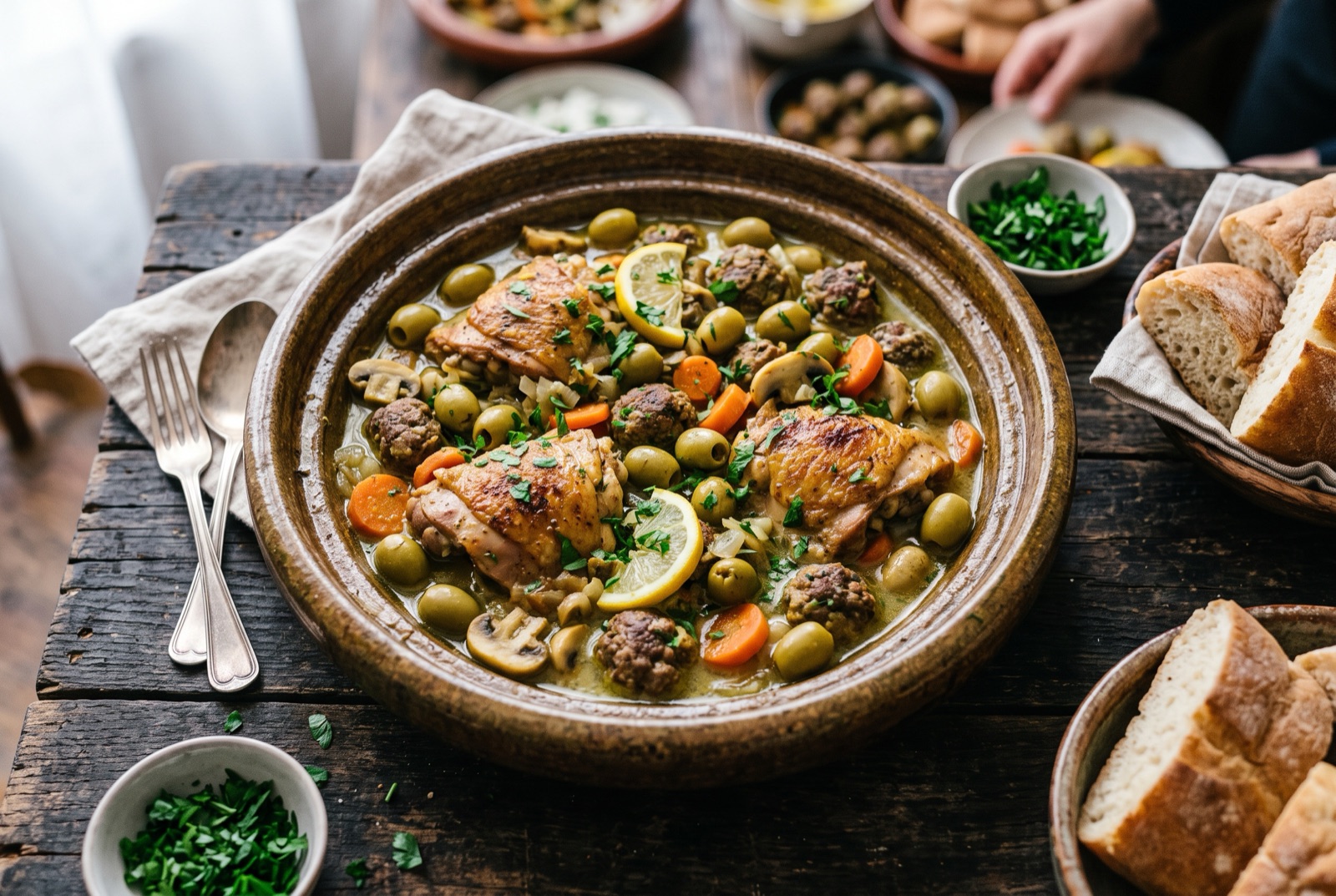
Algeria1 hr 30 min
Tadjine Zitoun
Algerian Chicken and Green Olive Stew
Keep traveling.
Algeria sits in Maghreb, and its kitchen shares borders as well as ingredients with Cameroon and Egypt.
 Cameroon
 Egypt
Egypt