Algerian Chorba Frik.
Lamb and Freekeh Soup
شوربة فريك · Chorba frik djazairia · say it: SHOR-ba freek
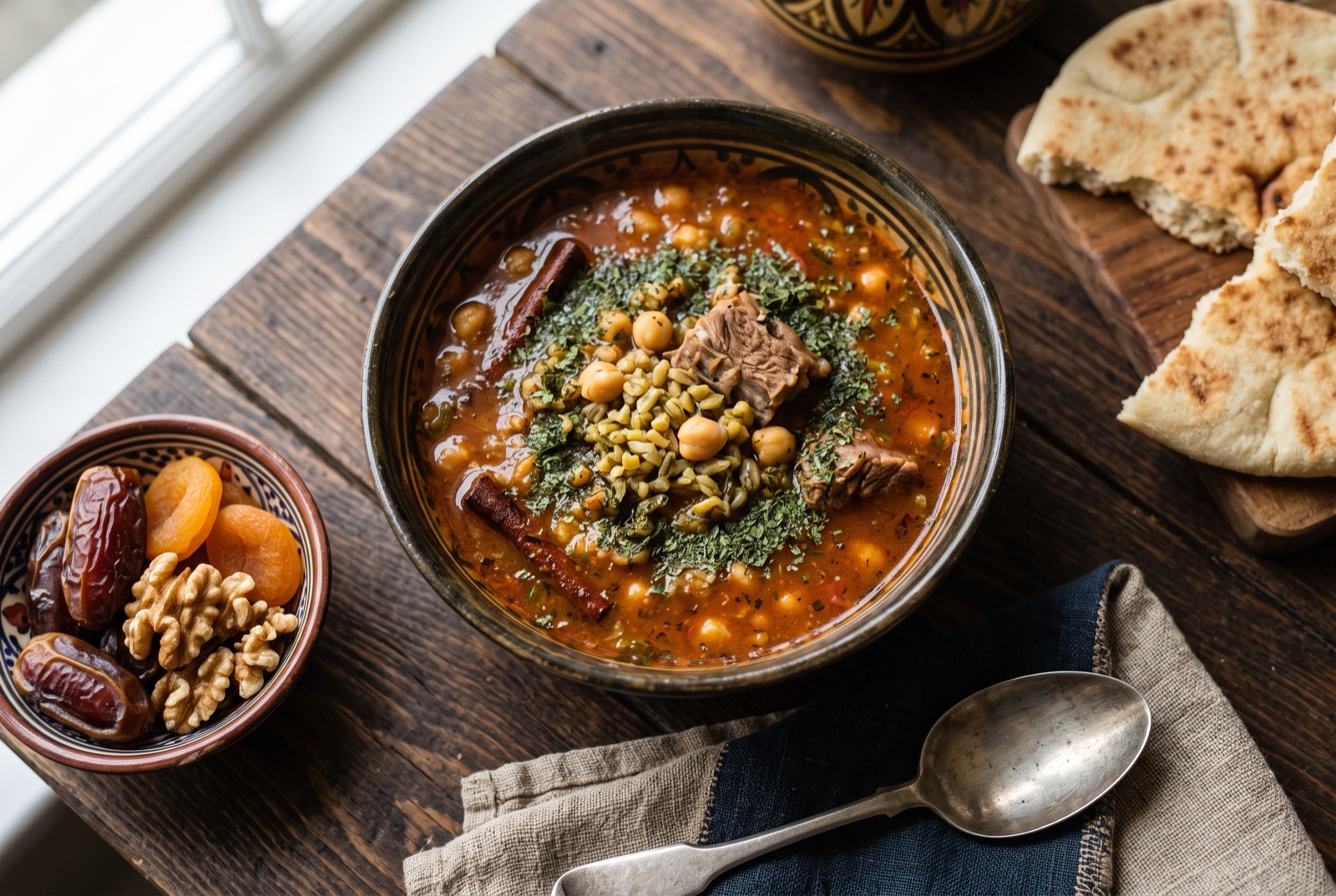
Chorba frik is a lamb soup that thickens itself. Frik — young durum wheat harvested green, fire-roasted and cracked — swells in the broth and turns a thin tomato liquid into something with weight and a faint smoky edge no other grain gives you. The flavour is warm rather than hot: cinnamon and black pepper against sweet cooked tomato, lamb fat, chickpeas that have gone soft at the edges, and then a shower of dried mint crushed between the palms at the very end, which lifts the whole bowl. It is a one-pot soup with no fussy technique, and it improves overnight. Squeeze lemon into it at the table.

- Gate
- Algeria
- Prep
- 20 min
- Cook
- 1 hr 10 min
- Total time
- 1 hr 30 min
- Serves
- 6
- Status
- Easy
- Nutrition / serving · estimated
- Calories 335 kcal
- Protein 24 g
- Carbs 28 g
- Fat 14 g
- Fiber 6 g
- Sodium 720 mg
Why this recipe works.
- Frik is treated properly — rinsed, then added late enough to keep its bite instead of dissolving into porridge.
- The tomato paste is fried until it darkens, which is the difference between a sweet broth and a tinny one.
- Dried mint goes in off the heat, where its aroma survives, rather than boiling away for an hour.
- Feeds six from 500 g of lamb, which is exactly how the soup is cooked at home.
Ingredients.
16 itemsFor the soup
To finish
Equipment
- Large heavy pot or pressure cooker
- Box grater
- Fine sieve for rinsing the frik
Instructions.
Sweat the aromatics
Warm the olive oil in a large heavy pot over medium heat and add the grated onion, chopped celery and the lamb. Stir for 5–6 minutes, until the onion has collapsed into a soft wet mass and the lamb has lost its raw pink surface without taking on any colour.
Tip Resist browning the meat. Algerian chorba is a soft-flavoured soup and a hard sear pushes it in the wrong direction.
Fry the tomato paste
Push the meat to one side, drop the tomato paste into the bare patch of oil and fry it for 2 minutes, mashing it against the pot. It should darken from bright red to brick and start to smell jammy rather than sharp. Stir in the grated tomato, cinnamon stick, black pepper, paprika and a good teaspoon of salt.
Simmer the lamb
Pour in 2 l of stock, bring to the boil, then drop to the barest simmer and cover. Cook for 45 minutes, until the lamb pulls apart under gentle pressure from a spoon and the broth has turned a deep rust colour. Skim off any grey foam in the first ten minutes.
Add the frik and chickpeas
Stir in the rinsed frik and the chickpeas. Simmer uncovered for 20–25 minutes, stirring every few minutes so nothing catches on the base. The soup is ready when the grains are tender with a slight chew left in the centre and the liquid coats the back of a spoon rather than running off it.
Tip If it thickens past what you want before the frik is soft, add hot water a ladle at a time — never cold, which stalls the cooking.
Finish with mint and coriander
Take the pot off the heat and fish out the cinnamon stick. Crush the dried mint between your palms directly over the surface, scatter in the chopped coriander, and stir once. Taste and correct the salt — the broth should taste rounded and faintly sweet, with the mint clearly present.
Serve
Ladle into deep bowls and bring lemon wedges to the table so each person can sharpen their own portion. Rest the soup for 5 minutes before serving; it comes off the stove hotter than it tastes.
Tips from our kitchen.
- Rinse the frik in three or four changes of cold water until the water runs clear — unrinsed frik makes a cloudy, muddy-tasting broth.
- Fry the tomato paste in the fat for a full two minutes before any liquid goes in. It should turn brick-coloured and smell sweet, not sharp.
- Keep the pot at a lazy simmer once the frik is in. A rolling boil bursts the grains and the soup turns to wallpaper paste.
- Crush the dried mint between your palms directly over the pot. Rubbing it releases the oils; sprinkling it straight from the jar does not.
- The soup thickens hard as it cools and thickens again overnight. Keep a jug of hot water nearby and loosen it before serving, then re-salt.
- If you can find smen, stir half a teaspoon in off the heat. It is pungent and funky and it is what makes some family versions taste unlike anyone else's.
Substitutions.
- Frik (green cracked freekeh) → Coarse bulgur, or pearl barley
- Both thicken the soup, but neither brings the smoke. Bulgur cooks in about 15 minutes, barley in 40 — adjust when you add it. Middle Eastern and North African grocers sell frik cheaply and it keeps for a year.
- Lamb shoulder → Lamb neck on the bone, or beef shin
- Bone-in cuts make a better broth. Beef shin needs an extra 30 minutes of simmering before the frik goes in.
- Lamb entirely → Double the chickpeas and use a well-seasoned vegetable stock
- Meatless chorba is common in Algerian homes at the end of the month. Add a tablespoon of olive oil at the finish to replace the richness the lamb was providing.
Variations.
- Chorba beida
- The white chorba of Algiers: no tomato at all, onion kept pale, chicken instead of lamb, thin vermicelli instead of frik, and a finish of egg beaten with lemon juice stirred in off the heat.
- Chorba with vermicelli
- Frik swapped for a handful of broken vermicelli, added in the last eight minutes. Lighter, faster, and what many cooks make when the frik runs out mid-Ramadan.
- Chorba loubia
- Built on white beans instead of chickpeas, with more paprika and a longer simmer — heartier winter food from the interior.
Storage & reheating.
Chorba keeps four days refrigerated and genuinely tastes better on day two, once the cinnamon has spread through the broth. It sets almost solid in the fridge because of the frik; reheat gently with a good splash of hot water, stirring until it flows off the spoon again, then correct the salt and add fresh mint. It freezes acceptably for three months, though the grain softens further on thawing.
Serve with
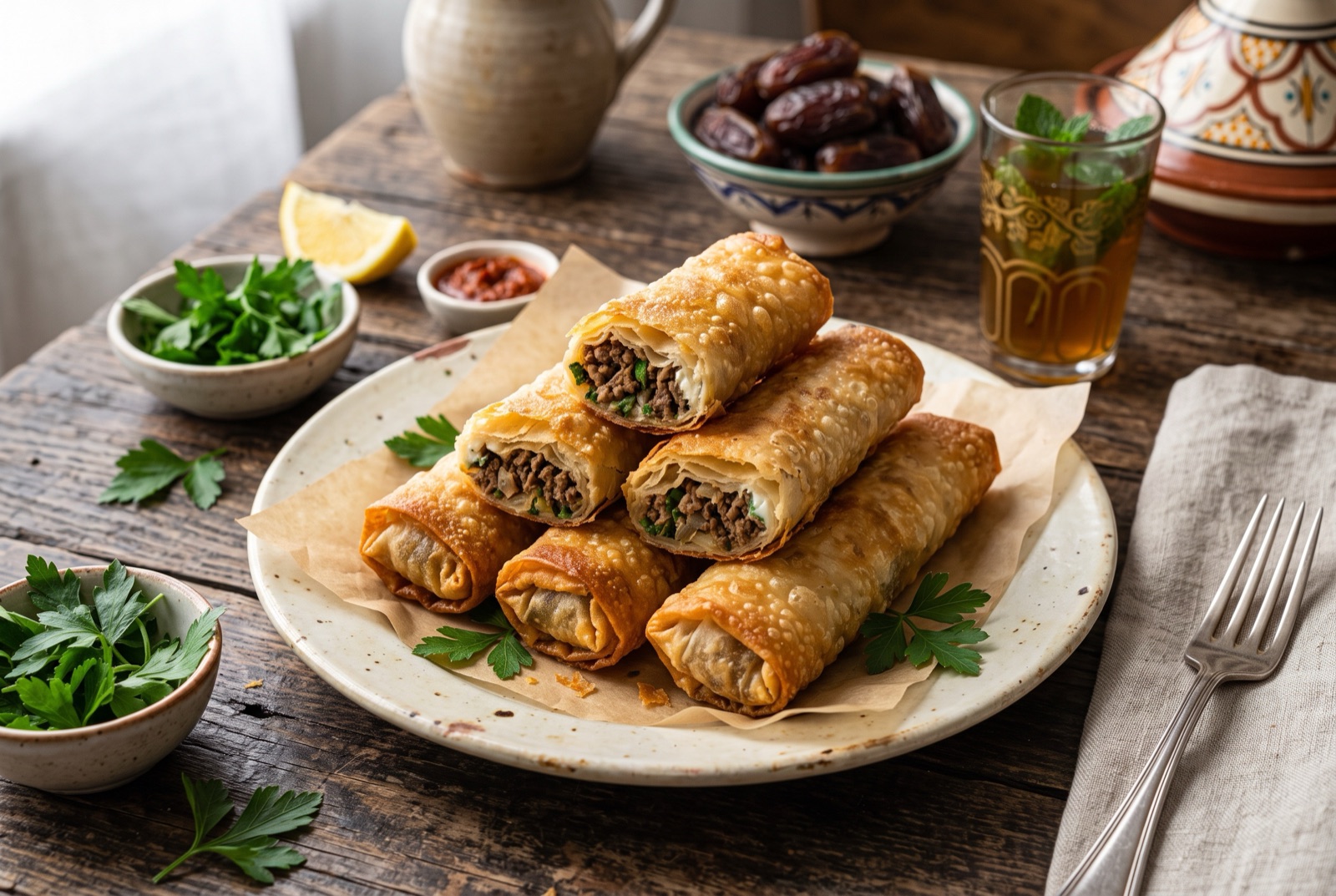
Dates, wedges of lemon, and hot bourek straight from the pan — the standard Algerian iftar opening.
The story behind Algerian Chorba Frik.
For roughly one month a year, this is the most-cooked dish in Algeria. When the sunset call to prayer ends the day's fast, the iftar table almost always opens with chorba — dates first, then a bowl of soup, then bourek, then everything else. Frik is the Algerian preference; the neighbouring Maghreb countries lean harder on vermicelli or lentils, but green cracked wheat is what most Algerian households buy by the kilo in the weeks before Ramadan begins. Households that cook chorba beida, the white version made without tomato, still call it chorba, and the argument over which is the proper one is entirely regional and entirely unwinnable.
Frik itself is older than any of that. Harvesting wheat while the grain is still soft and green, then burning off the chaff in a controlled fire, is an ancient eastern Mediterranean practice — the same product is freekeh in Levantine kitchens and farik across the Arabic-speaking world. The fire is not incidental. It halts the grain's development, keeps more protein in it, and leaves the smoky note that survives an hour of simmering. Algerian cooks pick it over for stones and rinse it in several changes of water before it goes anywhere near the pot.
Outside Ramadan the soup does ordinary duty: winter suppers, the first thing offered to someone recovering from illness, the pot a mother leaves on the stove for whoever comes home late. The lamb is usually a small amount of shoulder or neck cut into modest pieces, because the broth matters more than the meat. Some cooks finish with a whisked egg and lemon; some add a spoonful of smen, the aged salted butter, off the heat. What nobody skips is the dried mint, and adding it early instead of at the end is the one mistake that makes an Algerian cook wince.
Questions, answered.
What exactly is frik and can I use regular freekeh?
Frik is durum wheat harvested while still green, roasted over fire to burn off the chaff, then cracked into small pieces. Freekeh sold in Middle Eastern shops is the same product under a different name — buy the cracked version rather than whole grain, since whole freekeh takes roughly twice as long to soften and stays chewy in a soup.
Why did my chorba turn into thick porridge?
Either too much frik, too long a cook, or too hard a boil. Frik absorbs several times its volume in liquid and keeps going as the soup sits. Stick to about 100 g for six servings, simmer gently rather than boiling, and expect to thin the soup with hot water before every reheat.
Do I have to soak the chickpeas overnight?
Not if you use tinned ones, which is what plenty of Algerian cooks do on a weeknight — drain, rinse and add them halfway through. Dried chickpeas need an overnight soak and should go into the pot with the lamb at the start so they have the full hour to soften.
Is chorba frik spicy?
No. It is warmly spiced with cinnamon, black pepper and paprika, but heat is not part of the dish. Algerians who want it hot add harissa to their own bowl at the table, which keeps the pot mild enough for children and elderly relatives eating from the same platter.
Can I make this ahead for a crowd?
Yes, and you should. Cook it a day early up to the point of adding the mint, refrigerate, then reheat with extra water and add the mint and coriander fresh just before serving. The herbs are the only part that suffers from sitting, and adding them late costs you thirty seconds.
You might also like.
All recipes →
Keep exploring Algeria.
Algeria has 9 more dishes in the atlas — Bourek and Chakhchoukha, and 7 more.
All Algeria recipes Lamb recipes Chickpeas recipes Tomato recipes soupdairy freehalal friendlynut freeRecipe by The DishRoute Kitchen · published August 20, 2026 · updated August 20, 2026