Rechta.
Algiers Steamed Noodles in White Chicken Broth
رشتة · Rechta djazairia · say it: RESH-ta
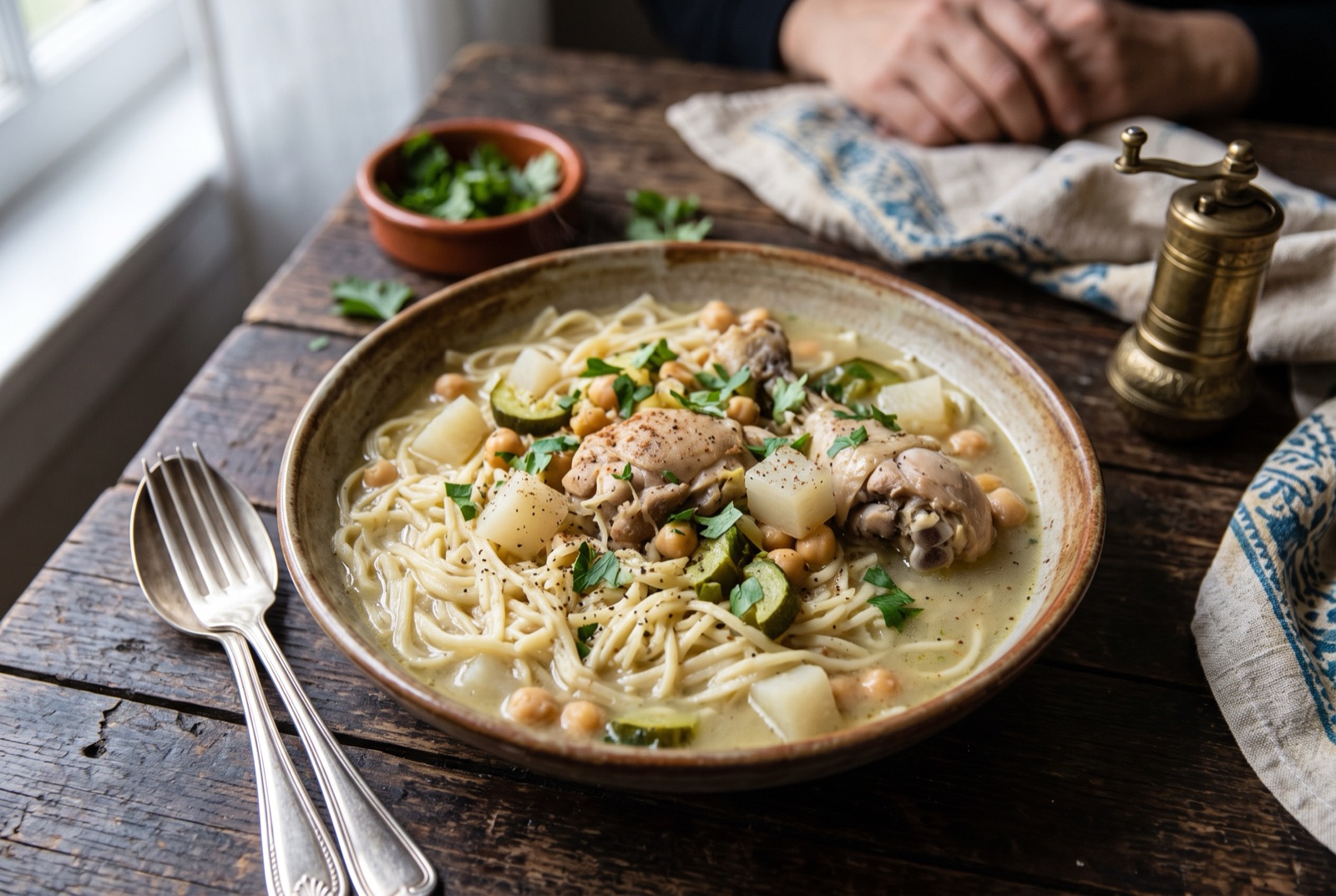
Rechta is a plate of pale, hand-cut flat noodles that are steamed rather than boiled, then buried under a white chicken broth thick with chickpeas, turnip and courgette. Nothing in the dish is browned, so the taste is unexpectedly gentle: sweet onion cooked colourless in butter, cinnamon and black pepper doing all the aromatic work, chicken that has given everything to the liquid, and noodles that carry the broth without ever going slack. The three-steam method is the whole trick — steam, oil, rest, repeat — and it produces a texture no boiled pasta reaches. In Algiers this appears at Mawlid, at weddings, and whenever a household wants to show effort.

- Gate
- AlgeriaAlgiers
- Prep
- 50 min
- Cook
- 1 hr 15 min
- Total time
- 2 hr 35 min incl. 30 min rest
- Serves
- 4
- Status
- Medium
- Nutrition / serving · estimated
- Calories 620 kcal
- Protein 44 g
- Carbs 76 g
- Fat 16 g
- Fiber 8 g
- Sodium 690 mg
Why this recipe works.
- The full three-steam method written out with what the noodles should look and feel like at each stage.
- A genuine marqa beida — the recipe tells you exactly how to cook onion for fifteen minutes without letting it colour.
- Honest about shop-bought noodles, including which dried pasta actually works as a stand-in and which collapses.
- The broth is built to be poured over, so it stays loose rather than reducing into a stew.
Ingredients.
16 itemsFor the noodles
For the broth
Equipment
- Couscoussier or pot with a steamer insert
- Rolling pin or pasta machine
- Large wide bowl for separating noodles
- Sharp knife
Instructions.
Make the noodle dough
Mix the semolina, flour and salt in a bowl, work in 1 tablespoon of the olive oil, then add warm water a little at a time until the dough gathers into a firm, slightly stiff ball. Knead on the worktop for 8 minutes, until it stops tearing when you stretch a corner and the surface goes smooth and matte.
Rest, roll and cut
Wrap the dough and rest it for 30 minutes. Divide it into four, roll each piece out as thinly as you can manage — thin enough to see the shadow of your fingers through the sheet — then flour the surface heavily, fold it loosely into a flat roll and slice into ribbons about 3 mm wide. Shake the ribbons apart with floured fingers onto a tray.
Tip A pasta machine on its second-thinnest setting does this faster and more evenly than a rolling pin, and nobody in Algiers will hold it against you.
Start the white broth
Melt the butter in the base of a couscoussier over low heat, add the grated onion and a pinch of salt, cover and cook for 12–15 minutes, stirring often. The onion must go soft, wet and translucent without a hint of gold. Add the chicken, cinnamon stick, black pepper and saffron and turn the pieces to coat.
Simmer the broth
Pour in the water, bring to a gentle boil and skim the surface until it runs clear. Add the turnip and chickpeas, salt lightly, and simmer uncovered for 25 minutes. The broth should stay pale ivory and taste distinctly peppery.
Steam the noodles the first time
Set the steamer basket over the simmering broth, sealing the join with a damp twist of cloth. Add the noodles loosely and steam for 15 minutes from the moment steam pushes through the top. Tip them into a wide bowl, sprinkle with a tablespoon of oil and a few drops of water, and rake them apart with a fork until every strand moves freely.
Tip They will look half-cooked and chalky at this stage. That is correct.
Steam twice more
Return the noodles to the basket and steam for 12 minutes, separate and oil them again, then steam a final 10 minutes. They are done when a strand is tender all the way through, bends without snapping, and glistens rather than looking dry. Add the courgette to the broth during this last steaming.
Assemble and serve
Pile the noodles into a wide serving dish, ladle a little broth over them so they drink it in, then arrange the chicken, turnip, courgette and chickpeas on top. Pour more broth over at the table and keep the rest in a jug for topping up.
Tips from our kitchen.
- Roll the dough far thinner than feels reasonable — you should see the shadow of your hand through it. Thick sheets give you rope, not rechta.
- Flour the sheet generously before folding and cutting, or the ribbons weld together in the steamer and no amount of separating fixes it.
- Toss the noodles with oil and a sprinkle of water between each steam. This is what keeps them separate and silky; skipping it gives you a solid cake.
- Seal the join between pot and steamer basket with a strip of damp cloth or a ring of flour paste. Steam escaping at the rim means the top layer of noodles never cooks.
- Keep the broth pale. If the onion browns, start again — the colour is the one thing that cannot be corrected later.
- Serve the noodles and broth separately and let people combine them at the table, so the last portions are not sitting in liquid going soft.
Substitutions.
- Homemade rechta noodles → Dried rechta from a North African grocer, or dried fine tagliatelle
- Dried rechta is normal in Algerian homes and steams identically. If using Italian pasta, choose flat ribbons about 3 mm wide and steam them from dry — round spaghetti and angel hair clump badly.
- Couscoussier → Any pot with a metal steamer insert or colander that sits above the liquid
- The only requirements are that steam passes through and does not escape at the rim. A damp tea towel twisted around the join does the sealing job perfectly well.
- Turnip → Kohlrabi, or a peeled parsnip cut into chunks
- You want mild sweetness and a vegetable that holds its shape for 40 minutes. Potato is a poor swap here — it clouds the broth that the whole dish is trying to keep clear.
Variations.
- Rechta bel hamra
- The red-sauce version, cooked with tomato paste and paprika instead of the pale broth. Less typical of Algiers but common further east, and considerably more forgiving for a first attempt.
- Rechta with lamb
- Chicken swapped for lamb shoulder on the bone, simmered an extra 30 minutes before the vegetables go in. Richer, and the version often chosen for weddings.
- Meatless rechta
- The broth built on onion, chickpeas and vegetables alone, with a generous knob of butter at the end to replace the fat the chicken would have given.
Storage & reheating.
Store the noodles and broth separately, both refrigerated, for up to three days. Reheat the noodles by steaming them for 10 minutes rather than microwaving, which dries the edges and leaves the middle cold. The broth reheats freely and thickens slightly, so loosen it with water. Cooked noodles do not freeze well; the broth does, for two months.
Serve with
A dish of harissa on the side for anyone who wants heat, and a bowl of the reserved broth for topping up plates.
The story behind Rechta.
Rechta belongs to the cuisine algéroise, the refined city cooking of the capital and its coastal hinterland, and it is one of the clearest surviving examples of the Ottoman layer in Algerian food. The name itself is Persian in origin — rishta, meaning thread — and it travelled west through Turkish kitchens along with a whole family of hand-cut noodle dishes that appear from Iran to the Balkans under related names. What Algiers did with it was specific: instead of boiling the noodles, cooks treat them exactly like couscous, steaming them in the perforated top of a couscoussier over the very broth they will be served with.
The sauce is a marqa beida, a white sauce, and its rules are strict. The onion goes into fat over low heat and must not take colour; no tomato, no paprika, no browning of any kind is allowed near the pot. Seasoning comes from cinnamon and a heavy amount of black pepper, sometimes a few threads of saffron for a faint gold tint, and the body comes from chickpeas and the slow breakdown of the vegetables. Turnip is not optional in the Algiers version — it gives the broth a mild sweetness that the courgette then softens.
The dish carries occasion weight. It is closely associated with Mawlid, the celebration of the Prophet's birth, and with wedding tables, where a mountain of rechta arrives after the savoury pastries and before the sweets. Older cooks made the noodles at home, rolling the dough almost transparent and cutting it into threads with a knife, then drying them on cloths across the courtyard. That labour is what made the dish special, and it is also why most households now buy dried rechta from the market and steam it in the same way. Both are considered legitimate. Skipping the steaming and boiling the noodles instead is not.
Questions, answered.
Why steam the noodles instead of boiling them?
Steaming cooks them without waterlogging them, so they stay springy and absorb broth at the table instead of before it. Boiled noodles arrive already saturated and turn soft within minutes of the sauce going on. Steaming also lets you oil and separate the strands between rounds, which is what gives rechta its characteristic silky, non-sticky texture.
My noodles clumped into one solid mass — what went wrong?
Almost always insufficient flour when cutting, or skipping the oiling between steams. Dust the rolled sheet heavily before folding it, shake the cut ribbons apart with your fingers, and after each steaming toss them in a wide bowl with a spoon of oil and a light sprinkle of water while they are still hot and pliable.
Can I make the broth clear without any browning at all?
Yes, and that is the point of a marqa beida. Cook the onion in butter or oil over genuinely low heat with a pinch of salt and a lid on, stirring often. Salt draws out water and the lid traps steam, so the onion softens and turns translucent instead of caramelising. If you see any golden edges, the heat is too high.
How far ahead can I prepare the noodles?
The dough can be made and the ribbons cut a full day in advance — spread them out on a floured tray, cover loosely with a cloth, and leave them at room temperature to dry. They will steam slightly faster once dried. The broth can also be made a day ahead and reheated while the noodles steam.
Is rechta the same as Moroccan seffa or Tunisian rechta?
They are relatives rather than the same dish. The steaming technique and the Persian-derived name are shared across the region, but Algerian rechta is defined by its savoury white chicken broth with turnip and chickpeas, while Moroccan seffa is usually sweet, dressed with cinnamon, sugar and almonds. Regional versions vary enough that no single one can claim to be the original.
You might also like.
All recipes →
Keep exploring Algeria.
Algeria has 9 more dishes in the atlas — Algerian Chorba Frik and Bourek, and 7 more.
All Algeria recipes Chicken recipes Semolina recipes Chickpeas recipes maindairy freehalal friendlynut freeRecipe by The DishRoute Kitchen · published August 20, 2026 · updated August 20, 2026