Cameroon.
Cameroun
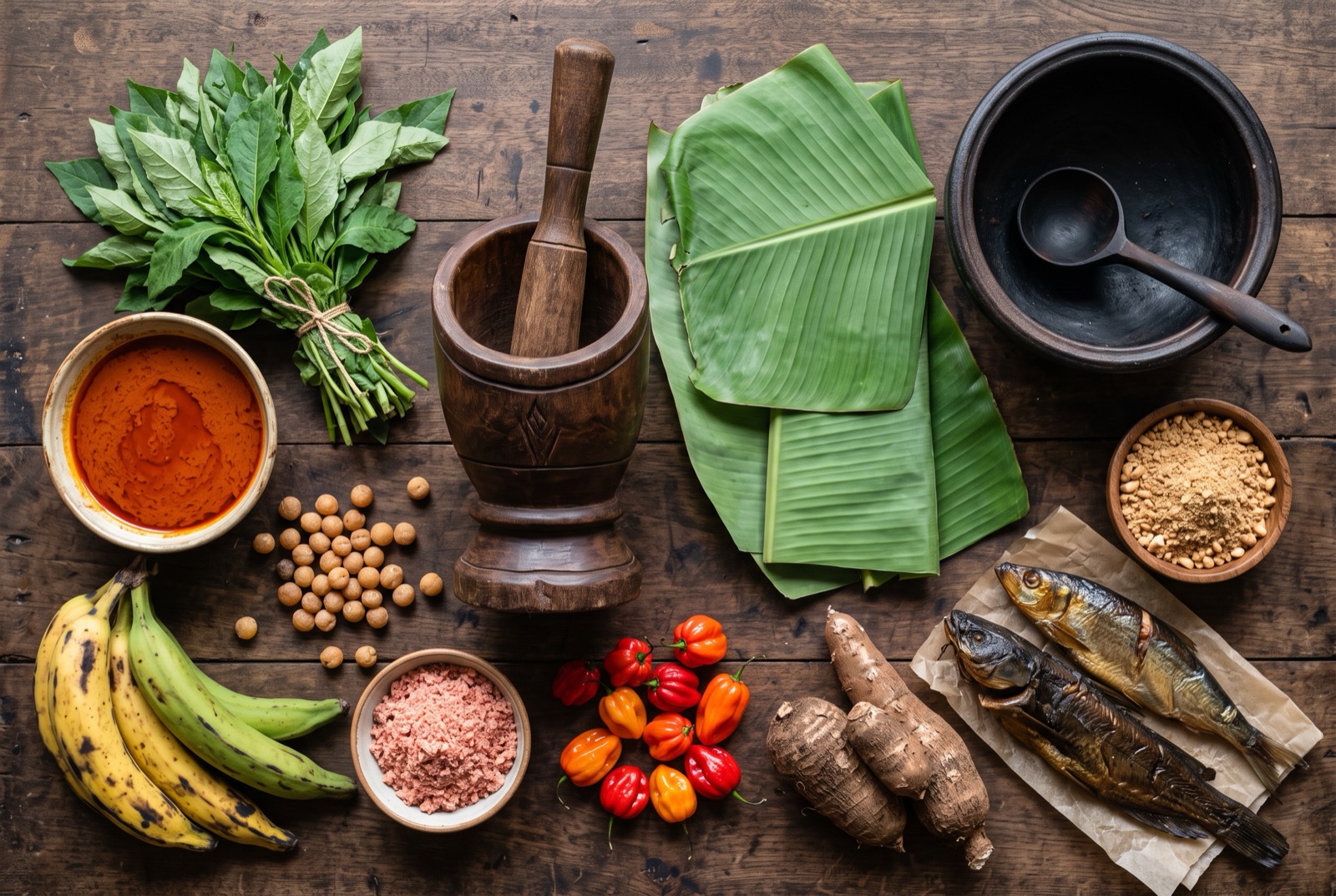
Cameroon is often described as Africa in miniature, and the plate makes the case better than the map does. Within one country you move from Sahel millet and grilled meat in the far north, through the forest cooking of the centre and east where leaves, tubers and wild seeds carry the flavour, to a humid Atlantic coast built on fish, shrimp and red palm oil. What holds it together is a way of thickening: sauces here get their body from ground seeds and nuts rather than from flour or cream. Peanuts, egusi melon seeds, njangsa and pumpkin seeds are boiled, ground and stirred into stews until the fat rises to the surface. The second constant is greens — bitterleaf, eru, cassava leaf, waterleaf, huckleberry — treated as a main ingredient with real weight, not as a garnish. Add a starch to scoop with, and you have the shape of almost every Cameroonian meal.

- Continent
- AfricaWest Africa
- Recipes in atlas
- 10
- Must-try dishes
- 3
- Pantry staples
- 9
Start with the classics.
Must tryThe dishes that explain the Cameroon kitchen fastest — if you cook only a few things from this page, cook these.
Inside the Cameroon kitchen.
Start with the fats, because they set the colour of the food. Red palm oil, unrefined and deep orange, is the everyday cooking fat across the south and the coast; it tastes faintly of carrot and violet and stains everything it touches. Groundnut oil is the neutral alternative, used where the cook wants the seeds and greens to speak. Palm oil also does something no other fat does here: whisked with alkaline potash water it emulsifies into the bright yellow sauce served with pounded cocoyam in the North West, a piece of kitchen chemistry that has no real parallel elsewhere in West and Central Africa.
The thickeners are the technical heart of the cuisine. Peanuts are boiled and blended into the smooth base of ndolé. Egusi seeds are ground and allowed to set into soft curds in a hot broth. Njangsa (akpi) seeds bring a bitter, almost cocoa-like depth to Bassa cooking and thicken as they toast. Pumpkin seed, sesame and even crushed cocoyam do the same job in other regions. The doneness signal is always the same: keep cooking until the oil breaks out and floats, because that is when the raw, chalky taste of the ground seed disappears.
Dried and smoked proteins season as much as they feed. Ground crayfish, dried shrimp, smoked mackerel and stockfish are pantry staples, added at the start of a stew to build savoury depth rather than at the end for texture. Cow skin, called kanda, is simmered until gelatinous and slippery, and tripe and offal appear without apology. Fresh meat and fish are frequently combined with a dried version of the same thing in one pot, which is why Cameroonian stews taste layered even when the ingredient list is short.
Starches are regional and non-negotiable at the table. The coast and forest eat plantain in every state of ripeness, cassava as fufu, water fufu and granular garri, cocoyam pounded into achu, and miondo — fermented cassava sticks steamed in leaves. The north eats millet and sorghum couscous with okra-thickened sauces, closer to Chad and northern Nigeria than to Douala. Rice is everywhere, but it is the guest, not the host.
Regional lines are drawn sharply. Douala and the Littoral belong to the Sawa peoples and their seafood, palm oil and the black mbongo stews of the Bassa. The North West and South West, anglophone Cameroon, gave the country eru, achu, koki and corn fufu. Yaoundé and the Centre cook Beti food heavy on cassava leaf, groundnut and forest game. The Grassfields have their own maize and bean cooking, and the far north grills, smokes and spices with a Sahelian hand. Ask two Cameroonians for the national dish and one will say ndolé; the other will name whatever their mother cooks.
Signature pantry.
9 staplesThe ingredients this cuisine cannot function without.
- red palm oil
- ground peanuts
- bitterleaf
- ground crayfish
- njangsa (akpi) seeds
- plantain
- cassava and cocoyam
- scotch bonnet pepper
- smoked fish
How people eat in Cameroon.
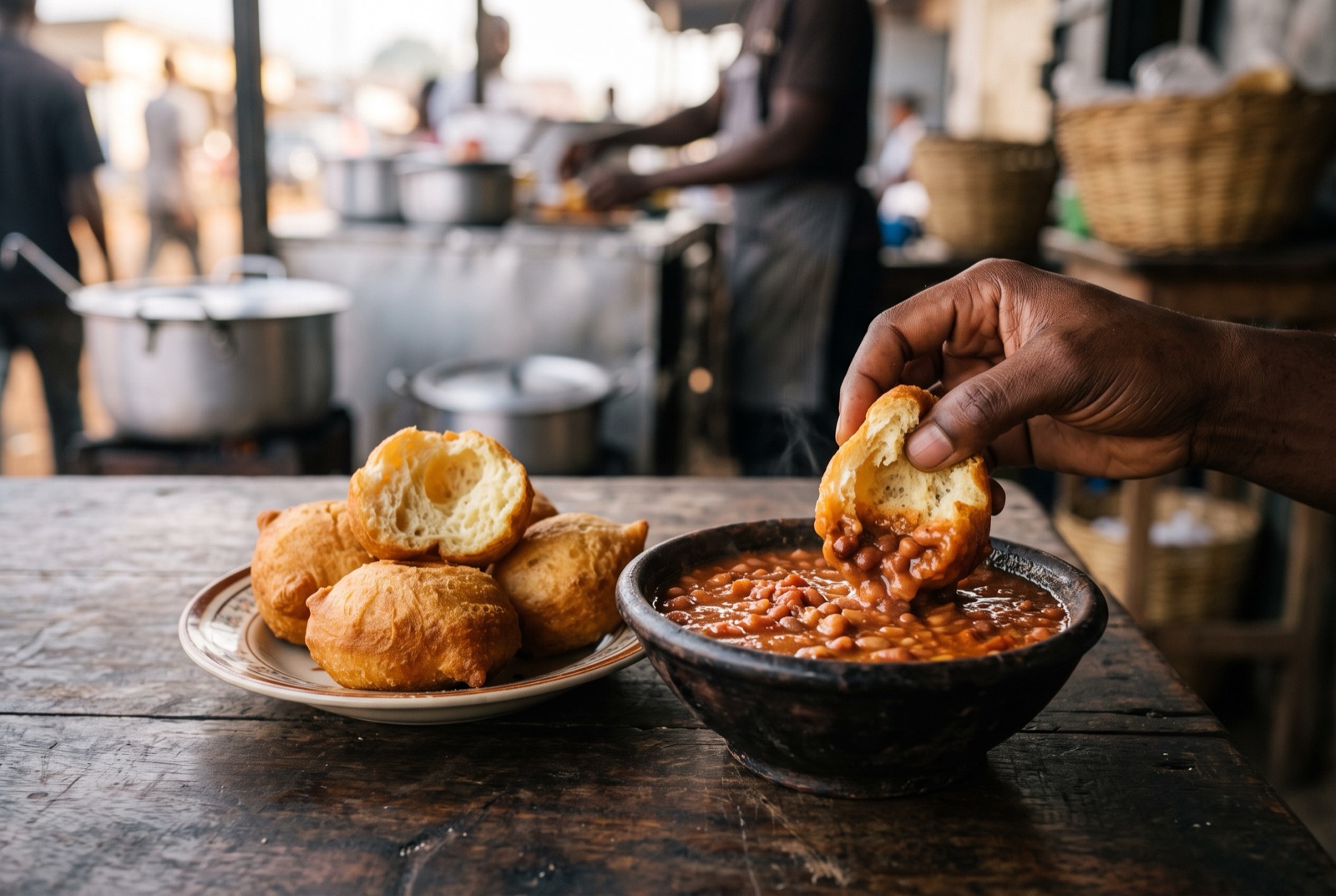
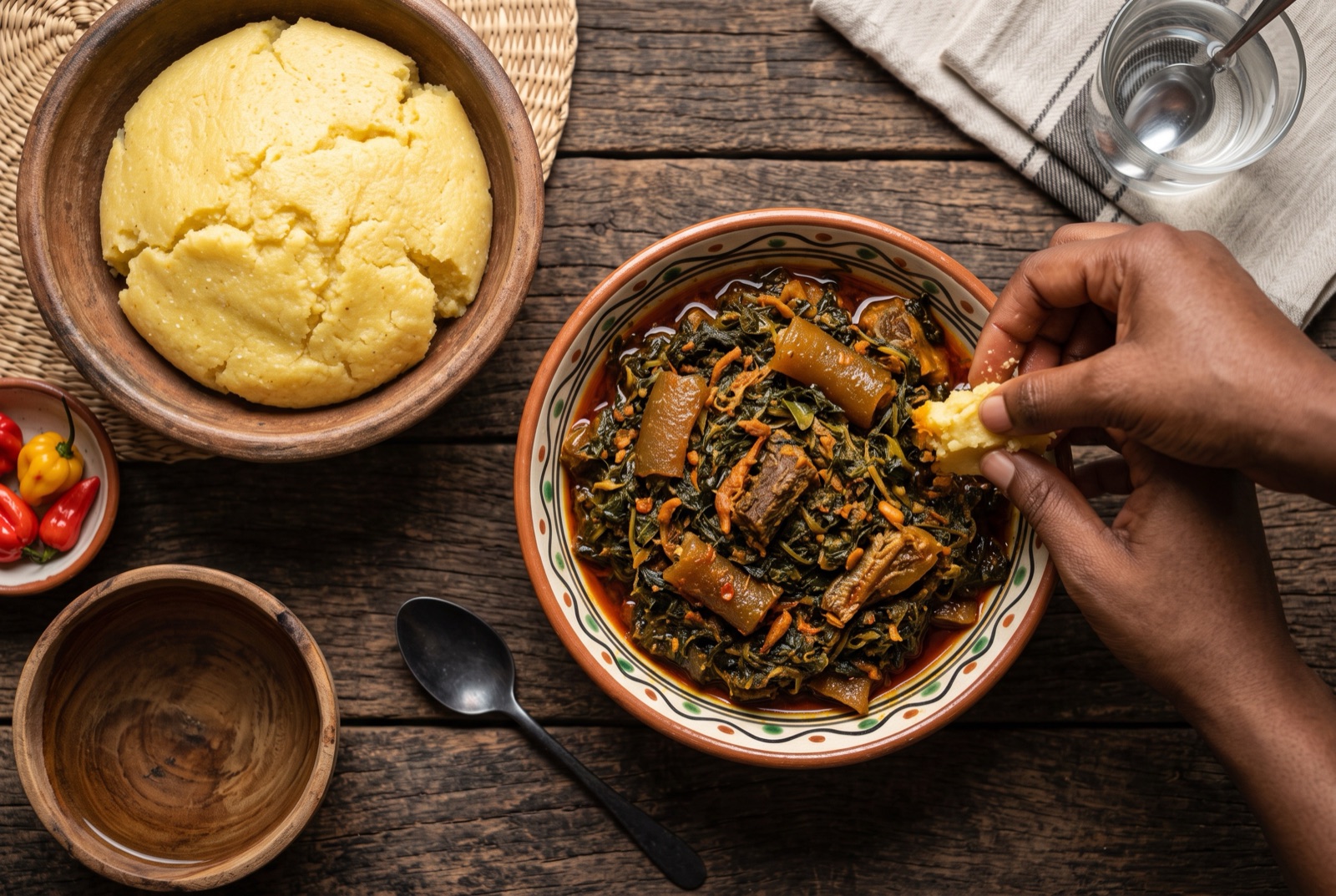
Meals are shared from communal bowls and eaten with the right hand, the starch pinched, dented and used to lift sauce. A bowl of water for rinsing fingers arrives before the food and is used again after. Guests are served first and served generously, and refusing a second helping outright is awkward — leaving a little in the bowl says it more politely. Lunch is the substantial meal; street food fills the morning and the late evening, with beignets and beans sold from roadside pans at dawn and grilled soya from charcoal braziers after dark. Beer, palm wine and chilled folere circulate at celebrations, and food keeps appearing for as long as guests stay. Nobody eats a Cameroonian meal quickly.
Regional kitchens.
Cameroon cooks 4 distinctly different ways depending on where you stand — here is what changes between them.
- R1Littoral and Douala
- The Atlantic port and its Sawa kitchens: fish and shrimp from the estuary, red palm oil in everything, and ndolé claimed here as the city's own. Inland Bassa cooks turn out mbongo tchobi, the black stew nothing else resembles.
- R2North West and South West
- Anglophone Cameroon and the source of eru, achu with yellow soup, koki and corn fufu. Grassfields cooking leans on cocoyam, maize, beans and slow-simmered cow skin.
- R3Centre and South
- Beti and Bulu country around Yaoundé, where cassava leaf, groundnut sauces, plantain and forest ingredients dominate, and food is often steamed in leaf parcels rather than fried.
- R4The Far North
- Sahelian Cameroon, drier and closer to Chad in habit: millet and sorghum couscous, okra and baobab-leaf sauces, and grilled or dried meat spiced with a bolder hand.
All Cameroon recipes.
10 recipes and counting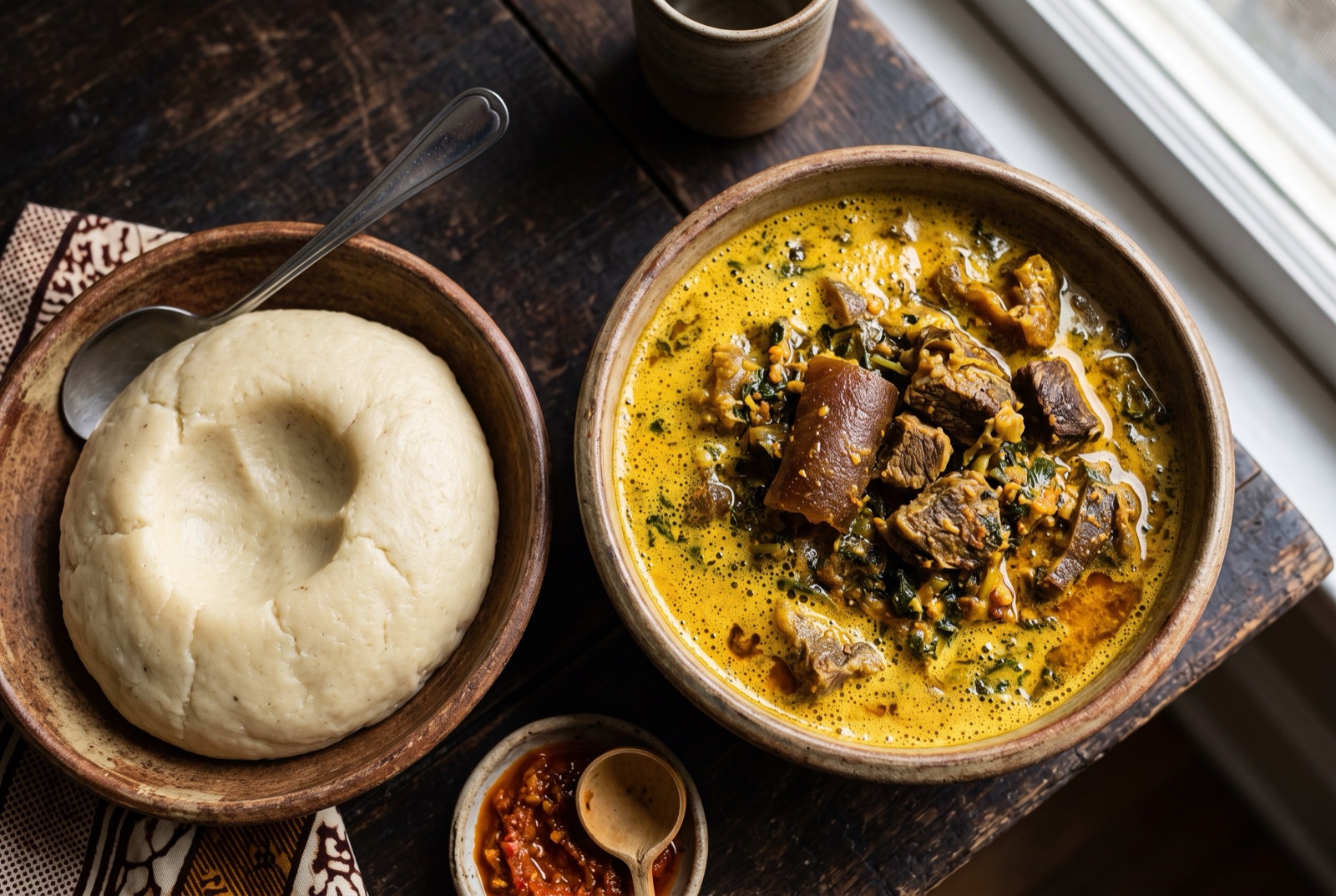
Cameroon2 hr 30 min
Achu Soup
Cameroonian Yellow Palm Oil Soup
Cameroon3 hr 35 min
Beignets Haricots
Cameroonian Fritters with Bean Stew
Cameroon2 hr 5 min
Eru
Cameroonian Wild Leaf and Waterleaf Stew
Cameroon2 hr 25 min
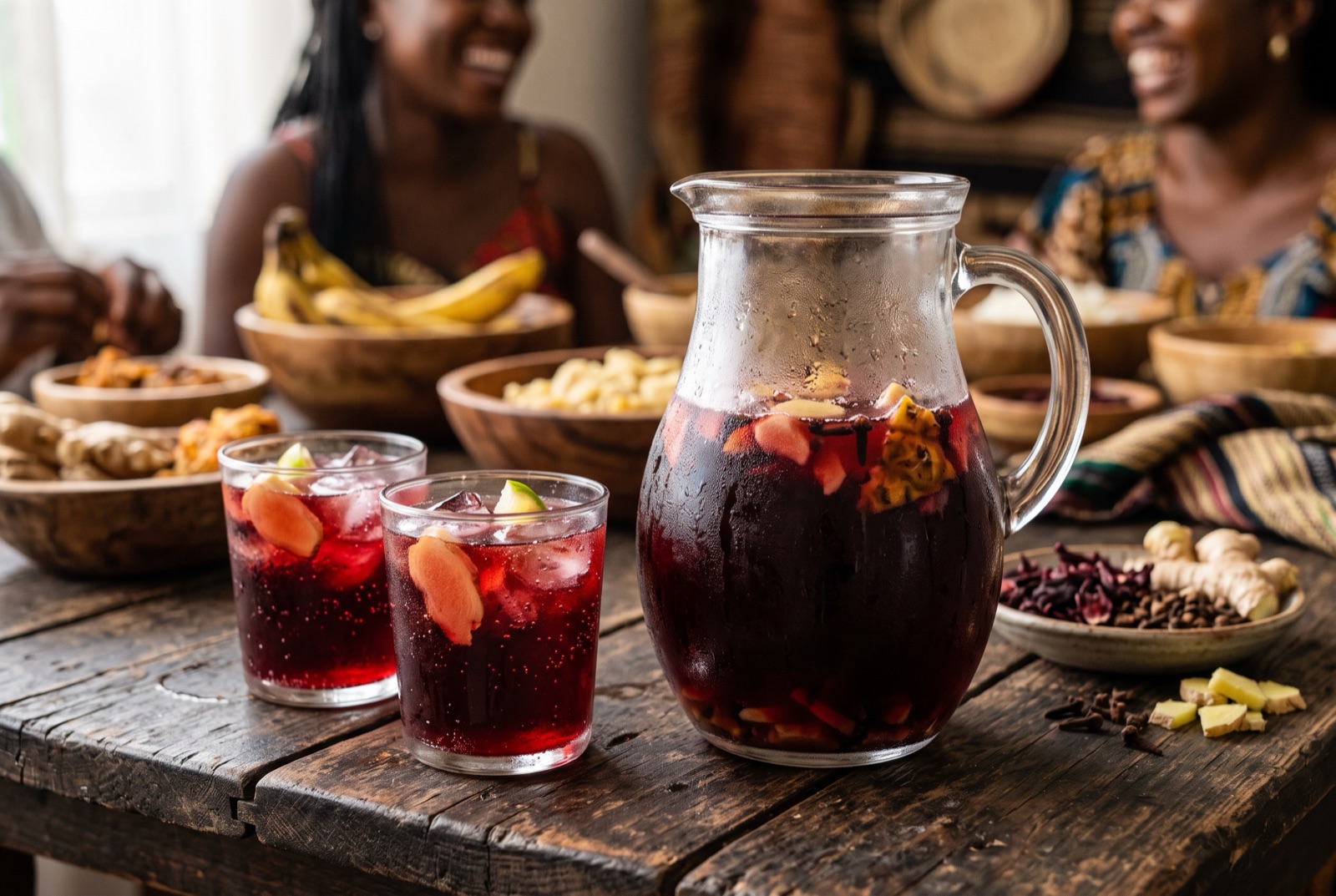
Folere
Cameroonian Hibiscus and Ginger Cooler
Cameroon11 hr 15 min
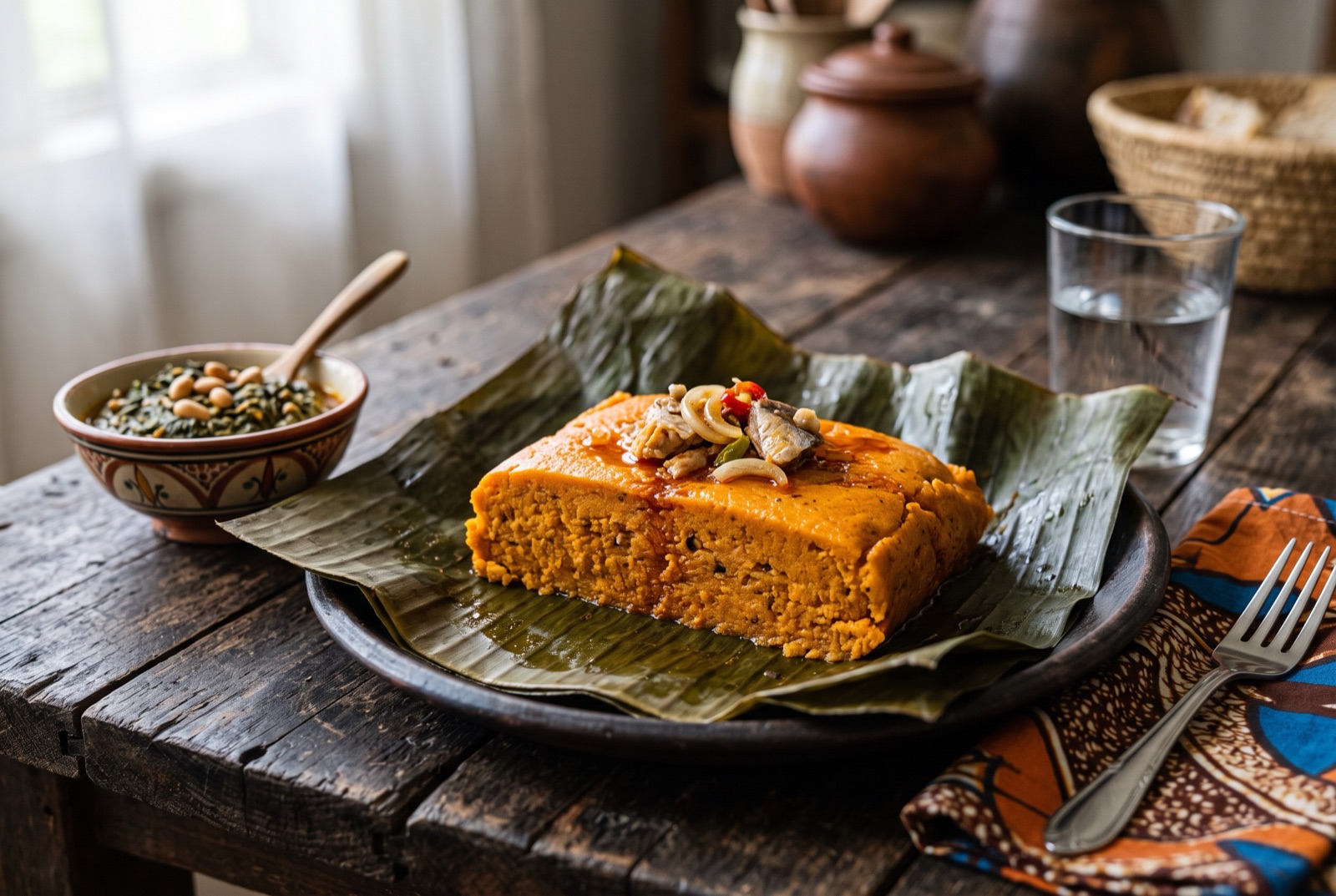
Koki
Cameroonian Steamed Black-Eyed Pea Pudding
Cameroon1 hr 20 min
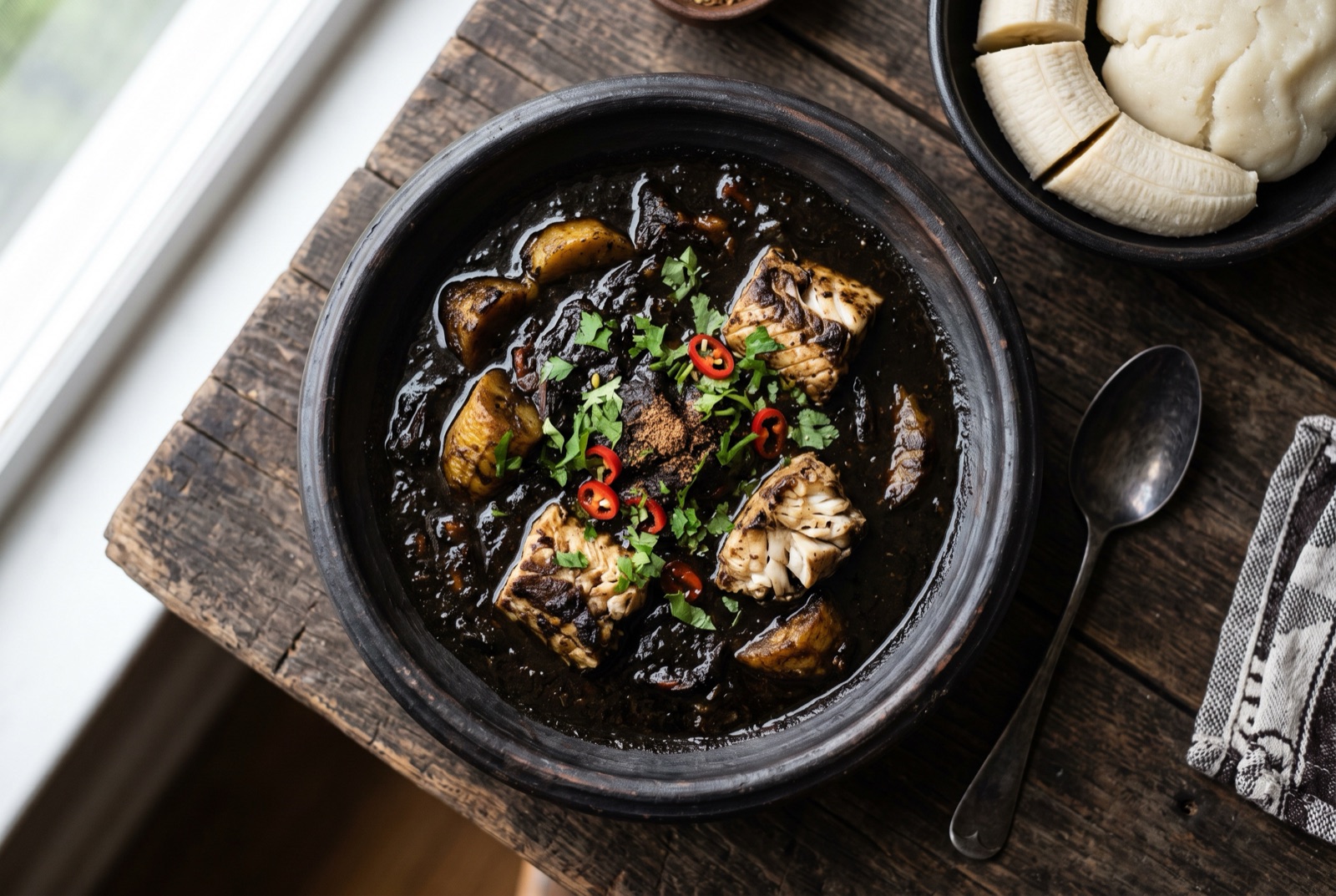
Mbongo Tchobi
Cameroonian Black Charred-Spice Stew
Cameroon2 hr 15 min
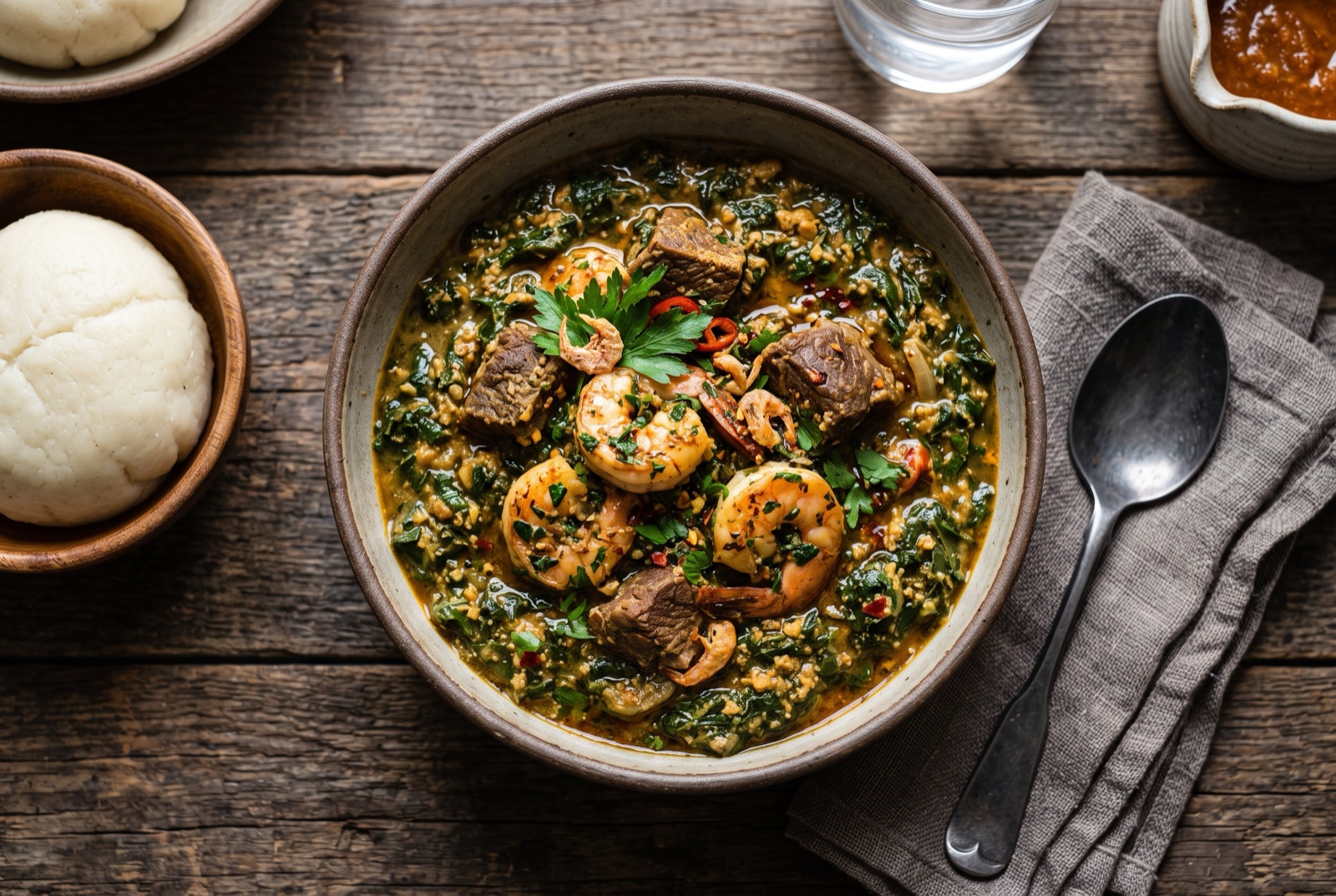
Ndolé
Cameroonian Bitterleaf and Peanut Stew
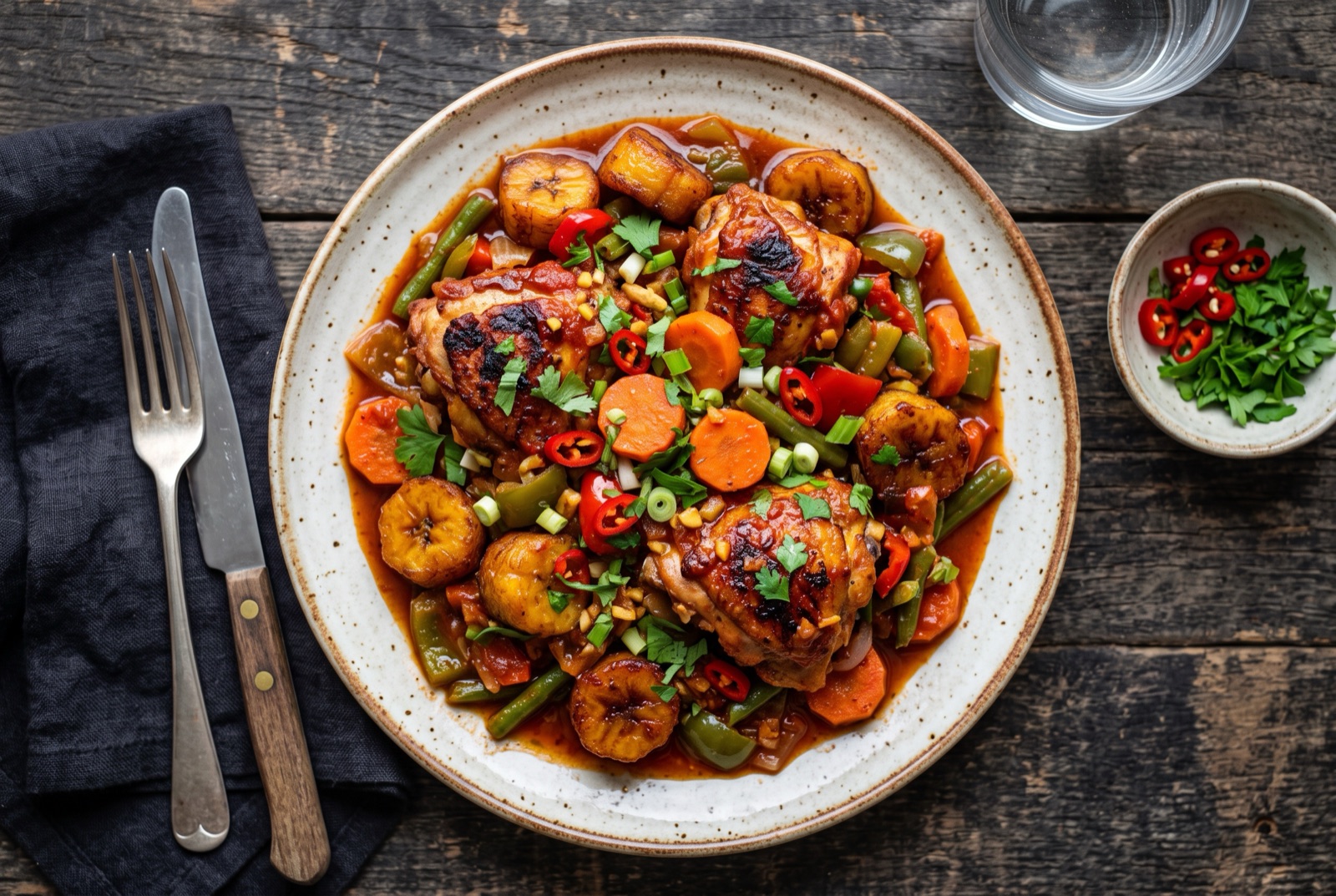
Cameroon1 hr 45 min
Poulet DG
Cameroonian Chicken with Fried Plantain
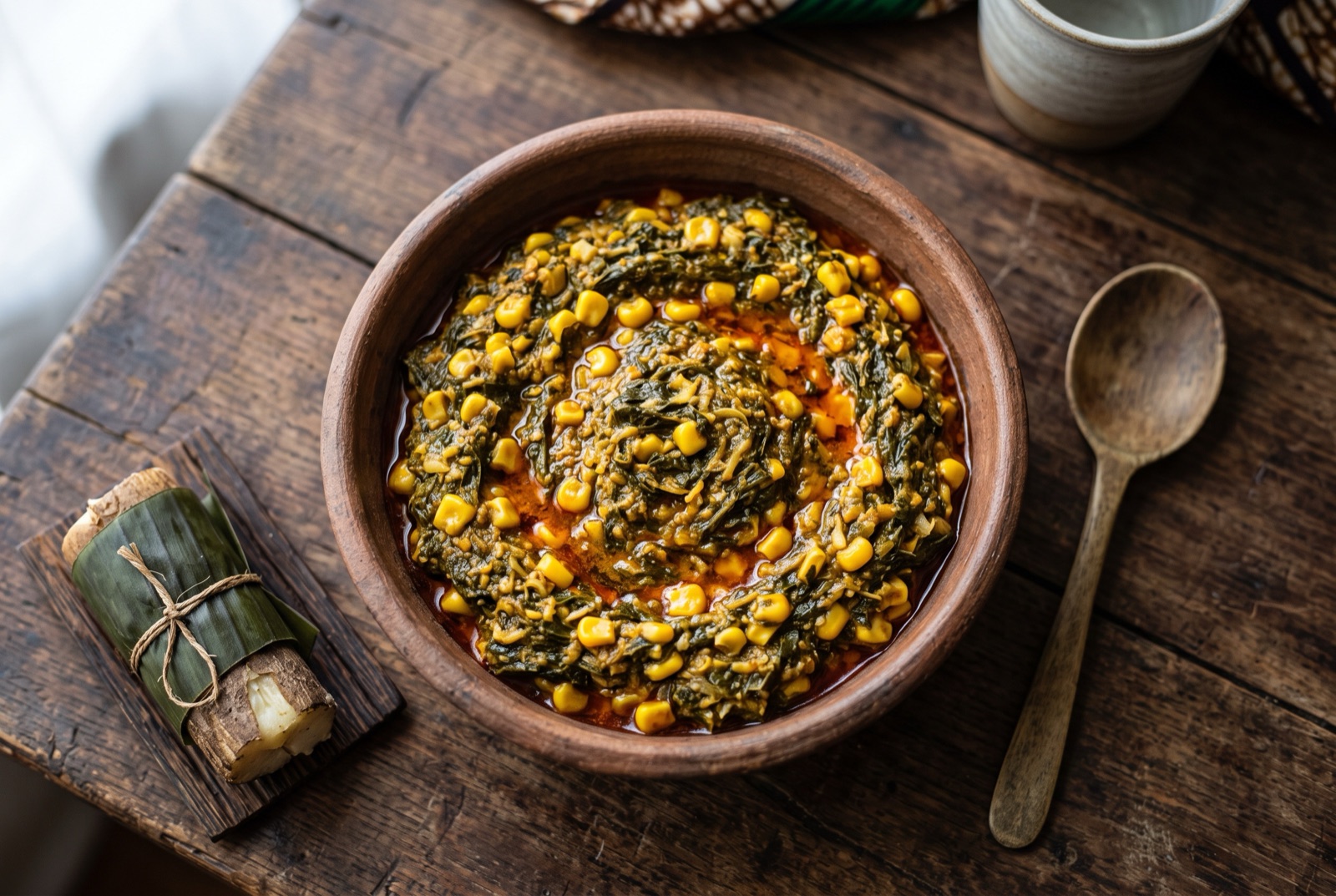
Cameroon1 hr 25 min
Sanga
Cameroonian Maize and Cassava Leaf Pot
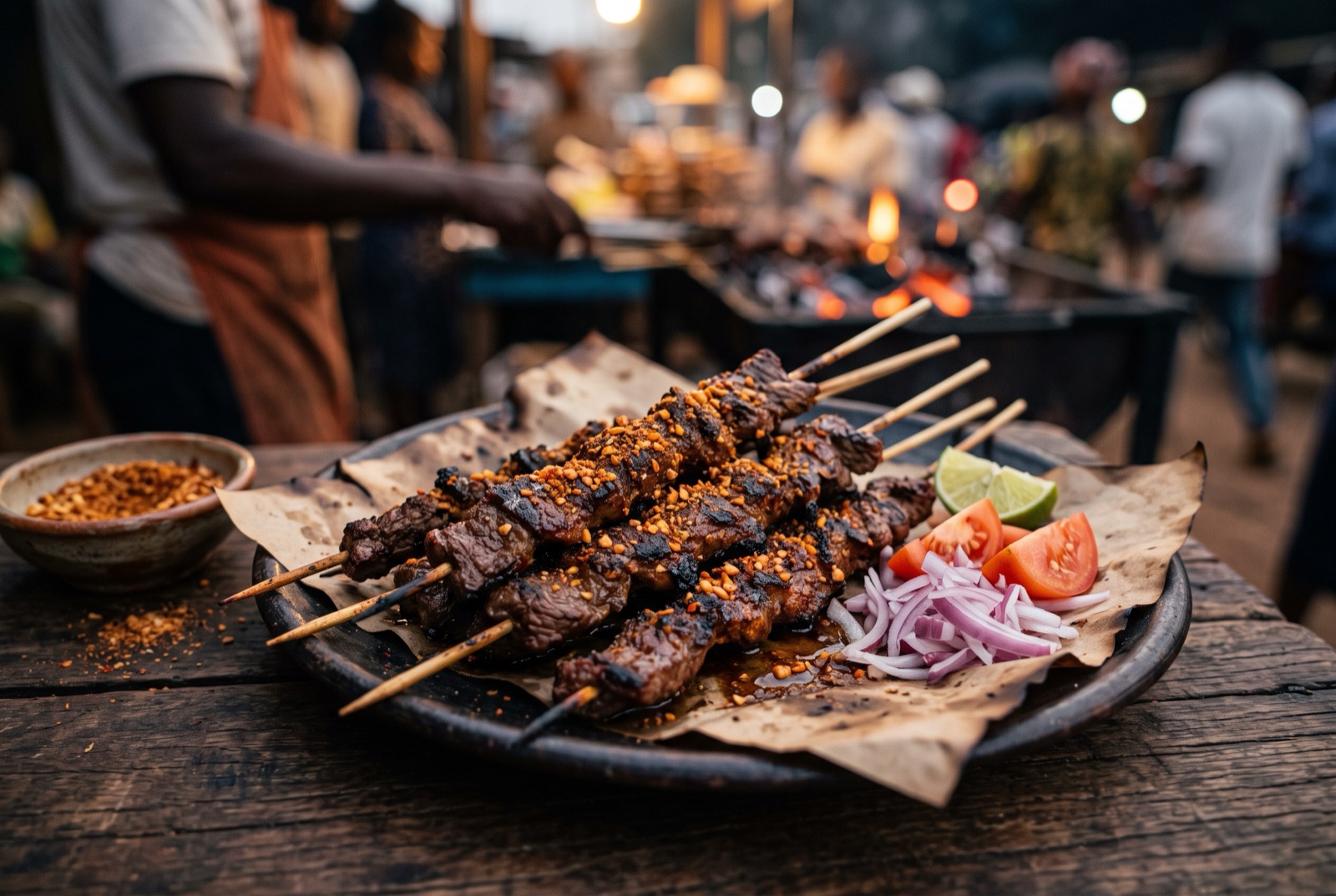
Cameroon1 hr 37 min
Soya
Cameroonian Spiced Beef Skewers
Keep traveling.
Cameroon sits in West Africa, and its kitchen shares borders as well as ingredients with Algeria and Egypt.
 Algeria
 Egypt
Egypt