Koki.
Cameroonian Steamed Black-Eyed Pea Pudding
Koki beans / Ekoki · say it: KOH-kee
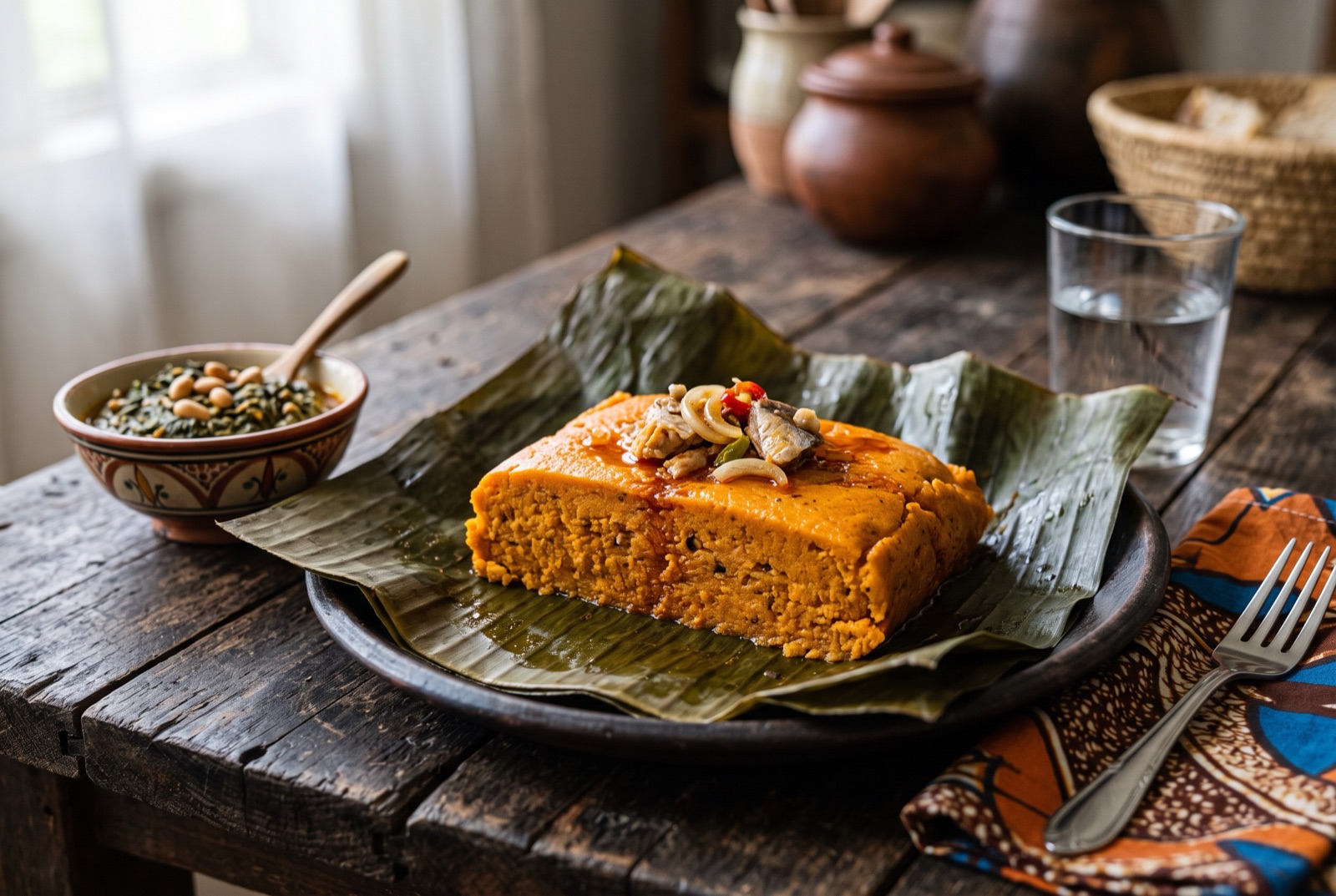
Koki is a steamed pudding made from nothing but beans, palm oil, water, pepper and salt — and it tastes far more interesting than that list suggests. Black-eyed peas are soaked, rubbed free of their skins, ground to a paste and then beaten by hand with red palm oil until the mixture lightens in colour and inflates with air. Wrapped in banana leaves and steamed slowly, it sets into a firm orange cake with a soft, faintly grainy crumb and a savoury, gently peppery flavour carrying the earthy perfume of the leaves it cooked in. Cameroonians eat it hot with ripe plantain or boiled cassava, as a side dish or as a substantial meal in its own right.

- Gate
- CameroonSouth West and Littoral
- Prep
- 45 min
- Cook
- 2 hr 30 min
- Total time
- 11 hr 15 min incl. 8 hr rest
- Serves
- 6
- Status
- Medium
- Nutrition / serving · estimated
- Calories 520 kcal
- Protein 16 g
- Carbs 54 g
- Fat 27 g
- Fiber 11 g
- Sugar 9 g
- Sodium 690 mg
Why this recipe works.
- Uses the float test rather than a timer, which is the only honest way to tell when the batter has been beaten enough.
- Explains the skin removal properly, since leftover skins are what make koki grey and gritty.
- Adds the water hot and gradually, so the paste emulsifies with the palm oil instead of splitting.
- Includes a working method for cooks who cannot get banana leaves, and is clear about what changes.
Ingredients.
8 itemsFor the batter
For wrapping
To serve
Equipment
- Large steamer or a deep pot with a rack
- Blender or food processor
- Large bowl
- Kitchen string
Instructions.
Soak the beans
Cover the black-eyed peas with plenty of cold water and leave them for at least 8 hours or overnight. They should double in size and a bean should split easily under thumb pressure.
Peel the beans
Working in batches in a large bowl of water, rub the soaked beans firmly between your palms so the skins slip off, then pour off the water with the floating skins. Repeat until the beans are uniformly creamy white with no dark specks, and drain well.
Tip Four rounds is normal. Any skins left behind will show as grey flecks in the finished pudding.
Grind to a paste
Blend the peeled beans with the scotch bonnet, onion and just enough water to keep the blades moving — around 150 ml. Stop when the paste is completely smooth and stiff enough to hold a ridge, with no whole bean fragments left.
Beat in the palm oil
Warm the palm oil until liquid and just warm. Tip the bean paste into a large bowl and beat it hard with a wooden spoon, adding the oil in a thin stream and then hot water a splash at a time. Keep going for 10 to 15 minutes: the paste lightens from dull orange to a bright, mousse-like batter and grows visibly in the bowl.
Test with cold water
Drop half a teaspoon of batter into a cup of cold water. If it bobs on the surface, the batter is ready. If it sinks, beat for another 3 minutes and test again. Season with the salt at this point and taste.
Soften the leaves and wrap
Pass the banana leaves quickly over a flame or dip them in boiling water until they turn deep glossy green and become floppy. Spoon batter into the centre of each, fold into flat parcels no more than 3 cm thick, and tie with string.
Steam
Stack the parcels in a steamer over boiling water, cover and steam for 2 to 2 and a half hours, topping up with boiling water as needed. The koki is done when a parcel feels firm all over and a skewer pushed into the centre comes out clean and dry.
Rest and serve
Let the parcels sit for 10 minutes before opening — the pudding firms as it cools slightly and unwraps cleanly instead of sticking. Serve hot with fried ripe plantain.
Tips from our kitchen.
- Rub the soaked beans hard between your palms in a big bowl of water, then float the skins off. It takes three or four rounds and the beans should end up creamy white with no dark flecks.
- Grind with as little water as possible. A stiff paste beats up lighter than a loose one, and you can always thin it afterwards.
- Use hot water, not boiling and not cold, when loosening the batter — it helps the palm oil emulsify smoothly through the paste.
- Wave banana leaves over a gas flame or dip them in boiling water until they turn deep glossy green and go floppy, or they will crack as you fold.
- Pack the parcels no more than 3 cm thick. Thicker ones stay wet in the middle even after three hours of steaming.
- Keep the steamer topped up with boiling water. Letting it run dry scorches the bottom leaves and taints the whole batch.
Substitutions.
- Banana leaves → Baking parchment inside foil, or small heatproof bowls covered tightly with foil
- Both hold the batter and steam it perfectly well. What disappears is the grassy, faintly tea-like aroma the leaves give off, which is a real part of how koki tastes — expect a plainer, more straightforwardly beany pudding. Frozen banana leaves are cheap in Asian, African and Latin American shops and freeze indefinitely.
- Black-eyed peas → Dried white beans or peeled split fava beans
- Both grind smooth and set firm. Black-eyed peas have a distinctly savoury, slightly mineral flavour and a pale colour that takes the palm oil orange beautifully; white beans give a milder, blander result that needs more pepper and salt.
- Unrefined red palm oil → There is no real substitute
- Koki is defined by palm oil — its colour, aroma and richness are the dish. Made with a neutral oil it becomes a pale, bland steamed bean cake. If you cannot find red palm oil, cook something else and come back to this one later.
Variations.
- Koki corn
- Fresh maize kernels ground and beaten in place of beans, wrapped and steamed identically. Sweeter, softer and quicker, and a common market snack in the South West.
- Koki with crayfish
- Ground dried crayfish and a little smoked fish folded into the batter, pushing the pudding firmly into savoury main-dish territory.
- Koki with cocoyam leaves
- Shredded cocoyam or spinach leaves stirred through before wrapping, adding flecks of green and a mild vegetal bitterness.
Storage & reheating.
Keep the parcels sealed and refrigerated for up to 4 days; koki firms up considerably when cold and slices cleanly straight from the fridge. Resteam for 15 minutes to bring it back, or fry cold slices in a little oil until crisp at the edges, which many Cameroonians consider the best way to eat leftovers. It freezes well in its wrapping for 3 months. Do not microwave it uncovered — it dries out into something crumbly and sad.
Serve with
Fried or boiled ripe plantain, which is the classic pairing and balances the savoury pudding with sweetness. Boiled cassava, yam, or garri for a heavier plate.
The story behind Koki.
Steamed bean puddings appear across West Africa — moin moin in Nigeria is the closest relative — but the Cameroonian version has its own identity, most obviously in how much palm oil goes in and how vigorously the batter is beaten. Koki belongs to the South West and Littoral especially, where it is sold from market stalls in leaf parcels stacked steaming in metal basins. It is one of those dishes that predates the equipment we now use for it: the beans were pounded in a mortar and the skins winnowed off, and everything after that was arm work.
That arm work is not optional. Beating air into the ground bean paste is what separates a light koki from a heavy brick, and older cooks judge the batter by dropping a small spoonful into a cup of cold water. If it floats, enough air is in and the pudding will steam up soft. If it sinks, the beating continues. It is the same test used for moin moin and for several other leaf-steamed batters across the region, and it is more reliable than any timing instruction because it depends on the beans, the water and the day.
Banana leaves do more than hold the parcel together. Passed briefly over a flame they turn pliable and glossy and release a green, tea-like aroma that permeates the pudding as it steams — a koki cooked in foil is perfectly edible and noticeably plainer. There are regional versions too: koki corn, made with fresh maize instead of beans and wrapped the same way, and versions enriched with crayfish or with cocoyam leaves folded through. The plain bean version remains the reference point, and in a country where cooking oil, beans and leaves are all local, it is also one of the most economical serious dishes on the table.
Questions, answered.
Do I really have to peel the beans?
Yes, if you want proper koki. The skins do not break down during grinding, so they leave dark specks and a gritty, slightly bitter texture running through the pudding. Soaking for at least six hours makes them slip off easily when the beans are rubbed between the palms and the loose skins floated away in several changes of water.
How do I know the batter has been beaten enough?
Drop half a teaspoon of the batter into a cup of cold water. If it floats on the surface, enough air has been beaten in and the koki will steam up light. If it sinks, keep beating and test again in a couple of minutes. This test is used across West Africa for leaf-steamed bean batters and is more reliable than any fixed beating time.
Why is my koki dense and heavy?
Almost always underbeating, or too much water in the batter. A wet paste cannot hold the air you beat into it, so grind the beans stiff and add hot water only a little at a time until the mixture drops thickly from a spoon rather than pouring. Packing the parcels too thick also leaves the centre dense even when the outside is set.
Is koki vegan?
In its plain form, yes — beans, red palm oil, water, pepper and salt, with nothing of animal origin. Versions with dried crayfish or smoked fish stirred into the batter are not. If you are cooking for vegans, also check any bouillon powder you plan to add, since many contain shrimp or meat extract.
Can I steam it in a loaf tin instead of parcels?
Yes. Line a tin or several ramekins, fill no deeper than 4 cm, cover tightly with foil and steam. A larger single block needs closer to three hours rather than two, and you should test the centre with a skewer, which must come out clean and dry. Individual parcels cook more evenly and are easier to store.
You might also like.
All recipes →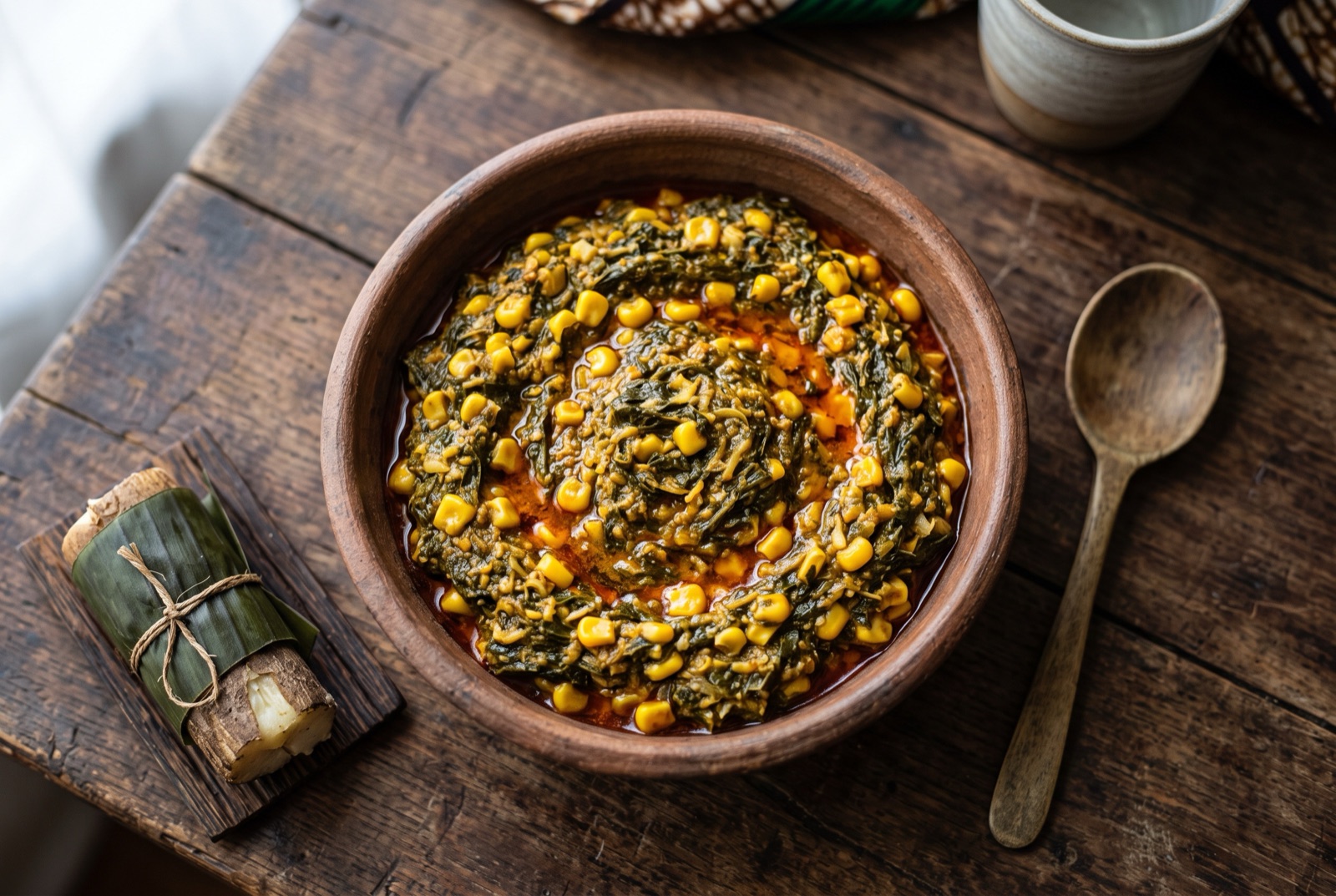
Keep exploring Cameroon.
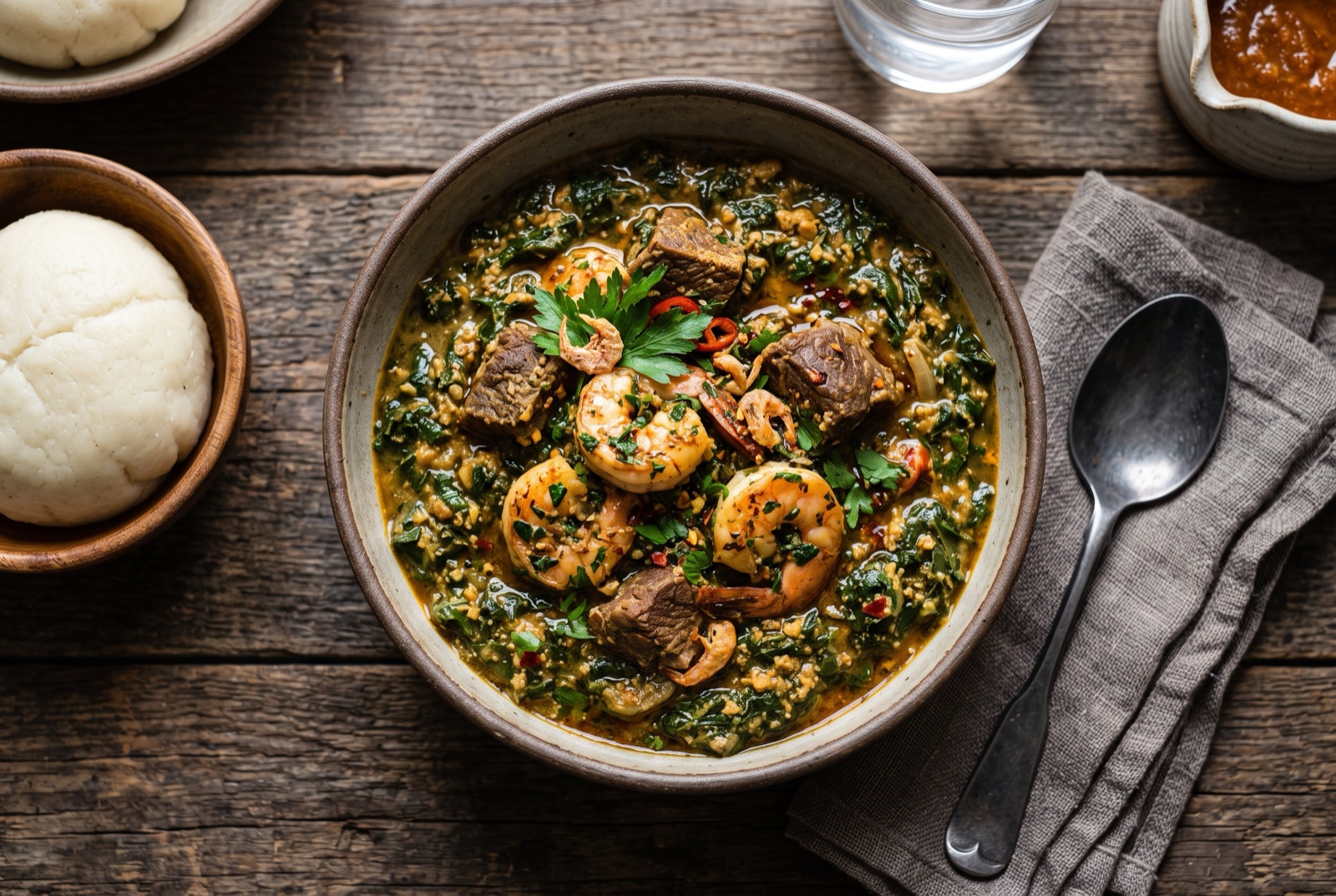
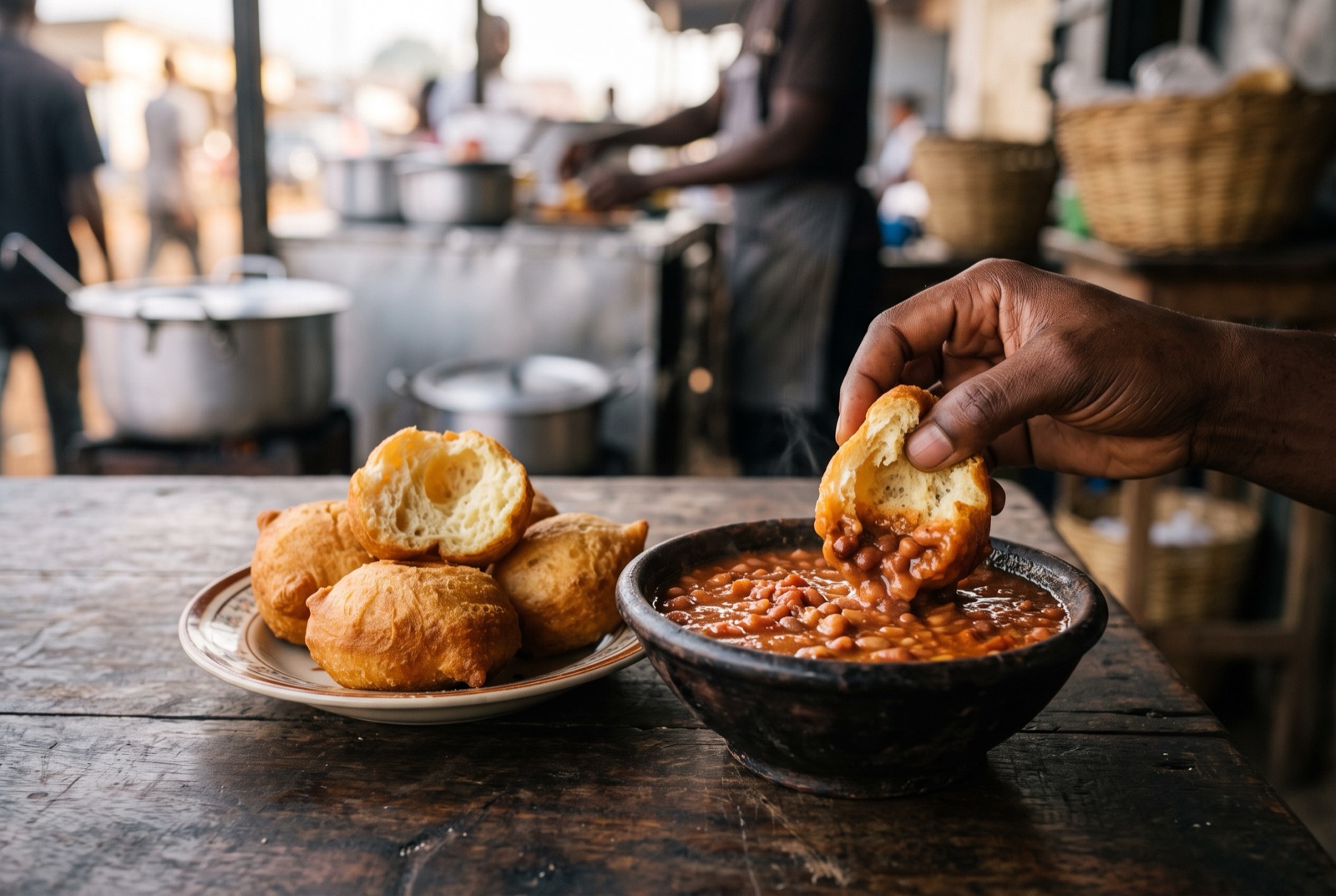
Cameroon has 9 more dishes in the atlas — Achu Soup and Beignets Haricots, and 7 more.
All Cameroon recipes Scotch bonnet recipes Onion recipes Plantain recipes sideveganvegetariangluten freedairy freenut freeRecipe by The DishRoute Kitchen · published August 20, 2026 · updated August 20, 2026