El Salvador.
El Salvador
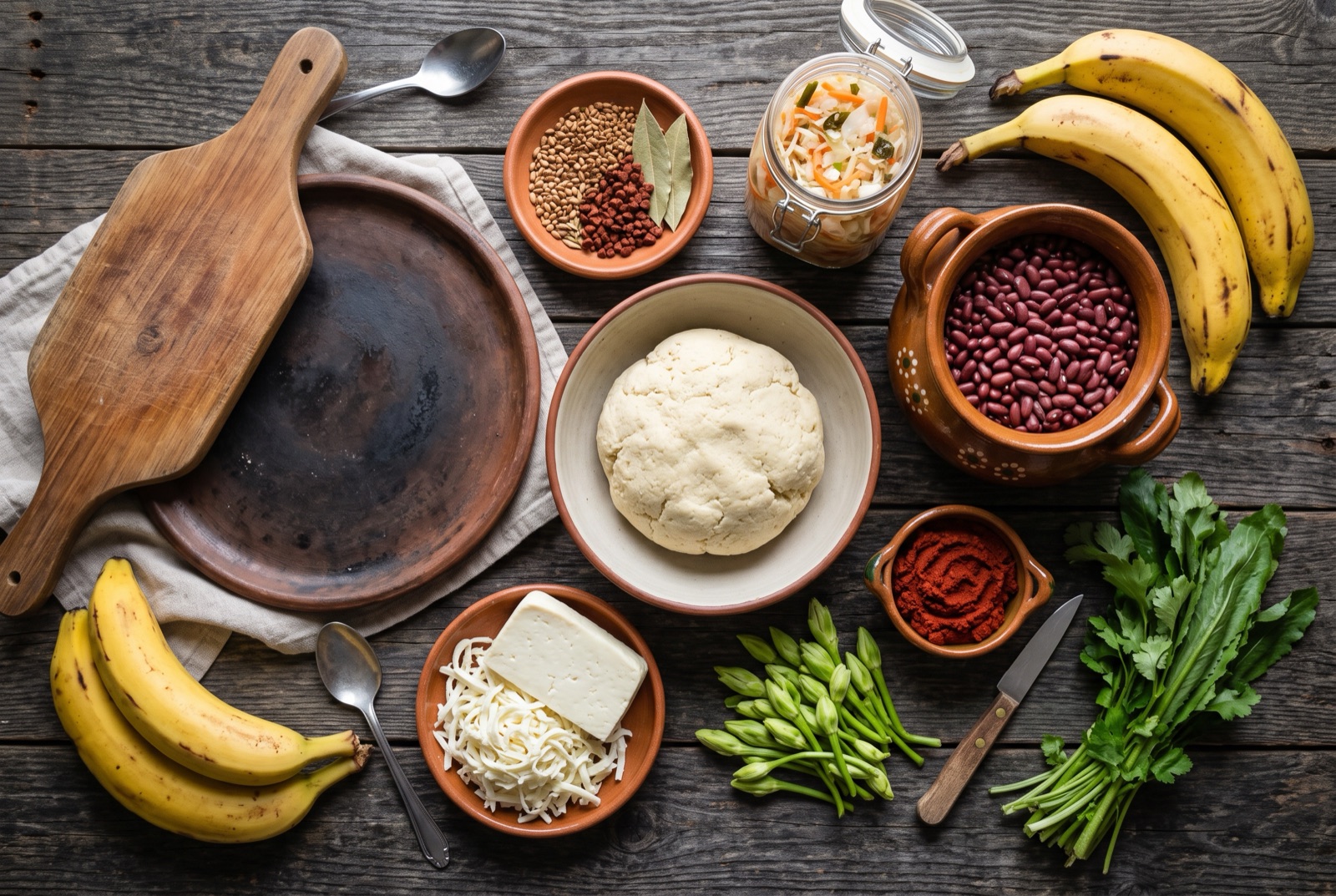
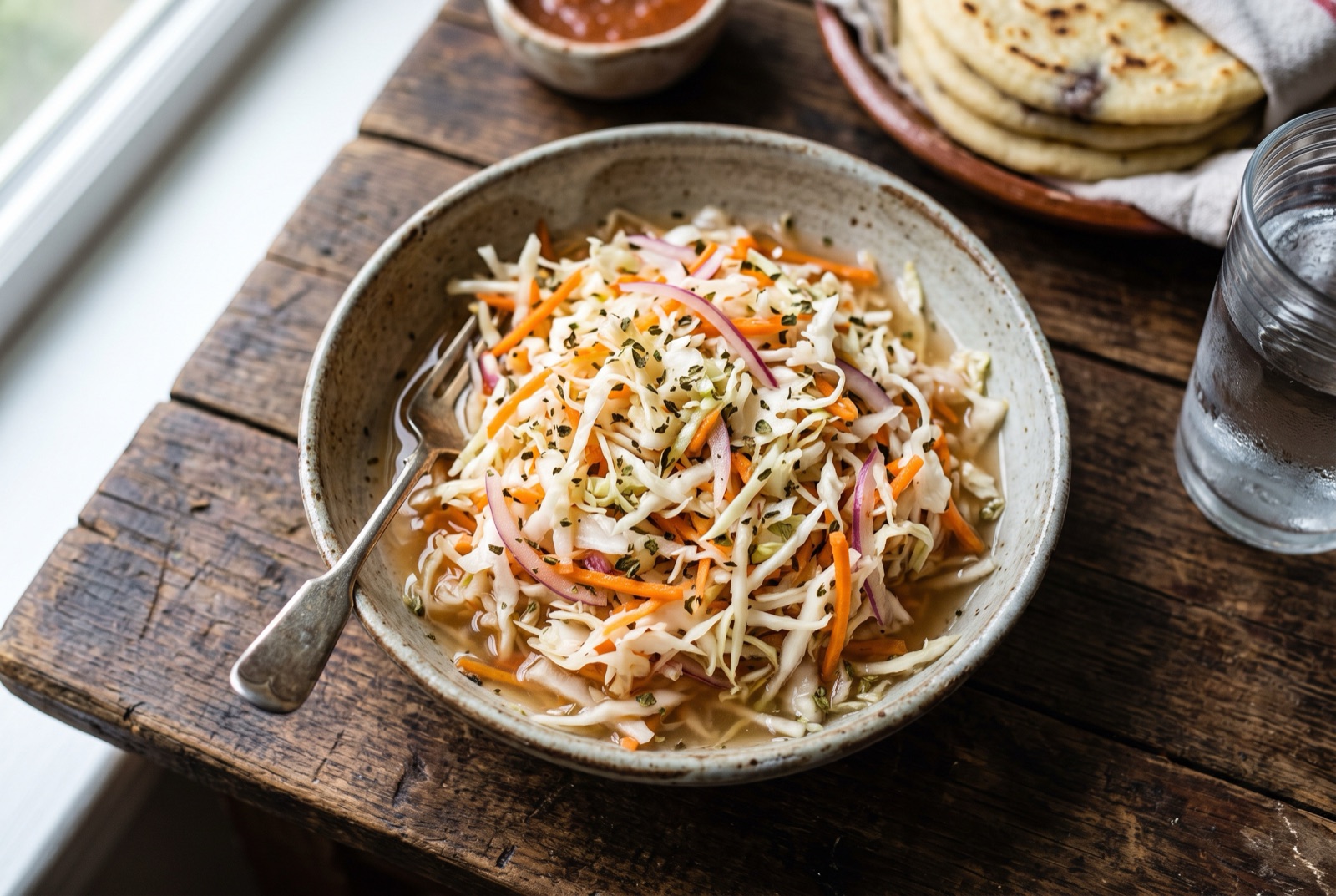
Salvadoran cooking is built on corn, beans and the griddle, and it is unusually good at making a great deal out of very little. The comal — a flat clay or steel plate set over the fire — is the central appliance, and masa passes over it constantly: pupusas, tortillas, riguas, tamales steamed rather than griddled. Beans are cooked twice, first boiled soft and then fried down in their own dark broth, and the leftover broth is treated as a seasoning in its own right rather than poured away. Two things separate this kitchen from its Guatemalan and Honduran neighbours. The first is relajo, a house spice mix of toasted sesame and pumpkin seeds, dried chiles, allspice and thyme that thickens and perfumes stews without making them hot. The second is the reflex to serve something sharp and fermented alongside anything rich: curtido, a vinegar-brined cabbage slaw, sits on practically every table. Chile heat is rare; sour, toasted and gently sweet notes do the work instead.

- Continent
- North AmericaCentral America
- Recipes in atlas
- 10
- Must-try dishes
- 3
- Pantry staples
- 9
Start with the classics.
Must tryThe dishes that explain the El Salvador kitchen fastest — if you cook only a few things from this page, cook these.
Inside the El Salvador kitchen.
Corn is not one ingredient here but a whole system. Dried kernels are cooked with lime into nixtamal, ground into masa, and then sent in several directions: pressed into tortillas, patted around fillings into pupusas, wrapped in banana leaf as tamales de elote or tamales pisques, thinned into atol, or fermented into chicha, the corn wine that turns up in the festival stew gallo en chicha. Fresh corn gets its own season and its own dishes — riguas, sweet corn tamales, elotes locos loaded with mayonnaise, mustard, ketchup and hard cheese. When Salvadorans abroad say they miss home food, masa is usually what they mean.
Beans run in parallel. The everyday bean is the frijol de seda, a small thin-skinned red bean prized because it cooks to a silky purée rather than staying mealy. Boiled beans become sopa de frijoles, blended and fried beans become frijoles licuados for spreading on tortillas, and day-old rice fried into the bean broth becomes casamiento, the breakfast plate whose name — "marriage" — is a joke about rice and beans finally settling down together. Alongside them come plantain, crema, fried egg and queso duroblando, the soft-firm cheese that also melts into pupusas.
The seasoning cupboard is modest and specific. Achiote gives colour and a faint peppery earthiness; relajo gives depth; oregano, thyme, bay and allspice do most of the aromatic work. Fresh herbs mean cilantro and, more importantly, culantro — the long serrated leaf with a far stronger scent, dropped whole into soups. Sourness comes from lime and from vinegar rather than from tamarind or tomatillo. Real chile heat is usually optional and served on the side, which is why visitors expecting Mexican-level spice are always surprised.
Geography splits the table. The Pacific coast, from La Libertad down to the Gulf of Fonseca, eats seafood daily: mariscada thickened with cream, coctel de conchas made from black clams pulled out of the mangroves, whole fried fish with curtido. The volcanic western highlands around Santa Ana and Ahuachapán are coffee country, with a cooler, more vegetable-driven table. The east, around San Miguel and Usulután, is cattle and dairy territory and the home ground of long-simmered offal soups.
Meals are structured around a plate rather than courses. Breakfast is the biggest fixed ritual — casamiento, fried plantain, crema, cheese, egg and tortillas — while lunch is the main meal and dinner is often pupusas from a neighbourhood pupusería that only opens in the evening. The comedor, an informal eating house serving one or two dishes of the day, is where most working people eat, and the food there is the truest version of the cuisine: no menu, no garnish, just a plate, a bowl of broth and a stack of tortillas.
Signature pantry.
9 staplesThe ingredients this cuisine cannot function without.
- masa (nixtamalised corn dough)
- frijoles de seda (red silk beans)
- relajo spice mix
- queso duroblando and quesillo
- curtido
- plantain
- achiote
- loroco flower buds
- culantro
How people eat in El Salvador.
Pupusas are eaten with the hands, never with cutlery: you tear, load on curtido with your fingers, spoon over the thin tomato salsa, and accept that it will drip. They are also evening food — most pupuserías fire up the comal in the late afternoon, so ordering them at nine in the morning marks you as a visitor. Breakfast is the fixed family meal and lunch is the largest; dinner is often light or bought on the street. Curtido and salsa arrive as a matter of course rather than on request, and refusing them is odd. Sharing plates is normal, coffee is drunk sweet and often with the meal, and a guest who does not accept a second serving is usually offered it twice more anyway.
Regional kitchens.
El Salvador cooks 4 distinctly different ways depending on where you stand — here is what changes between them.
- R1The Pacific Coast and La Libertad
- Surf towns and fishing coves where the day's catch decides the menu: cream-rich mariscada, black clam cocktails from the mangroves, and whole fried fish eaten at plastic tables on the sand.
- R2The Western Highlands (Santa Ana, Ahuachapán, Sonsonate)
- Coffee country on volcanic soil, with the strongest surviving Nahuat-Pipil food traditions. Cooler, greener cooking: fresh corn dishes, garden vegetables and the sweet-stall towns of the Ruta de las Flores.
- R3The Central Valley and San Salvador
- The pupusa heartland, with Olocuilta's highway strip of rice-flour pupuserías as its shrine. City food is fast, griddled and eaten standing up, from panes con pollo stands to late-night elotes locos.
- R4The East (San Miguel and Usulután)
- Cattle and dairy country, and the home of the long-simmered soups — sopa de pata, sopa de res — plus the roasted, cheese-heavy snacks that travel well in the dry eastern heat.
All El Salvador recipes.
10 recipes and counting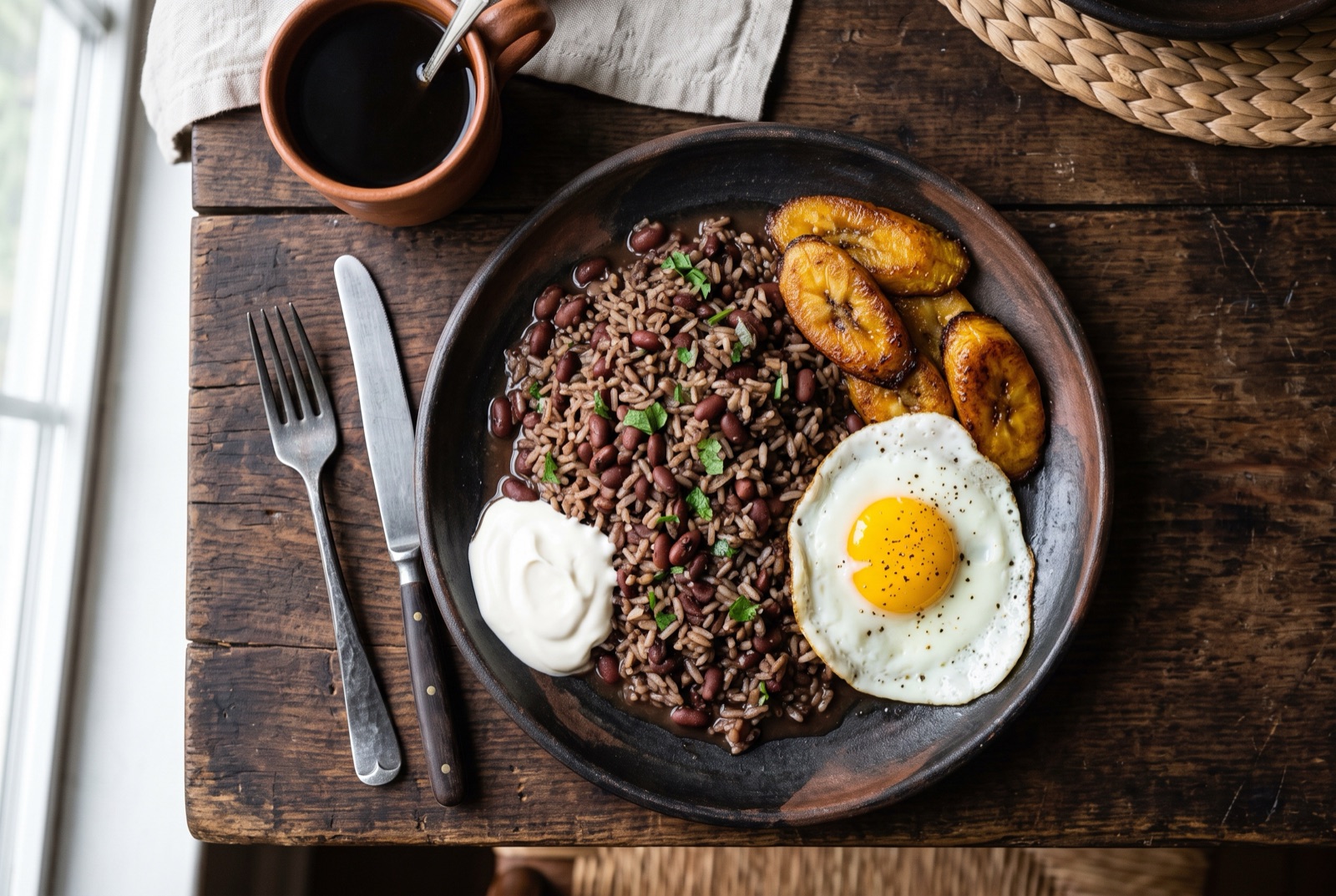
El Salvador25 min
Casamiento
Salvadoran Rice Married with Red Beans
El Salvador24 hr 25 min
Curtido
Salvadoran Lightly Fermented Cabbage Slaw
El Salvador1 hr 35 min
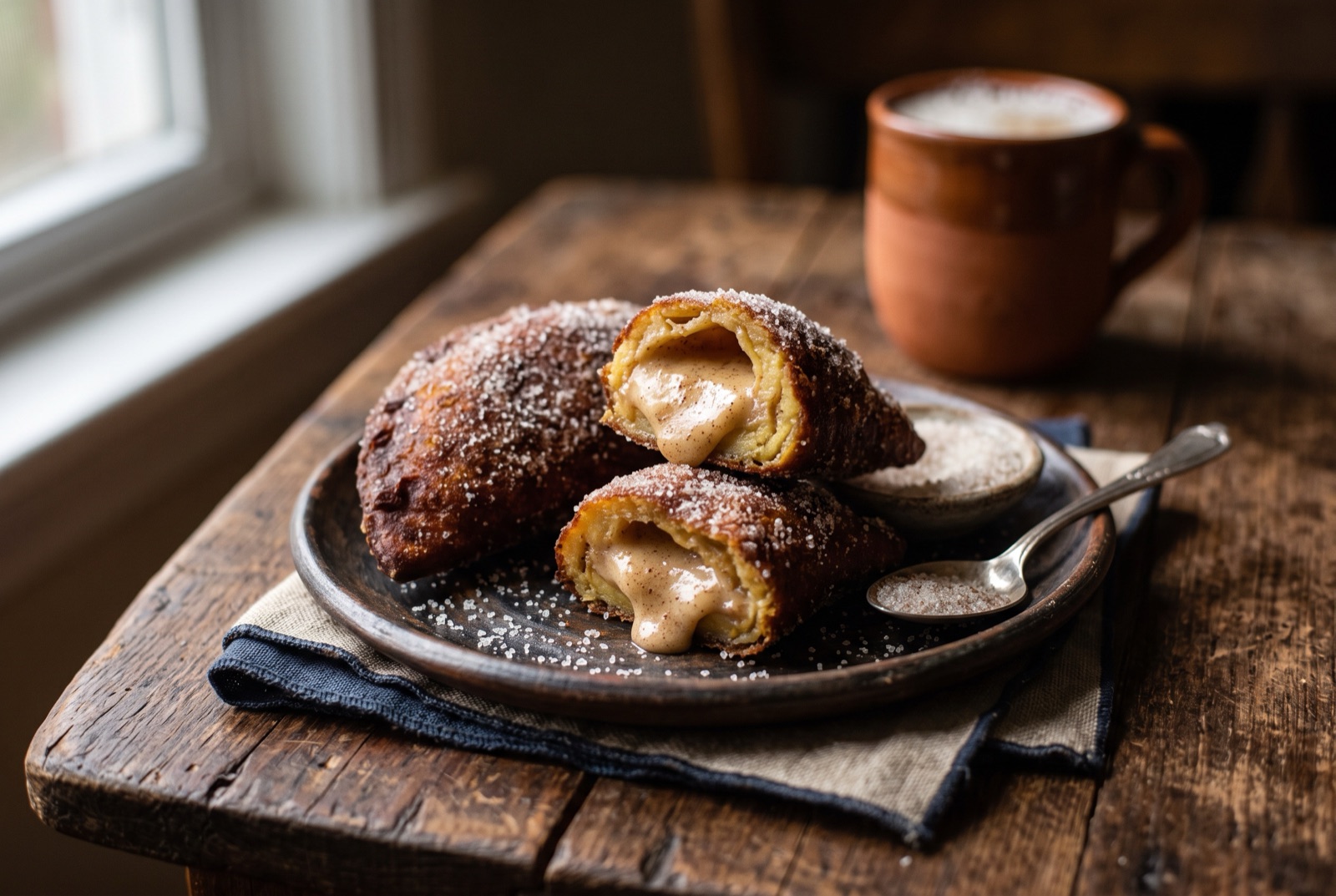
Empanadas de Plátano
Plantain Parcels with Milk Custard
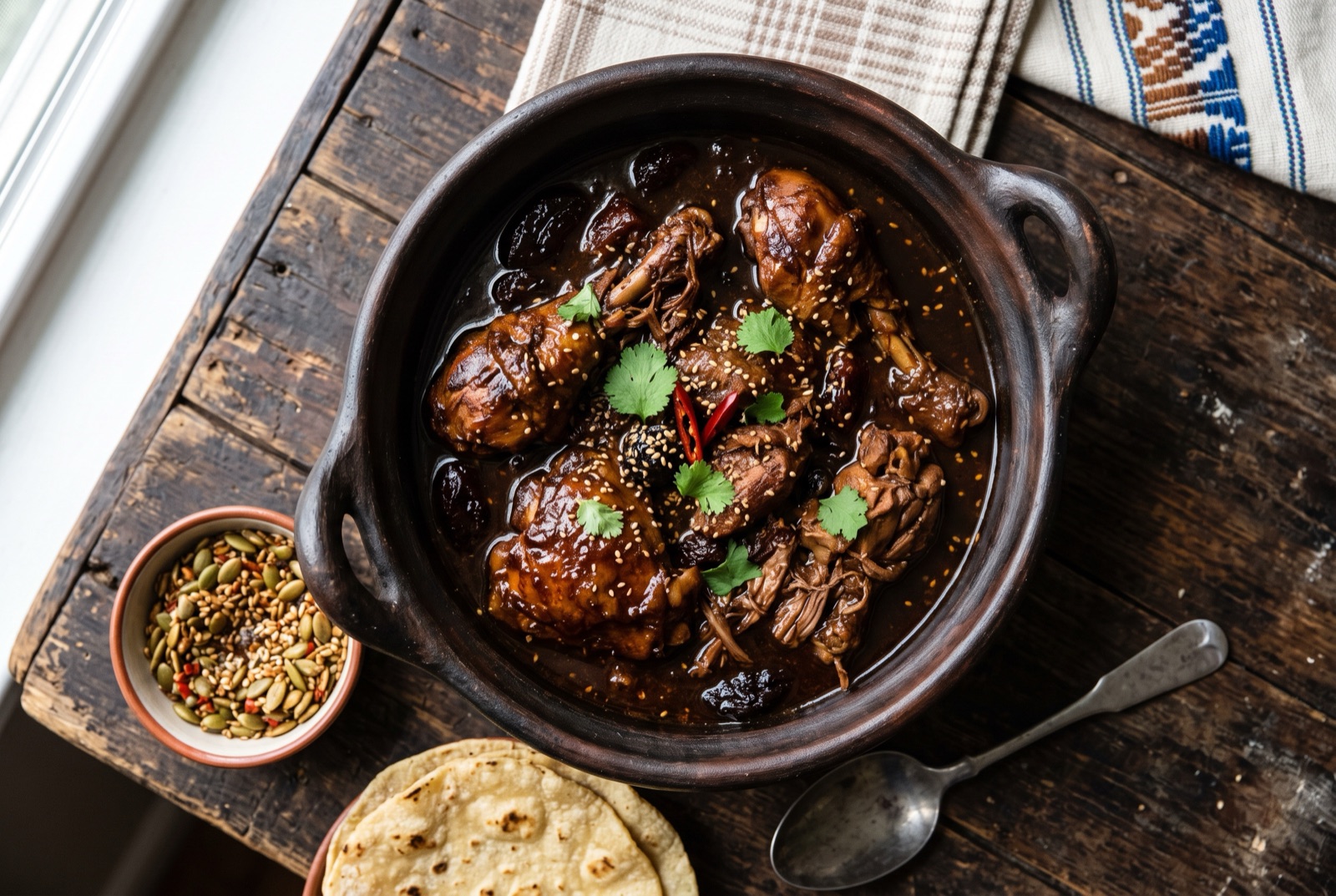
El Salvador14 hr 40 min
Gallo en Chicha
Rooster Stewed in Fermented Corn Wine
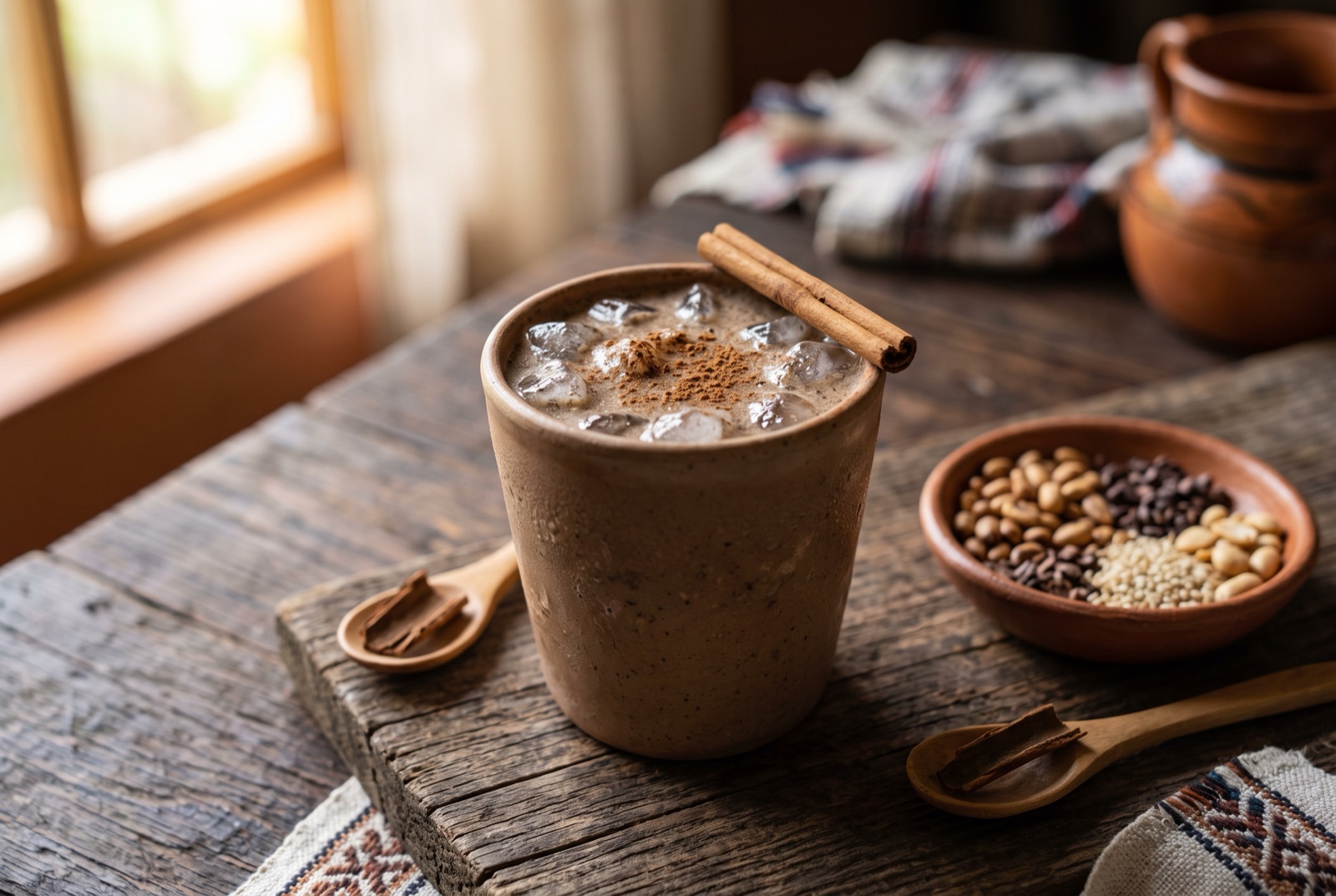
El Salvador2 hr 35 min
Horchata de Morro
Toasted Morro Seed Drink
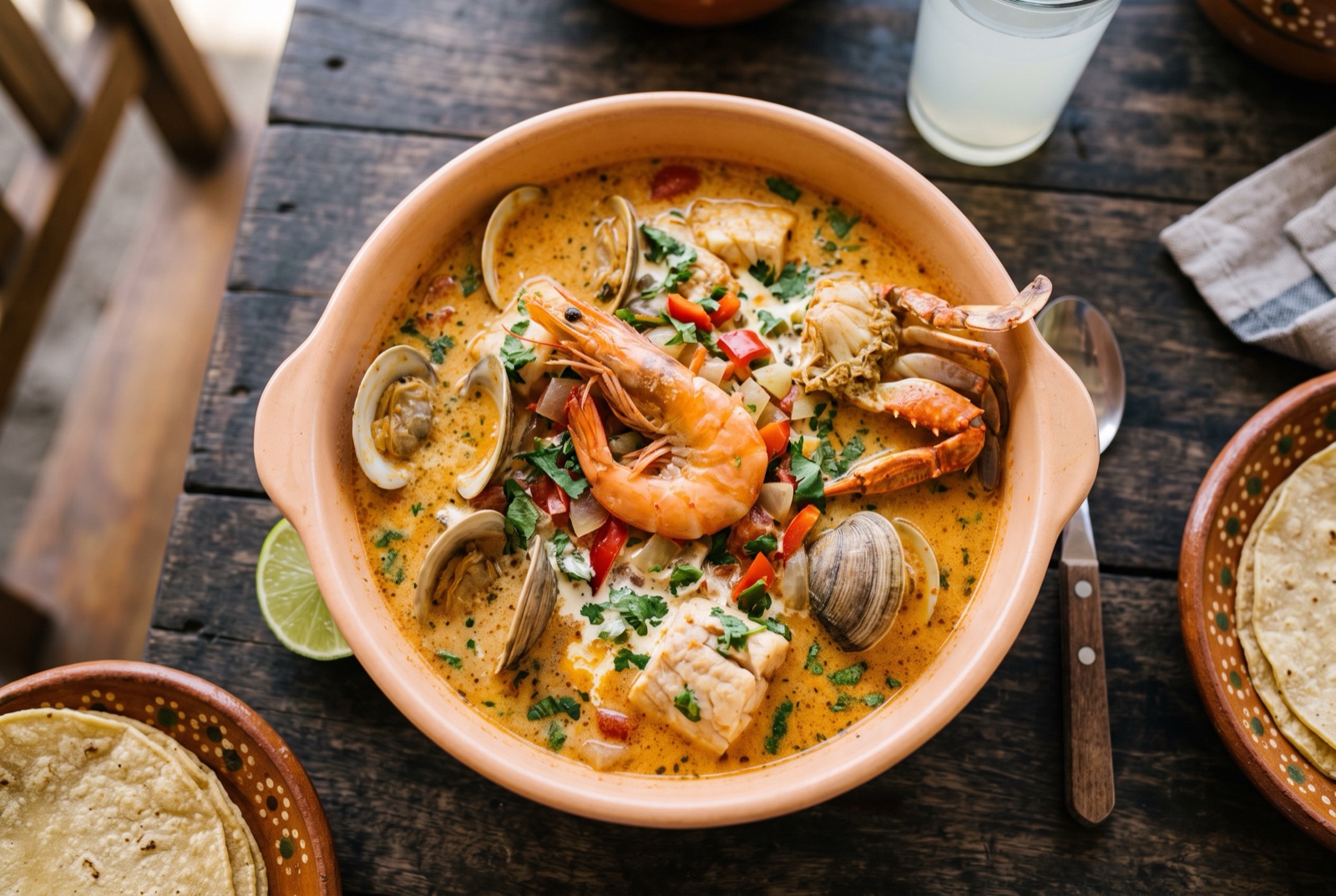
El Salvador1 hr 5 min
Mariscada Salvadoreña
Creamy Pacific Seafood Stew
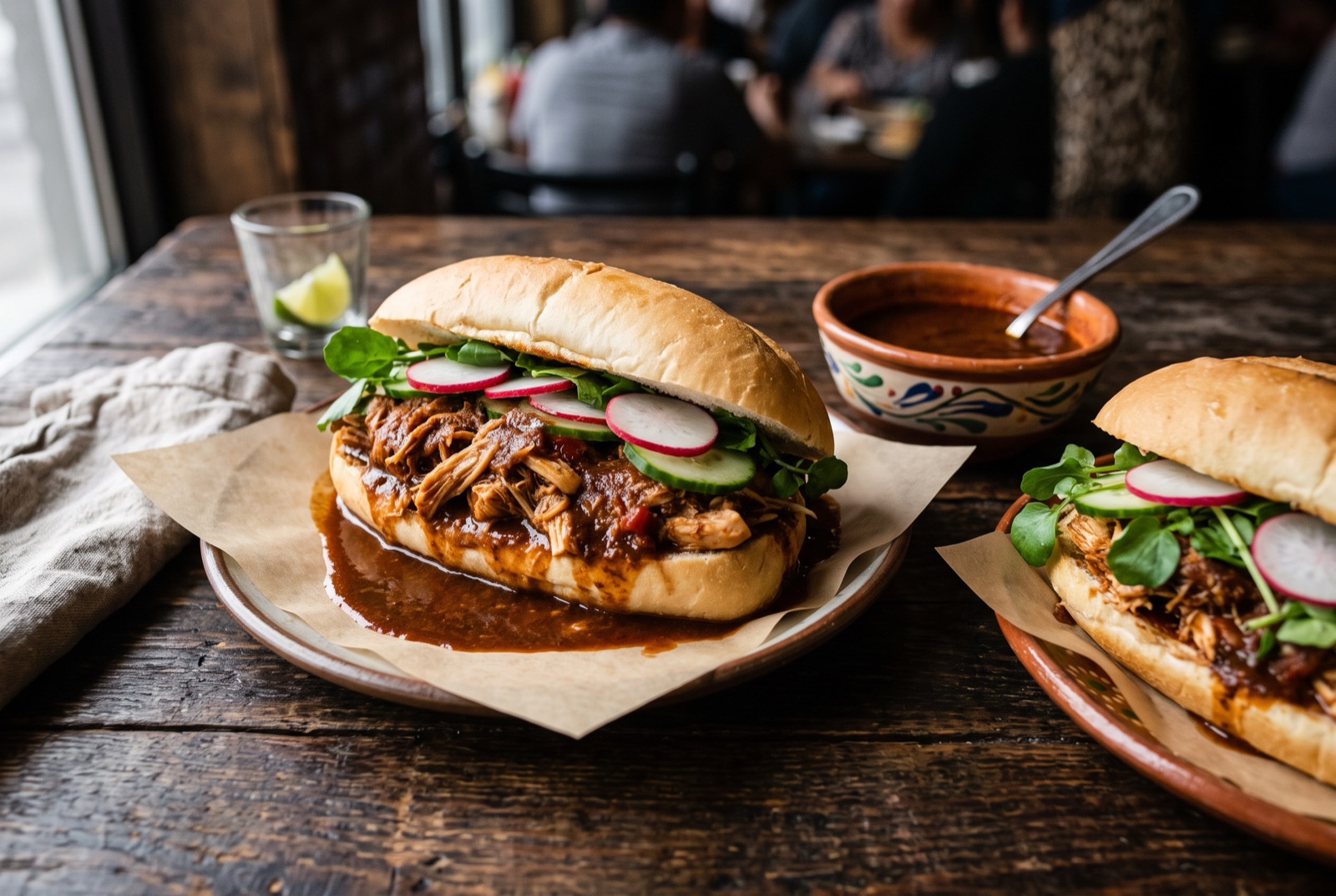
El Salvador1 hr 25 min
Panes con Pollo
Salvadoran Braised Chicken Sandwiches
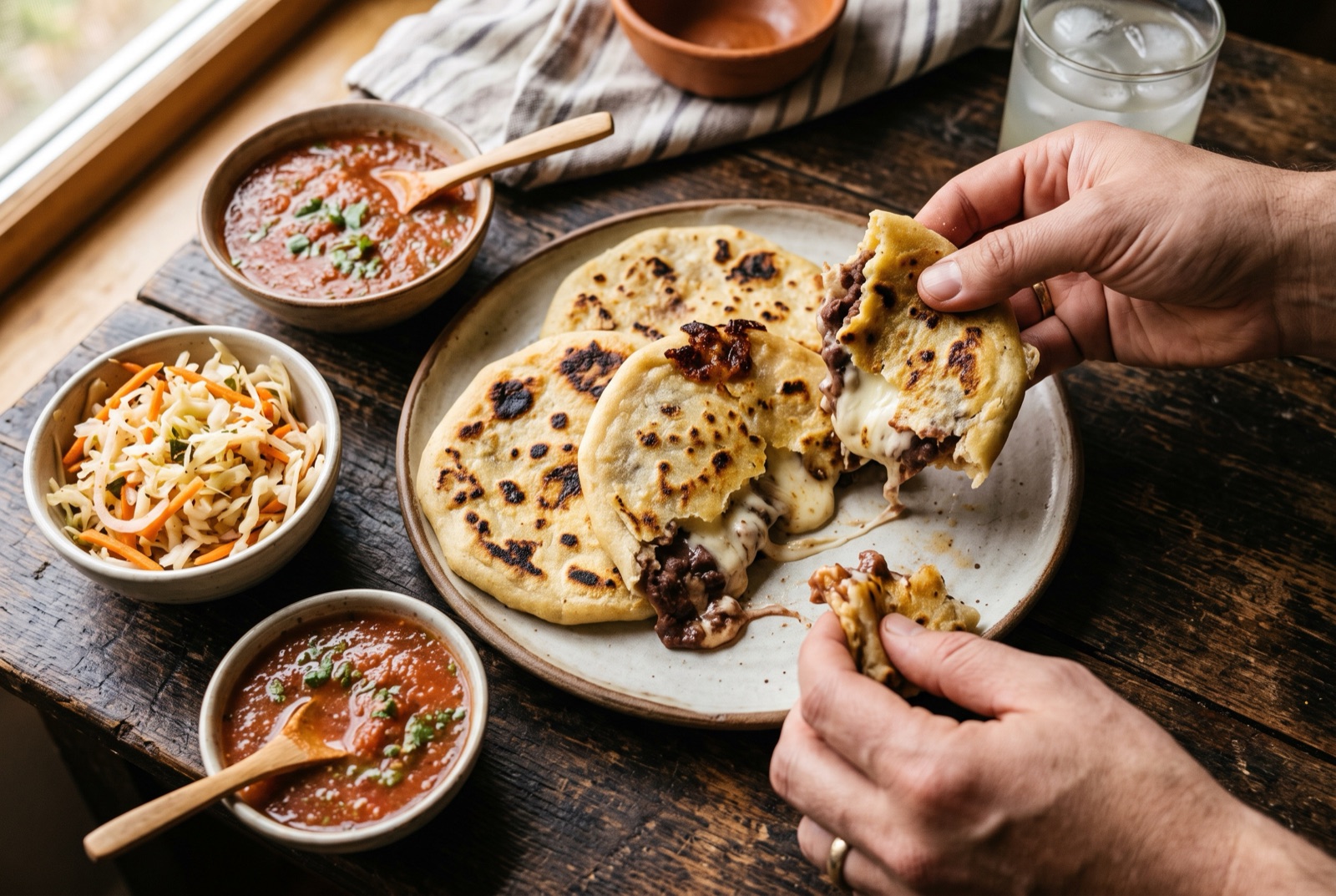
El Salvador1 hr 15 min
Pupusas
Salvadoran Stuffed Corn Cakes
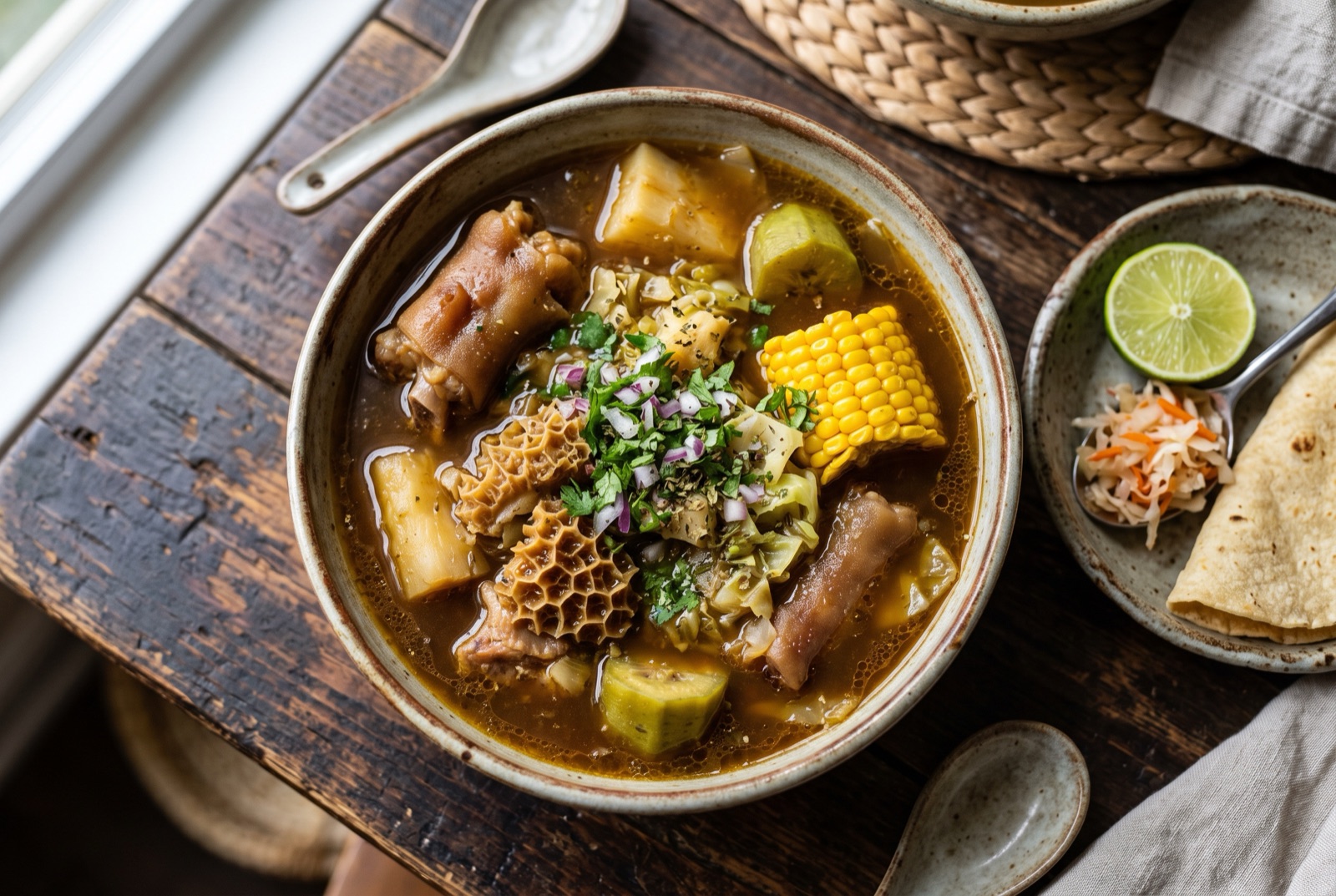
El Salvador4 hr 40 min
Sopa de Pata
Salvadoran Cow Foot and Tripe Soup
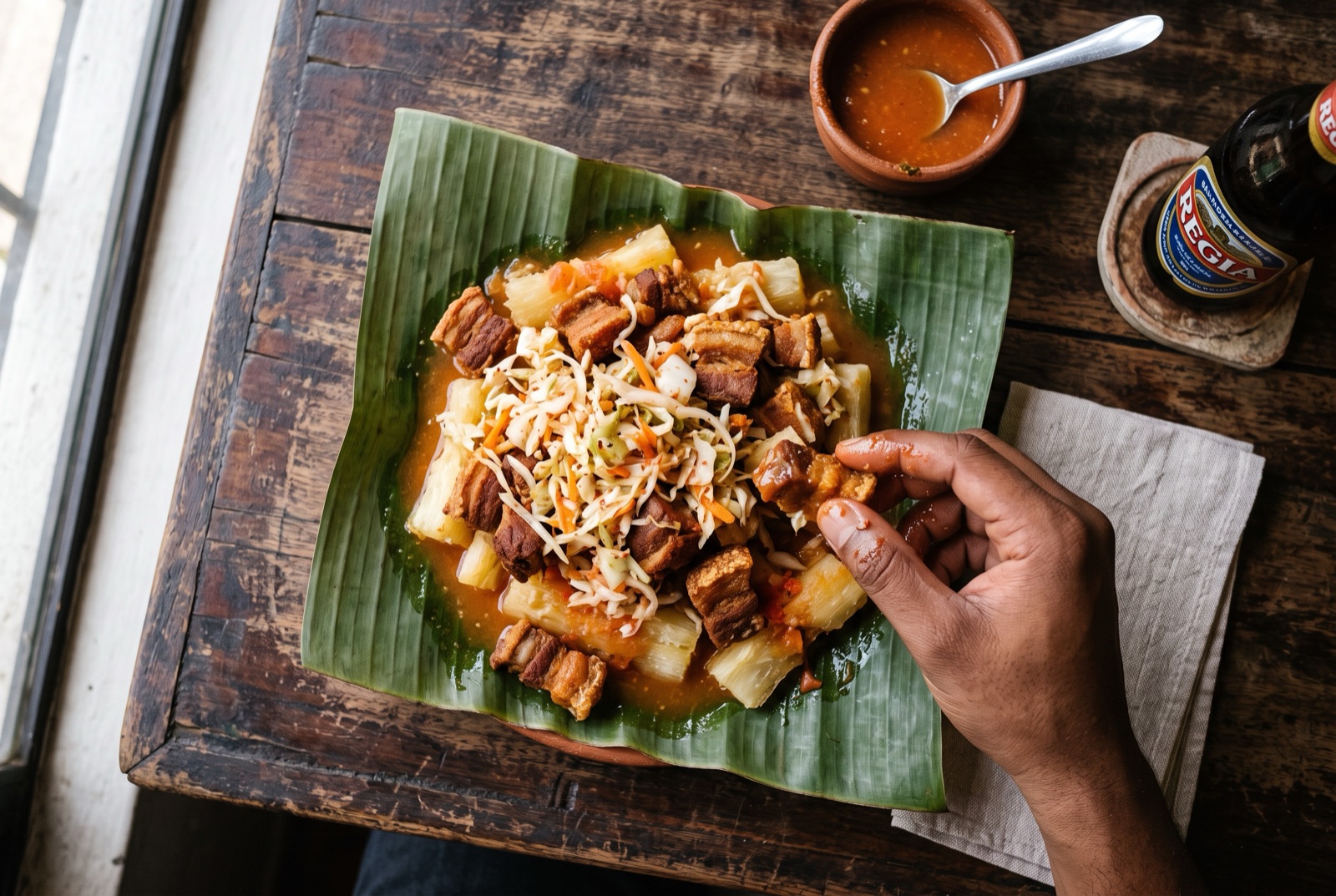
El Salvador1 hr 40 min
Yuca con Chicharrón
Cassava with Fried Pork
Keep traveling.
El Salvador sits in Central America, and its kitchen shares borders as well as ingredients with Canada and Costa Rica.
 Canada
 Costa Rica