India.
भारत
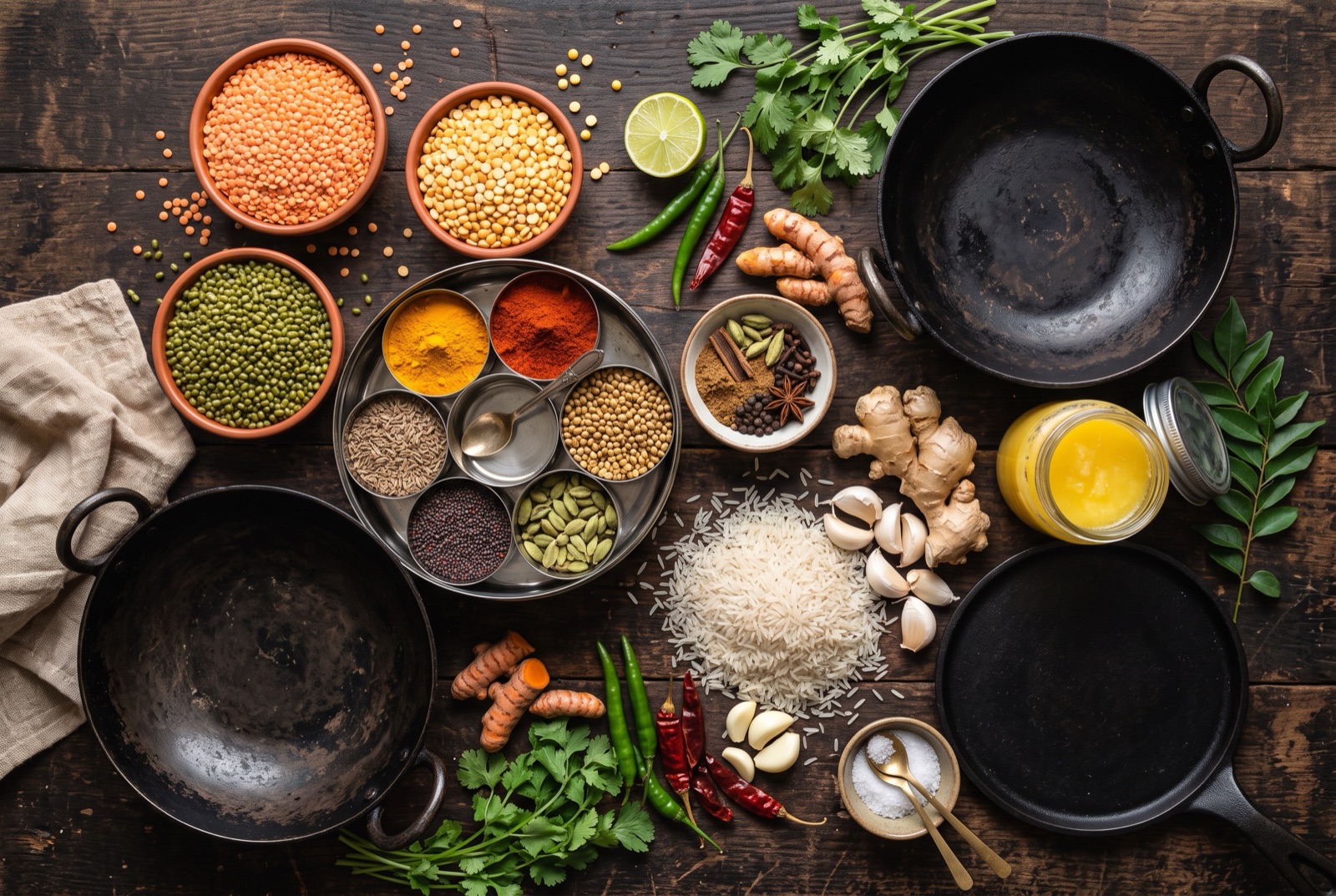
Calling Indian food one cuisine is like calling Europe one country. The subcontinent holds dozens of distinct kitchens — wheat-and-dairy Punjab, rice-and-coconut Kerala, fish-loving Bengal, the sweet-savory vegetarian thalis of Gujarat — bound together less by shared dishes than by a shared method: spices treated as ingredients to be cooked, not powders to be sprinkled. Whole seeds are bloomed in hot fat, onions are browned far past where most cooks stop, and ground spices are fried into a tomato-onion masala until the oil separates. Heat from chiles is optional and regional; technique is not. India also sustains the world's largest vegetarian tradition, which means its meatless cooking is not an afterthought but a complete cuisine of its own — dals, chickpeas, paneer and vegetables built with the same seriousness other cuisines reserve for meat.

- Continent
- AsiaSouth Asia
- Recipes in atlas
- 10
- Must-try dishes
- 3
- Pantry staples
- 8
Start with the classics.
Must tryThe dishes that explain the India kitchen fastest — if you cook only a few things from this page, cook these.
Inside the India kitchen.
The foundation of most North Indian savory cooking is the masala base: onions sliced or chopped and browned slowly in fat, then ginger and garlic, then tomatoes and ground spices, fried together until the mixture darkens, thickens and releases its oil back out at the edges. That oil separation — "bhunao" done properly — is the single most important doneness signal in the cuisine. Rush it and the curry tastes raw and thin; wait for it and the same five ingredients taste finished.
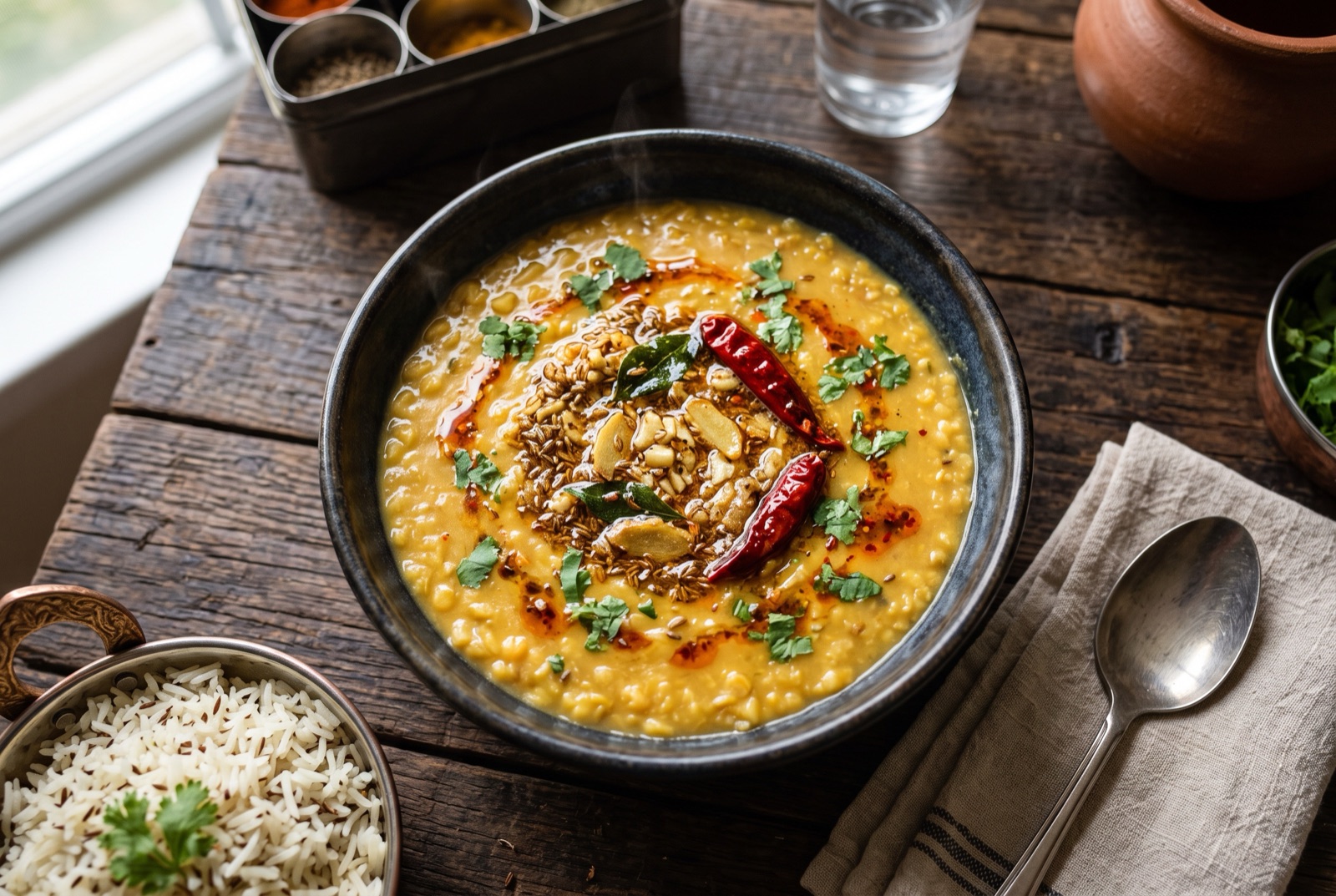
The second defining technique is the tadka (also called chaunk, baghar or tarka): whole spices — cumin seeds, mustard seeds, dried chiles, curry leaves — sizzled briefly in hot ghee or oil so their aromatics dissolve into the fat, then poured over a finished dish. A plain pot of boiled lentils becomes dal tadka in the ten seconds that pour takes. It is flavor added at the end at full volume, and it explains why Indian home cooking can be fast without being flat.
Dairy runs deeper here than in any other Asian cuisine: ghee for cooking and finishing, yogurt as marinade, souring agent and cooling raita, cream and butter in the restaurant gravies of the north, and fresh paneer as the vegetarian centerpiece. Legumes are the daily protein — India grows and eats more varieties of dal than anywhere on earth, and some form of it appears at most meals.
The map splits roughly along the wheat–rice line. The north eats flatbreads — roti, naan, paratha — torn and used as utensils, with thick gravies built to be scooped. The south eats rice in every form, including fermented rice-and-lentil batters steamed into idli or crisped into dosa, with thinner, brothier accompaniments like sambar and rasam, and coconut and curry leaves where the north uses cream and garam masala.
Finally, the restaurant canon and the home kitchen are different worlds. Butter chicken, tikka and creamy black dal come from the tandoor-driven Punjabi restaurant tradition that spread worldwide after 1947. Daily home food is simpler and largely vegetarian: a dal, a vegetable dish (sabzi), bread or rice, yogurt, pickle. Both are authentic; neither is the whole story.
Signature pantry.
8 staplesThe ingredients this cuisine cannot function without.
- garam masala
- ghee
- lentils (dal)
- yogurt
- basmati rice
- ginger and garlic
- turmeric
- green and dried chiles
How people eat in India.
Traditional meals are eaten with the right hand — bread torn into scoops in the north, rice mixed with dal and vegetables by hand in the south — and food touches only the fingertips, not the palm. The thali format rules: instead of courses, everything arrives at once as small bowls around bread or rice, so each diner builds their own bites and balances rich against sour, soft against crisp. Sharing is assumed; ordering one dish per person and not passing it around is a foreign habit. Meals often end with something sweet, however small, and in much of the country a digestive paan or fennel seeds follow. Water, chaas (thin buttermilk) or lassi are the everyday drinks — chai belongs to the hours between meals, not to the meal itself.
Regional kitchens.
India cooks 4 distinctly different ways depending on where you stand — here is what changes between them.
- R1Punjab and the North
- Tandoor country: wheat breads, dairy-rich food, and the robust onion-tomato gravies the world knows as "Indian restaurant food." Butter chicken, chole and dal makhani all trace here.
- R2Tamil Nadu and Kerala (the South)
- Rice in every form — steamed, fermented into dosa and idli batters — with coconut, tamarind, curry leaves and mustard seeds. Brothy sambar and rasam replace the thick gravies of the north.
- R3Bengal
- A river-delta kitchen built on fish and mustard oil, seasoned with the five-spice blend panch phoron, and famous across India for its milk-based sweets — roshogolla and sandesh above all.
- R4Gujarat and Maharashtra (the West)
- Gujarat sets India's benchmark vegetarian thali, balancing sweet, sour and heat in a single meal. Maharashtra answers with peanut-laced street food, coastal seafood and Mumbai's chaat culture.
All India recipes.
10 recipes and counting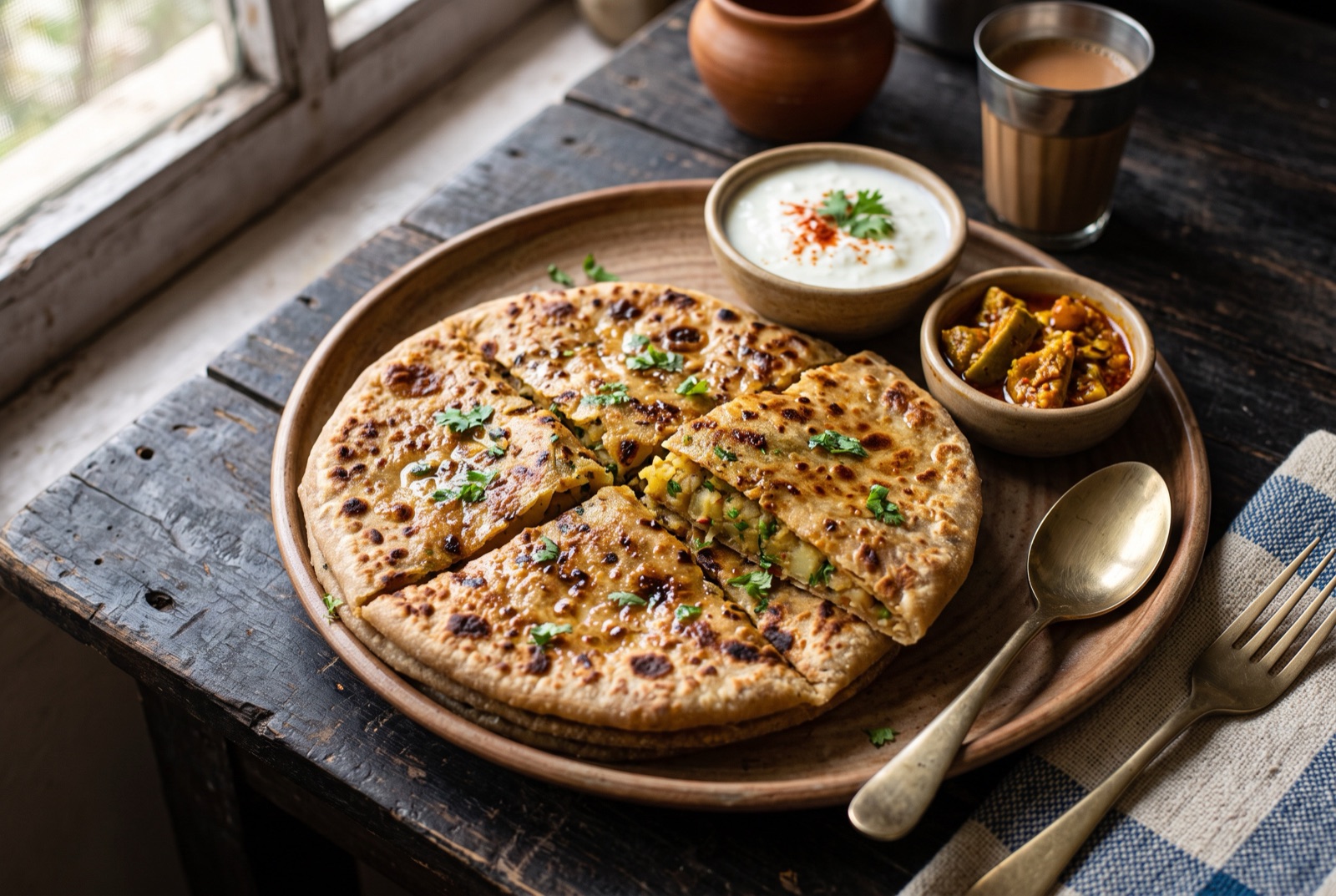
India1 hr 35 min
Aloo Paratha
Punjabi Potato-Stuffed Flatbread
India5 hr 10 min
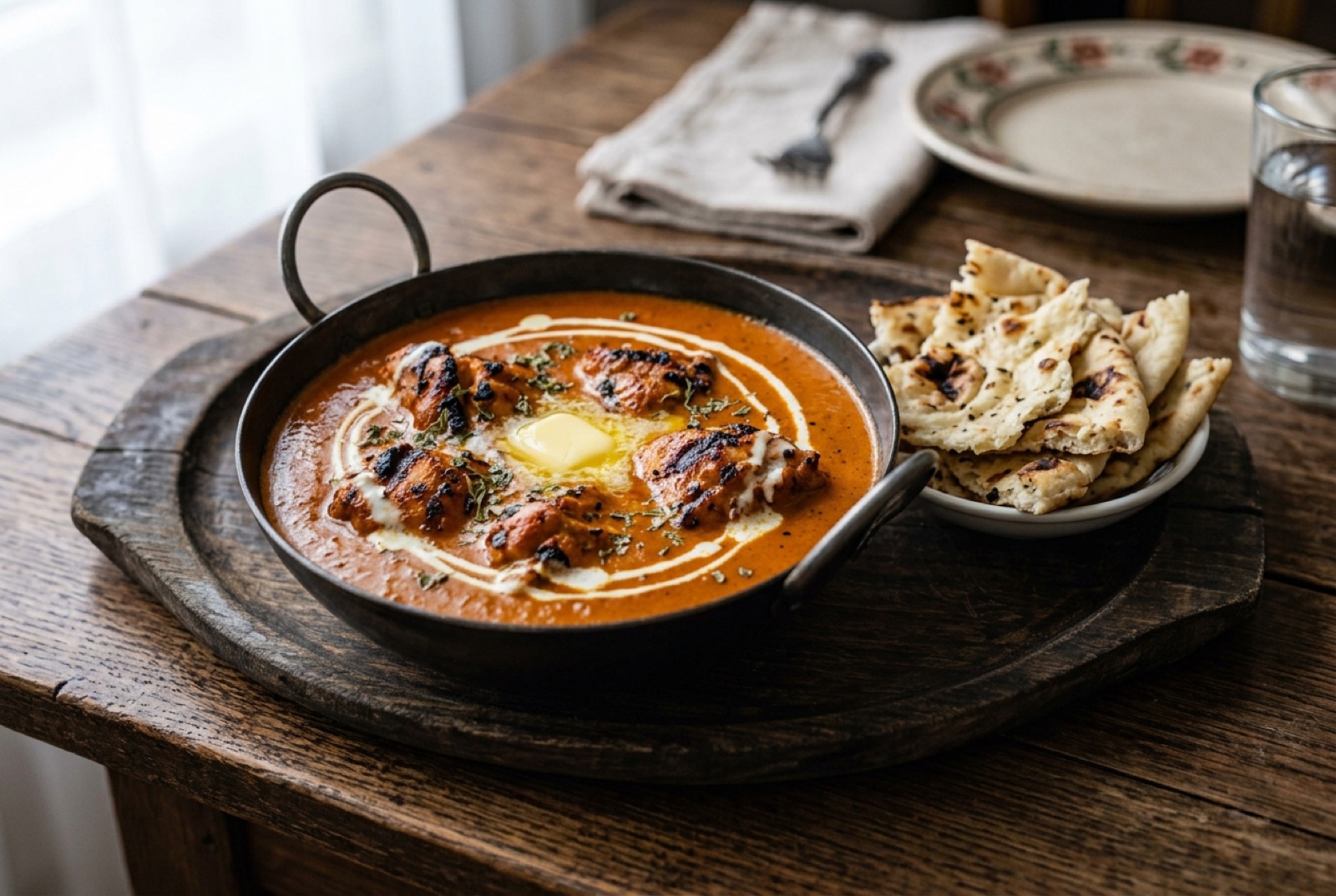
Butter Chicken
Murgh Makhani
India55 min
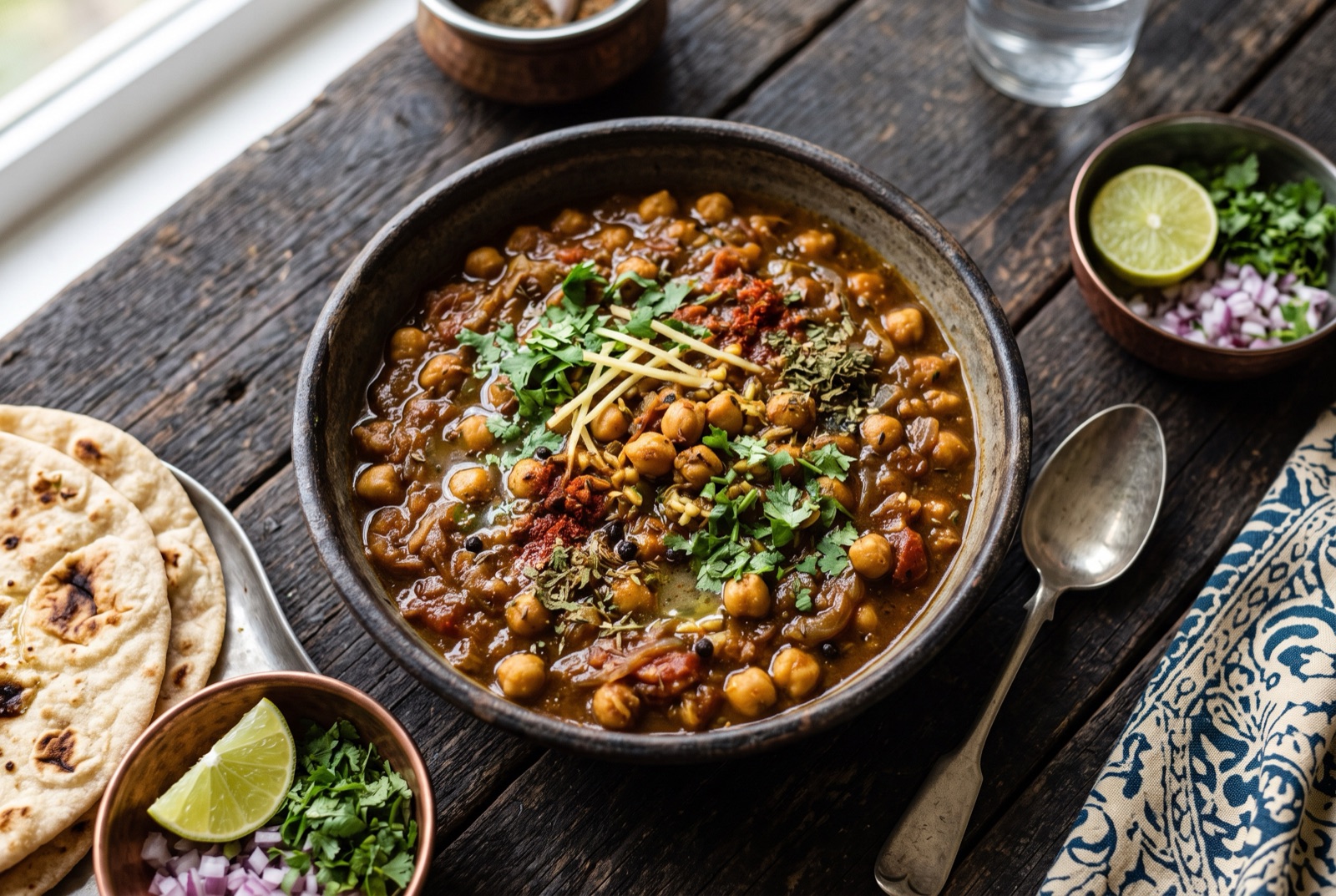
Chana Masala
North Indian Chickpea Curry
India50 min
Dal Tadka
Yellow Lentils with Sizzling Tempering
India1 hr 30 min
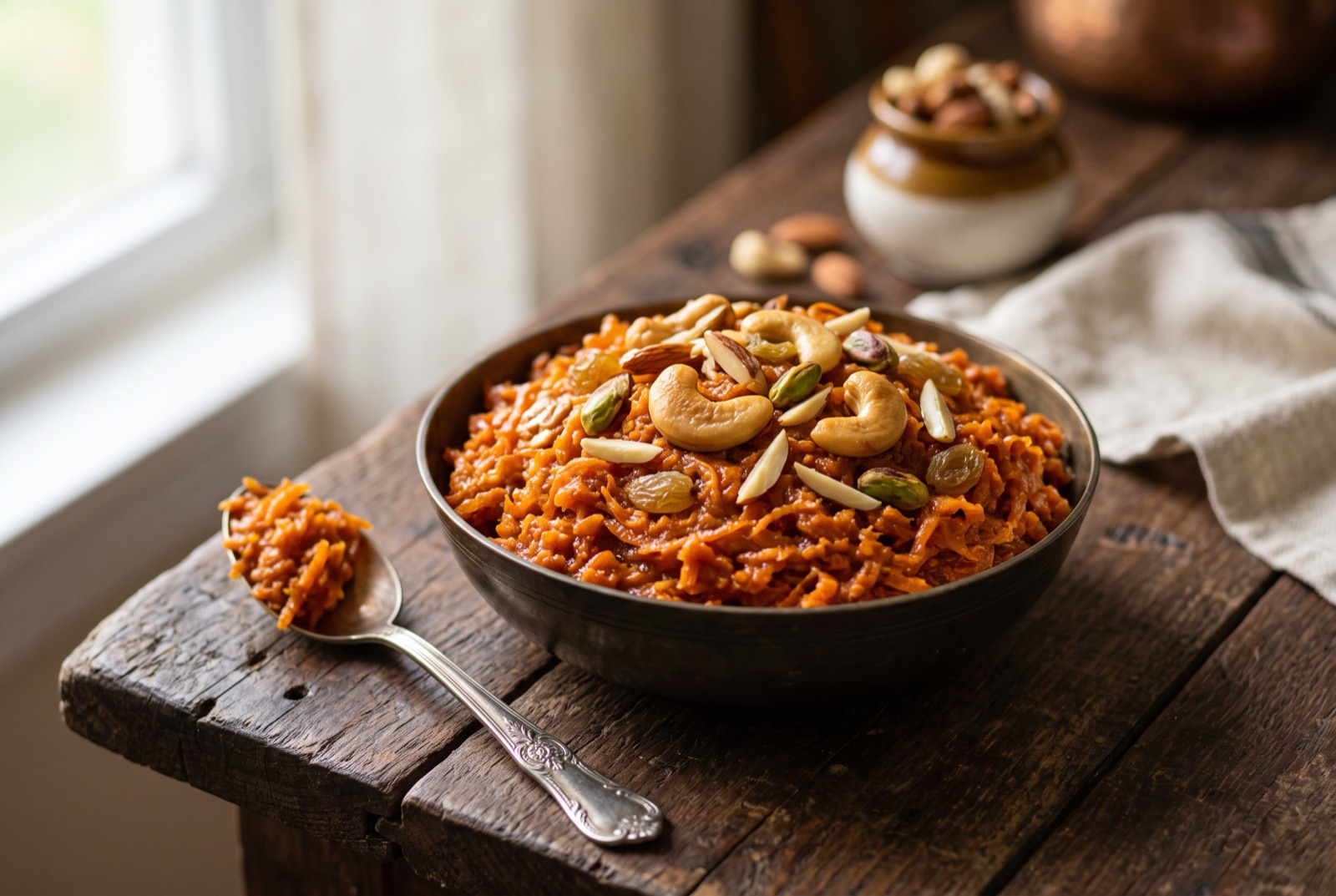
Gajar Ka Halwa
North Indian Carrot Milk Pudding
India5 hr 55 min
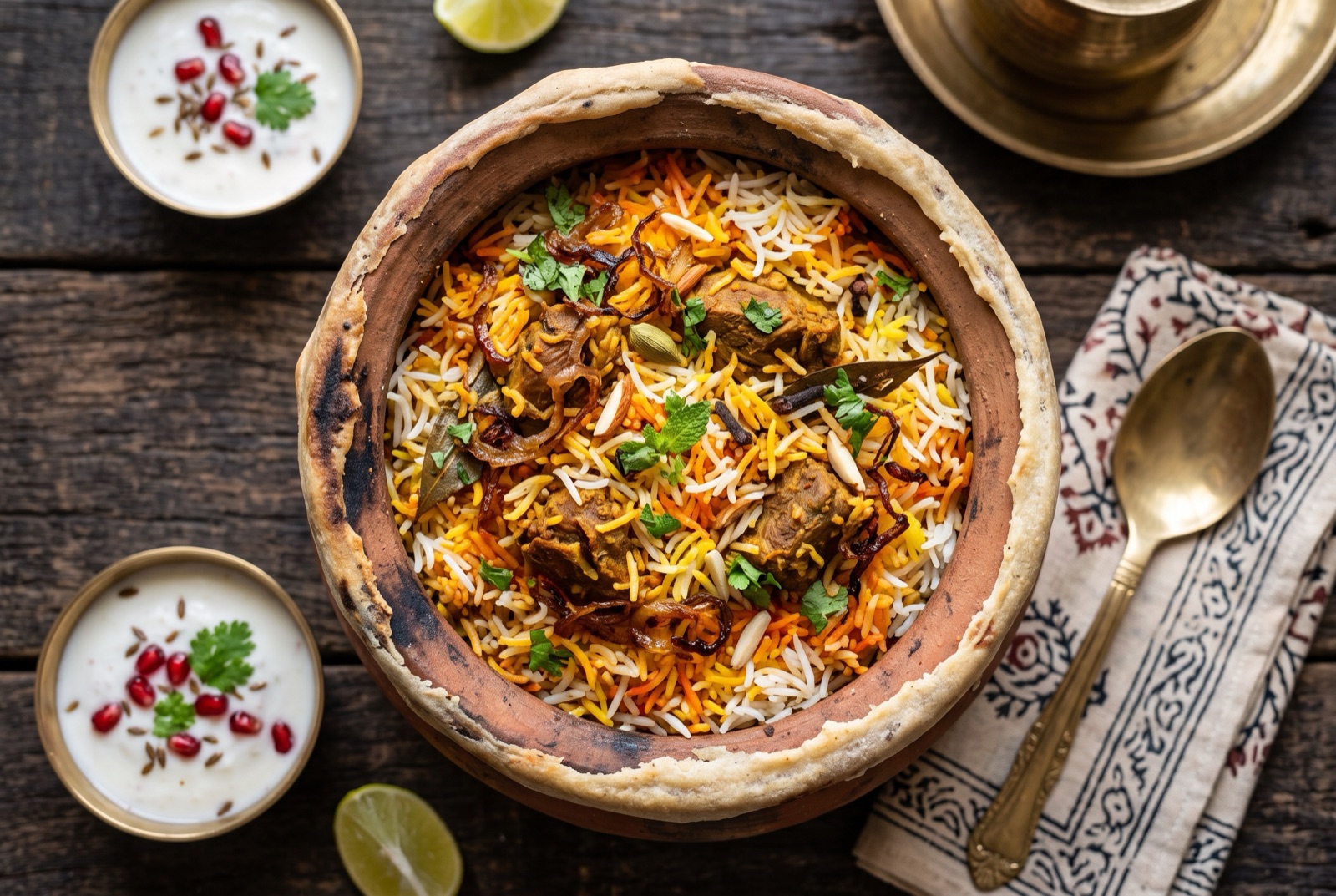
Hyderabadi Kacchi Biryani
Dum-Cooked Mutton and Saffron Rice
India17 hr 10 min
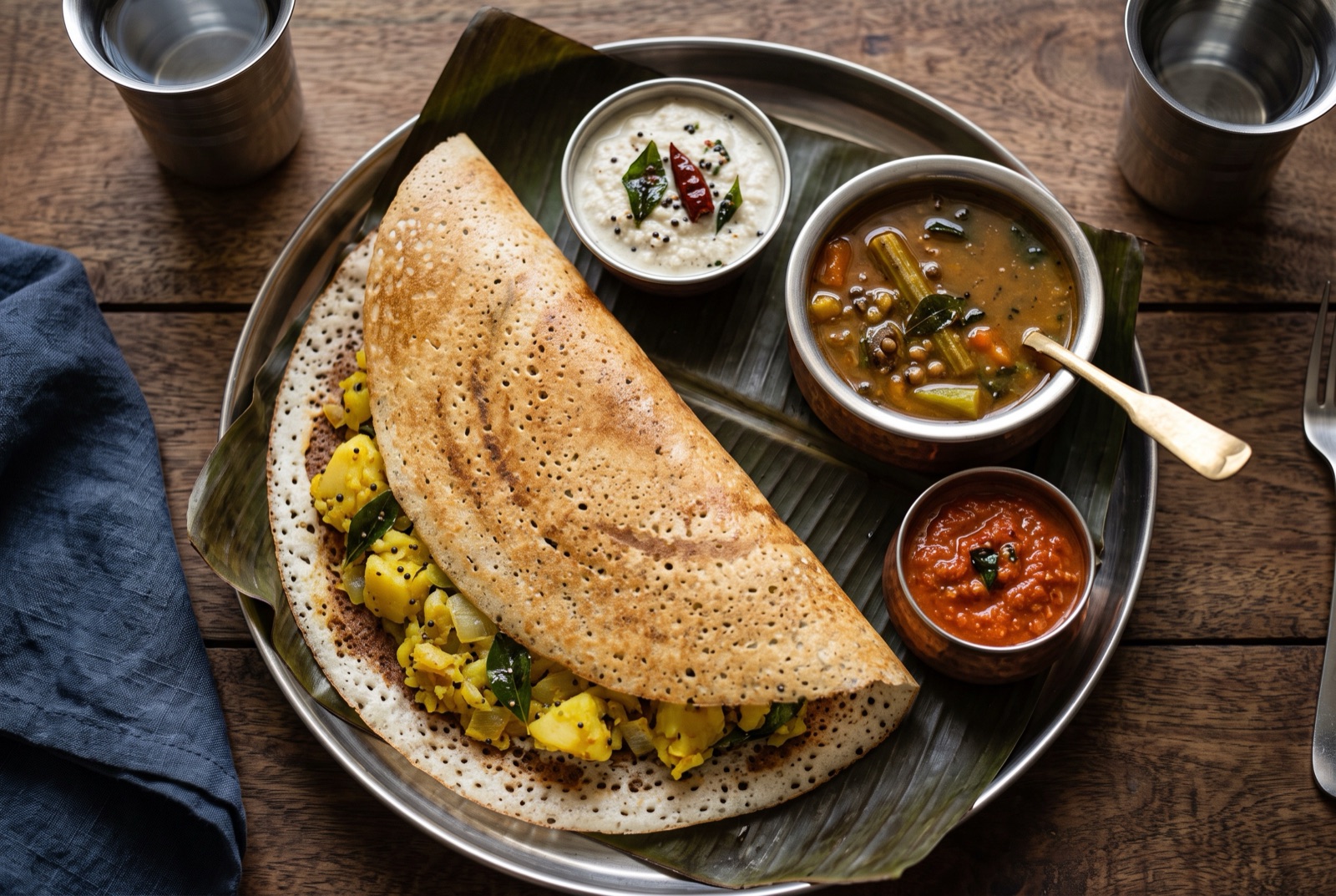
Masala Dosa
Fermented Rice Crepe with Potato Masala
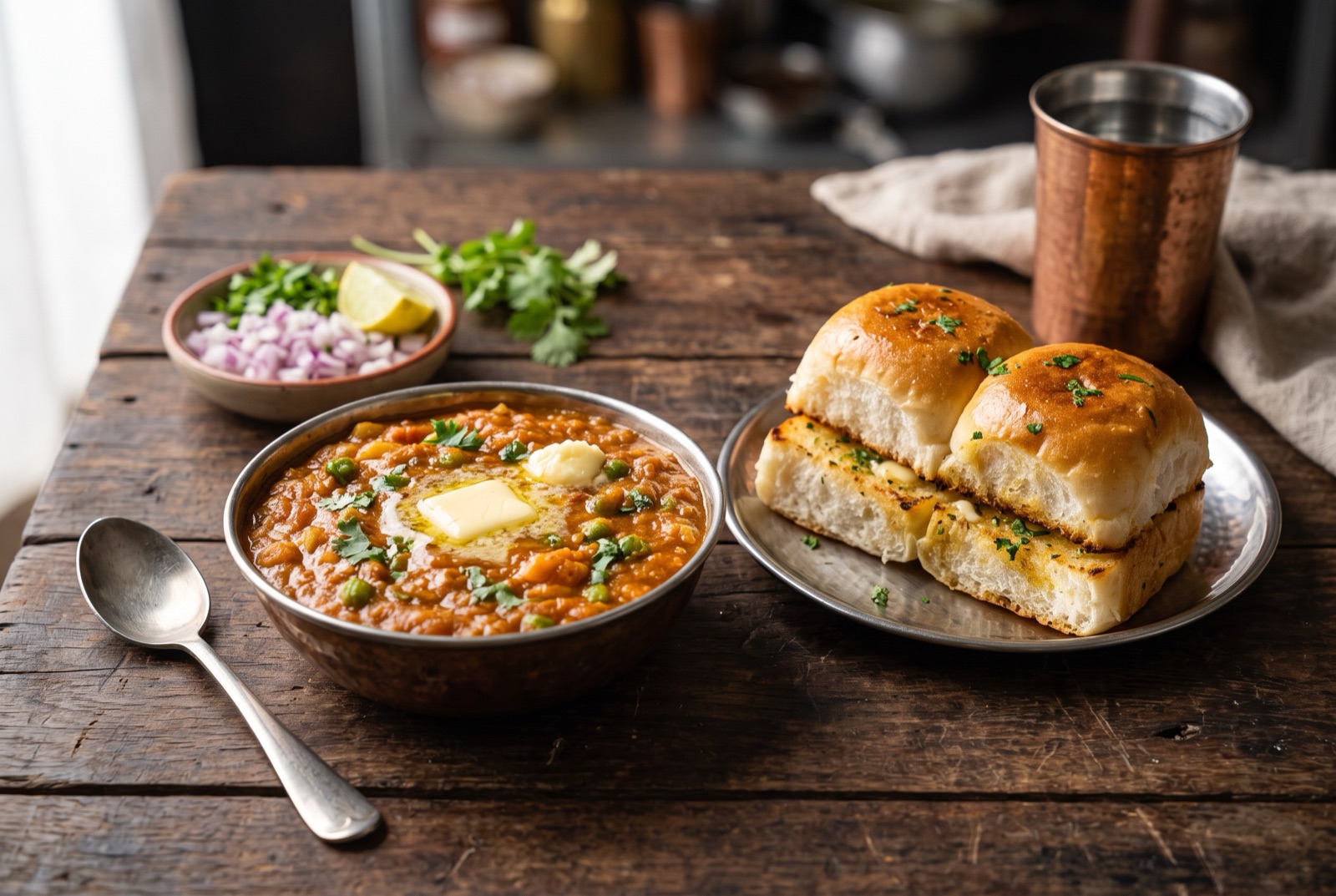
India1 hr
Pav Bhaji
Mumbai Mashed Vegetables with Buttered Rolls
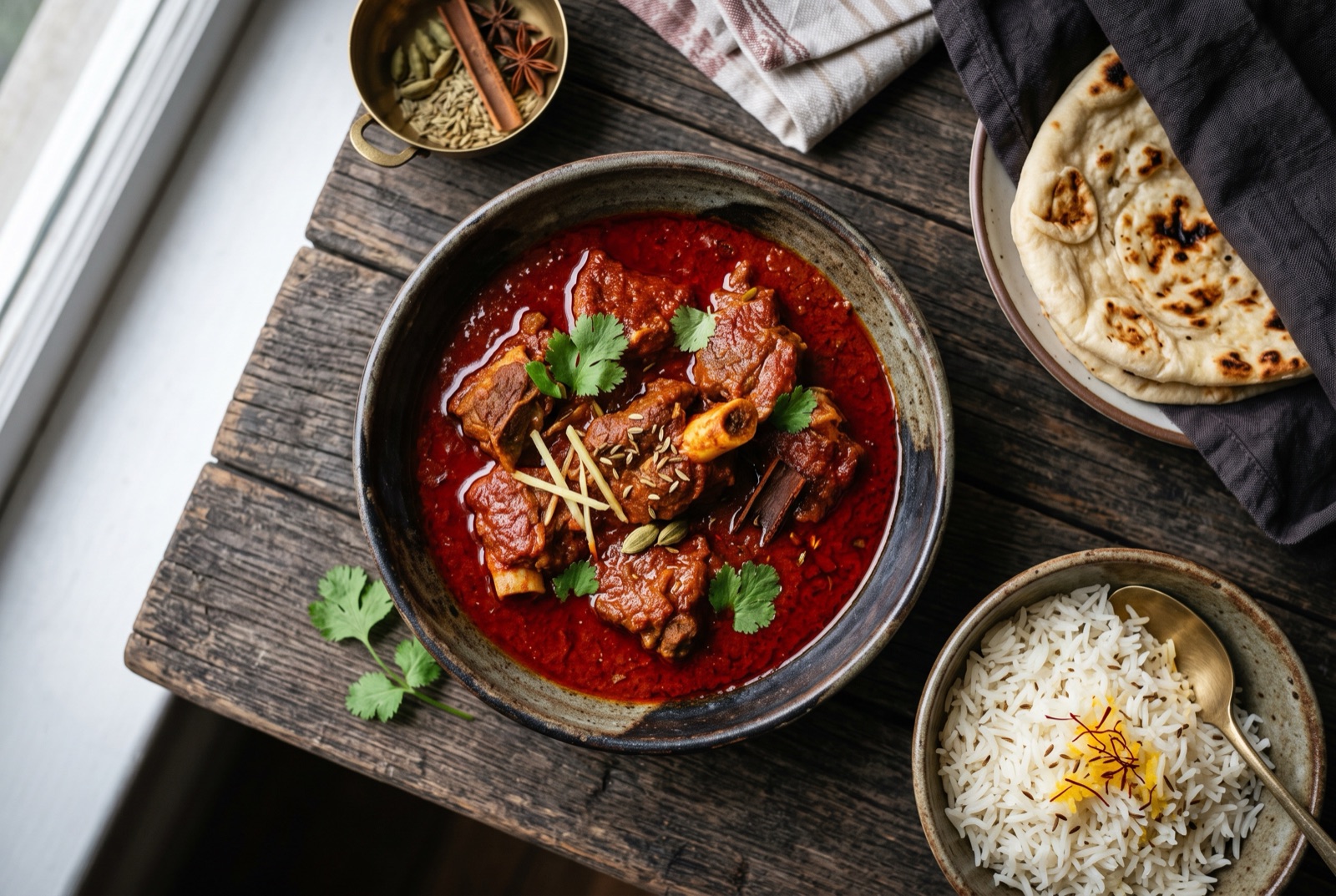
India1 hr 55 min
Rogan Josh
Kashmiri Red Lamb Curry
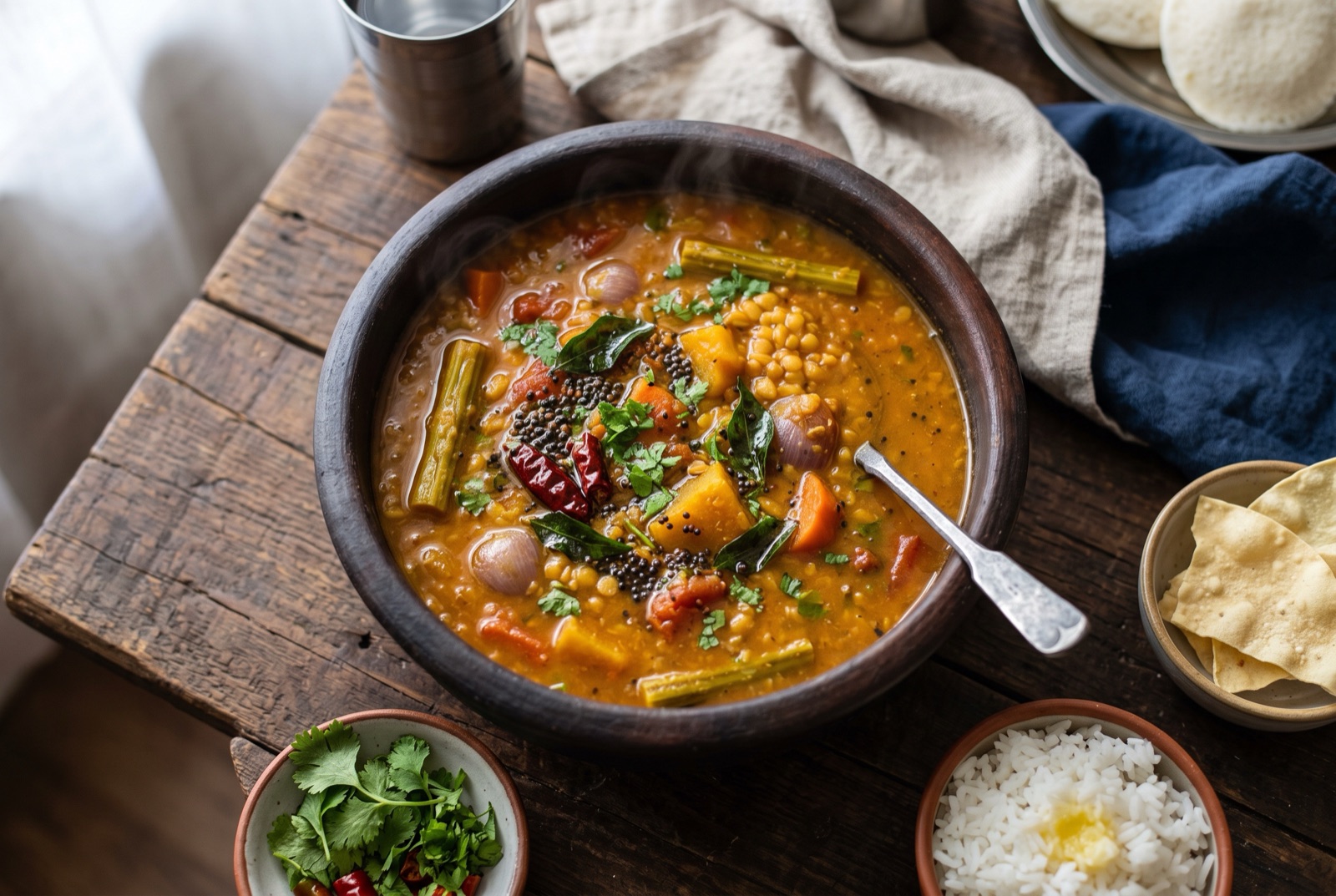
India1 hr
Sambar
South Indian Tamarind Lentil and Vegetable Stew
Keep traveling.
India sits in South Asia, and its kitchen shares borders as well as ingredients with Armenia and Bangladesh.
 Armenia
 Bangladesh