Pav Bhaji.
Mumbai Mashed Vegetables with Buttered Rolls
पाव भाजी · Pāv bhājī · say it: pahv BHAH-jee
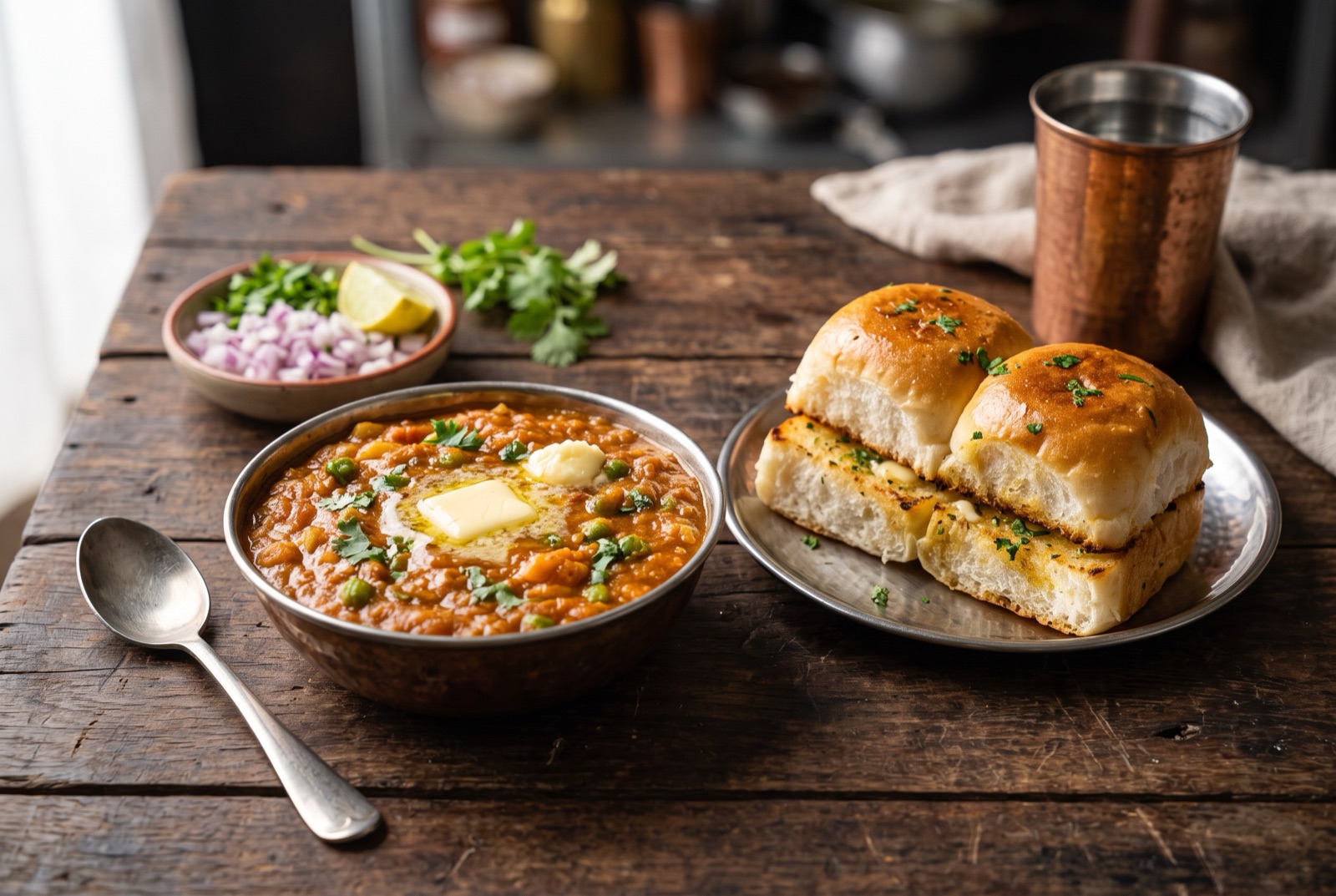
Pav bhaji is a plate of vegetables cooked past the point of being vegetables. Potato, cauliflower, peas and pepper are simmered into a tomato-onion masala and then mashed on the griddle until the whole thing is one thick, brick-red, spoonable mass, sharpened with pav bhaji masala and lemon and loaded with far more butter than you would admit to using. Alongside it come pav — soft white rolls, split and pressed cut-side down in the buttery scrapings of the same pan until they are golden and slightly crisp. The flavour is tangy, buttery and warmly spiced rather than fiery, and the texture is the point: soft bread scooping soft mash, no knife or fork involved.

- Gate
- IndiaMumbai, Maharashtra
- Prep
- 20 min
- Cook
- 40 min
- Total time
- 1 hr
- Serves
- 4
- Status
- Easy
- Nutrition / serving · estimated
- Calories 610 kcal
- Protein 14 g
- Carbs 76 g
- Fat 27 g
- Fiber 9 g
- Sugar 12 g
- Sodium 980 mg
Why this recipe works.
- Builds the masala properly first — the vegetables go into a cooked tomato base, not the other way around.
- Explains how the colour is actually made, so the bhaji comes out red without a bottle of food dye.
- Uses a potato masher on the pan rather than a blender, which is what gives the right rough-smooth texture.
- Feeds four generously in about an hour with supermarket vegetables and one spice blend.
Ingredients.
19 itemsTo boil
For the bhaji
To finish
For the pav
Equipment
- Wide, heavy frying pan or flat griddle (tawa)
- Potato masher
- Large saucepan or pressure cooker
Instructions.
Boil the vegetables to collapse
Boil the potatoes, cauliflower, peas and carrot in salted water for 15–18 minutes, until a fork goes through the potato with no resistance and the cauliflower falls apart when pressed. Drain, keeping a mug of the cooking water.
Tip Undercooked vegetables will not mash smoothly later — err on the side of too soft.
Brown the onions
Melt two-thirds of the butter in your widest pan over medium heat and cook the chopped onions for 8–10 minutes, stirring often, until they are soft, glassy and just beginning to take colour at the edges. Stir in the garlic, ginger and green chillies and fry for another minute, until the raw garlic smell disappears.
Cook the tomato masala until the fat separates
Add the capsicum and cook for 2 minutes, then tip in the tomatoes with the pav bhaji masala, Kashmiri chilli and turmeric. Cook over medium heat for 10–12 minutes, mashing as you go, until the tomatoes have completely lost their shape, the mixture darkens to brick red and buttery fat pools at the edges of the pan.
Tip This oil-separation stage is the difference between a bhaji that tastes finished and one that tastes of raw spice. Do not rush it.
Add the vegetables and mash
Tip the drained vegetables into the masala with a ladle of the reserved cooking water. Now mash directly in the pan with a potato masher, working in bursts over medium-low heat for about 10 minutes and adding water a splash at a time, until you have a thick mass with only a few soft lumps left.
Simmer, then season
Let the bhaji bubble gently for 5 more minutes so it thickens and the spices settle — it should mound on a spoon and slump slowly, not run. Season with salt now, stir in the lemon juice and half the coriander, and taste again: it should be tangy first, buttery second, spiced third.
Toast the pav
Wipe the pan, melt the remaining butter with a pinch of pav bhaji masala, and press the split rolls cut-side down in it. Toast for 1–2 minutes until the cut faces are golden and lightly crisp but the rolls are still soft enough to squash between your fingers.
Serve hot and loaded
Spoon the bhaji into shallow bowls, top each with a small knob of butter and let it melt in. Scatter the remaining coriander and serve with the toasted pav, raw chopped onion and lemon wedges for squeezing over.
Tips from our kitchen.
- The widest pan you own beats a deep pot. Surface area lets the water cook off so the bhaji thickens instead of turning into soup.
- Boil the potatoes, cauliflower and peas separately from the masala — they should be soft enough to collapse under the masher before they ever meet the tomatoes.
- The red colour comes from Kashmiri chilli powder and long-cooked tomato, not from heat. Kashmiri chilli is mild, so a full teaspoon is safe.
- Mash while the pan is still hot and keep mashing in bursts for a good ten minutes — the texture should be thick with a few soft lumps, never a smooth purée.
- Salt the bhaji late. Pav bhaji masala blends vary a lot in salt, so taste after the spice has cooked in.
- Toast the pav in the same pan straight after serving the bhaji, with a pinch of the masala in the butter — that reddish smear on the bread is half the pleasure.
Substitutions.
- Pav bhaji masala → 1 tbsp garam masala + 1 tbsp ground coriander + 1 tsp ground cumin + 1 tsp amchur (dried mango powder) + ½ tsp black salt
- Close, and much better than plain garam masala alone. The real blend leans on amchur and black salt for its sour, faintly sulphurous edge, so do not skip those if you can find them.
- Pav rolls → Soft white dinner rolls, brioche buns or a split milk bun
- Anything soft, plain and slightly sweet works. Crusty sourdough does not — the bread is meant to squash, not resist.
- Butter → A neutral oil, with a spoon of butter only at the end
- You can cut the butter by half and the dish still works. Cut it entirely and it stops tasting like pav bhaji.
Variations.
- Cheese pav bhaji
- A handful of grated processed cheese stirred into the hot bhaji and more melted over the top. Ubiquitous at Mumbai stalls and unapologetically modern.
- Jain pav bhaji
- Made without onion, garlic or root vegetables, so raw banana and green plantain stand in for potato. Widely available in Mumbai and Gujarat.
- Khada pav bhaji
- "Standing" pav bhaji, left deliberately chunky so you can still see the peas and peppers, with the masala poured over rather than mashed in.
Storage & reheating.
Bhaji keeps 3 days refrigerated and genuinely improves overnight as the spices settle. Reheat in a wide pan with a splash of hot water and a fresh knob of butter, mashing again as it loosens; microwaving makes it pasty. It freezes well for 2 months in portions — thaw fully before reheating, and expect to add water and re-season with lemon and salt. Toast the pav fresh every time; reheated toasted bread goes leathery.
Serve with
Finely chopped raw onion with lemon wedges, and a glass of masala chaas or cold lassi to cut the butter.
The story behind Pav Bhaji.
Pav bhaji belongs to Mumbai in a way few Indian dishes belong to a single city. The account repeated across the city — and it is an oral account rather than a documented one — puts its birth in the textile-mill district of Girangaon and around the cotton exchange in the second half of the nineteenth century, when mill hands and traders needed a hot meal fast and late, and vendors built one by cooking down whatever vegetables were left at the end of the day, mashing them and serving them with the bread already on hand. Whether or not the details survive scrutiny, the logic of the dish is visibly that of a working city: everything cooks on one giant flat tawa, everything is portioned by eye, and it is ready in the time it takes to mash it.
The bread is a whole story of its own. Pav takes its name from pão, the Portuguese word for bread, and yeast-leavened white rolls entered the west coast through Portuguese Goa and Bombay long before they became street food; today they arrive in joined slabs of four or eight, torn apart at the table. This is why pav bhaji is a Maharashtrian dish that contains almost nothing a traditional Maharashtrian kitchen would have used a few centuries earlier — the tomato, the chilli and the bread are all imports that the city absorbed and made its own.
Mumbai now eats it everywhere: on Chowpatty and Juhu beach in the evening, at wedding buffets, at late-night stalls where the cook keeps a permanent mound of mashed bhaji at the cool edge of the tawa and pulls portions into the hot centre to order. Variations multiply from there — cheese pav bhaji, Jain pav bhaji made without onion, garlic or root vegetables, khada pav bhaji left chunky on purpose, and the notorious black-tinged version some stalls make by cooking the masala hard and long. The one constant is the final pat of butter melting into the top of the bhaji as the plate reaches you.
Questions, answered.
What is pav bhaji masala and can I use garam masala instead?
Pav bhaji masala is a specific commercial spice blend built around coriander, cumin, dried red chilli, amchur (dried mango powder) and black salt, which give the dish its sour, savoury tang. Garam masala alone is warmer and sweeter and will not taste right, but a mix of garam masala, ground coriander, cumin, amchur and black salt gets you close.
Why is my pav bhaji brown instead of red?
Two usual reasons. First, the chilli: restaurant colour comes from Kashmiri red chilli powder, which is mild and intensely red, rather than from ordinary hot chilli powder. Second, underdone tomatoes — the tomato needs to cook until it breaks down completely and the fat separates at the edges of the pan, which deepens the colour. Some stalls also add beetroot or food colouring, which is optional and not traditional.
Which vegetables belong in pav bhaji?
Potato, cauliflower, green peas and capsicum are the standard four, with tomato and onion forming the masala. Carrot, beans and beetroot are common home additions that make it sweeter and darker. Avoid anything with a strong flavour of its own, such as broccoli or courgette, since the point is a unified savoury mash rather than identifiable vegetables.
Can I make pav bhaji ahead for a party?
Yes, and it is the sensible way to serve it. Make the bhaji up to two days in advance and keep it refrigerated; the flavour deepens. Reheat it in a wide pan with a little hot water, taste for salt and lemon, then toast the pav to order so they are hot and buttery when they hit the plate.
Is pav bhaji very spicy?
It is more tangy and buttery than hot. Most of the red colour comes from mild Kashmiri chilli, and the heat in this recipe comes from one or two green chillies, which you can leave out entirely. Stalls in Mumbai vary widely, and diners adjust their own plate with raw onion and lemon rather than expecting a fixed heat level.
You might also like.
All recipes →
Keep exploring India.
India has 9 more dishes in the atlas — Aloo Paratha and Butter Chicken, and 7 more.
Recipe by The DishRoute Kitchen · published August 19, 2026 · updated August 19, 2026