Bulgaria.
България
Bulgarian cooking runs on three things that most other Balkan kitchens use more sparingly: sour milk, white brine cheese, and one insistent herb. Yoghurt is not a side dish here — it is thinned into cold soup, spooned over beans, whisked into pastry filling, and drunk salted from a glass. Sirene, the crumbly brined cheese, goes over salads in quantities that startle visitors and gets baked, battered and stuffed into everything else. And chubritsa, summer savory, is the smell of a Bulgarian kitchen the way oregano is of a Greek one: peppery, slightly bitter, sprinkled on grilled meat and stirred into bean pots without ceremony. Around that core the food is vegetable-forward and slow. Late-summer peppers, aubergines and tomatoes are roasted, peeled, bottled and buried in cellars for winter; meat appears in modest quantities inside clay pots rather than in slabs on plates. It is frugal cooking that never tastes frugal, because the seasoning does the heavy lifting.

- Continent
- EuropeBalkans
- Recipes in atlas
- 10
- Must-try dishes
- 3
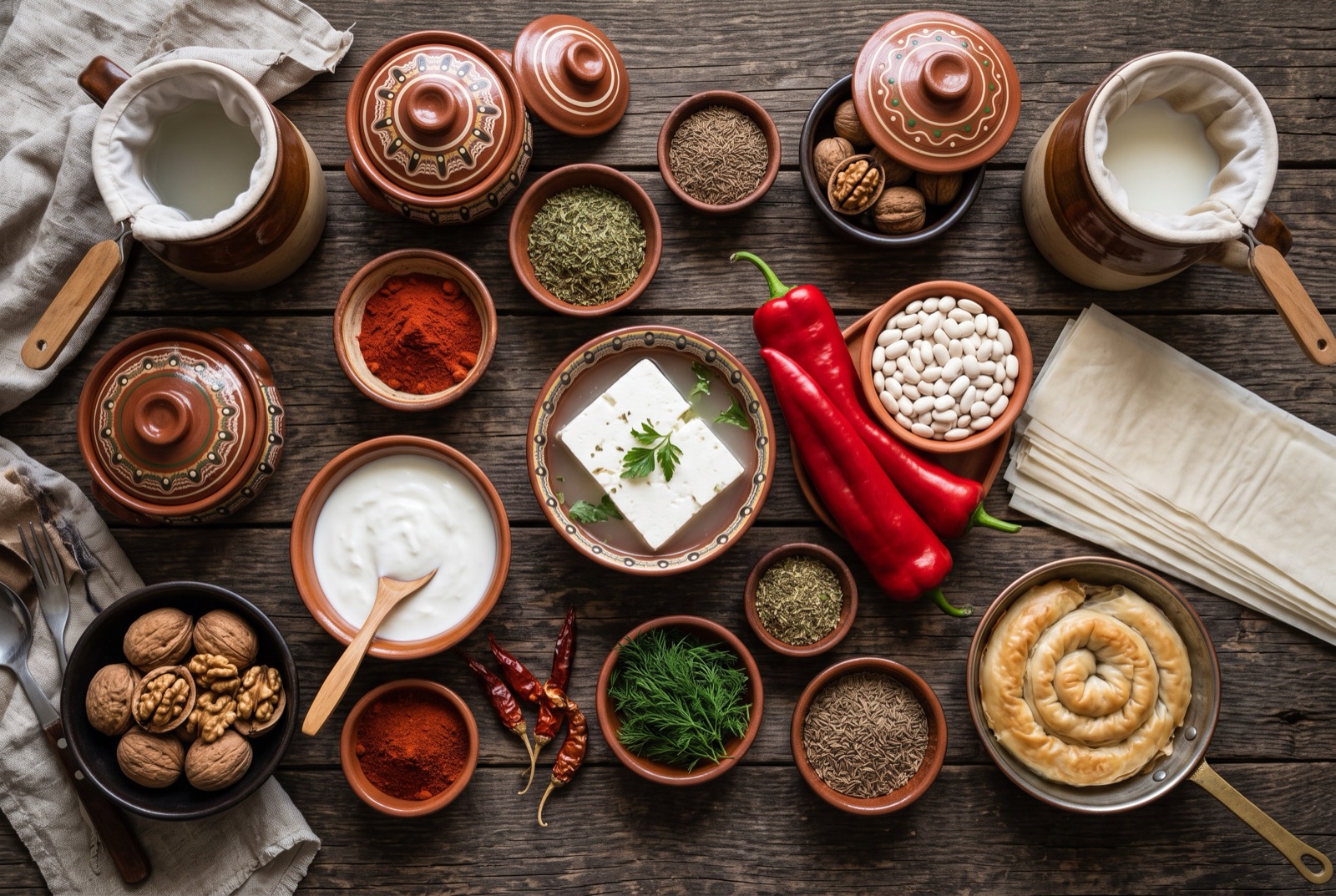
- Pantry staples
- 10
Start with the classics.
Must tryThe dishes that explain the Bulgaria kitchen fastest — if you cook only a few things from this page, cook these.
Inside the Bulgaria kitchen.
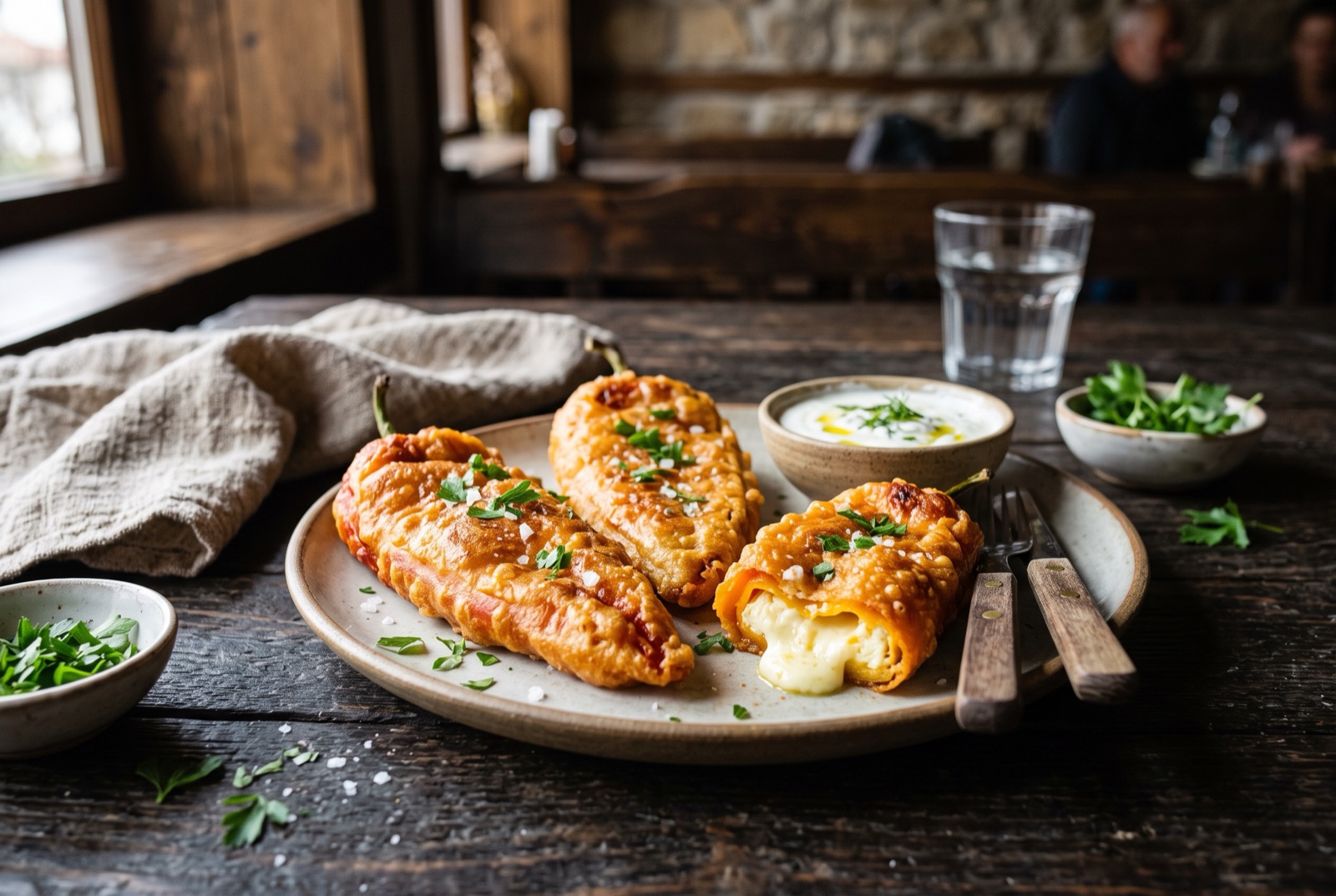
Start with the dairy, because everything else leans on it. Bulgarian yoghurt is fermented with Lactobacillus bulgaricus, a strain isolated here in the early twentieth century, and it is thicker and sharper than the set yoghurt sold in most supermarkets. Households buy it in tubs and use it structurally: as the acid in banitsa filling, as the base of tarator, as the cooling spoonful on top of stuffed vine leaves, and as ayran — yoghurt, water, salt — which is drunk with grilled meat the way beer is elsewhere. Sirene, made from cow or sheep milk and kept in brine, is the second pillar. It is grated in blizzards over shopska salata, cubed into pastry, whipped with egg to stuff peppers, and baked in a clay dish under tomato and chilli as sirene po shopski.
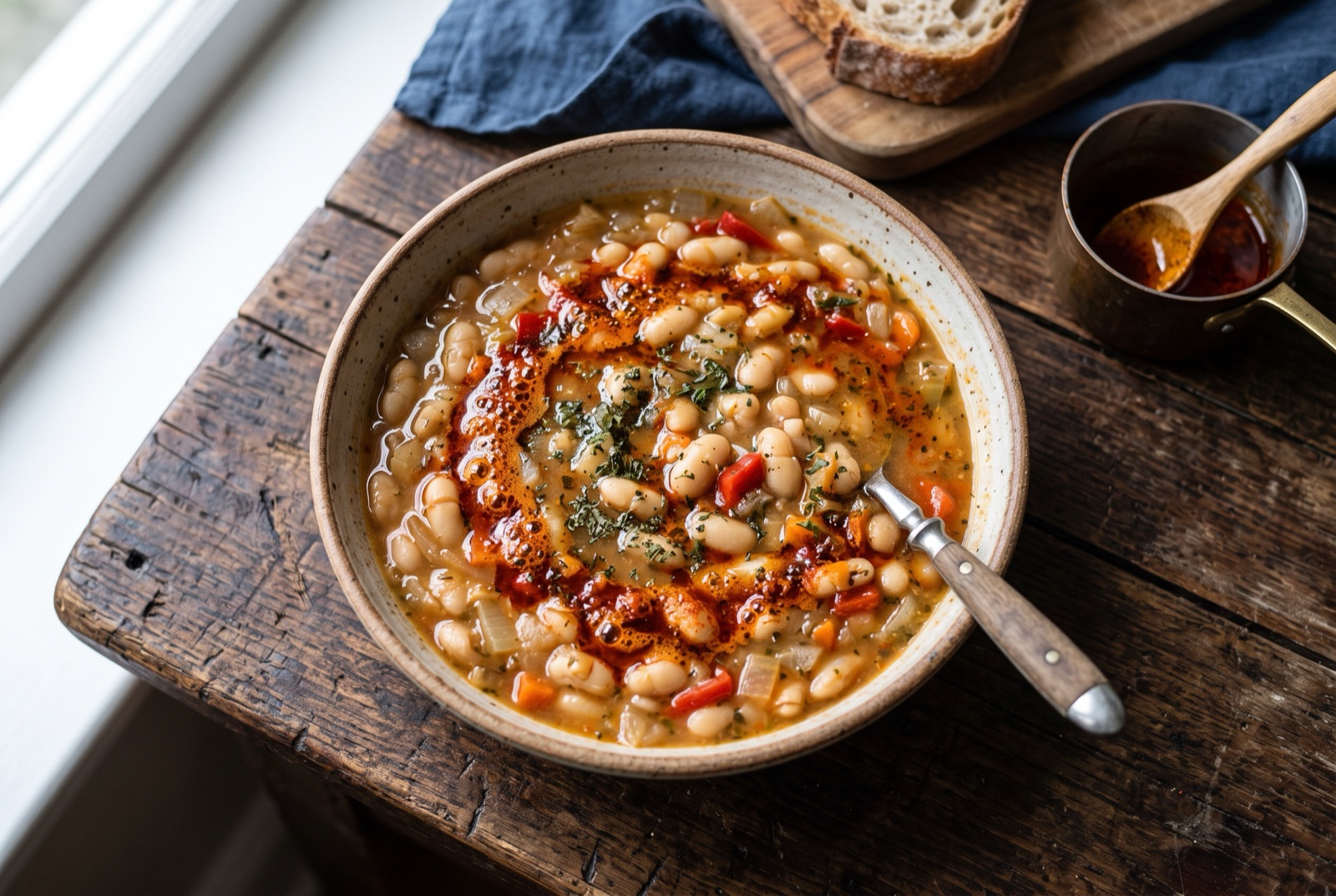
The herb shelf is short and used hard. Chubritsa (summer savory) is the national seasoning, sold both as loose leaf and as sharena sol, the "coloured salt" blend of savory, paprika and often ground fenugreek or corn flour that sits on every table next to the bread. Sweet red paprika colours the fats. Dried mint goes into bean soup and into the final fry-off of hot fat that gets poured over the pot. Dill belongs to cucumber and yoghurt, parsley to everything else, and cumin — unusual for the region — is the fingerprint of Bulgarian minced meat, the thing that separates a kyufte from a Serbian pljeskavica.
The defining vessel is earthenware. Gyuvech names both a wide glazed clay dish and the vegetable-and-meat casserole baked in it; gyuveche is the single-portion version that arrives at the table still spitting. Clay holds heat gently and unevenly in a way that suits Bulgarian technique, which is largely about leaving things alone: layers go in raw, the dish goes into a moderate oven, and nothing is stirred until it comes out. Alongside that sits the zadushvane method — a slow, lidded braise in fat and a little liquid, used for kavarma and for most vegetable dishes.
Meals are structured around salad first, and the salad is not an afterthought. Shopska, snezhanka (strained yoghurt with cucumber), roasted-pepper salads and lyutenitsa — the thick pepper-and-tomato relish canned by the crateful every September — open the table and accompany rakia, the fruit brandy that starts most long meals. Soup is a genuine course rather than a starter, from cold tarator in August to shkembe chorba, the vinegary tripe soup eaten at dawn. Bread is present at every meal, and in villages it is still often round rather than sliced.
Regional differences are real but softer than in neighbouring countries. The Rhodope mountains in the south cook with sheep dairy, potatoes and the smoky katak and patatnik of high pasture; the Black Sea coast eats fried small fish, mussels and rice pilafs with a Greek and Turkish accent; the Danube plain in the north leans on wheat, pork and river carp; and the Shopluk region around Sofia gave the country both its most famous salad and a reputation for eating with plenty of raw onion and garlic. Ottoman rule left the pastry, the stuffed vegetables and the coffee; the Orthodox fasting calendar left an enormous repertoire of vegan cooking that Bulgarians call postno rather than vegan, and which still shapes what appears on the table for weeks at a time.
Signature pantry.
10 staplesThe ingredients this cuisine cannot function without.
- sirene (white brine cheese)
- Bulgarian yoghurt
- summer savory (chubritsa)
- red peppers
- sweet paprika
- walnuts
- dried beans
- phyllo pastry
- cumin
- dill
How people eat in Bulgaria.
A Bulgarian meal opens rather than begins: salad, white cheese, bread and a glass of rakia arrive first, and the table stays there for a while, because rakia is sipped slowly against food and never knocked back. Toasts are made with eye contact, and glasses are not refilled by the person drinking from them. Soup counts as a proper course, not a starter, and in summer it is served cold. Bread sits directly on the table and is torn, not cut, at home. Sharing is normal — dishes land in the middle and everyone reaches — but the clay gyuveche is the exception, arriving as one portion per person. Nodding means no and shaking the head means yes, which catches out more visitors at the table than anywhere else.
Regional kitchens.
Bulgaria cooks 4 distinctly different ways depending on where you stand — here is what changes between them.
- R1Shopluk (around Sofia)
- The plateau region that gave the country shopska salata and a joking reputation for raw onion, garlic and blunt seasoning. Sirene appears at almost every meal, often baked with tomato and chilli.
- R2The Rhodope Mountains
- Sheep-dairy country in the south, where potatoes, cheese and rye shape the food. Patatnik, the grated potato and sheep-cheese cake, and thick katak spreads belong to these villages.
- R3The Black Sea Coast
- Small fried fish, mussels, rice pilafs and vine leaves, with an accent inherited from Greek and Turkish neighbours. Meals here lean lighter and use more olive oil than inland Bulgaria.
- R4The Danubian Plain (the North)
- Wheat and pork country, plus river carp from the Danube itself. Ruse, the river port, is where the Garash cake was created and where Central European pastry entered Bulgarian kitchens.
All Bulgaria recipes.
10 recipes and counting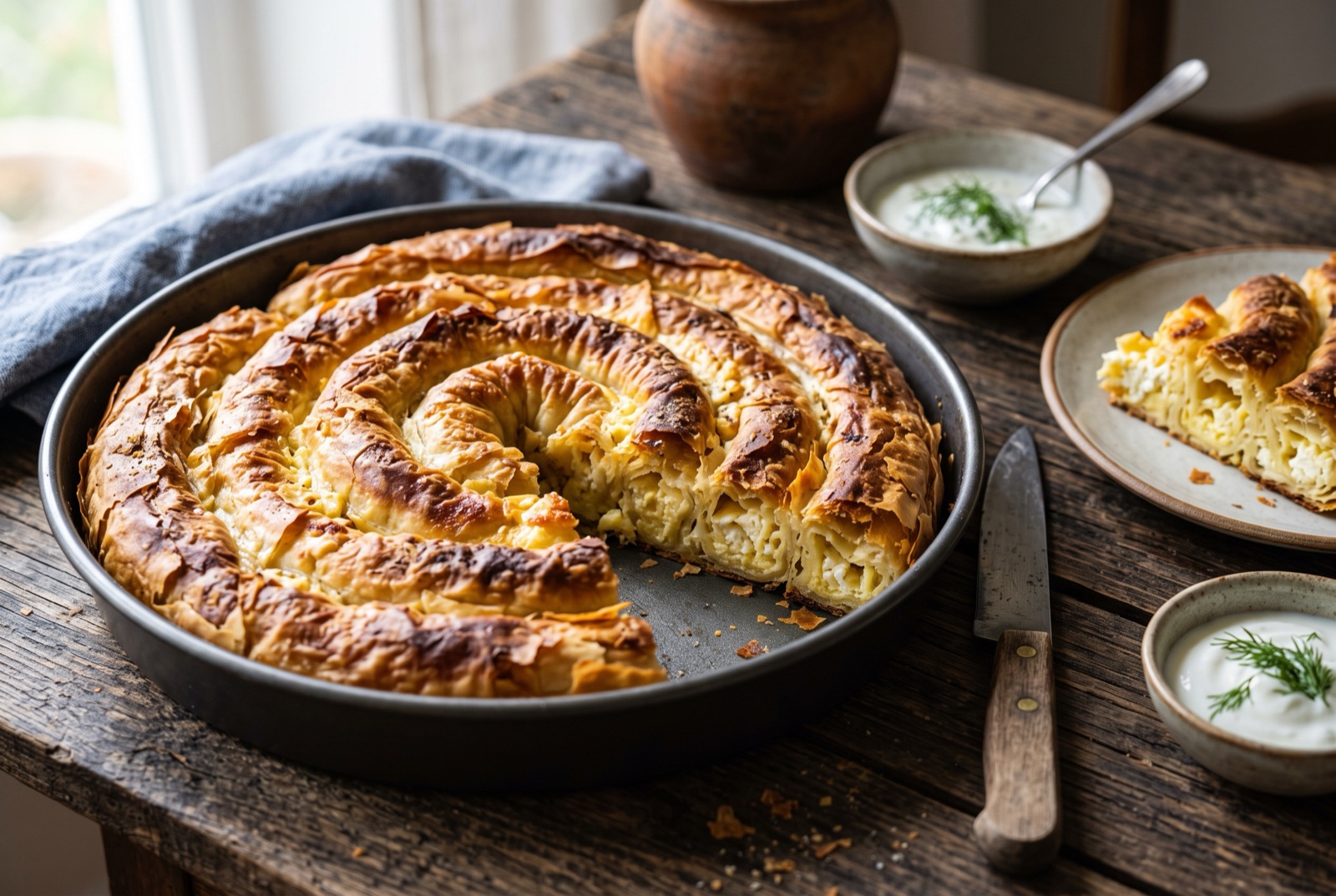
Bulgaria1 hr 30 min
Banitsa
Bulgarian Coiled Filo Pie with Sirene
Bulgaria10 hr 10 min
Bob Chorba
Bulgarian Bean Soup with Savory and Mint
Bulgaria1 hr 25 min
Chushki Byurek
Bulgarian Cheese-Stuffed Fried Peppers
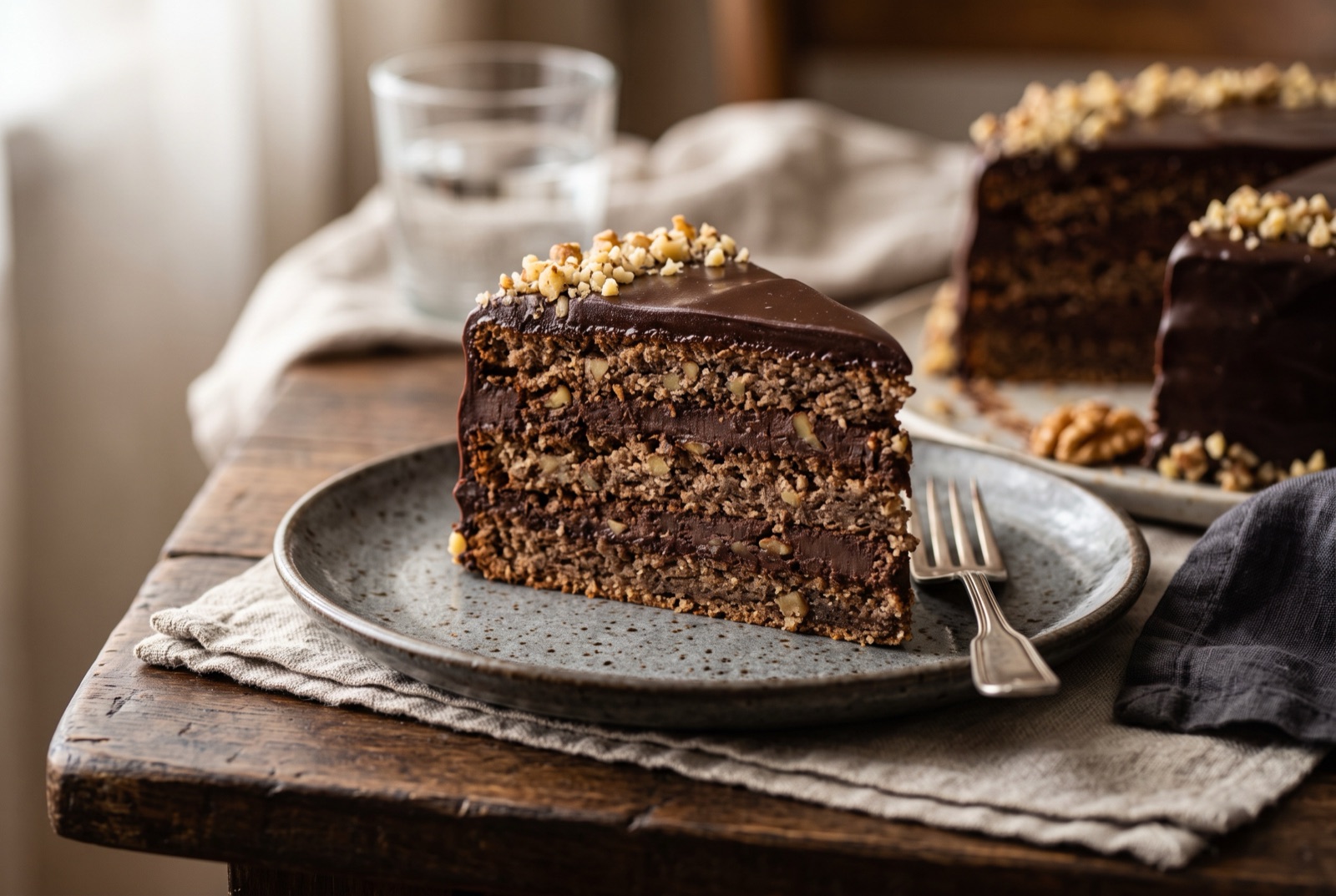
Bulgaria14 hr
Garash Torta
Bulgarian Flourless Walnut Chocolate Cake
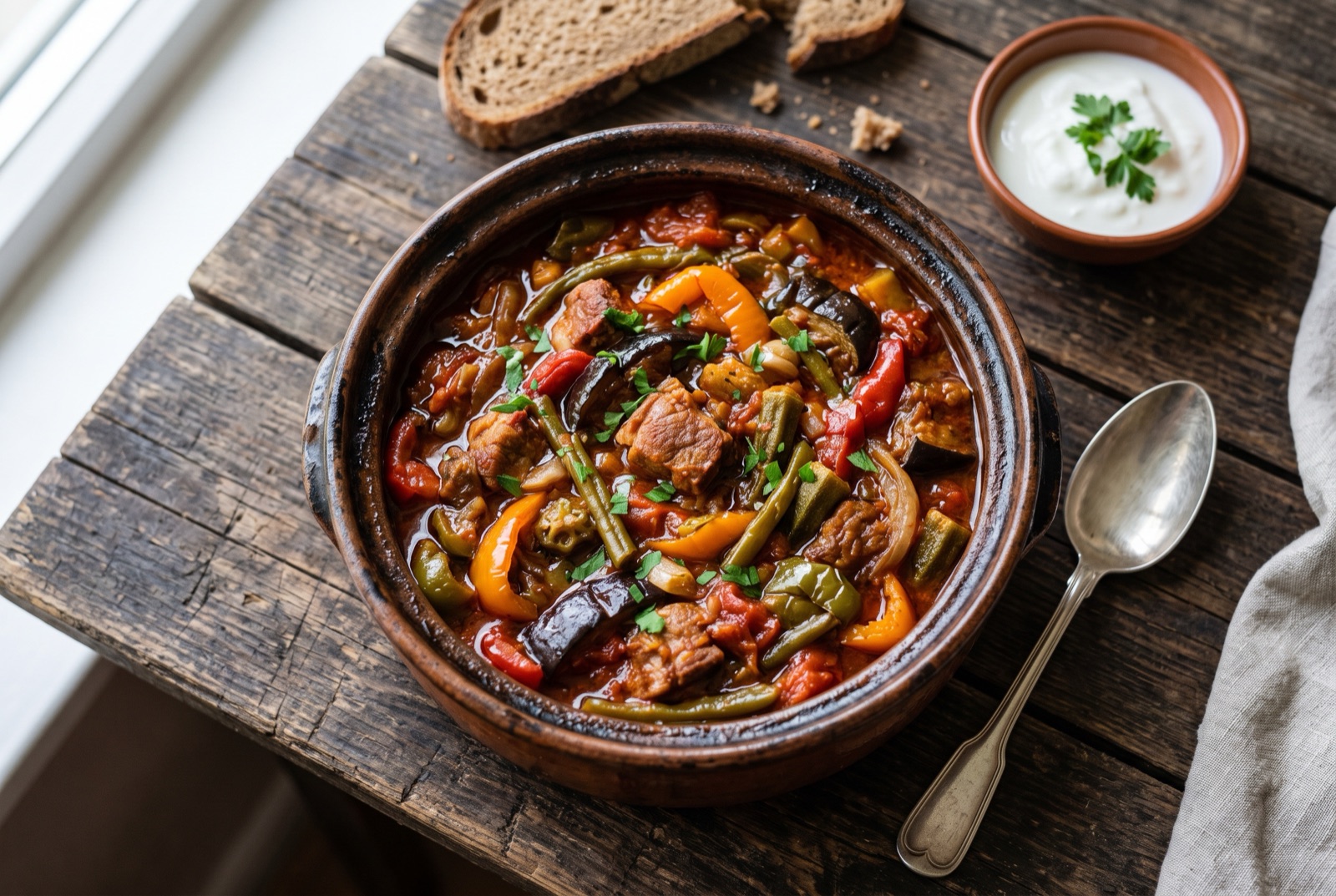
Bulgaria2 hr 25 min
Gyuvech
Bulgarian Baked Vegetable and Pork Casserole
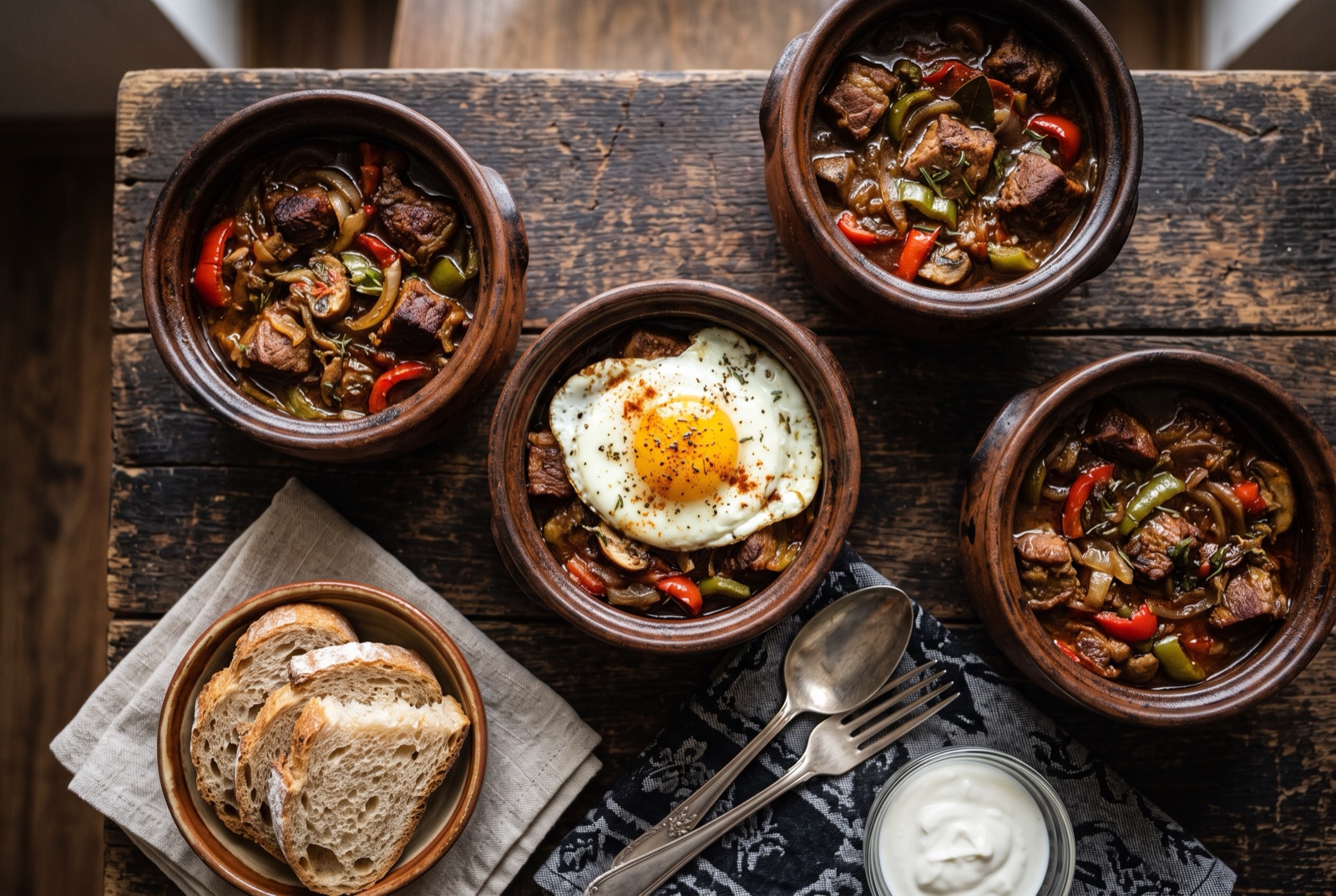
Bulgaria1 hr 45 min
Kavarma
Bulgarian Clay-Pot Pork and Pepper Stew
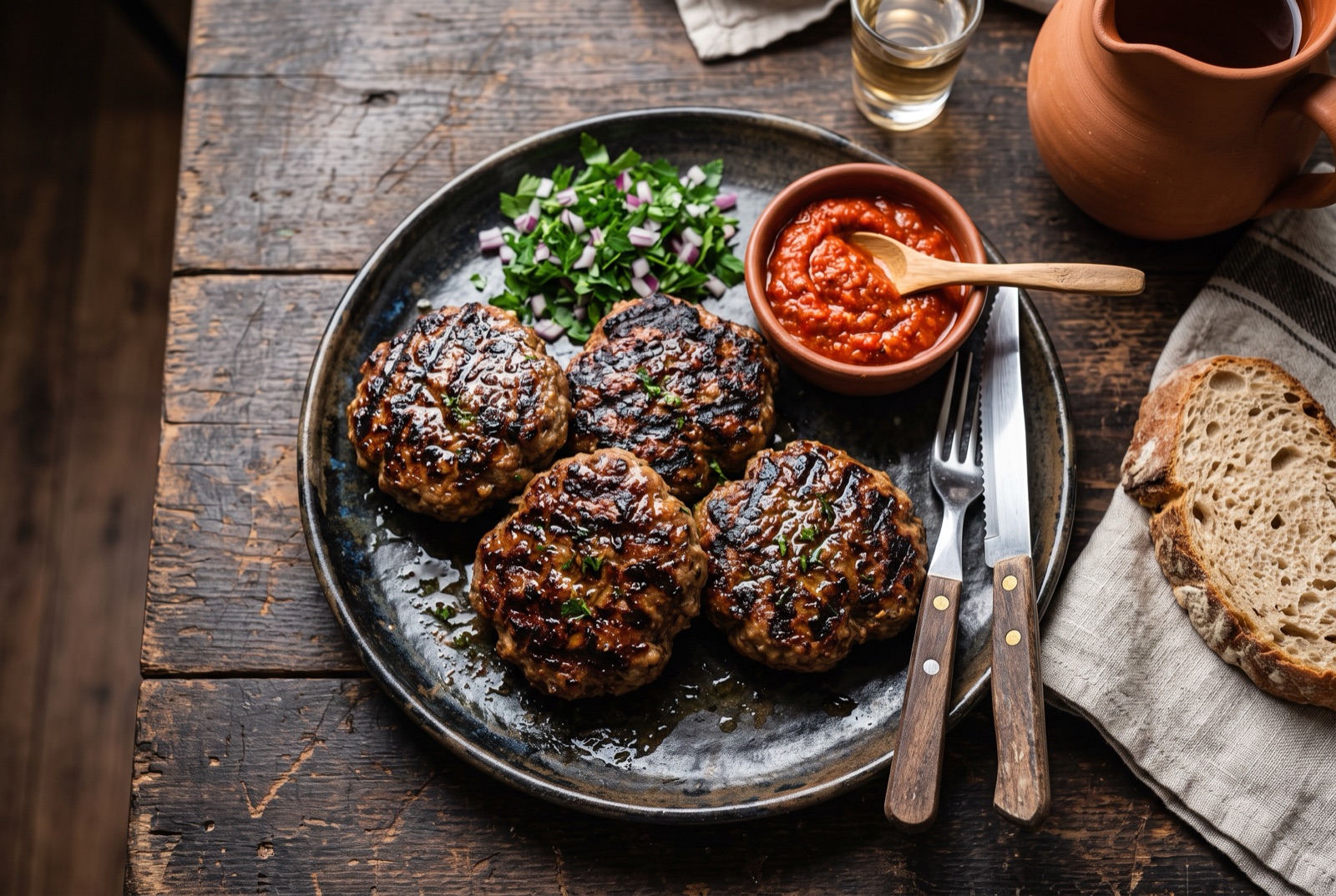
Bulgaria8 hr 40 min
Kyufte
Bulgarian Grilled Cumin and Savory Meat Patties
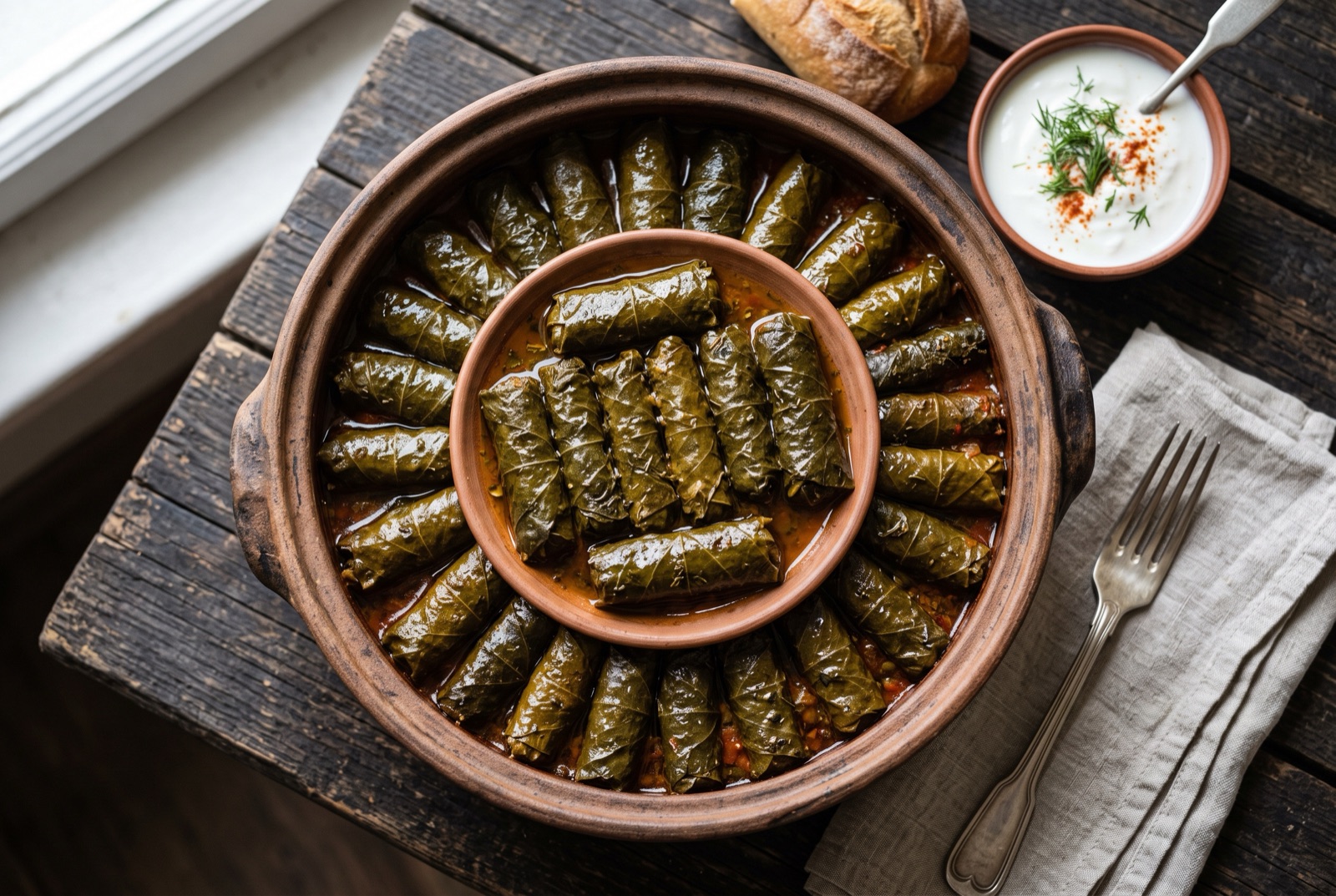
Bulgaria2 hr 5 min
Lozovi Sarmi
Bulgarian Vine Leaf Rolls with Rice and Mint
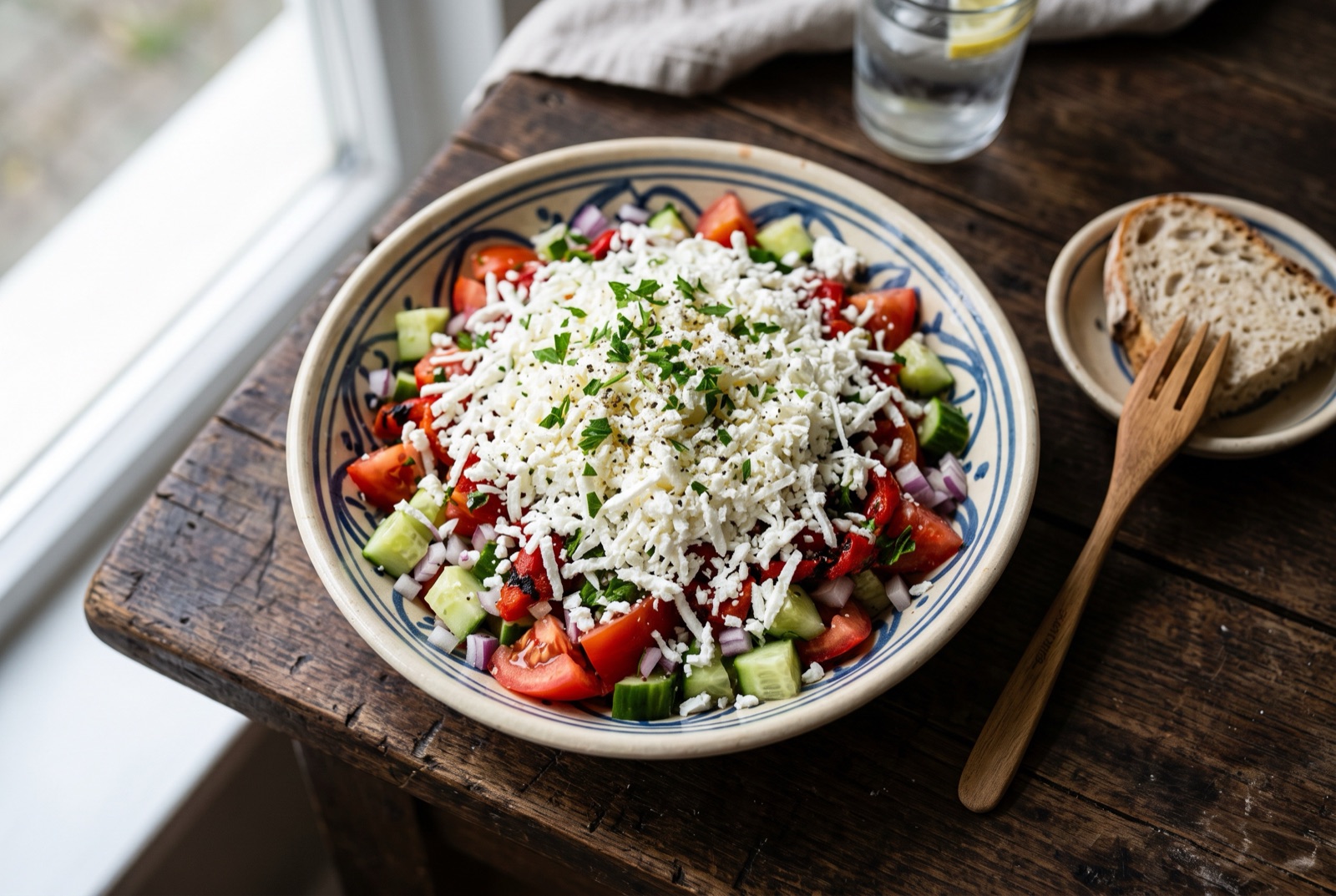
Bulgaria25 min
Shopska Salata
Bulgarian Tomato, Cucumber and Sirene Salad
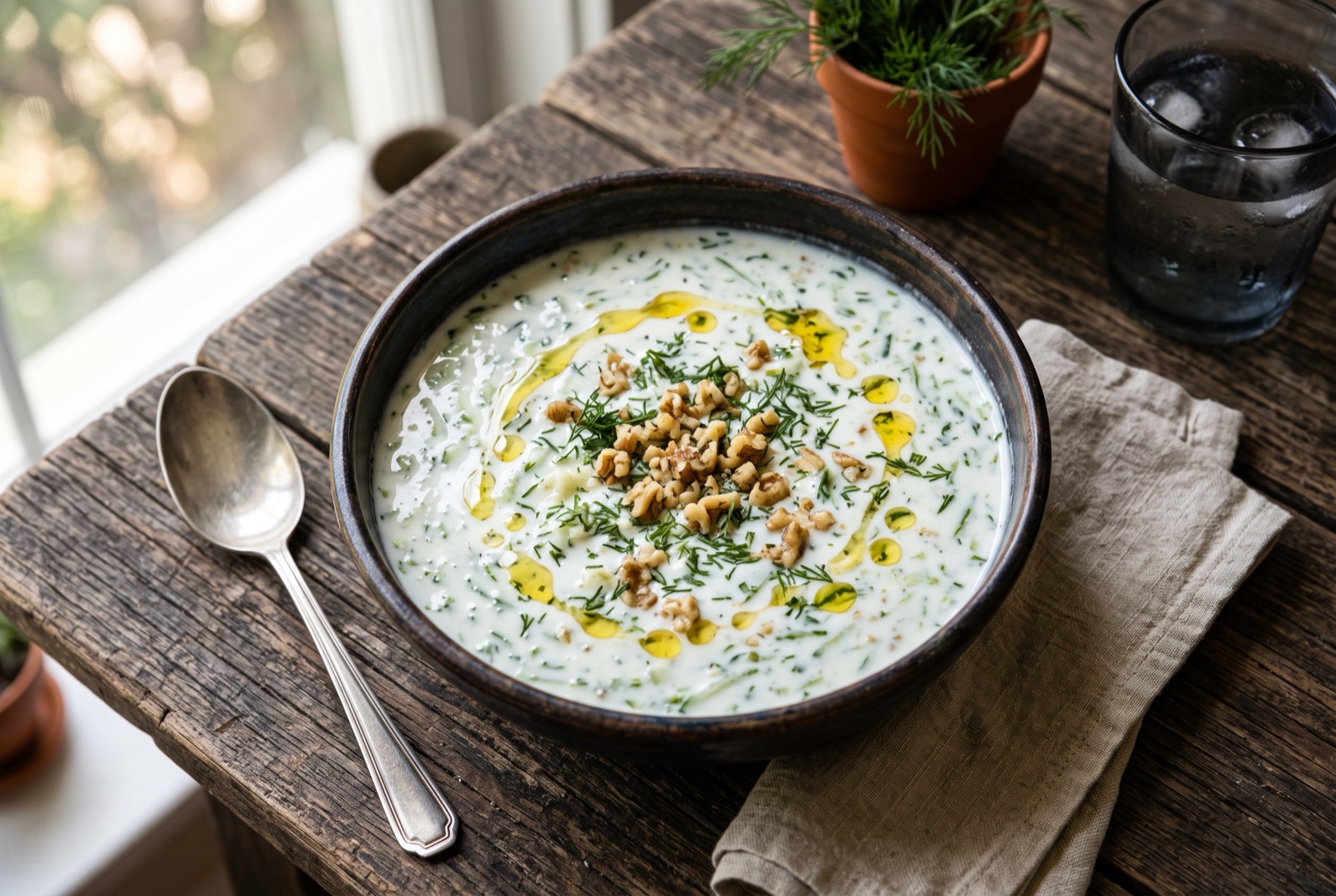
Bulgaria1 hr 20 min
Tarator
Bulgarian Chilled Cucumber Yoghurt Soup
Keep traveling.
Bulgaria sits in Balkans, and its kitchen shares borders as well as ingredients with Albania and Austria.
 Albania
 Austria