Kavarma.
Bulgarian Clay-Pot Pork and Pepper Stew
Кавърма · say it: kah-VUHR-mah
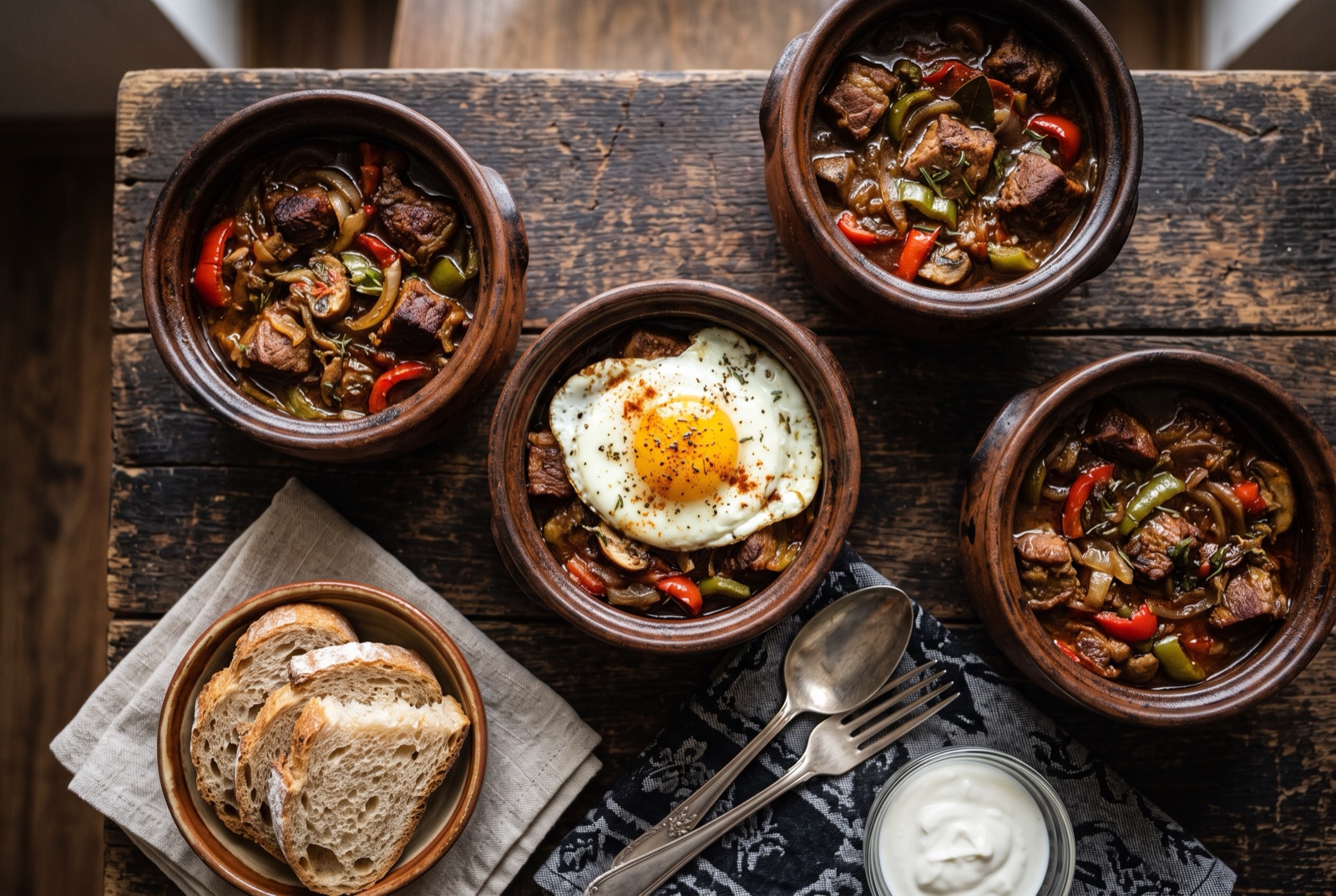
Kavarma is a slow pork braise served in a small glazed clay pot, one per person. Cubes of shoulder are browned until properly dark, then cooked down with onion, red and green peppers, mushrooms, tomato and white wine until the meat gives way under a fork and the liquid has reduced to a thick, glossy, deeply savoury sauce. What makes it Bulgarian rather than generically Balkan is the seasoning: summer savory and paprika instead of bay and herbs, plus a habit of cracking a whole egg over the top for the last few minutes so it sets into a soft lid. It arrives at the table in the pot, still spitting at the rim, with bread and nothing else.

- Gate
- Bulgaria
- Prep
- 25 min
- Cook
- 1 hr 20 min
- Total time
- 1 hr 45 min
- Serves
- 4
- Status
- Medium
- Nutrition / serving · estimated
- Calories 610 kcal
- Protein 47 g
- Carbs 16 g
- Fat 39 g
- Fiber 4 g
- Sugar 9 g
- Sodium 690 mg
Why this recipe works.
- Browns the pork in batches until genuinely dark, which is where the whole colour and depth of the sauce comes from.
- Uses summer savory and paprika in the Bulgarian proportions rather than generic mixed herbs.
- Gives a workaround for cooks with no clay pots, and explains what actually changes without them.
- Includes the egg finish with clear timing so it sets soft rather than turning rubbery.
Ingredients.
19 itemsFor the stew
For the seasoning
To finish
Equipment
- 4 small clay pots (gyuvecheta) or ovenproof dishes
- Heavy frying pan or casserole
- Wooden spoon
Instructions.
Brown the pork hard
Heat two tablespoons of the oil in a heavy pan until it shimmers, then brown the pork in two or three batches without crowding, turning the cubes only when they release easily and have a dark mahogany crust. Set the browned meat aside on a plate with any juices.
Tip Grey meat means the pan was too full or too cool. The crust is the sauce, so it is worth the extra five minutes.
Soften the vegetables
Add the last of the oil to the same pan, tip in the onions and cook over medium heat for 8 minutes until soft and just starting to catch gold at the edges. Add the peppers and mushrooms and cook another 8 minutes, until the mushrooms have given up their water and it has boiled away.
Bloom the paprika
Stir in the garlic and cook for 30 seconds, then pull the pan off the heat and stir in the paprika, savory and black pepper. Keep stirring for about 15 seconds in the residual heat until the fat turns deep orange and smells sweet and toasty.
Tip Off the heat, always. Paprika burns in seconds on a hot burner and turns the whole pot bitter.
Deglaze and build the sauce
Return the pan to the heat, pour in the wine and scrape up everything stuck to the base as it bubbles hard for 2 minutes, until the raw alcohol smell is gone. Stir in the tomato paste, grated tomatoes, bay leaves and stock, and return the pork with its juices.
Braise low
Bring to a bare simmer, cover, and cook over the lowest heat for about 60 minutes, stirring twice, until the pork pulls apart under gentle pressure from a spoon. Uncover for the final 10 minutes if the sauce is still loose — it should be thick enough to leave a slow-closing channel behind a spoon.
Divide into the pots and add the egg
Taste for salt, fish out the bay leaves, and divide the stew between four clay pots or small ovenproof dishes. Crack an egg into the centre of each, put them into a cold oven set to 200°C, and bake for 10 minutes until the whites are just set and the yolks still wobble.
Tip Cold oven, always, with clay. Putting a clay pot into a hot oven is how they crack.
Serve straight from the pot
Scatter parsley over each pot and take them to the table on wooden boards while the sauce is still bubbling at the rim. Warn everyone the pots are genuinely too hot to touch, and serve bread for mopping.
Tips from our kitchen.
- Buy pork shoulder or neck, not loin. Lean cuts turn dry and stringy over an hour of braising, while shoulder fat melts into the sauce and keeps the meat succulent.
- Brown the meat in batches with space between the cubes. Crowd the pan and the pork steams grey instead of building the dark crust the sauce depends on.
- Add the paprika off the heat, stirred into the hot fat for a few seconds only. Paprika scorches fast and turns bitter, and there is no rescuing it once it does.
- Soak new clay pots in cold water for 20 minutes before their first use and always put them into a cold oven — thermal shock cracks them.
- Let the wine reduce until you can no longer smell alcohol, roughly two minutes at a hard bubble, before any liquid goes in.
- The stew is finished when a spoon dragged through the pot leaves a channel that fills back in slowly. If it is still soupy, take the lid off and reduce.
Substitutions.
- Pork shoulder → Boneless chicken thighs, or veal shoulder
- Chicken kavarma is standard on Bulgarian menus. Cut the braise down to about 35 minutes, because thighs are tender long before pork is.
- Summer savory (chubritsa) → Two parts dried thyme to one part dried oregano
- Not identical — savory is more peppery and slightly bitter — but the combination sits in the right place. Balkan and Turkish shops sell chubritsa cheaply if you can find one.
- Dry white wine → Stock plus a tablespoon of white wine vinegar
- The wine is there for acidity as much as flavour, so the vinegar substitution works well. Add it early so the harshness cooks off.
Variations.
- Pileshka kavarma
- The chicken version, lighter and faster, usually made with thighs, more mushrooms and a splash of cream stirred in at the end.
- Kavarma with sirene
- A handful of crumbled white cheese scattered over each pot before the final blast in the oven, so it softens into the sauce instead of melting away.
- Zimna kavarma
- The preserved autumn version: pork cooked down hard with savory and packed into jars under its own fat, then reheated through the winter.
Storage & reheating.
Kavarma keeps 3 days refrigerated and genuinely improves overnight as the paprika and savory settle into the sauce. Reheat gently in a covered pan or in the clay pots in a 160°C oven for about 20 minutes, adding a splash of water if the sauce has tightened too far. Make it without the egg if you plan to keep it; cook a fresh egg into each pot on reheating. The stew freezes well for 3 months, though the mushrooms soften noticeably — freeze it in portions and thaw overnight in the fridge before reheating.
Serve with
Thick slices of bread for the sauce, a shopska salad first, and a glass of red wine or rakia.
The story behind Kavarma.
The name travelled a long way before it landed here. Kavurma comes from the Turkish verb kavurmak, to fry or roast, and across the old Ottoman territories the same root produced very different foods: in Turkey, kavurma is often preserved meat cooked and stored under its own fat; in Armenia and the Caucasus, kavurma names other fried-meat preparations entirely. Bulgarian kavarma kept the frying step and turned it into a slow-braised pot dish, and — critically — moved it into earthenware.
That pot is not decoration. Glinen gyuveche, the small glazed clay dish, heats slowly and holds heat long after it leaves the oven, so the stew arrives at the table still bubbling and keeps cooking gently while you eat it. Bulgarian mehani, the traditional taverns, built their menus around this format: several kavarma variations listed by meat, each served in its own pot, each brought out too hot to touch. Ordering one is a slightly theatrical experience that has not changed in decades.
Regional and household versions vary more than most Bulgarian dishes. Some cooks use only pork, others chicken or a mix; some include mushrooms, some do not; along the Danube you find versions with more paprika and a heavier hand with the wine. The egg on top is optional but common, and it is the detail that most reliably identifies a kavarma to a Bulgarian at first glance. There is also a preserved kind, kavarma in a jar, made in autumn when a pig is slaughtered and the meat is cooked down and sealed under fat for winter — the closest surviving relative of the Turkish original, and a reminder that this dish started as a way to keep meat rather than a way to serve it hot.
Questions, answered.
Do I need clay pots to make kavarma?
No. The stew cooks perfectly in a heavy casserole or Dutch oven and tastes the same. What you lose is the serving format — the small glazed gyuveche holds heat so well that the dish arrives at the table still bubbling and stays hot to the last bite. If you want the effect without buying clay, divide the finished stew into small ovenproof dishes, add the egg, and give them ten minutes in a hot oven.
Why is my pork tough after an hour of cooking?
Either the cut or the heat. Pork loin and other lean cuts have no connective tissue to break down, so they only get drier the longer they cook — use shoulder or neck. If you did use shoulder, the braise was probably too hot: a rolling boil tightens muscle fibres, while a bare simmer with occasional lazy bubbles dissolves the collagen. Turn it down and give it another 20 minutes.
What is chubritsa and is it essential?
Chubritsa is summer savory, the herb Bulgarians use the way Greeks use oregano — peppery, faintly bitter, and the smell most people associate with Bulgarian home cooking. It is not strictly essential, and a mix of thyme and oregano gets you close, but it is the single seasoning that makes a pork stew taste specifically Bulgarian rather than generally Balkan.
Is the egg on top traditional or optional?
Both, depending on who you ask. Plenty of Bulgarian restaurants serve kavarma with an egg cracked on top and set in the oven, and plenty serve it without. It adds a soft, rich layer that mixes into the sauce as you eat, so it is worth doing if you like eggs. Add it in the last 8 to 10 minutes only, or the yolk sets hard and the white turns rubbery.
Can I make kavarma in advance for guests?
Yes, and it is a good dish for it. Cook the stew completely a day ahead and refrigerate it — the flavour deepens overnight. On the day, divide it between the clay pots, reheat at 160°C for about 20 minutes, then crack the eggs on and give it a final 10 minutes so everything reaches the table hot at once.
You might also like.
All recipes →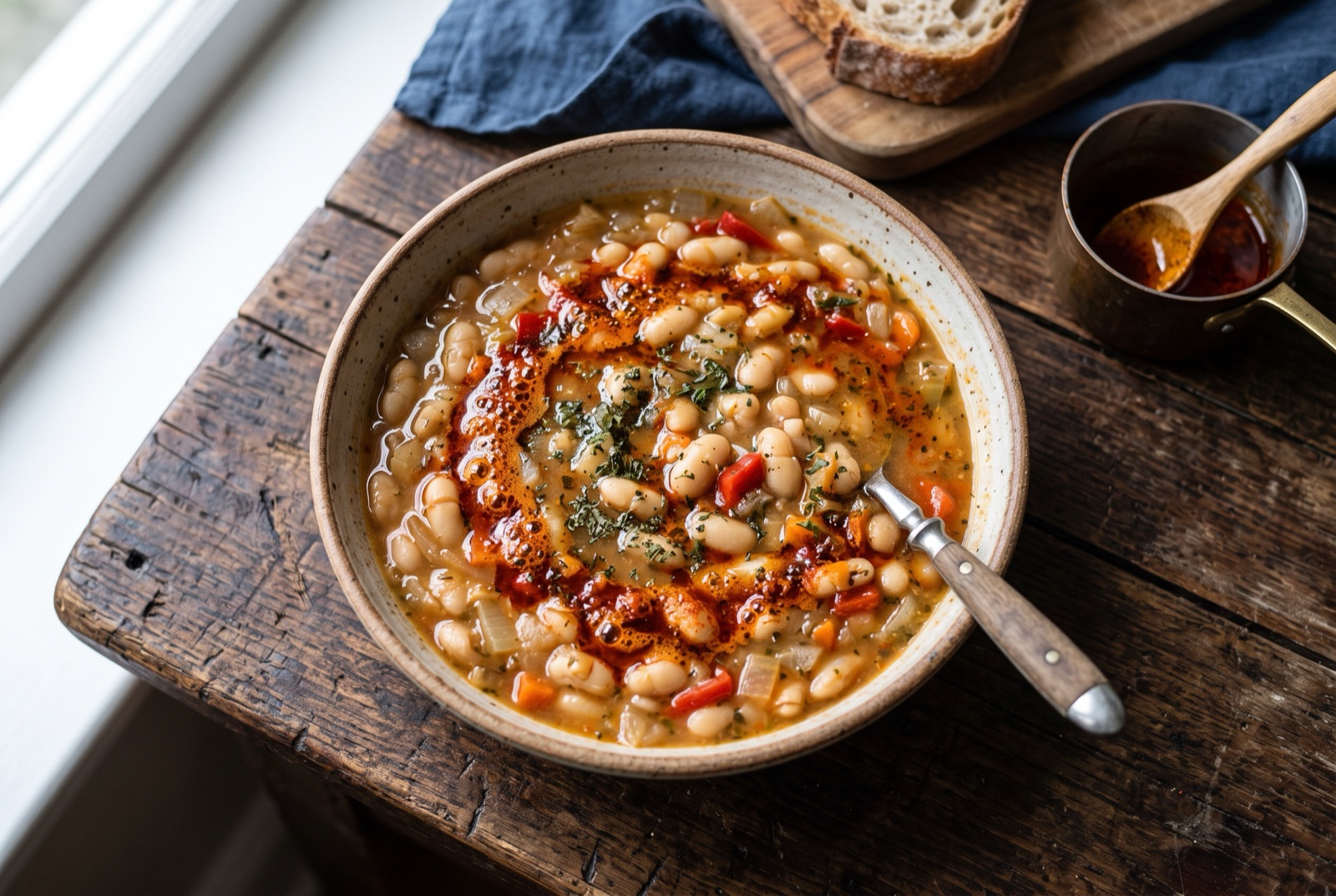
Bulgaria10 hr 10 min
Bob Chorba
Bulgarian Bean Soup with Savory and Mint
Bulgaria2 hr 25 min
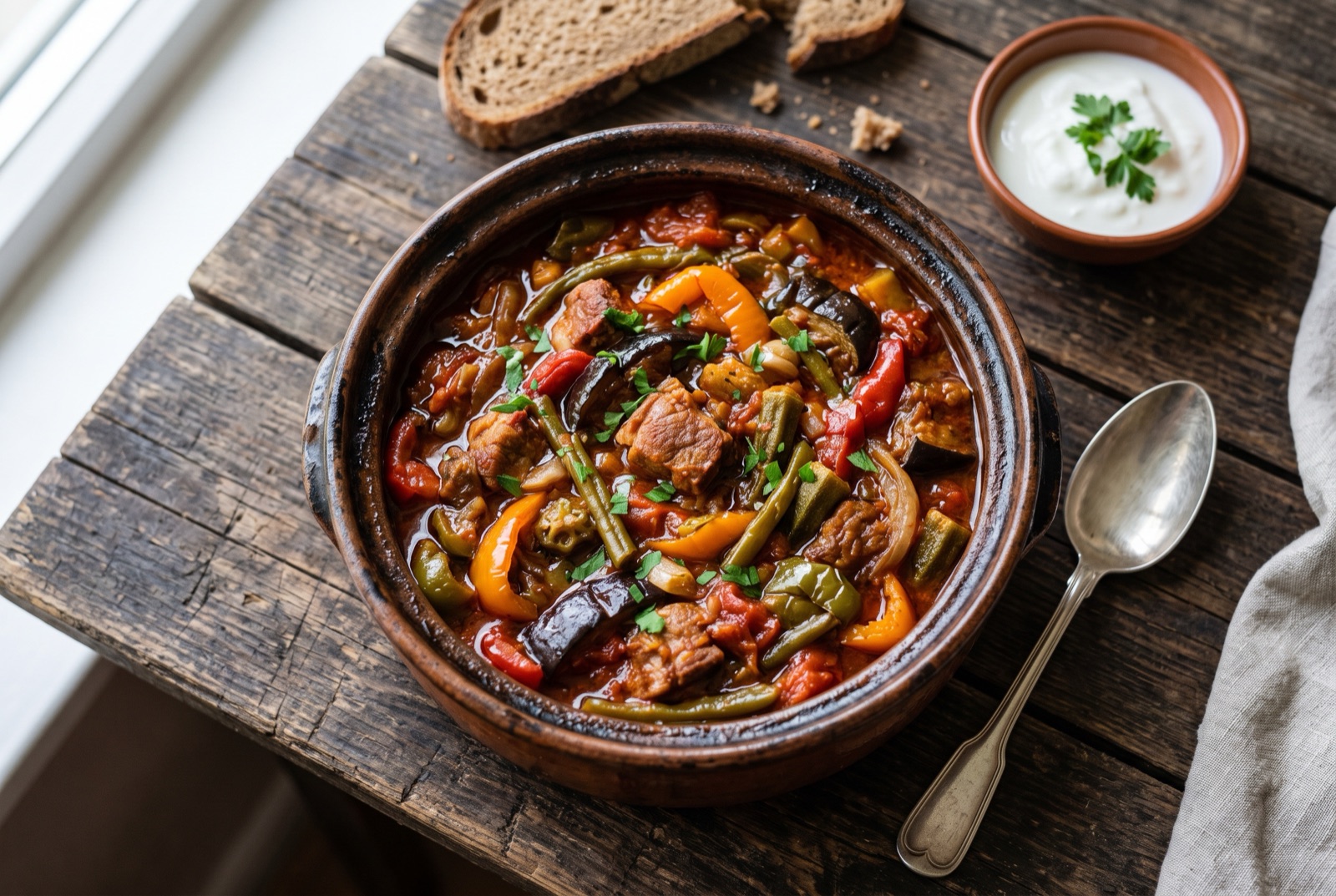
Gyuvech
Bulgarian Baked Vegetable and Pork Casserole
Bulgaria25 min
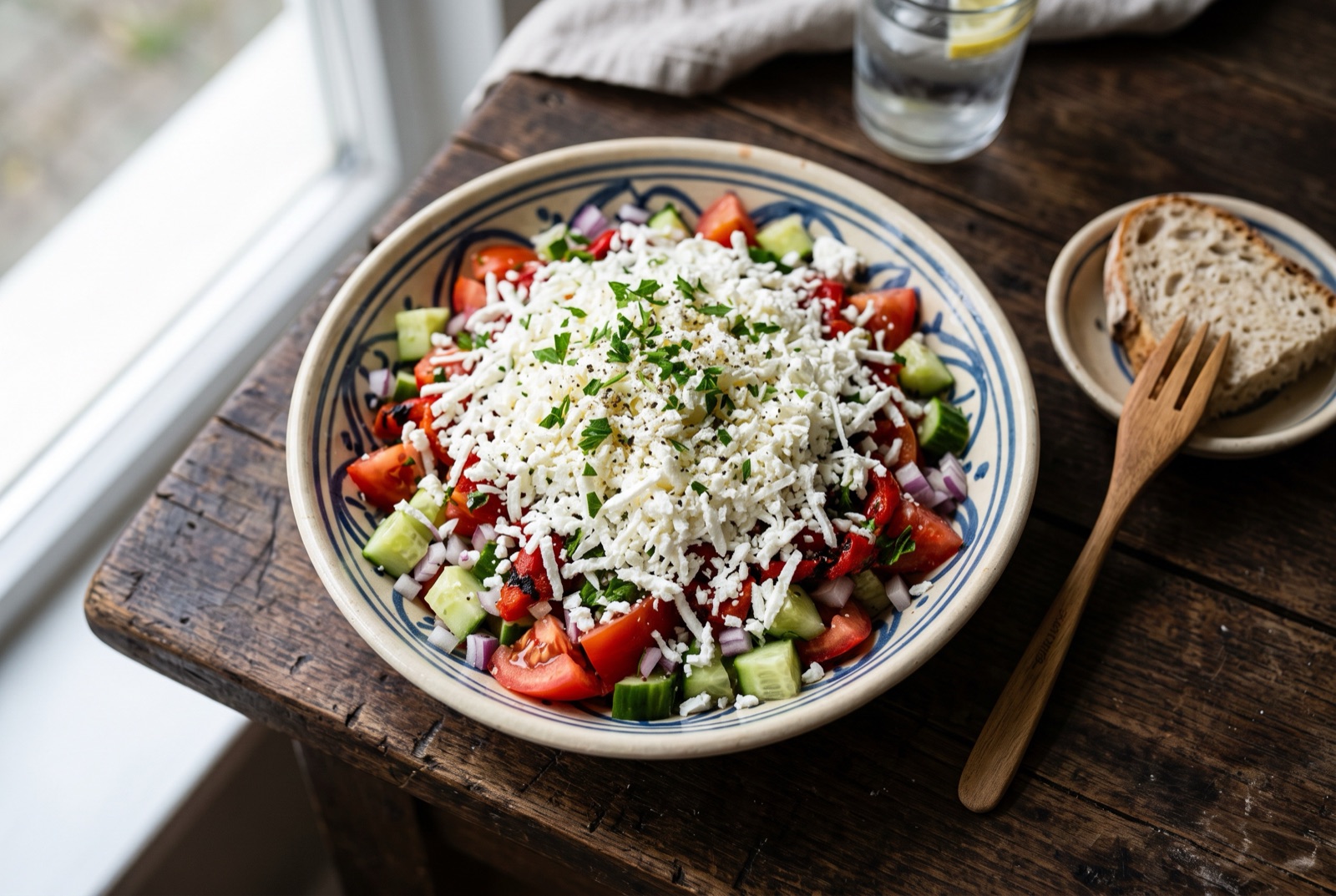
Shopska Salata
Bulgarian Tomato, Cucumber and Sirene Salad
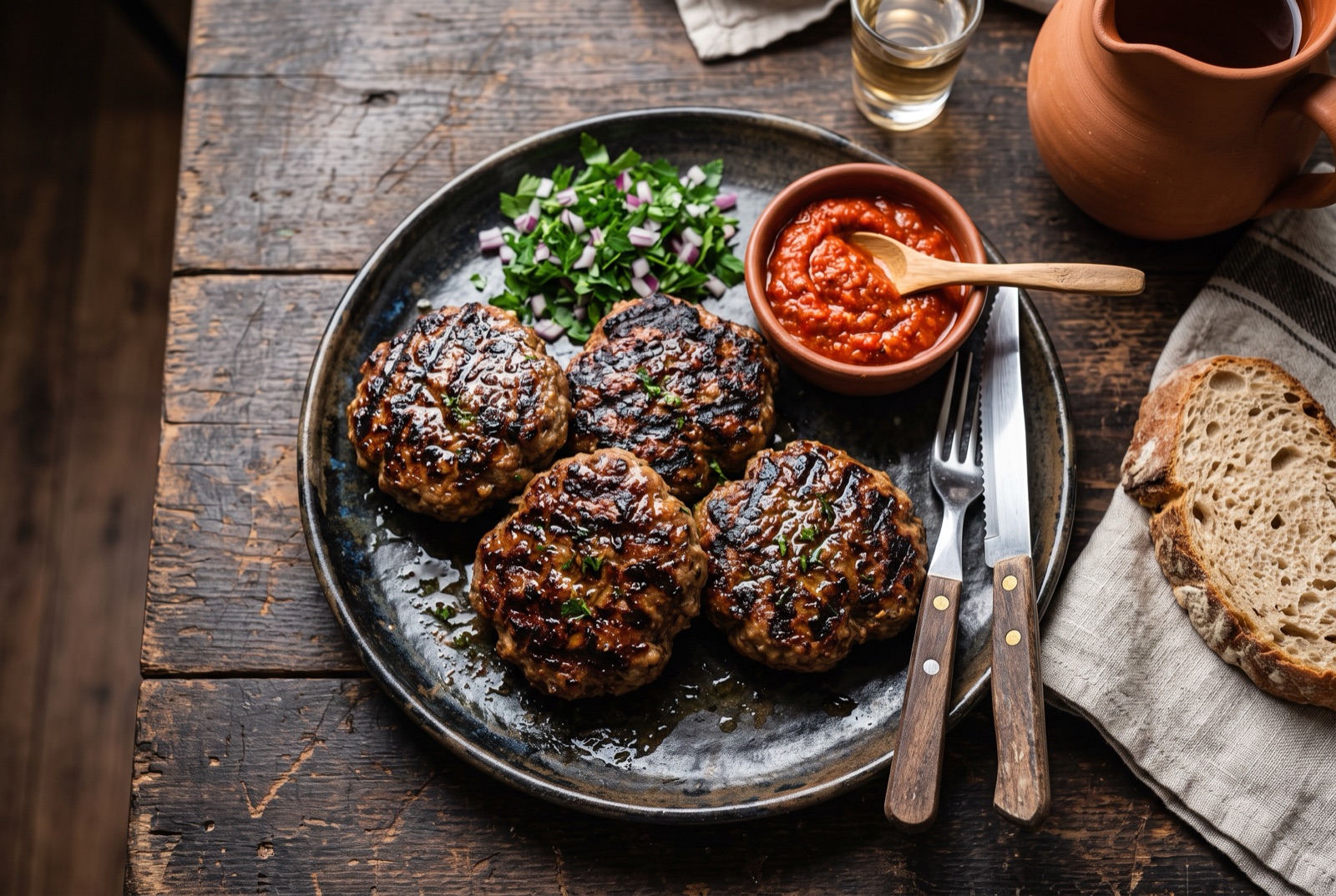
Bulgaria8 hr 40 min
Kyufte
Bulgarian Grilled Cumin and Savory Meat Patties
Keep exploring Bulgaria.
Bulgaria has 9 more dishes in the atlas — Banitsa and Bob Chorba, and 7 more.
Recipe by The DishRoute Kitchen · published August 20, 2026 · updated August 20, 2026