Gyuvech.
Bulgarian Baked Vegetable and Pork Casserole
Гювеч · say it: gyoo-VECH
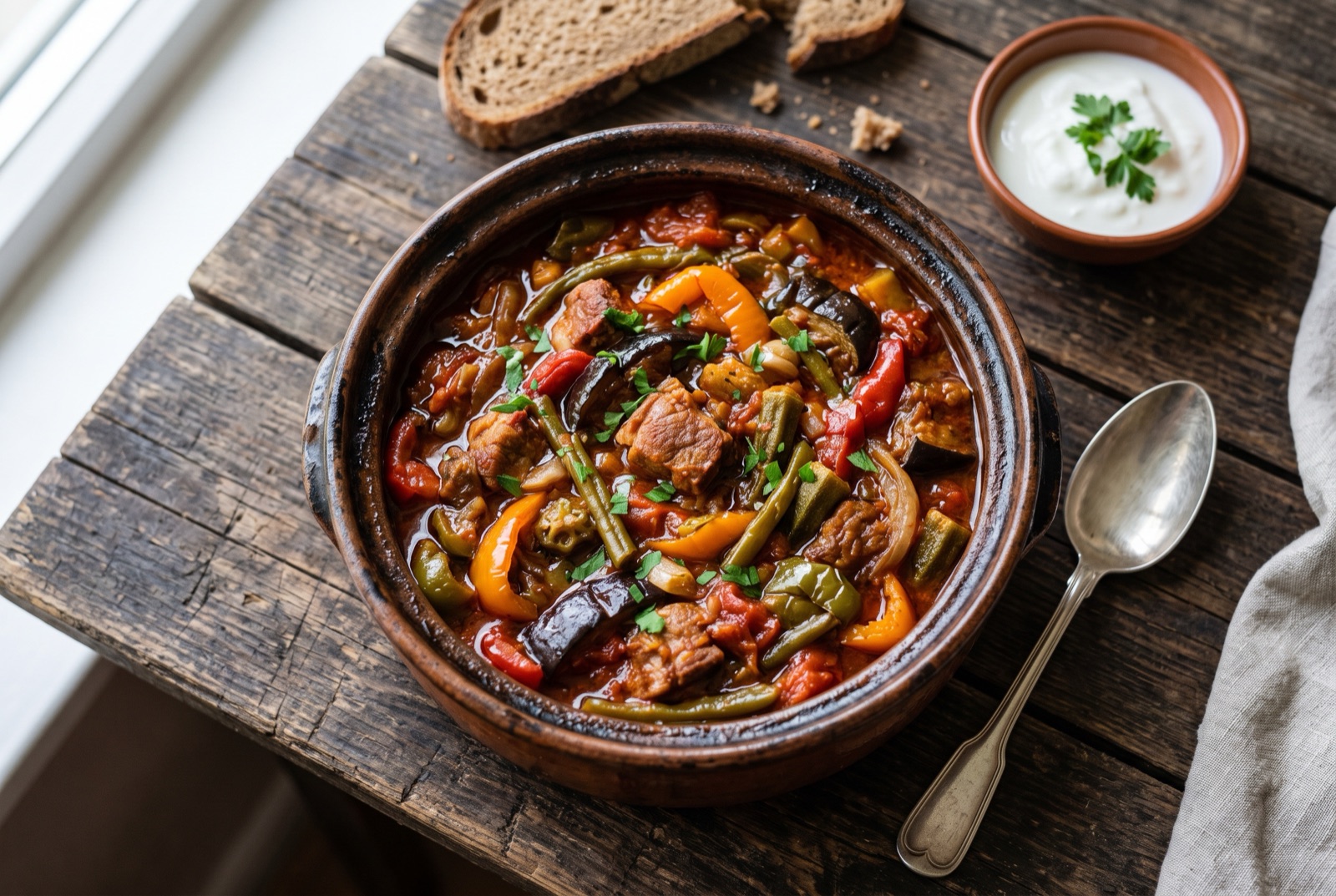
Gyuvech is the dish and the pot at the same time: a wide glazed earthenware dish, and the casserole baked in it. Aubergine, peppers, okra, green beans, potato and tomato go in raw with cubes of pork, a good amount of oil, savory and paprika, and then nothing happens for an hour and a half except heat. Nobody stirs. The vegetables on top brown and shrink, the ones underneath steam in their own juice, and by the end the whole thing has collapsed into something between a stew and a roast, with concentrated, slightly sweet, faintly smoky flavour. It is late-August cooking, made when everything ripens at once and the sensible answer is to put all of it in one dish.

- Gate
- Bulgaria
- Prep
- 35 min
- Cook
- 1 hr 35 min
- Total time
- 2 hr 25 min incl. 15 min rest
- Serves
- 6
- Status
- Medium
- Nutrition / serving · estimated
- Calories 470 kcal
- Protein 24 g
- Carbs 30 g
- Fat 28 g
- Fiber 8 g
- Sugar 12 g
- Sodium 640 mg
Why this recipe works.
- Salts the aubergine and pre-browns the meat, the two steps that stop a gyuvech turning grey and watery.
- Layers by cooking time rather than dumping everything in at once, so nothing is raw and nothing is mush.
- Includes okra with the trick for keeping it from going slimy — a short vinegar soak before it goes in.
- Gives the meat-free Lenten version proper instructions rather than treating it as an afterthought.
Ingredients.
18 itemsFor the base
For the vegetables
For the seasoning
To finish
Equipment
- Wide earthenware or ceramic baking dish, about 30 cm
- Frying pan
- Colander
Instructions.
Salt the aubergine, soak the okra
Toss the aubergine chunks with a teaspoon of salt in a colander and leave them to drain for 20 minutes, then pat dry. At the same time, soak the trimmed okra in cold water with the vinegar, then drain it and dry it well on a towel.
Tip Dry okra matters more than most people expect — wet pods go straight to slimy in the oven.
Brown the pork
Heat two tablespoons of oil in a frying pan and brown the pork cubes in two batches over high heat until they are dark on at least two sides, about 4 minutes per batch. Transfer to the earthenware dish along with every scraping from the pan.
Sweat the onions and bloom the paprika
Lower the heat, add another two tablespoons of oil and cook the onions for 8 minutes until soft and translucent. Add the garlic for 30 seconds, then take the pan off the heat and stir in the paprika, savory and black pepper until the oil turns deep orange.
Layer the dish
Scrape the onion mixture over the pork, then add the vegetables in loose layers — potato and carrot first, then beans and okra, then aubergine, courgette and peppers. Pour over the grated tomatoes, the remaining oil, the rest of the salt and 150 ml of water, and finish with the tomato slices laid flat across the top.
Bake without touching it
Put the dish into a cold oven, set it to 180°C, and bake uncovered for about 90 minutes. Do not stir at any point. It is done when the top layer is browned and shrunken, the potatoes give with no resistance to a knife tip, and the juices at the edge have thickened and turned dark orange.
Tip If the surface darkens before the hour mark, lay foil loosely over the top and pull it off for the last 15 minutes.
Rest and serve
Let the gyuvech stand for at least 15 minutes out of the oven so the juices settle back into the vegetables instead of running out onto the plate. Scatter the parsley over the top and serve warm rather than scalding, with bread and yoghurt.
Tips from our kitchen.
- Cut everything into big pieces, 3–4 cm. Small dice disintegrates over 90 minutes and you lose the distinction between the vegetables entirely.
- Salt the aubergine and let it drain for 20 minutes. It removes bitterness from older fruit and, more importantly, stops it absorbing every drop of oil in the dish.
- Do not stir once it goes into the oven. The browned top layer and the steamed bottom layer are both intentional, and stirring destroys them.
- Be generous with the oil. Gyuvech is not a low-fat dish — the oil carries the paprika and stops the top layer drying out into leather.
- Add the tomatoes as a layer on top rather than mixed through, so their juice runs down and bastes everything below it.
- If the top is browning too fast before the vegetables are soft, cover with foil for 20 minutes and remove it again at the end.
Substitutions.
- Fresh okra → Frozen okra, added straight from frozen, or extra green beans
- Frozen okra is less slimy than fresh and needs no vinegar soak. If okra is genuinely unavailable, green beans keep the texture balance without pretending to be a substitute.
- Pork shoulder → Lamb shoulder, or nothing at all
- Lamb makes a richer, more Anatolian gyuvech. Leaving the meat out gives postno gyuvech, the Lenten version, which is a standard dish in its own right — add a handful of rice for body.
- Summer savory → Dried thyme with a pinch of dried oregano
- Savory is peppery and slightly bitter in a way thyme is not, but the substitution keeps the dish in the right register rather than pushing it towards Italian.
Variations.
- Postno gyuvech
- The Lenten version with no meat and no dairy: the same vegetables plus a handful of rice and extra oil, baked the same way. Eaten cold as often as hot.
- Gyuvech with lamb and rice
- A heavier autumn variant where half a cup of rice goes in under the vegetables and soaks up the juices, making the dish a complete meal without bread.
- Individual gyuvecheta
- Divided between small clay pots before baking, tavern style — the top layer browns more per portion and everything arrives at the table still hissing.
Storage & reheating.
Gyuvech keeps 4 days refrigerated and is better on day two, once the vegetables have finished trading flavours. Bulgarians commonly eat leftovers cold or at room temperature rather than reheated, which is worth trying before you turn the oven on. To reheat, cover with foil and warm at 160°C for 25 minutes; a microwave turns the aubergine to paste. It freezes for 2 months but the texture suffers — the potatoes go grainy and the courgette collapses — so freeze only if you plan to eat it as a thick sauce over rice.
Serve with
Bread, a bowl of thick yoghurt on the side, and pickled peppers if you have them.
The story behind Gyuvech.
Gyuvech is the Balkan and Anatolian answer to a garden glut, and its name — from the Turkish güveç — refers first to the vessel. Across the region the same word covers a family of vegetable-and-meat bakes with local names and local proportions: Turkish güveç, Serbian đuveč, Romanian ghiveci. The common thread is a shallow earthenware dish, a slow oven, and the discipline of not touching the food while it cooks. Clay conducts heat gently and evenly enough that vegetables release their water slowly instead of boiling, which is why gyuvech baked in metal never tastes quite the same even when the recipe is identical.
In Bulgaria the dish exists at two scales. The big communal gyuvech feeds a table and comes out in the middle of it; the individual gyuveche, a small pot per person, is the format of the traditional mehana. Both descend from the village practice of assembling the dish at home and carrying it to the communal bread oven, where it sat in falling heat for hours after the loaves came out. That long, slow, declining bake is what the recipe is really designed for, and a modern oven at 180°C is a reasonable imitation of it.
What goes in is dictated entirely by season rather than by a fixed list. Late summer gives the classic combination — aubergine, okra, peppers, green beans, tomatoes, courgette — while autumn versions lean on potato, carrot and cabbage. Meat is present in modest amounts and functions as seasoning rather than centrepiece: pork, lamb or none at all during the long Orthodox fasts, when the meat-free postno gyuvech is not a compromise but the normal version. Bulgarians will also tell you the dish is better the next day, which is true, and that it should be eaten lukewarm rather than piping hot, which is also true and surprises people.
Questions, answered.
What is a gyuvech — the dish or the pot?
Both, and that is not confusion but how the word works. Gyuvech names the wide glazed earthenware dish, borrowed from the Turkish güveç, and by extension the vegetable-and-meat casserole baked in it. The small single-portion version, served one per person in Bulgarian taverns, is called a gyuveche. If someone offers you gyuvech, they mean the food.
Can I make gyuvech in a normal roasting tin?
Yes, and it will be good. Clay heats more gently and holds moisture better, so the vegetables sweat rather than roast at the edges, but a heavy ceramic or cast-iron dish gets you most of the way. Avoid thin metal trays — they run hot at the base and scorch the bottom layer before the top is done. Whatever you use, choose something wide and shallow rather than deep.
How do I stop the okra going slimy?
Soak the trimmed pods in water with a couple of tablespoons of vinegar for 20 minutes, then drain and pat dry before they go into the dish. Do not cut the pods open if you can avoid it — trim the cone at the stem without slicing into the seed chamber. Frozen okra is already treated and can go in straight from the freezer without soaking.
Why must I not stir it while it bakes?
Because the two textures are the point. The exposed top layer roasts, browns and concentrates, while the layer underneath steams in the collected juices and stays soft. Stirring mixes those into one uniform, wet result and knocks the vegetable pieces apart. If you are worried about drying, add a splash of water down the side of the dish rather than reaching for a spoon.
Can I make it vegan?
Yes — leave out the meat entirely and you have postno gyuvech, the version Bulgarians eat during Orthodox fasting periods. It is a normal, unremarkable dish there rather than a substitution. Add a handful of rice or a tin of drained beans for substance, use a little more oil since there is no rendered fat, and season more assertively with paprika and savory.
You might also like.
All recipes →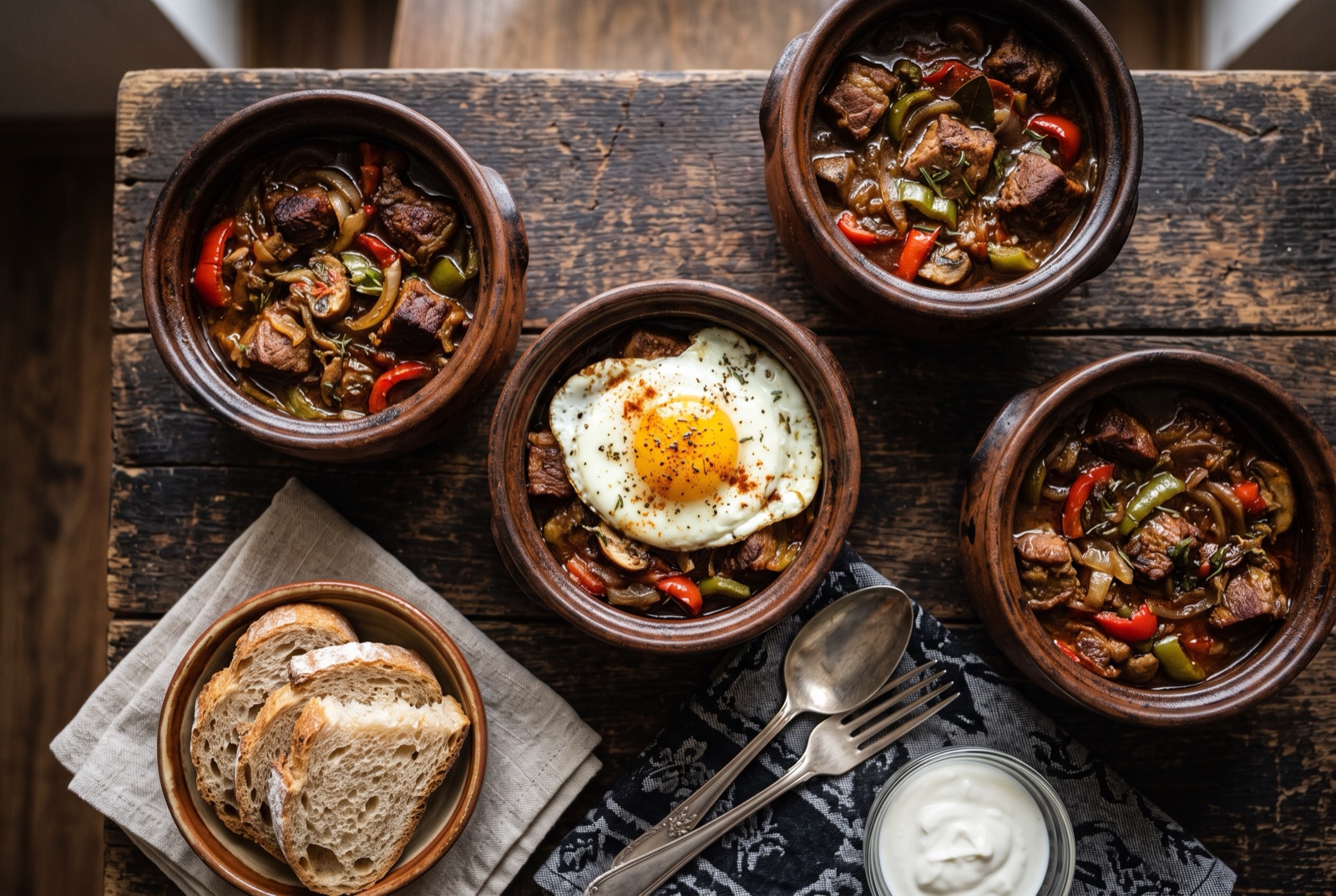
Bulgaria1 hr 45 min
Kavarma
Bulgarian Clay-Pot Pork and Pepper Stew
Bulgaria25 min
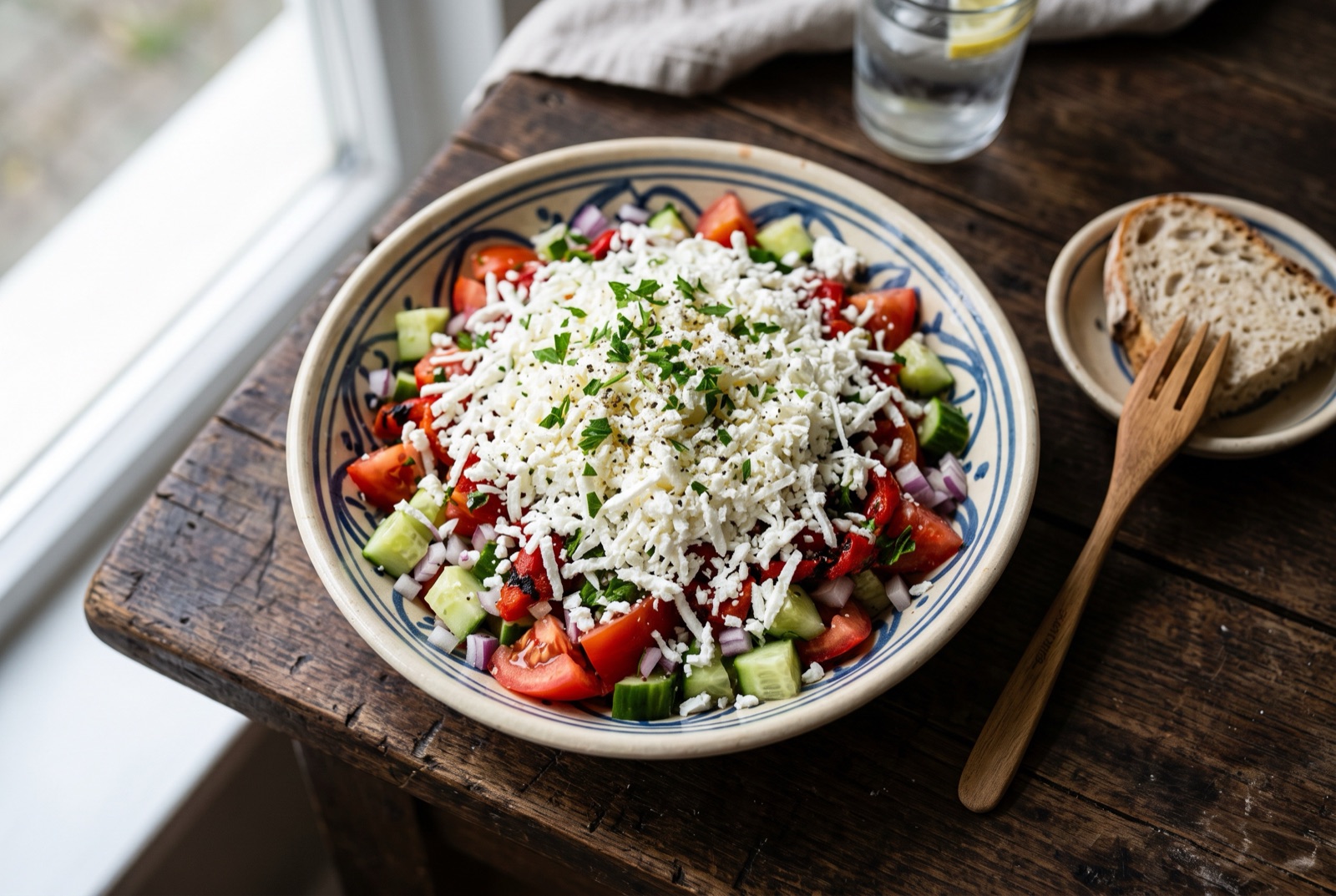
Shopska Salata
Bulgarian Tomato, Cucumber and Sirene Salad
Bulgaria10 hr 10 min
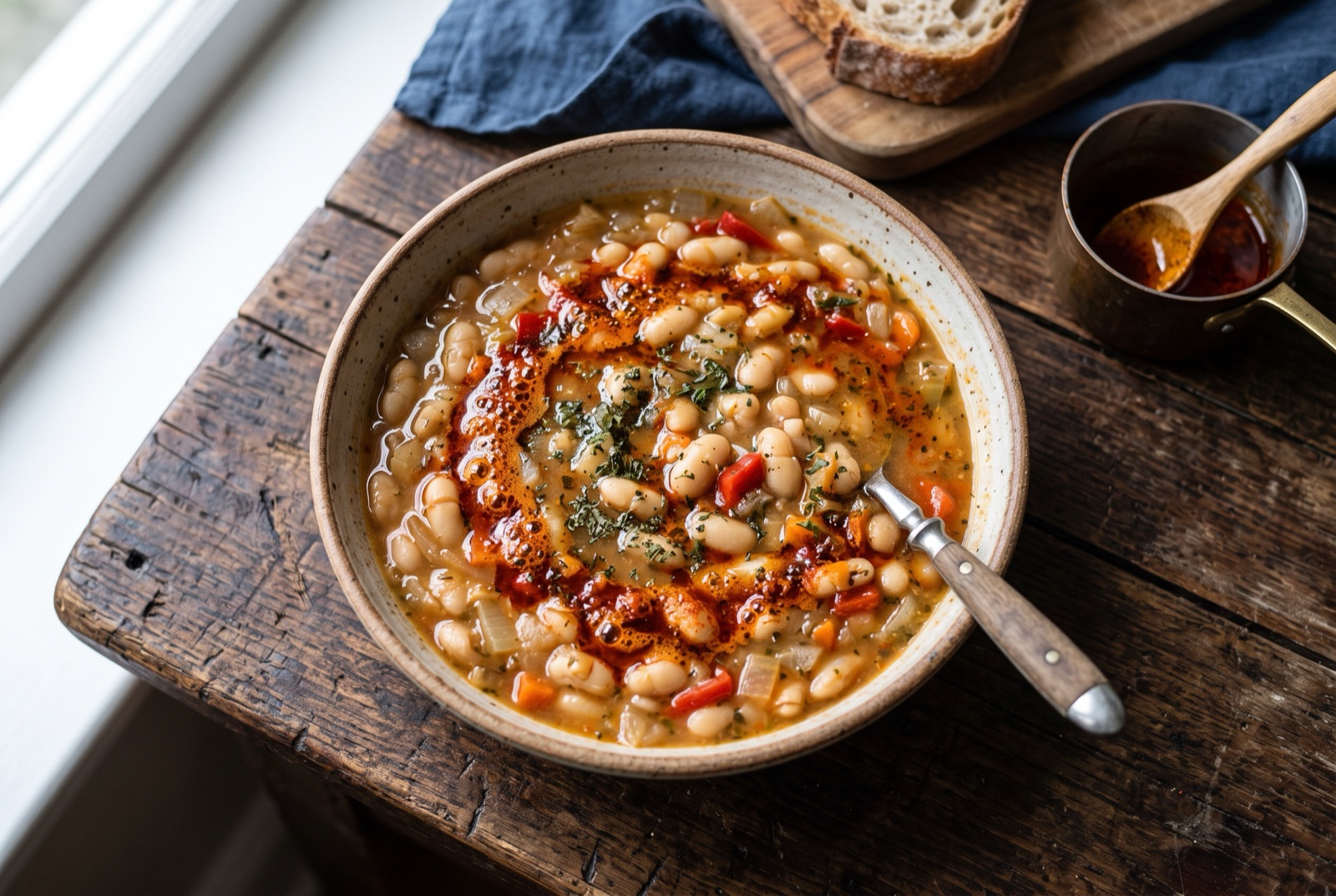
Bob Chorba
Bulgarian Bean Soup with Savory and Mint
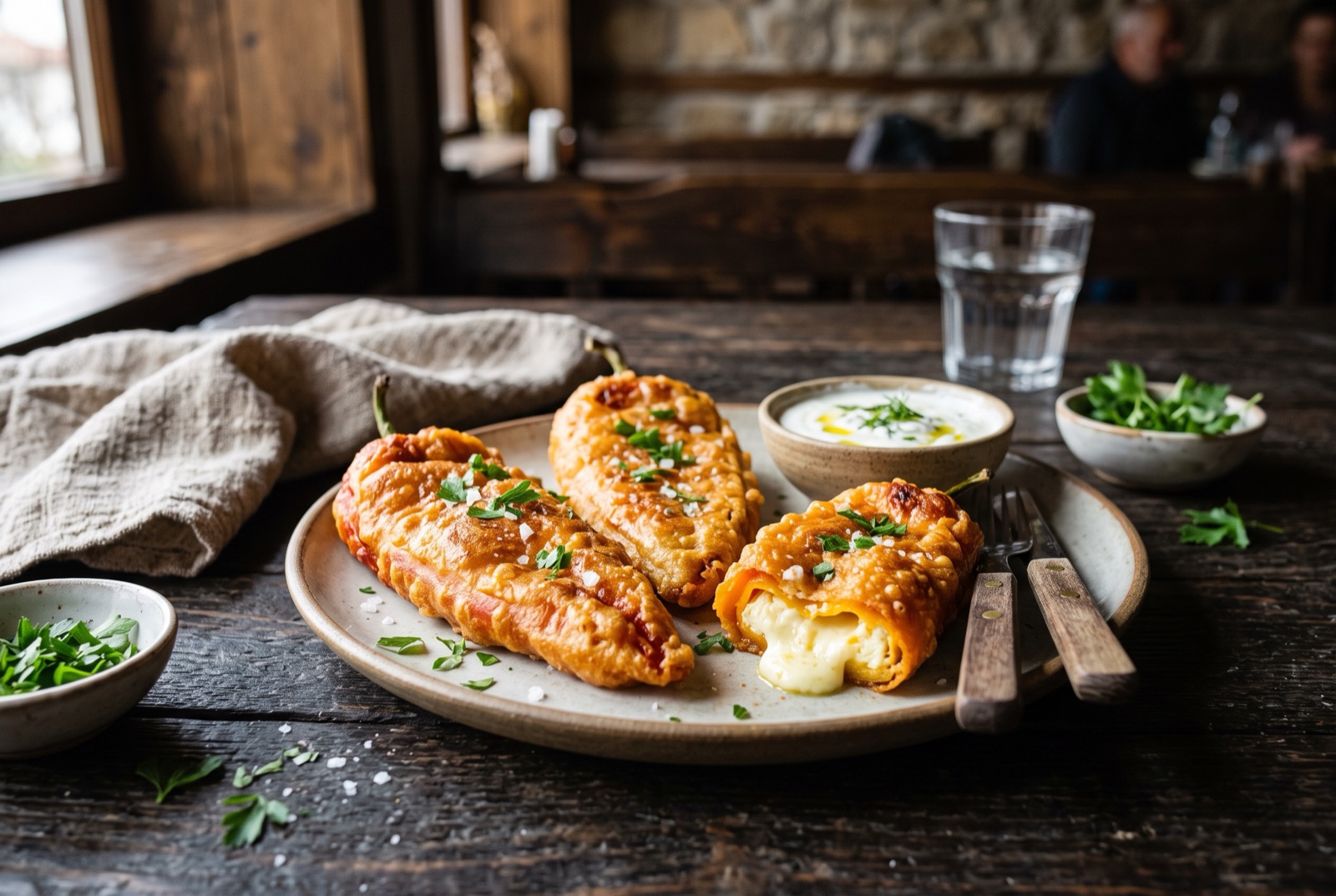
Bulgaria1 hr 25 min
Chushki Byurek
Bulgarian Cheese-Stuffed Fried Peppers
Keep exploring Bulgaria.
Bulgaria has 9 more dishes in the atlas — Banitsa and Bob Chorba, and 7 more.
Recipe by The DishRoute Kitchen · published August 20, 2026 · updated August 20, 2026