Bob Chorba.
Bulgarian Bean Soup with Savory and Mint
Боб чорба · say it: BOB chor-BAH
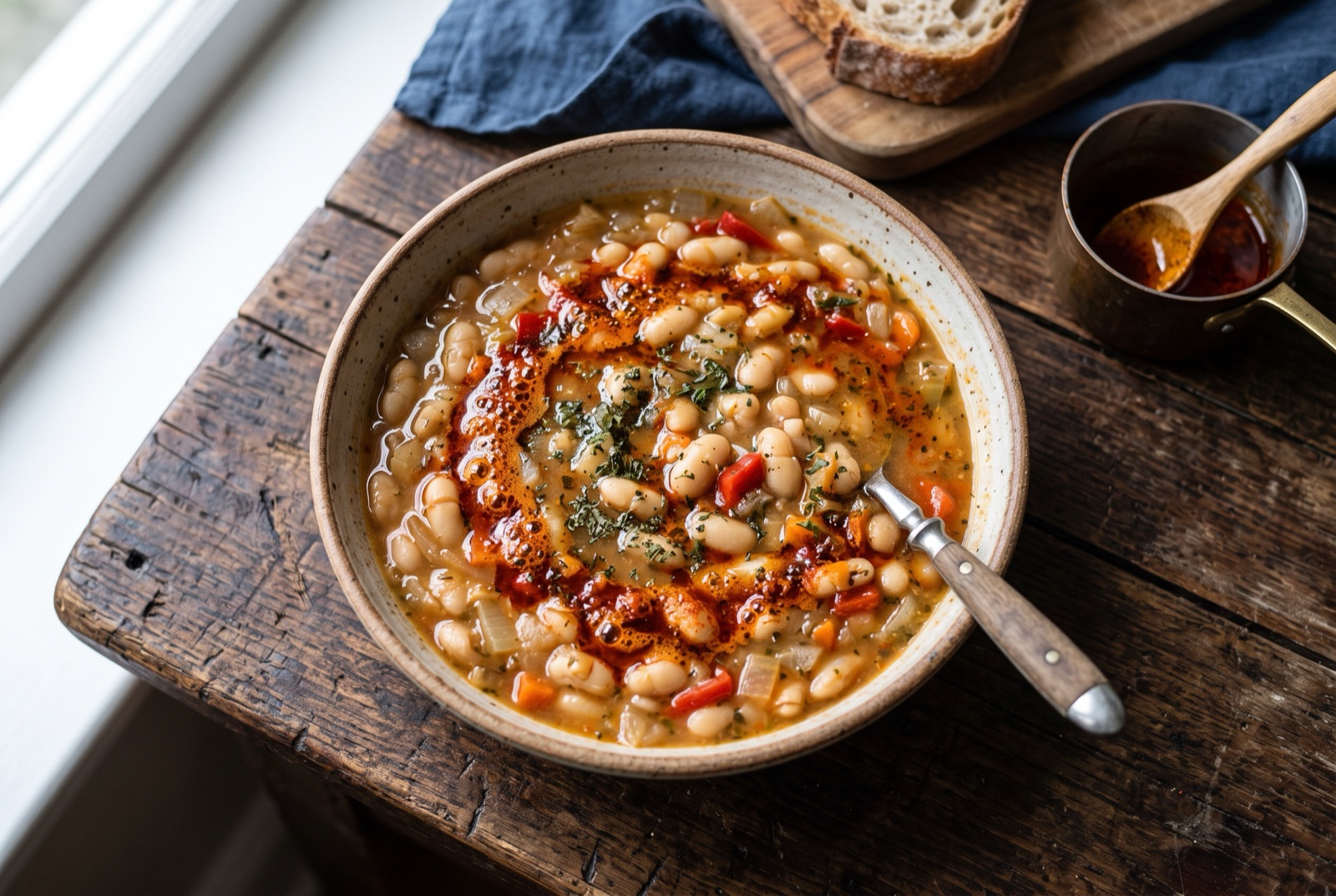
Bob chorba is Bulgaria's everyday bean soup: dried white beans cooked down with onion, carrot, pepper and tomato until the broth turns thick and slightly starchy, seasoned with the country's signature summer savory, and finished with a spoonful of hot oil bloomed with paprika and dried mint that goes in right at the end. That final pour is the difference between a decent bean soup and this one — mint and paprika hit the hot broth and the whole pot suddenly smells like a Bulgarian kitchen. It is cheap, vegan by default, eaten year-round, and served with raw onion and bread rather than anything more elaborate.

- Gate
- Bulgaria
- Prep
- 20 min
- Cook
- 1 hr 50 min
- Total time
- 10 hr 10 min incl. 8 hr rest
- Serves
- 6
- Status
- Easy
- Nutrition / serving · estimated
- Calories 380 kcal
- Protein 17 g
- Carbs 48 g
- Fat 14 g
- Fiber 15 g
- Sugar 6 g
- Sodium 700 mg
Why this recipe works.
- Boils and drains the beans once before the real cook, which removes the compounds that make them hard to digest.
- Salts only at the end, so the bean skins soften properly instead of toughening.
- Finishes with the paprika and mint fry-off in the last minute, the way Bulgarian soups are actually seasoned.
- Vegan without substitutions or apology, because that is how the dish is normally made.
Ingredients.
15 itemsFor the soup
For the fry-off
To finish
Equipment
- Large heavy pot
- Small frying pan for the fry-off
- Ladle
Instructions.
Soak the beans
Cover the dried beans with at least three times their volume of cold water and leave them to soak for 8 hours or overnight. They should swell to roughly double in size and their skins should be smooth rather than wrinkled.
Boil once and drain
Drain the soaked beans, put them in a large pot with fresh cold water, bring to a rolling boil and cook for 5 minutes. Drain again and discard that water — this removes most of what makes beans hard to digest and gives a clearer broth.
Start the real cook
Return the beans to the pot with 2 litres of fresh water, the onions, carrots, pepper, bay leaves, savory and the first four tablespoons of oil. Bring to a simmer and cook, partly covered, for 75 to 90 minutes without any salt at all.
Tip Keep it at a lazy simmer. A hard boil bursts the skins and turns the soup into a cloudy purée.
Add tomato and season
Once the beans crush easily between your fingers, stir in the grated tomatoes and the salt and simmer for another 15 minutes. Mash a full ladleful of beans against the side of the pot and stir it back in so the broth thickens to the consistency of single cream.
Make the fry-off
Heat the remaining three tablespoons of oil in a small pan until it just shimmers, then take it off the heat and stir in the paprika, dried mint and chilli flakes. Count to ten while the fat turns deep red and smells strongly of mint, then pour the whole lot into the soup and stir once.
Tip Off the heat, without exception. Mint blackens in about five seconds on a live burner and the bitterness is permanent.
Rest and serve
Take the pot off the heat and let it stand for 5 minutes so the fry-off spreads through the broth. Fish out the bay leaves, taste for salt one more time, and serve with parsley scattered over, raw onion quarters and plenty of bread.
Tips from our kitchen.
- Soak the beans overnight in plenty of cold water. Quick-soaking works but produces more split skins and a cloudier broth.
- Bring the beans to the boil once, drain them, and start again with fresh water. It is a standard Bulgarian step and it makes a real difference to how the soup sits afterwards.
- Do not salt until the beans are fully tender. Salt added early firms the skins and can leave beans chalky after two hours of cooking.
- Mash a ladleful of beans against the side of the pot and stir it back in. That is what thickens the broth — no flour needed.
- Add the mint to hot oil off the heat and count to ten. Dried mint scorches faster than paprika and turns acrid almost instantly.
- Old beans never soften. If a batch is still hard after two hours with no salt in the pot, they were too old to begin with and nothing will fix them.
Substitutions.
- Dried white beans → Two tins of drained cannellini or haricot beans
- Cuts the cooking time to about 25 minutes. The broth will be thinner and less silky, so mash more of the beans and use vegetable stock instead of water.
- Summer savory (chubritsa) → Dried thyme plus a little extra black pepper
- Savory is peppery and slightly bitter, which is why the pepper helps. This is the seasoning that makes the soup taste Bulgarian, so it is worth seeking out.
- Sunflower oil → Olive oil, or a knob of butter if you are not fasting
- Butter makes a richer, rounder soup that is no longer vegan. Bulgarian versions use sunflower oil almost exclusively.
Variations.
- Bob chorba with smoked meat
- A piece of smoked pork rib or dried sausage simmered with the beans from the start, which turns the soup meaty and salty. The non-fasting winter version.
- Manastirski bob
- The monastery version, baked rather than simmered: the beans go into a clay pot with the vegetables and oil and cook slowly in a low oven until the top browns.
- Bob yahniya
- Cooked down much further into a thick stew rather than a soup, with more onion and paprika, and eaten with a fork rather than a spoon.
Storage & reheating.
Bob chorba keeps 4 days refrigerated and improves for the first two — the broth thickens as the beans continue to release starch. Loosen it with hot water when reheating and check the salt again, since a thicker soup needs less. It freezes well for 3 months in portions; the beans hold their shape better than most legumes. If you are making it ahead deliberately, hold back the paprika and mint fry-off and do it fresh when you reheat, because those aromatics fade in the fridge.
Serve with
Raw onion quarters, a thick slice of bread, and dried chilli or a spoon of lyutenitsa on the side.
The story behind Bob Chorba.
Beans arrived in the Balkans from the Americas and settled in so thoroughly that it is now hard to imagine Bulgarian cooking without them. Bob became the staple protein of a largely Orthodox country with long fasting periods — over a hundred days a year in strict observance — during which meat, dairy and eggs are all off the table. A pot of beans, seasoned properly, had to carry a meal on its own, and Bulgarian cooks got good at making it do so.
The soup is inseparable from the town of Chiprovtsi and, more famously, from Sopot and the annual bean festivals held around the country, but its real home is ordinary and domestic: a pot on the back of the stove, made in a quantity that lasts several days. In monasteries it is still the standard fasting meal, sometimes cooked in a clay pot buried in the embers overnight. In army barracks and school canteens it was for decades the default lunch, which is why some Bulgarians of a certain age have complicated feelings about it.
The technique worth learning is the zaprazhka, the fry-off. Bulgarian soups are typically finished rather than started with their seasoning fat: paprika, dried mint and sometimes a little flour are heated in oil off the heat until the fat turns red and fragrant, then tipped into the pot in the last minute of cooking. The aromatics stay bright because they have not spent an hour boiling. Do it at the start instead and the soup tastes muddy and flat — which is the single most common way homemade bob chorba goes wrong.
Questions, answered.
Why are my beans still hard after two hours?
Either they are old, or something in the pot toughened them. Dried beans more than a year or two past harvest may never soften properly regardless of cooking time. Salt and acidic ingredients like tomato added early also firm the skins, which is why both go in only once the beans are already tender. Hard water can slow things down too — a pinch of bicarbonate in the soaking water helps.
Do I really need to boil and drain the beans first?
It is a standard step in Bulgarian kitchens and worth doing. Bringing the soaked beans to the boil, draining, and restarting with fresh water removes a good part of the oligosaccharides that cause digestive trouble, and it also gives a cleaner, less murky broth. Skipping it will not ruin the soup, but the result is heavier and cloudier.
What is the paprika and mint fry-off for?
It is the finishing step that gives the soup its character. Paprika and dried mint are heated briefly in oil off the heat until the fat turns red and aromatic, then poured into the pot in the last minute. Because the aromatics have not boiled for an hour, they stay bright and perfumed. Adding them at the start instead makes the soup taste dull and slightly muddy.
Can I use tinned beans?
Yes. Use two drained tins of cannellini or haricot beans and add them once the vegetables are soft, then simmer for 20 to 25 minutes so they take on the seasoning. The broth will be thinner because you lose the starch that comes off dried beans during the long cook, so mash a generous ladleful against the pot and consider using vegetable stock instead of plain water.
Is bob chorba vegan?
The standard version is, and not by adaptation — it is one of the pillars of Bulgarian fasting cooking, made with beans, vegetables, herbs and sunflower oil only. Non-fasting households sometimes simmer smoked pork ribs or dried sausage with the beans, which is a recognised variant rather than the default. Check before ordering it in a restaurant, since either version may appear.
You might also like.
All recipes →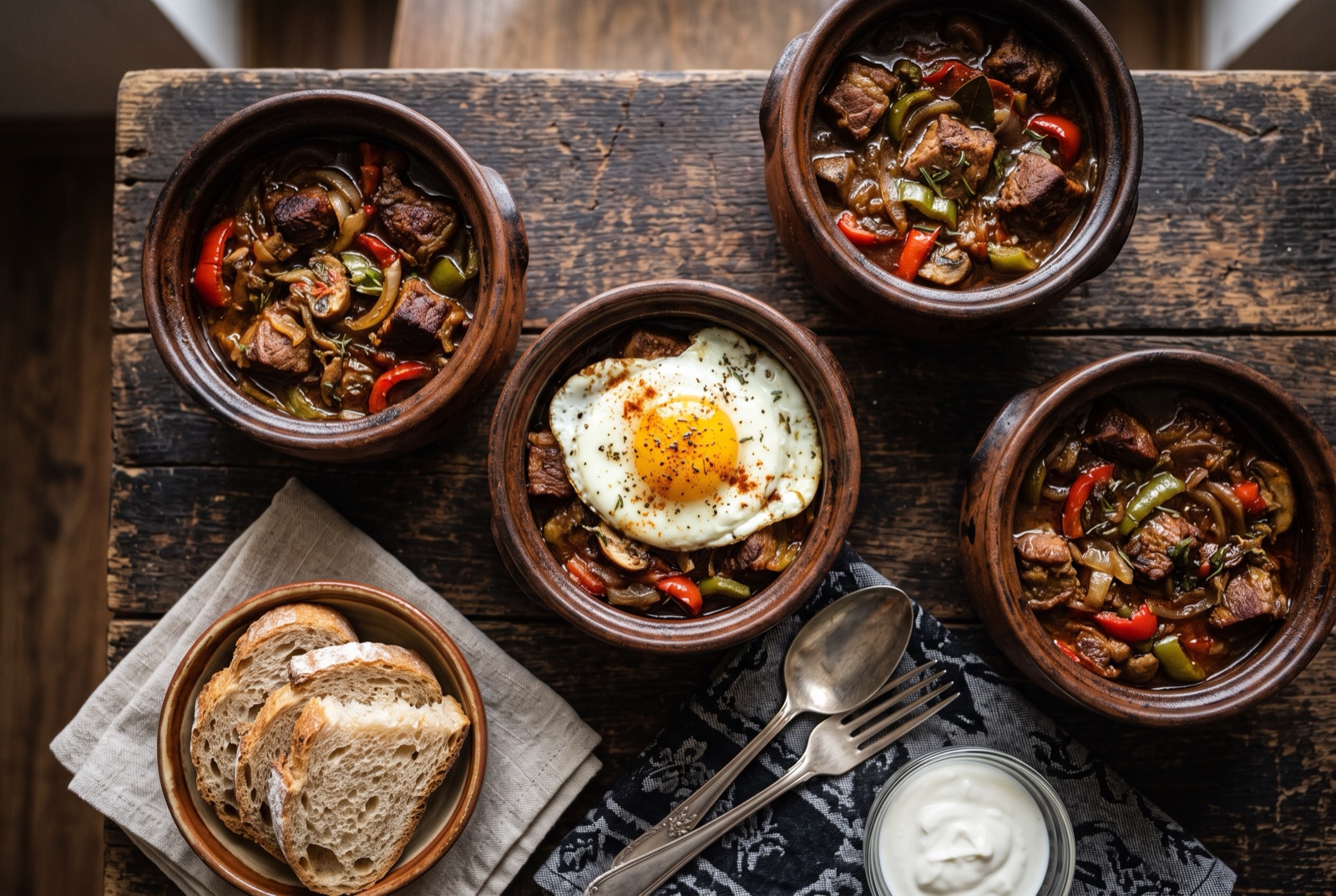
Bulgaria1 hr 45 min
Kavarma
Bulgarian Clay-Pot Pork and Pepper Stew
Bulgaria2 hr 5 min
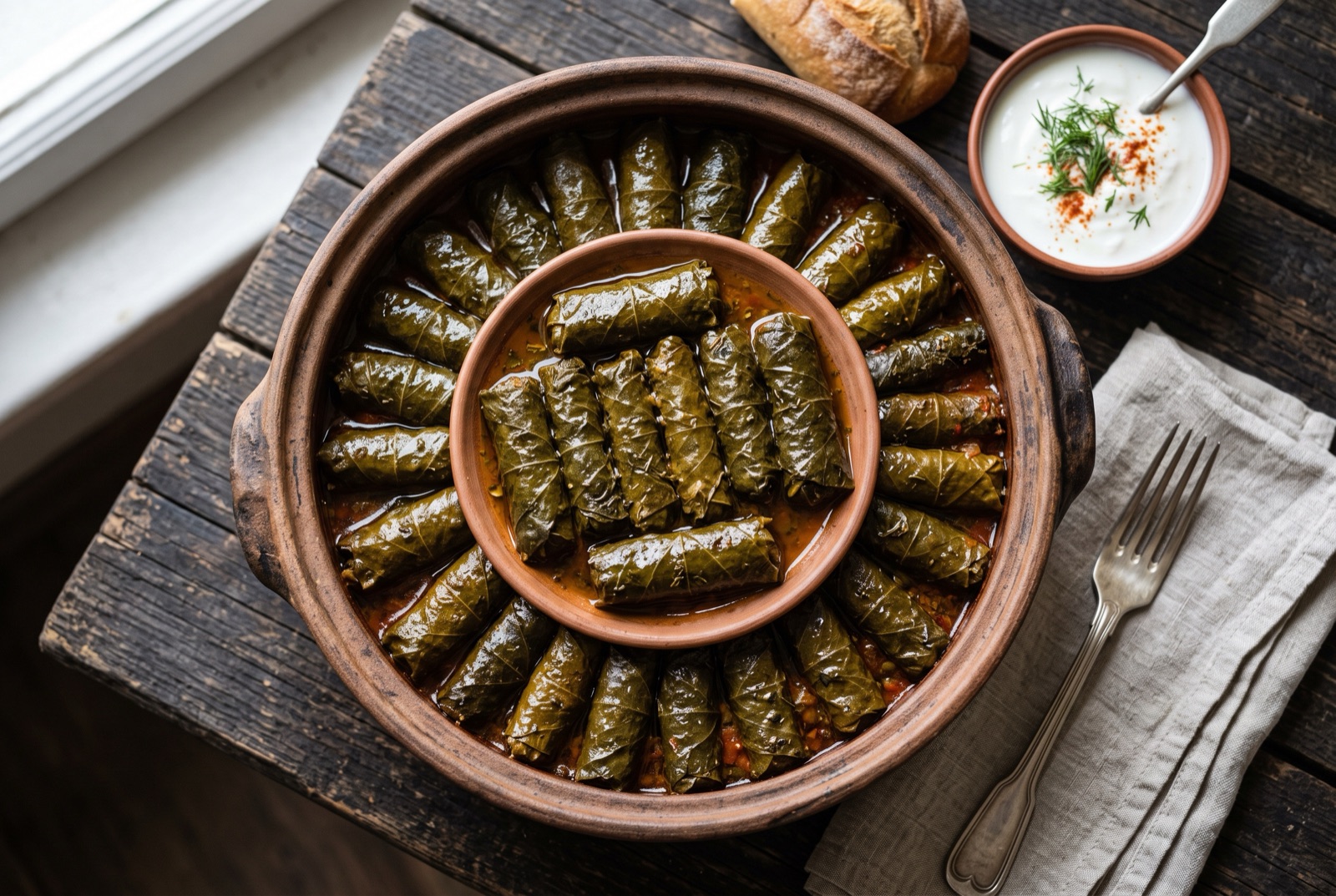
Lozovi Sarmi
Bulgarian Vine Leaf Rolls with Rice and Mint
Bulgaria25 min
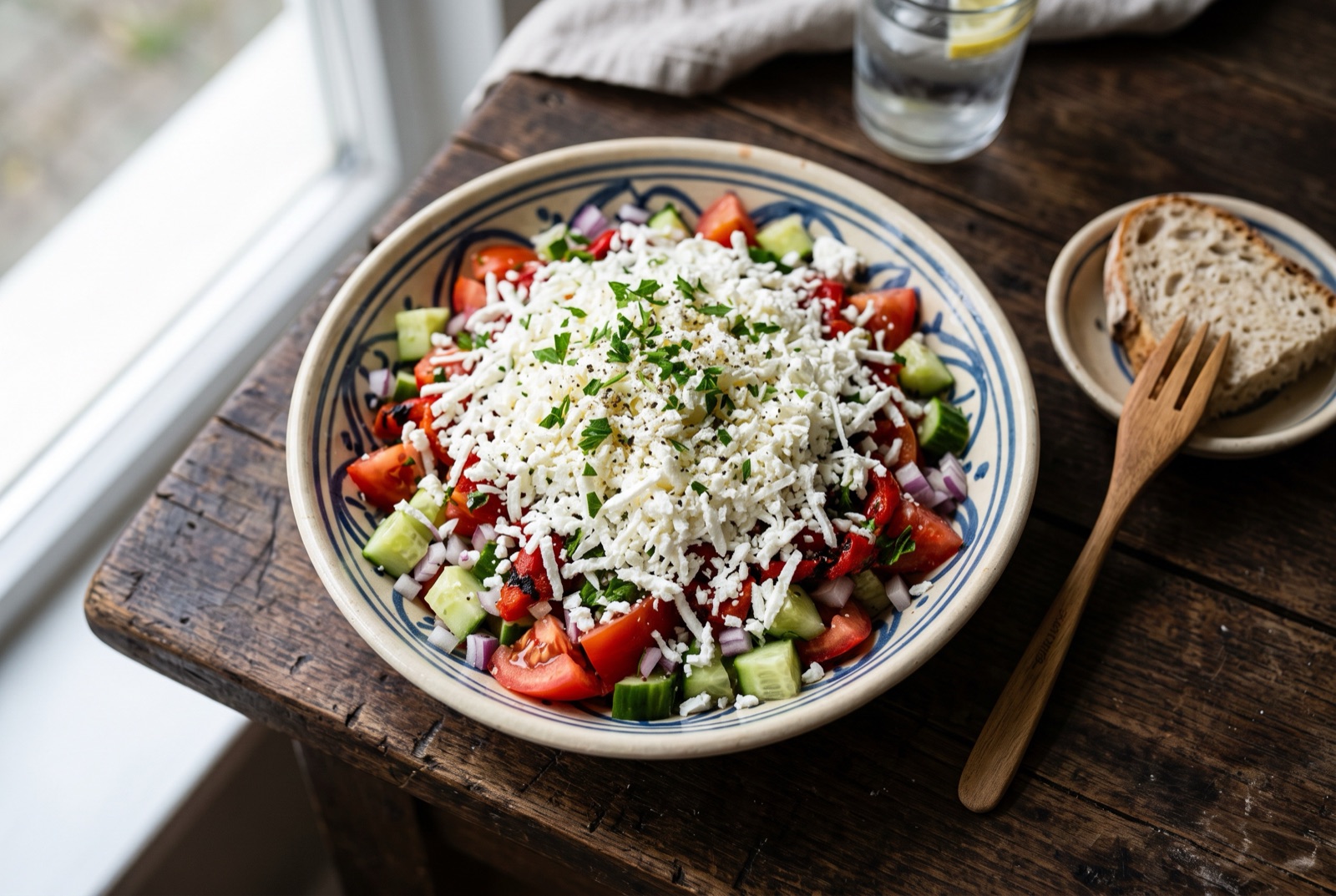
Shopska Salata
Bulgarian Tomato, Cucumber and Sirene Salad
Bulgaria2 hr 25 min
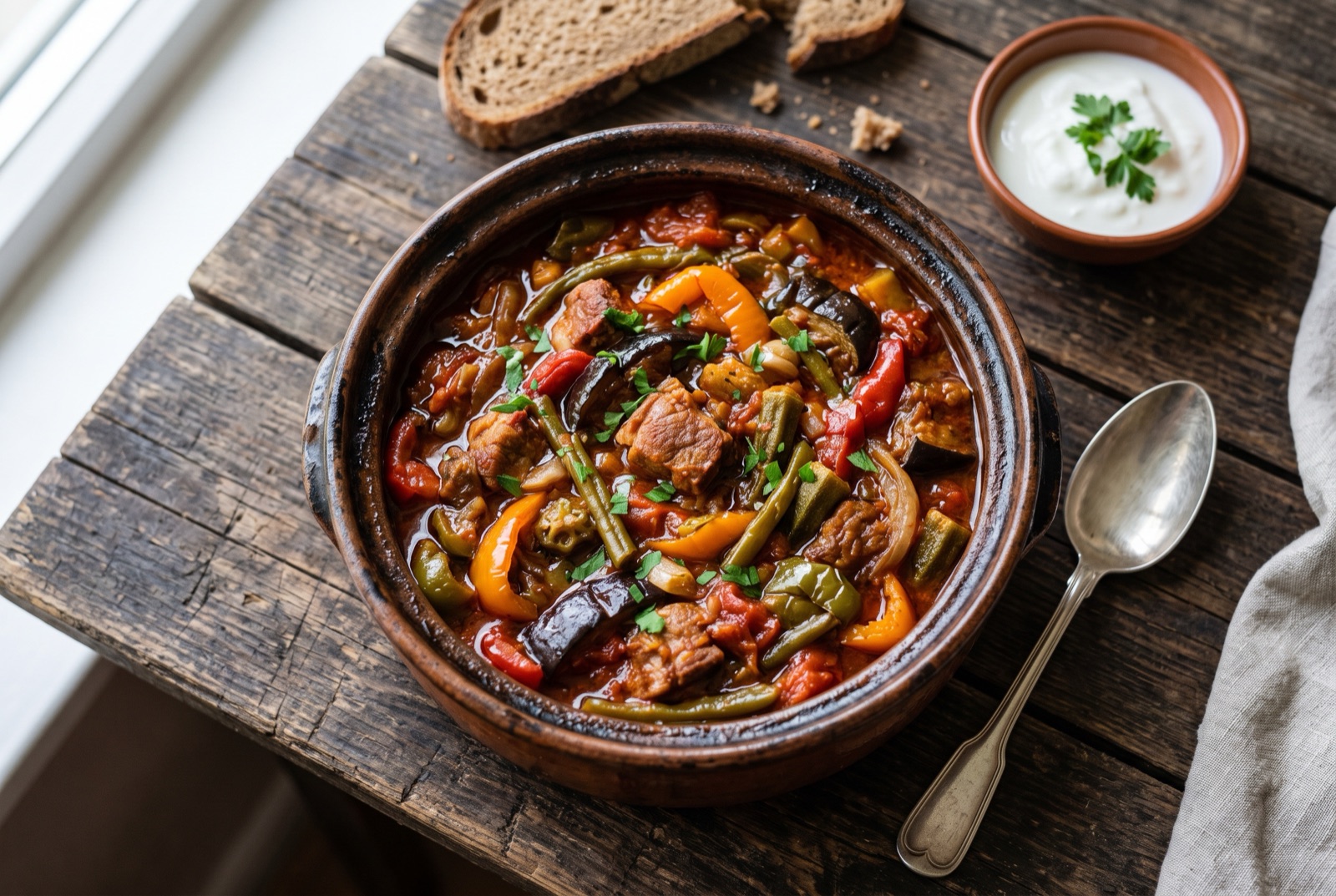
Gyuvech
Bulgarian Baked Vegetable and Pork Casserole
Keep exploring Bulgaria.
Bulgaria has 9 more dishes in the atlas — Banitsa and Chushki Byurek, and 7 more.
All Bulgaria recipes Onion recipes Carrot recipes Tomato recipes soupmainveganvegetariangluten freedairy freeRecipe by The DishRoute Kitchen · published August 20, 2026 · updated August 20, 2026