Folere.
Cameroonian Hibiscus and Ginger Cooler
Foléré · say it: foh-LEH-ray
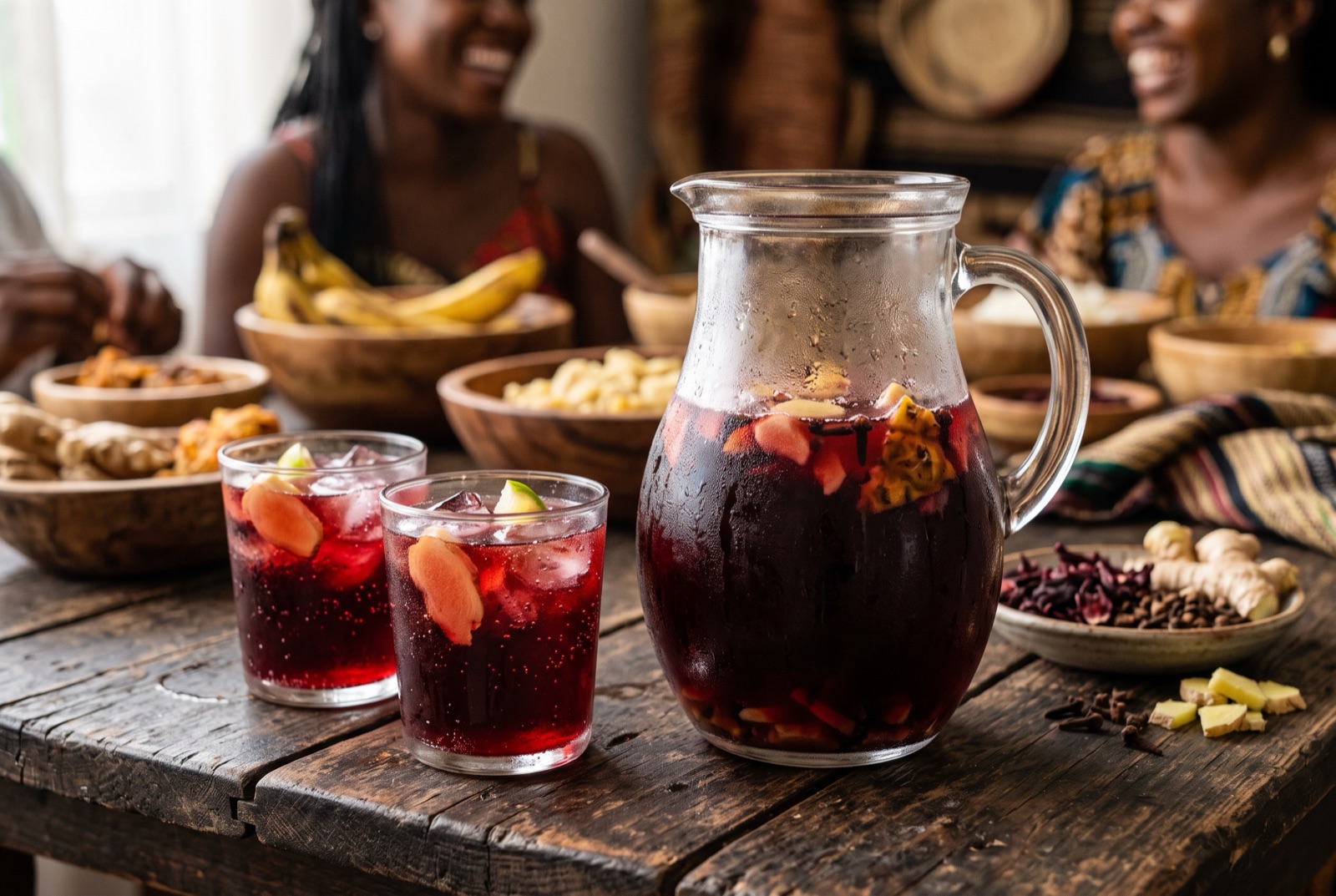
Folere is a cold hibiscus infusion, and in Cameroon it is defined less by the flower than by how much ginger goes in with it. The dried calyces give a deep garnet colour and a sharp cranberry sourness; the ginger provides a burn at the back of the throat that lands a second after you swallow, and cloves and pineapple skin round the edges with something warm and faintly fermented. It is served very sweet and very cold, poured from reused plastic bottles at weddings, funerals and Christmas tables, and it is the drink handed to you before anyone asks whether you wanted one.

- Gate
- CameroonNorthern Cameroon, drunk nationwide
- Prep
- 15 min
- Cook
- 10 min
- Total time
- 2 hr 25 min incl. 2 hr rest
- Serves
- 8
- Status
- Easy
- Nutrition / serving · estimated
- Calories 95 kcal
- Protein 0 g
- Carbs 24 g
- Fat 0 g
- Sugar 23 g
- Sodium 5 mg
Why this recipe works.
- Grates the ginger instead of slicing it, which is the difference between a warm background note and the real Cameroonian bite.
- Steeps the calyces off the heat with the lid on, so the drink keeps its perfume instead of turning flat and tannic.
- Uses the pineapple skin rather than the fruit, which is what northern households actually put in the pot.
- Sets the sweetness cold, since a jug balanced while hot always tastes sour once ice hits it.
Ingredients.
9 itemsFor the infusion
To finish
Equipment
- Large pot with a lid
- Fine sieve and a piece of muslin
- Grater
- Bottles or a jug for chilling
Instructions.
Rinse the calyces
Tip the dried hibiscus into a bowl of cold water, swish it with your hand and lift the flowers out, leaving the grit behind. Field-dried calyces always carry a little dust and the odd stem, and rinsing costs you nothing in colour.
Boil the ginger and spices
Put the water, grated ginger, scrubbed pineapple skin, cloves and nutmeg in a large pot and bring it to a rolling boil. Let it bubble for 5 minutes, until the kitchen smells sharply of ginger rather than merely warm.
Steep off the heat
Take the pot off the heat, stir in the rinsed calyces and clamp the lid on. Leave it for 25 to 30 minutes, by which time the liquid should be opaque and nearly black-red in the pot and the flowers should have gone pale and soft.
Tip Resist putting it back on the flame to speed things up — that is exactly what turns folere astringent.
Sweeten while hot
Strain the infusion into a clean pot through a sieve, pressing the flowers firmly with the back of a ladle to get the last of the colour out. Stir in the sugar while the liquid is still hot and keep stirring until you cannot feel any grit against the base of the pan.
Strain again and flavour
Pass the sweetened liquid through muslin or a clean cloth into a jug — this second pass takes out the fine sediment that would otherwise settle into sludge. Stir in the vanilla and lime juice if using, and taste.
Chill hard and correct
Refrigerate for at least 2 hours, or until properly cold rather than merely cool. Taste again at drinking temperature and add more sugar dissolved in a little hot water if it reads sour — cold flattens sweetness far more than most people expect.
Serve over ice
Pour into glasses packed with ice and serve immediately, with the bottle left on the table because nobody stops at one glass. Give the jug a stir before each round, as the heavier extract settles toward the bottom.
Tips from our kitchen.
- Grate or pound the ginger so its juice goes into the water. Coin-shaped slices look tidy and give you barely a third of the heat.
- Scrub the pineapple skin under running water and cut away the crown and base. It goes into the pot unpeeled, carrying whatever the fruit sat in at the market.
- Add the calyces after the water comes off the boil and cover the pan. Boiling hibiscus hard pulls out a hard tannic edge that no amount of sugar hides.
- Judge sweetness at drinking temperature. Chill a spoonful in the freezer for a minute and taste that, rather than trusting a hot pan.
- Strain through muslin or a clean cloth after the sieve. The second pass is what gives the glassy jewel colour instead of a cloudy jug with sediment at the bottom.
- Refrigerate it and drink within four days. With pineapple skin in the mix it will start fermenting quietly, gaining prickle and losing sweetness.
Substitutions.
- Dried folere (hibiscus) calyces → Dried sorrel, flor de jamaica or karkadé from a Caribbean, Latin American or Middle Eastern shop
- All the same plant under different trade names, so the swap changes nothing. Avoid hibiscus tea bags, which are cut fine and brew bitter fast.
- Pineapple skin → 150 ml pineapple juice, stirred in after straining
- Juice gives the sweetness without the slight funk the peel contributes. Add it cold so you can taste what it is doing.
- White sugar → Honey, or an equal weight of unrefined cane sugar
- Cane sugar deepens the colour and adds a molasses note that suits the cloves. Honey works but pushes the drink toward something more herbal.
Variations.
- Folere sucré-glacé
- Sweeten a little harder, pour into small freezer bags, knot them and freeze. Children bite off a corner and squeeze out the slush — how it is sold outside schools.
- Spiced Christmas folere
- Add a cinnamon stick, a blade of mace and a strip of orange peel to the steep. Warmer and more perfumed, and a common festive-season version in the south.
- Lightly fermented folere
- Leave the strained, sweetened drink at room temperature for a day with the pineapple skin still in it, then bottle and refrigerate. It turns faintly sparkling and drier — deliberate in some households, an accident in others.
Storage & reheating.
Keep folere refrigerated in tightly capped bottles and drink it within 4 days. It stays safe a little longer but the pineapple skin keeps working, so the drink slowly turns drier, sharper and slightly fizzy. If a bottle hisses when opened, that is wild fermentation rather than spoilage — taste it and decide. For longer storage, reduce the strained infusion with an equal weight of sugar into a syrup that keeps a month in the fridge, then dilute by the glass. It also freezes well in bottles left a third empty for expansion.
Serve with
Grilled fish or soya skewers — the sourness cuts through charred meat better than any soft drink.
The story behind Folere.
The name comes from the north. Folere is the Fulfulde word for Hibiscus sabdariffa, the plant is grown widely across Adamawa and the Far North, and in those regions the leaves are also cooked as a sour green in sauces, so the household that dries calyces for the drink is often using the rest of the plant on the same day. From there the drink travelled south into Douala and Yaoundé, where it is bottled by the litre and sold from cool boxes, and where French speakers usually call it jus de folere.
What separates it from the hibiscus drinks of neighbouring countries is the spicing. The same calyx is drunk as bissap in Senegal, zobo in Nigeria, karkadé in Egypt and Sudan, and each place has its own signature: mint and orange blossom to the west, nothing much at all to the north. Cameroon leans hard into ginger and cloves, and adds well-washed pineapple skin to the pot, which contributes a light tropical sweetness and, if the jug sits around, a faint natural fizz as wild yeast on the peel gets to work. Some households encourage that and let a bottle go slightly sparkling; others drink it strictly fresh.
It belongs to occasions. A Cameroonian celebration table carries folere in quantity next to the palm wine and the soft drinks, because it is cheap to make in volume, it looks spectacular in a glass, and it suits people who do not drink alcohol without feeling like a compromise. Vendors sell it frozen in small knotted bags to children on the way home from school, and street kiosks keep it iced through the dry season heat. The only genuine disagreement is over sweetness: northern versions tend to be less sugared and more gingery, city bottles are frankly sweet, and everyone believes their own balance is the correct one.
Questions, answered.
Is folere the same drink as bissap or zobo?
They all start from the dried calyces of Hibiscus sabdariffa, so the base is identical, but the seasoning differs by country. Senegalese bissap leans on mint and orange blossom water, Nigerian zobo is often spiced with ginger and pineapple, and Cameroonian folere is defined by a heavy dose of ginger plus cloves and pineapple skin. Same flower, three distinctly different drinks.
Why does my hibiscus drink taste bitter and drying?
Almost always too much heat for too long. Hard boiling extracts tannins from the calyces, which coat the mouth in an astringency that sugar cannot cover. Bring the water to a boil with the ginger and spices, then take the pan off the heat before the hibiscus goes in and let it steep covered for 25 to 30 minutes.
How much sugar does folere actually need?
Around 80 to 100 g per litre for a city-style sweet jug, and closer to 50 g for the drier northern balance. Cold suppresses sweetness noticeably, so a batch that tastes right straight off the stove will read sour over ice. Sweeten while the liquid is hot enough to dissolve the sugar fully, then taste again after chilling and adjust with syrup rather than granules.
Can I make folere without pineapple skin?
Yes, and the drink is still recognisably folere. The peel adds a mild tropical sweetness and a slight fermented note, and it is what many Cameroonian households use because it costs nothing. Without it, increase the ginger slightly and consider a strip of orange peel so the infusion does not taste one-dimensionally sour.
Does folere contain alcohol?
Freshly made, no — it is a sweetened infusion and a standard non-alcoholic option at Cameroonian celebrations. If a bottle is left at room temperature for a day or two with pineapple skin in it, wild yeast can start a light fermentation that produces bubbles and a trace of alcohol, well under a percent. Refrigerate it if you want it to stay a soft drink.
You might also like.
All recipes →
Keep exploring Cameroon.
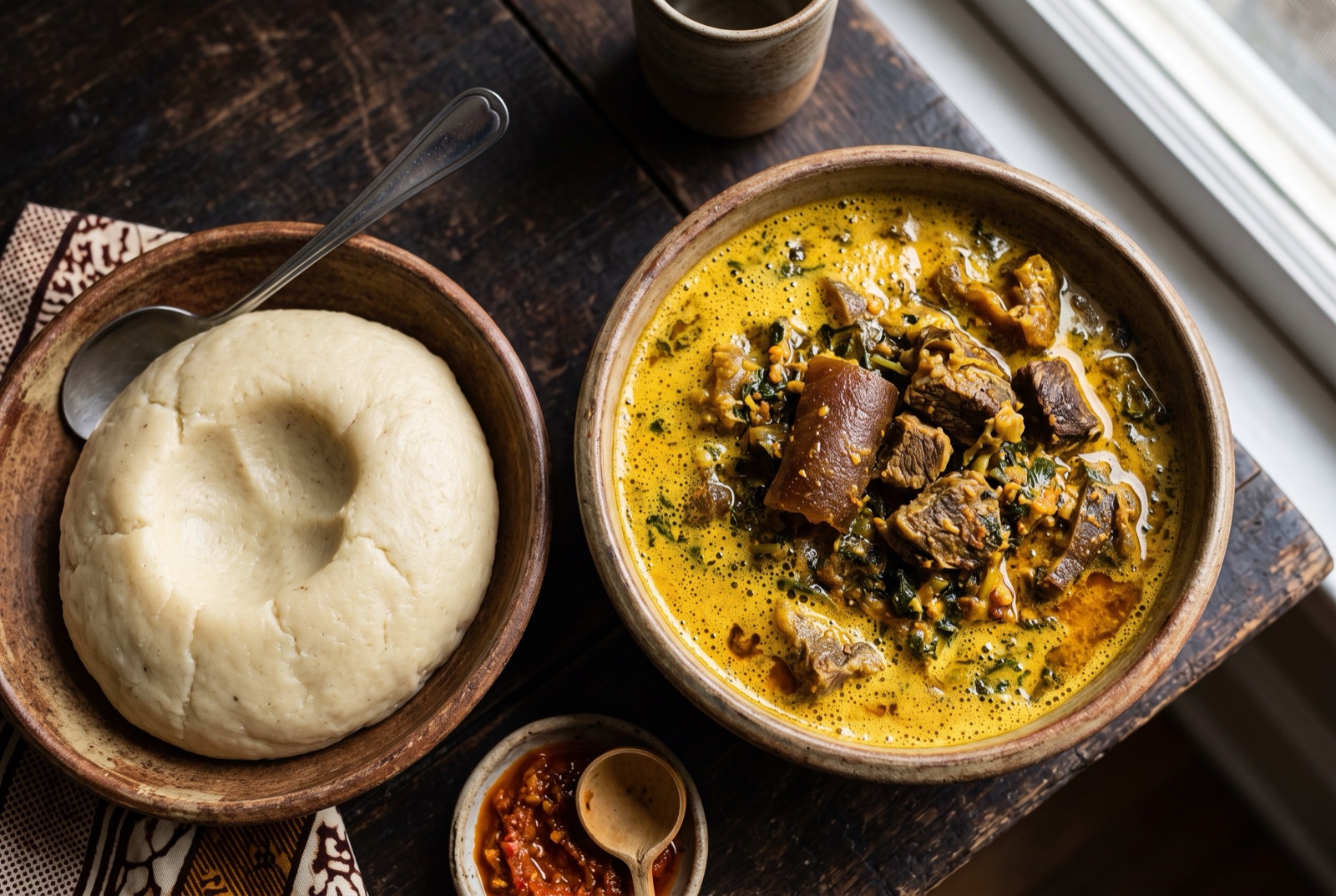
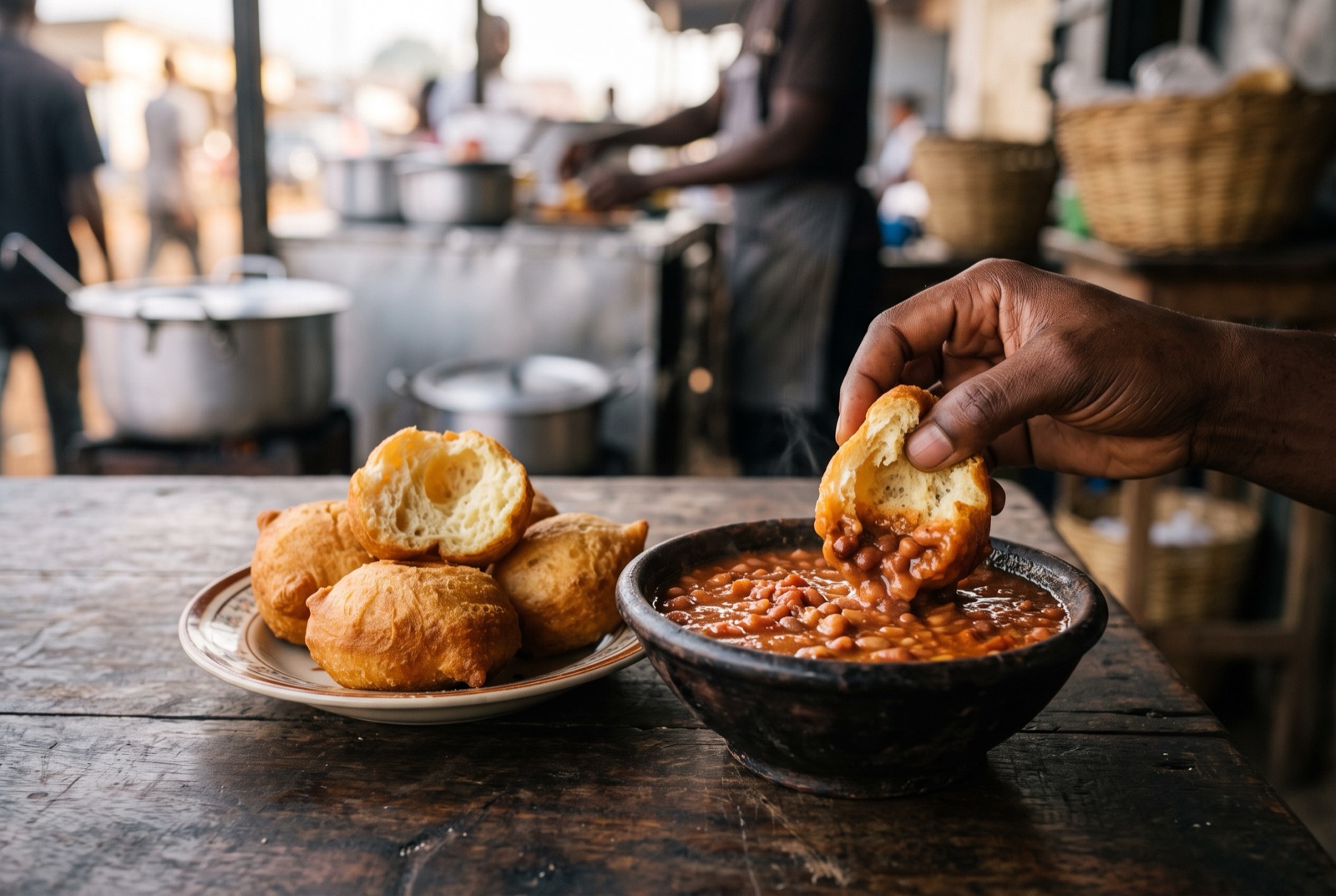
Cameroon has 9 more dishes in the atlas — Achu Soup and Beignets Haricots, and 7 more.
Recipe by The DishRoute Kitchen · published August 20, 2026 · updated August 20, 2026