Bourek.
Algerian Fried Meat and Cheese Cigars
بوراك · Bourek djazairi · say it: boo-REK
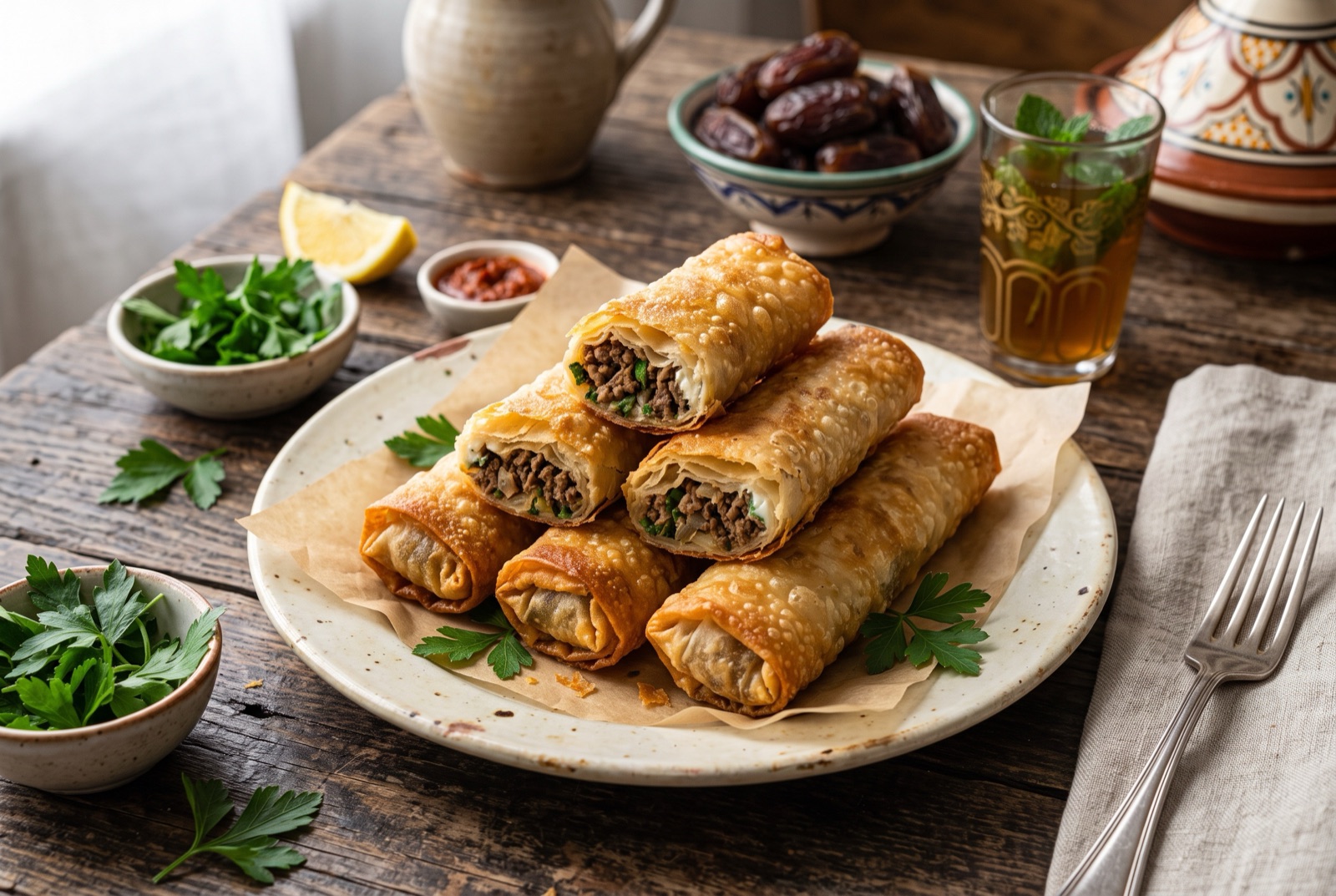
Bourek are fried cigars of tissue-thin pastry wrapped around a filling of minced beef cooked with grated onion, flat-leaf parsley and a discreet amount of cinnamon, usually with soft cheese tucked in so the roll seals itself and turns molten inside. The pastry blisters and shatters; the filling stays juicy and faintly sweet from the onion. They take ten minutes to fill, three to fry, and they are eaten with the fingers, dipped in nothing more elaborate than a squeeze of lemon. In Algeria they arrive at the table beside a bowl of chorba and disappear before anyone counts them.

- Gate
- Algeria
- Prep
- 35 min
- Cook
- 25 min
- Total time
- 1 hr
- Serves
- 6
- Status
- Easy
- Nutrition / serving · estimated
- Calories 430 kcal
- Protein 21 g
- Carbs 28 g
- Fat 26 g
- Fiber 2 g
- Sodium 610 mg
Why this recipe works.
- The meat is cooked and cooled before rolling, so the filling is properly seasoned and the pastry never goes soggy from raw juices.
- Cheese does double duty as flavour and as the glue that keeps the roll shut in hot oil.
- Rolling technique described tuck by tuck, which is the difference between a tight cigar and a leaking parcel.
- Works with dioul, spring roll wrappers or filo, with honest notes on how each one behaves.
Ingredients.
13 itemsFor the filling
To assemble
To serve
Equipment
- Deep pan or wok for frying
- Wire rack
- Kitchen thermometer (helpful, not essential)
Instructions.
Cook the filling
Heat the olive oil in a frying pan and cook the grated onion over medium heat for 5 minutes until soft and losing its raw smell. Add the beef and garlic, breaking the meat up with a wooden spoon, and cook for 8 minutes until no pink remains and the pan is dry rather than swimming in juices.
Season and cool
Stir in the cinnamon, black pepper, parsley and a generous pinch of salt, cook for one more minute, then taste and adjust — it should be well seasoned and clearly peppery, since the pastry adds nothing. Spread the mixture on a tray and cool completely, at least 20 minutes.
Tip Chill it in the fridge if you are in a hurry. Warm filling is the main cause of torn pastry.
Roll the cigars
Lay a pastry sheet with the straight edge nearest you. Place a tablespoon of filling in a short log across the lower third, leaving 2 cm clear at each side, and press a piece of cheese on top. Roll once over the filling, fold both sides in envelope-style, then continue rolling tightly to the end and seal the flap with flour paste.
Tip Work with one sheet at a time and keep the rest covered with a barely damp cloth.
Heat the oil
Pour the frying oil into a deep pan to a depth of about 4 cm and bring it to 170°C. Test it with a scrap of pastry: it should sizzle immediately and rise to the surface within two seconds, without browning instantly.
Fry in batches
Fry the bourek seam side down, four or five at a time, for about 90 seconds a side. They are ready when the pastry is deep gold and covered in tiny blisters and the roll sounds hollow and hard when tapped with tongs. Lift onto a wire rack.
Serve straight away
Pile the bourek onto a platter with lemon wedges and serve while the cheese is still molten. Squeeze lemon over each one as you eat it — the acid cuts the fried pastry and is the only accompaniment they really need.
Tips from our kitchen.
- Cool the filling completely. Warm filling softens the pastry from the inside and the roll splits the moment it hits the oil.
- Keep the stack of pastry sheets under a barely damp cloth while you work. Dioul dries out and cracks within a couple of minutes of being exposed.
- Roll tightly and tuck the sides in halfway, envelope-style, before finishing the roll. A loose cigar traps air, puffs up and bursts.
- Seal the final edge with a dab of flour-and-water paste or a smear of soft cheese, then lay the rolls seam side down so their own weight holds them shut.
- Fry at a moderate 170°C. Hotter and the pastry browns before the cheese melts; cooler and it drinks oil and goes limp.
- Drain on a wire rack rather than kitchen paper. Paper traps steam under the roll and softens the underside.
Substitutions.
- Dioul pastry → Spring roll wrappers, or filo brushed with melted butter and doubled
- Spring roll wrappers are the closest in behaviour and are sold everywhere. Filo needs two layers and butter between them, browns faster, and gives a flakier, less glassy result than the real thing.
- Minced beef → Minced lamb, shredded cooked chicken, or drained tinned tuna with capers
- Tuna and caper bourek is a genuine and common Algerian variant, not an invention. Skip the cinnamon if you go that way.
- Soft cheese triangles → Cream cheese, or grated mozzarella
- The classic is a processed triangle, which melts smoothly and does not leak. Mozzarella tastes better but runs more, so use less of it and roll more tightly.
Variations.
- Bourek bel jben
- Cheese and egg only — soft cheese, a beaten egg, parsley and pepper, no meat at all. Faster to assemble and the version children usually reach for first.
- Bourek with a whole egg
- A raw egg cracked into a folded triangle of pastry and fried briefly so the yolk stays soft. Closer to Tunisian brik, and eaten in one careful bite over a plate.
- Baked bourek
- Brushed with oil and baked at 200°C for 15–18 minutes. Noticeably drier and less glassy than fried, but manageable when you are cooking forty of them for a crowd.
Storage & reheating.
Fried bourek are at their best within twenty minutes and decline steadily after that; leftovers keep two days refrigerated and come back reasonably well in a hot oven for 8 minutes, though never fully crisp again. Unfried rolls are the ones worth storing — freeze them flat on a tray, then bag them, and fry straight from frozen at a slightly lower temperature for an extra minute or two. Do not thaw first; they go limp and stick together.
Serve with
Lemon wedges, a bowl of chorba frik, and a small dish of harissa for dipping.
The story behind Bourek.
Bourek is the Algerian branch of a very large family. The name comes straight from the Turkish börek, and the dish is one of the clearest culinary legacies of the Ottoman centuries in Algiers — the same word and the same rolled-pastry idea reach from the Balkans through Anatolia and across North Africa, taking a different shape in each place. Nobody sensible claims a single country invented it. What Algeria did was settle on a particular version: slim cigars rather than coils or pies, minced beef rather than lamb, cinnamon in the meat, and a wrapper of dioul.
Dioul are round sheets of very thin cooked pastry, made by dabbing a wet dough onto a hot plate until a film sets and peels away. They are close cousins of Moroccan warqa and Tunisian malsouka, and in French-speaking contexts they are usually called feuilles de brick. Unlike filo, they are already cooked, which is why bourek fries so fast and why the pastry goes glassy rather than flaky. Algerian households buy them in stacks from the market during Ramadan; making them from scratch is an expert-level job that almost nobody does at home any more.
The association with Ramadan is total. For a month, evening after evening, someone in the family stands at the pan turning bourek while the chorba finishes, and the two dishes are so tightly linked that eating one without the other feels incomplete. The rest of the year bourek turns up at weddings, at family lunches as a starter, and folded into a piece of bread as a snack. Fillings vary a lot — spinach and cheese, mashed potato, chicken, tuna and capers, or just cheese and egg — but the beef, onion and parsley version is the one people mean when they say bourek without qualification.
Questions, answered.
What is dioul pastry and where do I find it?
Dioul are pre-cooked paper-thin pastry rounds, made by wiping a loose dough over a hot plate until a film sets. North African and Middle Eastern grocers stock them fresh or frozen, often labelled feuilles de brick or malsouka. Because they are already cooked, they need only enough frying to crisp and colour, which is why bourek takes three minutes rather than ten.
Why do my bourek burst open in the oil?
Either the roll was loose enough to trap air, which expands and splits the seam, or the seam was not sealed and the pastry unwound. Roll firmly, fold the sides in before completing the roll, seal the end with flour paste or cheese, and always place the finished cigar seam-side down so it cannot unravel while it waits.
Can I bake them instead of frying?
You can, and plenty of people do when making large quantities. Brush both sides with oil and bake at 200°C for about 15–18 minutes, turning once. The texture is drier and more biscuity rather than the glassy shatter frying gives, so it is a trade rather than an upgrade.
How much filling goes in each roll?
About a tablespoon, shaped into a short log across the lower third of the sheet and kept a good two centimetres in from each side. Overfilling is the most common beginner error — a fat bourek cannot be rolled tightly, and anything that is not tight will leak. Err on the side of slim.
Is bourek the same as Turkish börek or Balkan burek?
They share an origin and a name but not a form. Balkan burek is usually a large coiled or layered pie cut into portions and baked; Turkish börek covers a whole family of shapes. The Algerian version is specifically a small fried cigar in pre-cooked dioul pastry, and it is eaten as a starter or snack rather than as a main course.
You might also like.
All recipes →
Keep exploring Algeria.
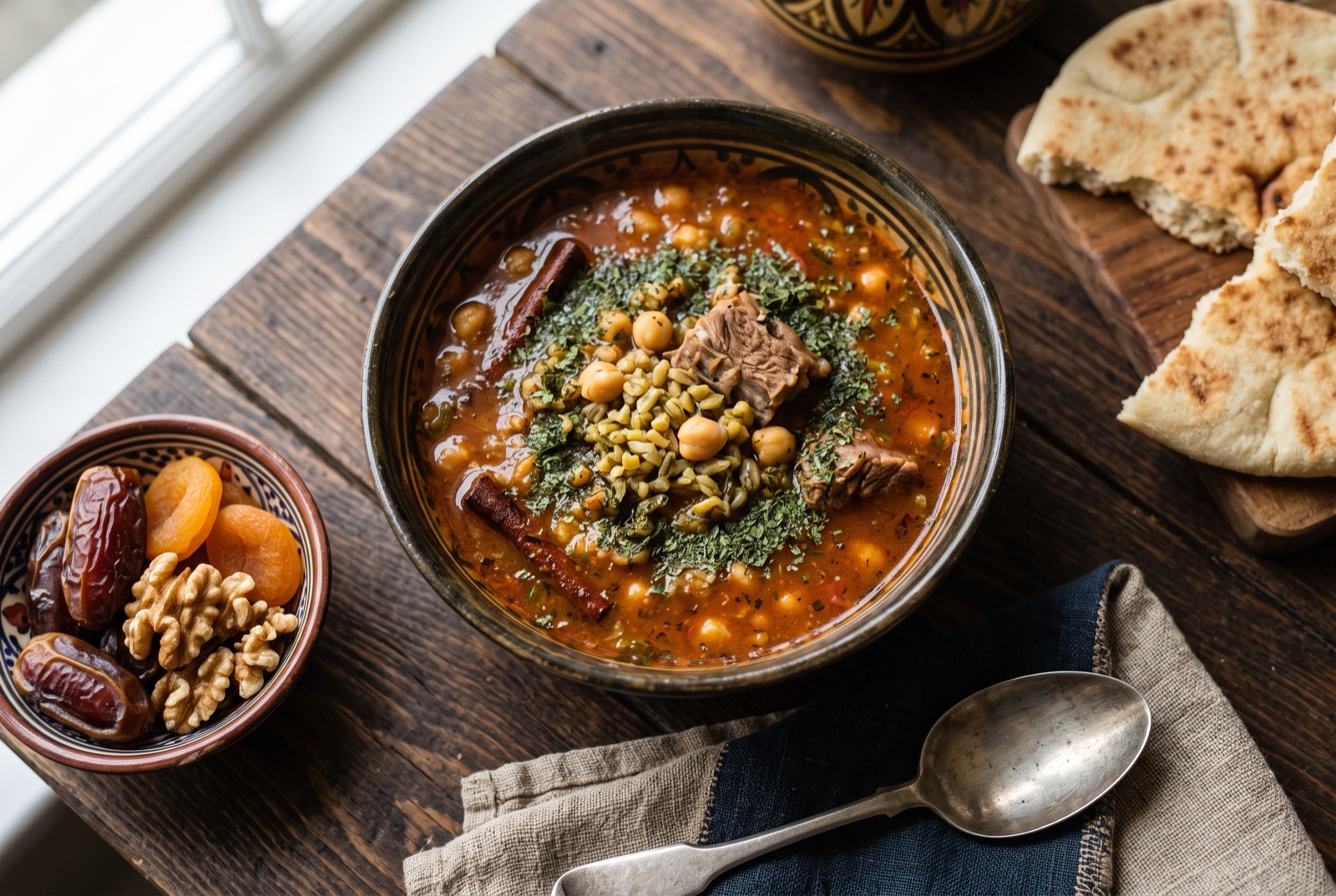
Algeria has 9 more dishes in the atlas — Algerian Chorba Frik and Chakhchoukha, and 7 more.
All Algeria recipes Ground beef recipes Onion recipes Parsley recipes appetizerstreet foodhalal friendlynut freeRecipe by The DishRoute Kitchen · published August 20, 2026 · updated August 20, 2026