Karantika.
Oran Baked Chickpea Flour Flan
كرنتيكة · Karantika · say it: ka-ran-TEE-ka
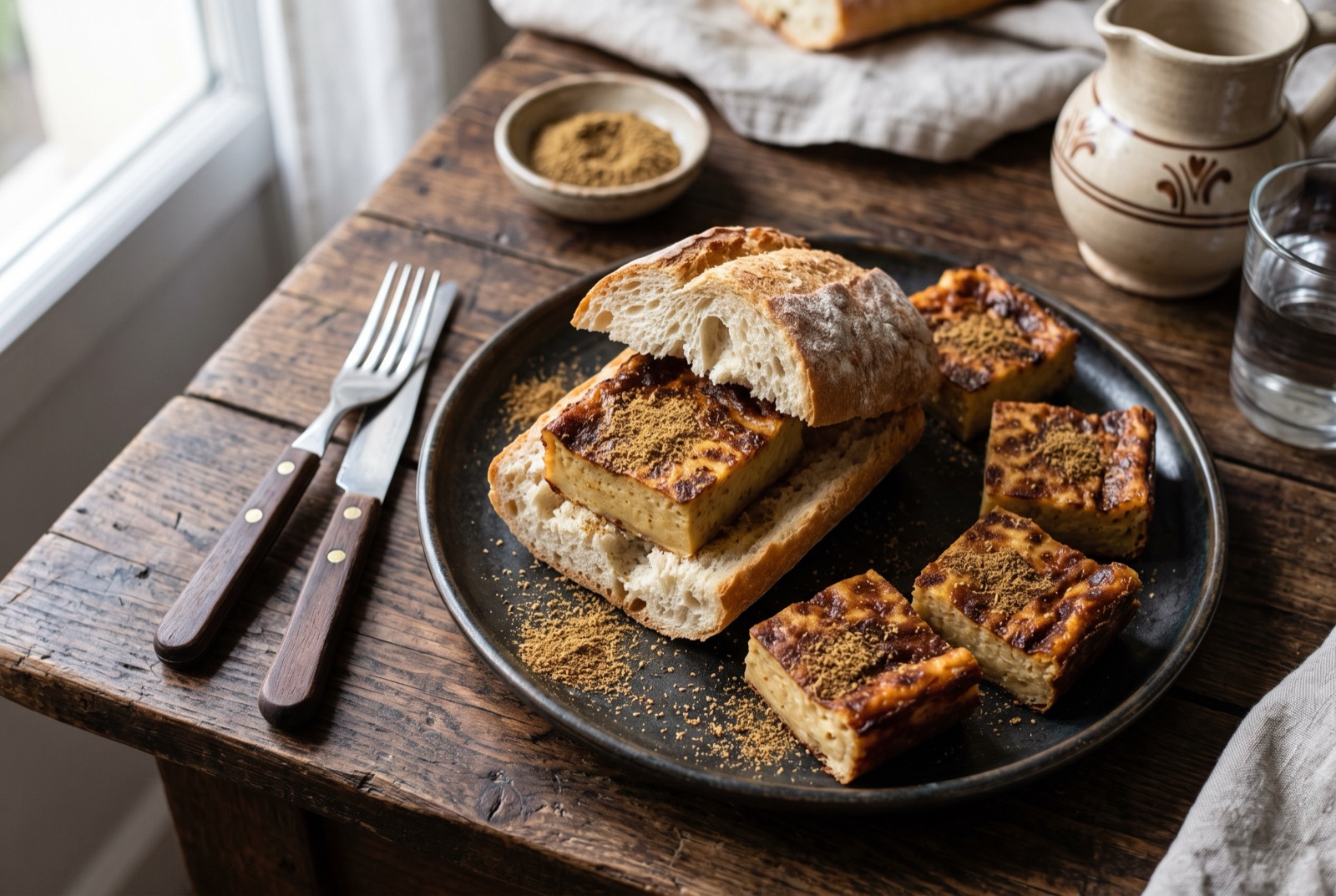
Karantika is a tray of chickpea flour and water baked into something between a flan and a very soft polenta. The top browns and cracks slightly; underneath it stays pale gold, wobbling, custardy and mild, tasting of toasted chickpea and olive oil with a savoury note from the egg. It costs almost nothing to make and it is sold from carts and hole-in-the-wall counters all over Oran, sliced into squares, dusted with cumin, splashed with harissa and pushed into a piece of baguette. Made at home it wants nothing more than the same treatment and an appetite that arrives at four in the afternoon.

- Gate
- AlgeriaOran
- Prep
- 10 min
- Cook
- 50 min
- Total time
- 1 hr 30 min incl. 30 min rest
- Serves
- 6
- Status
- Easy
- Nutrition / serving · estimated
- Calories 290 kcal
- Protein 11 g
- Carbs 24 g
- Fat 17 g
- Fiber 5 g
- Sodium 680 mg
Why this recipe works.
- The batter ratio is written by weight and volume so the set comes out custardy rather than rubbery or soupy.
- Rests before baking, which lets the chickpea flour hydrate and prevents the gritty texture that ruins most first attempts.
- Baked hot from the start so the surface browns while the inside stays soft — the contrast the dish is entirely about.
- Four cheap pantry ingredients, no special equipment, and naturally gluten-free.
Ingredients.
8 itemsFor the batter
To serve
Equipment
- Metal baking tray or roasting tin, roughly 20 x 30 cm
- Balloon whisk
- Sieve
Instructions.
Whisk the batter
Tip the chickpea flour into a large bowl and add the cold water in a thin stream, whisking constantly, until you have a thin batter with the consistency of single cream. Whisk in the olive oil, beaten eggs, salt and the garlic if using.
Tip Adding water gradually to the flour, rather than the other way round, is what prevents lumps in the first place.
Sieve and rest
Pour the batter through a sieve into a jug, pressing any lumps through with the back of a spoon. Leave it to stand for 30 minutes at room temperature — the surface will look slightly separated and that is fine, just whisk it once before pouring.
Heat the tray
Heat the oven to 220°C. Pour 2 tablespoons of oil into a metal tray about 20 x 30 cm, tilt it so the base and sides are coated, and put it in the oven for 5 minutes until the oil shimmers.
Bake
Whisk the batter, pull the hot tray out and pour it in — it should hiss faintly on contact and sit about 3 cm deep. Bake for 45–50 minutes, until the top is deep golden brown with a few cracks and the centre wobbles as one set mass when you shake the tray.
Tip Do not open the oven for the first 25 minutes. The set needs steady heat to rise evenly.
Rest and cut
Let the tray stand for 10 minutes out of the oven. The flan will settle and firm enough to slice cleanly into squares roughly 6 cm across, showing a browned top over a pale, soft interior.
Serve the Oran way
Lift the squares onto plates or into split baguettes, dust generously with ground cumin, add a smear of harissa and a pinch of salt, and eat while hot. Put the cumin and harissa on the table so people can load their own.
Tips from our kitchen.
- Whisk the batter until no lumps remain, then pass it through a sieve anyway. Chickpea flour clumps invisibly and the lumps show up as chalky spots in the finished flan.
- Let the batter stand for at least 20 minutes. Hydrated flour sets smoothly; rushed batter tastes raw and slightly bitter.
- Oil the tray generously and heat it in the oven before pouring. The batter should hiss faintly as it goes in, which starts the base setting immediately.
- Use a metal tray rather than glass or ceramic. Metal conducts hard and fast, and that is what gives you a browned top over a soft middle.
- Judge doneness by the wobble, not the clock: the centre should move as a single mass when you shake the tray, like a set custard, not slosh.
- Rest it 10 minutes before cutting. Straight from the oven it collapses on the knife; ten minutes later it slices into clean squares.
Substitutions.
- Chickpea flour → There is no working substitute
- Chickpea flour — gram flour, besan, farine de pois chiches — is the entire dish. It is sold in Indian, North African and health food shops and keeps for months. Wheat or corn flour produce something else entirely.
- Eggs → Omit them and increase the oil by 2 tbsp
- The result is closer to farinata: still very good, denser and less custardy, and completely vegan. Algerian street versions almost always include egg.
- Harissa on top → A pinch of chilli flakes stirred into the batter, or nothing at all
- Traditionally the heat is added by the eater, not the cook, which is why sellers keep the bottle on the counter rather than in the tray.
Variations.
- Karantika with garlic
- Two crushed cloves whisked into the batter before resting. Common in home versions and gives the flan a savoury backbone that street versions leave to the harissa.
- Thin-baked karantika
- Poured to only 1 cm in a wide tray and baked for 20 minutes, giving a crisper, chewier result much closer to Niçois socca. Not the Oran standard, but excellent with a beer.
- Karantika sandwich
- How it is actually eaten in the street: a hot square crushed into a split half-baguette with cumin, salt and harissa, and eaten walking. The bread soaks up the oil and the whole thing works far better than it should.
Storage & reheating.
Keeps three days covered in the fridge and firms up considerably as it chills. Revive squares in a hot oven or a dry pan for a few minutes a side — the edges crisp and the inside softens again, and some people prefer it this way. It does not freeze; the set breaks and weeps water on thawing. Reheating in a microwave makes it dense and slightly rubbery.
Serve with
A split baguette, ground cumin and harissa on the table, and sweet mint tea afterwards.
The story behind Karantika.
The name gives the history away. Karantika — also written garantita or calentica — is generally understood to come from the Spanish calentita, meaning roughly the little hot one, which is exactly what a street seller would shout. Spain's presence on the Algerian coast, centuries of movement between Oran and the Iberian ports, and later waves of Spanish workers in the west of the country all left marks on the Oranie, and this dish is the tastiest surviving one. Gibraltar makes a nearly identical thing under the name calentita and calls it a national dish; Nice makes socca and Genoa makes farinata from the same three ingredients, which suggests a very old western Mediterranean idea rather than a single inventor.
What separates the Algerian version from its cousins is thickness and texture. Socca and farinata are baked thin and blistered, almost like a pancake, and eaten crisp. Karantika is poured deep — three or four centimetres — and baked until the interior sets soft and quivering, so it is eaten with a spoon or a piece of bread rather than by hand. The egg is also particular to it, giving the set a custardy rather than a starchy quality.
It is street food in the most literal sense: a stainless tray on a counter, a knife, a tub of ground cumin, a bottle of harissa, and a stack of half-baguettes. In Oran it functions as an afternoon snack, a cheap student lunch and a Ramadan staple all at once. There is a running affection for it in the west of the country that people from Algiers find slightly excessive, which is itself part of the pleasure — karantika is a thing Oranais are from Oran about. Made at home it is one of the simplest recipes in the entire Algerian repertoire, needing a whisk, a tray and an oven that runs hot.
Questions, answered.
What is karantika made of?
Chickpea flour, water, oil, egg and salt — that is the whole list. The batter is very loose, roughly four parts water to one part flour by weight, and the oven does the rest. Its flavour comes from the chickpea flour toasting on top and the olive oil, so both are worth buying decently.
Why is my karantika grainy or bitter?
The flour did not hydrate. Chickpea flour needs time in liquid before it cooks, otherwise it stays chalky and carries a raw, slightly bitter taste. Whisk the batter, sieve it, and leave it to stand for twenty to thirty minutes before baking. If your flour has been open for a long time, that can also cause bitterness — it goes stale faster than wheat flour.
How do I know when it is set?
Shake the tray gently. The centre should move as one piece with a soft wobble, like a baked custard, rather than rippling like liquid. The top will be well browned and may crack a little, and a knife inserted into the middle should come out coated but not wet. If it still sloshes, give it another ten minutes.
Is karantika related to socca or farinata?
Yes, in the sense that they are all chickpea flour batters baked in oiled trays around the western Mediterranean. The differences are real, though: socca and farinata are poured thin and eaten crisp, while karantika is poured deep and eaten soft and custardy, and the Algerian version usually contains egg. Which came first is not something anyone can settle.
Can I make it without an oven?
Not really, in this form. The browned top comes from dry radiant heat and a hob will not reproduce it. If you have no oven, pour the batter thinner into a heavy non-stick pan, cover, and cook over low heat for about 20 minutes, then finish under a grill if you have one. Expect a paler, softer result.
You might also like.
All recipes →
Keep exploring Algeria.
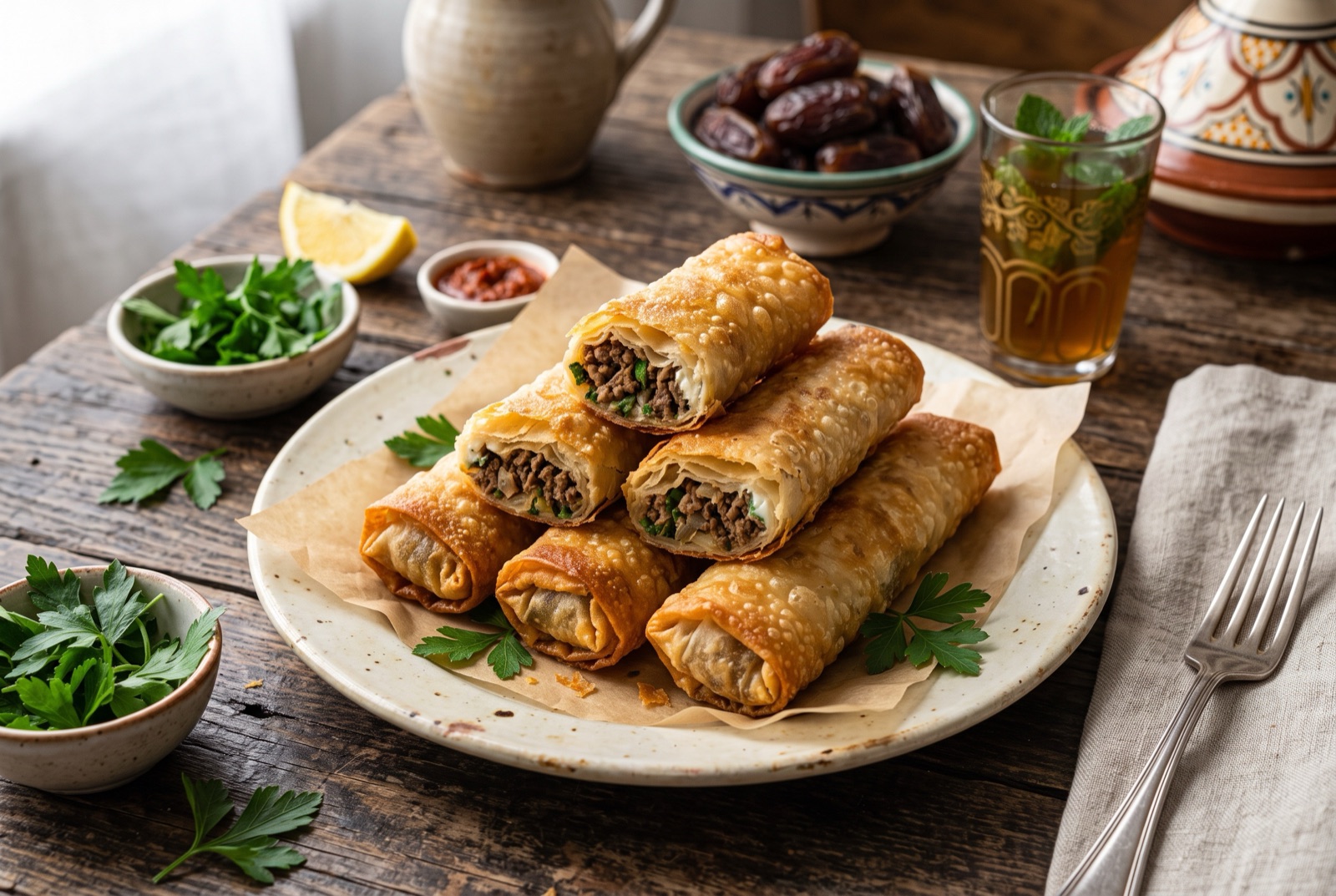
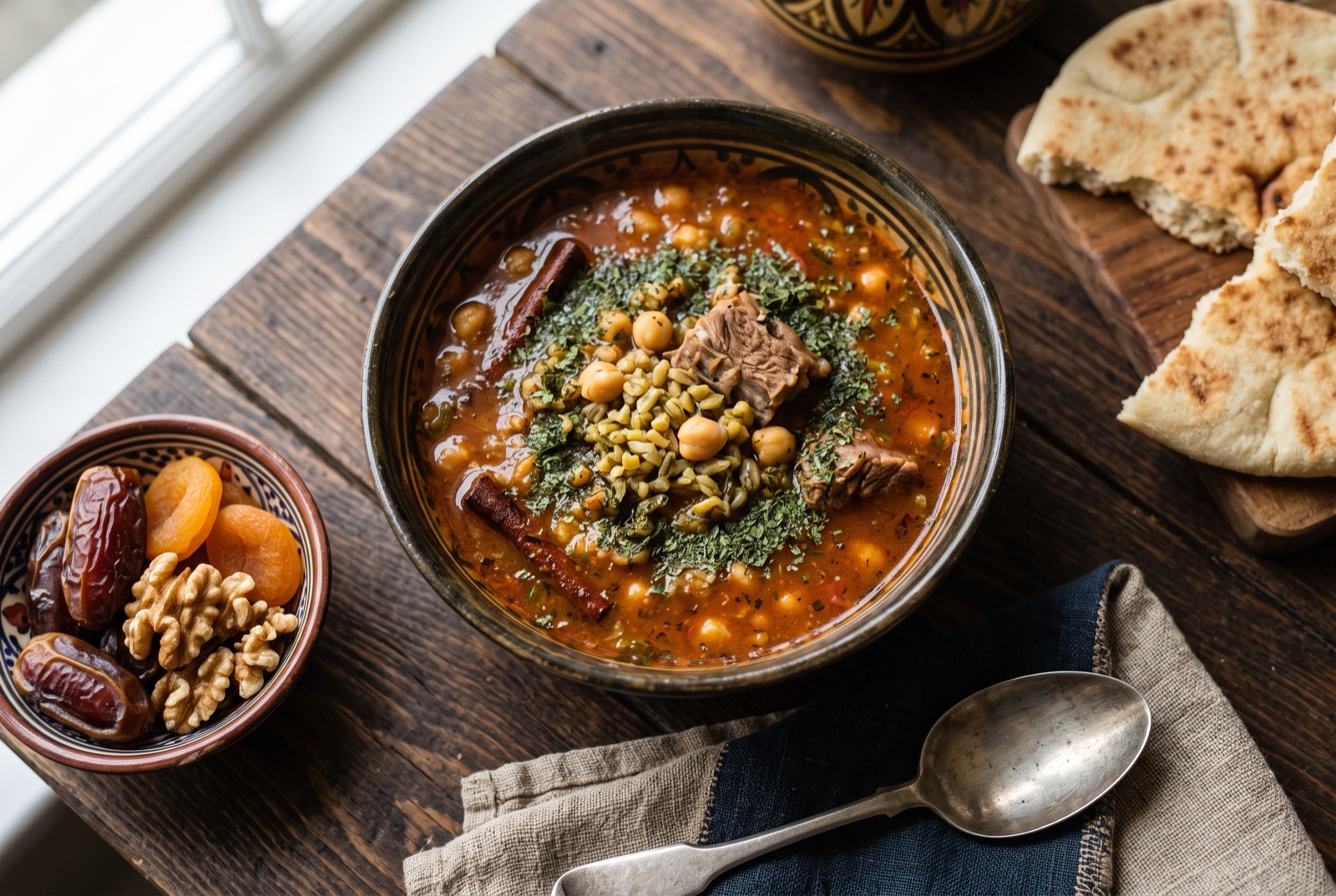
Algeria has 9 more dishes in the atlas — Algerian Chorba Frik and Bourek, and 7 more.
All Algeria recipes Chickpea flour recipes Eggs recipes Olive oil recipes street foodsnackvegetariangluten freedairy freenut freeRecipe by The DishRoute Kitchen · published August 20, 2026 · updated August 20, 2026