Shiro Wat.
Ethiopian Spiced Chickpea Flour Stew
ሽሮ ወጥ · Shiro wet · say it: SHEE-roh WUHT
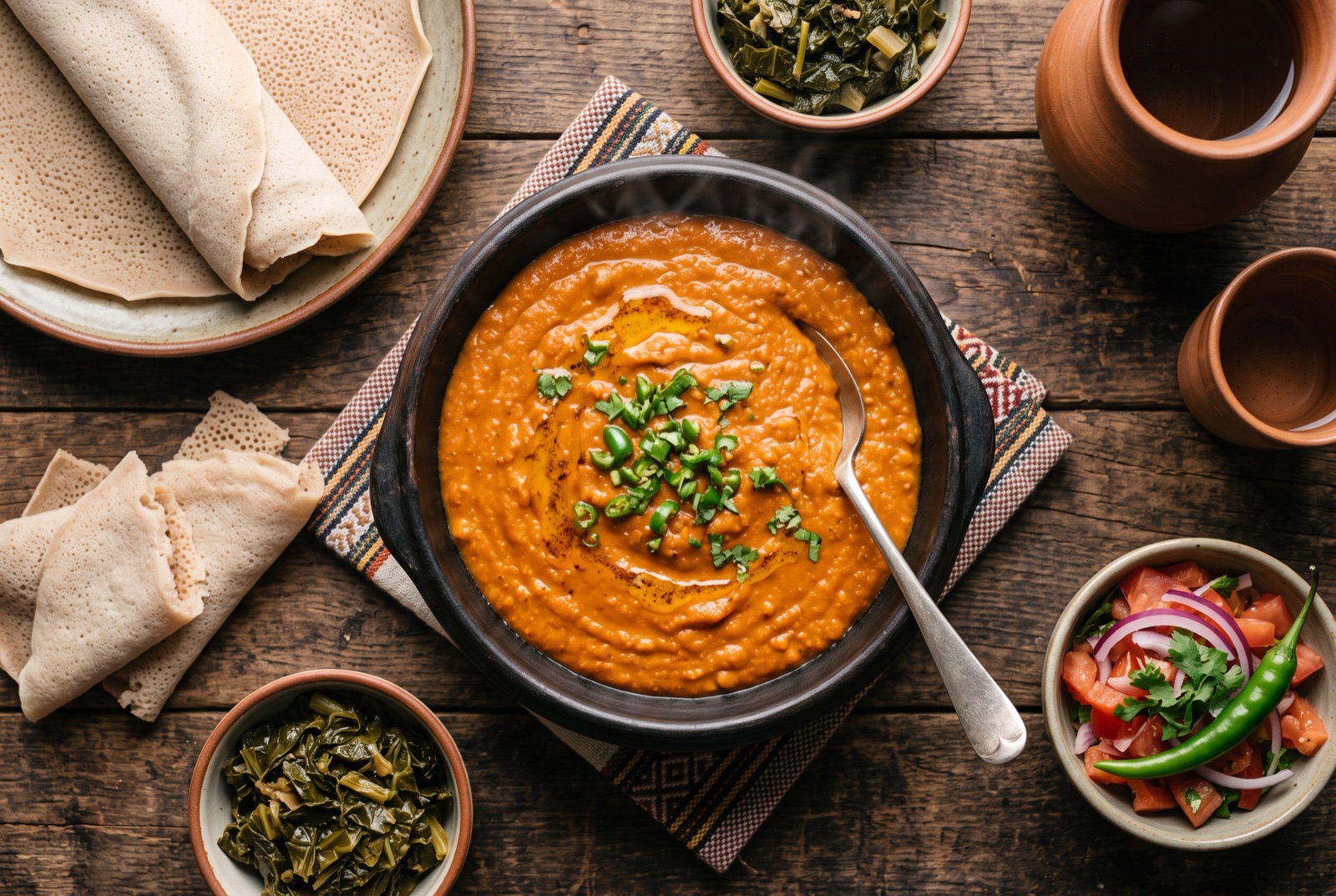
Shiro is a stew made from milled legumes — chickpeas, broad beans or field peas ground to a fine flour and usually blended with berbere, garlic and spices before they ever reach a kitchen. Whisked into softened onions and water, that powder thickens in minutes into something between a thin dal and a savoury porridge: smooth, nutty, faintly grainy on the tongue, with chilli warmth running underneath and a lot of garlic on top. It is naturally vegan, costs very little, and is the dish Ethiopians eat more often than any other, particularly on the fasting days that fill more than half the Orthodox year. Served bubbling with injera, it needs no side dish to justify itself.

- Gate
- Ethiopia
- Prep
- 10 min
- Cook
- 25 min
- Total time
- 35 min
- Serves
- 4
- Status
- Easy
- Nutrition / serving · estimated
- Calories 330 kcal
- Protein 12 g
- Carbs 32 g
- Fat 17 g
- Fiber 7 g
- Sodium 620 mg
Why this recipe works.
- Works with either spiced shiro powder or plain chickpea flour, with the berbere adjusted accordingly.
- The whisking method given here reliably avoids lumps, which is the one thing that goes wrong with shiro.
- Ready in under half an hour from ingredients that live in a cupboard rather than a fridge.
- Vegan without any substitution, because that is what the dish has always been.
Ingredients.
9 itemsEquipment
- Medium heavy saucepan
- Balloon whisk
- Measuring jug
- Microplane or fine grater
Instructions.
Soften the onion
Cook the chopped onion in the oil over medium-low heat for 10 minutes, stirring often, until it has gone limp, translucent and pale gold with no bite left. It should smell sweet, not sharp.
Tip Chop the onion much finer than feels necessary. It has no long simmer ahead of it, and coarse pieces stay as noticeable lumps in a smooth stew.
Fry the spice base
Add the chopped garlic and the ginger and cook for 1 minute until fragrant, then stir in the berbere and the diced tomato if using. Fry for 3 minutes, stirring constantly, until the paste darkens and oil begins to separate at the edge of the pan.
Tip This is where raw chilli powder gets cooked out. If the pan looks dry, add a splash of water rather than more oil.
Make the slurry
Whisk 150 g of shiro powder into 400 ml of the water in a jug until it is completely smooth and pours like thin cream. Take a minute over this — every lump you leave here survives into the finished stew.
Whisk it into the pot
Pour the remaining 500 ml water into the pan and bring it to a simmer, then pour in the slurry in a steady stream while whisking hard. The mixture will look alarmingly thin for the first two minutes and then start to grip the whisk.
Simmer until it thickens
Cook over low heat for 12–15 minutes, stirring right into the corners of the pan every minute or so, until the stew coats the back of a spoon, the raw-flour smell is gone and small volcanic bubbles break the surface slowly. Season with salt.
Tip Legume flour catches and scorches on the base long before you can smell it. Keep the heat low and the spoon moving.
Finish with raw garlic
Take the pan off the heat and grate in the two reserved garlic cloves, stirring them through the residual heat. Loosen with a little hot water if it has tightened past a pourable consistency, and serve at once over injera.
Tips from our kitchen.
- Whisk the flour into cold or warm water in a jug first, then pour that slurry into the pot. Sprinkling dry powder into hot liquid guarantees lumps.
- Shiro thickens substantially as it cools and again as it stands. Take it off the heat looser than you want it — it will find the right consistency in the two minutes before it reaches the table.
- If your powder is mitin shiro, already blended with berbere, cut the added berbere to a teaspoon or leave it out and taste first.
- Keep stirring for the last five minutes. The flour sinks and catches on the bottom of the pot faster than you expect, and scorched legume flour is bitter.
- Finish with raw grated garlic off the heat as well as cooked garlic at the start — the raw hit at the end is what makes restaurant shiro smell the way it does.
Substitutions.
- Shiro powder → Fine chickpea flour (besan) plus 2 tbsp berbere and an extra clove of garlic
- Besan is milled from raw chickpeas rather than roasted ones, so the result is slightly less nutty. Toasting it dry in the pan for two minutes before use closes most of the gap.
- Chickpea shiro → Broad bean (fava) flour
- A completely traditional alternative — many households prefer it. The stew comes out earthier and a shade darker, and thickens a little faster, so add the water more gradually.
- Niter kibbeh → Any neutral oil
- Fasting-day shiro is cooked in oil, not butter, because dairy is excluded. Oil is the traditional choice as often as spiced butter is, so this is not a compromise.
Variations.
- Shiro tegabino
- Cooked thicker in a small clay dish and carried to the table still bubbling, with a spoonful of niter kibbeh melting on top. A single-portion order rather than part of a shared platter.
- Bozena shiro
- Built on the same base with minced or finely shredded beef stirred in and simmered until tender. Not fasting food, and richer by a wide margin.
- Shiro fitfit
- Torn injera folded through leftover shiro until the bread absorbs it completely. Eaten cool or barely warm, usually the morning after.
Storage & reheating.
Shiro keeps 4 days refrigerated, where it sets to a firm paste — this is normal and reverses on reheating. Warm it in a pan over low heat with a good splash of water, whisking, until it loosens and steams; microwaving without added water produces a rubbery block. It freezes for 3 months in portions, and thawed shiro benefits from a fresh grating of raw garlic to wake it up. Do not reheat more than once, as each round of thickening and thinning coarsens the texture.
Serve with
Injera, with a spoonful of gomen and a wedge of tomato salad alongside for a full fasting-day plate.
The story behind Shiro Wat.
The Ethiopian Orthodox Tewahedo calendar removes meat, dairy and eggs from the table on every Wednesday and Friday, through the fifty-five days of Lent, and across several other fasts — for observant households, well over 180 days a year. A cuisine under that constraint has to make legumes carry the whole load, and shiro is the most efficient answer anyone found. A bag of milled legume flour keeps for months, needs no soaking, and turns into a hot meal in less time than it takes to cook rice.
The milling is where the work happens, and it usually happens outside the home. Dried chickpeas or broad beans are roasted, cleaned and taken to a mill, often already combined with berbere, garlic, ginger, korarima and other spices — so shiro powder is not a plain flour but a finished seasoning system. Families have preferred mills and preferred blends, and someone flying to a relative abroad will very often be carrying a kilo of it. Shops selling Ethiopian groceries stock both the spiced blend and the plain unspiced version, mitin shiro and nech shiro respectively, and knowing which one you have determines how much berbere you add to the pot.
There are two main ways it comes to the table. The everyday version is loose enough to spoon and spread across injera, one section of a beyaynetu platter alongside lentils, greens and cabbage. Shiro tegabino is the restaurant version: cooked thicker in a small clay dish called a dist, brought out still audibly bubbling, and eaten straight from it — a dish ordered for one person rather than shared. Bozena shiro adds minced or shredded beef and drops the fasting-food framing entirely. All three are the same technique at different densities.
Questions, answered.
What exactly is shiro powder?
It is legume flour, most often from roasted chickpeas or broad beans, usually milled together with berbere, garlic, ginger, korarima and other spices so that it arrives as a complete seasoning base rather than a plain flour. The spiced kind is called mitin shiro and the unspiced kind nech shiro. Ethiopian and Eritrean grocers stock both, and the label rarely explains which is which, so ask.
Why did my shiro turn out lumpy?
Dry flour was added straight to hot liquid. Legume flour hydrates instantly on the outside of each clump and seals the dry powder inside, so the lumps never dissolve no matter how long you whisk. Mix the flour into cool water in a separate jug until it looks like thin cream, then pour that into the simmering pot in a steady stream while whisking. Lumps that have already formed can be pushed through a sieve.
Can I use ordinary chickpea flour from an Indian shop?
Yes, besan works well and is far easier to find. The difference is that Ethiopian shiro flour is milled from roasted legumes, which gives a deeper, nuttier flavour, and usually comes pre-spiced. With besan you supply the berbere and garlic yourself, and toasting the flour dry in the pan for a couple of minutes first gets you most of the roasted character.
Is shiro spicy?
Moderately, and adjustably. The heat comes entirely from the berbere content, so a spiced shiro powder from a hot-handed mill will be considerably fiercer than one you season yourself. Made with plain chickpea flour and one tablespoon of berbere, it is warm rather than hot, and a mild alicha shiro with turmeric instead of chilli is a normal thing to cook for children.
How thick should the finished stew be?
Loose enough to spread when spooned onto injera, roughly the consistency of a thick pouring custard, and it will firm up noticeably as it stands. The clay-dish version, shiro tegabino, is deliberately thicker — closer to a soft polenta — because it is eaten straight from the pot with bread rather than spread across a platter. Adjust with hot water at the end rather than trying to get it exact during cooking.
You might also like.
All recipes →
Keep exploring Ethiopia.
Ethiopia has 9 more dishes in the atlas — Berbere and Doro Wat, and 7 more.
All Ethiopia recipes Chickpea flour recipes Garlic recipes Onion recipes mainveganvegetariandairy freegluten freenut freeRecipe by The DishRoute Kitchen · published August 20, 2026 · updated August 20, 2026