Fattah.
Egyptian Bread, Rice and Lamb Layers
فتة · Fattah · say it: FUT-tah
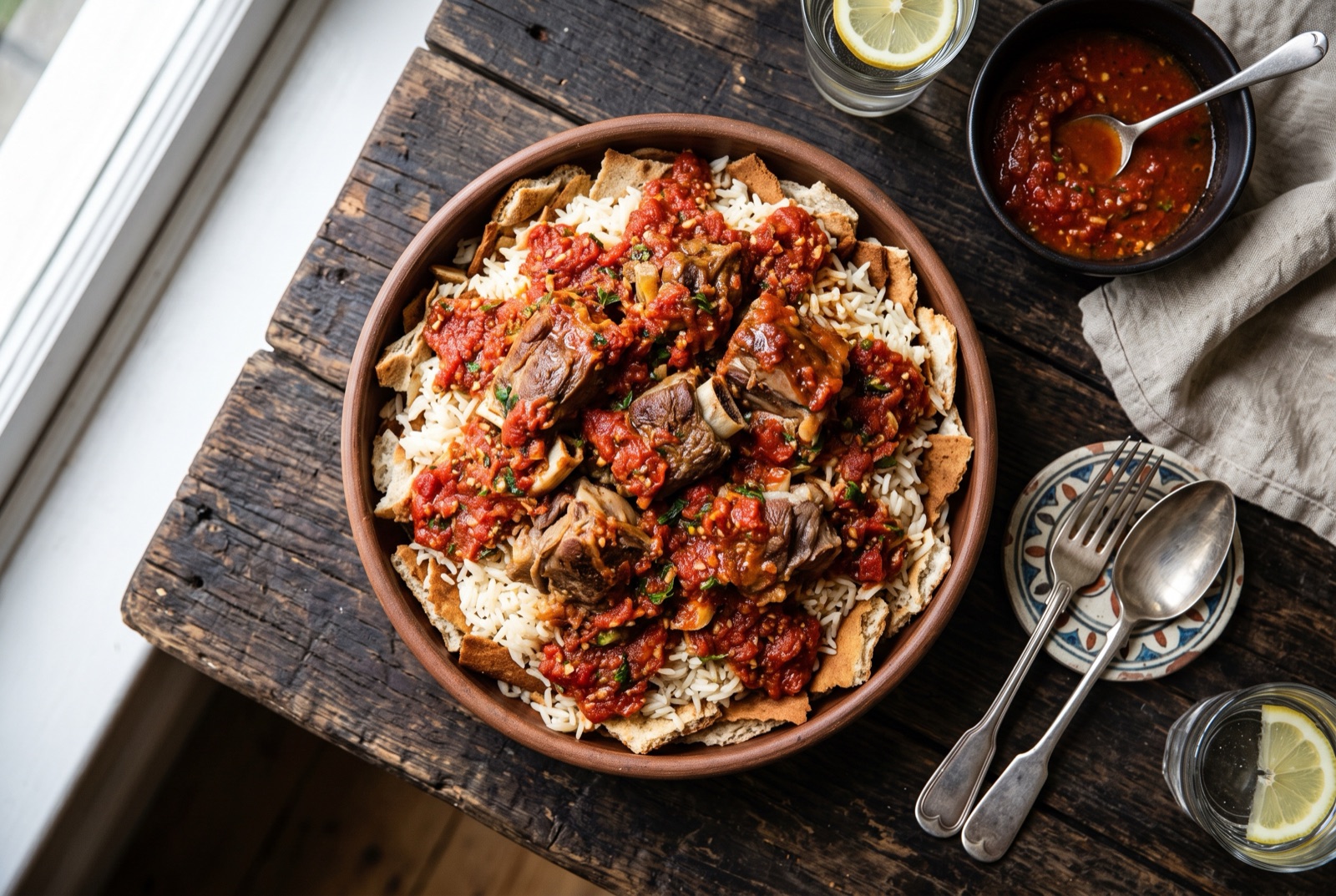
Fattah is a dish built in layers on one wide platter — dried bread on the bottom, rice cooked in lamb broth above it, chunks of long-boiled lamb on top, and a thin garlic-vinegar tomato sauce poured over the lot so it runs all the way down. The bread is the point. It has to be crisp enough to snap when the sauce hits it, so it softens into something chewy and savoury instead of turning to porridge. The flavour is meaty and round from the broth, then cut hard by vinegar and raw-fried garlic, which is what keeps a plate of bread, rice and fat from tasting heavy. It takes most of an afternoon, almost all of it unattended, and it is timed backwards from the moment the sauce goes on.

- Gate
- Egypt
- Prep
- 25 min
- Cook
- 2 hr 10 min
- Total time
- 2 hr 45 min incl. 10 min rest
- Serves
- 6
- Status
- Takes skill
- Nutrition / serving · estimated
- Calories 780 kcal
- Protein 44 g
- Carbs 73 g
- Fat 34 g
- Fiber 4 g
- Sugar 5 g
- Sodium 980 mg
Why this recipe works.
- Cooks the rice in the lamb broth rather than water, so the middle layer tastes of the meat instead of sitting under it.
- Toasts the bread properly dry, which is what lets it soak up sauce without collapsing into mush.
- Times the garlic-vinegar sauce to the assembly, since it loses its edge within minutes of leaving the pan.
- Breaks a long feast dish into stages you can spread across an afternoon, with only the last ten minutes needing attention.
Ingredients.
18 itemsThe lamb and broth
The bread layer
The rice
The garlic sauce (da'a)
Equipment
- Large stockpot
- Saucepan with a tight lid for the rice
- Small frying pan for the garlic sauce
- Wide shallow serving platter
Instructions.
Boil the lamb
Put 1.4 kg of lamb in a stockpot, cover with 2.5 litres of cold water and bring slowly to a simmer. Skim the grey foam off the surface until it stops rising, then add the onion, bay, cardamom, cinnamon, peppercorns and salt.
Tip Cold water and a slow start pull more into the broth and make the foam gather in one raft instead of dispersing.
Simmer until the meat gives
Cook at a bare simmer, part-covered, for 1 hour 45 minutes to 2 hours, until a piece of lamb pulls away from the bone under gentle pressure but still holds together when lifted. Top up with hot water if the meat is ever exposed.
Strain and separate
Lift the lamb onto a tray and strain the broth through a sieve. You want about 1.6 litres of clear, well-seasoned liquid; taste it and add salt until it tastes good on its own, because it has to season the rice and the sauce too. Skim off most of the surface fat and keep 2 tablespoons of it.
Toast the bread
Toss the torn bread with the olive oil and spread it in one layer on a tray. Bake at 200°C for 10 to 14 minutes, turning once, until the pieces are dry all the way through and a piece snaps cleanly instead of bending. Set aside at room temperature.
Tip Any piece that still flexes will disappear into the sauce. Give it another few minutes.
Cook the rice in broth
Melt the ghee in a saucepan, add the drained rice and stir for 2 minutes, until the grains look glossy and smell faintly toasted. Pour in 900 ml of the hot broth, bring to a boil, then cover and cook on the lowest heat for 15 minutes. Leave the lid on, off the heat, for another 10 minutes.
Brown the lamb
While the rice rests, heat the reserved lamb fat in a wide pan and colour the drained lamb pieces over high heat for 4 to 5 minutes, turning, until the outsides are browned and crusted at the edges. Keep them warm with a ladle of broth in the pan.
Make the da'a
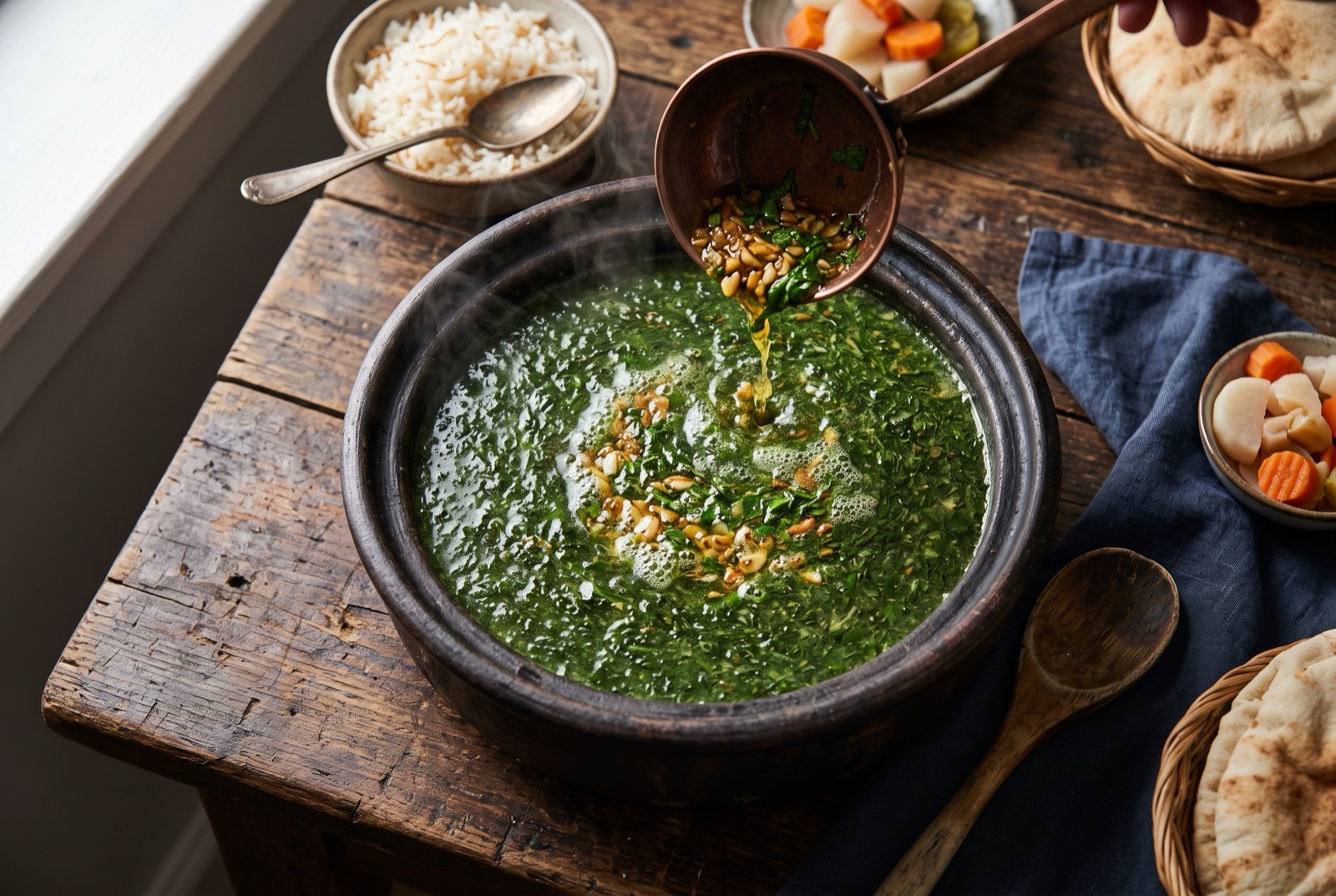
Melt the ghee for the sauce in a small pan over medium heat, add the garlic paste and stir for 30 to 45 seconds, until it is pale gold and the pan smells sweet rather than raw. Stand back and pour in the vinegar — it will steam sharply. Let it boil for 30 seconds, stir in the tomato paste, passata, chilli flakes and 150 ml of broth, and simmer for 5 minutes until it darkens slightly and coats a spoon thinly. Salt to taste.
Tip Make this last. The garlic aroma is at its strongest in the first few minutes and fades as the sauce sits.
Build the platter
Spread the toasted bread over a wide shallow platter and moisten it with two ladles of hot broth and a third of the sauce. Fluff the rice and spread it over the bread in an even layer, spoon over another third of the sauce, then pile the lamb on top and pour the rest over the meat.
Rest and serve
Leave the platter for 10 minutes so the bread drinks the sauce without turning soft, then take it to the table whole and serve down through all three layers with a large spoon. Pass extra broth and vinegar on the side.
Tip Every serving should carry bread, rice and meat together — the layers are meant to be eaten in the same mouthful, not side by side.
Tips from our kitchen.
- Start the lamb in cold water and skim it patiently for the first ten minutes. Broth that is not skimmed makes cloudy rice and a greasy plate.
- Dry the bread in the oven rather than frying it if you want a lighter dish — but dry it fully, until a piece snaps rather than bends.
- Do not brown the garlic for the sauce. Pull the pan the moment it smells sweet and turns the palest gold; brown garlic makes the whole platter bitter.
- Stand back when the vinegar goes in. The steam is sharp enough to catch your throat, and that first burst of harshness is exactly what cooks off.
- Assemble on a wide, shallow platter, not in a deep bowl. Depth traps steam and the bottom layer turns to paste.
- Keep a mug of hot broth aside. If the bread looks dry after the sauce, a few spoonfuls of broth fix it without diluting the flavour.
Substitutions.
- Lamb on the bone → Beef shank, or a whole chicken
- Beef shank needs an extra hour and gives a deeper broth. Chicken cuts the cooking time roughly in half and makes a lighter, everyday version.
- Aish baladi for the base → Any stale flatbread, or pita torn and dried in the oven
- Stale bread is traditional and works better than fresh, because it dries faster and holds its structure longer under the sauce.
- Ghee → Butter, or a neutral oil for a lighter plate
- Ghee handles the high heat of the garlic best and carries the flavour Egyptians expect. Butter browns faster, so watch it.
Variations.
- Fattah with chicken
- A quicker weekday version: poach a jointed chicken for the broth, brown the pieces under a grill, and build the same three layers with the same sauce.
- Fried-bread fattah
- Shallow-fry the bread pieces in ghee instead of oven-toasting them. Richer, heavier, and the way many households make it for a proper feast.
- Fattah bil daqqa hamra
- A tomato-forward sauce with more passata and less vinegar, giving a milder, sweeter platter that suits children and large mixed tables.
Storage & reheating.
Assembled fattah does not keep — the bread goes to paste within an hour or two, so build only what will be eaten. The components keep separately for 3 days refrigerated: broth and lamb together, rice on its own, sauce in a jar, toasted bread in a sealed tin at room temperature. Reheat the rice with a splash of broth under a lid, warm the lamb in broth rather than dry heat, and re-crisp the bread for 4 minutes in a hot oven before assembling a fresh platter.
Serve with
A bowl of the remaining broth to drink or spoon over, sliced raw onion in vinegar, and green salad with plenty of lemon.
The story behind Fattah.
Fattah is a feast dish tied to Eid al-Adha, the festival at which a sheep or cow is slaughtered and the meat divided between the household, relatives and people who need it. A dish that stretches a share of fresh meat across bread and rice, and that can be assembled for however many people walk through the door, fits that day precisely. It is also cooked for the sebou', the celebration held a week after a baby is born, and Coptic families make it at Easter — it belongs to occasions rather than to any particular religion.
The word comes from the verb meaning to crumble or break up, and it names a whole family of dishes across the Arab world in which stale bread is the foundation. Levantine fatteh is usually chickpeas and yoghurt over bread; Gulf versions bring their own spice profiles and often chicken. The Egyptian one is distinct in two ways: there is no yoghurt anywhere near it, and the sauce is aggressive on purpose, built on garlic fried until it is loud and then hit with vinegar so the pan steams.
That sauce, the da'a, is where the dish is won or lost. Garlic is fried in ghee until it is just short of colouring, vinegar goes in and boils off its harshness in seconds, and tomato follows. Poured hot over cold-ish bread it does two jobs at once — softens the base and sharpens everything above it. Egyptian cooks disagree about proportions the way other cooks disagree about salt: some make the sauce thin and use a lot of it, some keep it thick and spoon it sparingly, and everyone is confident that the household they grew up in got it right.
Questions, answered.
Why did my bread layer turn to mush?
Either it was not dried enough or the platter was too deep. The bread must be toasted until it is completely dry and snaps cleanly, not just warmed through, and it should sit in a wide shallow layer so steam escapes. Assemble at the last moment and serve straight away — fattah is not a dish that waits.
Can I make fattah ahead of time?
The parts, yes; the platter, no. Cook the lamb and broth a day ahead, make the rice and the sauce the same morning, and toast the bread whenever suits you. Assembly takes about five minutes and has to happen immediately before eating, because the bread starts softening the second the sauce touches it.
What is da'a and why is it so sharp?
Da'a is the garlic-and-vinegar sauce poured over fattah — garlic fried in ghee, doused with vinegar, then loosened with tomato and a little broth. Its sharpness is structural: the plate underneath is bread, rice and lamb fat, and without a strong acid the whole thing tastes flat and cloying after three mouthfuls.
Do I need lamb on the bone?
It is strongly preferable. The bones and connective tissue are what give the broth body, and that broth cooks the rice, moistens the bread and thins the sauce — so boneless meat leaves all three layers weaker. If you only have boneless lamb, add a couple of extra bones or use a good stock instead of water.
What kind of rice works best?
Egyptian short-grain or any medium-grain rice, which stays slightly sticky and holds together in a layer. Long-grain basmati works but gives a looser platter where the grains slip off the bread. Rinse it until the water runs clear either way, and toast it briefly in ghee before adding broth.
You might also like.
All recipes →
Keep exploring Egypt.
Egypt has 9 more dishes in the atlas — Aish Baladi and Ful Medames, and 7 more.
Recipe by The DishRoute Kitchen · published August 20, 2026 · updated August 20, 2026