Beef Bhuna.
Bangladeshi Dry-Roasted Spiced Beef
গরুর মাংস ভুনা · say it: GO-rur mangsho BHOO-nah
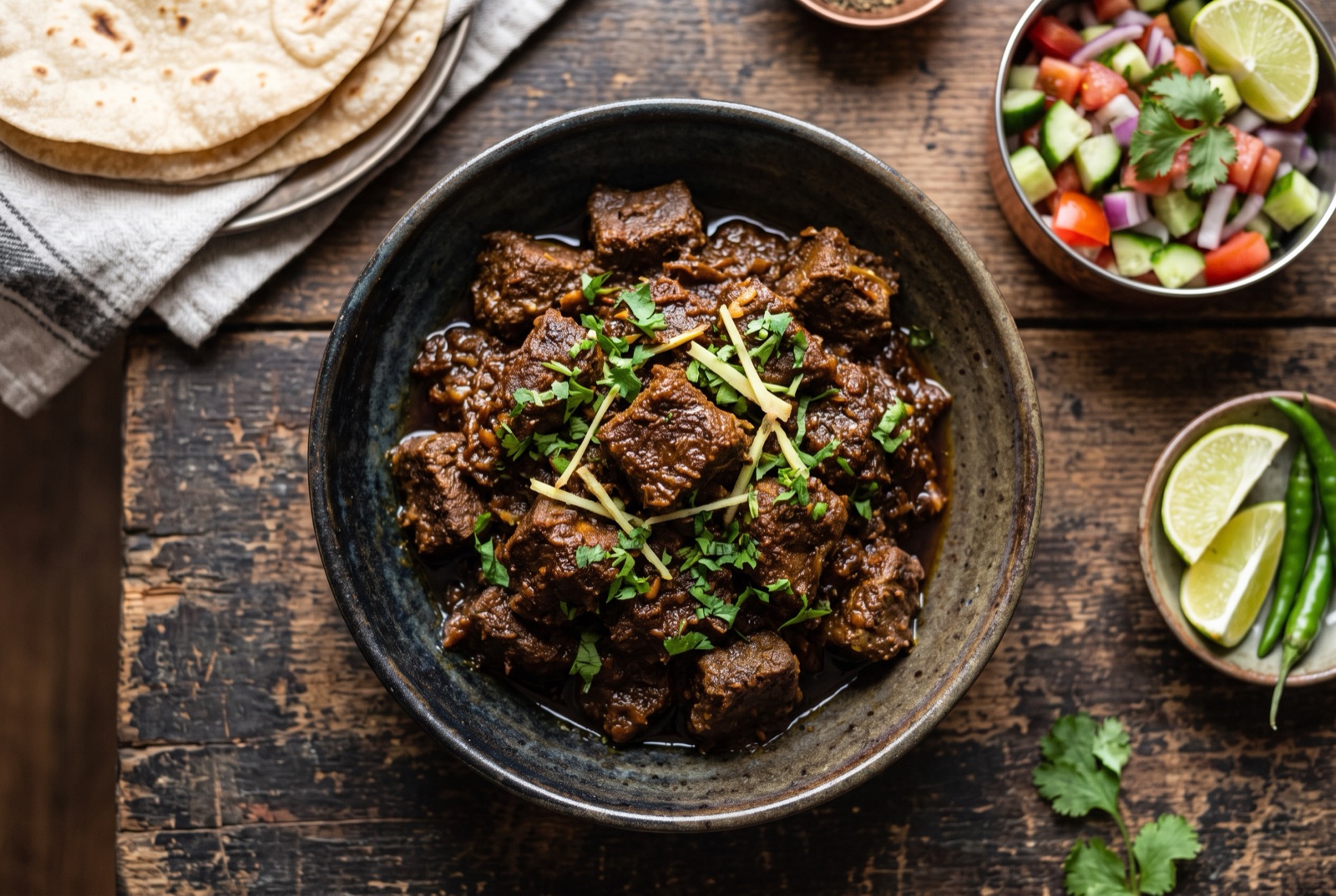
Beef bhuna is what happens when you cook a curry past the point where most recipes tell you to stop. Chunks of beef go in with sliced onion, ginger, garlic and ground spice and a little water, and then the pot is worked over an hour and a half until the liquid has completely evaporated, the onions have collapsed into the masala, and the oil separates out and coats the meat in a dark, glossy film. There is almost no gravy at the end — a couple of tablespoons at most — and the flavour is correspondingly concentrated: deep, faintly bitter from long-cooked onion, warm rather than fiery. It is eaten with plain rice, khichuri or paratha, and it is one of the standard Eid al-Adha dishes in Bangladeshi homes.

- Gate
- BangladeshNationwide
- Prep
- 20 min
- Cook
- 1 hr 45 min
- Total time
- 2 hr 5 min
- Serves
- 5
- Status
- Medium
- Nutrition / serving · estimated
- Calories 520 kcal
- Protein 44 g
- Carbs 12 g
- Fat 33 g
- Fiber 3 g
- Sodium 880 mg
Why this recipe works.
- Teaches the actual bhuna signal — oil separating and pooling — rather than giving you a fixed cooking time to trust blindly.
- Builds the masala in stages so the ground spices fry properly instead of steaming into a raw, dusty gravy.
- Uses a well-marbled cut and explains why lean stewing beef fails at this particular technique.
- No cream, no tomato purée and no shortcuts — the depth comes from onions cooked far past golden.
Ingredients.
16 itemsFor the meat
For the masala
To finish
Equipment
- Heavy-bottomed pan or karahi, wide rather than deep
- Wooden spoon
- Measuring jug for the water splashes
Instructions.
Brown the onions
Heat the oil in a wide heavy pan until it shimmers and the mustard smell sharpens, then add the cinnamon, cardamom and bay leaves for 30 seconds. Add the sliced onions and fry over medium heat for about 15 minutes, until they have shrunk to a third of their volume and turned deep brown at the edges.
Tip Brown, not golden. This is where nearly all the colour of the finished dish comes from.
Fry the ginger, garlic and ground spices
Stir in the ginger and garlic pastes and cook 2 minutes until the raw garlic smell disappears. Add the turmeric, chile powder, cumin and coriander with a splash of water and fry hard for another 2 minutes, until the paste darkens and smells toasted rather than dusty.
Tip If the spices stick, add water a tablespoon at a time — never oil, or the dish turns greasy at the end.
Seal the beef in the masala
Tip in 1 kg of beef cubes with the salt and stir over medium-high heat for 8–10 minutes, turning the pieces so every side takes on the masala. The meat will release liquid; keep going until that liquid has cooked off and the pan is sizzling again.
Simmer to tenderness
Add 250 ml of the hot water, bring to a simmer, cover partly and cook for 50–60 minutes, stirring every 10 minutes. Add more hot water in 60 ml splashes only when the pan looks dry. The beef is ready for the next stage when a piece gives way under gentle pressure from a spoon.
Bhuna — cook the liquid away
Uncover, raise the heat to medium and fry the beef in its own masala for 20–25 minutes, stirring often and scraping the base. It is done when there is no free liquid left, the masala clings to the meat as a dark coat, and clear oil runs back into the gap when you push the pieces aside.
Tip This is the whole dish. If you stop before the oil separates you have made a wet curry, not a bhuna.
Finish and rest
Scatter over the garam masala and the slit green chiles, fold them through and cook 2 minutes more. Take off the heat, correct the salt, and let it stand 10 minutes before serving with rice or paratha.
Tips from our kitchen.
- Use a fatty cut — chuck, brisket or shin with plenty of connective tissue. Lean stewing steak has nothing to render and turns to dry string over a long bhuna.
- Slice the onions rather than chopping them. Slices break down into the masala evenly, while a fine dice tends to scorch in patches during the long fry.
- Add water only in small splashes, 60 ml at a time, and only when the spices start sticking. Flooding the pot turns the dish into a stew you then have to reduce all over again.
- The finish is visual, not timed. Wait until you can push the meat aside with a spoon and see clear oil running back into the gap.
- Season with salt early, then correct at the very end. A dish that reduces this far concentrates its salt dramatically.
- Keep the heat at a confident medium for the frying stages. Timid heat steams the onions grey instead of browning them.
Substitutions.
- Mustard oil → Neutral vegetable oil
- Mustard oil adds a distinct pungency common in Bangladeshi cooking. With neutral oil the dish is still correct, just rounder and less sharp.
- Beef chuck → Lamb or goat shoulder on the bone
- Mutton bhuna is equally traditional and needs roughly the same time. Chicken thighs work too but need only 35–40 minutes total.
- Whole garam masala plus ground spices → Two tablespoons of a good bhuna or meat masala blend
- Convenient, but pre-ground blends lose aroma fast. If you use one, add half at the start and half in the last ten minutes.
Variations.
- Kala bhuna
- The Chattogram version, cooked far longer with roasted ground spices until the meat is nearly black. It is drier, smokier and considerably hotter than the standard bhuna.
- Beef bhuna with potatoes
- Halved potatoes added for the last 25 minutes so they take on the masala. Common at home when the meat needs stretching for extra guests.
- Chicken bhuna
- Same technique with bone-in chicken thighs and drumsticks. Cut the total cooking time to about 40 minutes and use slightly less water, since chicken releases plenty of its own.
Storage & reheating.
Because there is almost no liquid left, beef bhuna keeps unusually well: 4 days refrigerated in a sealed container, and the flavour genuinely improves after a day. Reheat in a pan over medium heat with a splash of water, stirring until the oil separates again. It freezes for up to 3 months. Thaw in the fridge overnight and reheat in a pan rather than a microwave, which leaves the fat and the meat at different temperatures.
Serve with
Plain steamed rice, bhuna khichuri, or hot parathas — plus sliced raw onion and green chile on the side to cut the richness.
The story behind Beef Bhuna.
The word bhuna comes from bhunno, to fry or roast, and in Bangladesh it names a process rather than a recipe. To bhuna something is to keep frying it in fat with the pot uncovered, adding small splashes of water whenever the spices threaten to catch, so that each splash cooks off and the mixture reduces a little further. Every serious cook in the country knows the finishing signal by sight: the oil, which was absorbed into the masala early on, comes back out and pools at the edges of the pot. That moment is called kosha or koshano in Bengali, and until it happens the dish is simply not done.
The confusion outside Bangladesh comes from British curry-house menus, where bhuna appears as a category alongside korma and madras, implying a fixed sauce with a fixed heat level. That is a restaurant convenience. In a Bangladeshi kitchen you can bhuna beef, mutton, chicken, prawns, eggs, potatoes or lentils, and the word tells you how it was cooked, not what was in it. Many of those British restaurants were opened by Sylheti families, which is why so much of the standard curry-house vocabulary is Bengali in the first place.
Beef carries particular weight here. Bangladesh is a majority Muslim country and beef is the everyday celebration meat rather than a taboo, and at Eid al-Adha the sacrifice means households suddenly have far more of it than they can cook at once. Bhuna is one of the answers: it is a preservation-minded technique as much as a flavour one, since a dish with no water left in it keeps considerably longer in a hot climate without refrigeration. Older cooks will tell you that a properly bhuna-ed pot could sit out for two days and be reheated, and that the flavour got better each time.
The honest difficulty of the dish is patience. There is no shortcut and no clever step. You stand at the pot, you stir, you add a little water, you wait, and about ninety minutes later it is suddenly correct.
Questions, answered.
What does bhuna actually mean?
Bhuna is a Bengali and Urdu cooking technique meaning to fry or roast — specifically, to cook meat and spices in fat over a long time while the liquid evaporates, until the oil separates out and coats the meat. It is not a type of sauce or a fixed heat level, despite how British curry-house menus use the word. You can bhuna beef, chicken, prawns, eggs or vegetables.
How do I know when the bhuna is finished?
Push the meat to one side of the pan with a spoon and look at the gap. If clear reddish oil runs back into it and the masala left behind is thick and glossy rather than wet, the dish is done. If liquid pools instead of oil, keep cooking. This usually takes 80 to 100 minutes for beef, but the visual signal is far more reliable than the clock.
Why is my beef bhuna tough?
Either the cut was too lean or the heat was too high for too long. Bhuna needs a collagen-rich cut like chuck, brisket or shin, which turns tender as the connective tissue melts. Once the meat is in with liquid, keep the pot at a steady simmer rather than a hard boil, and add water in small splashes so the meat never dries out before it has finished tenderising.
Can I make beef bhuna in a pressure cooker?
Partly. Pressure-cook the beef with the onions, ginger, garlic and spices for about 20 minutes to tenderise it, then release the pressure, take the lid off and fry the mixture down uncovered until the liquid has gone and the oil separates. Skipping that final open-pot stage gives you a wet curry, not a bhuna.
Is beef bhuna very spicy?
It is intensely flavoured but not necessarily fiery. Most of the depth comes from onions cooked far past golden and from spices fried in fat, while chile heat is adjustable — this version is moderately hot. Reduce the red chile powder by half for a mild version and the dish loses nothing structurally.
You might also like.
All recipes →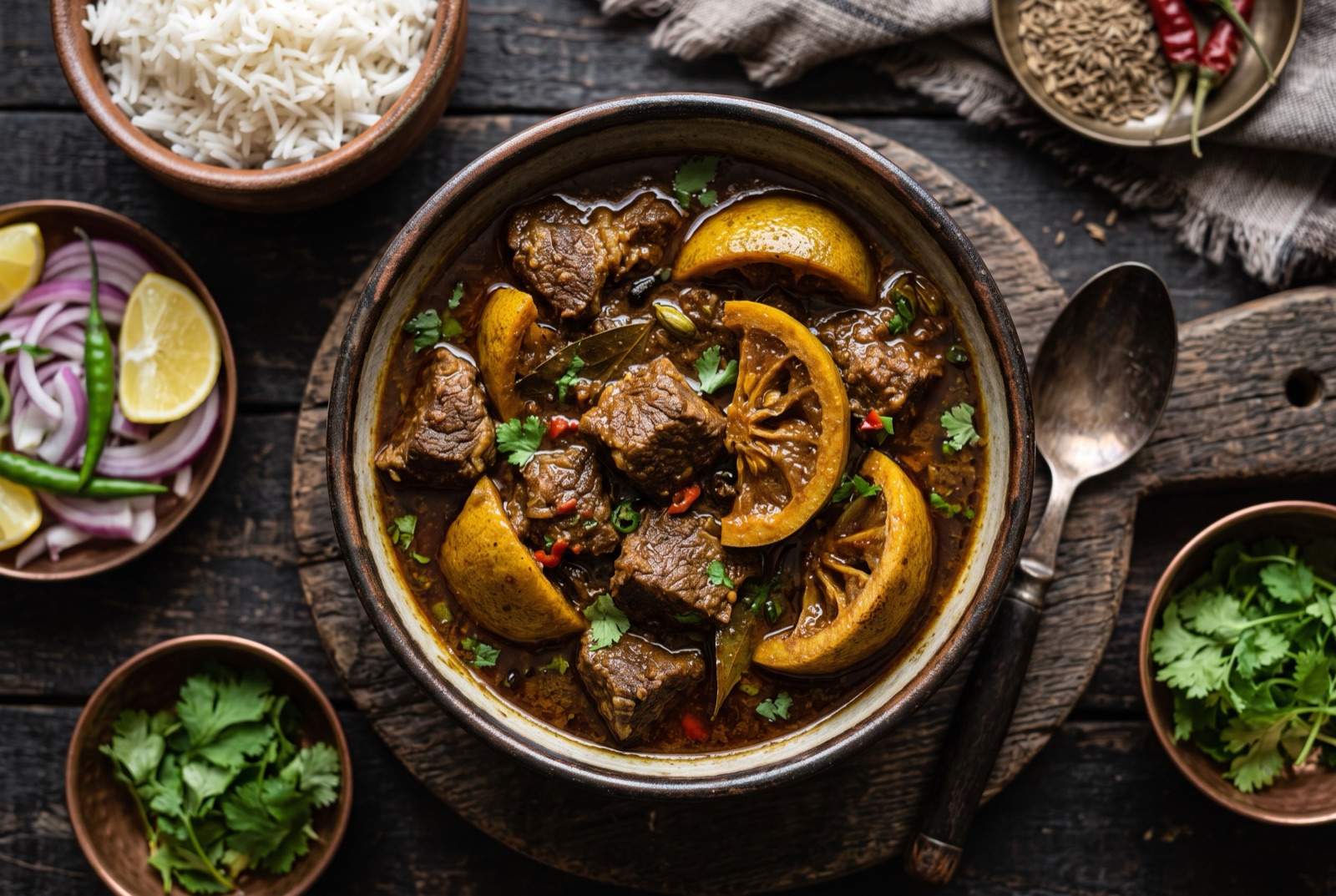
Keep exploring Bangladesh.
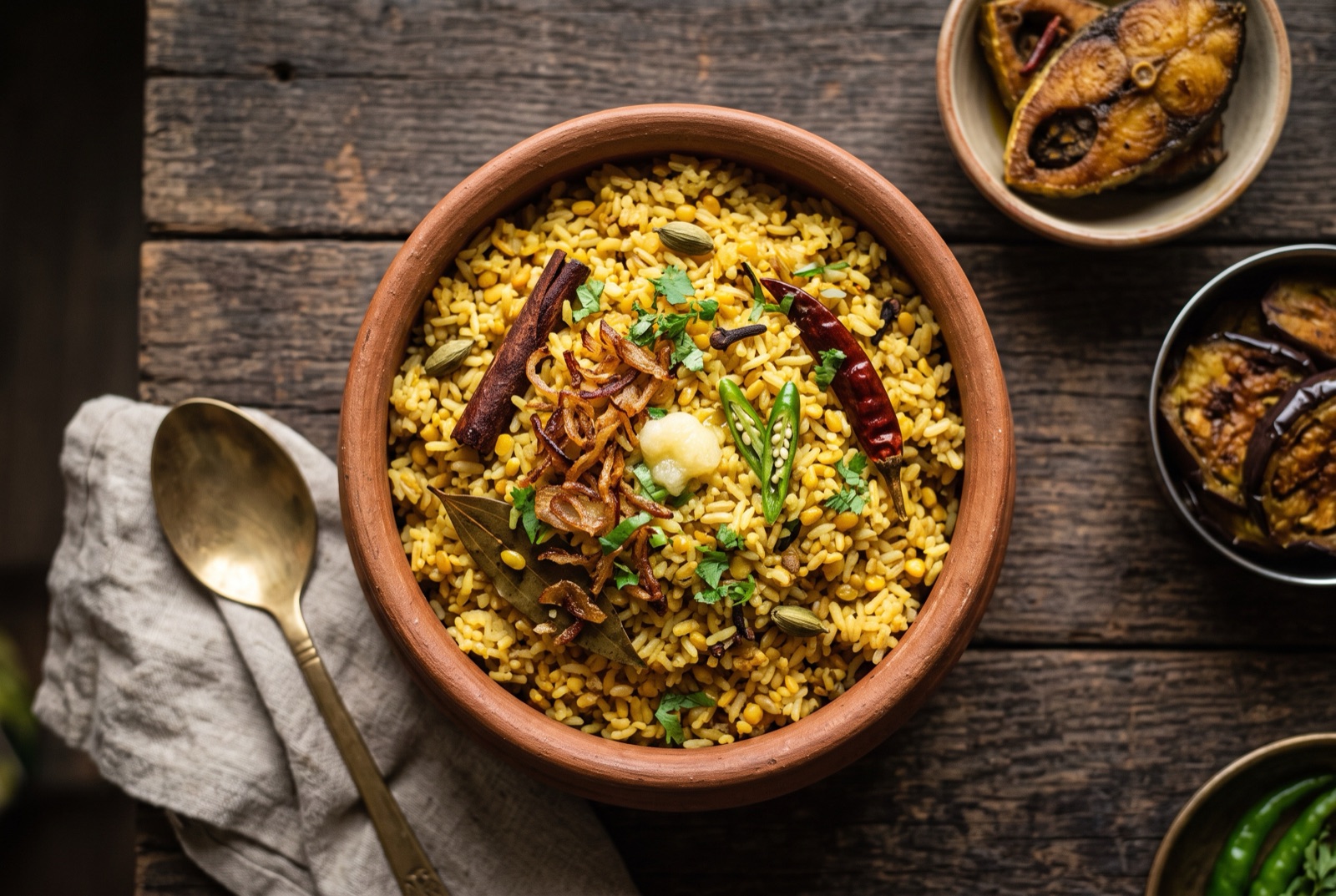
Bangladesh has 9 more dishes in the atlas — Beef Shatkora and Bhuna Khichuri, and 7 more.
All Bangladesh recipes Beef chuck recipes Onion recipes Garlic recipes maindairy freegluten freehalal friendlyRecipe by The DishRoute Kitchen · published August 20, 2026 · updated August 20, 2026