Beef Shatkora.
Sylheti Beef with Bitter Citrus
সাতকরা দিয়ে গরুর মাংস · say it: shot-KO-rah
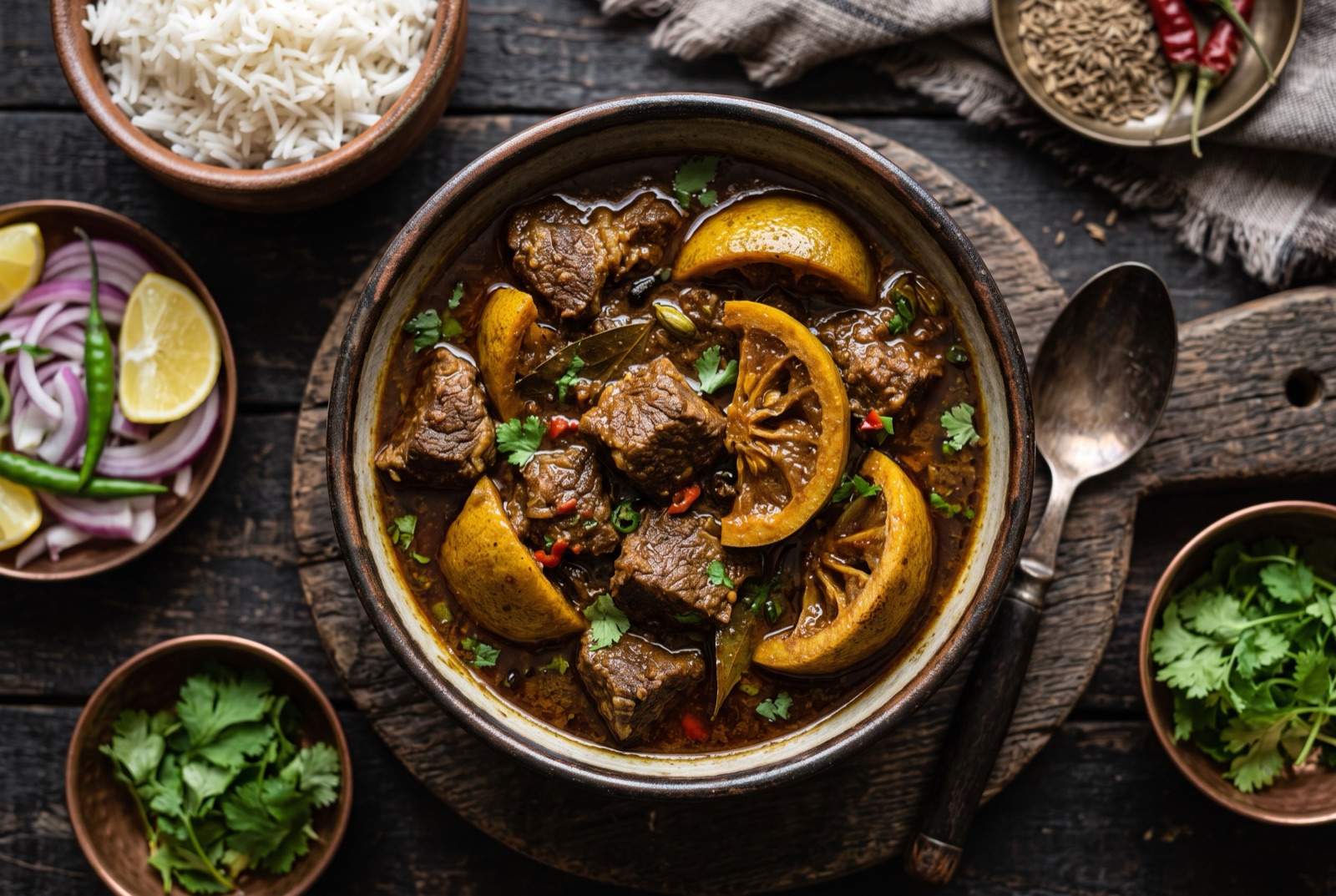
Beef shatkora is a Sylheti beef curry defined by a fruit almost nobody outside northeast Bangladesh has heard of. Shatkora is a knobbly green citrus with a very thick, aromatic rind and sour, largely inedible flesh, and it is used the way a bay leaf is used — for its peel, cut into thick wedges and cooked into the pot. What it gives the gravy is unmistakable: a clean bitterness sitting behind the chile heat, a resinous citrus perfume closer to bergamot or kaffir lime than to lemon, and a sharpness that makes the beef fat taste lighter than it is. The curry itself is otherwise straightforward — onions browned hard, ginger and garlic, ground spices, beef simmered until it gives — and the shatkora goes in near the end so it flavours without turning acrid.

- Gate
- BangladeshSylhet
- Prep
- 25 min
- Cook
- 1 hr 35 min
- Total time
- 2 hr
- Serves
- 5
- Status
- Medium
- Nutrition / serving · estimated
- Calories 490 kcal
- Protein 43 g
- Carbs 11 g
- Fat 31 g
- Fiber 3 g
- Sodium 860 mg
Why this recipe works.
- Handles the shatkora properly — blanched, added late, and tasted before committing, so the curry is fragrant rather than harsh.
- A real Sylheti regional dish rather than a generic beef curry with citrus thrown at it.
- Gives working substitutes for the fruit and is clear that they approximate rather than replace it.
- Builds a proper browned-onion base first, so the bitterness has something rich to sit against.
Ingredients.
17 itemsFor the curry
To finish
Equipment
- Heavy lidded pot or Dutch oven
- Sharp knife for the citrus rind
- Wooden spoon
Instructions.
Prepare the shatkora
Scrape most of the dry pulp from the shatkora wedges so mainly rind remains, then drop the wedges into boiling water for 2 minutes and drain. Taste a fingernail-sized piece: it should be strongly bitter but aromatic. If it is punishing, blanch it a second time.
Tip Wear the bitterness on your tongue for a moment before deciding. It mellows a lot in the pot but never disappears.
Brown the onions
Heat the oil in a heavy pot with the bay leaves and cinnamon for 30 seconds, then add the sliced onions and fry over medium heat for 12–15 minutes until collapsed and browned at the edges. They should smell sweet and toasted, not sharp.
Fry the spice base
Stir in the ginger and garlic pastes for 2 minutes, then the turmeric, chile powder, cumin and coriander with a splash of water. Fry for 2–3 minutes until the mixture darkens and oil beads at the edges of the pan.
Seal the beef
Add 1 kg of beef and the salt and stir over medium-high heat for about 10 minutes, until the meat has taken on the masala colour and the liquid it released has cooked off. The pan should be sizzling again before you go on.
Simmer
Pour in 500 ml of hot water, bring to a simmer, cover and cook for 55–65 minutes, until the beef is tender enough to break with a spoon but still holds its shape. Top up with small amounts of hot water if the pot looks like drying out.
Add the citrus
Tuck the blanched shatkora wedges into the gravy, add the slit green chiles, and simmer uncovered for 20–25 minutes so the gravy reduces to a thick, oily coating. The kitchen should smell strongly of citrus rind by the ten-minute mark.
Tip Taste at 15 minutes. If the bitterness is already where you want it, lift the wedges out and let the curry finish reducing without them.
Finish and rest
Sprinkle over the garam masala, correct the salt, and add the sugar only if the pot has tipped too bitter. Take off the heat and leave for 20 minutes before serving with plain rice.
Tips from our kitchen.
- Taste a sliver of raw shatkora rind before you start. Fruits vary a lot, and a very bitter one means using fewer wedges or blanching them twice.
- Cut the shatkora into thick wedges with the rind attached and scrape away most of the dry inner flesh — the flesh contributes almost nothing but harsh acidity.
- Add the citrus in the last 25 minutes. Cooked from the start it dissolves into the gravy and turns the whole pot uniformly bitter.
- Use a fatty cut such as chuck or shin. Bitterness needs richness to balance against, and lean beef makes the curry taste thin and sharp.
- If the gravy tips too bitter, fish out the shatkora immediately and stir in a teaspoon of sugar — it will not erase the bitterness but it rebalances the pot.
- Let the curry sit for at least 20 minutes before serving. The citrus perfume distributes properly as it cools slightly.
Substitutions.
- Fresh shatkora → Frozen shatkora wedges from a South Asian grocer
- The most faithful option by a wide margin, and they keep for months. Use them straight from frozen and add five extra minutes of cooking.
- Shatkora → The peel of one unwaxed grapefruit plus two tablespoons of lime juice
- This gets you bitter and citrus separately, which is not the same as the two arriving together, but it is a genuinely decent approximation. Blanch the grapefruit peel twice before using.
- Beef chuck → Mutton or goat on the bone
- Shatkora is also cooked with mutton in Sylhet. Bone-in goat needs about 20 minutes longer before the citrus goes in.
Variations.
- Shatkora with mutton
- Bone-in goat instead of beef, common in Sylheti homes for Eid. Richer and slightly gamier, and the bitterness cuts it even more effectively.
- Chicken shatkora
- A lighter weeknight version with bone-in chicken thighs. Total cooking time drops to about 35 minutes, so add the citrus after 15.
- Green mango beef curry
- What much of Bangladesh cooks when shatkora is out of season — unripe green mango wedges give sourness without the resinous bitterness of the rind.
Storage & reheating.
Beef shatkora keeps 3 days refrigerated and the citrus flavour deepens overnight, sometimes considerably — taste before serving on day two and add a pinch of sugar if it has gone sharper than you want. Reheat gently in a covered pan with a splash of water. It freezes well for up to 3 months, though the rind softens further on thawing; some cooks remove the wedges before freezing for exactly this reason.
Serve with
Plain white rice — this curry is too assertive for bread, and rice gives the bitterness somewhere to land. A bowl of thin dal alongside.
The story behind Beef Shatkora.
Sylhet, in the northeast corner of Bangladesh, sits in hill country covered in tea gardens and citrus groves, and it grows things the rest of the country does not. Shatkora, sometimes written satkara, is one of them — a citrus in the same broad family as pomelo and citron, grown for its rind rather than its juice. Sylheti cooks use it with beef above all, and the pairing is regional identity in a pot: if you meet a Bangladeshi from Sylhet and ask what their mother cooks, this dish comes up.
The fruit travelled with the people. Sylhetis make up the great majority of the Bangladeshi diaspora in Britain, and they founded much of the British curry-house trade from the mid twentieth century onward. Shatkora went with them, first as fruit carried in suitcases, then as a frozen and preserved product in Asian grocers, and eventually onto restaurant menus in Birmingham and east London where "beef shatkora" appears as a house speciality. It is one of the few genuinely regional Bangladeshi dishes that made the jump abroad without being diluted, largely because there is no way to fake the ingredient.
Using it takes a little care. The rind is thick, oily and much more bitter than lemon peel, and different fruits vary considerably in strength. Sylheti cooks blanch or briefly fry the wedges first to knock the harshest edge off, add them late enough that they do not disintegrate, and taste the gravy before deciding whether to leave the pieces in. Some households remove the wedges before serving; others consider eating a soft, chewy piece of the cooked rind the best part of the meal. Both positions are held with conviction.
Outside Sylhet the same dish gets made with green mango or lime in the summer months. Nobody claims that is the real thing, but they eat it happily enough.
Questions, answered.
What is shatkora and what does it taste like?
Shatkora is a thick-skinned green citrus grown mainly in Sylhet, in northeast Bangladesh, related to citron and pomelo. It is used for its rind rather than its juice: the peel is aromatic and distinctly bitter, closer to bergamot or kaffir lime than to lemon, with a resinous perfume. The inner flesh is dry and very sour and is usually scraped away and discarded.
Where can I buy shatkora outside Bangladesh?
South Asian grocers, especially those serving Sylheti communities in Britain, sell it fresh in season and frozen in wedges year round. Frozen is the more reliable option and works nearly as well as fresh. Some shops also sell it preserved in brine, which needs rinsing and a shorter cooking time since it is already softened.
My curry came out too bitter. Can I fix it?
Remove the shatkora pieces from the pot straight away, since bitterness keeps leaching out for as long as they sit in the gravy. Then stir in a teaspoon of sugar and a spoonful of yogurt or a splash of coconut milk to round it. Next time, blanch the wedges in boiling water for two minutes before adding them, and use fewer of them.
When should the shatkora go into the pot?
In the last 20 to 25 minutes of cooking, once the beef is already tender. Added at the start it breaks down completely and the bitterness spreads evenly through the gravy in a flat, unpleasant way. Added late it stays in recognisable wedges and releases its aromatic oils without dominating.
Do you eat the shatkora pieces?
That is genuinely a matter of taste and Sylheti households disagree. After long cooking the rind becomes soft and chewy with a marmalade-like intensity, and many people consider it the best thing in the dish. Others remove the wedges before serving because a whole mouthful of the rind is very strong. Serve them in the pot and let people decide.
You might also like.
All recipes →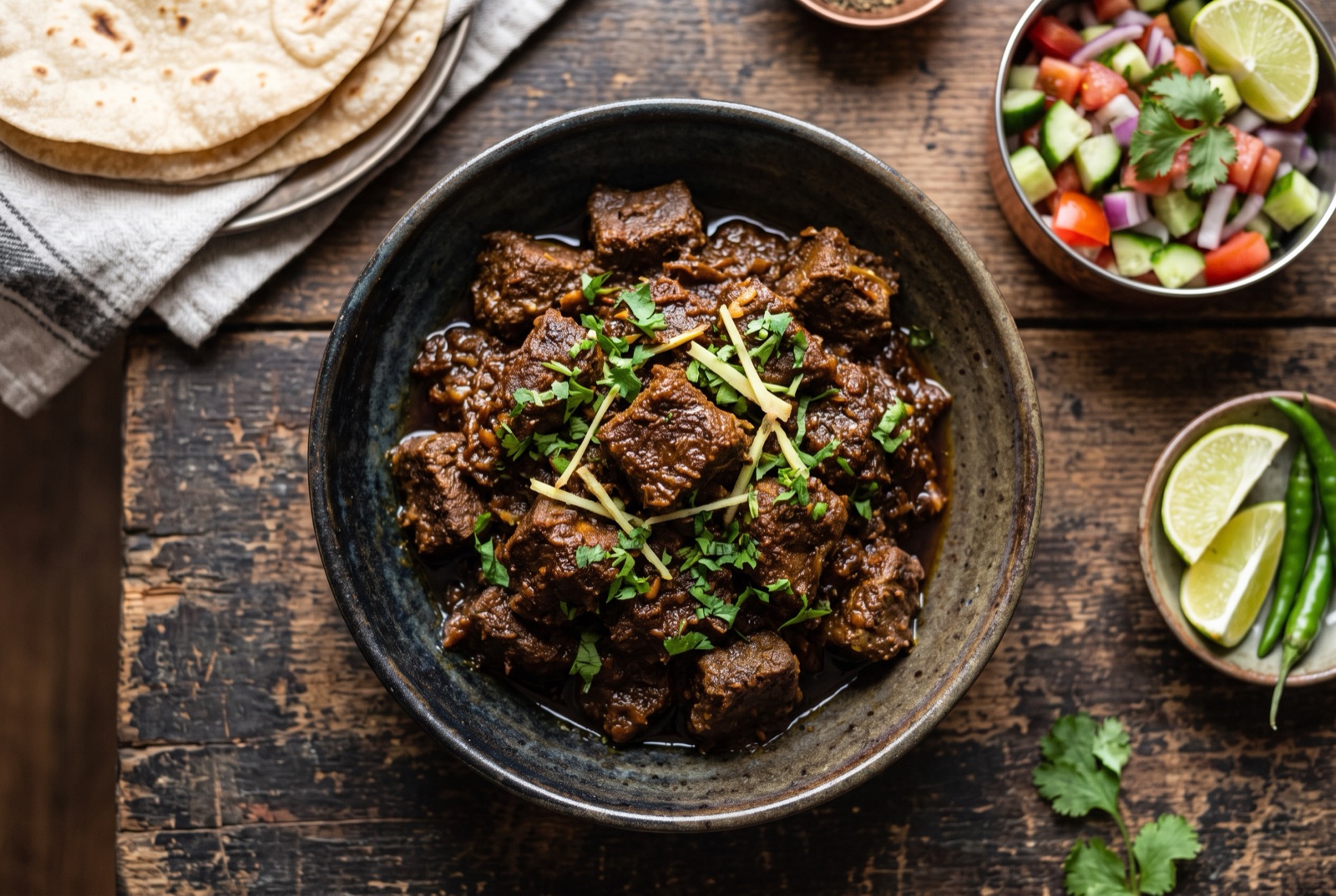
Keep exploring Bangladesh.
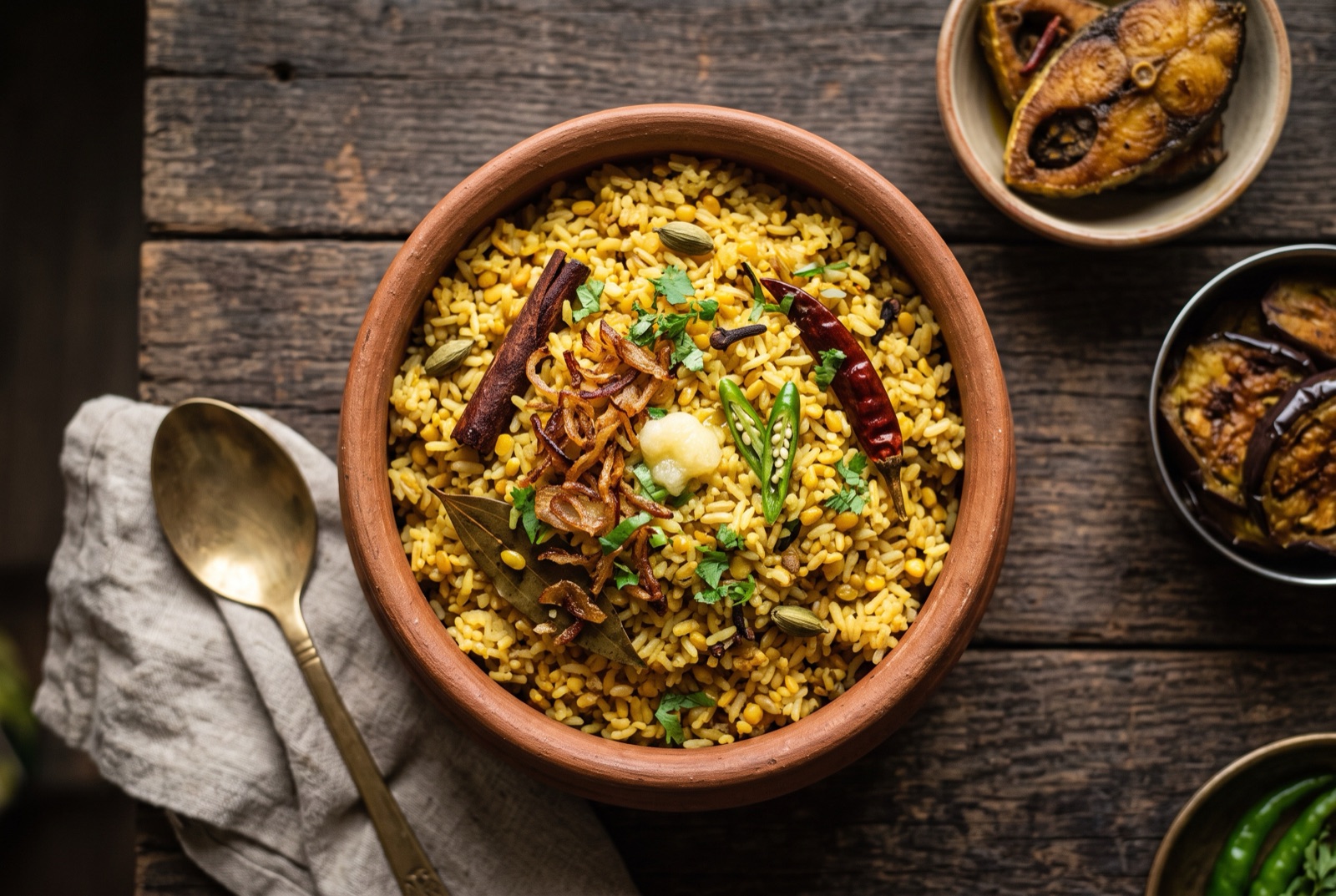
Bangladesh has 9 more dishes in the atlas — Beef Bhuna and Bhuna Khichuri, and 7 more.
All Bangladesh recipes Beef chuck recipes Onion recipes Ginger recipes maindairy freegluten freehalal friendlyRecipe by The DishRoute Kitchen · published August 20, 2026 · updated August 20, 2026