Bannock.
Pan-Fried Canadian Flatbread
Bannock · say it: BAN-uk
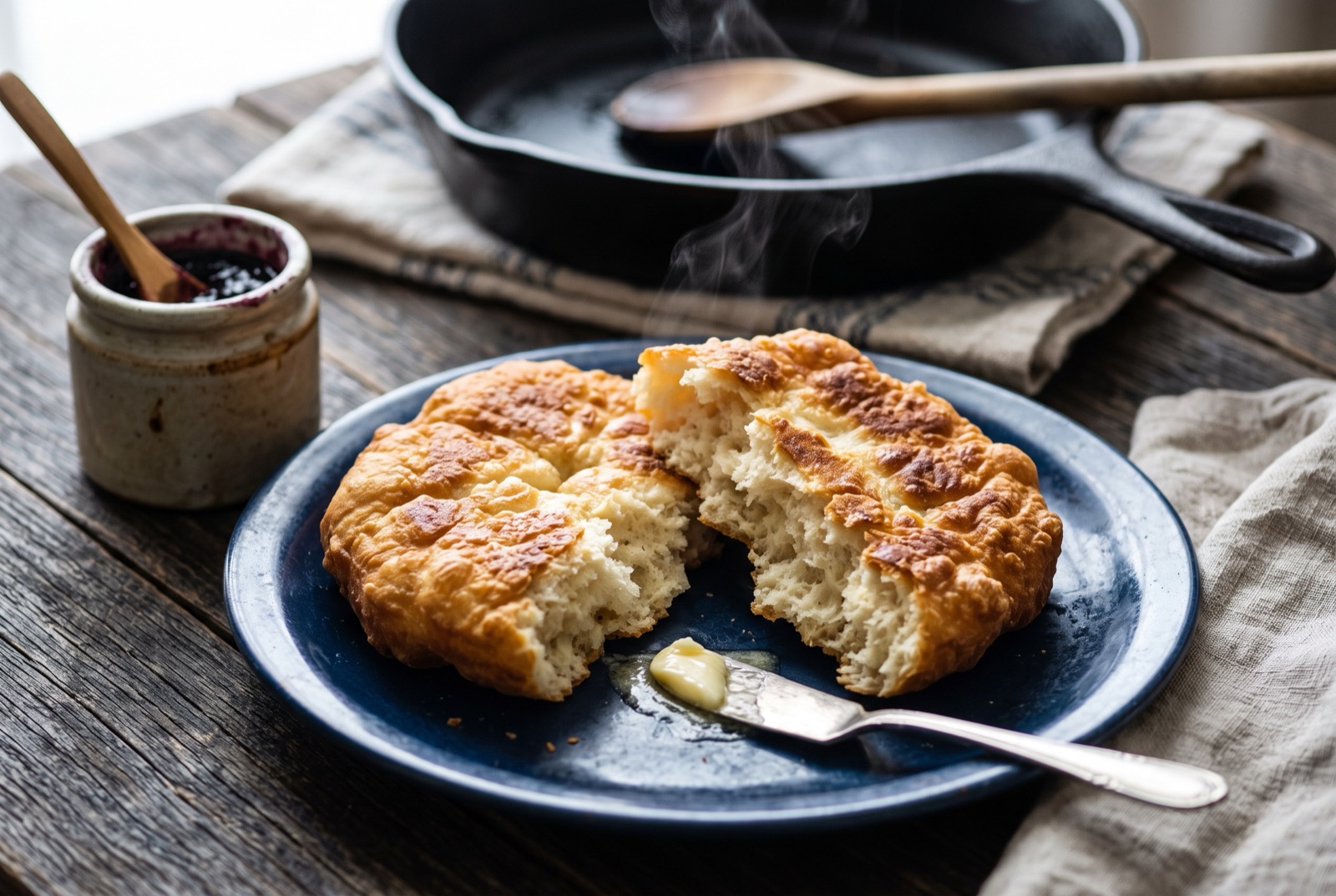
Bannock is a quick bread of flour, baking powder, fat and liquid, mixed in a single bowl and cooked in a pan over the stove or a fire. There is no yeast and no waiting: the dough comes together in three minutes and is on the table in twenty. Fried, it puffs into a golden disc with a crisp blistered surface and a soft, steamy, slightly chewy interior that should tear rather than slice. Baked, it comes out closer to a scone — drier, more crumbly, better for keeping. It is plain in the best sense, made to be torn and loaded with butter, jam, berries or stew, and it is one of the most widely eaten breads in Canada, particularly in First Nations and Métis communities where it carries a great deal more meaning than convenience.

- Gate
- CanadaAcross Canada
- Prep
- 10 min
- Cook
- 20 min
- Total time
- 30 min
- Serves
- 6
- Status
- Easy
- Nutrition / serving · estimated
- Calories 340 kcal
- Protein 8 g
- Carbs 51 g
- Fat 12 g
- Fiber 2 g
- Sodium 640 mg
Why this recipe works.
- A single bowl, four core ingredients and no rising time — this is the everyday version, not a project loaf.
- The mixing is written so you stop at the exact point that keeps bannock tender instead of tough.
- Covers pan-fried, oven-baked and stick-over-a-fire methods, because all three are traditional and each has its use.
- Names the history honestly, including the parts of it that are not comfortable.
Ingredients.
7 itemsFor the dough
For frying
Equipment
- Mixing bowl
- Cast-iron skillet or heavy frying pan
- Fork
- Fish slice or spatula
Instructions.
Whisk the dry ingredients
Whisk the flour, baking powder, salt and sugar together in a wide bowl for a good 20 seconds, so the baking powder is evenly distributed. Pockets of unmixed leavening leave bitter yellow spots in the finished bread.
Bring the dough together
Pour in the melted fat and most of the milk and stir with a fork just until the dry flour disappears and the dough gathers into a rough, shaggy mass. Add the last of the milk only if there is still loose flour in the bowl. It should feel soft and a little tacky, not smooth.
Tip Count the strokes if it helps — twenty or so is plenty. This dough is meant to look underworked.
Shape the rounds
Turn the dough onto a floured surface, press it together gently with your palms, and divide it into six pieces. Pat each into a disc about 1.5 cm thick and press a shallow dimple into the centre with your thumb so the middle cooks through.
Tip Handle it as little as possible. Every extra press makes the bread tighter.
Heat the pan properly
Melt a tablespoon of fat in a heavy skillet over medium heat until it shimmers. Drop in a scrap of dough as a test: it should sizzle steadily and take about 30 seconds to turn gold. If it browns instantly, take the pan off the heat for a minute.
Fry until blistered
Fry the rounds two at a time for 4 to 5 minutes a side, until deep gold with blistered patches and visibly puffed at the edges. Press gently on the centre — it should feel springy and firm rather than doughy, and a skewer should come out clean.
Tip If they colour before the middle is done, lower the heat and cover the pan for the last two minutes.
Tear and eat hot
Drain briefly on a rack, not paper, and serve while steam still escapes when you tear one open. Bannock is torn by hand, never sliced, and it takes butter best in the first five minutes.
Tips from our kitchen.
- Stop mixing the moment the dough holds together in a shaggy mass. Bannock dough kneaded like bread dough turns tough and rubbery — it should look rough and underworked.
- The dough should feel soft and slightly sticky. Add liquid a spoonful at a time at the end, since flour absorbs differently on different days.
- Test the pan with a scrap of dough before committing. It should sizzle steadily and take about 30 seconds to colour — if it browns instantly the fat is too hot and the inside will stay raw.
- Poke a hole or press a dimple in the centre of thicker rounds. It lets heat through the middle so the centre cooks at the same rate as the edges.
- Bannock is at its best within an hour of cooking. If you need it later, bake rather than fry — the baked version keeps far better overnight.
- For a cooked-through test, tap the bread: it should sound hollow, and a skewer pushed into the middle should come out clean and dry.
Substitutions.
- Butter → Lard, shortening, bacon fat or a neutral oil
- Lard is the traditional fur-trade fat and gives the most tender crumb. Oil makes the bread dairy-free and works perfectly well, though the flavour is plainer.
- Milk → Water, or buttermilk with ½ tsp baking soda added
- Water is the most traditional and makes it dairy-free; buttermilk gives a softer, tangier bread. Historically it was usually just water, because that was what was available.
- Plain white flour → Up to a third replaced with wholemeal or oat flour
- Adds flavour and body. Do not replace it all — bannock needs some white flour structure or it crumbles when torn.
Variations.
- Berry bannock
- Fold a cup of saskatoon berries, blueberries or dried cranberries into the dough before shaping. Bake rather than fry, since fruit scorches in a hot pan.
- Stick bannock (twisted over a fire)
- Roll the dough into a long rope, wind it around a peeled green stick and turn it slowly over embers for 10 to 15 minutes until hollow-sounding. Camp bannock, and the version most people remember from childhood.
- Bannock taco
- A fried round used as the base for seasoned bison or beef, beans, cheese, lettuce and tomato — a fixture at powwows and Indigenous food trucks across Canada.
Storage & reheating.
Bannock is a same-day bread and it goes noticeably dry after the first few hours. Keep it wrapped in a cloth at room temperature for up to 2 days, and revive it by warming in a dry pan or a hot oven for a few minutes — it comes back surprisingly well. Do not refrigerate it, which speeds up staling. It freezes for a month wrapped tightly; reheat from frozen at 180°C for about 10 minutes. Day-old baked bannock is excellent split, buttered and toasted in a pan.
Serve with
Butter and berry jam, a bowl of stew or soup for dipping, or maple syrup and a mug of strong tea.
The story behind Bannock.
Bannock has a genuinely complicated history, and it is worth stating plainly rather than smoothing over. The word is Scottish, describing a flat griddle bread of oat or barley meal, and it travelled to North America with Scottish traders working for the Hudson's Bay Company and the North West Company during the fur trade. Wheat flour, lard and baking powder arrived along the same routes. Indigenous communities across the continent adopted and reshaped the bread, and within a few generations bannock had become a staple food from the Prairies to the Arctic — cooked in a pan over a stove, wrapped around a stick over a fire, or baked flat in an oven.
What complicates it is why it spread. Bannock became widespread in large part because flour, lard and sugar were what government rations supplied to communities displaced from their lands and cut off from traditional foods — the same story that produced frybread in the United States. Many Indigenous writers and cooks are direct about that: bannock is both a beloved food that grandmothers make and a reminder of the conditions that made it necessary, and the health consequences of a diet built on white flour and fat are part of the conversation. Both things are true at once, and treating bannock as simply a charming rustic bread misses half of it.
What has happened more recently is reclamation. Indigenous chefs and bakers across Canada now serve bannock in restaurants and at food trucks, often built on the Indigenous ingredients that predate the fur trade: wild berries, bison, wild rice flour, cattail flour, birch syrup. Bannock tacos and bannock burgers are fixtures at powwows and street festivals. There is a real distinction, still argued about, between bannock and frybread — many hold that true bannock is baked or pan-fried in a little fat while frybread is deep-fried and puffier — and the terminology shifts from community to community. The recipe below is the everyday pan-fried version: the one made in a cast-iron skillet on a weekday, with a bowl and a fork and no measuring beyond a handful.
Questions, answered.
What is the difference between bannock and frybread?
The terms overlap and usage varies between communities, but the common distinction is method. Bannock is generally baked, griddled, or pan-fried in a shallow film of fat, and stays relatively dense and bread-like. Frybread is deep-fried in several centimetres of hot fat, which makes it puff up into a light, hollow, doughnut-textured round. Both descend from the same rationed flour-and-fat history, and in many households the words are used interchangeably.
Why is my bannock tough?
Overmixing, almost always. Baking powder breads develop gluten the same way yeast breads do, but they have no long rest to relax it, so kneading makes them rubbery. Mix only until the dry flour disappears and the dough holds together in a rough mass — it should look unfinished. The other cause is too much flour, which happens easily when you scoop from the bag rather than spooning it into the cup.
Can I bake bannock instead of frying it?
Yes, and baking is fully traditional. Pat the dough into a round about 2 cm thick, score it into wedges, and bake at 200°C for 20 to 25 minutes until golden and hollow-sounding. Baked bannock is drier and more scone-like, keeps far better than the fried version, and is the easier option when you are making a lot at once for a crowd.
Is bannock Indigenous or Scottish?
Both, in sequence. The bread and its name came from Scotland with fur traders, along with the wheat flour, lard and baking powder that made it possible. Indigenous communities across Canada adapted it, made it their own over generations, and it is now genuinely an Indigenous food — while also being a food whose spread is tied to displacement from traditional foods and government rations. Many Indigenous cooks hold both facts at once rather than choosing one.
Can I make bannock without baking powder?
You can, but it will be a flatbread rather than a raised one. Historically, bannock was made with whatever leavening was available, and plenty of versions had none at all — those are rolled thinner, cooked on a dry griddle, and end up closer to a chapati. If you have baking soda but no baking powder, use 1 tsp of soda with buttermilk or with milk soured by a tablespoon of lemon juice.
You might also like.
All recipes →
Keep exploring Canada.
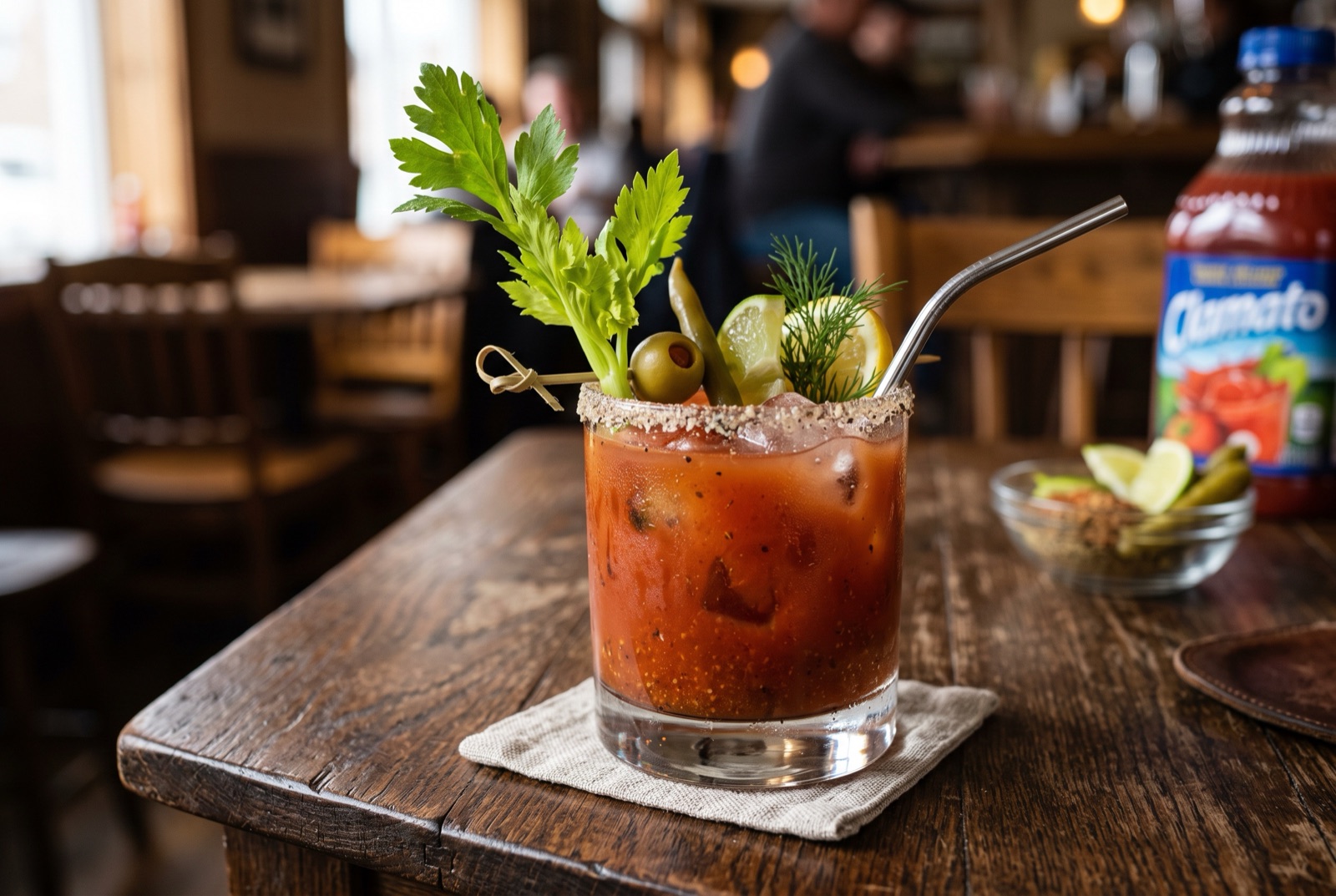
Canada has 9 more dishes in the atlas — Bloody Caesar and Butter Tarts, and 7 more.
Recipe by The DishRoute Kitchen · published August 20, 2026 · updated August 20, 2026