Flæskesteg.
Danish Roast Pork with Crackling
Flæskesteg med sprød svær · say it: FLESK-eh-sty
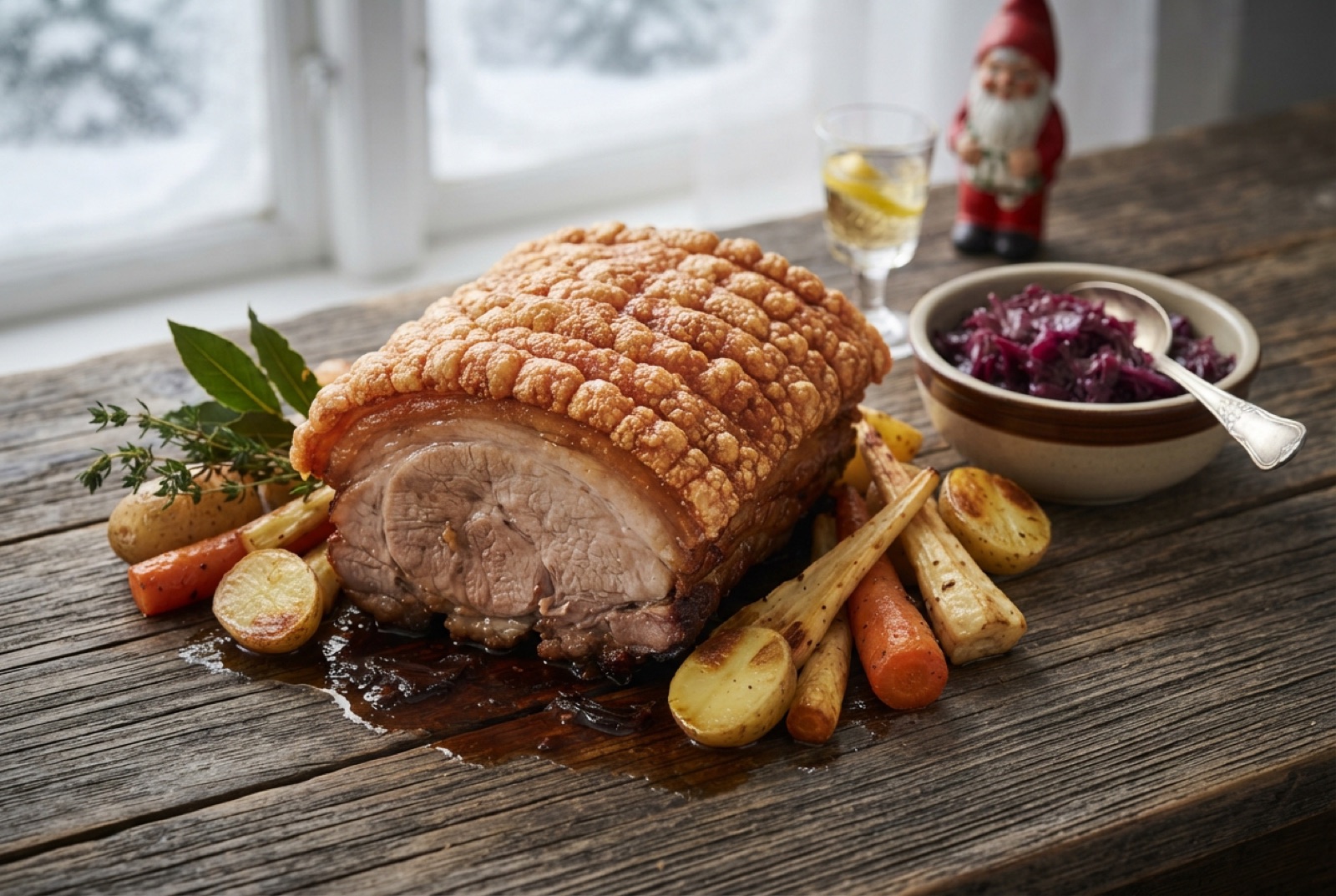
Flæskesteg is a joint of pork roasted with its rind on, scored into narrow strips and cooked so that the skin transforms into brittle, blistered crackling — sprød svær — while the meat underneath stays juicy. The seasoning is almost nothing: coarse salt worked deep into the cuts, bay leaves pushed between them, and the pork's own fat. It is the centrepiece of the Danish Christmas Eve table, carved at the table with the crackling snapped into shards, and served with braised red cabbage, caramelised potatoes and brown gravy. The whole dish is judged on one thing, and every Dane at the table will look at it first: whether the crackling crackled everywhere.

- Gate
- Denmark
- Prep
- 25 min
- Cook
- 2 hr 30 min
- Total time
- 3 hr 15 min incl. 20 min rest
- Serves
- 6
- Status
- Takes skill
- Nutrition / serving · estimated
- Calories 690 kcal
- Protein 45 g
- Carbs 12 g
- Fat 50 g
- Fiber 1 g
- Sodium 1100 mg
Why this recipe works.
- Two-stage roasting — a moist low start, then dry high heat — which cooks the meat through without drying it and gives the rind time to blister.
- Explains levelling the joint with foil, the single fix for the half-crackled roast that ruins most first attempts.
- Salt is worked into the scored cuts rather than rubbed on the surface, which seasons the fat all the way down.
- Includes the brown gravy built from the roasting juices, so the roast and its sauce come from one tray.
Ingredients.
12 itemsThe roast
Brown gravy
Equipment
- Roasting tray with a rack
- Sharp knife or scalpel for scoring
- Meat thermometer
- Aluminium foil for levelling
Instructions.
Score and salt
Check the scoring and deepen any shallow cuts so they run through the rind and fat but stop short of the meat. Dry the rind completely with kitchen paper, then push coarse salt down into every cut with your fingers until each groove is packed.
Fit the bay leaves
Wedge the bay leaves into the cuts along the length of the joint, spacing them evenly. They will scorch at the edges as the fat renders and perfume the whole roast from the inside of the scoring.
Roast low with water
Heat the oven to 160°C. Sit the joint on a rack over the tray with the onions and carrots below, pour the water into the tray, and check with a spirit level or your eye that the rind sits dead flat — prop the low side with crumpled foil. Roast for 1 hour 15 minutes.
Tip Check the levelling again after 30 minutes. The joint changes shape as the fat renders and can tip.
Turn up the heat for the crackling
Raise the oven to 220°C and roast for another 30–45 minutes, until the rind has puffed into blistered, glassy squares that sound hollow when tapped and the centre of the meat reads 65–68°C. Watch the last ten minutes closely.
Rescue any soft patches
If parts of the rind are still leathery when the meat is up to temperature, lift the joint out, cover the exposed meat with foil and put it under a hot grill for 3–8 minutes. Do not walk away — soft rind turns to charcoal in under a minute at this stage.
Rest uncovered
Move the roast to a board and rest it for 15–20 minutes with nothing over it. Covering it now would trap steam under the crackling and undo everything you have just done.
Make the brown gravy
Strain the tray juices into a jug and skim off the fat. Melt the butter in a pan, whisk in the flour and cook for a minute until it smells nutty, then add the juices and stock a little at a time, whisking smooth. Simmer 5 minutes, stir in the cream and jelly, and darken with a few drops of gravy browning.
Carve and serve
Cut the crackling off in one sheet, snap it into shards, then slice the meat about 1 cm thick. Give everyone meat and crackling, and serve with red cabbage, caramelised potatoes and plenty of the gravy.
Tips from our kitchen.
- Buy the joint with the rind on and ask the butcher to score it if it is not pre-scored. Cuts should go through the rind and the fat but stop just short of the meat.
- Dry the rind thoroughly with kitchen paper before salting. Any surface moisture steams the skin during the crucial first hour.
- Work coarse salt down into every single cut with your fingers — not sprinkled over the top, where it does nothing but season the tray.
- Set the joint dead level in the tray, propping the low side with crumpled foil. A tilted roast gives you crackling at one end and rubber at the other.
- If patches of rind are still soft when the meat is cooked, move the roast under a hot grill for 3–8 minutes and stand there watching it. It goes from pale to burnt fast.
- Rest the roast uncovered. Foil traps steam and softens crackling you spent two hours earning.
Substitutions.
- Pork neck or loin with rind → Boneless pork shoulder with the rind left on
- Shoulder is fattier and more forgiving, though it needs longer at the low temperature. What you cannot substitute is the rind — a rindless joint makes a decent roast but not a flæskesteg.
- Bay leaves between the cuts → Whole cloves pushed into the cuts, or nothing at all
- Bay is the Danish standard. Cloves show up in some family recipes and lean the roast toward the Christmas ham end of the spectrum.
- Gravy browning for the sauce → A teaspoon of dark soy sauce or a spoonful of caramelised sugar
- Danish brun sovs is deliberately dark. If your pan juices come out pale, this is how Danish kitchens fix the colour without changing the flavour much.
Variations.
- Flæskesteg sandwich
- Cold roast sliced onto buttered rye with red cabbage and a shard of crackling on top. This is what Boxing Day looks like in Denmark, and the leftovers are half the reason for the size of the joint.
- Beer-basted roast
- Dark Danish beer instead of water in the tray for the first stage. It deepens the gravy considerably and adds a faint malt sweetness to the pan juices.
- Ribbensteg
- The same treatment on a bone-in pork rib roast, which many Danes consider the better cut for Christmas because the bones keep the meat juicier.
Storage & reheating.
Cold flæskesteg keeps 4 days refrigerated and is genuinely prized as leftovers, sliced onto rye bread. Store the meat wrapped and the crackling separately in a paper bag at room temperature so it stays dry — sealed in plastic in the fridge it goes soft and chewy within hours. Warm slices gently in a covered dish with a spoonful of gravy at 150°C; re-crisp crackling in a hot oven for a few minutes on its own. The gravy keeps 3 days and freezes well; the roast itself freezes acceptably for 2 months, but the crackling does not survive it.
Serve with
Braised red cabbage, caramelised potatoes (brunede kartofler), boiled potatoes and brown gravy — the full Danish Christmas plate.
The story behind Flæskesteg.
Roast pork carries more weight in Denmark than a roast usually does anywhere. It is the dish of julaften, Christmas Eve, when families eat it alongside roast duck, and it turns up again at confirmations, birthdays and Sunday tables through the year. Danish supermarkets sell the joint pre-scored specifically for it, and every December the newspapers and television run the same anxious features about how to guarantee the crackling, which tells you where the national attention sits.
The cut matters. Danes use svinekam — pork loin with a thick fat cap and rind attached — or the fattier nakkefilet from the neck. The rind is scored down to but not into the meat, in narrow strips about a centimetre apart, and coarse salt is pushed into every cut. Bay leaves are wedged in between the strips, which is the one flavouring the classic recipe allows and which perfumes the fat as it renders. Some cooks roast the joint sitting in a shallow bath of water for the first stage to keep the meat moist while the rind dries, and some finish under a grill; both are common and both are argued about.
The failure everyone fears is uneven crackling — one end blistered and glassy, the other still rubbery. It comes from a joint sitting crooked in the tray, so the fat runs to the low end and boils the rind instead of crisping it. Danish cooks correct this with crumpled foil under the low side, and check it repeatedly, which is not fussiness but experience. When it works, the sound of the knife going through the top is the point of the whole meal, and the shards are divided as carefully as the meat.
Questions, answered.
Why did only part of my crackling crisp up?
The joint was not level in the roasting tray. Rendered fat runs to the low side and boils the rind there instead of drying it, so that end stays rubbery while the high side blisters. Prop the low side with crumpled foil before roasting and check again after an hour, when the shape of the joint has changed.
How deep should the rind be scored?
Through the rind and most of the fat, stopping just before the meat, in strips about 1 cm apart. Cutting into the meat lets juices escape upward and steams the skin from below. Most Danish supermarkets sell the joint already scored, and a butcher will do it on request.
What temperature should the meat reach?
Around 65–68°C in the centre for loin, measured away from bone, which leaves it juicy and faintly pink. Fattier neck or shoulder cuts take well to 70–75°C. Pull it out at the lower end of the range, since the temperature rises a couple of degrees while resting.
Should I cover the roast while it rests?
No. Covering it with foil traps steam directly under the crackling and turns two hours of work soft within minutes. Rest it uncovered on a board for 15–20 minutes; the meat stays hot enough, and the crackling keeps its snap.
Can I roast it a day ahead for a party?
Partly. Roast, cool and refrigerate the meat, then reheat it covered at 150°C and crisp the crackling separately in a hot oven just before serving. It will not be quite as good as fresh, but for a large Christmas table it is a reasonable trade, and Danish caterers do exactly this.
You might also like.
All recipes →
Keep exploring Denmark.
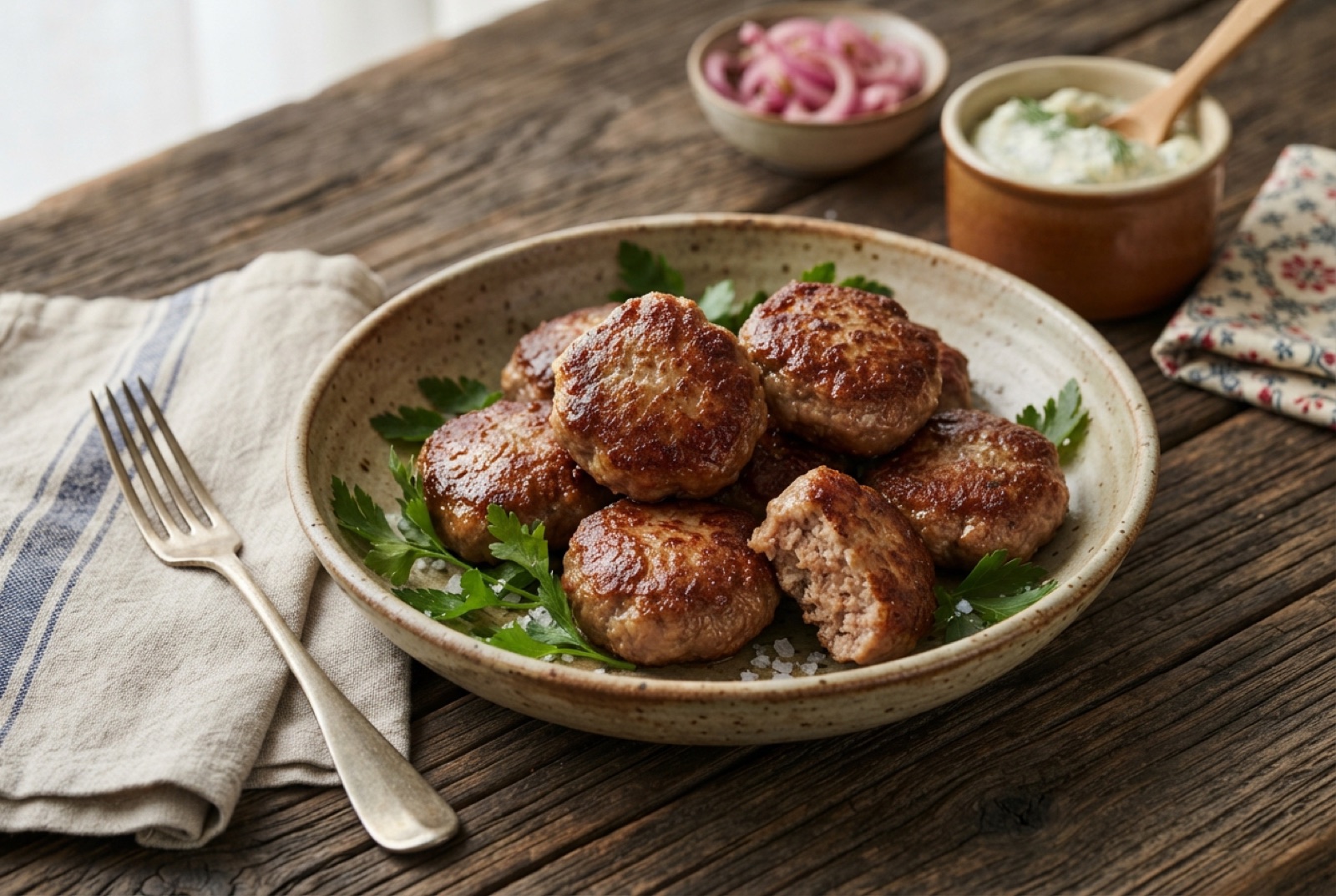
Denmark has 9 more dishes in the atlas — Æbleskiver and Frikadeller, and 7 more.
Recipe by The DishRoute Kitchen · published August 19, 2026 · updated August 19, 2026