Garba.
Attiéké with Fried Tuna
Garba · say it: GAR-bah
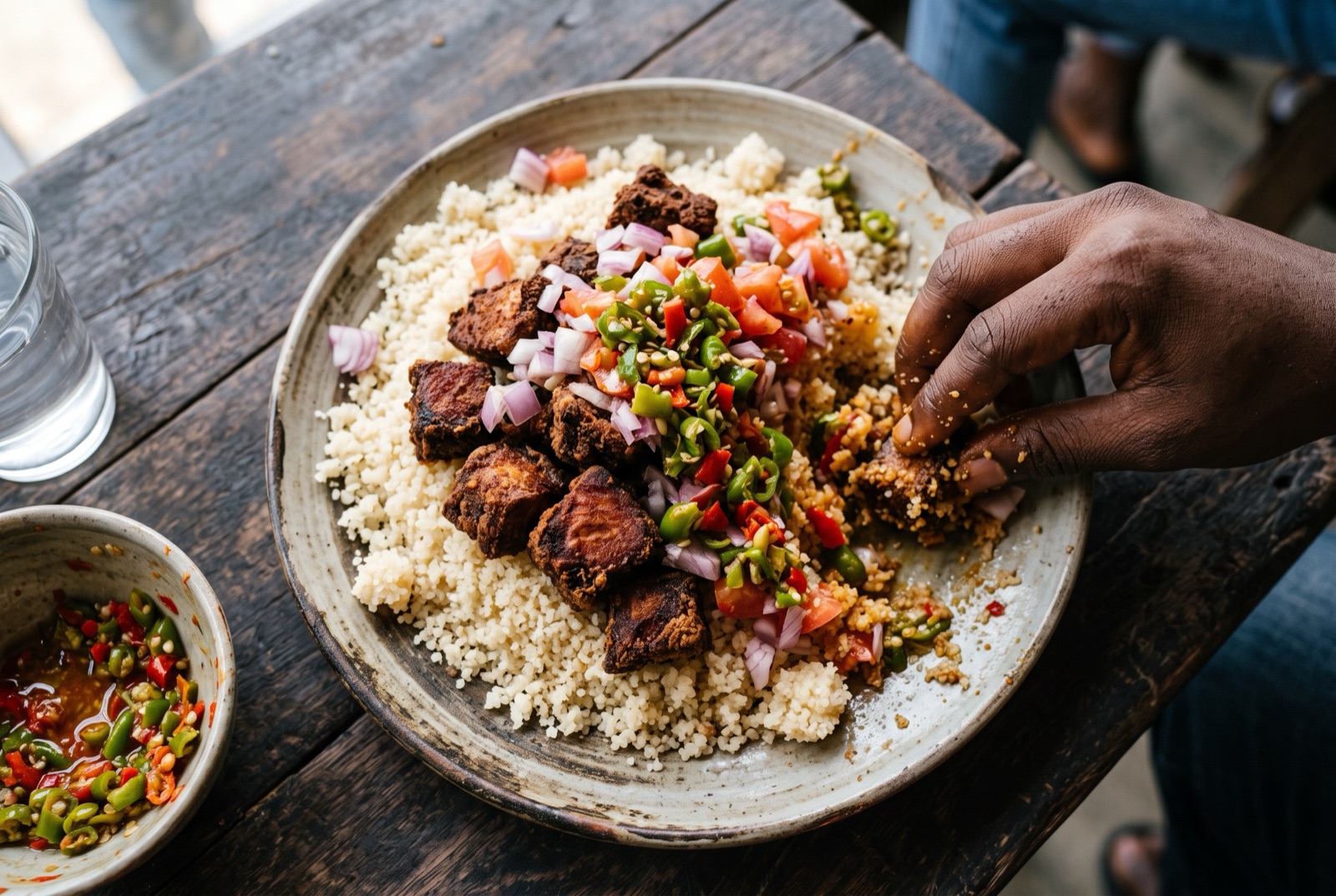
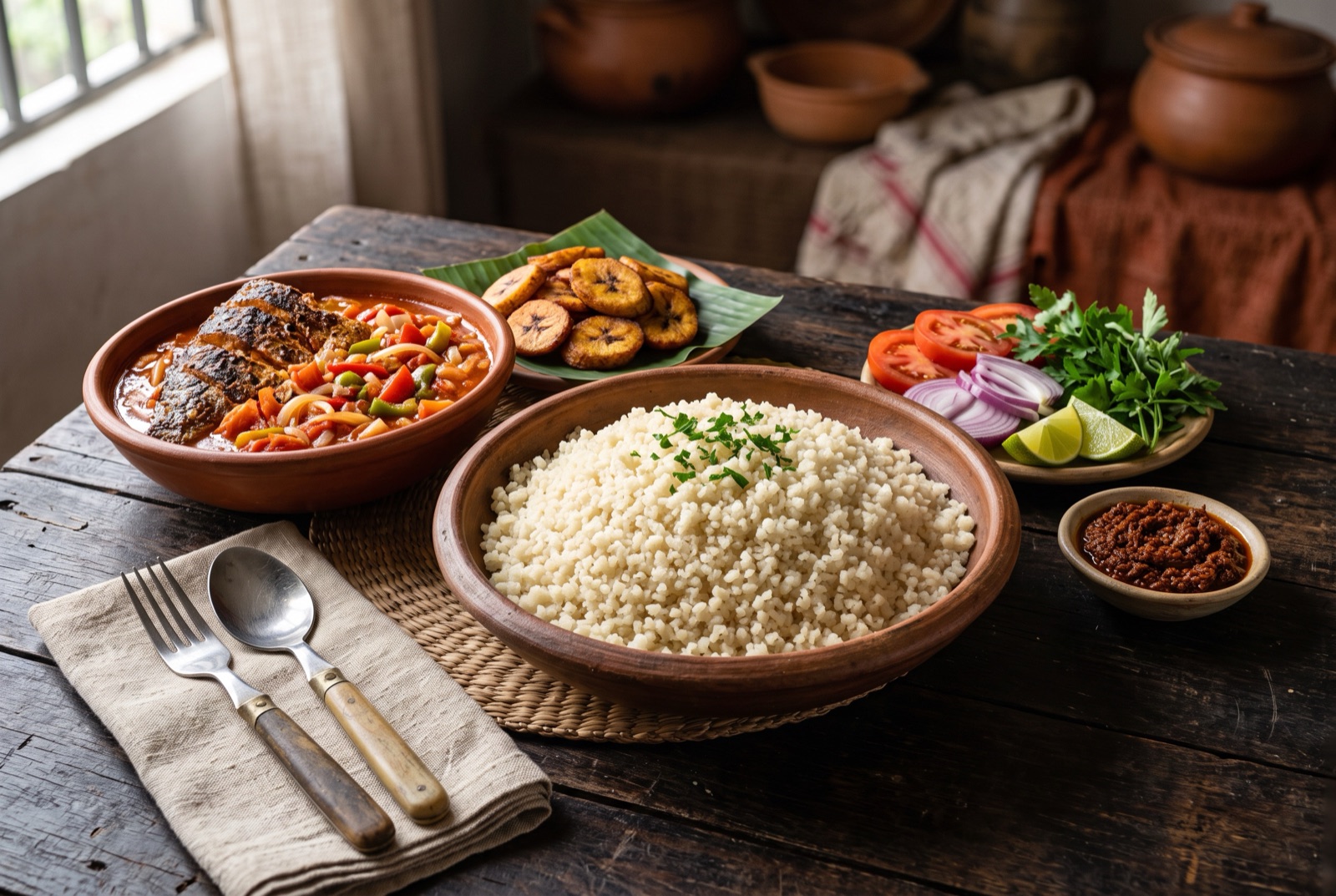
Garba is fried tuna on attiéké, and almost nothing else. Chunks of tuna go into deep oil until the outsides are firm and browned and the insides stay just moist, then they are tipped onto a heap of steamed fermented cassava granules with chopped onion, tomato, salt and enough ground chilli to make the whole thing sting. Everything about it is direct: the fish is oily and hot, the attiéké is cool and faintly sour, the onion is raw, and the pepper is not negotiable. It costs very little in Abidjan and is sold from wooden kiosks by the roadside, wrapped in paper and eaten standing up with the fingers. At home it comes together in half an hour if the attiéké is already made or bought.

- Gate
- Ivory CoastAbidjan
- Prep
- 20 min
- Cook
- 20 min
- Total time
- 40 min
- Serves
- 4
- Status
- Easy
- Nutrition / serving · estimated
- Calories 620 kcal
- Protein 42 g
- Carbs 58 g
- Fat 24 g
- Fiber 4 g
- Sodium 950 mg
Why this recipe works.
- Fries the tuna the way the kiosks do — hard and fast, so the surface crusts before the inside dries out.
- Gets the attiéké to the right temperature and looseness, which is half of what makes garba work.
- Seasons in the correct order, salting the fish before and the plate after.
- A complete meal from one pan, with no sauce to make and nothing to marinate.
Ingredients.
9 itemsFor the fish
For the plate
Equipment
- Deep pan or wok for frying
- Slotted spoon
- Kitchen thermometer, if you have one
Instructions.
Season the tuna
Toss 600 g of tuna cubes with the salt and black pepper and leave them uncovered on a plate for 10 minutes. Blot the surfaces dry with kitchen paper just before frying — the seasoning stays, the surface moisture goes.
Get the attiéké ready
If the attiéké is cold or clumped, steam it for 5 minutes and break it up with a fork into separate grains, then leave it uncovered to come down to room temperature while you fry.
Tip Serving it hot muddles the dish. The cool sour granules are what balance the oil.
Heat the oil hard
Bring the oil to 180°C in a deep pan. Drop in one cube of fish as a test: it should hiss loudly straight away and float within a couple of seconds, with vigorous bubbling all around it.
Fry the fish
Fry the tuna in two batches for 3 to 4 minutes, turning once, until the outside is firm and evenly browned with darker crusted corners. Lift each batch onto kitchen paper and let the oil recover before the next.
Tip Pull it while the very centre still looks slightly translucent. It finishes cooking on the plate.
Build the plate
Mound the attiéké on plates or in paper, scatter over the sliced onion and tomato wedges, and pile the hot tuna on top. Crumble over the stock cube if you use it.
Season at the table
Put the ground chilli in a small dish and let everyone add their own, then eat immediately while the fish is still hot against the cool attiéké. A squeeze of lemon over the top is optional and common.
Tips from our kitchen.
- Cut the tuna into 3 cm cubes and pat them completely dry. Wet fish drops the oil temperature and steams rather than browning.
- Season the cubes with salt and pepper at least 10 minutes before frying so the seasoning gets past the surface, then blot them again before they go in.
- The oil should be hot enough that a cube starts hissing loudly on contact — around 180°C. This is the one dish in Ivorian cooking where you want the oil aggressive.
- Do not fry tuna past four minutes. It goes from firm to dry and cottony very quickly, and the residual heat keeps working after it leaves the pan.
- Serve attiéké at room temperature, not hot. Cold sour granules against hot fish is the contrast the dish is built on.
- Put the ground chilli on the table rather than mixing it in, since garba is ordered by heat level and everyone's is different.
Substitutions.
- Fresh tuna → Swordfish, bonito, mackerel or firm white fish
- Any dense fish that holds a cube shape works. Avoid delicate flaky fillets, which fall apart in the oil.
- Home-made attiéké → Dried or frozen attiéké from an African grocer
- Entirely normal, including in Ivorian households abroad. Rehydrate dried attiéké with hot salted water, cover 10 minutes, then steam briefly and fluff.
- Ground chilli → Fresh scotch bonnet, minced into the onion and tomato
- Kiosks use dry ground pepper for speed and shelf life; fresh chilli gives a fruitier heat and works just as well at home.
Variations.
- Garba with extra fish
- The standard upgrade at any kiosk: the same plate with a much larger share of tuna, ordered when you are properly hungry.
- Garba with avocado
- Sliced avocado laid over the top, which softens the chilli and adds a cool richness against the fried fish.
- Grilled garba
- Tuna steaks grilled over charcoal rather than deep-fried, then cubed onto the attiéké — leaner, smokier, less like the street original.
Storage & reheating.
Garba is assembled to order and does not hold. Fried tuna reheats poorly, drying out within a minute in a pan or microwave, so fry only what you will eat. Leftover attiéké keeps 3 days refrigerated and can be revived with a sprinkle of water and 5 minutes of steaming. If you have cooked too much fish, chill it and use it cold in a salad rather than reheating it.
Serve with
Nothing, really. A cold drink and a lot of napkins.
The story behind Garba.
Garba is a city dish and a recent one by the standards of most things in this atlas. It grew out of the kiosks that line Abidjan's streets, run largely by Hausa-speaking traders from Niger and Burkina Faso, and the name is widely understood to come from a personal name common among them. The formula never varies much — fried fish, attiéké, onion, pepper — because the whole point is a hot meal for the price of a bus fare, sold fast to workers, students and anyone else passing at the right hour.
The fish is almost always tuna, which arrives cheaply through Abidjan's port, one of the largest tuna handling hubs in Africa. Kiosks buy the cuts that do not go for export, cube them, and fry them in oil that has been working all day, which is exactly why kiosk garba tastes more intense than the home version — the oil carries the memory of everything fried in it before. That is not something to reproduce at home, and it does not need reproducing; fresh oil gives a cleaner result that most people will prefer.
What makes garba more than the sum of its parts is the temperature and texture contrast built into it. Attiéké is served at room temperature, its sourness cutting the oil straight away; the tuna arrives blisteringly hot; the onion is raw and crunchy and the chilli is applied with a heavy hand. Regulars order by size and specify their pepper level, and it is normal to eat it without cutlery, pressing a little attiéké and a piece of fish together between the fingers. Nothing about the dish is refined, and it is one of the most-eaten meals in the country.
Questions, answered.
What kind of fish is used for garba?
Tuna, almost always, and usually the cheaper cuts rather than prime loin. Abidjan is a major tuna port, which is why the fish is affordable enough for a street meal. Any dense fish that holds its shape in hot oil will do at home — swordfish, bonito and firm white fish all work, while delicate fillets disintegrate.
Do I have to make the attiéké myself?
No. Ready-made attiéké is sold fresh, frozen and freeze-dried in African grocers and online, and Ivorian families abroad buy it routinely. Dried attiéké needs rehydrating with hot salted water and a short steam before serving. Making it from scratch is a two-day fermentation project worth doing once, but it is not what a garba kiosk does either — they buy theirs too.
Why is my fried tuna dry?
It was in the oil too long. Tuna has very little connective tissue and goes from just-cooked to dry within about a minute, especially in cubes. Three to four minutes at 180°C is enough for a 3 cm piece, and it will continue cooking on the plate. Pull it when the outside is browned and the centre still looks slightly darker than the edges.
How spicy is garba supposed to be?
Hot by design, though the eater sets the level. Kiosks ask how much pepper you want and apply ground chilli generously by default. Serving the chilli separately at home lets everyone dose their own plate, which is closer to how it actually works than seasoning the whole dish uniformly.
Is garba eaten with cutlery?
Usually not. It is street food eaten with the right hand, pressing a pinch of attiéké together with a piece of fish and some onion. A fork is perfectly acceptable at home and no one will object, but eating it by hand is part of what the dish is.
You might also like.
All recipes →
Keep exploring Ivory Coast.
Ivory Coast has 9 more dishes in the atlas — Alloco and Attiéké, and 7 more.
All Ivory Coast recipes Tuna recipes Cassava recipes Onion recipes street foodmainpescatariangluten freedairy freenut freeRecipe by The DishRoute Kitchen · published August 20, 2026 · updated August 20, 2026