Hilachas.
Guatemalan Shredded Beef in Tomato Sauce
Hilachas · say it: ee-LAH-chahs
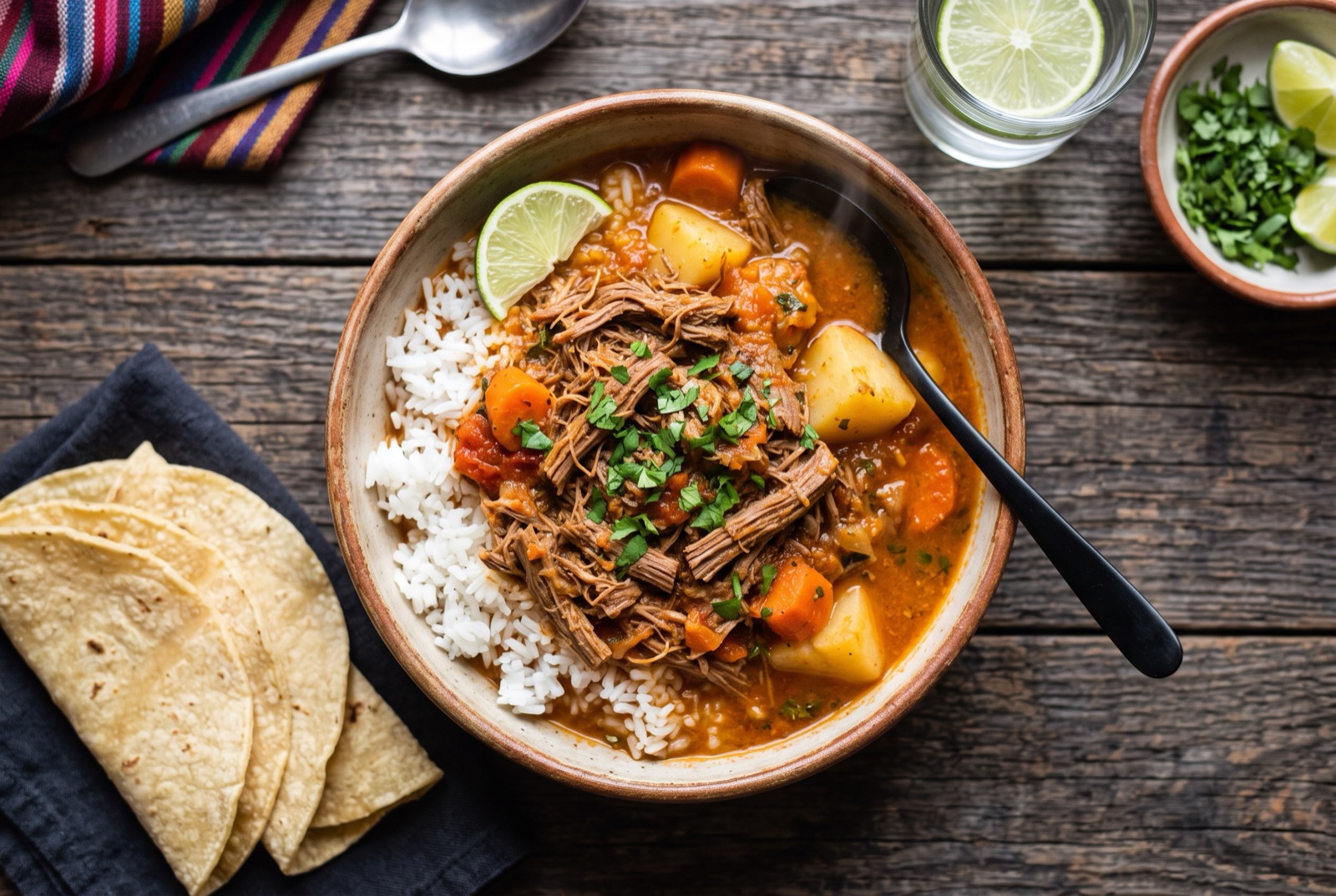
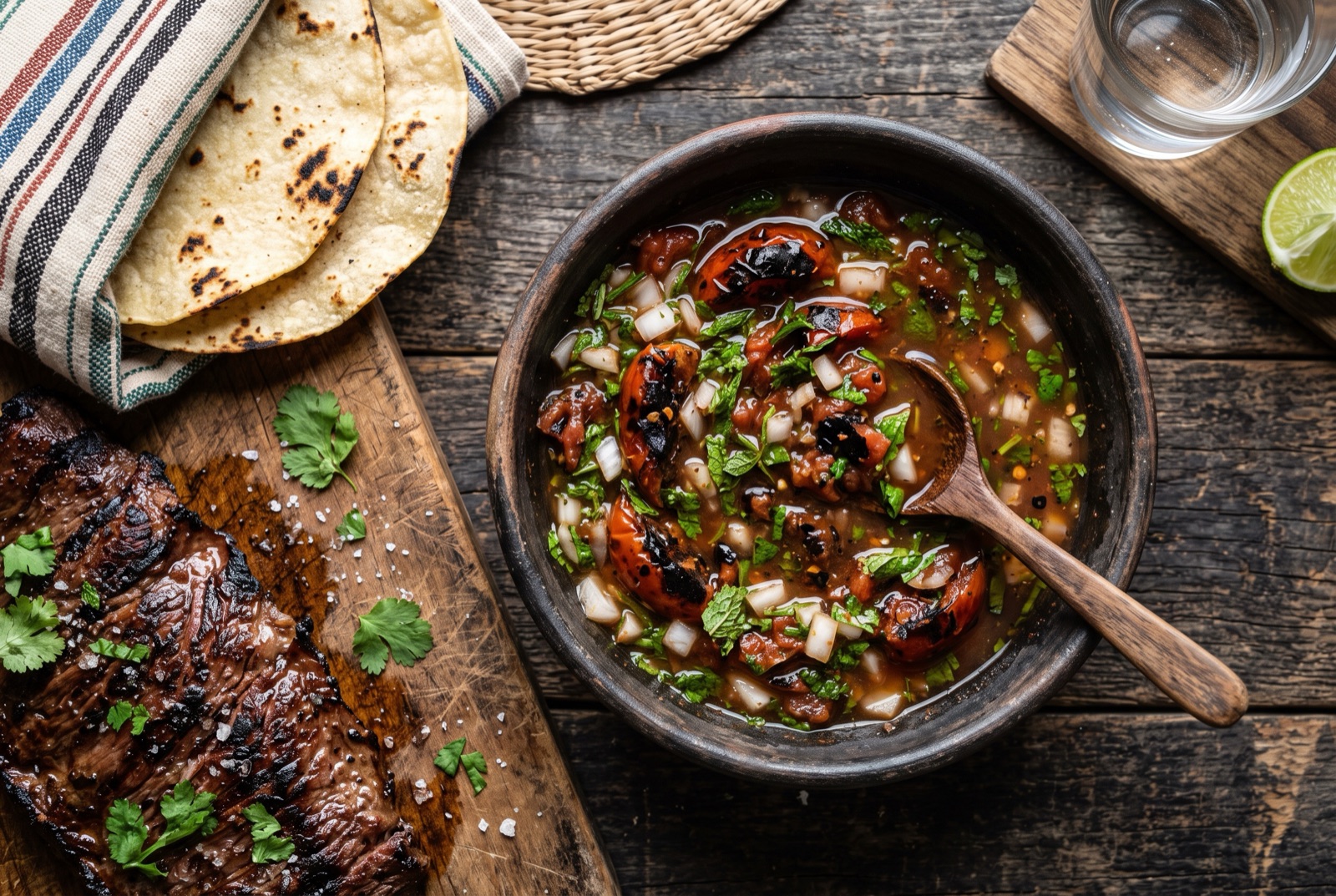
Hilachas means "rags", and that is exactly what the beef looks like: flank or brisket simmered until it surrenders, then pulled apart into fine threads and dropped back into a sauce of charred tomato, mild dried chile and the beef's own broth. Potato and carrot cook in the same pot, so the stew lands somewhere between a soup and a ragù — loose enough to need a spoon, meaty enough to be dinner. The flavour is gentle and tomato-forward with a smoky edge from the toasted chiles, and it is not spicy at all unless you put salsa on it yourself. It is one of the most common home-cooked lunches in Guatemala precisely because it stretches a cheap cut across a whole table.

- Gate
- GuatemalaGuatemala City
- Prep
- 20 min
- Cook
- 2 hr
- Total time
- 2 hr 20 min
- Serves
- 4
- Status
- Medium
- Nutrition / serving · estimated
- Calories 520 kcal
- Protein 44 g
- Carbs 30 g
- Fat 24 g
- Fiber 5 g
- Sugar 8 g
- Sodium 820 mg
Why this recipe works.
- The beef is shredded by hand rather than sliced, which is the entire point and the reason the sauce clings to it.
- The cooking broth becomes the sauce base, so nothing tastes watered down and no stock cube is needed.
- Charred tomato and toasted chile give real depth from very ordinary ingredients.
- Cheap cut, one pot, and it feeds four with leftovers that reheat better than the first day.
Ingredients.
17 itemsFor the beef
For the sauce
For the pot
To finish
Equipment
- Large pot or Dutch oven
- Dry frying pan or comal
- Blender
- Two forks for shredding
Instructions.
Simmer the beef
Put the beef in a large pot with the water, halved onion, crushed garlic, bay leaves and salt. Bring to a simmer, skim the foam, then cover partly and cook at the barest bubble for 90 minutes to 2 hours, until a fork twisted into the meat pulls fibres away without resistance.
Tip Keep the surface trembling rather than bubbling. Hard boiling tightens the muscle and you will be waiting even longer.
Shred and reserve the broth
Lift the beef onto a board and let it cool for 10 minutes, then pull it apart with two forks, following the grain, into long thin threads. Strain the broth and keep 1 litre of it — this is the body of the sauce.
Char and toast for the recado
Set a dry pan over medium-high heat. Toast the opened chiles for 20 seconds a side until fragrant and slightly darkened, then char the tomatoes, tomatillos, quartered onion and unpeeled garlic for 8–10 minutes, turning, until the skins blister and go black in patches.
Tip A little black is what you want. Chiles that smoke or turn brittle are burnt — start those again.
Blend the sauce
Peel the charred garlic and blend it with the tomatoes, tomatillos, onion, chiles and 300 ml of the reserved broth until completely smooth and deep orange-red. Blend for at least a minute so no chile skin remains.
Fry the sauce
Heat the oil in the rinsed pot over medium heat and pour in the blended sauce. Fry for 8 minutes, stirring, until it darkens, thickens noticeably and a spoon dragged across the base leaves a trail that holds for a second.
Cook the vegetables
Pour in the remaining 700 ml of broth, add the potato and carrot, and simmer uncovered for 20 minutes, until the potato is tender at the centre when pierced and the sauce has reduced to the thickness of a loose soup.
Finish with the beef
Stir in the shredded beef and simmer 10 minutes more, so the threads soften further and take on the colour of the sauce. Season with salt and black pepper, scatter over the cilantro, and serve ladled over white rice with tortillas.
Tips from our kitchen.
- Use flank, brisket or skirt — cuts with long visible fibres. Cubed stewing steak crumbles into mush instead of pulling into threads.
- Do not shred the beef until it falls apart under light pressure from two forks. If you have to fight it, give it another twenty minutes in the broth.
- Shred with the grain into long strands rather than chopping across it. Short pieces make the stew feel like mince.
- Char the tomatoes and tomatillos on a dry pan until the skins split and blacken in places. Blending raw tomato gives a thin, sharp sauce with none of the smokiness.
- Salt the sauce only after it has reduced. The broth concentrates as it cooks and a stew seasoned early turns out too salty.
- Keep the stew loose. Hilachas should pour off the spoon over rice, not sit on the plate in a mound.
Substitutions.
- Guaque and pasa chiles → Guajillo and ancho chiles
- Both are mild and dried and behave the same way. If you cannot find any dried chile at all, use 2 teaspoons of sweet paprika plus a small pinch of chile flakes — the colour holds up better than the flavour.
- Tomatillos → One extra tomato plus a squeeze of lime at the end
- Tomatillos supply tartness rather than tomato flavour, so acid is what you need to replace, not bulk.
- Beef flank → Beef brisket, skirt, or bone-in shank
- Shank takes longer but gives a richer broth thanks to the collagen. Add 45 minutes to the simmering time.
Variations.
- Hilachas con güisquil
- Chayote squash added with the carrot, cut into thick wedges. It stays slightly crunchy and lightens the whole pot.
- Caldo de hilachas
- Thinned with extra broth and served as a soup in its own right, with the rice served on the side rather than under it.
- Spicy hilachas
- A single chile cobanero or chiltepe blended into the recado, which takes the dish from mild to genuinely hot without changing anything else.
Storage & reheating.
Hilachas keeps 4 days refrigerated and is better on day two, once the shredded beef has soaked up the sauce. Reheat in a pan over low heat with a splash of water, since the potato thickens the stew overnight. It freezes for 3 months, though the potato goes slightly grainy — leave it out if you are freezing deliberately and boil fresh potato into the reheated stew.
Serve with
White rice, corn tortillas, and sliced avocado to cool the plate.
The story behind Hilachas.
The technique behind hilachas — boil tough meat, shred it, sauce it — belongs to a family of Latin American dishes that includes Cuban ropa vieja, Venezuelan carne mechada and Mexican salpicón, all of which solve the same problem: how to make a hard-working cut of beef feed a lot of people. The Guatemalan answer differs in its sauce. Where Cuban cooks build on sofrito, peppers and wine, Guatemalan cooks build on a recado of tomato and tomatillo charred on the comal and blended with toasted guaque and pasa chiles, which gives hilachas a rounder, less acidic, faintly smoky character.
What makes the dish specifically Guatemalan is the vegetables. Potato and carrot go in and stay in, cut chunky, until the sauce tastes as much of them as of the beef. Some households add güisquil or green beans; some thin the stew considerably and treat it as a caldo. Cooks in the capital tend to keep it thicker and serve it over white rice, which is the usual way it appears on a menú del día in a comedor, alongside a stack of tortillas.
Hilachas is comida corriente — everyday food — rather than fiesta food, and nobody makes a ceremony of it. But it is one of the first dishes Guatemalan cooks abroad reproduce, because it needs no specialist equipment, the meat is cheap, and the whole thing reheats better than it cooks. The main thing to get right is patience with the meat: beef pulled while still firm gives short, chewy shreds, while beef simmered until it collapses on its own gives the long, soft threads the dish is named for.
Questions, answered.
What cut of beef should I use for hilachas?
Flank steak is the classic choice because its long fibres pull into neat threads, but brisket, skirt steak or bone-in shank all work. Avoid pre-cut stewing cubes and lean cuts like topside, which break into crumbs rather than strands no matter how long you cook them.
Why is my beef still tough after shredding?
It was pulled out of the broth too early. Tough cuts need enough time for collagen to melt, usually 90 minutes to 2 hours at a bare simmer, and there is no shortcut. If the shreds are chewy, return them to the broth and simmer another 20 to 30 minutes — shredded meat reabsorbs liquid and softens quickly.
Is hilachas spicy?
No. Guaque and pasa chiles are dried, mild and used for colour and smoky depth rather than heat, so the stew tastes savoury and tomato-rich. Guatemalans add heat at the table from a bowl of salsa, which means the same pot suits children and chile lovers at once.
Can I make hilachas in a pressure cooker?
Yes, and it saves over an hour. Pressure cook the beef with the aromatics for 35 minutes at high pressure, release naturally, then shred and continue with the sauce as written. Use slightly less water than the recipe calls for, since a sealed pot loses almost nothing to evaporation.
What is the difference between hilachas and ropa vieja?
Both are shredded beef in tomato sauce, but ropa vieja is Cuban and built on a sofrito of peppers, onions, olives and often wine or cumin, and is usually thicker. Guatemalan hilachas uses a blended recado of charred tomato and toasted dried chile, includes potato and carrot, and is served loose enough to spoon over rice.
You might also like.
All recipes →
Keep exploring Guatemala.
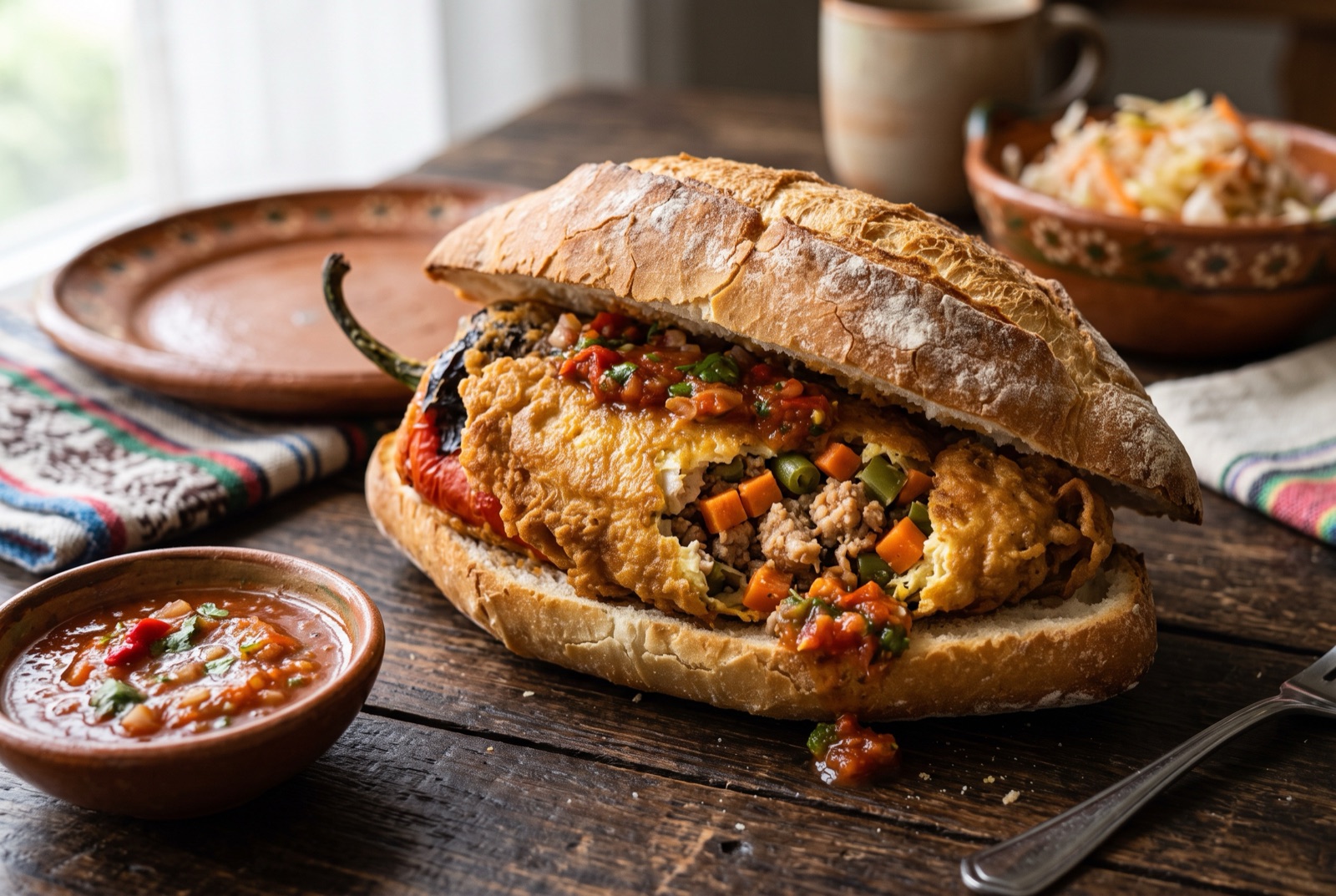
Guatemala has 9 more dishes in the atlas — Atol de Elote and Chiles Rellenos Guatemaltecos, and 7 more.
Recipe by The DishRoute Kitchen · published August 20, 2026 · updated August 20, 2026