Miso Soup with Dashi from Scratch.
味噌汁 · Misoshiru · say it: mee-so-SHEE-roo
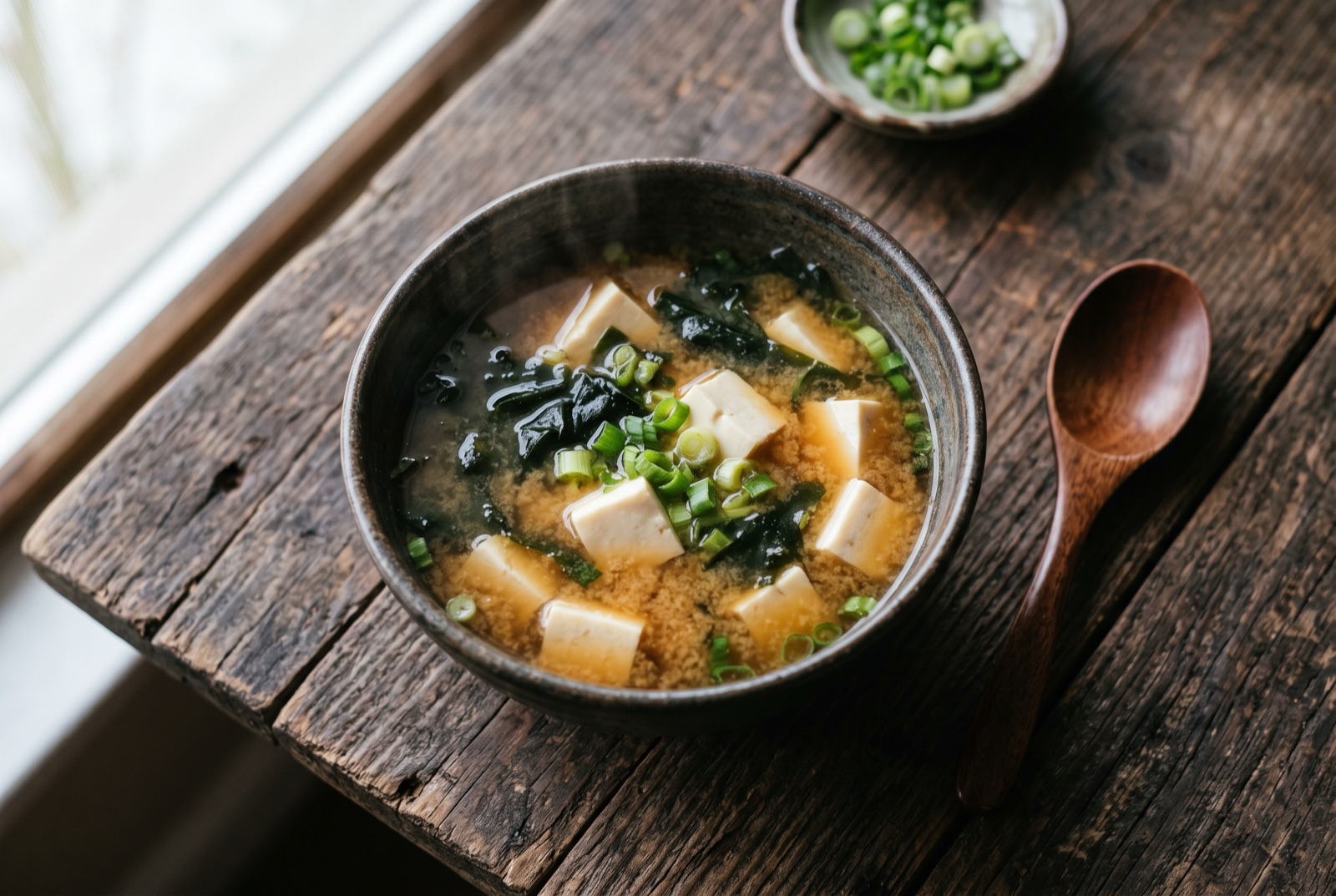
Miso soup is the daily soup of Japan: a light, savory broth of dashi with miso whisked in, holding a few quiet ingredients — here, silken tofu, wakame seaweed and scallions. Made properly it tastes clean and deeply savory at once, the smokiness of katsuobushi under the fermented saltiness of miso, and it bears almost no resemblance to the flat instant versions. The whole thing takes about fifteen minutes, because real dashi is a ten-minute infusion, not a long-simmered stock. Two techniques carry the dish: draw the dashi gently so it stays clear and sweet, and add the miso off the boil so its aroma survives to the bowl.

- Gate
- Japan
- Prep
- 10 min
- Cook
- 15 min
- Total time
- 25 min
- Serves
- 4
- Status
- Easy
- Nutrition / serving · estimated
- Calories 90 kcal
- Protein 8 g
- Carbs 6 g
- Fat 4 g
- Sodium 850 mg
Why this recipe works.
- Real ichiban dashi from kombu and katsuobushi in about ten minutes — no instant granules.
- The miso goes in off the boil, so its aroma reaches the bowl instead of steaming away.
- Silken tofu and wakame prepared so they stay intact and tender, not shredded by stirring.
- A base method you can re-fill endlessly with seasonal vegetables, clams or mushrooms.
Ingredients.
7 itemsFor the dashi
For the soup
Equipment
- Medium saucepan
- Fine strainer or sieve
- Ladle
- Small bowl for dissolving the miso
Instructions.
Steep the kombu
Put the kombu in the cold water in a saucepan and bring it up over medium-low heat, uncovered. Just as small bubbles line the pan and the water is about to boil — 8–10 minutes — lift the kombu out. The water should be faintly amber and smell of the sea.
Tip For deeper flavor, start the kombu soaking in the cold water 30 minutes (or up to overnight) before turning on the heat.
Add the katsuobushi
Bring the kombu water just to a boil, then turn off the heat and scatter in the katsuobushi. Let the flakes steep undisturbed until they sink and the liquid turns pale gold — about 2 minutes.
Strain the dashi
Pour the dashi through a fine strainer into a bowl, letting it drain on its own without pressing the flakes — pressing turns the stock cloudy and fishy. You should have clear, fragrant amber dashi; return it to the rinsed pan.
Rehydrate the wakame and warm the tofu
Bring the dashi to a bare simmer and add the wakame and tofu cubes. Heat gently, without stirring hard, until the wakame unfurls into tender green ribbons and the tofu is heated through, 2–3 minutes.
Dissolve the miso
Turn the heat to low. Put the 4 tbsp of miso in a ladle or small strainer, lower it into the broth, and work it through with chopsticks or a spoon until fully dissolved and the soup turns cloudy and even. Taste — add miso by the half-spoon if it needs more depth.
Tip Miso brands vary a lot in salt; season by taste, not by measurement.
Heat to the edge and serve
Bring the soup just to the point where the surface trembles and wisps of steam rise — never to a boil. Ladle into bowls, top with scallions, and serve immediately while the aroma is at its peak.
Tips from our kitchen.
- Pull the kombu out just before the water boils — boiled kombu releases sliminess and bitterness that no later step can remove.
- Wipe the kombu with a dry cloth if dusty, but leave the white powdery bloom alone; that is natural glutamate, the flavor you are after.
- Steep the katsuobushi briefly and strain without pressing the flakes — squeezing them muddies the dashi and adds a fishy edge.
- Dissolve the miso in a ladleful of broth (or through a small strainer) before it joins the pot, so the soup stays smooth with no stray lumps.
- Never boil after the miso goes in — bring the soup just to the edge of a simmer and serve. Boiling kills the aroma and flattens the flavor.
- Taste your miso first: white miso is sweeter and needs more, red is saltier and needs less. Adjust by the spoonful, not the recipe.
Substitutions.
- Katsuobushi (bonito flakes) → Kombu-shiitake dashi (add 2 dried shiitake to the kombu steep)
- The standard vegan dashi — earthier and less smoky, but genuinely traditional in Buddhist temple cooking.
- Wakame → A handful of spinach leaves, wilted in at the end
- A common household filling when there is no seaweed in the cupboard. Different character, same comfort.
- Silken tofu → Firm tofu in small dice
- Sturdier and more forgiving to stir, at the cost of the custardy texture silken tofu gives the soup.
Variations.
- Breakfast style with onion and potato
- Simmer thin-sliced onion and potato in the dashi until tender before the miso goes in — a sweet, hearty everyday version.
- Asari (clam) miso soup
- Small clams opened directly in the dashi add briny depth; use a lighter hand with the miso since clams bring their own salt.
- Red miso with mushrooms
- Aka miso with sliced fresh shiitake or enoki — deeper, saltier and more autumnal than the everyday awase bowl.
Storage & reheating.
Best the day it is made — the aroma fades with reheating. The strained dashi, though, keeps 3 days refrigerated and freezes well for a month, so make extra stock and finish each pot of soup fresh: reheat dashi, add fillings, dissolve miso off the boil. Avoid freezing the finished soup; tofu turns spongy.
Serve with
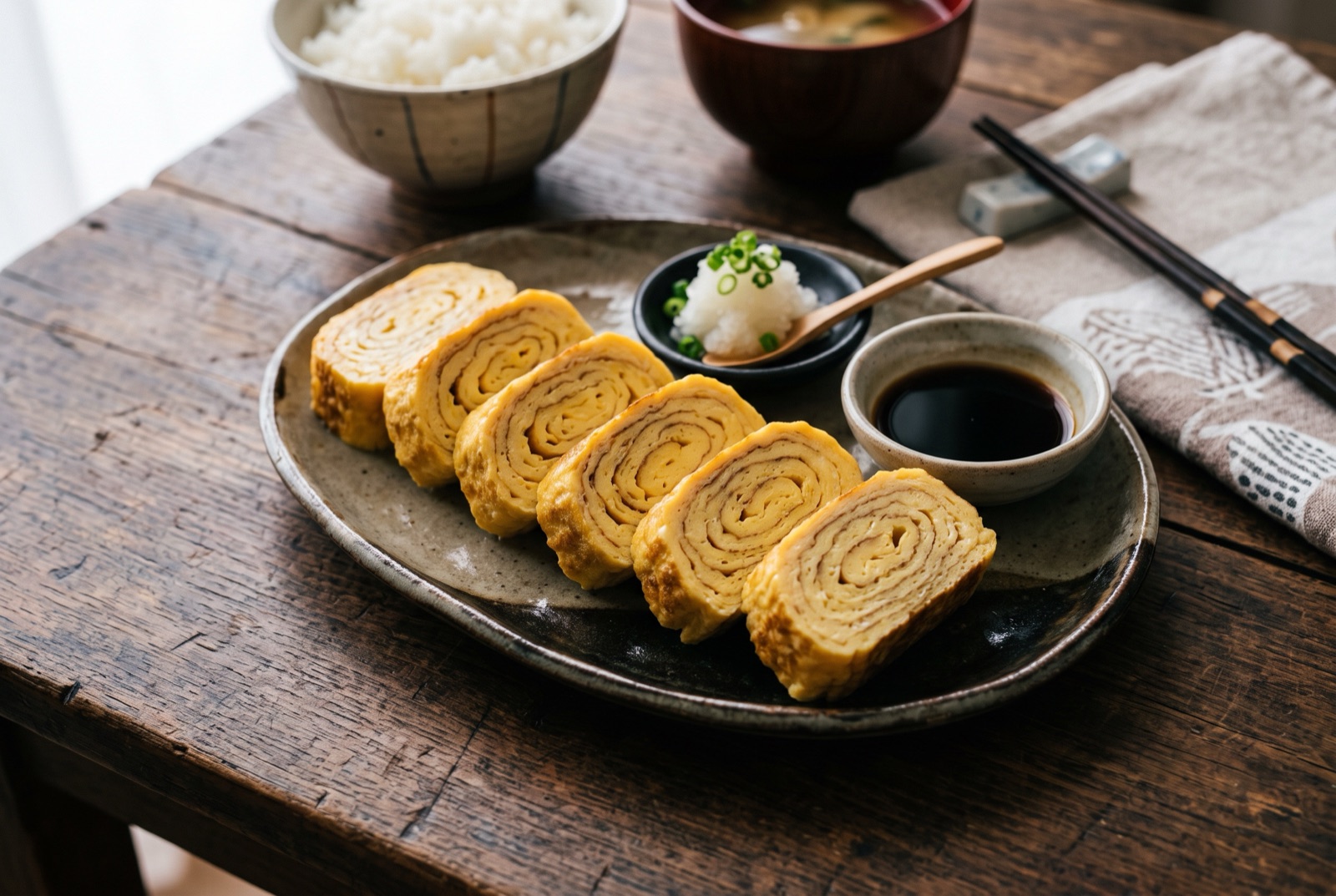
Steamed rice and a simple side — grilled fish or tamagoyaki — for a classic Japanese set meal.
The story behind Miso Soup with Dashi from Scratch.
In the traditional Japanese meal pattern — ichijū issai or ichijū sansai, "one soup, one (or three) sides" with rice — the soup is very often miso soup, at breakfast as readily as dinner. It is less a recipe than a daily practice: the base stays constant while the contents rotate with the season and the fridge — tofu and wakame, daikon, potato and onion, clams, mushrooms, greens. Households develop signatures, starting with which miso they keep: sweeter white (shiro) miso, punchier red (aka), or the blended awase that splits the difference, with real regional leanings across Japan.
Underneath every good bowl is dashi, the stock that carries Japanese cooking. The classic version pairs kombu — dried kelp, rich in the glutamates that read as umami — with katsuobushi, shavings of dried, smoked, cured skipjack tuna. Unlike Western stocks, dashi is about extraction without violence: the kombu steeps and comes out before the boil (boiled kombu turns the stock slimy and bitter), the katsuobushi steeps for barely a minute or two off the heat, and the result is a pale amber liquid of startling depth. It is the reason a soup this simple can taste this complete. Umami itself was named by the Japanese chemist Kikunae Ikeda in 1908, working from kombu dashi.
The last piece of craft is the miso. It is a living fermented paste, and its high aromatic notes are fragile; Japanese cooks dissolve it through a strainer or in a ladle at the end and never let the soup return to a full boil afterward. Boiled miso soup tastes duller and flatter — the difference is obvious in a side-by-side. Respect those two rules and the humblest soup in the repertoire becomes one of the best things you can make in fifteen minutes.
Questions, answered.
Why should miso never be boiled?
Miso is a fermented paste whose appeal is partly aromatic, and those aromas are volatile — a hard boil drives them off and leaves the soup tasting flat and merely salty. The standard Japanese practice is to dissolve miso into hot dashi at the end and bring the soup only to the edge of a simmer before serving.
What is dashi made of?
Classic dashi is a quick infusion of two ingredients: kombu (dried kelp), steeped in water and removed before boiling, and katsuobushi (shavings of dried, smoked bonito/skipjack), steeped briefly off the heat and strained. It takes about ten minutes and provides the umami backbone of miso soup and much of Japanese cooking.
Which miso should I use for miso soup — white, red or awase?
Awase (blended) miso is the most versatile starting point, balancing the sweetness of white (shiro) miso against the depth and saltiness of red (aka). White gives a gentler, sweeter breakfast-style soup; red gives a stronger, saltier one. Whichever you use, taste as you dissolve it — saltiness varies widely between brands.
Is miso soup vegan or vegetarian?
Not usually as served: classic dashi contains katsuobushi, which is dried fish, so standard miso soup is pescatarian rather than vegetarian. A fully vegan version is traditional too — steep kombu with dried shiitake mushrooms instead of using bonito. Miso paste and tofu themselves are plant-based.
Can I use instant dashi powder for miso soup?
You can — dashi granules are common in busy Japanese kitchens — but they carry MSG-forward saltiness and none of the fresh smokiness of real katsuobushi. Since scratch dashi takes about ten minutes and two ingredients, it is one of the highest-return upgrades in cooking. Try both once and the difference decides for itself.
You might also like.
All recipes →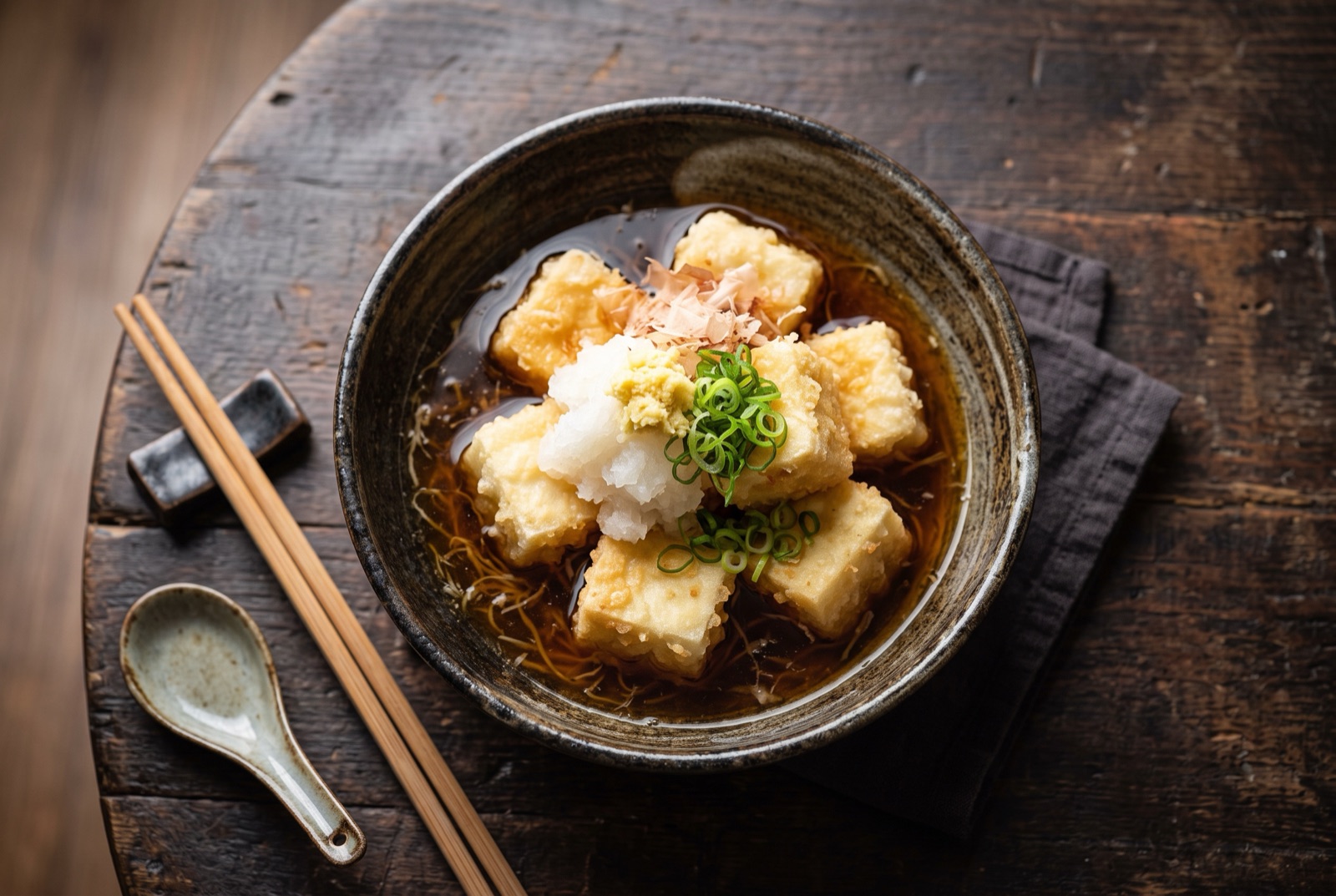
Keep exploring Japan.
Japan has 9 more dishes in the atlas — Agedashi Dofu and Chicken Teriyaki, and 7 more.
Recipe by The DishRoute Kitchen · published August 18, 2026 · updated August 18, 2026