Philippines.
Pilipinas
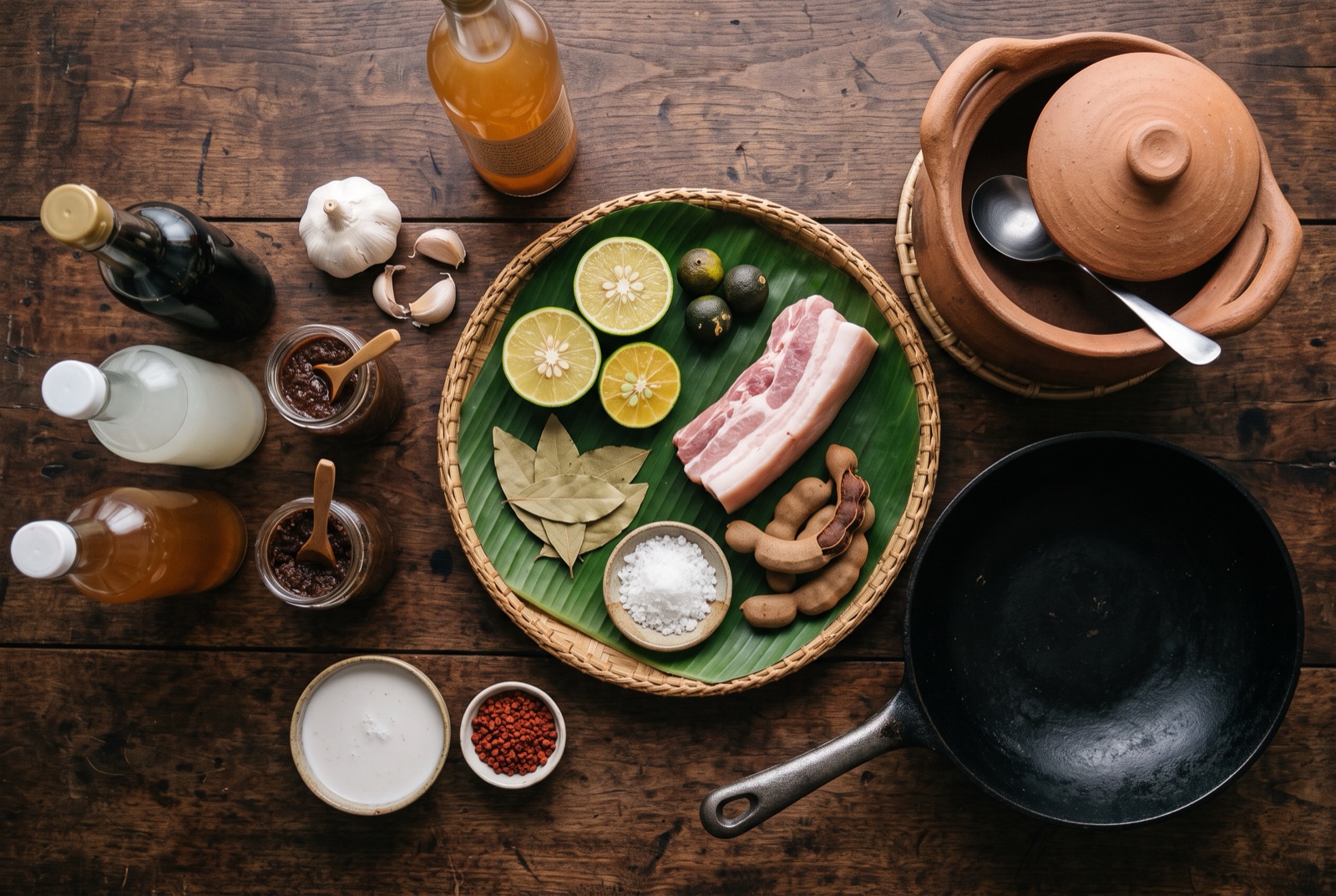
Filipino cooking runs on a sour-and-salty axis that almost no other Asian kitchen leans on this hard. Where neighbouring cuisines reach first for sugar, chile or fermented bean, Filipino cooks reach for acid — cane vinegar, coconut vinegar, calamansi, tamarind, unripe guava, kamias — and then answer it with salt from soy sauce, fish sauce and bagoong shrimp paste. Chile heat is optional and regional; sourness is structural. The other half of the story is fat and starch: pork in every conceivable form, coconut milk across the south, and rice at every single meal, breakfast included. Three centuries of Spanish rule and half a century of American administration left real deposits — the Spanish name adobo, a fondness for stews and sausages, canned meat, spaghetti sweetened with banana ketchup — layered over an older Malay and Chinese base of noodles, steamed rice cakes and fish preserved in salt. The result tastes assembled rather than refined, and Filipinos are entirely unapologetic about it.

- Continent
- AsiaSoutheast Asia
- Recipes in atlas
- 10
- Must-try dishes
- 3
- Pantry staples
- 10
Start with the classics.
Must tryThe dishes that explain the Philippines kitchen fastest — if you cook only a few things from this page, cook these.
Inside the Philippines kitchen.
Start with vinegar, because almost everything does. Long before Spanish ships arrived, cooks across the archipelago preserved fish and meat by cooking it in vinegar and salt — the technique the Spanish later named adobo after their own marinating tradition, which is why a pre-colonial method carries a colonial name. The rule every Filipino cook knows is that vinegar must be allowed to boil without stirring for the first few minutes; disturb it early and the dish keeps a raw, throat-catching sharpness instead of mellowing into something round and savoury. That single instruction governs adobo, paksiw, kinilaw and half the pork dishes in the country.
The workhorse technique is gisa: garlic, then onion, then tomato, softened in oil until the tomato collapses and darkens. It opens sinigang, most vegetable dishes, and the rice-and-garlic breakfasts. Garlic in particular is used at a volume that surprises visitors — fried into golden chips, it is a condiment in its own right, scattered over rice, noodles and roast pork.
A large number of Filipino dishes are deliberately underseasoned in the pot, because seasoning happens at the table. The sawsawan — a small saucer of vinegar with crushed garlic and chile, soy with calamansi, or fermented shrimp bagoong — is not an optional extra but the missing half of the recipe. Kare-kare is the clearest case: a rich peanut stew that tastes flat and slightly sweet on its own, and only becomes itself when a spoonful of salty bagoong is stirred through each serving. Judging such a dish before dipping is the most common foreign mistake.
Coconut divides the map. North and central Luzon cook with vinegar, soy and broth; Bicol and much of the Visayas and Mindanao cook with coconut milk, often reduced until the oil breaks out, and with far more chile — Bicolanos are the acknowledged exception to the country's mild reputation. The Muslim south adds its own repertoire of turmeric, spiced grilled fish and dishes with no pork in them at all, which is a useful reminder that the pork-obsessed picture of Filipino food is a Christian-lowland one.
Rice sets the rhythm of the day. It appears at breakfast as sinangag, fried with garlic and yesterday's leftovers, alongside cured meat and a fried egg in the compound breakfasts named silog. It appears again at lunch and dinner, and between meals it turns up as kakanin — sticky rice cakes steamed in banana leaves with coconut and palm sugar — eaten during merienda, the mid-morning and mid-afternoon snack breaks that Filipinos treat as genuine meals rather than indulgences. Noodles, inherited from centuries of Chinese trade and now thoroughly local, carry their own obligation: pancit is served at birthdays, and the strands are never cut, because long noodles mean long life.
Signature pantry.
10 staplesThe ingredients this cuisine cannot function without.
- cane and coconut vinegar
- soy sauce
- calamansi
- bagoong (fermented shrimp paste)
- coconut milk
- garlic
- tamarind
- annatto (atsuete)
- pork
- bay leaf
How people eat in Philippines.
Everything arrives at once and everything is shared: a table of dishes surrounding a communal pot of rice, with each person spooning rice onto their own plate and taking a little of this and that beside it. Rice is the plate, not a side. Almost every diner keeps a personal saucer of sawsawan — vinegar with garlic and chile, or soy with calamansi — and adjusts each mouthful themselves, so two people can eat the same dish at very different intensities. Eating kamayan, with the hands, is common at home and at celebrations, where food is laid straight onto banana leaves. Guests are pressed to eat more, repeatedly, and refusing outright reads as a small rejection; taking a token second helping is the graceful answer. Anyone leaving a table with food on it says a quick invitation to join, which is politeness rather than a genuine offer.
Regional kitchens.
Philippines cooks 4 distinctly different ways depending on where you stand — here is what changes between them.
- R1Central Luzon and Pampanga
- Pampanga calls itself the culinary capital and has a fair claim: sisig, tocino, longganisa and a deep charcuterie tradition all trace here. Neighbouring provinces supply Manila with vinegar-braised pork and the country's most familiar adobo.
- R2Bicol
- The one region that genuinely cooks hot. Coconut milk and finger chiles go into almost everything, from laing and Bicol Express to fish stewed in coconut cream until the oil separates and the sauce turns silky.
- R3The Visayas
- Grilling and seafood country. Bacolod is the home of chicken inasal, Cebu of whole roast lechon rubbed with lemongrass, and coastal towns everywhere serve kinilaw — raw fish cured in vinegar rather than citrus alone.
- R4Mindanao
- The Muslim south cooks with turmeric, coconut and grilled fish, and largely without pork. Dishes like piaparan and tiyula itum sit outside the Hispanised lowland canon and are still barely known abroad.
All Philippines recipes.
10 recipes and counting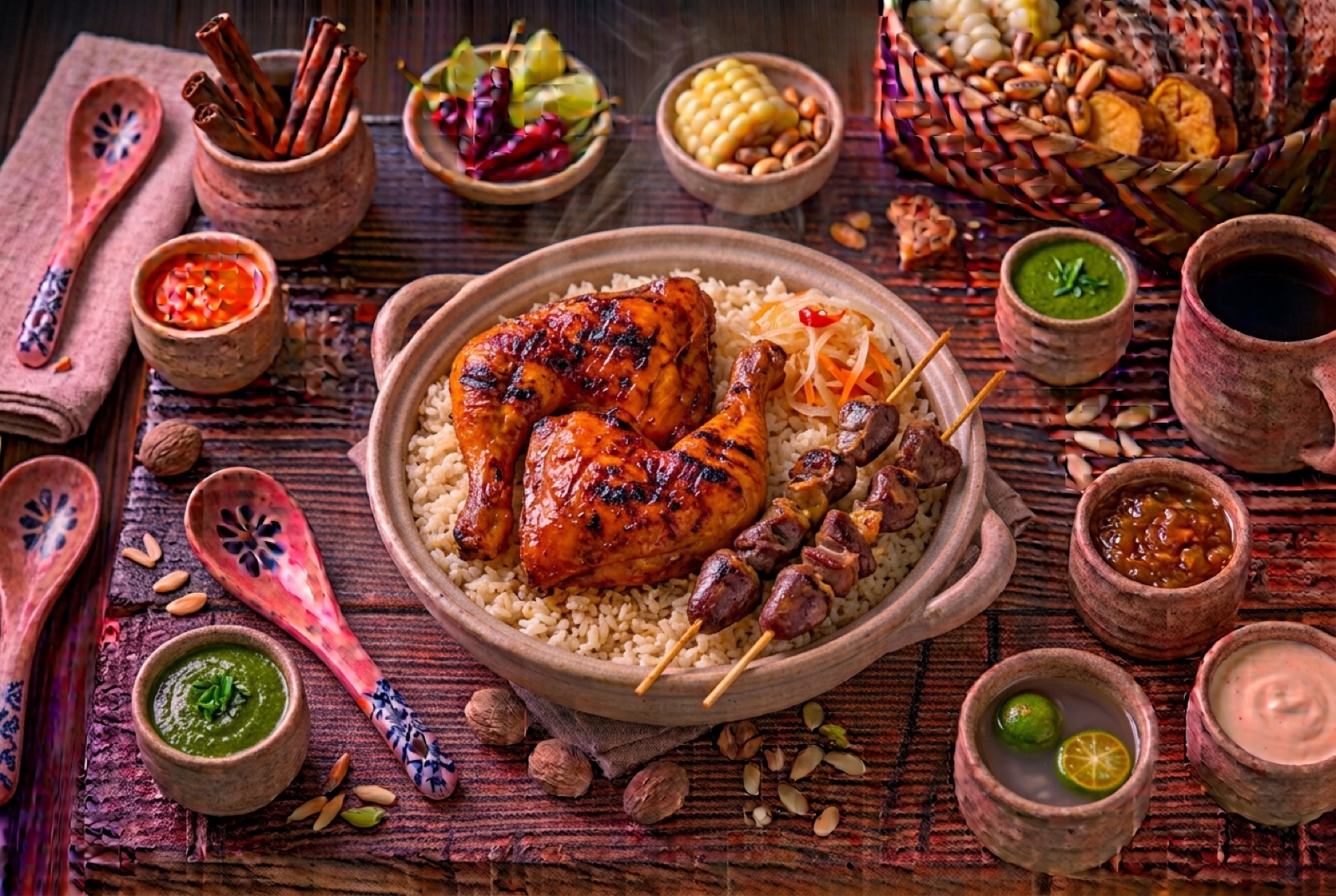
Philippines6 hr
Chicken Inasal
Bacolod Charcoal-Grilled Annatto Chicken
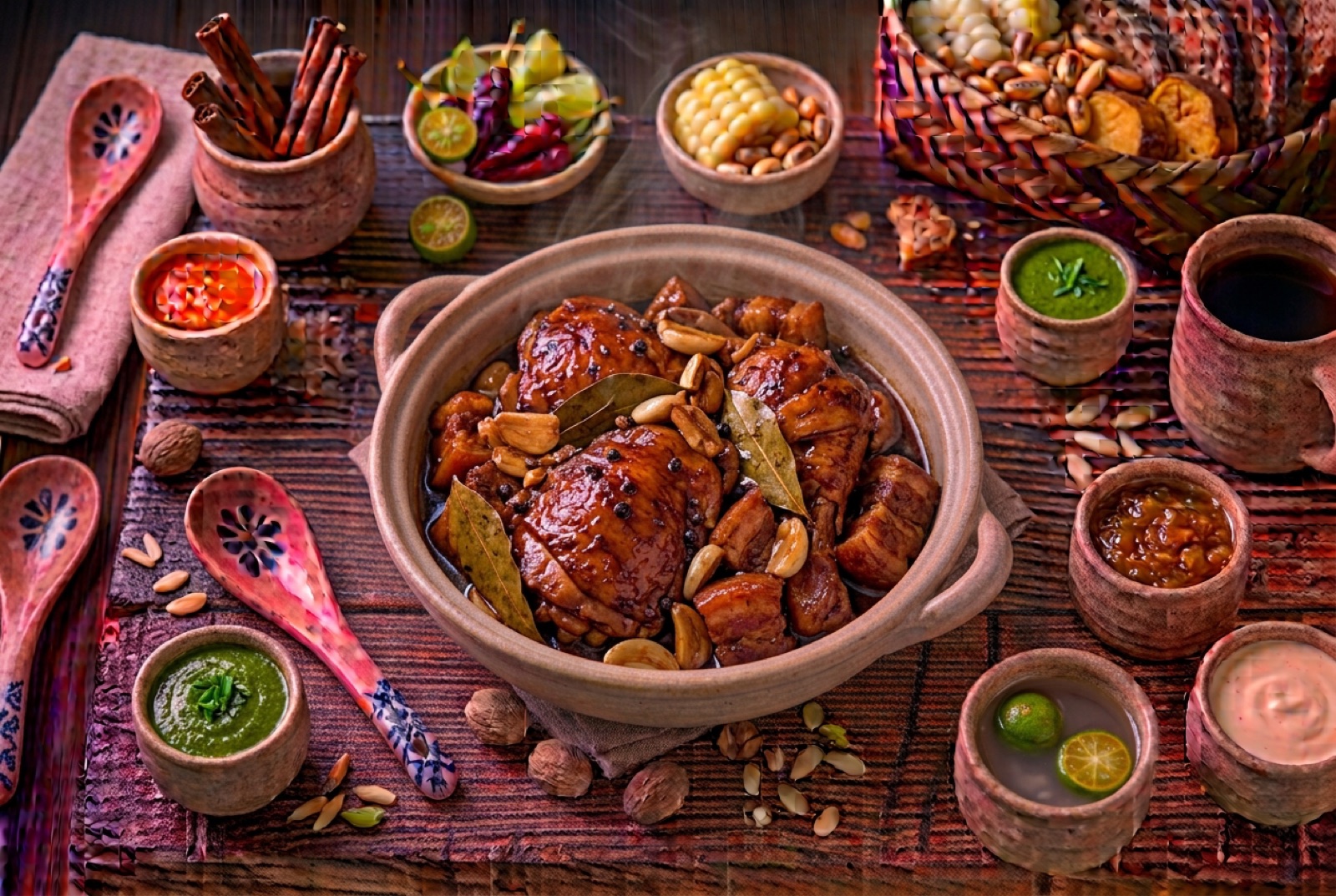
Philippines1 hr 15 min
Filipino Adobo
Soy-Vinegar Braised Chicken and Pork
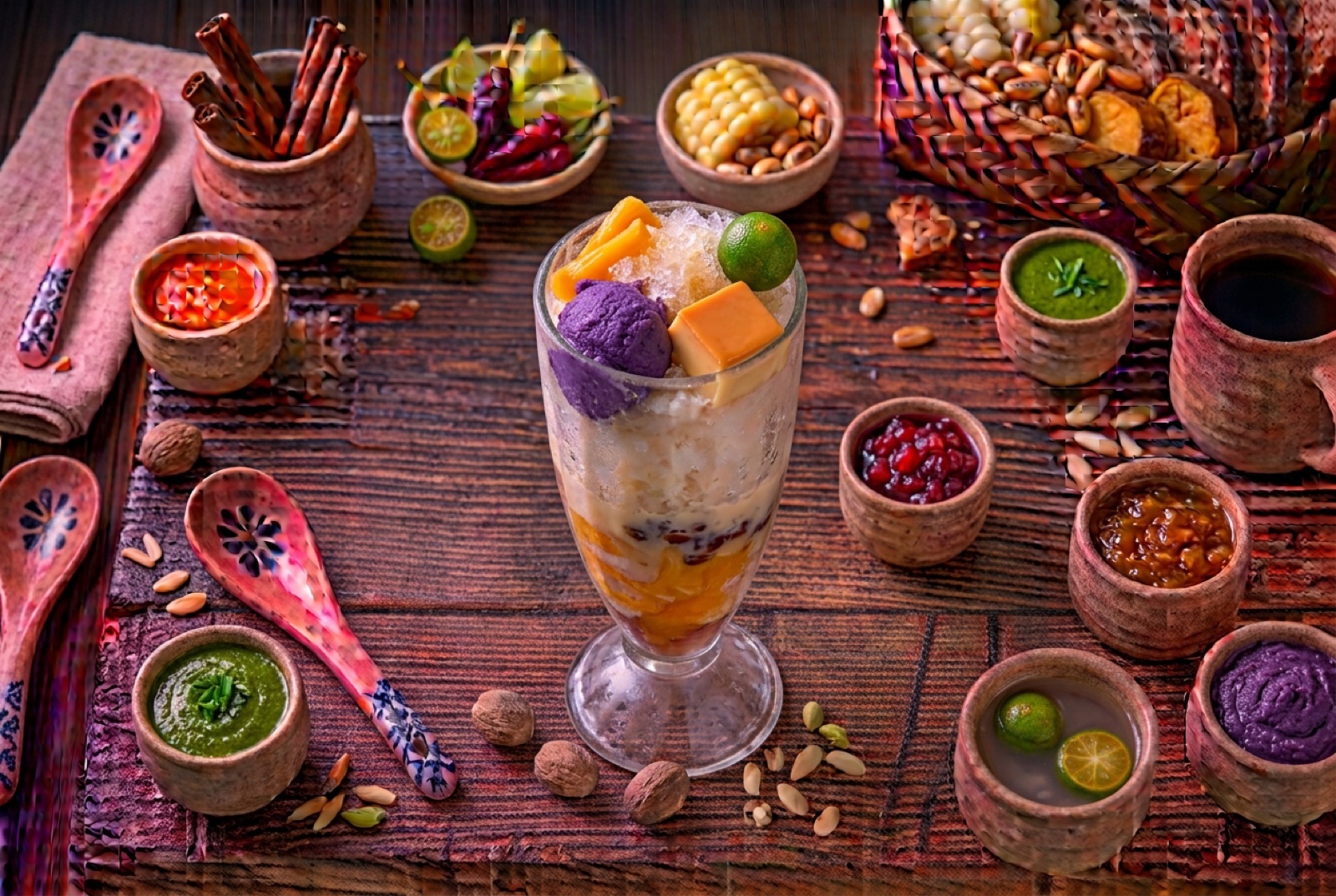
Philippines3 hr
Halo-Halo
Filipino Shaved Ice with Beans and Flan

Philippines4 hr 10 min
Kare-Kare
Filipino Oxtail Peanut Stew
Philippines1 hr 10 min
Laing
Bicol Taro Leaves in Coconut Milk

Philippines9 hr 35 min
Lechon Kawali
Filipino Crispy Fried Pork Belly

Philippines40 min
Pancit Bihon
Filipino Stir-Fried Rice Noodles

Philippines1 hr 45 min
Sinigang na Baboy
Sour Tamarind Pork Soup
Philippines2 hr 15 min
Sisig
Sizzling Chopped Pork from Pampanga

Philippines8 hr 50 min
Tapsilog
Cured Beef Tapa with Garlic Rice and Egg
Keep traveling.
Philippines sits in Southeast Asia, and its kitchen shares borders as well as ingredients with Armenia and Bangladesh.
 Armenia
 Bangladesh