South Korea.
대한민국
A Korean meal is never one dish — it is a table. Rice and soup anchor the setting, and around them spreads banchan: small shared plates of kimchi, seasoned vegetables, pickles and braises that arrive unbidden and get refilled without ceremony. Underneath nearly everything runs fermentation. Kimchi is the famous example, but the deeper foundation is the jang family — doenjang (soybean paste), ganjang (soy sauce) and gochujang (chile paste), traditionally aged for months in earthenware crocks. These give Korean food its signature depth: savory, funky, gently sweet, and often warm with chile rather than punishingly hot. The third pillar is company. Meat is grilled at the table and wrapped in lettuce by hand, stews are eaten from a shared pot, and drinks come with rules of pouring for one another. Eating alone is the exception the language has a special word for.

- Continent
- AsiaEast Asia
- Recipes in atlas
- 10
- Must-try dishes
- 3
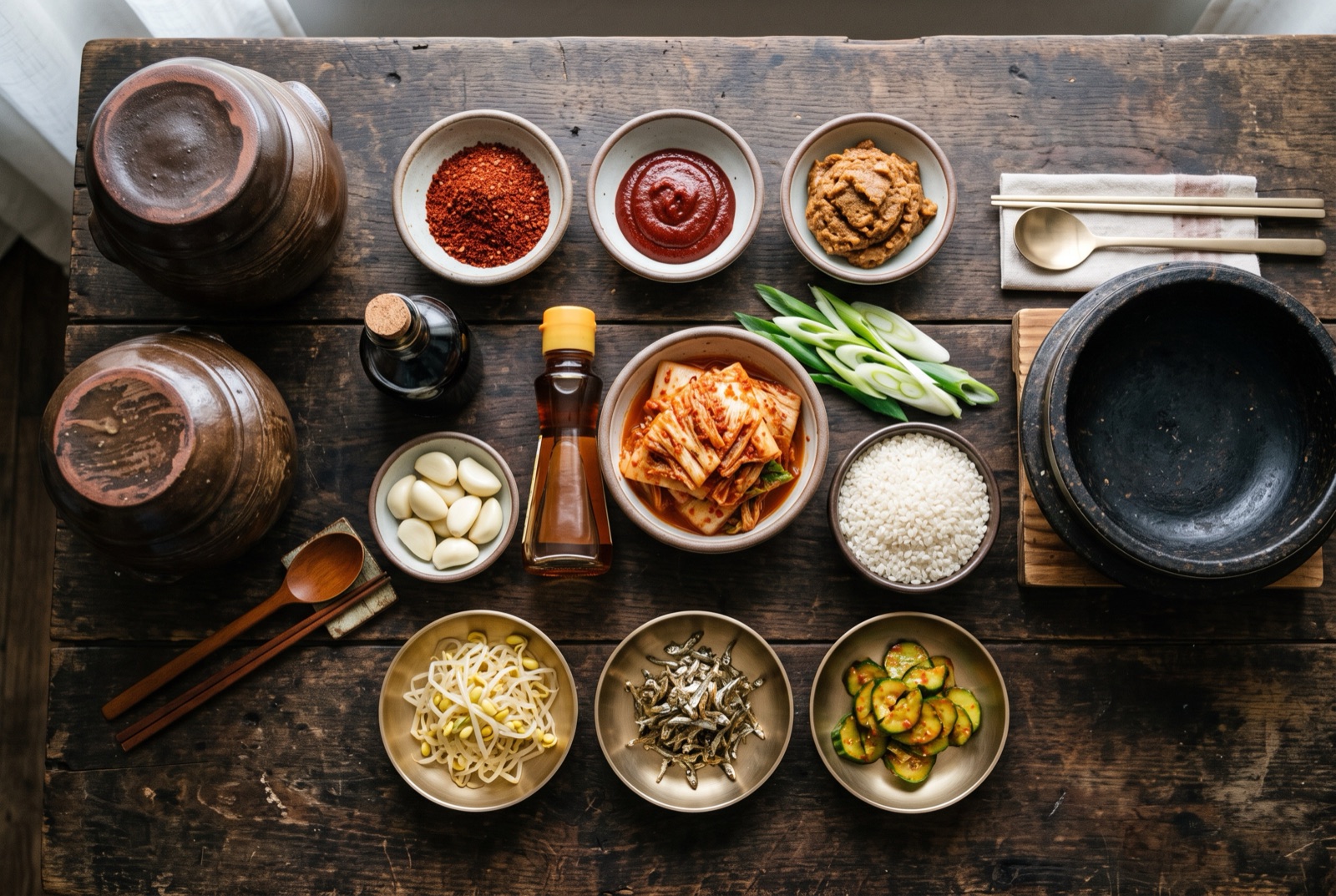
- Pantry staples
- 8
Start with the classics.
Must tryThe dishes that explain the South Korea kitchen fastest — if you cook only a few things from this page, cook these.
Inside the South Korea kitchen.
Fermentation is the engine of the Korean kitchen, and it starts with soybeans. Cooked beans are shaped into blocks called meju, dried and inoculated by wild molds, then brined; the liquid becomes ganjang (soy sauce) and the solids become doenjang, a rustic soybean paste earthier than Japanese miso. Gochujang adds glutinous rice and gochugaru chile flakes to the ferment for a paste that is sweet, hot and savory at once. These three jang, historically aged in onggi crocks on a sunny terrace called the jangdokdae, are the seasoning backbone — a Korean cook reaches for jang the way a French cook reaches for butter.
Kimchi is the second ferment, and it is a category, not a single dish: napa cabbage kimchi is the flagship, but there are versions built on radish, cucumber, scallions and dozens of other vegetables, some fiery, some clear and almost effervescent. Kimjang, the communal late-autumn kimchi-making that once provisioned families for winter, is recognized by UNESCO as intangible cultural heritage. Crucially, kimchi has a second life as an ingredient — once it sours past fresh eating, it goes into stews, pancakes and fried rice, where its acidity is the whole point.
The table itself follows a grammar. Bap (rice) is the center of the meal; guk or jjigae (soup or stew) sits beside it; banchan fill the rest of the surface, always shared. Balance is instinctive rather than doctrinaire — something fermented, something fresh, something seasoned with sesame oil and garlic. Gochugaru, garlic, ginger, scallions, toasted sesame and jang do most of the seasoning work; heat is layered and warming rather than sharp.
Technique splits between fire and time. On the fire side sit the table grills of Korean barbecue — bulgogi, galbi, samgyeopsal — and the jeon family of pan-fried savory pancakes. On the time side sit the long braises and bubbling stone-pot stews, and the ferments that may have started years earlier. Street food thrives in markets and pojangmacha tent stalls: tteokbokki in gochujang sauce, hotteok, gimbap, fried chicken that became a national obsession. And no serious meal ends without fruit or a cold drink — dessert is quiet in Korea; the table already did the talking.
Signature pantry.
8 staplesThe ingredients this cuisine cannot function without.
- gochugaru (chile flakes)
- gochujang and doenjang
- soy sauce (ganjang)
- garlic
- toasted sesame oil
- napa cabbage kimchi
- scallions
- short-grain rice
How people eat in South Korea.
Everything on the table is shared except your own bowl of rice and soup — reaching across for banchan is normal, hoarding one is not. Rice is eaten with a spoon, not chopsticks, and the bowl stays on the table rather than being lifted. Age structures the meal: the eldest lifts their spoon first, and drinks are poured for others with two hands, never for yourself. Grilled meat is eaten as ssam — wrapped in a lettuce or perilla leaf with rice, sauce and garlic, and the whole parcel goes in at once. Refusing a refill of banchan takes more effort than accepting it.
Regional kitchens.
South Korea cooks 4 distinctly different ways depending on where you stand — here is what changes between them.
- R1Seoul & Gyeonggi
- The capital region, where royal-court refinement meets street-market energy — home of bulgogi houses, Gwangjang Market's bindaetteok griddles, and a restless modern food scene that exports trends to the rest of the country.
- R2Jeolla
- The southwest's rice bowl and, by broad national consensus, the food capital of Korea — famed for lavish banchan spreads, deep fermentation traditions, and Jeonju, the city that gave the country bibimbap.
- R3Busan & Gyeongsang
- The southeastern coast, bolder and saltier: Jagalchi fish market seafood, milmyeon noodles, dwaeji gukbap pork soup, and a taste for stronger seasoning than the capital.
- R4Jeju
- The volcanic island kitchen — black pork grilled over charcoal, abalone porridge, hairtail fish and citrus, shaped by haenyeo diving women who harvest the sea by breath alone.
All South Korea recipes.
10 recipes and counting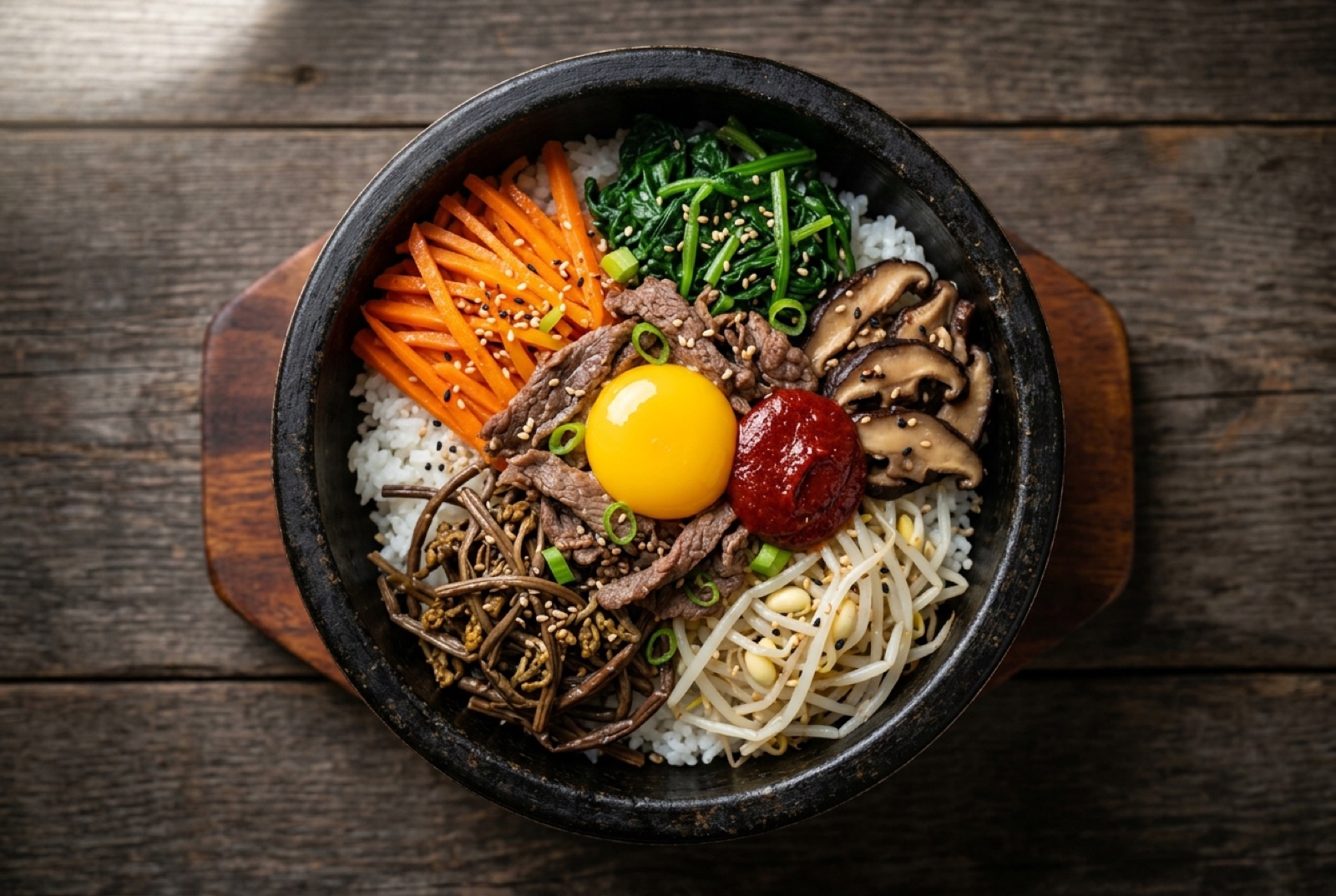
South Korea1 hr
Bibimbap
Korean Mixed Rice Bowl with Namul and Gochujang
South Korea4 hr 37 min
Bulgogi
Korean Soy-Pear Marinated Beef

South Korea2 hr 50 min
Dakgalbi
Chuncheon Spicy Stir-Fried Chicken

South Korea1 hr 20 min
Gimbap
Korean Seaweed Rice Rolls, Not Sushi

South Korea2 hr 15 min
Hotteok
Korean Syrup-Filled Griddle Pancake
South Korea55 min
Japchae
Korean Sweet Potato Glass Noodles with Vegetables
South Korea25 min
Kimchi Fried Rice
Kimchi Bokkeumbap

South Korea40 min
Kimchi Jjigae
Sour Kimchi and Pork Belly Stew
South Korea27 min
Pajeon
Korean Scallion Pancakes
South Korea55 min
Tteokbokki
Chewy Korean Rice Cakes in Spicy Sauce
Keep traveling.
South Korea sits in East Asia, and its kitchen shares borders as well as ingredients with Armenia and Bangladesh.
 Armenia
 Bangladesh