Bibimbap.
Korean Mixed Rice Bowl with Namul and Gochujang
비빔밥 · bibimbap · say it: BEE-bim-bap
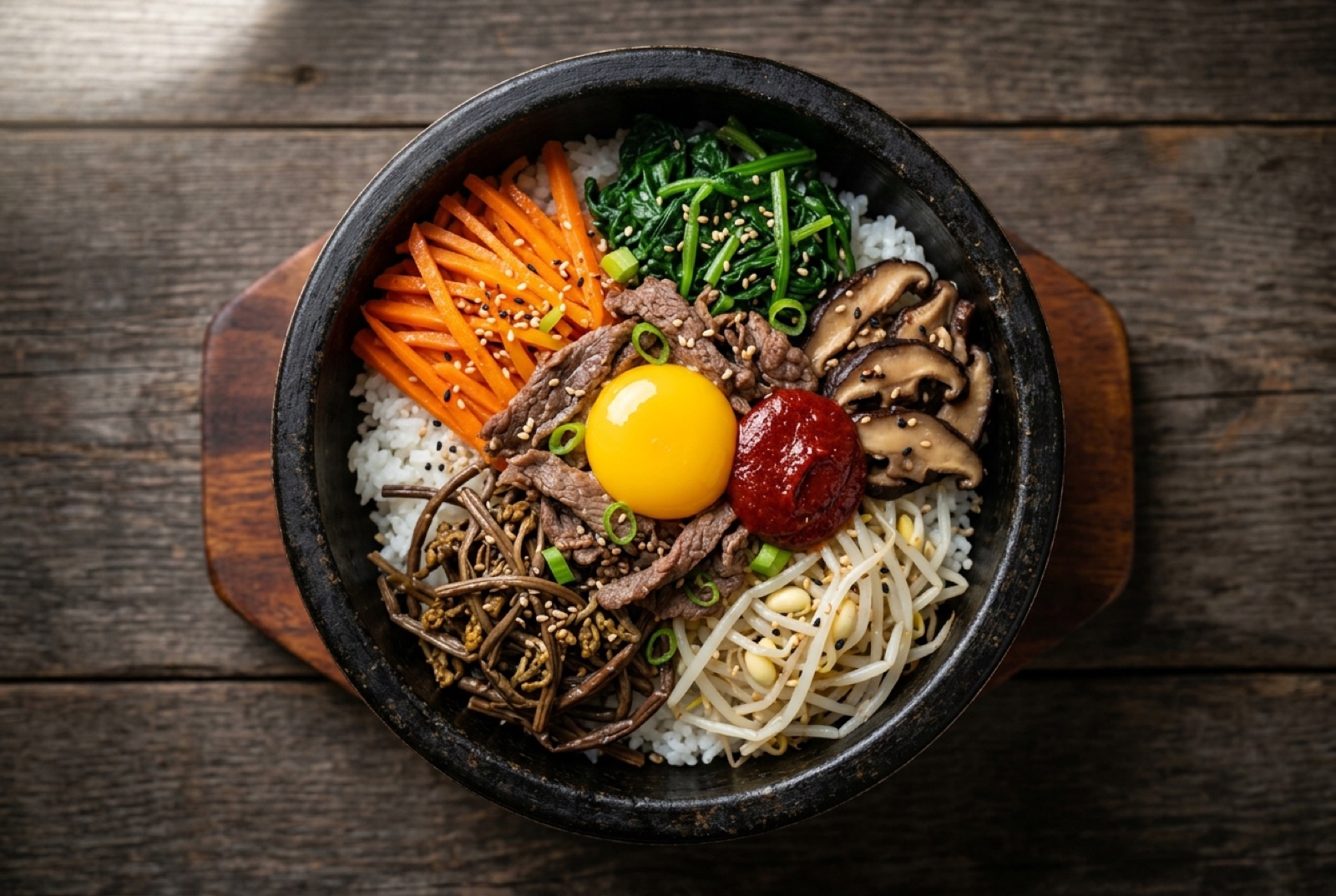
Bibimbap is a bowl of hot rice topped with small, separately seasoned piles of vegetables — spinach, bean sprouts, carrot, mushroom, courgette — plus seasoned beef, a fried egg and a spoonful of gochujang sauce, all of it stirred into one thing the moment it reaches the table. The mixing is the dish, not a garnish on it: before the spoon goes in you can taste six distinct seasonings, and after it you taste one, sweet-hot and nutty with sesame oil, the rice carrying everything. It is also the most forgiving Korean dish to cook at home, because each component is finished on its own terms and nothing has to come off the heat at the same moment.

- Gate
- South KoreaJeonju
- Prep
- 30 min
- Cook
- 30 min
- Total time
- 1 hr
- Serves
- 4
- Status
- Easy
- Nutrition / serving · estimated
- Calories 640 kcal
- Protein 29 g
- Carbs 82 g
- Fat 21 g
- Fiber 6 g
- Sugar 11 g
- Sodium 890 mg
Why this recipe works.
- Each vegetable is blanched or fried separately and seasoned on its own — the namul method that makes the difference between real bibimbap and rice salad.
- A gochujang sauce with a little sugar, vinegar and sesame oil, so it loosens and coats instead of sitting in a red lump.
- A dolsot method included for anyone with a cast-iron pan, so you can get the crisp scorched rice layer without a stone bowl.
- Everything except the egg can be prepped hours ahead, which is how Korean home cooks actually make it.
Ingredients.
19 itemsBase
Vegetable toppings
Beef topping
Gochujang sauce
Equipment
- Large pot for blanching
- Frying pan or wok
- Several small mixing bowls
- Rice cooker or heavy lidded saucepan
Instructions.
Start the rice
Cook 350 g of rinsed short-grain rice with a scant 1:1 ratio of water, either in a rice cooker or covered over low heat for 15 minutes plus 10 minutes off the heat. Aim for grains that are cooked through but still separate, since soft rice goes pasty once mixed.
Mix the gochujang sauce
Stir the gochujang, sugar, rice vinegar, water and one tablespoon of the sesame oil together in a small bowl until it is smooth and pourable, roughly the thickness of ketchup. Set it aside so the sugar dissolves fully while you cook.
Tip Taste it now. It should be sharp and slightly sweet on its own — rice will dull it considerably.
Blanch the spinach and sprouts
Boil a large pot of salted water. Drop the bean sprouts in for 2 minutes until they lose their raw squeak but still snap, lift them out, then blanch the spinach for 30 seconds, just until it collapses and turns dark green. Cool both under cold water and squeeze out as much liquid as you can with your hands.
Season the two namul
In separate bowls, dress the squeezed sprouts and the squeezed spinach each with a teaspoon of sesame oil, a little grated garlic, a pinch of salt and a scatter of sesame seeds. Taste each one — it should be clearly seasoned, almost too much so, because rice will mute it.
Fry the carrot, courgette and mushrooms
In a lightly oiled pan over medium-high heat, cook each vegetable separately with a pinch of salt: carrots for 2 minutes until they bend but still have bite, courgette for 2 minutes until the edges turn translucent and no longer, and mushrooms for 4 minutes until they stop releasing water and start to brown. Wipe the pan between batches.
Cook the seasoned beef
Toss the minced beef with the soy sauce, sugar, spring onions and remaining garlic, then fry over high heat for 4–5 minutes, breaking it up, until the liquid has cooked away and the meat catches and glazes dark at the edges. It should smell sweet and caramelised, not steamed.
Fry the eggs
Fry the eggs sunny side up in a little sesame oil over medium heat until the whites are set and the edges frill but the yolks are still fully liquid. The runny yolk is the fat that binds the whole bowl once you stir it.
Build and mix
Divide the hot rice between four wide bowls, arrange the namul, mushrooms, carrot, courgette and beef in separate wedges around the rim, and slide an egg into the centre. Add a spoonful of gochujang sauce, then stir everything vigorously with a spoon until the rice is evenly orange before you take the first bite.
Tip For a scorched-rice bottom, press the rice into a hot, well-oiled cast-iron pan and leave it for 5 minutes until it crackles before topping.
Tips from our kitchen.
- Squeeze blanched spinach and sprouts hard with your hands — trapped water dilutes the seasoning and makes the bottom of the bowl soupy.
- Season each namul in its own small bowl, tasting as you go. They should be flavourful enough to eat alone, because they will be diluted by rice.
- Cook the rice slightly firmer than usual. Soft rice turns pasty once you stir the sauce and vegetables through it.
- Arrange the toppings in wedges around the rim with the egg in the centre — not for looks, but so nobody accidentally gets a spoonful of only carrot.
- Add the gochujang sauce a spoonful at a time. It is easier to add more heat than to rescue a bowl that has gone salty and aggressive.
- For a scorched-rice bottom, brush a cast-iron pan generously with sesame oil, press the rice in and leave it undisturbed over medium heat until you hear it crackle.
Substitutions.
- Gochujang → Miso paste plus a teaspoon of chile flakes and a little sugar
- Not the same — gochujang is fermented with glutinous rice and is sweeter and rounder — but it gives a workable savoury-hot sauce. Gochujang keeps for a year in the fridge, so it is worth buying once.
- Beef → Firm tofu cut in batons, pressed and pan-fried in sesame oil with soy sauce
- Bibimbap without meat is completely traditional; temple cuisine versions never had any. Skip the egg too and the bowl is vegan.
- Bean sprouts → Extra spinach, or thinly sliced cucumber salted and squeezed dry
- You want one crunchy component. Cucumber goes in raw and cool rather than blanched.
Variations.
- Dolsot bibimbap
- Assembled in a screaming-hot stone bowl so the rice against the sides toasts into nurungji. The egg is often cracked in raw and cooks against the bowl as you stir.
- Jeonju bibimbap
- The famous city version: rice cooked in beef broth, strips of mung bean jelly, raw seasoned beef and a soft yolk instead of a fried egg.
- Yeolmu bibimbap
- A summer bowl built on young radish kimchi and its cold brine, with barley mixed into the rice. Sharper, cooler and barely cooked.
Storage & reheating.
Store the cooked namul, beef and sauce in separate containers for up to 3 days; they are meant to be made ahead and are arguably better on day two once the seasonings settle. Keep the rice separate and reheat it with a splash of water. Do not assemble bowls in advance — the vegetables leach water into the rice and everything greys. Fried eggs must be cooked to order. Assembled leftovers can be rescued by frying them in a hot oiled pan, which is essentially how bibimbap becomes fried rice.
Serve with
A bowl of doenjang jjigae or plain soybean paste soup, plus kimchi — Korean meals rarely arrive without something hot and liquid alongside.
The story behind Bibimbap.
Bibimbap belongs to a very old Korean habit: rice is the meal, and everything else on the table exists to be eaten with it. Mixed-rice dishes appear in Joseon-era writing under the name goldongban, and the practice has practical roots in ancestral memorial rites, where the food offered at the altar was afterwards divided among the family and stirred together into bowls of rice rather than served as separate courses. That logic survives in every bibimbap: it is a way of eating banchan all at once, with no dish left half-finished.
The most famous regional version comes from Jeonju, in North Jeolla province, a city that treats its bibimbap as a civic institution. Jeonju-style bowls cook the rice in beef broth rather than water, add hwangpomuk — pale, wobbly mung bean jelly cut into strips — and often crown the bowl with yukhoe, raw seasoned beef, with the egg served as a soft yolk rather than fried. Jinju, in the south, makes its own version with a clear beef soup alongside. Then there is dolsot bibimbap, served in a stone bowl heated until the rice hisses against the sides and forms nurungji, a crackling scorched layer that people scrape up last and consider the best part of the meal.
Bibimbap also became, improbably, one of the first Korean dishes many foreigners ever ate, because Korean Air began serving it in the air in the 1990s and it turned out to travel well: components packed apart, sauce in a tube, assembled by the passenger. That is a fair description of the dish in general. It is built to be assembled by the person eating it, which is why no two bowls at the same table taste quite the same.
Questions, answered.
Do I have to use a stone bowl?
No. The stone bowl (dolsot) is a specific style that toasts the rice into a crisp bottom layer; a normal bowl gives you regular bibimbap, which is equally traditional and far more common at home. If you want the crisp bottom without a dolsot, press the rice into a well-oiled cast-iron pan over medium heat for five minutes before adding the toppings.
What is namul and why cook each vegetable separately?
Namul are seasoned vegetable side dishes, usually blanched or lightly fried and dressed with sesame oil, garlic and salt or soy sauce. Each vegetable needs a different cooking time and a different seasoning balance, and cooking them together turns everything the same muddy colour and flavour. Cooked apart, they stay visually distinct and taste like themselves right up until you stir the bowl.
How much gochujang sauce should I use?
Start with about one tablespoon of the mixed sauce per bowl, stir thoroughly, taste, and add more. The rice should turn an even orange-red, not deep crimson. Korean gochujang brands vary a lot in heat and sweetness, so the same spoonful can be mild or fierce depending on the tub in your fridge.
Can I make bibimbap ahead for a weeknight?
Yes, and that is the normal way to do it. Cook all the vegetable toppings and the beef on the weekend and refrigerate them separately for up to three days. On the night, you only need to reheat rice and fry an egg, which takes about five minutes. The toppings are eaten at room temperature or barely warm, so they do not need reheating.
Is bibimbap supposed to be spicy?
Only as spicy as you make it, because the chile arrives entirely in the sauce you stir in at the table. Bowls served to children in Korea often go out with sesame oil and soy sauce instead of gochujang. The underlying dish — rice, seasoned vegetables, egg — is not hot at all.
You might also like.
All recipes →


Keep exploring South Korea.
South Korea has 9 more dishes in the atlas — Bulgogi and Dakgalbi, and 7 more.
Recipe by The DishRoute Kitchen · published August 19, 2026 · updated August 19, 2026