United Kingdom.
United Kingdom
British cooking is organised around roasting, baking and the pudding — a word that here means a steamed suet dessert, a batter risen in hot beef fat, and a blood sausage, all at once. The raw material explains most of it: rain-fed grass produces beef, lamb and dairy of a quality other countries import, cold North Sea and Atlantic water produces haddock, cod, herring and langoustine, and a short growing season pushed cooks towards roots, brassicas, oats and barley rather than year-round vegetables. Seasoning is deliberately narrow — salt, pepper, English mustard, horseradish, malt vinegar, a bay leaf — because the intended flavour is the meat, the crust or the crumb rather than the spice rack. Two later layers matter as much as the old ones. The pub kitchen made pies, pasties, ploughman's cheese and rarebit into a shared national repertoire. And the South Asian kitchens that arrived with Sylheti, Bengali and Punjabi migration turned curry into an unambiguously British food, cooked at home and eaten on the high street in every town.

- Continent
- EuropeBritish Isles
- Recipes in atlas
- 10
- Must-try dishes
- 3
- Pantry staples
- 10
Start with the classics.
Must tryThe dishes that explain the United Kingdom kitchen fastest — if you cook only a few things from this page, cook these.
Inside the United Kingdom kitchen.
The centre of the tradition is dry heat and animal fat. A joint of beef, lamb or pork goes into a hot oven, is basted in its own rendered fat, comes out to rest while the fat is poured off, and the browned residue left in the tin is turned into gravy with stock and whatever wine or ale is open. Potatoes are parboiled, roughed up in the colander and roasted in that same fat until the shaggy edges shatter. Nothing in the sequence is complicated, but everything depends on timing and on temperature discipline: fat hot enough to smoke faintly before batter or potato goes near it, meat rested long enough that the juices stay in the slice instead of running onto the board.
Pudding is the other pillar, and it is far broader than dessert. Yorkshire pudding is a plain flour-egg-milk batter poured into smoking dripping, where it climbs the sides of the tin and sets hollow. Steak and kidney pudding is a suet crust lining a basin, steamed for hours until the pastry turns translucent and silky. Christmas pudding is dried fruit, suet and spirit steamed and then aged for months. Sponge puddings, treacle tarts, crumbles, trifles and custards all belong to the same family: cheap starch and dairy transformed by long, gentle, moist heat.
Fish is treated two ways — fried fresh, or cured with smoke. The chip shop batter and the deep fryer arrived with industrial cities and the railway, which put North Sea trawler fish in inland markets overnight. Alongside it sits an older curing tradition: Finnan and Arbroath haddock in the north-east of Scotland, Craster kippers in Northumberland, smoked eel and potted shrimp in the fens and Morecambe Bay. Smoked haddock poached in milk still underpins kedgeree, fish pie and Cullen skink.
Dairy and baking carry the rest of the table. Britain and Ireland make several hundred territorial cheeses — Cheddar, Cheshire, Lancashire, Stilton, Caerphilly, Wensleydale — and cheese is eaten as a course with oatcakes, pickle and celery rather than dissolved into sauces. Baking runs from Scottish oatcakes and bannocks to Welsh bara brith, Cornish saffron buns, Chelsea buns, scones and shortbread, most of it built on butter, dried fruit and a light hand.
What holds the modern kitchen together is the pub and the curry house. Pub food formalised the pie, the pasty, the ploughman's and the Sunday roast as things you eat out. From the 1960s onwards, restaurants opened largely by Sylheti Bangladeshi families created a British-Indian repertoire — balti, tikka masala, jalfrezi, the Friday-night takeaway — that no longer maps onto any single region of South Asia because it stopped being an import and became a domestic cuisine.
Signature pantry.
10 staplesThe ingredients this cuisine cannot function without.
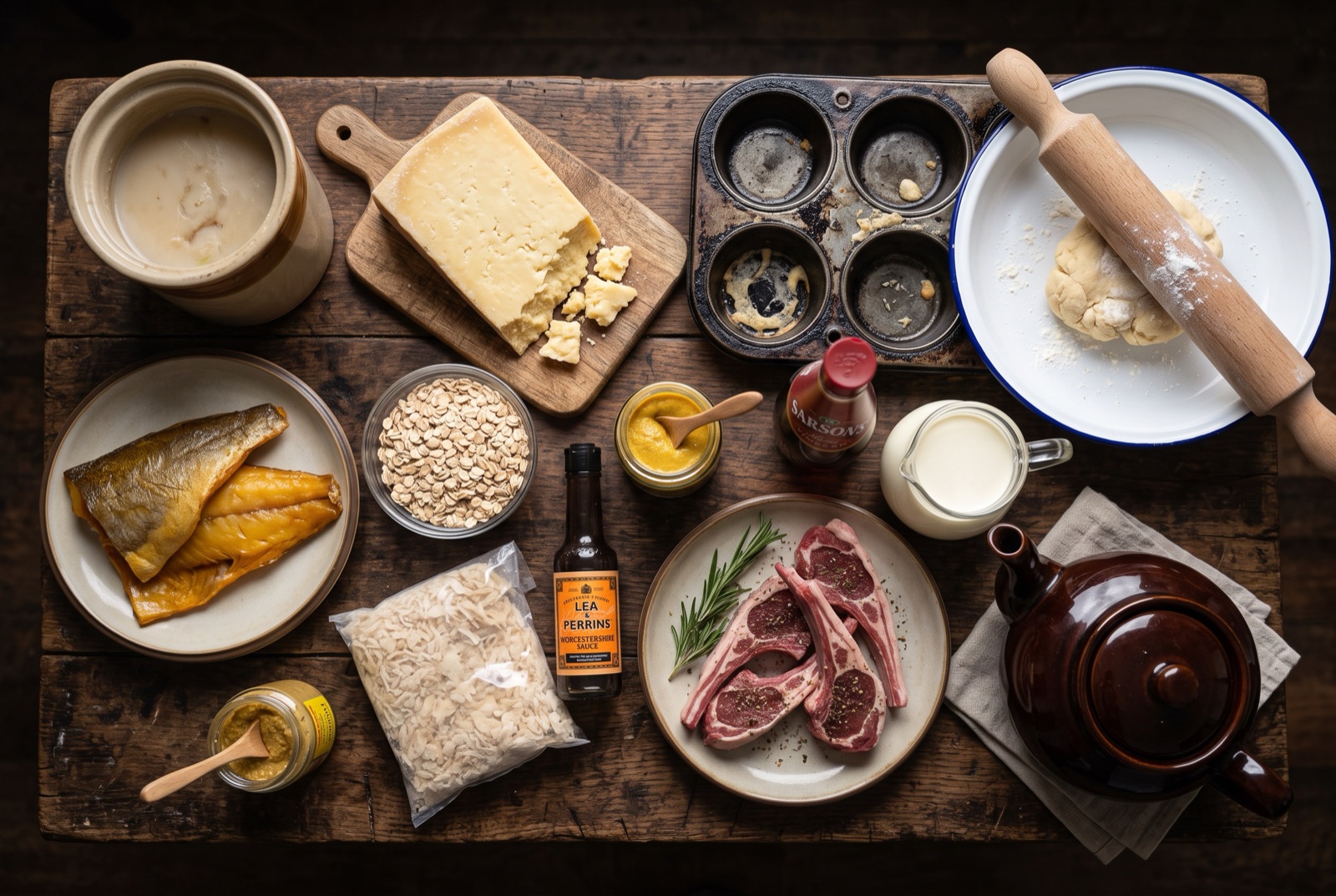
- beef dripping
- Cheddar
- smoked haddock
- oats
- suet
- English mustard
- Worcestershire sauce
- malt vinegar
- double cream
- lamb
How people eat in United Kingdom.
The Sunday roast is the one fixed appointment: a single large joint carved at the table around two o'clock, everything served at once on one plate, gravy poured over the lot. Tea is two separate things — the drink, taken constantly and usually with milk, and afternoon tea, which is scones, sandwiches and cake between lunch and dinner rather than a meal in itself. Condiments are the diner's business, not the cook's: mustard, horseradish, mint sauce, brown sauce, ketchup and vinegar sit on the table so everyone adjusts their own plate. Cheese comes after the pudding, not before it. Rounds of drinks in a pub are bought for the whole group in turn, and skipping your round is noticed.
Regional kitchens.
United Kingdom cooks 4 distinctly different ways depending on where you stand — here is what changes between them.
- R1England
- Roasting and pie country: Yorkshire puddings and forced rhubarb in the north, Cornish pasties and clotted cream in the south-west, and the chip shops, pie shops and curry houses of the industrial cities and London.
- R2Scotland
- Cold-water and grain cooking — haggis with neeps and tatties, Aberdeen Angus beef, langoustine and scallops from the west coast, smoked haddock from Moray, and oats in everything from porridge to the coating on herring.
- R3Wales
- Hill-farmed salt-marsh lamb, leeks and laverbread from the Gower coast, Caerphilly cheese, and a baking tradition of Welsh cakes and bara brith cooked on a bakestone rather than in an oven.
- R4Northern Ireland
- A griddle and potato kitchen: the Ulster fry with soda farls and potato bread, champ and boxty, Comber earlies and Dexter beef, and Lough Neagh eel smoked or stewed.
All United Kingdom recipes.
10 recipes and counting
United Kingdom1 hr
Bangers and Mash
Sausages with Onion Gravy
United Kingdom2 hr 35 min
Cornish Pasty
Crimped Beef and Swede Pastry
United Kingdom45 min
Cullen Skink
Scottish Smoked Haddock Soup
United Kingdom28 min
English Scones with Clotted Cream and Jam
United Kingdom1 hr 45 min
Fish and Chips
Beer-Battered Cod with Thick Chips
United Kingdom45 min
Full English Breakfast
The Fry-Up Plate
United Kingdom2 hr 45 min
Roast Beef and Yorkshire Pudding
Sunday Roast
United Kingdom1 hr 35 min
Shepherd's Pie
Minced Lamb under Mashed Potato
United Kingdom1 hr
Sticky Toffee Pudding
Date Sponge in Toffee Sauce
United Kingdom1 hr 25 min
Welsh Rarebit
Savoury Cheese Sauce on Toast
Keep traveling.
United Kingdom sits in British Isles, and its kitchen shares borders as well as ingredients with Albania and Austria.
 Albania
 Austria