Aloo Tama.
Nepali Potato and Bamboo Shoot Curry
आलु तामा · say it: AH-loo TAH-mah
Aloo tama is a soupy Newari curry built on tama, bamboo shoots fermented in their own liquid until they turn sharply sour and faintly funky. That sourness is the whole point: it soaks into soft potato and creamy black-eyed peas, and the finished curry tastes tangy, savoury and slightly wild in a way nothing else in the Nepali repertoire does. The spicing is restrained — turmeric, cumin, a little chile, timur for its citrus tingle — because heavy spice would fight the ferment. It sits somewhere between a thick soup and a stew, and it is eaten spooned over rice with the same relish other cuisines reserve for a good sour pickle.
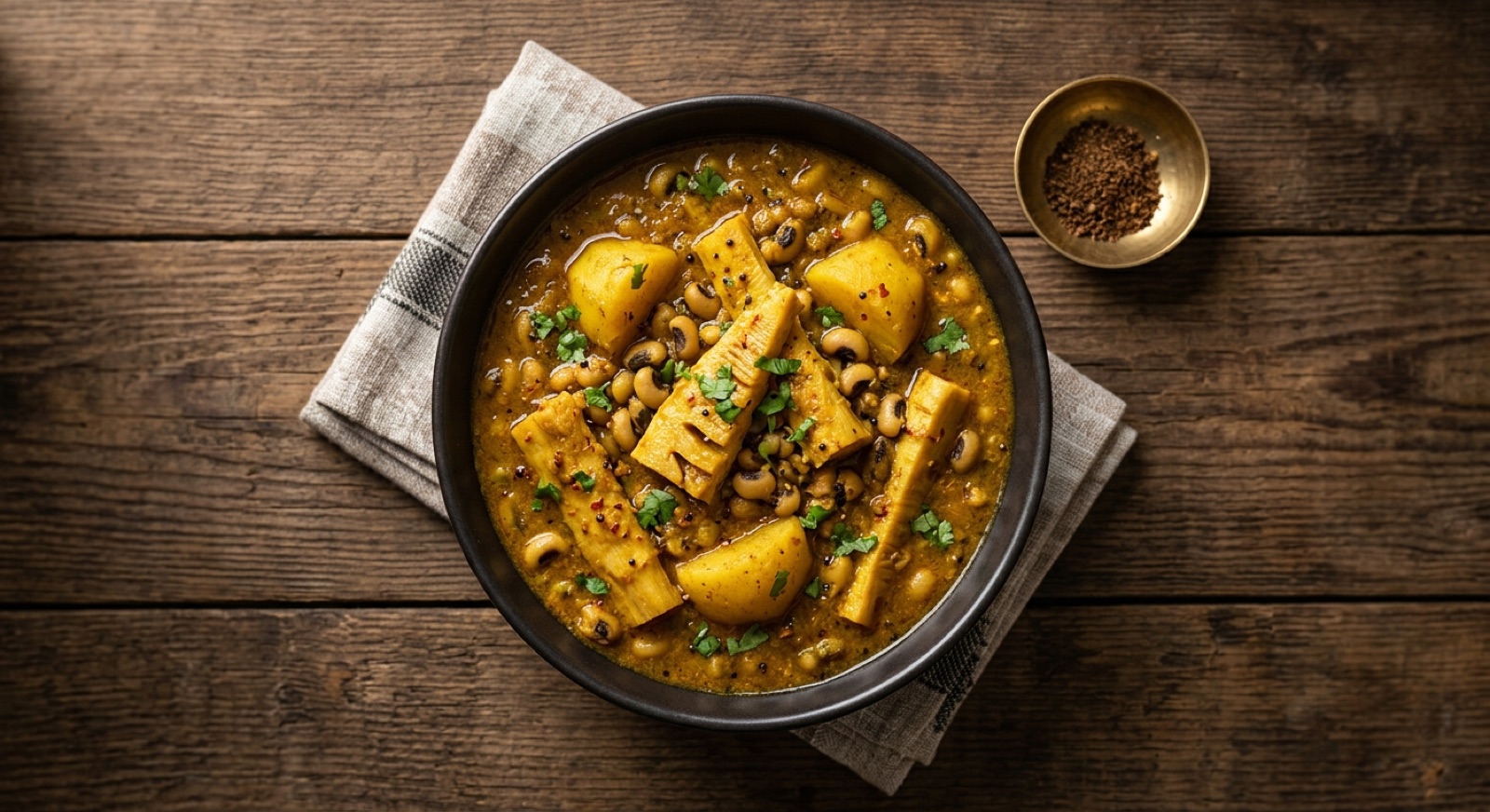

- Gate
- NepalKathmandu Valley
- Prep
- 20 min
- Cook
- 45 min
- Total time
- 1 hr 5 min
- Serves
- 4
- Status
- Medium
- Nutrition / serving · estimated
- Calories 390 kcal
- Protein 15 g
- Carbs 58 g
- Fat 12 g
- Fiber 13 g
- Sodium 640 mg
Why this recipe works.
- Treats the ferment as the lead flavour rather than burying it under spice.
- Gives a workable rescue for cooks who can only find unfermented bamboo shoots.
- Black-eyed peas are cooked to the right point — creamy inside, still holding their shape.
- Balances the sourness with a specific tasting checkpoint instead of vague seasoning advice.
Ingredients.
16 itemsBase
Spices
To finish
Equipment
- Heavy pot or Dutch oven
- Bowl for soaking the peas
- Mortar for the timur
Instructions.
Cook the black-eyed peas
Drain the soaked peas, cover them with fresh water in a pot and simmer for 25 to 30 minutes until they are creamy inside but still hold their round shape. Drain, keeping a cup of the cooking water.
Fry the tama
Heat the mustard oil in a heavy pot until it just smokes, then lower the heat and add the drained bamboo shoots. Fry for 5 minutes, stirring, until the sharpest sour smell has softened into something rounder and the shoots start to catch pale gold at the edges.
Build the base
Add the onion and cook until translucent and slipping apart, then the garlic and ginger for another minute until they stop smelling raw. Stir in the turmeric, cumin, coriander and chile powder and fry for 30 seconds so the spices toast in the oil rather than steam.
Add tomato and cook it down
Tip in the chopped tomatoes with a good pinch of salt and cook over medium heat for 6 to 8 minutes, pressing them against the pot, until they collapse into a paste and the oil separates and pools at the edges.
Tip Wait for the oil to break out. It is the signal that the masala is cooked and not raw.
Simmer everything together
Add the potato chunks, cooked peas and the water. Bring to a boil, then simmer uncovered for 20 to 25 minutes until the potato is soft enough to crush against the side of the pot and the broth has thickened slightly.
Thicken and season
Mash four or five potato chunks against the pot wall and stir them back in to give the broth body. Taste for salt and sourness — it should be clearly tangy, savoury and only mildly hot, with the ferment reading as depth rather than sharpness.
Finish with timur
Stir in the ground timur off the heat and let the curry sit for five minutes so the tingle spreads. Scatter cilantro over the top and serve hot, spooned over rice with the broth.
Tips from our kitchen.
- Rinse fermented tama once and taste it. Some jars are aggressively sour and need a second rinse; others are mild and should go in as they are.
- Fry the tama in the oil for a few minutes before adding liquid — it rounds off the sharpest edge of the ferment and deepens the smell.
- Soak the black-eyed peas overnight if you can; they cook unevenly otherwise and some stay stubbornly hard.
- Mash a few potato cubes against the side of the pot near the end to thicken the broth naturally.
- Timur goes in at the end. Boiled for twenty minutes it loses the citrus note that makes it worth using.
- Open a window while the tama jar is open. The smell is strong and short-lived, and it does not carry into the finished dish at the same intensity.
Substitutions.
- Fermented bamboo shoots (tama) → Water-packed bamboo shoots plus 2 tbsp lemon juice and 1 tsp rice vinegar
- This gets you sour but not funky. Fermented tama has a lactic depth that acid alone cannot copy — the dish becomes a good sour potato curry rather than aloo tama.
- Black-eyed peas → Cooked chickpeas or white beans
- Chickpeas are firmer and slightly nuttier but hold up well. Add them in the last ten minutes since they are already cooked.
- Mustard oil → Any neutral oil
- Mustard oil gives the pungent background common in Nepali cooking. Heat it to smoking first; used raw it tastes harsh.
Variations.
- Aloo tama bodi
- The full Newar name and version, with a generous quantity of black-eyed peas so the dish eats as a substantial main rather than a side curry.
- Tama with pork
- Hill and Newar households often add fatty pork, browned first and simmered until tender, which the sour broth cuts beautifully.
- Thinner jhol style
- Loosen with extra water and less potato for a brothy, drinkable version served alongside rice rather than over it.
Storage & reheating.
Aloo tama keeps 3 days refrigerated and many cooks prefer it on day two, once the sourness has spread evenly through the potato. Reheat gently and add a splash of water, since the potato starch thickens the broth overnight. It freezes for a month, though the potato turns slightly grainy on thawing. The opened jar of tama keeps for weeks in the fridge under its liquid.
Serve with
Steamed rice, a dry vegetable tarkari and a spoonful of yogurt to soften the acidity.
The story behind Aloo Tama.
Bamboo grows fast and everywhere in the middle hills of Nepal, and the young shoots come up in the monsoon in far greater quantity than anyone can eat fresh. The traditional answer is fermentation: shoots are shaved thin, packed into a jar or a bamboo tube, sometimes with a little of their own water, and left to sour for a week or more in a warm place until the smell turns pungent and pleasantly rotten. That preserved product is tama, and it lasts through the seasons when nothing fresh is growing. Nepali cooking has a whole vocabulary of this kind of preservation — gundruk from mustard greens, sinki from radish, masyaura from lentil paste — and tama belongs to the same logic of a hill economy with no refrigeration and a long, cold, empty winter.
Aloo tama is most strongly associated with Newar kitchens in the Kathmandu Valley, where it shows up on feast plates and in everyday meals alike, usually with black-eyed peas — bodi — for body and protein. The combination is so fixed that many people call the dish aloo tama bodi. In the valley it is a rainy-season dish above all: the shoots are harvested in the monsoon, the ferment is at its freshest, and a sour, warming bowl is exactly what a Kathmandu August calls for.
Outside Nepal, tama is the ingredient that decides whether this dish tastes right. Canned or vacuum-packed fermented bamboo shoots from Nepali and Northeast Indian grocers are the real thing and are worth seeking out. The plain water-packed bamboo shoots sold for Chinese cooking are not fermented at all — they are mild and slightly sweet, and a curry made with them is pleasant but simply not aloo tama. The recipe below tells you how to fake the acidity if that is all you can find, without pretending the result is identical.
Questions, answered.
What exactly is tama and where do I buy it?
Tama is young bamboo shoots shaved thin and fermented in their own liquid until sour. Look for jars or vacuum packs labelled fermented bamboo shoot at Nepali, Tibetan or Northeast Indian grocers, and online. It is not the same product as the plain water-packed bamboo shoots stocked for Chinese cooking, which are unfermented and mild.
Why does the bamboo shoot smell so strong?
That is the lactic fermentation, and it is normal. The sharpest part of the smell comes off in the first minutes of frying and simmering, and the finished curry smells far milder than the open jar. If the shoots smell of alcohol, mould or anything sweet and rotten rather than sour, discard them.
Can I use canned black-eyed peas?
Yes. Drain and rinse them, and add them only in the final ten minutes of simmering — they are already fully cooked and will disintegrate if they go in at the start. You will lose a little of the starchy body that cooking dried peas from scratch gives the broth.
My curry tastes too sour. Can I fix it?
Add a peeled whole potato and simmer for ten minutes to absorb acidity, or stir in a spoonful of yogurt off the heat. A small pinch of sugar also rounds it off. Next time, rinse the tama twice and taste it before it goes in the pot, since jars vary widely in strength.
Is aloo tama vegan?
As written, yes — it is potato, fermented bamboo, black-eyed peas, spices and oil, with no dairy or meat anywhere in it. It is a common dish during Nepali fasting periods and vegetarian feast plates for exactly that reason, though some households do add pork.
You might also like.
All recipes →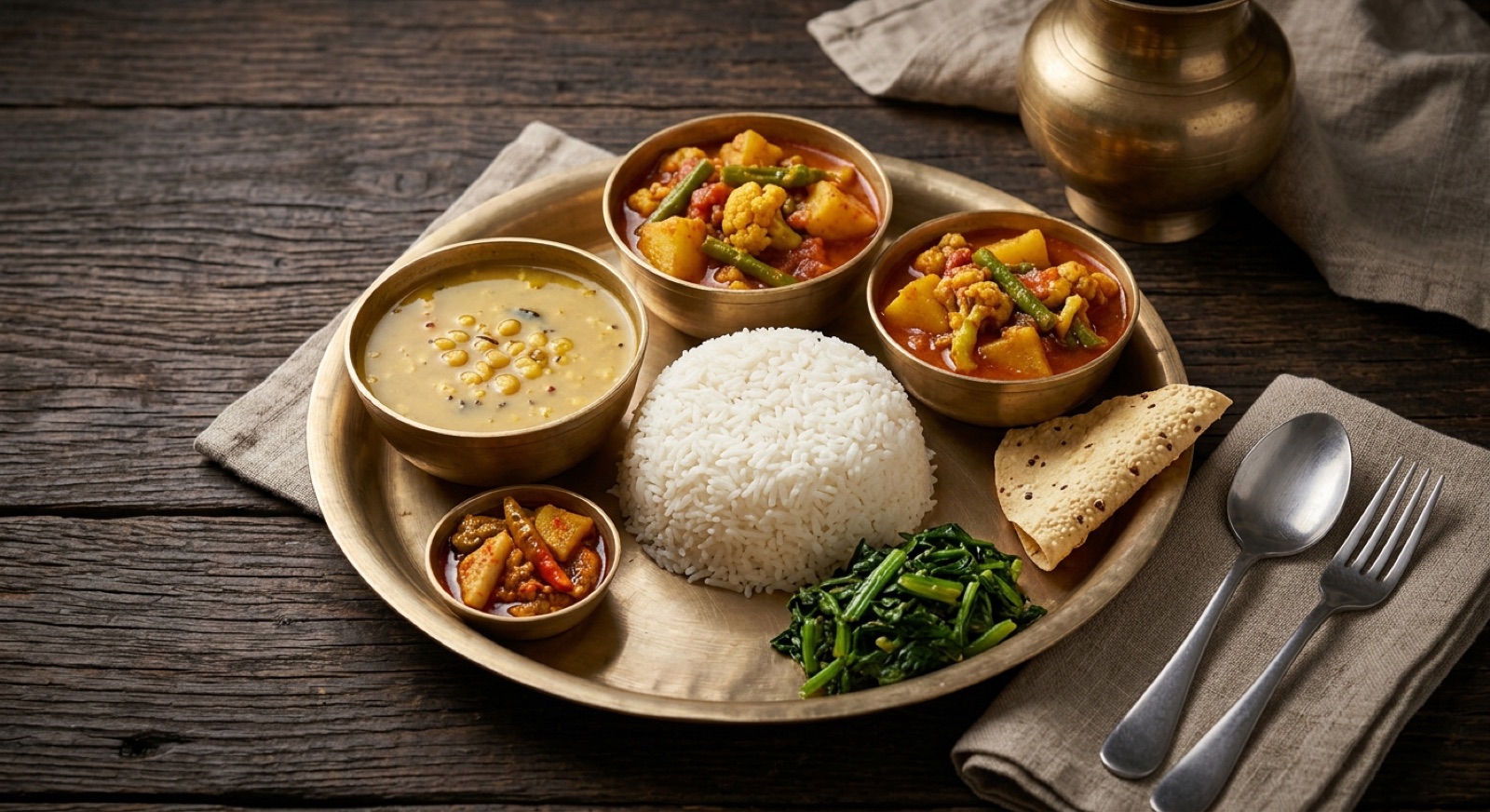
Keep exploring Nepal.
Nepal has 9 more dishes in the atlas — Aloo ko Achar and Choila, and 7 more.
All Nepal recipes Potato recipes Turmeric recipes Onion recipes mainveganvegetariangluten freedairy freenut freeRecipe by The DishRoute Kitchen · published August 20, 2026 · updated August 20, 2026