Nepal.
नेपाल
Nepali cooking is South Asian food rearranged by altitude. The country climbs from subtropical plains to the highest mountains on earth inside a hundred and fifty kilometres, and the kitchen follows that gradient closely: rice below, millet and buckwheat above, and a preserving habit everywhere in between because nothing green grows in a hill winter. The seasoning is where it parts company with India. Nepali cooks reach for mustard oil rather than ghee for everyday frying, for timur — the citrusy Himalayan pepper that numbs the lip — rather than garam masala, and for jimbu, a dried allium herb with a smell between chives and dried onion. Dal is poured, not spooned; it is thin enough to soak into rice rather than sit beside it. And the sour note on a Nepali plate usually comes from fermentation — gundruk, sinki, tama — rather than from lemon or tamarind. It is restrained, savoury food that tastes of the hills rather than of a restaurant spice tin.

- Continent
- AsiaSouth Asia
- Recipes in atlas
- 10
- Must-try dishes
- 5
- Pantry staples
- 10
Start with the classics.
Must tryThe dishes that explain the Nepal kitchen fastest — if you cook only a few things from this page, cook these.
Nepal1 hr 5 min
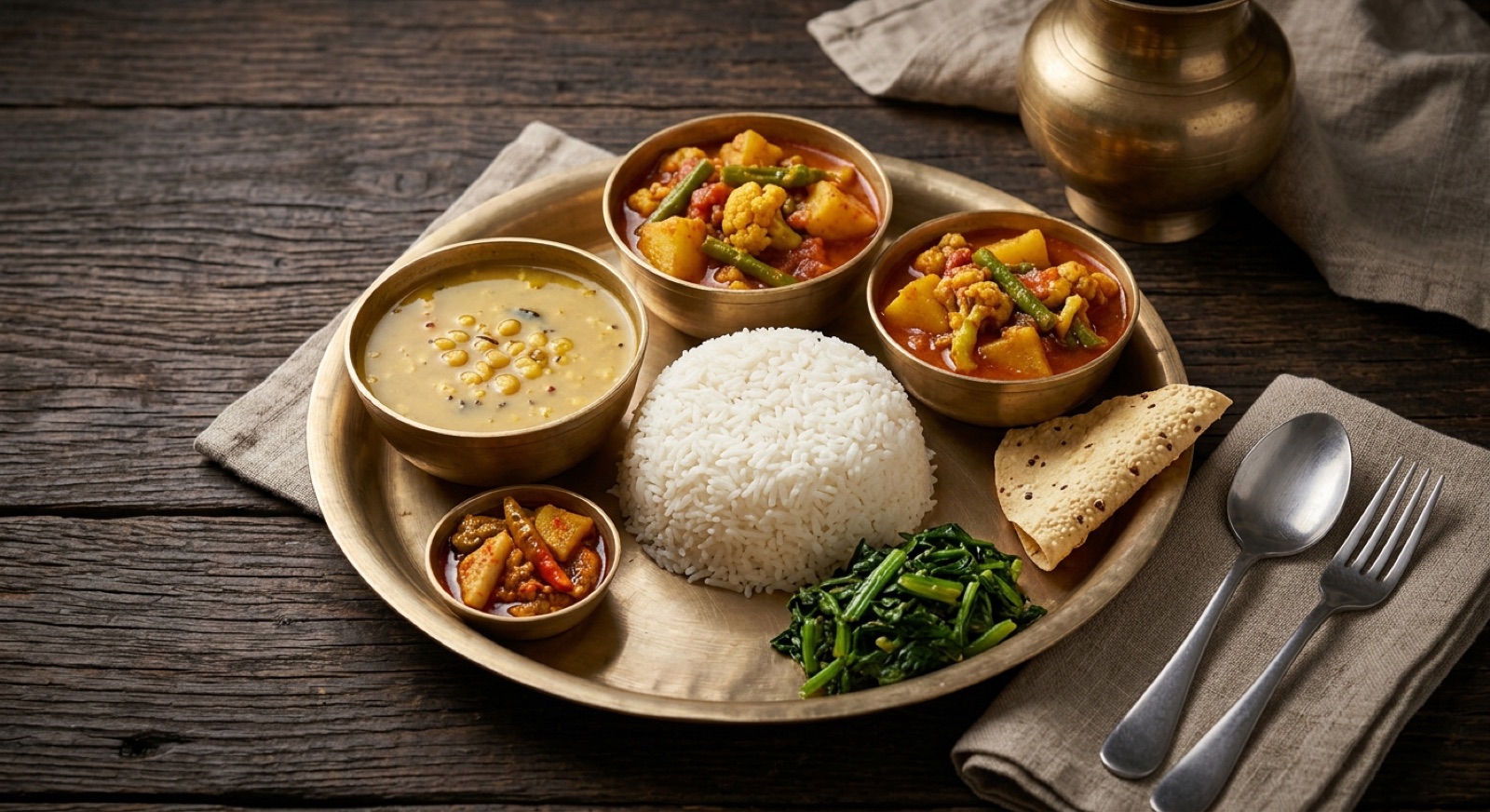
Dal Bhat Tarkari
Nepali Lentils, Rice and Vegetable Curry
Nepal1 hr 45 min
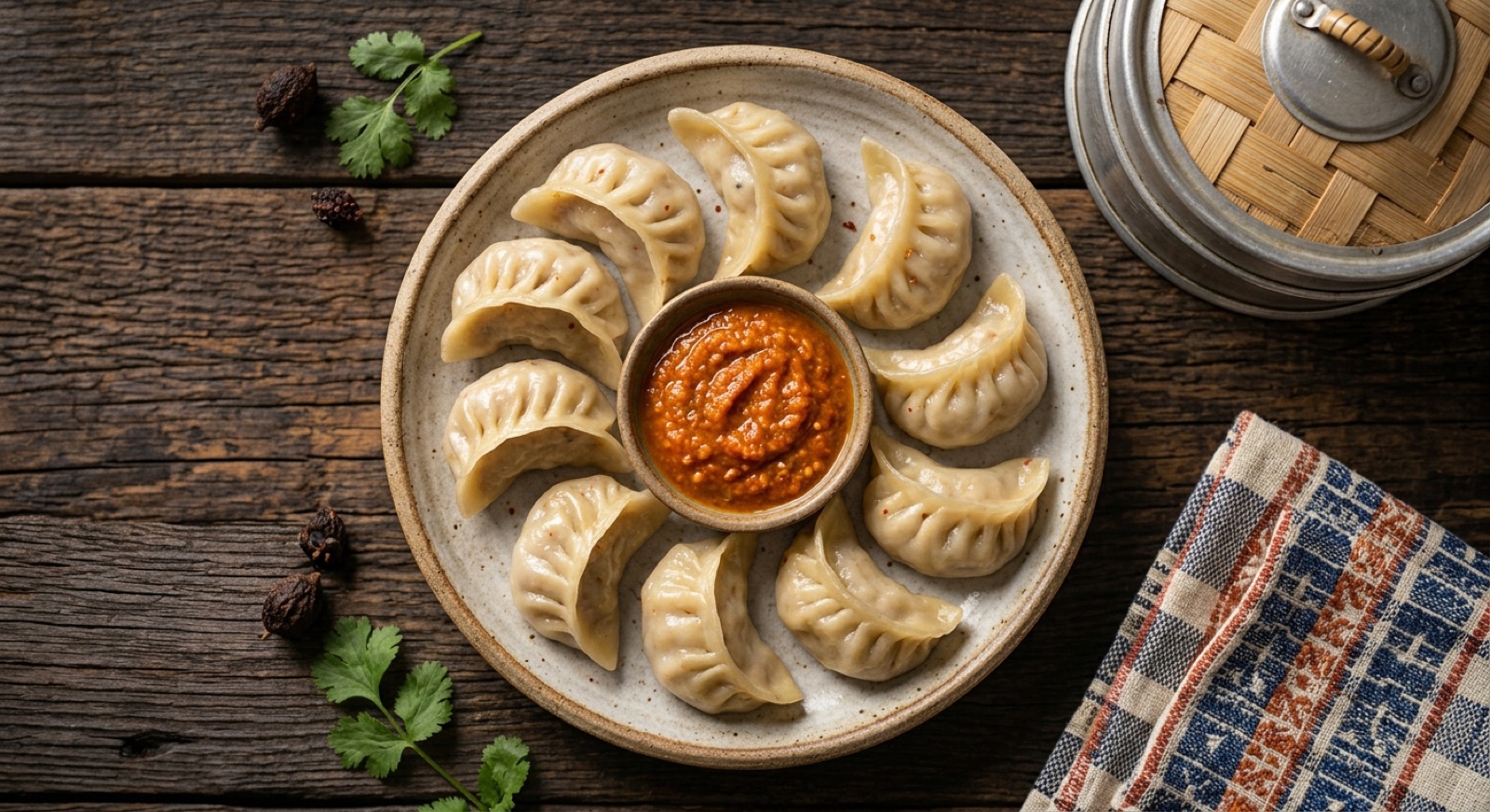
Momo
Nepali Steamed Dumplings with Tomato Achar
Nepal55 min
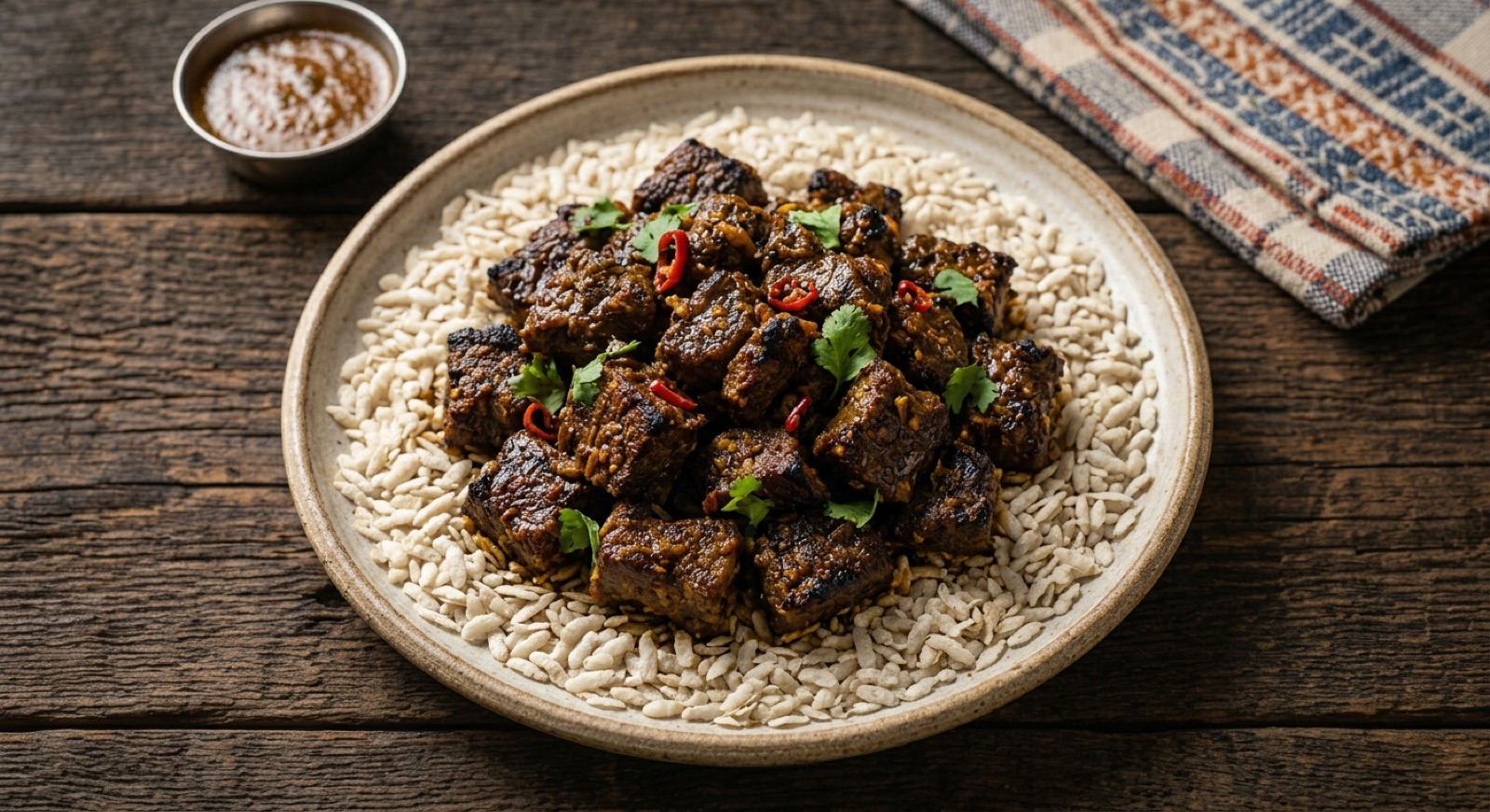
Choila
Newari Spiced Grilled Buffalo
Nepal55 min
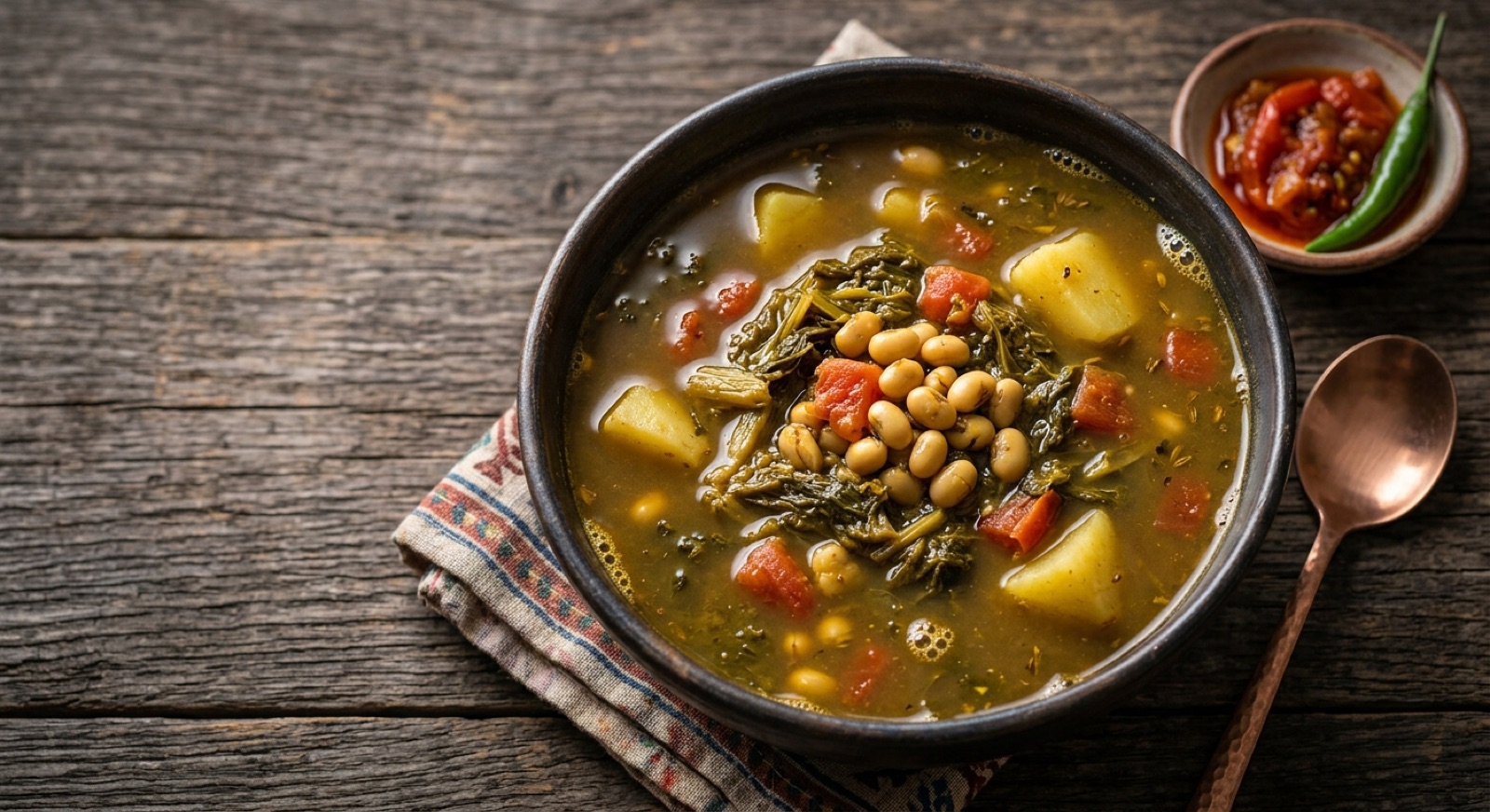
Gundruk ko Jhol
Nepali Fermented Greens Soup
Nepal8 hr 40 min
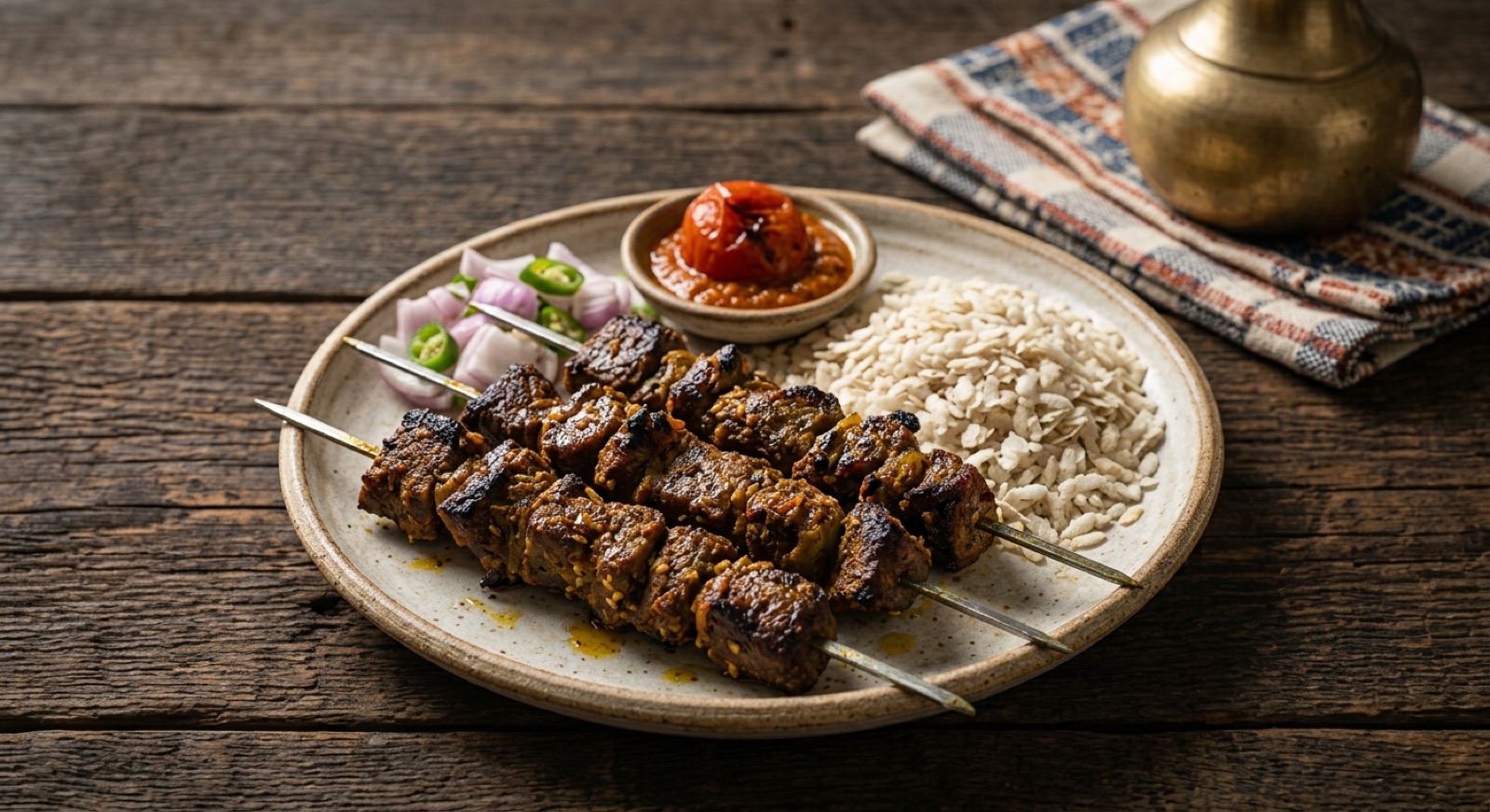
Sekuwa
Nepali Grilled Marinated Meat Skewers
Inside the Nepal kitchen.
The everyday structure is dal bhat tarkari, eaten twice a day across most of the country: a mound of rice, a thin lentil soup poured over it, a dry seasonal vegetable, sautéed greens and a spoonful of achar. It is not a restaurant showpiece but the actual daily meal, refilled until you cover your plate with your hand. Above the rice line the same architecture holds with dhido in place of bhat — buckwheat or millet flour beaten into boiling salted water with a flat wooden paddle until it pulls away from the pot in one glossy lump, then pinched off with the fingers and dipped. Dhido carried a class stigma for most of the twentieth century, when rice was the aspirational grain bought up from the lowlands; it has since moved onto Kathmandu restaurant menus as heritage food, served in a small brass bowl.
Preservation is the technique that defines the hills. Mustard and radish greens all come in at once in the autumn, so they are wilted, pressed airtight into an earthen pot to ferment for a week or three, then dried in the sun until brittle and nearly black — that is gundruk, eaten as a thin sour jhol with potato, tomato and roasted soybeans, or pounded into a fierce dry achar. Radish gets the same treatment as sinki, bamboo shoots as tama, lentil paste as masyaura. The results are lactic and sharply sour in a way that reads closer to sauerkraut than to anything else in South Asia, and they are why a Nepali winter plate has acidity at all.
Meat is festival and market food more than daily food. Goat dominates, especially during Dashain, when families slaughter and work through every part across a week; buffalo is the Newar meat of choice, since cows are protected and buffalo is not, and it carries char and smoking mustard oil better than beef would. The eastern hills around Dharan built the country's reputation for sekuwa, meat marinated in yogurt with ginger, garlic, mustard oil and timur and grilled hard over wood coals. Momo came the other way, over the Himalaya with Newar merchants running the Kathmandu–Lhasa trade, and Kathmandu made them its own by burying them under a roasted tomato-sesame achar no Tibetan shop would recognise.
The honest comparison with the neighbours is that Nepal shares plenty and owns a few things outright. Dal, achar and tarkari are recognisably part of the wider subcontinent; momo belong to a Tibetan dumpling family; gundruk is made across Sikkim, Darjeeling and Bhutan too. What is distinctly Nepali is the combination — timur and jimbu over garam masala, fermentation over fresh acid, dal thin enough to drink, and the Newar feast repertoire of the Kathmandu Valley, which is among the most elaborate and least exported cuisines in South Asia.
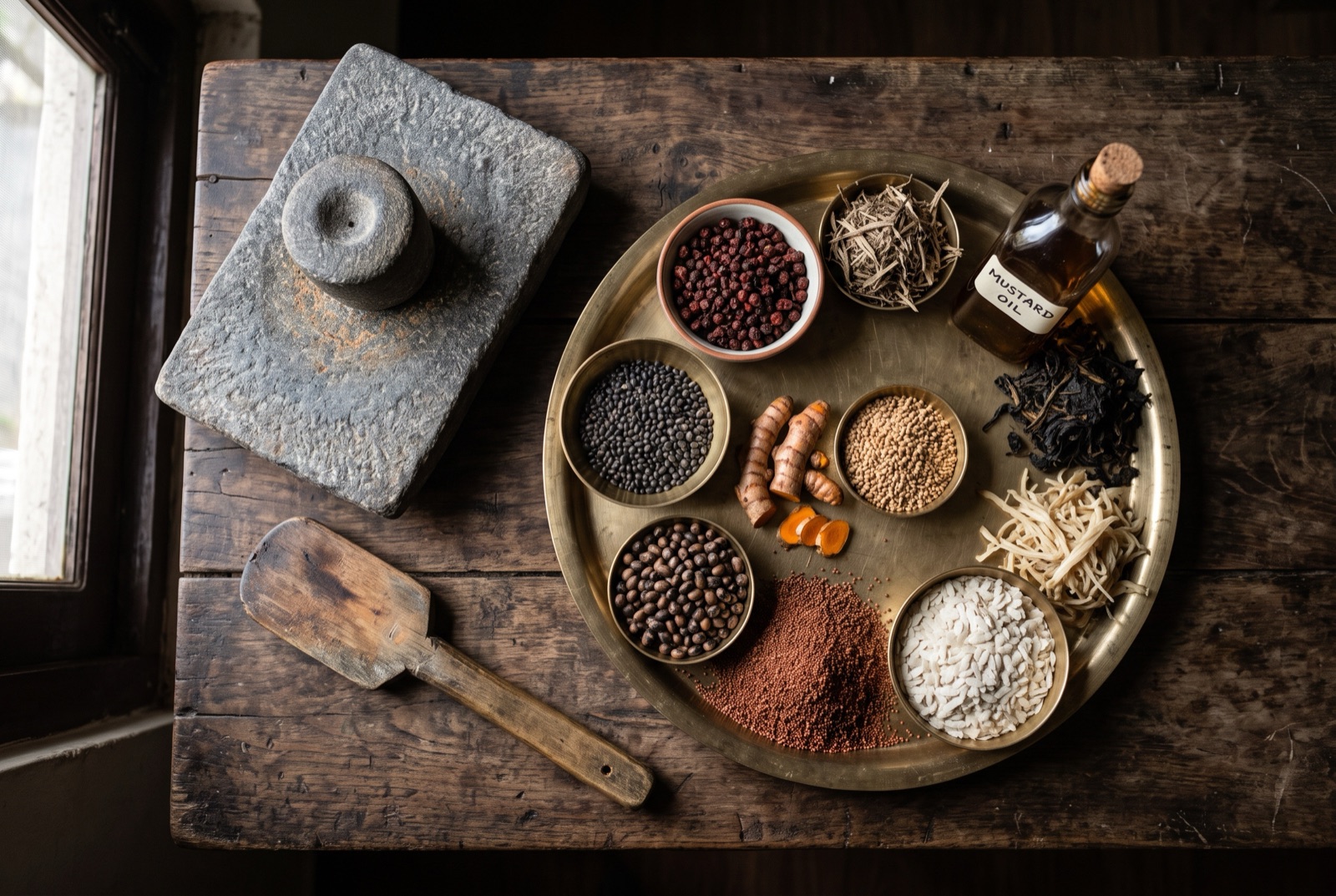
Signature pantry.
10 staplesThe ingredients this cuisine cannot function without.
- timur (Himalayan Sichuan pepper)
- jimbu (dried Himalayan allium herb)
- mustard oil
- gundruk (dried fermented mustard greens)
- tama (fermented bamboo shoots)
- chiura (flattened beaten rice)
- kodo (finger millet flour)
- bhatmas (dried soybeans)
- turmeric
- black lentils
How people eat in Nepal.
Meals are eaten with the right hand, and the mixing happens on the plate: dal is poured over rice and worked into it with the fingers before the first mouthful, so nothing is tasted in isolation. A serving is a starting point rather than a portion — in a bhojanalaya the server keeps returning with more rice, dal and tarkari until a hand goes over the plate. Food is ritually sensitive; once a shared dish is touched by a used hand or spoon it becomes jutho and is not offered on. Newar feasts invert the usual order entirely: choila, bara, black soybeans and beaten rice arrive together at room temperature on one plate, and the eating stretches over hours alongside aila, the home-distilled spirit.
Regional kitchens.
Nepal cooks 4 distinctly different ways depending on where you stand — here is what changes between them.
- R1The Kathmandu Valley
- Newar territory, and the most elaborate cooking in the country — choila, bara, sanya khuna and the long samay baji feast plate, plus a deep buffalo butchery tradition that assigns different cuts and organs to different dishes. It is also the momo capital, where the tomato-sesame achar is judged before the dumpling.
- R2The Middle Hills
- The home of dhido, gundruk and sinki, where terraces grow millet, buckwheat and maize rather than rice and the winter larder is whatever was fermented in autumn. Cooking here is plain, sour and built on preservation rather than fresh produce.
- R3The Eastern Hills — Dharan and Bhojpur
- Grilling country, with Limbu and other eastern communities behind Nepal's reputation for sekuwa cooked over wood coals. Kathmandu sekuwa houses still advertise the eastern connection on the sign, and kodo ko dhido made from finger millet is the local staple.
- R4The Terai
- The flat southern plains along the Indian border, where rice actually grows and the cooking edges towards Bihar and Uttar Pradesh — more fish, more mustard, more wheat breads, and lighter use of the Himalayan spicing found higher up.
All Nepal recipes.
10 recipes and counting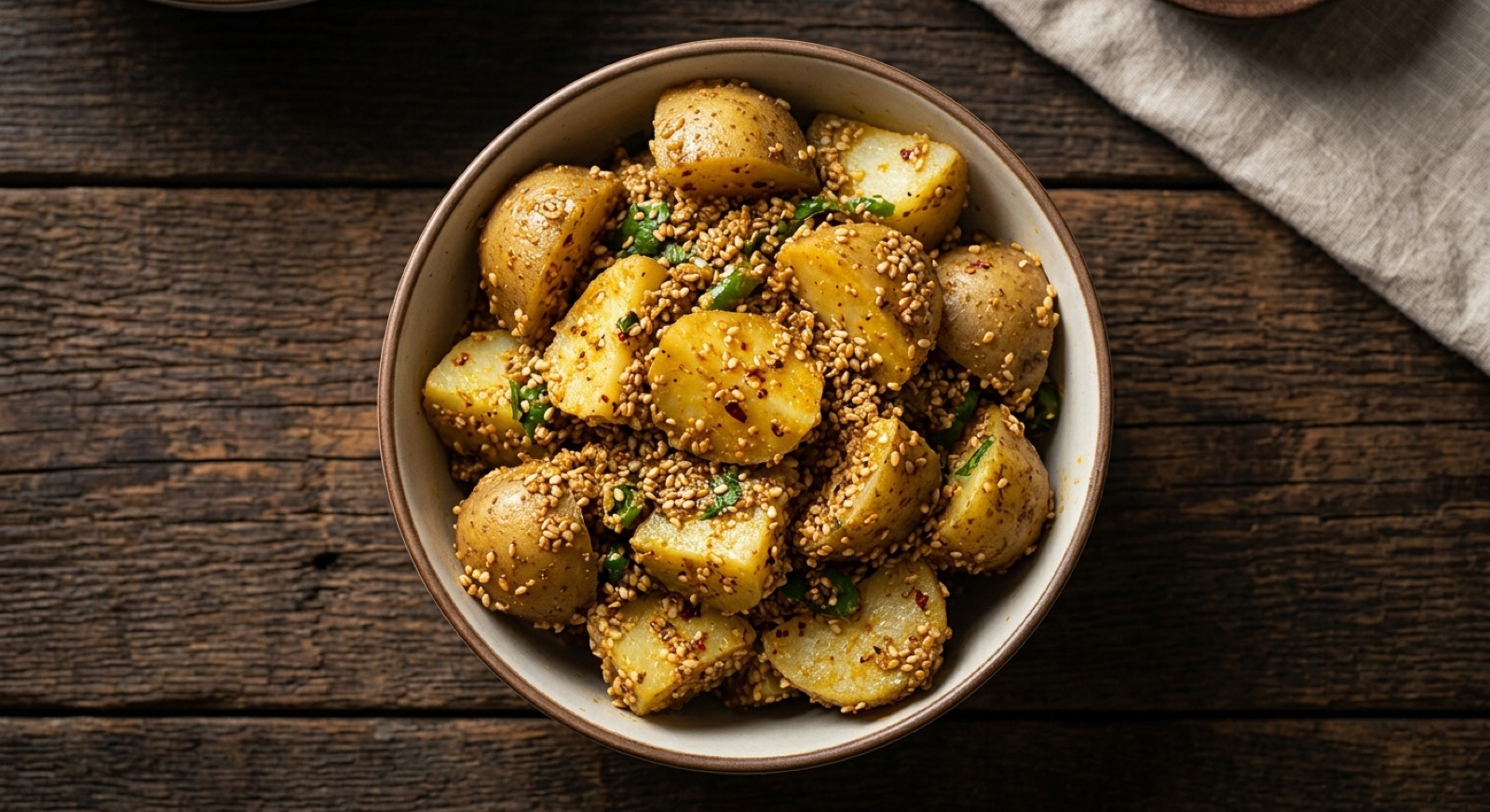
Nepal1 hr 5 min
Aloo ko Achar
Nepali Sesame Potato Pickle
Nepal1 hr 5 min
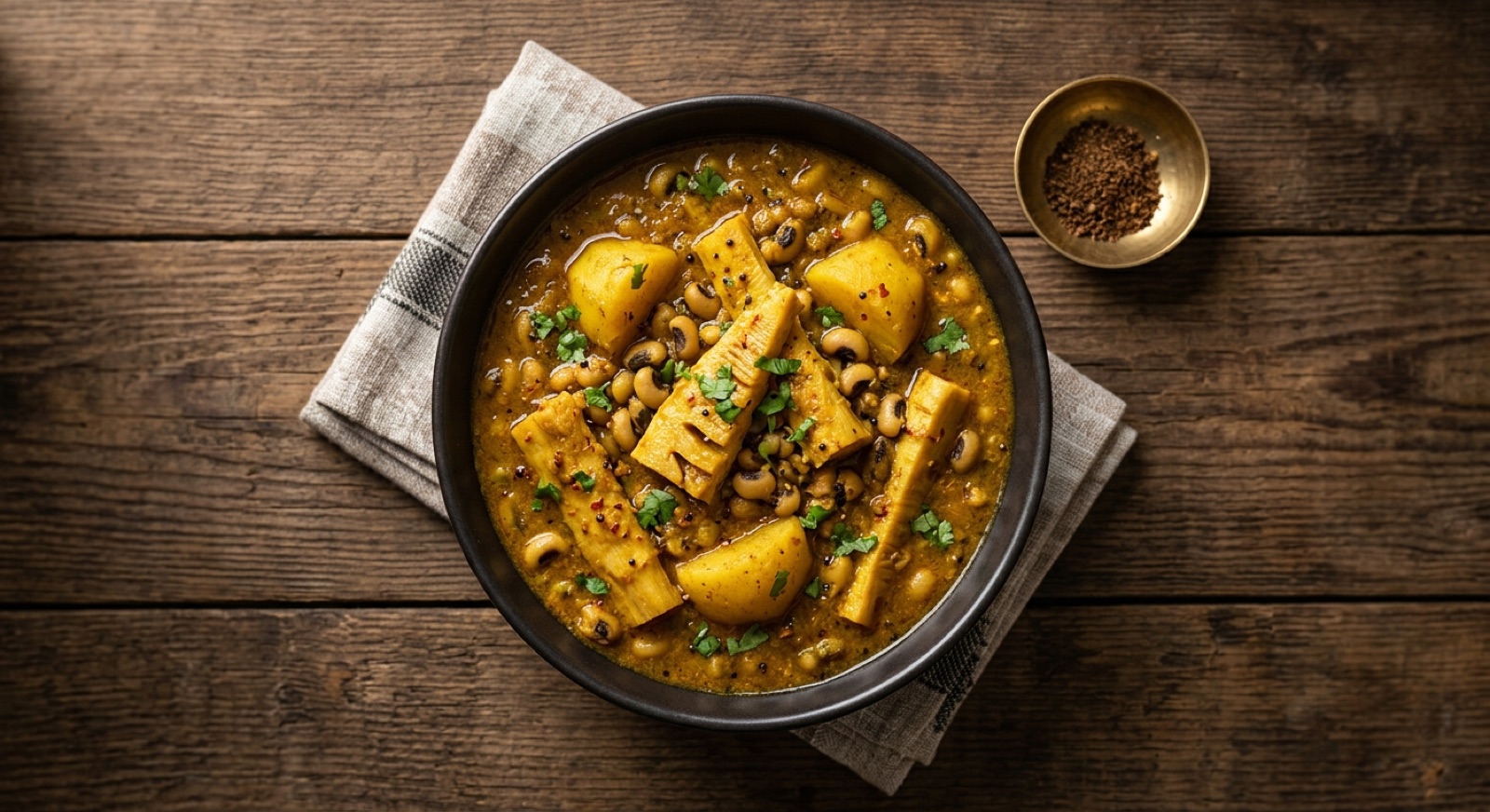
Aloo Tama
Nepali Potato and Bamboo Shoot Curry
Nepal55 min
Choila
Newari Spiced Grilled Buffalo
Nepal1 hr 5 min
Dal Bhat Tarkari
Nepali Lentils, Rice and Vegetable Curry
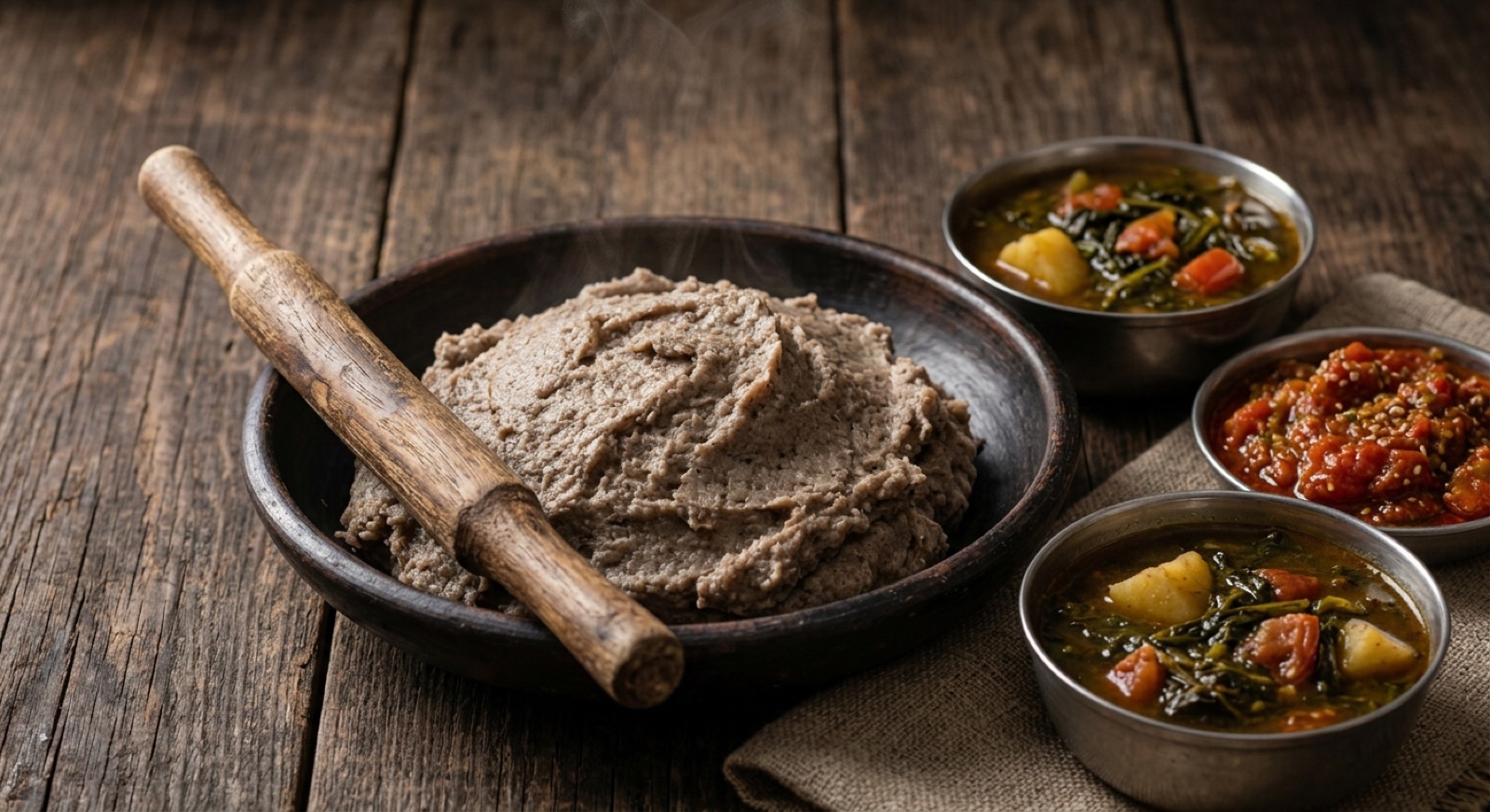
Nepal20 min
Dhido
Nepali Buckwheat and Millet Mush
Nepal55 min
Gundruk ko Jhol
Nepali Fermented Greens Soup
Nepal1 hr 45 min
Momo
Nepali Steamed Dumplings with Tomato Achar
Nepal8 hr 40 min
Sekuwa
Nepali Grilled Marinated Meat Skewers
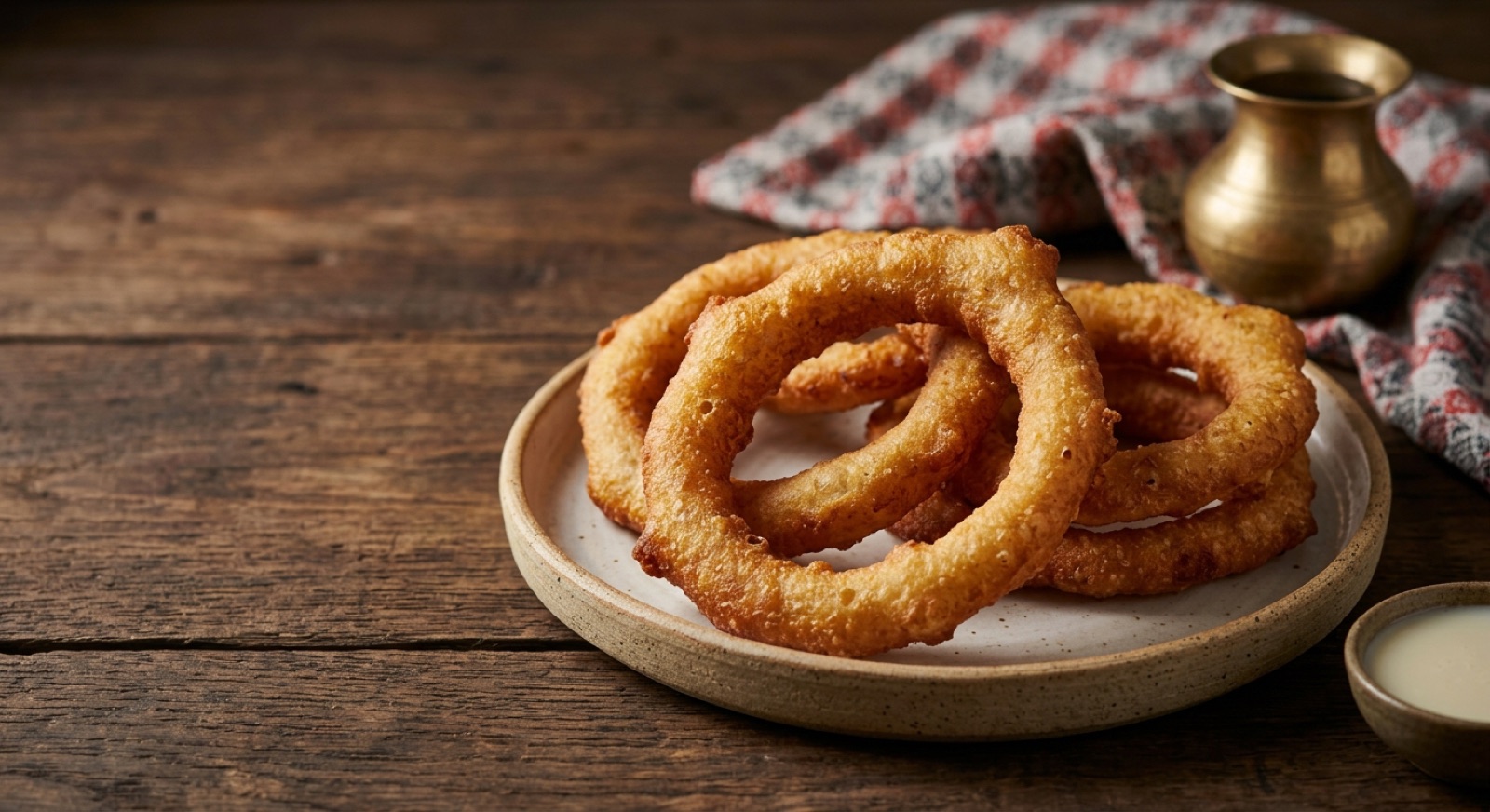
Nepal5 hr
Sel Roti
Nepali Fermented Rice Ring Bread
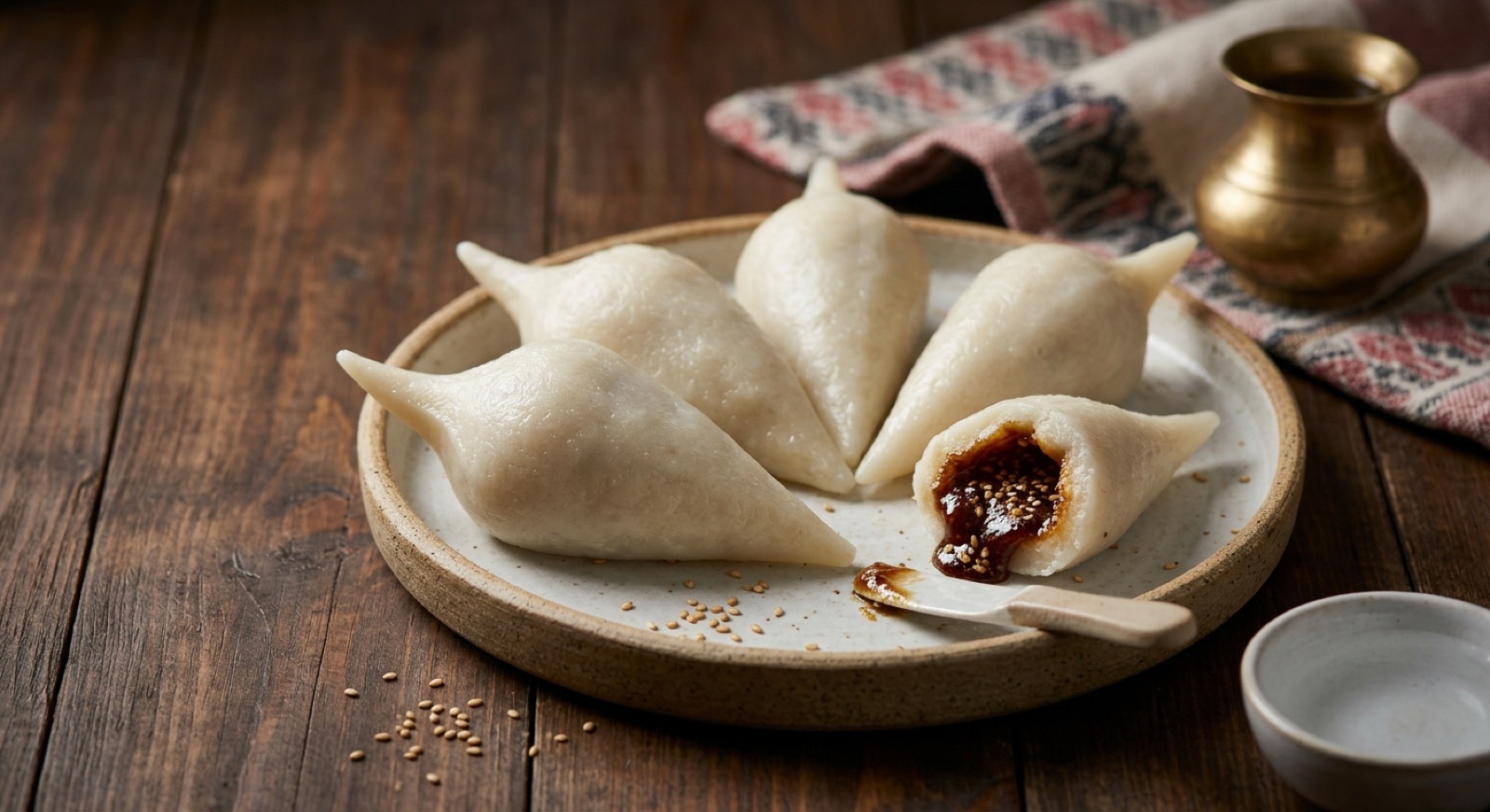
Nepal1 hr 30 min
Yomari
Newari Steamed Sweet Rice Dumplings
Keep traveling.
Nepal sits in South Asia, and its kitchen shares borders as well as ingredients with Armenia and Bangladesh.
 Armenia
 Bangladesh