Aloo ko Achar.
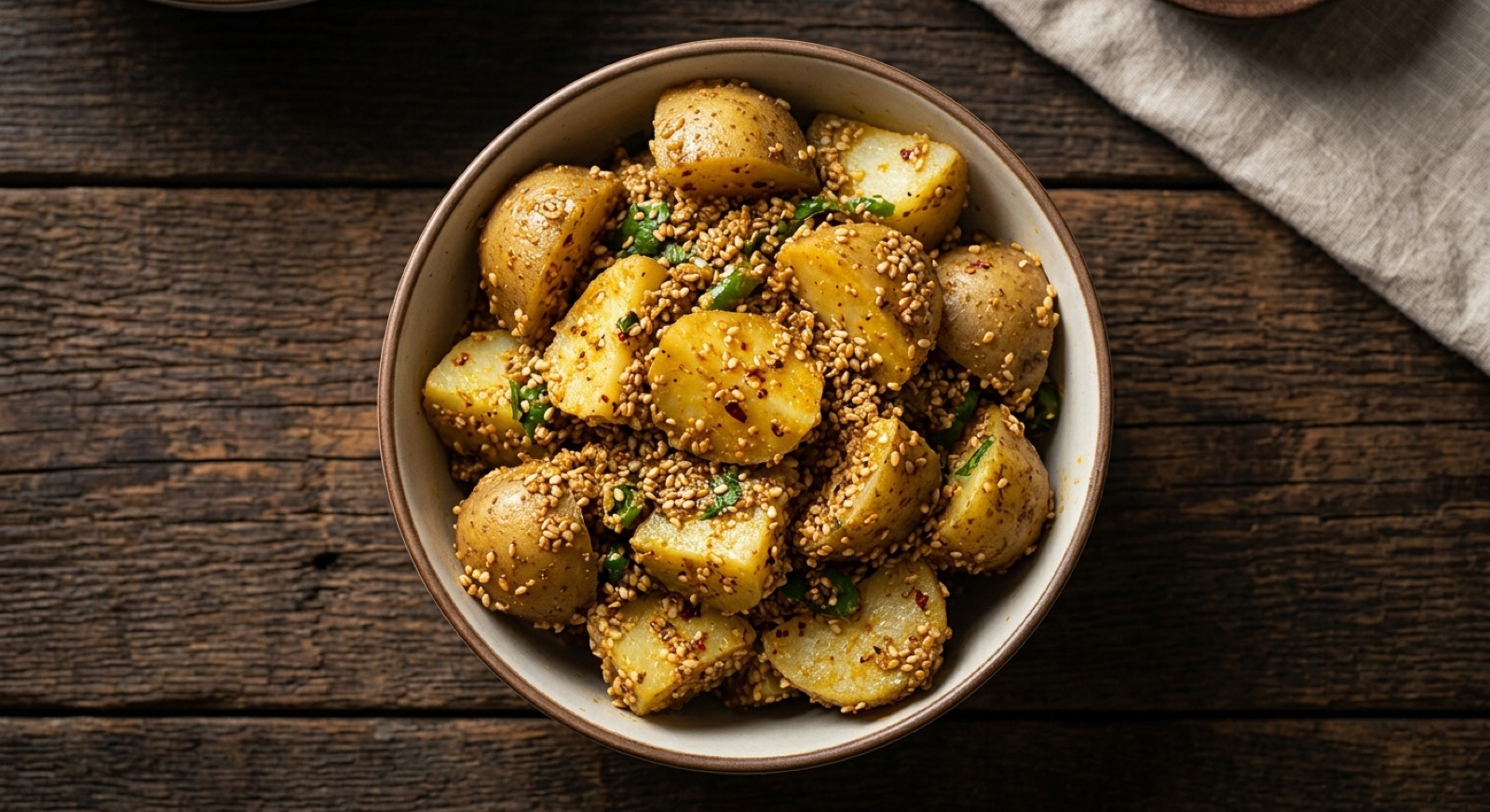
Nepali Sesame Potato Pickle
आलुको अचार · say it: AH-loo koh ah-CHAR
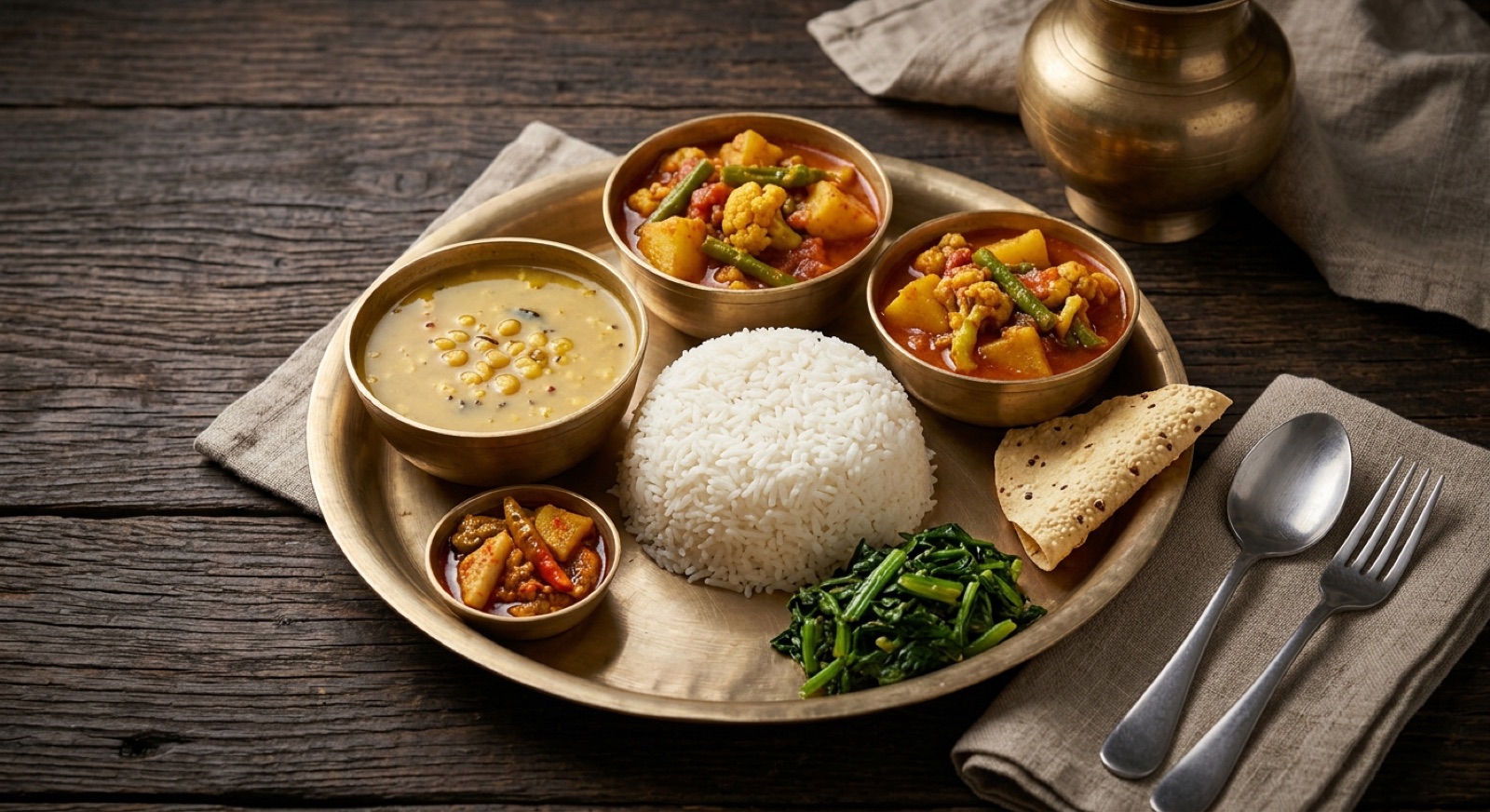
Aloo ko achar is a fresh pickle rather than a preserved one: potatoes boiled, cooled and cut, then coated in a paste of toasted sesame ground to a rough powder, lemon juice, chile and mustard oil heated until it smokes. Cucumber goes in for crunch, fenugreek seeds are fried almost black to bitter the oil, and timur gives the citrus tingle that marks the dish as Nepali rather than Indian. It is eaten cold or at room temperature, and it is one of the few items on a dal bhat plate whose job is purely to cut through everything else with acid, heat and fat.

- Gate
- NepalKathmandu Valley and the hills
- Prep
- 20 min
- Cook
- 25 min
- Total time
- 1 hr 5 min incl. 20 min rest
- Serves
- 6
- Status
- Easy
- Nutrition / serving · estimated
- Calories 220 kcal
- Protein 5 g
- Carbs 28 g
- Fat 11 g
- Fiber 4 g
- Sodium 380 mg
Why this recipe works.
- Grinds the sesame properly so the dressing thickens and clings rather than sliding off.
- Smokes the mustard oil first, which is the difference between rounded and harsh.
- Takes the fenugreek to the dark, near-bitter stage that gives the achar its backbone.
- Dresses the potato while it is still slightly warm so it absorbs instead of sitting coated.
Ingredients.
12 itemsBase
Dressing
Tempering
To finish
Equipment
- Spice grinder or mortar
- Small pan for the tempering
- Large mixing bowl
Instructions.
Boil the potatoes whole
Cover the unpeeled potatoes with cold salted water, bring to a boil and simmer for 20 to 25 minutes until a knife enters with slight resistance. Drain and leave them until cool enough to handle but still warm.
Tip Whole and skin-on is not fussiness — cut potatoes take on water and collapse in the dressing.
Toast and grind the sesame
Dry-toast the sesame seeds over medium heat for 3 to 4 minutes, shaking constantly, until they are pale gold, smell nutty and start to pop. Cool them completely, then grind to a coarse powder — not a paste.
Cut the potatoes
Peel the warm potatoes with your fingers or a small knife and cut them into rough 3 cm chunks. Put them in a wide bowl with the cucumber batons while they still hold some heat.
Mix the dressing
Add the ground sesame, lemon juice, green chillies, chile powder, turmeric and a generous amount of salt to the bowl and fold everything through gently so the potato takes up the dressing without breaking apart.
Smoke the mustard oil
Heat the mustard oil in a small pan over high heat until it visibly smokes and the sharp raw smell falls away, then take it off the heat for ten seconds so it stops climbing in temperature.
Fry the fenugreek and pour it over
Return the pan to medium heat, add the fenugreek seeds and swirl for 20 to 30 seconds until they turn very dark brown and smell toasty and faintly bitter. Pour the oil and seeds straight over the potatoes and fold through.
Tip Dark, not black. If the seeds smell acrid rather than toasty, tip them out and start again — burnt fenugreek ruins the batch.
Rest and adjust
Stir in the timur and cilantro, cover the bowl and let it stand for 20 minutes at room temperature. Taste again and correct with lemon and salt — it should be openly sour and clearly salty, not gently seasoned.
Tips from our kitchen.
- Boil the potatoes whole in their skins and peel them after. Cut potatoes waterlog and fall apart in the dressing.
- Dress them while still faintly warm — warm potato drinks in the lemon and salt, cold potato just wears them on the outside.
- Toast the sesame until it smells nutty and pops, then cool it fully before grinding. Warm seeds turn to oily paste in the grinder.
- Heat the mustard oil until it visibly smokes and the sharp smell drops away before anything goes in, or the achar tastes raw and metallic.
- Fry the fenugreek until the seeds are very dark brown. Pale fenugreek adds nothing; properly darkened it gives the bitter edge the dish is built on.
- Salt it harder than you would a salad and let it sit 20 minutes. It is a pickle eaten in spoonfuls against plain rice, not a side dish eaten by the bowl.
Substitutions.
- Mustard oil → Neutral oil with 1 tsp mustard powder stirred in off the heat
- A workable stand-in for the pungency, though it lacks the depth mustard oil gets from being taken to smoking point. Do not add the powder to hot oil or it turns acrid.
- Timur → Sichuan pepper, lightly toasted and ground
- The closest relative and near-identical in effect. Ordinary black pepper does not substitute — it brings heat but none of the citrus or the numbing tingle.
- Lemon juice → Lime juice, or 2 tbsp rice vinegar
- Lime is sharper and more floral, vinegar flatter but more stable if the achar is being made ahead. Adjust to taste, since the dish should read as clearly sour.
Variations.
- Aloo cucumber achar
- The everyday version with a generous quantity of cucumber cut into batons, which loosens the dressing with its water and makes the achar lighter and more refreshing.
- Feast plate achar
- Made drier and more strongly seasoned for samay baji, with less cucumber and more sesame so it holds its shape at room temperature next to beaten rice and choila.
- Aloo bhatmas achar
- Fried or roasted soybeans stirred in just before serving for crunch, a common addition in the hills where dried soybeans are a standard larder item.
Storage & reheating.
Aloo ko achar keeps 3 days refrigerated and is best on the day it is made, when the cucumber is still crisp. It weeps liquid as it sits, so drain it and check the seasoning before serving again — the salt and sour both dull overnight. Take it out of the fridge 20 minutes ahead, since cold flattens the sesame and the timur. It does not freeze; the potato turns grainy and the dressing splits. If making ahead for a gathering, dress the potatoes but hold back the cucumber and cilantro until the last moment.
Serve with
Dal bhat, sel roti at festival time, or a Newar samay baji plate with beaten rice and choila.
The story behind Aloo ko Achar.
Achar in Nepal covers two quite different things. There are the long-keeping pickles, vegetables salted and left under oil for months, and there are the fresh achars mixed the same day and eaten within hours, which is what aloo ko achar is. The daily Nepali plate is deliberately plain — rice, thin dal, a dry vegetable, greens — and it needs one sharp element to stop it becoming monotonous across two meals a day, every day. The fresh achar is that element, and the potato version is the most common of all because potato is cheap, stores through winter and takes on dressing readily.
The seasoning is the part that would not be made this way anywhere else in South Asia. Sesame is toasted and ground rather than used whole, which turns it into a thickener as much as a flavour — the dressing clings to the potato instead of pooling underneath. Mustard oil is heated until it genuinely smokes before the fenugreek goes in, which burns off its raw pungency; used cold it tastes harsh and metallic. The fenugreek is fried until it is very dark, almost at the point of burning, because that near-burnt bitterness is a signature Newar note rather than a mistake. And timur, the Himalayan pepper that numbs the lip, does the work that black pepper or extra chile would do further south.
The dish sits at the centre of Newar eating as well as everyday hill cooking. On the samay baji feast plate, where everything arrives at room temperature at once — beaten rice, choila, black soybeans, egg, aila — a sour potato achar is one of the fixed components, and it is also the standard partner for sel roti at Tihar. Potatoes themselves are relatively recent in the Himalaya, arriving through colonial-era trade routes, but they took hold quickly because they grow at altitudes where rice will not and store without processing. A dish that looks like potato salad to an outsider is really doing the job of a pickle, and it should be seasoned accordingly: distinctly sour, hot enough to notice, and salted harder than a salad would be.
Questions, answered.
Is aloo ko achar a pickle or a potato salad?
It is a fresh pickle, not a preserved one. Nepali kitchens make both kinds: long-keeping vegetables under oil and salt, and fresh achars mixed the same day and eaten within hours. This is the second kind, seasoned far more sharply than a salad because it is eaten in small spoonfuls against plain rice.
Why does the mustard oil need to be heated until it smokes?
Raw mustard oil has an aggressive, almost metallic pungency. Heating it to smoking point drives that off and leaves a rounder, warmer flavour, which is why nearly every Nepali recipe starts by smoking the oil before anything is added. Let it cool for a few seconds afterwards so the spices do not scorch instantly.
What is timur and what can I use instead?
Timur is the Himalayan relative of Sichuan pepper, a dried berry husk with a citrus aroma and a tingling numbness rather than heat. Sichuan pepper is the closest substitute and behaves almost identically. Black pepper is not a substitute, since it provides heat but neither the citrus note nor the numbing effect.
Which potatoes work best?
Waxy or all-purpose potatoes hold their shape when boiled whole and cut, which matters when they are tossed in a thick dressing. Floury baking potatoes break down into a mash. Boil them in their skins until a knife slides in with slight resistance, then peel and cut once they are cool enough to handle.
Is aloo ko achar vegan and gluten-free?
Yes to both as written. It contains only potato, cucumber, sesame, lemon, mustard oil, chile and spices, with no dairy, egg or wheat anywhere in it. That makes it a standard item on Nepali fasting plates and vegetarian feast spreads.
You might also like.
All recipes →
Keep exploring Nepal.
Nepal has 9 more dishes in the atlas — Aloo Tama and Choila, and 7 more.
All Nepal recipes Potato recipes Sesame seeds recipes Lemon recipes sideveganvegetariangluten freedairy freenut freeRecipe by The DishRoute Kitchen · published August 21, 2026 · updated August 21, 2026