Damper.
Australian Campfire Soda Bread
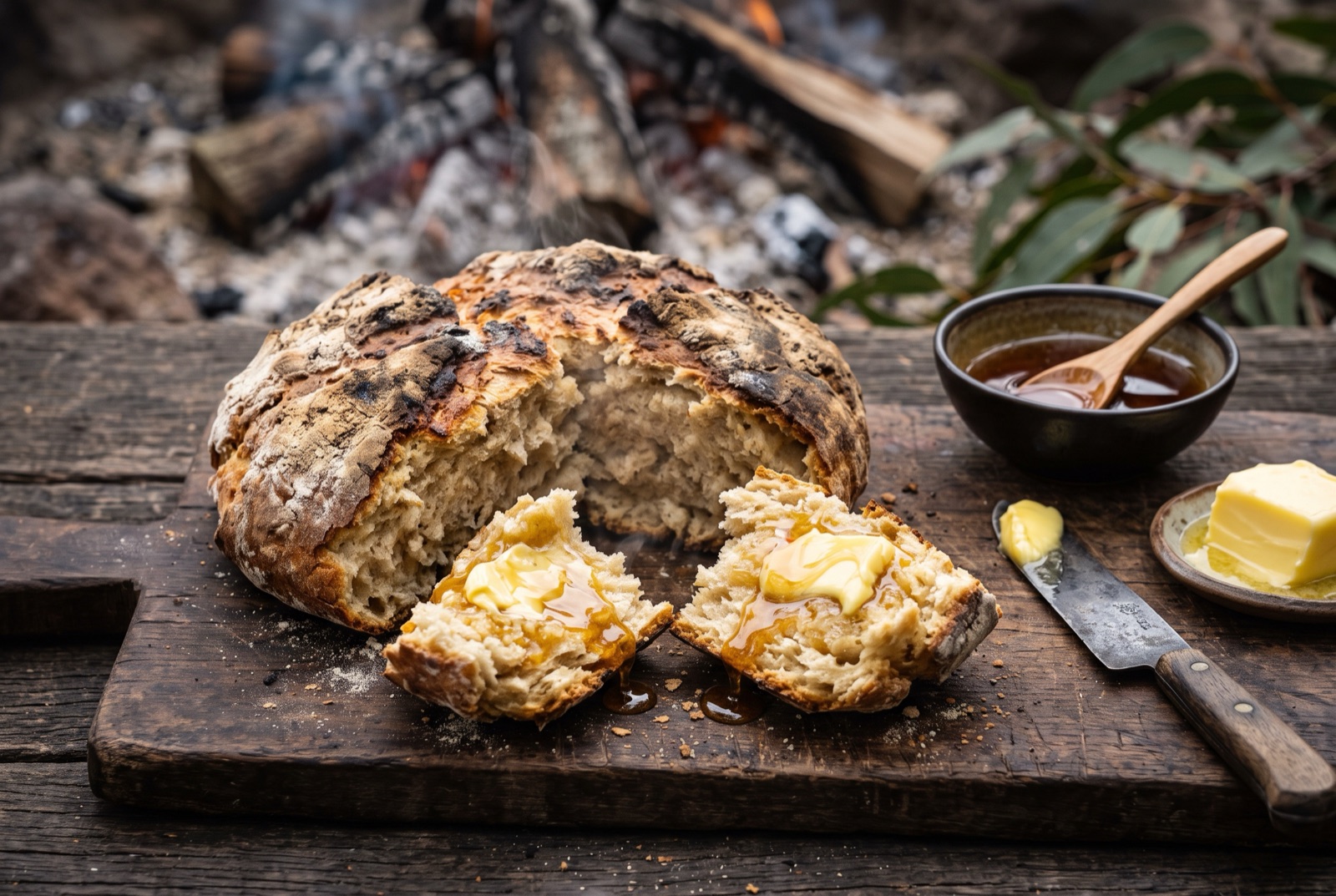
Damper is a plain, dense, slightly craggy round loaf leavened with baking powder rather than yeast, so it goes from bowl to fire in ten minutes with no proving. The crust is thick and blistered, sometimes ashy from the coals, and the crumb inside is close-textured and faintly scone-like — it tastes of toasted flour and salt and not much else, which is exactly the point. It exists to be torn while too hot to hold, smeared with butter and drowned in golden syrup. Made in a camp oven over a fire it is genuinely good; made in a domestic oven it is a very fast bread that takes half an hour start to finish.

- Gate
- Australia
- Prep
- 10 min
- Cook
- 30 min
- Total time
- 40 min
- Serves
- 8
- Status
- Easy
- Nutrition / serving · estimated
- Calories 350 kcal
- Protein 8 g
- Carbs 58 g
- Fat 11 g
- Fiber 2 g
- Sugar 12 g
Why this recipe works.
- Barely mixes the dough, which is the difference between a tender damper and a tough one — this is the mistake most recipes fail to warn about.
- Gives both the camp oven method and the home oven method, with real coal and temperature guidance for each.
- Includes a butter-and-milk version alongside the historical flour-and-water one, and is honest about which tastes better.
- Thirty minutes from bowl to table, with no proving, no yeast and no equipment beyond a hot oven or a fire.
Ingredients.
7 itemsFor the dough
To serve
Equipment
- Large mixing bowl
- Baking tray or cast-iron camp oven
- Sharp knife for scoring
Instructions.
Heat the oven or build the coals
Heat the oven to 220°C with a heavy tray or a cast-iron pot inside. If cooking on a fire, let it burn down until you have a thick bed of glowing coals with no flame licking up — flames scorch the crust before the middle cooks.
Rub the butter through the flour
Combine the self-raising flour and salt in a large bowl, add the cold butter and rub it in with your fingertips until the mixture looks like coarse sand with a few pea-sized flecks left. Work quickly so the butter stays cold.
Bring the dough together barely
Pour in the milk and water and cut them through the flour with a butter knife until a shaggy, sticky mass forms. Tip it onto a floured bench and gather it into a rough round with your hands for no more than 30 seconds — do not knead it.
Tip The dough should look untidy and patchy. Smooth, elastic damper dough has already been overworked.
Shape and score
Pat the dough into a flattish round about 20 cm across and 5 cm high, set it on the hot tray or in the hot pot, dust the top with flour and cut a deep cross into it, about 2 cm down, running right across the loaf.
Bake hot
Bake for 25–30 minutes until the crust is deep golden and hard to the tap, the cross has opened into four distinct wedges and the loaf sounds hollow when you knock the base. In a camp oven, allow the same time with coals under the base and heaped on the lid.
Tear and serve hot
Move the damper to a board and leave it 5 minutes only, then tear it open along the cross rather than slicing it. Serve while steaming with cold butter and a heavy pour of golden syrup.
Tips from our kitchen.
- Mix until the dough just holds together and no further. Damper is a scone dough, not a bread dough — kneading builds gluten and makes it rubbery.
- Cut a deep cross into the top before baking. It lets heat into the centre and gives you four natural tear-apart quarters.
- Dust the top with flour before it goes in for the traditional pale, floury bush-loaf finish.
- Bake hot — 220°C, or a camp oven with coals underneath and on the lid — so the crust sets before the middle dries out.
- Knock the base: a hollow sound means done, a dull thud means it needs another five to ten minutes.
- Eat it within the hour. Quick breads have no yeast to keep them soft and damper is stale by the next morning.
Substitutions.
- Self-raising flour → Plain flour plus 4 tsp baking powder
- Whisk the baking powder thoroughly through the flour before adding liquid, or you get bitter pockets and uneven rise.
- Milk → Water
- Water is the historically accurate choice and what was actually used in the bush. Milk gives a softer crumb and better browning, so this recipe uses a mix — use all water if you want the plainer original.
- Butter → Omit entirely
- The original damper had no fat at all. The result is drier and more crumbly but perfectly authentic, and it keeps even less well.
Variations.
- Camp oven damper
- Baked in a cast-iron camp oven set on a bed of coals with more coals heaped on the lid, so heat comes from both sides. The traditional method and still the best crust.
- Cheese and herb damper
- Grated tasty cheese, chopped rosemary and cracked pepper folded through the dry flour before the liquid goes in.
- Native-spiced damper
- Ground wattleseed or chopped saltbush worked into the dough — a modern link back to the far older Aboriginal tradition of ash-baked seed breads.
Storage & reheating.
Damper is at its best for about an hour and noticeably stale by the next day — there is no yeast structure to hold moisture. Keep leftovers wrapped in a tea towel at room temperature for a day, and never in the fridge, which accelerates staling. Day-old damper is genuinely good sliced thick and toasted hard, or split and fried in butter. The unbaked dough does not keep; the raising agents start working the moment liquid is added.
Serve with
Cold butter and golden syrup, torn apart by hand. Alongside a stew or a camp-oven roast it also works as a plain table bread.
The story behind Damper.
Damper is the bread of the stockmen, drovers, swagmen and shearers who spent weeks away from any bakery in the Australian bush during the nineteenth century. The ration they carried was flour, sugar, tea and salted meat, so bread had to be made from flour and water alone, mixed in the top of the flour bag or on a piece of bark, and cooked in the ashes of a campfire — either buried directly in hot coals or baked in a cast-iron camp oven with coals heaped on the lid. Later versions added baking powder or bicarbonate of soda once those became available, which is the recipe most people make now.
The practice did not appear from nowhere. Aboriginal peoples across Australia had ground native seeds and grains into flour and baked seed cakes in ashes for thousands of years before European arrival, and colonial damper sits alongside that far older tradition rather than replacing it. Some contemporary bakers make the connection explicit by working native ingredients — wattleseed, saltbush, bush tomato — into the dough, which suits the bread well.
Damper survives today mostly as camping food, scout-troop cooking and school heritage lessons, which risks making it sound like a museum piece. It is better than that if you treat it as what it is: a very fast, very plain quick bread with a serious crust. The two things that make or break it are handling and heat. Work the dough as little as possible — thirty seconds of gentle bringing-together, not kneading — because the more you develop it the tougher and more rubbery the crumb becomes. And bake it hot, so the outside sets into a hard shell while the inside is still steaming. A finished damper should sound hollow when you knock the base, and it should be eaten within an hour, because plain quick breads go stale fast and damper is no exception.
Questions, answered.
Why did my damper turn out tough and heavy?
Overworking the dough. Damper is chemically leavened like a scone, so every extra minute of mixing develops gluten and makes the crumb rubbery and dense instead of short and tender. Bring the dough together with a knife and then your hands for no more than thirty seconds, accept that it looks rough and shaggy, and stop. A slightly ugly damper is a good damper.
Can I bake damper in a normal oven?
Yes, and most people do. Bake at 220°C for about 25–30 minutes on a hot tray or in a preheated cast-iron pot. The pot gets you closer to the camp-oven result because it traps steam early and then crisps the crust. What you lose is the smoke and the faint ash flavour that comes from cooking in a real fire, which is the one thing a domestic oven cannot fake.
How do I bake it in the coals of a fire?
Let the fire burn down to a deep bed of glowing coals with no flames. Either sit the dough in a greased cast-iron camp oven, put the lid on and shovel coals underneath and on top, or wrap the dough well in greased foil and bury it in the coals. Allow roughly 30 minutes, rotating the pot occasionally, and check by knocking the base for a hollow sound.
Is damper the same as Irish soda bread?
They are close relatives — both are unyeasted quick breads baked as a round with a cross cut in the top. The differences are in the leavening and liquid: Irish soda bread uses bicarbonate of soda activated by buttermilk, giving a tangier, more open crumb, while damper traditionally uses baking powder with water or milk and is plainer and denser. The bush cooking method is what makes damper its own thing.
What is golden syrup and can I substitute it?
Golden syrup is a thick amber cane sugar syrup with a mild caramel-butterscotch flavour, sold in tins across Australia and Britain and used constantly in Australian baking. It is the traditional partner for damper. Honey or maple syrup will do the job, though both are more strongly flavoured; light corn syrup with a little brown sugar stirred in is the closest neutral stand-in.
You might also like.
All recipes →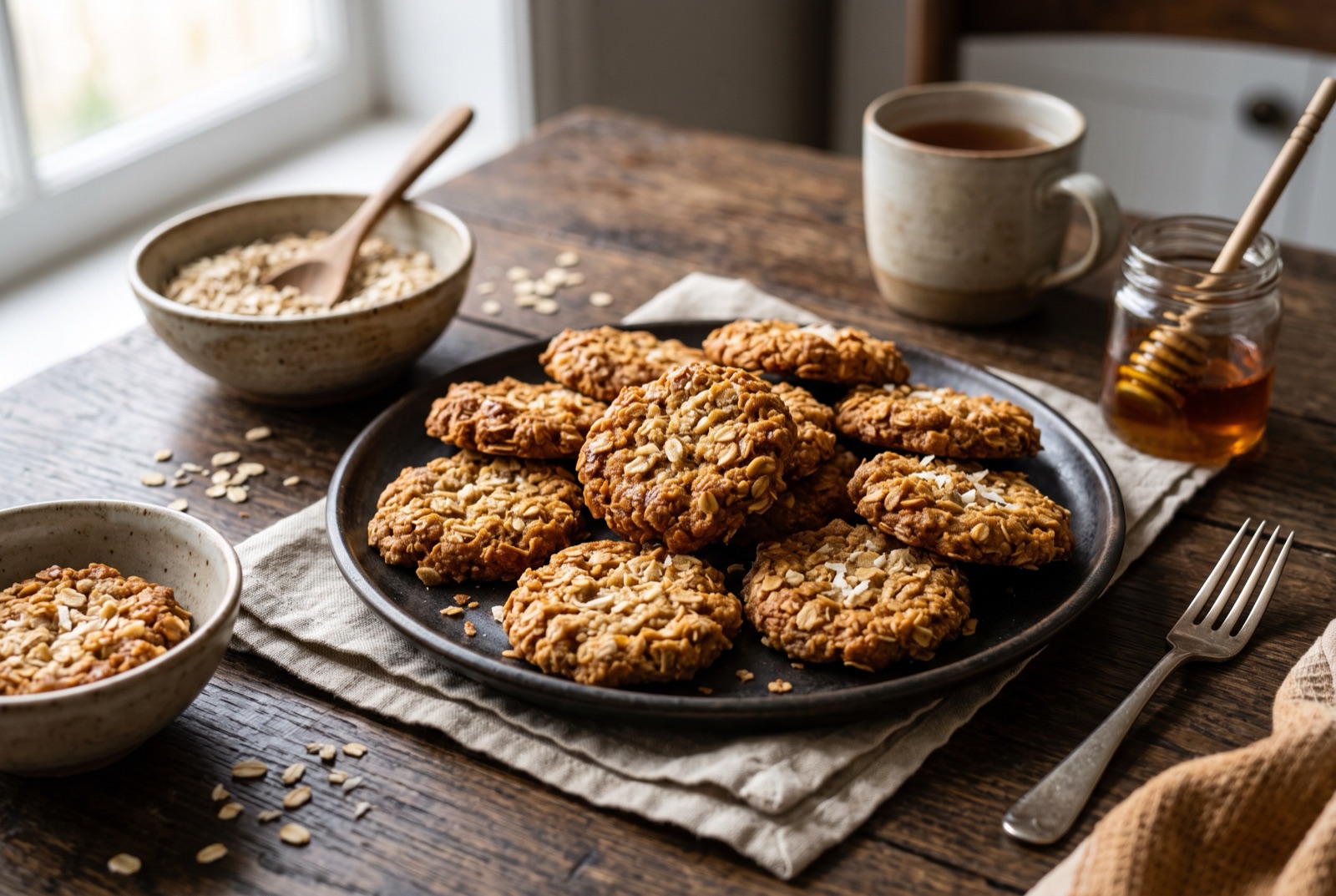

Keep exploring Australia.
Australia has 9 more dishes in the atlas — ANZAC Biscuits and Aussie Meat Pie, and 7 more.
Recipe by The DishRoute Kitchen · published August 20, 2026 · updated August 20, 2026