Bai Sach Chrouk.
Khmer Grilled Pork and Broken Rice
បាយសាច់ជ្រូក · say it: bye sahk chrook
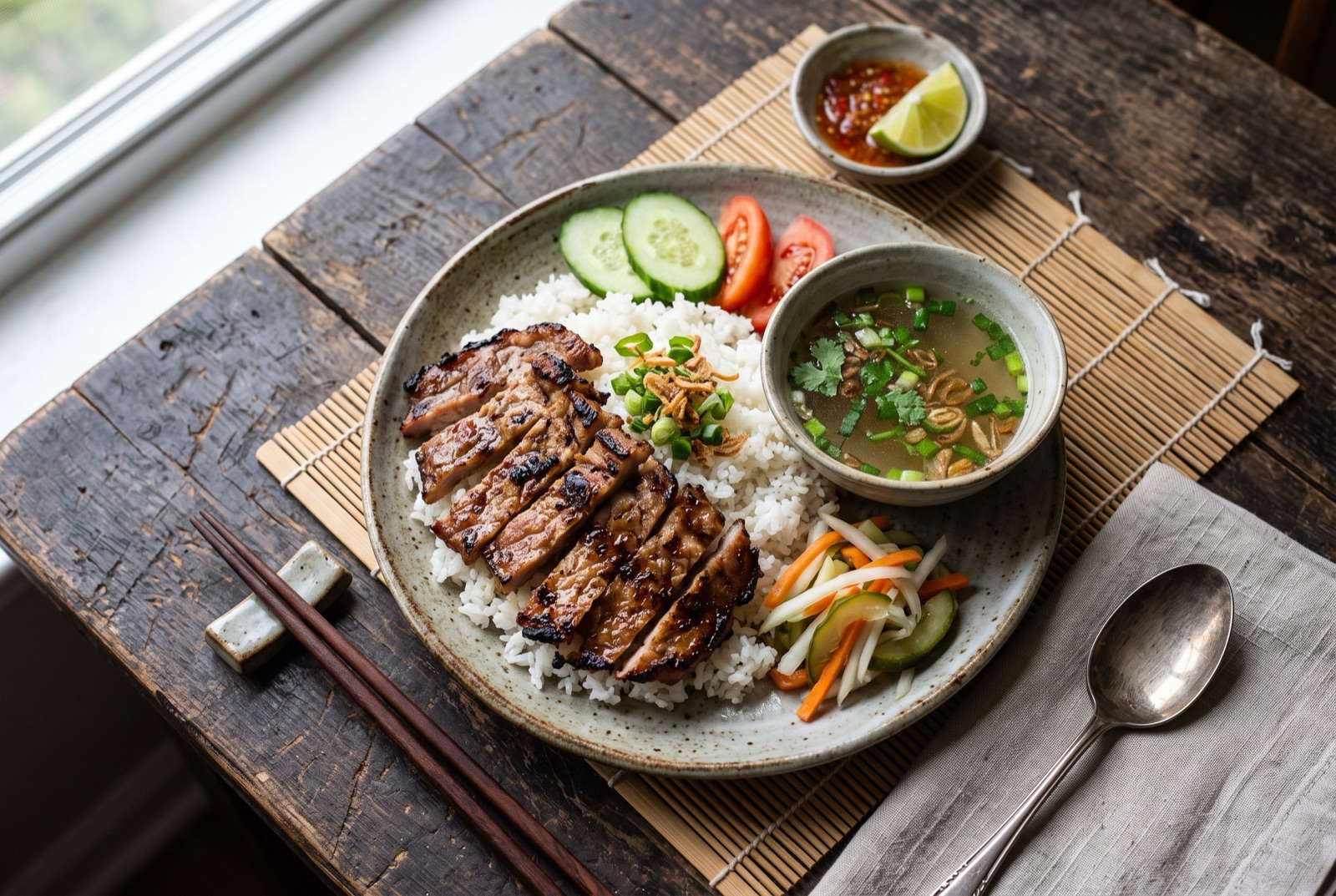
Bai sach chrouk is what half the country eats before eight in the morning. Pork shoulder is sliced thin, marinated overnight in coconut milk, garlic, palm sugar and soy, then grilled fast over charcoal until the edges blacken and the sugar caramelises. It lands on a mound of broken rice — the small fractured grains left over from milling, softer and stickier than whole jasmine rice — with a heap of pickled daikon and carrot, cucumber slices and a small bowl of clear broth alongside. The pork is sweet and smoky, the pickles sharp, the rice plain and comforting, and the broth is there to sip between mouthfuls. It costs about a dollar in Phnom Penh and it is genuinely one of the best breakfasts anywhere.

- Gate
- CambodiaPhnom Penh
- Prep
- 25 min
- Cook
- 25 min
- Total time
- 8 hr 50 min incl. 8 hr rest
- Serves
- 4
- Status
- Easy
- Nutrition / serving · estimated
- Calories 690 kcal
- Protein 42 g
- Carbs 85 g
- Fat 20 g
- Fiber 3 g
- Sugar 16 g
Why this recipe works.
- An overnight coconut milk marinade that tenderises the pork and gives the char its distinctive sweetness.
- Broken rice cooked with slightly less water than usual, so it stays soft and clingy the way the street version is.
- Quick pickles that are ready in thirty minutes and stay crunchy rather than turning limp and sour.
- A grill-pan method for anyone without charcoal, with a clear note about what you gain and lose.
Ingredients.
16 itemsFor the pork
For the rice
For the pickles
To serve
Equipment
- Charcoal grill or cast-iron grill pan
- Rice cooker or heavy saucepan with a lid
- Mixing bowl for the pickles
Instructions.
Marinate the pork
Whisk the coconut milk, garlic, soy sauce, fish sauce, palm sugar and pepper together until the sugar dissolves. Add 700 g of sliced pork, turn until every sheet is coated, cover and refrigerate overnight or at least 4 hours.
Make the pickles
Toss the carrot and daikon with the salt and leave 10 minutes, then squeeze out the water that comes off. Warm the vinegar with the sugar until dissolved, cool, pour over the vegetables and leave at least 30 minutes.
Tip Squeezing out the salted water first is what keeps the pickles crunchy instead of floppy.
Cook the rice
Rinse the broken rice once, briefly, then cook with water to 1 cm above the surface — about 10 percent less than you would use for jasmine rice. Steam covered for 12 minutes, then rest off the heat 10 minutes and fluff gently.
Fire the grill
Get charcoal to the point where the coals glow under a coat of grey ash and you can hold a hand 10 cm above the grate for about four seconds. On a grill pan, heat over high until a drop of water evaporates on contact.
Grill the pork
Lift the pork out of the marinade and shake off the excess. Grill in a single layer for 2–3 minutes a side, turning every 40 seconds, until the edges are dark and lacquered and the sugar has caramelised without burning.
Tip If flames flare up from dripping marinade, move the slices to a cooler part of the grate rather than trying to beat the fire down.
Assemble the plates
Rest the pork 2 minutes, then slice into strips. Mound the rice on four plates, lay the pork alongside, add a heap of drained pickles and a few cucumber slices, and serve with small bowls of hot broth scattered with scallion.
Tips from our kitchen.
- Slice the pork 3 mm thick or ask the butcher to do it. Thick slices dry out on the outside before the middle cooks through.
- Marinate overnight if you can — the coconut milk and sugar need time to work, and eight hours makes a noticeable difference to tenderness.
- Shake off excess marinade before grilling. Dripping marinade flares up and coats the meat in soot rather than smoke.
- Keep the pork moving over the coals. The palm sugar caramelises fast and goes from mahogany to burnt in under a minute.
- Rinse broken rice only once, briefly. Washing it hard strips the starch that makes it cling together.
- Rest the grilled pork for two minutes before slicing so the juices redistribute instead of running out onto the rice.
Substitutions.
- Broken rice → Regular jasmine rice cooked with 10 percent less water
- Broken rice is sold in Asian grocers as com tam or riz brise. Standard jasmine rice is fine but comes out fluffier and less clingy.
- Pork shoulder → Pork belly, or boneless chicken thigh
- Belly gives a richer, fattier result and needs slightly gentler heat. Chicken thigh works but loses the pork sweetness the dish is built around.
- Charcoal grill → A ridged cast-iron grill pan on high heat
- You get colour and caramelisation but no smoke. A few drops of liquid smoke in the marinade help, or finish the pork under a very hot broiler.
- Palm sugar → Light brown sugar or honey
- Honey browns faster, so watch the grill more closely if you use it.
Variations.
- With a fried egg
- A runny fried egg on top of the rice, the way most Phnom Penh stalls will do it if you ask. The yolk moistens the rice.
- Bai sach chrouk with pork skewers
- The same marinade threaded onto bamboo skewers instead of sliced flat, which gets more edges and more char per bite.
- Chicken version
- Bai sach moan, made with thigh meat. Popular at stalls that also sell noodle soup and just as good with the pickles.
Storage & reheating.
Marinated raw pork keeps 2 days refrigerated and freezes for a month in its marinade — thaw overnight before grilling. Grilled pork keeps 2 days and is best reheated in a hot dry pan for a minute a side rather than in a microwave, which steams away the char. Cooked rice should be cooled quickly and refrigerated within an hour, then reheated with a splash of water. The pickles keep two weeks refrigerated in their brine and get softer and more sour as they sit.
Serve with
A small bowl of clear pork or chicken broth with sliced scallion, sipped between mouthfuls.
The story behind Bai Sach Chrouk.
Broken rice is the quiet centre of the dish. When rice is milled, some grains fracture; those fragments were historically sold cheap or kept by farmers because they fetched little at market. They cook faster, absorb more water and end up softer and slightly clingy, which suits a plate you eat with a spoon. The same principle produced cơm tấm in Vietnam, and the two dishes are close relatives — thin grilled pork, broken rice, pickles, often a fried egg — separated mainly by seasoning. Khmer versions lean sweeter and use coconut milk in the marinade where Vietnamese ones lean on lemongrass and fish sauce.
The cooking happens in the street. Vendors set up before dawn with a low charcoal grill, a rice cooker and a plastic tub of pork already marinating, and by mid-morning they are sold out and gone. The pork is cut on the bias into sheets roughly three millimetres thick so it cooks in under five minutes and picks up char on both faces without drying. Because the marinade contains sugar, the vendors keep the meat moving over the coals — the difference between caramelised and carbonised is about forty seconds.
What makes it breakfast rather than dinner is the accompaniments. The pickles are lightly done, more crunchy than sour, and cut through the fat before you are properly awake. The broth is not soup so much as a palate cleanser — often just the pork bones or a chicken carcass simmered with scallion and a little pepper, served nearly clear in a tiny bowl. Many stalls add a fried egg on request, and some serve a chile-lime dip. The formula has stayed stable for generations because nothing in it is optional; take away the pickles and it becomes an ordinary plate of pork and rice.
Questions, answered.
What is broken rice and why is it used?
Broken rice is made up of grains that fractured during milling. It was historically the cheap by-product farmers kept for themselves rather than selling. It cooks faster, absorbs more water and ends up softer and stickier than whole grains, which makes it well suited to a plate eaten with a spoon under grilled meat and sauce. Asian grocers sell it as com tam.
Can I make this without a charcoal grill?
Yes. A ridged cast-iron grill pan over high heat, or a very hot broiler with the rack close to the element, both produce good caramelisation. What you cannot replicate indoors is the smoke, which is a real part of the street version. A tiny amount of liquid smoke in the marinade gets you partway there without making it taste artificial.
Why does my pork burn before it cooks through?
The marinade contains sugar, which caramelises long before the meat is done if the slices are too thick or the coals are too hot. Slice the pork no thicker than 3 mm, shake off excess marinade, and grill over medium-hot coals rather than directly over a roaring fire. Turn the slices every 30 to 45 seconds so neither face sits still long enough to scorch.
How far ahead can I make the pickles?
They are ready after 30 minutes and are at their best within the first three days, when they still snap. They keep up to two weeks refrigerated in their brine, gradually turning softer and more sour. Make a large jar — they go with grilled meat, noodles and sandwiches all week.
What is the little bowl of soup for?
It is a palate cleanser, not a course. Usually a clear broth from pork bones or a chicken carcass with scallion and pepper, served almost unseasoned, and sipped between bites to cut the richness of the grilled pork. If you do not want to make stock, a light chicken bouillon with fresh scallion and white pepper is a reasonable stand-in.
You might also like.
All recipes →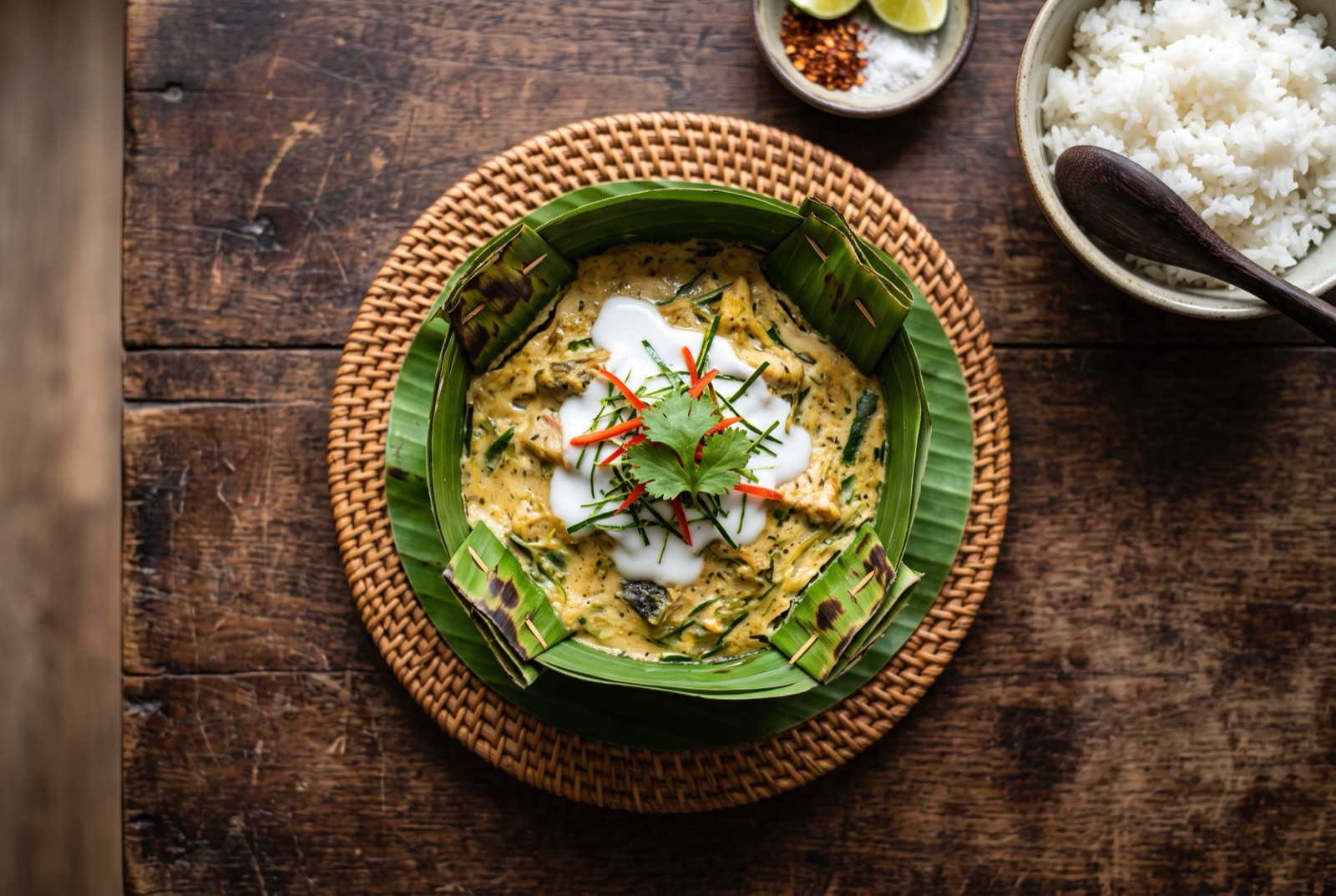
Keep exploring Cambodia.
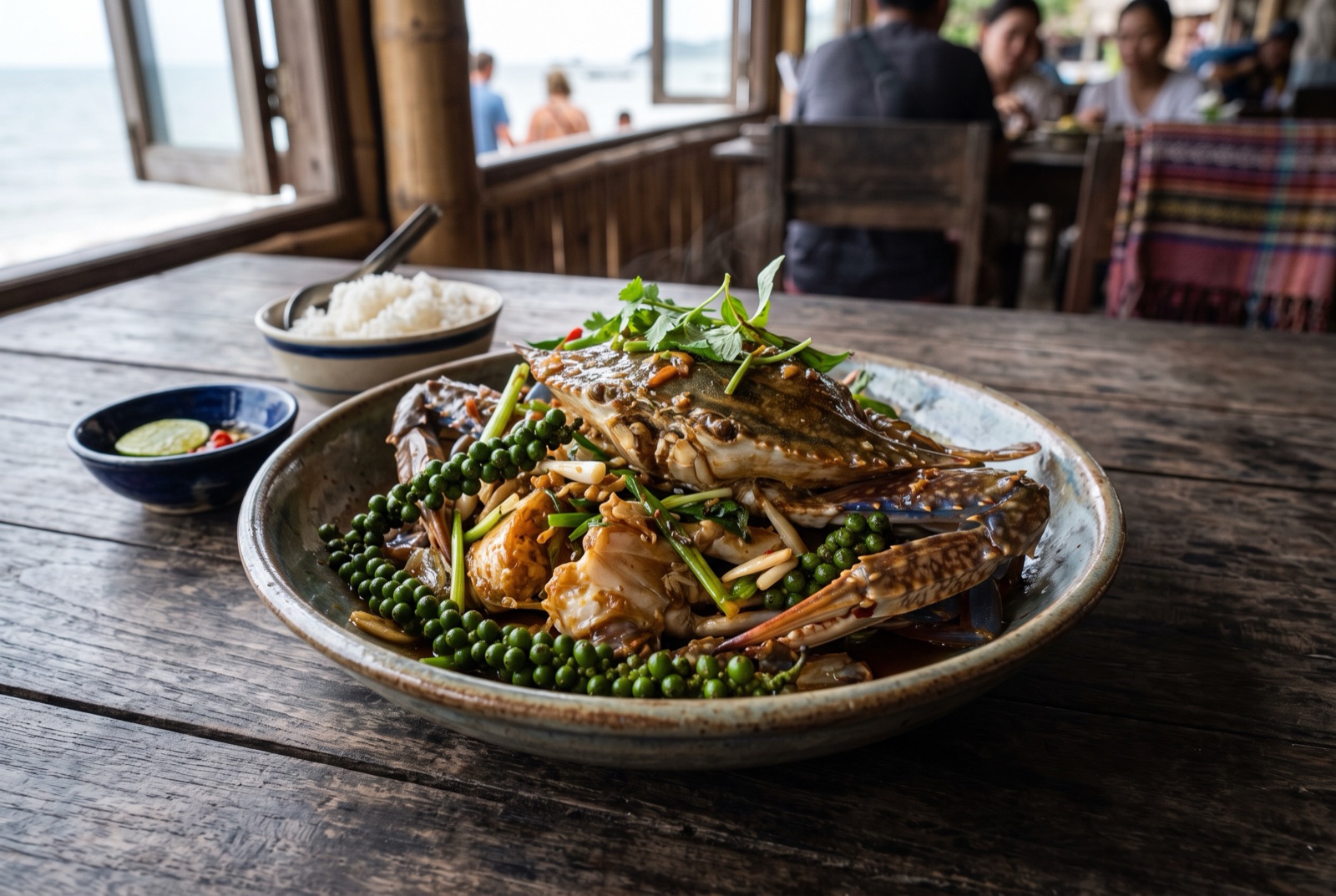
Cambodia has 9 more dishes in the atlas — Amok Trey and Kdam Chaa Mrech Kchei, and 7 more.
All Cambodia recipes Pork shoulder recipes Coconut milk recipes Garlic recipes breakfastmaindairy freeRecipe by The DishRoute Kitchen · published August 20, 2026 · updated August 20, 2026