Colțunași cu Brânză.
Moldovan Curd Cheese Dumplings
Colțunași cu brânză de vaci · say it: kol-tsoo-NASH koo BRUHN-zuh
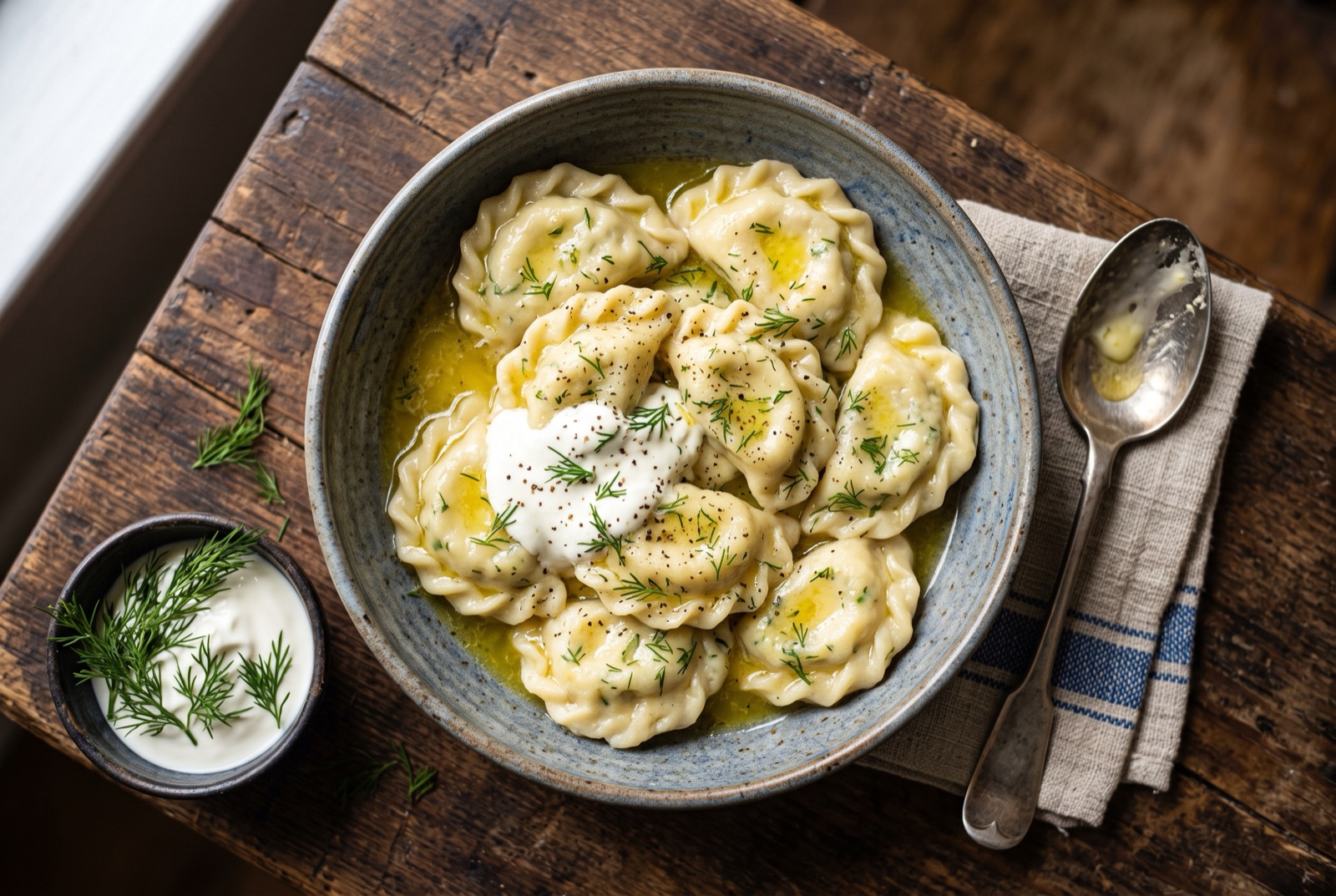
Colțunași are hand-pinched half-moon dumplings filled with fresh cow's curd, egg and dill, dropped into salted water and fished out the moment they float. The dough is thin and slightly chewy, the filling soft and mildly tangy, and the finish is unapologetic: melted butter poured over the top and a heavy spoonful of smântână, the thick soured cream that Moldovans put on almost everything. They can go savoury with dill and pepper or sweet with sugar and vanilla, and the same batch of dough serves both. Making them is a table activity — several pairs of hands, one rolling, the rest pinching.

- Gate
- Moldova
- Prep
- 45 min
- Cook
- 15 min
- Total time
- 1 hr 30 min incl. 30 min rest
- Serves
- 4
- Status
- Medium
- Nutrition / serving · estimated
- Calories 610 kcal
- Protein 26 g
- Carbs 62 g
- Fat 28 g
- Fiber 3 g
- Sodium 760 mg
Why this recipe works.
- A soft egg dough that rolls thin without tearing and stays tender after boiling instead of turning rubbery.
- The filling is drained and bound properly, so it holds its shape rather than leaking into the water.
- Clear crimping instructions — the seal is the only part of this recipe that actually fails.
- One dough, both the savoury dill version and the sweet cherry variation, with quantities that scale.
Ingredients.
12 itemsFor the dough
For the filling
To serve
Equipment
- Rolling pin
- Round cutter or a glass, about 9 cm
- Large pot
- Slotted spoon
Instructions.
Make the dough
Beat the egg with the warm water, oil and salt, then work in 400 g of flour until you have a soft dough that is just past sticky. Knead it for eight minutes until smooth and springy, then cover and rest for 30 minutes.
Drain and mix the filling
If the curd is at all wet, drain it in a cloth-lined sieve for an hour and press out the whey. Mash it with the egg yolk, dill, pepper and salt until it holds together in a soft, spoonable mass with no free liquid.
Tip Tip the bowl — if anything runs, drain longer.
Roll and cut
Roll half the dough on a lightly floured surface to about 2 mm, thin enough to read newsprint through but not translucent. Cut out 9 cm circles and keep them under a cloth while you cut the rest.
Fill and seal twice
Put a heaped teaspoon of filling on each circle, fold it into a half-moon and press the edge firmly with your fingertips to expel any air. Then go back over the sealed edge, folding it over on itself in small pleats to crimp it shut.
Tip Air trapped inside expands in the water and pops the seam — press from the fold outward.
Boil in batches
Bring a large pot of well-salted water to a gentle rolling boil and slide in a dozen dumplings, stirring once so they do not stick to the base. Cook until they rise to the surface, then give them one more minute.
Butter as you go
Lift the dumplings out with a slotted spoon, letting them drain for a second, and drop them straight into a warm bowl with some of the melted butter. Toss gently after each batch so they never sit dry and glue together.
Serve hot
Pour the remaining butter over the full bowl, spoon the sour cream on top and take them to the table immediately. Scatter over a little extra dill and let everyone stir the cream through their own portion.
Tips from our kitchen.
- Drain the curd for at least an hour in a sieve lined with cloth. Wet cheese thins the filling and forces the seams open in the pot.
- Rest the dough half an hour before rolling. Fresh dough shrinks back the moment you cut a circle and the discs end up too small.
- Keep the rolled sheet covered with a cloth while you work — dry edges will not seal no matter how hard you press.
- Press the seam flat first, then crimp it a second time by folding the edge over itself in small pleats. Two passes is what keeps them shut.
- Boil in plenty of salted water at a gentle roll and stir once as they go in so they do not glue to the bottom.
- Take them out one minute after they float, not the second they surface. That extra minute cooks the thick seam through.
Substitutions.
- Brânză de vaci (fresh cow's curd) → Quark, or dry cottage cheese pressed through a sieve
- Ricotta is too wet and too sweet on its own; if it is all you have, drain it overnight and add a squeeze of lemon for tang.
- Smântână → Full-fat sour cream, or crème fraîche
- Crème fraîche is the closer match for thickness; ordinary thin sour cream runs off the dumplings and pools.
- Butter to finish → Sunflower oil with fried breadcrumbs
- The dairy-free finish used during fasts, and genuinely good — the crumbs give crunch against the soft dough.
Variations.
- Colțunași cu vișine
- The summer version, filled with pitted sour cherries and a little sugar, served with sour cream and the cherry juice that leaks out.
- Colțunași cu cartofi
- Mashed potato with heavily browned onion inside, dairy-free and the standard fasting filling.
- Fried colțunași
- Boiled first, then pan-fried in butter until the edges blister and crisp — the usual treatment for leftovers the next day.
Storage & reheating.
Cooked dumplings keep two days refrigerated and are best revived by frying in butter rather than reboiling. Uncooked ones freeze far better: arrange them separated on a floured tray, freeze solid, then bag them for up to three months and boil straight from frozen, adding two minutes to the cooking time.
Serve with
Melted butter, a heavy spoonful of smântână, and cold buttermilk to drink.
The story behind Colțunași cu Brânză.
Colțunași belong to the great dumpling belt that runs from Poland through Ukraine and into Romania and Moldova, sharing a family tree with pierogi, vareniki and Italian ravioli without descending neatly from any of them. The Romanian name comes from colț, meaning corner or angle, describing the shape rather than the filling. In Moldova the word covers both the boiled curd version and fried sweet ones, and asking which is the real colțunaș produces a different answer in each household.
What anchors the dish locally is brânză de vaci — fresh, unsalted cow's curd, drained in cloth, somewhere between cottage cheese and quark in texture. Before refrigeration, milk that soured was not wasted but turned into curd, and curd that could not be eaten quickly went into dumplings. The same logic produced the sweet versions with sour cherries in July, when the trees drop more fruit than any family can eat, and the potato versions in winter when there is no fruit and no fresh cheese.
Smântână deserves its own mention. It is thicker and more sour than most Western sour creams, closer to a light crème fraîche, and Moldovans serve it in quantity — not a decorative dot but a proper spoonful that melts into the butter and makes its own sauce on the plate. A plate of colțunași with butter and smântână is a complete meal in Moldovan terms, meatless without anyone thinking about it, and it appears constantly during fasting periods in a dairy-free form filled with potato, cabbage or mushrooms instead. The technique is forgiving in every part except one: the seal. A dumpling that opens in the pot loses its filling into the water and leaves you with a floating empty pocket, which is why the edges are pressed and then crimped a second time.
Questions, answered.
What cheese should I use if I cannot find brânză de vaci?
Quark is the closest widely available substitute, and dry-curd or pressed cottage cheese pushed through a sieve also works well. The requirement is that it be fresh, unsalted and thick — anything wet needs draining in cloth first or the filling will run.
Why do my dumplings open while boiling?
Three usual causes: the filling was too wet, the dough edge had dried out before sealing, or the water was boiling too violently. Drain the curd, keep the dough covered, seal in two passes, and cook at a gentle rolling boil rather than a furious one.
Can I make them ahead?
Yes, and freezing raw is the best method. Lay the shaped dumplings on a floured tray so they do not touch, freeze until hard, then transfer to a bag. Boil from frozen with about two extra minutes — do not thaw, or they turn into a sticky mass.
How do I know when they are done?
They sink at first and rise to the surface as the dough cooks and traps steam. Give them one more minute after they float, then lift one out and check the crimped edge — the doubled dough there is the last part to cook and should be tender, not chalky.
Are colțunași sweet or savoury?
Both, depending on the filling. Curd with dill and pepper is savoury and usually eaten as a main course; curd with sugar and vanilla, or sour cherries, is a dessert. The dough and the technique are identical, which is why one batch often produces some of each.
You might also like.
All recipes →
Keep exploring Moldova.
Moldova has 9 more dishes in the atlas — Alivenci and Chiftele Marinate, and 7 more.
Recipe by The DishRoute Kitchen · published August 20, 2026 · updated August 20, 2026