Githeri.
Kenyan Maize and Bean Stew
Gĩtheri · say it: gih-THEH-ree
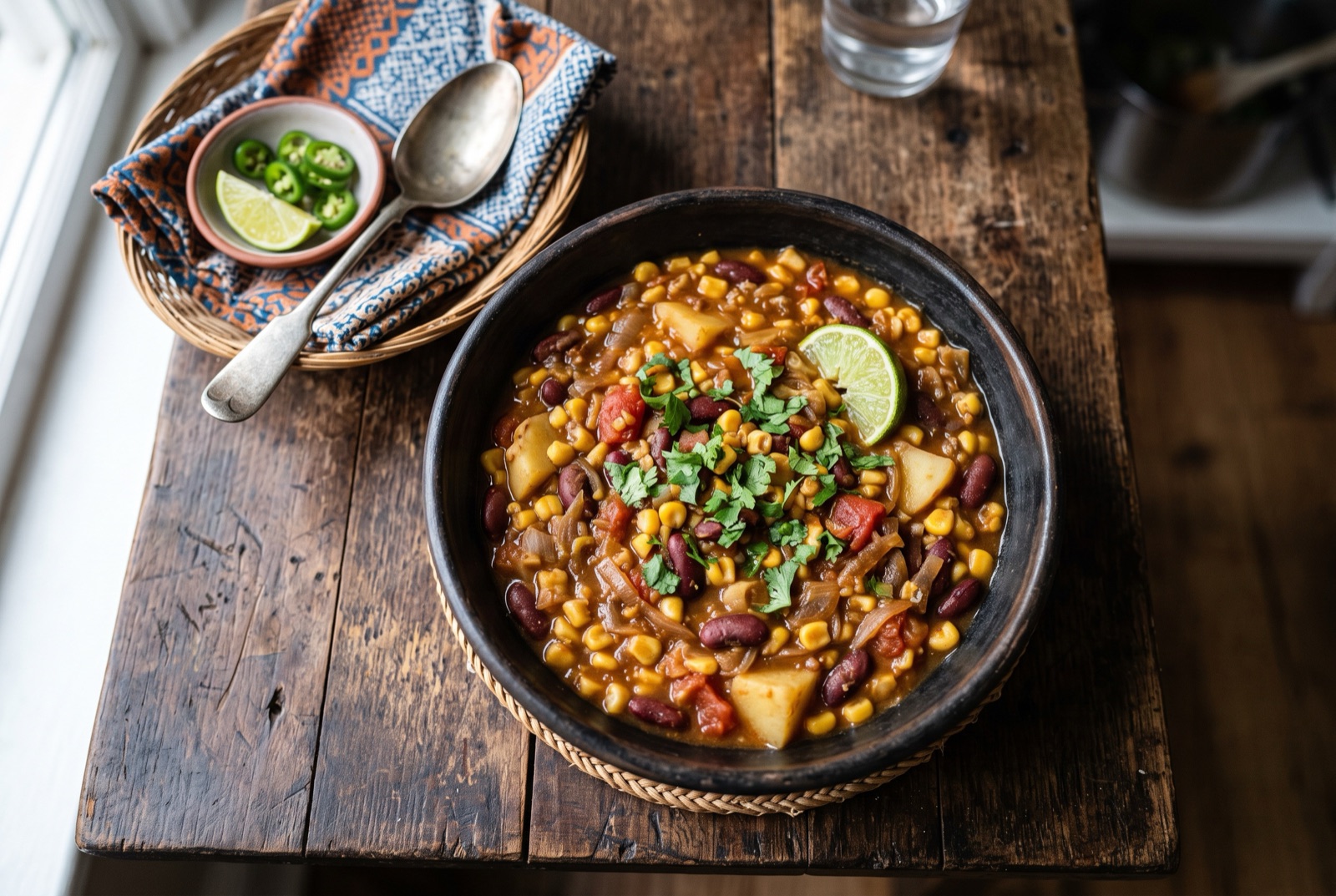
Githeri is boiled maize and beans turned into a meal by frying them with onion, tomato and potato until the pot thickens and the starches begin to break down at the edges. It eats like a cross between a stew and a hearty pilaf: chewy maize kernels that keep their shape, beans that go soft and creamy, and a tomato base holding it all together. Nothing about it is delicate, and that is the appeal — a single pot of githeri is a complete meal with no side dish required, it costs very little, and the flavour improves overnight. Central Kenya cooks it constantly, and the rest of the country has adopted it without argument.

- Gate
- KenyaCentral Kenya
- Prep
- 20 min
- Cook
- 2 hr
- Total time
- 10 hr 20 min incl. 8 hr rest
- Serves
- 6
- Status
- Easy
- Nutrition / serving · estimated
- Calories 430 kcal
- Protein 17 g
- Carbs 72 g
- Fat 9 g
- Fiber 15 g
- Sodium 380 mg
Why this recipe works.
- Boils the maize and beans together properly first, so neither ends up chalky in the finished pot.
- Builds a real fried base instead of just seasoning boiled grains, which is the difference between home githeri and canteen githeri.
- Includes the safety step for dried kidney beans that most recipes skip entirely.
- Works as one pot for six with nothing else on the table, and reheats better than it cooks fresh.
Ingredients.
13 itemsTo boil
For the stew
To finish
Equipment
- Large heavy pot
- Colander
- Wooden spoon
Instructions.
Soak overnight
Put the dried maize and beans in a large bowl, cover with cold water by at least 8 cm and leave for 8 hours or overnight. By morning both should have swollen to roughly double and the beans should feel plump rather than wrinkled.
Boil until tender
Drain, tip into a large pot with fresh water to cover generously, and bring to a hard rolling boil for 10 minutes without a lid. Lower to a simmer and cook for 80 to 100 minutes, until a bean crushes easily between finger and thumb and a maize kernel is chewy but no longer chalky at the centre.
Tip Top up with hot water if the level drops below the grains — they should stay submerged throughout.
Drain, keeping the liquid
Drain the maize and beans over a bowl and set aside about 300 ml of the starchy cooking water. Season the grains with a good pinch of salt now that they are soft.
Fry the base
Heat the oil in the empty pot and cook the onions over medium heat for 7 minutes until soft and lightly gold, then add the garlic, curry powder and chilli. Stir in the tomatoes and tomato paste and cook for 6 to 8 minutes, until the mixture darkens to brick red and oil rises to the surface.
Combine and simmer
Return the maize and beans to the pot with the potato chunks, carrot and the reserved cooking liquid. Simmer uncovered for 20 to 25 minutes, stirring occasionally, until the potatoes are tender and the stew is thick enough that a spoon dragged across the base leaves a track.
Mash a little and finish
Press a ladleful of beans and potato against the side of the pot and stir it back through to thicken everything. Season with salt and pepper, scatter over the coriander, and serve in deep bowls with avocado on the side.
Tips from our kitchen.
- Soak the maize and beans together overnight in plenty of cold water — both roughly double in volume, so use a bigger bowl than seems necessary.
- Boil dried kidney beans hard for a full 10 minutes at the start, uncovered. This destroys the lectin that makes undercooked red beans genuinely unpleasant.
- Add salt only once the beans are soft. Salted cooking water toughens bean skins and adds an hour to the pot.
- Old dried beans may never soften. If yours are still firm after two hours, the stock was too old rather than the method wrong.
- Keep about a cup of the cooking liquid back — it is starchy and it is what gives the finished stew body without any thickener.
- Mash a ladleful of the beans against the side of the pot at the end for a thicker, more cohesive texture.
Substitutions.
- Dried maize and dried beans → 2 tins of cooked kidney beans plus 1 tin of sweetcorn or hominy, drained
- Cuts two hours off the recipe. The texture is softer and the maize much sweeter than dried field maize, so it is a different dish, but a good weeknight one.
- Red kidney beans → Rosecoco beans, pinto beans or black beans
- Rosecoco is the usual Kenyan bean for githeri. Any medium-sized bean that holds together works; lentils do not, since they disintegrate long before the maize is ready.
- Potato → Pumpkin, carrot, or green banana
- Potato is the most common addition but far from fixed. Green banana is a western Kenyan habit and makes the pot noticeably denser.
Variations.
- Muthokoi
- Made with dehulled maize that has been pounded to strip its skin, giving a paler, softer stew that cooks in roughly half the time. Common in Kamba cooking.
- Githeri na nyama
- Beef cubes browned first and stewed into the pot, turning a vegetarian staple into a substantial meat dish for Sunday lunch.
- Coconut githeri
- A coastal treatment in which thick coconut milk goes in for the last ten minutes, giving a rounder, sweeter and much richer result.
Storage & reheating.
Githeri keeps 4 days refrigerated and genuinely tastes better on the second and third day, once the maize has absorbed the tomato base. Reheat it in a pan with a splash of water, stirring so the bottom does not catch, and season again — the salt seems to disappear in the fridge. It freezes well for 3 months in portions. If you cook the maize and beans in a big batch, freeze them plain in their liquid and you can build a fresh pot in fifteen minutes any evening.
Serve with
Sliced avocado and a wedge of lime, or a spoonful of chilli sauce for anyone who wants heat.
The story behind Githeri.
The name is Kikuyu, and the dish comes from the farming logic of the central highlands, where maize and beans are traditionally planted in the same field. The beans climb between the maize stalks and put nitrogen back into the soil, both crops are harvested and dried together, and the two end up stored, sold and cooked as a pair. Eating them together also happens to combine into a more complete protein than either alone, a piece of nutritional arithmetic that farming households worked out by practice long before anyone wrote it down.
Githeri carries a slightly comic reputation in Kenya as institutional food. It is the fixture of boarding school dining halls, army camps, prisons and church gatherings — cheap, bulk-cookable and filling — which means a great many Kenyans have complicated feelings about it and strong opinions on how to redeem it. The redemption is usually fat, onion and tomato: plain boiled maize and beans is the dorm version, while the home version fried with a proper base, potatoes and sometimes avocado on the side is the one people actually want.
Regional cousins exist. Muthokoi uses maize that has been pounded to remove the outer hull, which cooks faster and gives a softer, whiter result that many consider superior. Coastal kitchens occasionally cook the same combination with coconut milk. Some households mash the whole pot roughly at the end, which pushes it towards mukimo, its close relative from the same region. And in 2017 the dish briefly became a national joke and then a marketing phenomenon after a street photo of a man eating githeri while queueing to vote spread across Kenyan social media — proof, if any were needed, that the country regards this pot of maize and beans as thoroughly its own.
Questions, answered.
Do I have to soak the maize and beans overnight?
For dried maize, effectively yes — field maize is very hard and can take three hours of boiling unsoaked. Beans benefit almost as much. If you forget, cover both with boiling water and leave for two hours as a quick soak, or use a pressure cooker, which brings unsoaked maize and beans to tender in around 45 minutes.
Are dried kidney beans safe if I just simmer them?
Not on their own. Raw kidney beans contain a lectin that causes serious stomach upset and is only destroyed by a proper hard boil, so give them at least 10 minutes at a rolling boil before dropping to a simmer. This matters specifically for red kidney beans and is one reason slow cookers alone are a poor choice for them.
Why are my beans still hard after two hours?
Usually age. Dried beans that have sat in a cupboard for a year or more can refuse to soften no matter how long they cook. Salt added early and very hard water both slow things down as well, so hold the salt until the end and add a pinch of bicarbonate of soda to the cooking water if your water is hard.
Is githeri vegan?
As written here, yes — maize, beans, vegetables and oil, with nothing animal-derived. Kenyan home versions are frequently cooked with beef, beef fat or a meat stock cube, so if you are eating out it is worth asking. The vegetarian version is not a modern adaptation; it is the everyday form of the dish.
What is the difference between githeri and muthokoi?
The maize. Githeri uses whole dried kernels with their hulls intact, which stay chewy and distinct. Muthokoi uses maize pounded to remove the outer skin, so it cooks faster and turns softer and paler. Beyond that the two are cooked almost identically, and preference between them runs along regional and family lines.
You might also like.
All recipes →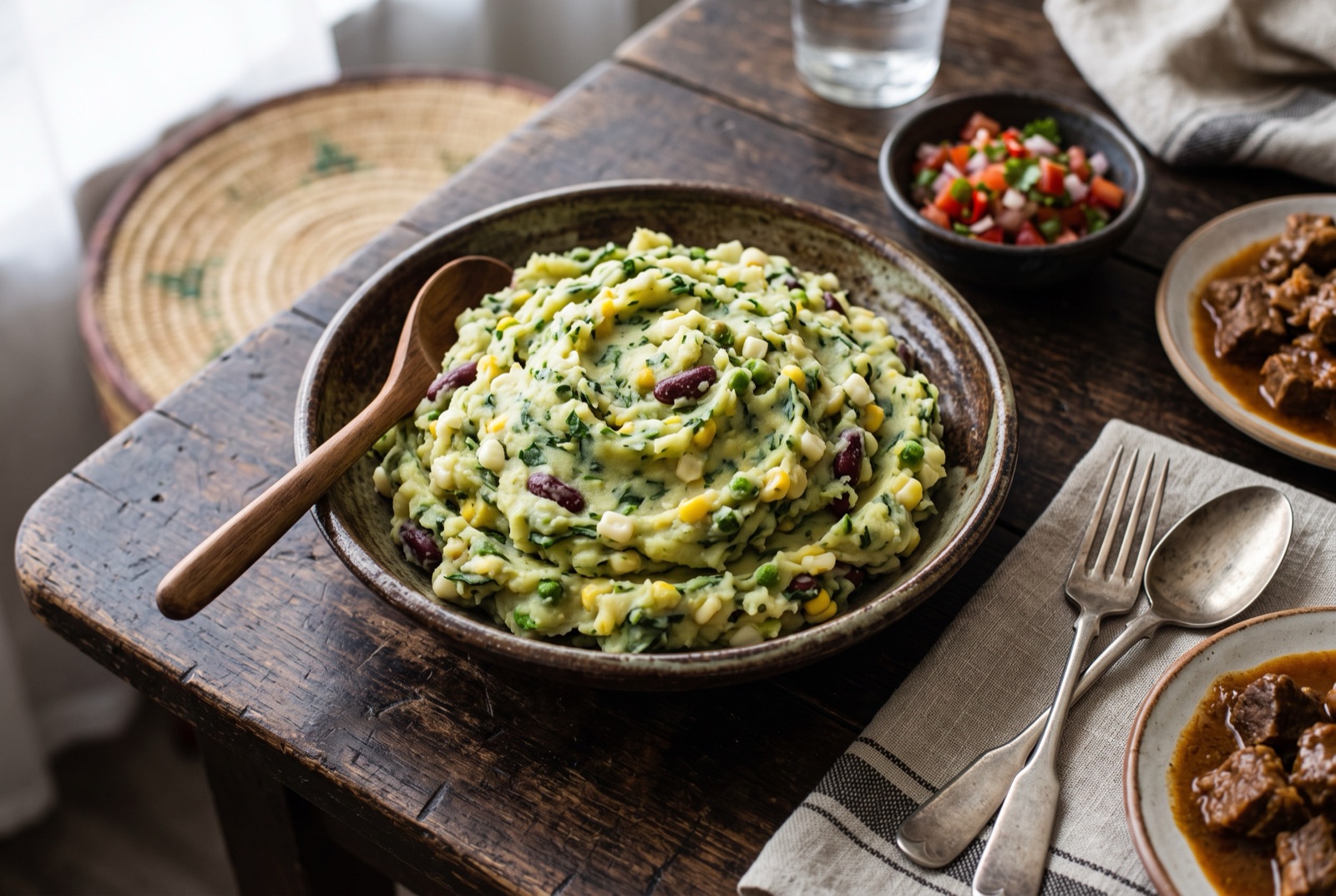
Keep exploring Kenya.
Kenya has 9 more dishes in the atlas — Kenyan Chapati and Mandazi, and 7 more.
All Kenya recipes Corn recipes Potato recipes Onion recipes mainveganvegetariangluten freedairy freenut freeRecipe by The DishRoute Kitchen · published August 20, 2026 · updated August 20, 2026