Pilau.
Kenyan Swahili Spiced Rice with Beef
Pilau ya nyama · say it: pee-LAOW yah NYAH-mah
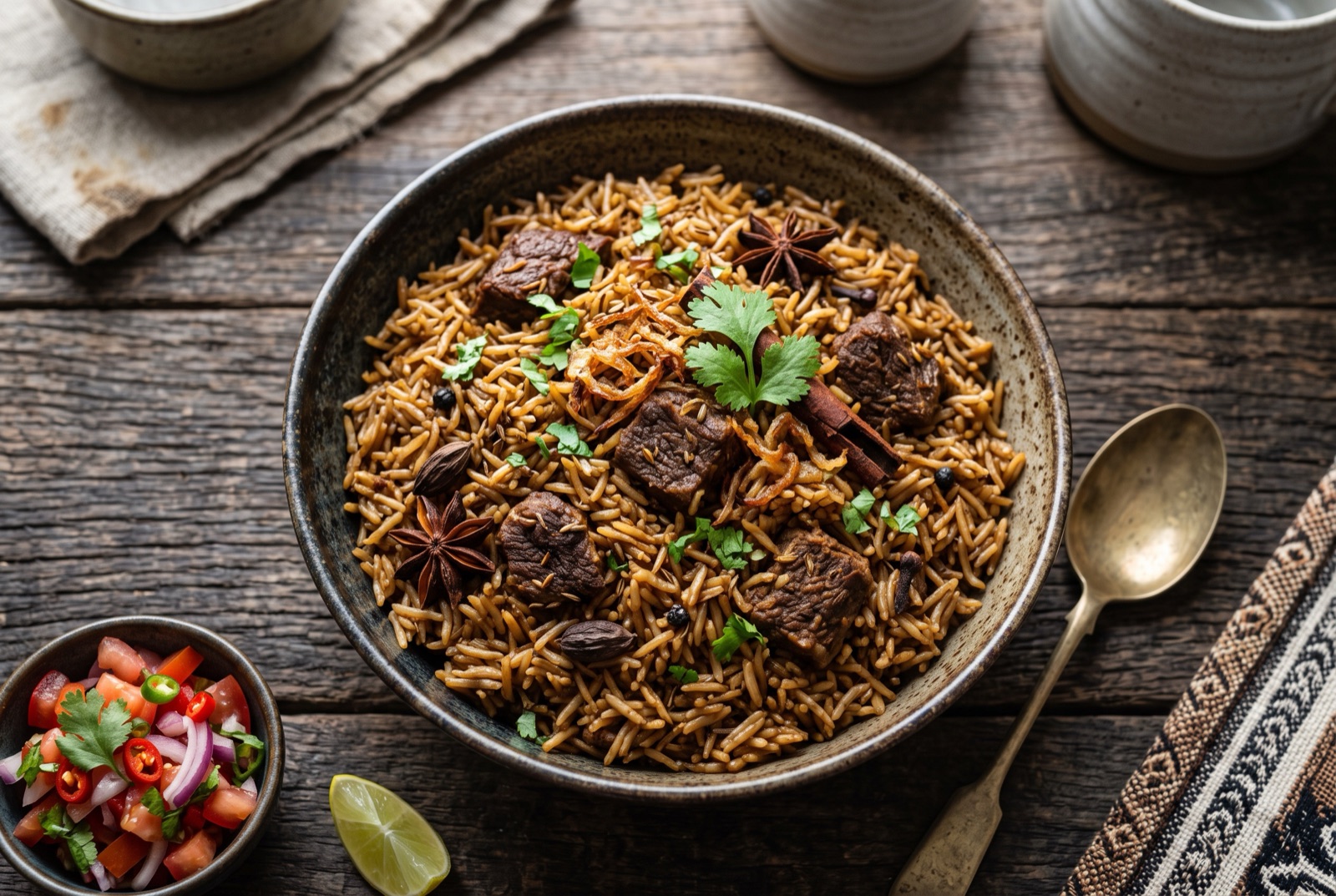
Kenyan pilau is a one-pot rice dish in which every grain is stained brown and perfumed with whole-spice masala, studded with pieces of slow-cooked beef. The taste is warm rather than hot — cumin and cardamom lead, cinnamon and clove sit underneath, and there is a background sweetness that surprises people who expect a curry. That colour is the part cooks argue about: it comes from onions fried patiently until they are genuinely brown, not from turmeric, and a pale pilau is read across the Kenyan coast as a sign that someone was in a hurry. It is celebration food that happens to be practical, since one pot feeds a crowd and improves while it rests.

- Gate
- KenyaSwahili Coast
- Prep
- 25 min
- Cook
- 1 hr 15 min
- Total time
- 1 hr 50 min incl. 10 min rest
- Serves
- 6
- Status
- Medium
- Nutrition / serving · estimated
- Calories 610 kcal
- Protein 33 g
- Carbs 76 g
- Fat 19 g
- Fiber 4 g
- Sodium 720 mg
Why this recipe works.
- Browns the onions to the real Swahili depth and tells you exactly when to stop before they turn bitter.
- Cooks the beef first so its broth becomes the liquid the rice absorbs, which is where the depth comes from.
- Gives a from-scratch pilau masala blend as well as the shop-bought shortcut.
- Soaks and drains the rice properly, so the grains finish separate instead of clumping into a spiced risotto.
Ingredients.
16 itemsFor the meat
For the rice
For the spice
To finish
Equipment
- Heavy pot or Dutch oven with a tight lid (sufuria)
- Fine sieve
- Spice grinder or mortar
Instructions.
Simmer the beef
Put 700 g of beef in a pot with the garlic, ginger, salt and enough water to cover by two fingers. Simmer gently for 45 minutes, until a cube gives easily when pressed but has not fallen apart. Lift out the meat and keep every drop of the broth.
Tip Skim the grey foam off in the first five minutes and the broth will stay clean-tasting.
Soak the rice
While the beef cooks, rinse the rice in several changes of cold water until the water runs almost clear, then cover with fresh water and leave to soak for 20 minutes. Drain it in a sieve and let it sit there so the grains dry off at the surface.
Brown the onions
Heat the oil in a heavy pot over medium heat and fry the sliced onions for 20 to 25 minutes, stirring often. They will go translucent, then straw-coloured, then deep chestnut brown and jammy — pull them back from the heat the moment the smell turns from sweet to sharp.
Tip This single step decides the colour and flavour of the finished pilau. Do not walk away in the last five minutes.
Bloom the spices and meat
Stir the cumin, cardamom, cloves, cinnamon and peppercorns into the onions and fry for a minute until the kitchen smells strongly of cardamom. Add the tomatoes and the drained beef, and cook for 5 minutes until the tomato has broken down and the mixture looks dark and oily rather than watery.
Add rice and broth
Tip in the drained rice and potatoes and turn everything gently for 2 minutes so each grain is coated in the spiced fat. Pour in the measured broth, taste it for salt — it should be slightly saltier than you want the finished dish — and bring to a strong boil.
Steam covered
Boil uncovered until the liquid drops to the level of the rice and small craters appear on the surface, about 6 minutes. Cover tightly, drop the heat to the lowest setting and cook undisturbed for 20 minutes, until the rice is tender and the base has a faint toasted crust.
Rest and fluff
Take the pot off the heat and let it stand, still covered, for 10 minutes so the steam redistributes. Fork the rice up from the edges, folding the meat through, scatter with coriander and serve with kachumbari alongside.
Tips from our kitchen.
- Take the onions further than feels comfortable — deep chestnut brown, soft and almost jammy. Golden onions give a pale, flat pilau.
- Watch the last two minutes of onion frying closely; the shift from brown to burnt takes seconds and burnt onion makes the whole pot bitter.
- Rinse the rice until the water runs clear, then soak it 20 minutes and drain well. Excess surface starch is what glues grains together.
- Measure the cooking liquid after the beef has simmered, topping up with water so the total is exactly right — evaporation varies by pan.
- Once the lid goes on, leave it alone. Every peek releases the steam that is cooking the top layer of rice.
- Fluff with a fork from the edges inward, never a spoon, and only after the pot has rested off the heat.
Substitutions.
- Beef chuck → Goat shoulder, or bone-in chicken thighs
- Goat is common on the coast and needs the same long simmer. Chicken thighs need only 20 minutes, so brown them and add them back with the rice rather than stewing them first.
- Shop-bought pilau masala → Grind 2 tsp cumin seeds, 8 green cardamom pods, 6 cloves, 1 tsp black peppercorns and a 5 cm cinnamon stick
- Homemade is noticeably brighter. Toast the whole spices in a dry pan until fragrant before grinding.
- Basmati rice → Any long-grain rice such as pishori or jasmine
- Pishori from Mwea is the prized Kenyan rice for pilau. Avoid short-grain and parboiled types, which give the wrong texture entirely.
Variations.
- Pilau ya kuku
- Made with chicken instead of beef, lighter and quicker, and the usual choice when the pot has to be on the table the same afternoon.
- Vegetarian pilau
- Potatoes, carrots and chickpeas carry the dish instead of meat, with vegetable stock. It needs slightly more masala to compensate for the missing broth.
- Pilau with potatoes
- Chunks of potato added with the rice, absorbing the spiced broth and turning soft at the edges — common in home cooking, less so at restaurants.
Storage & reheating.
Pilau refrigerates well for 3 days and many Kenyan cooks consider day-two pilau better than fresh, since the spice settles into the grains. Reheat it covered with a tablespoon of water per portion in a low oven or a pan over gentle heat, so it steams back to softness instead of drying out. It also freezes successfully for up to 2 months, unlike most rice dishes, because the grains are relatively dry and well coated in fat — cool it quickly, freeze in portions, and thaw fully before reheating.
Serve with
Kachumbari and a bowl of plain yoghurt or thin tomato chutney, with lime wedges for squeezing over.
The story behind Pilau.
Pilau belongs to the Swahili coast, where Mombasa, Lamu and Malindi have been ports on the monsoon trade routes for well over a thousand years. Rice, cloves, cardamom, cinnamon and cumin all moved along those routes, and the dish sits in the family of pilafs that stretches from Persia through India to Zanzibar — related to all of them, identical to none. The Kenyan branch is distinguished by that browned-onion base and by a masala blend heavy on cumin, which is sold ready-mixed as pilau masala in every Kenyan supermarket and mixed at home by cooks who care.
The distinction from biriani matters on the coast and is worth learning. Biriani is layered: rice cooked separately, a wet, tomato-and-yoghurt-rich meat sauce built alongside it, the two assembled at the end so the finished plate has white rice and sauce in visible strata. Pilau is cooked together in a single pot so the rice absorbs the meat broth and comes out uniformly brown and dry. Ordering one and being served the other is a genuine complaint, not a technicality.
Upcountry, pilau became the dish of occasions. It is what gets cooked for weddings, for Eid, for funerals and for Christmas across much of Kenya, prepared in enormous sufurias over open fires by whoever in the extended family has the reputation for it. That reputation rests almost entirely on two things: whether the onions were taken far enough, and whether the rice came out separate. A pilau that clumps is remembered. Kachumbari on the side is not optional in most households — the raw, sour tomato and onion is what keeps a rich, spiced pot of rice from becoming heavy halfway through the plate.
Questions, answered.
Why is my pilau pale instead of brown?
The onions were not fried far enough. All of the colour in an authentic Kenyan pilau comes from onions cooked slowly until they are deep brown and collapsed, a process that takes 20 to 25 minutes and cannot be rushed on high heat. Adding turmeric or food colouring to fix the shade is common in shortcut recipes but produces a different, flatter taste.
What is the difference between pilau and biriani?
Pilau is cooked in one pot, with the rice absorbing spiced meat broth so everything ends up the same brown colour. Biriani is assembled: the rice is boiled separately and layered with a wet, tomato and yoghurt based meat sauce, so the finished dish has distinct white rice and red sauce. On the Swahili coast the two are firmly separate dishes.
Why did my rice come out mushy?
Usually too much liquid, or rice that went into the pot wet after rinsing. Drain soaked rice thoroughly and measure the broth precisely — roughly 1.75 times the volume of the rice for soaked basmati. Stirring the pot after the lid goes on also breaks the grains and releases starch, so leave it undisturbed until the resting stage.
Can I make pilau without pilau masala?
Yes. Grind your own from cumin seeds, green cardamom, cloves, black peppercorns and cinnamon, in roughly that order of quantity, and toast them first for a fuller aroma. Garam masala is not a good substitute on its own — it is usually much heavier on cinnamon and lacks the cumin dominance that makes pilau taste Kenyan.
Can I cook pilau in a rice cooker?
Partly. Do the onion browning and the meat simmering in a pan, then transfer everything with the drained rice and measured broth to the cooker and run a normal white rice cycle. The result is decent, though you lose the slightly crisp base layer that forms in a heavy pot, which many people consider the best part.
You might also like.
All recipes →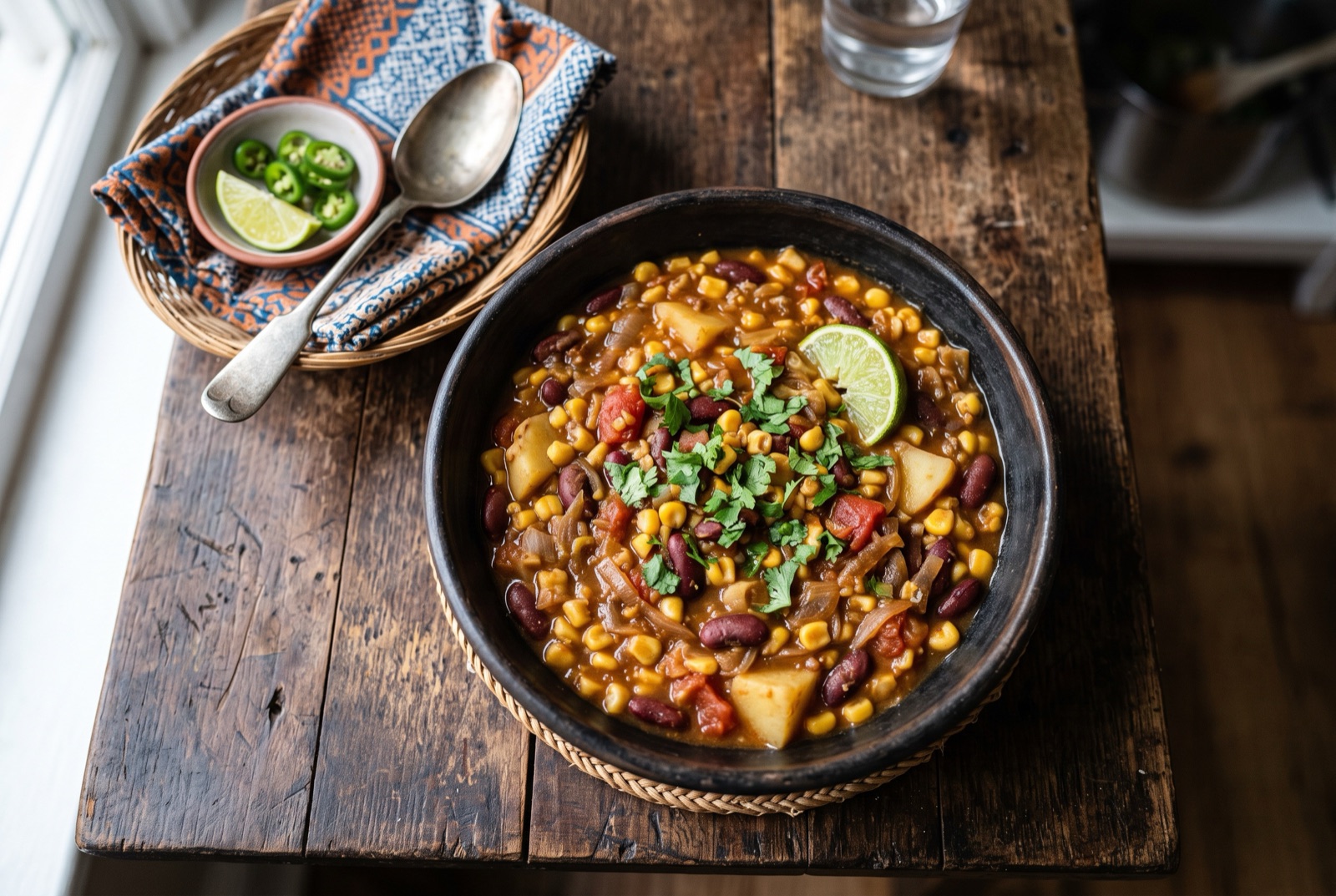
Keep exploring Kenya.
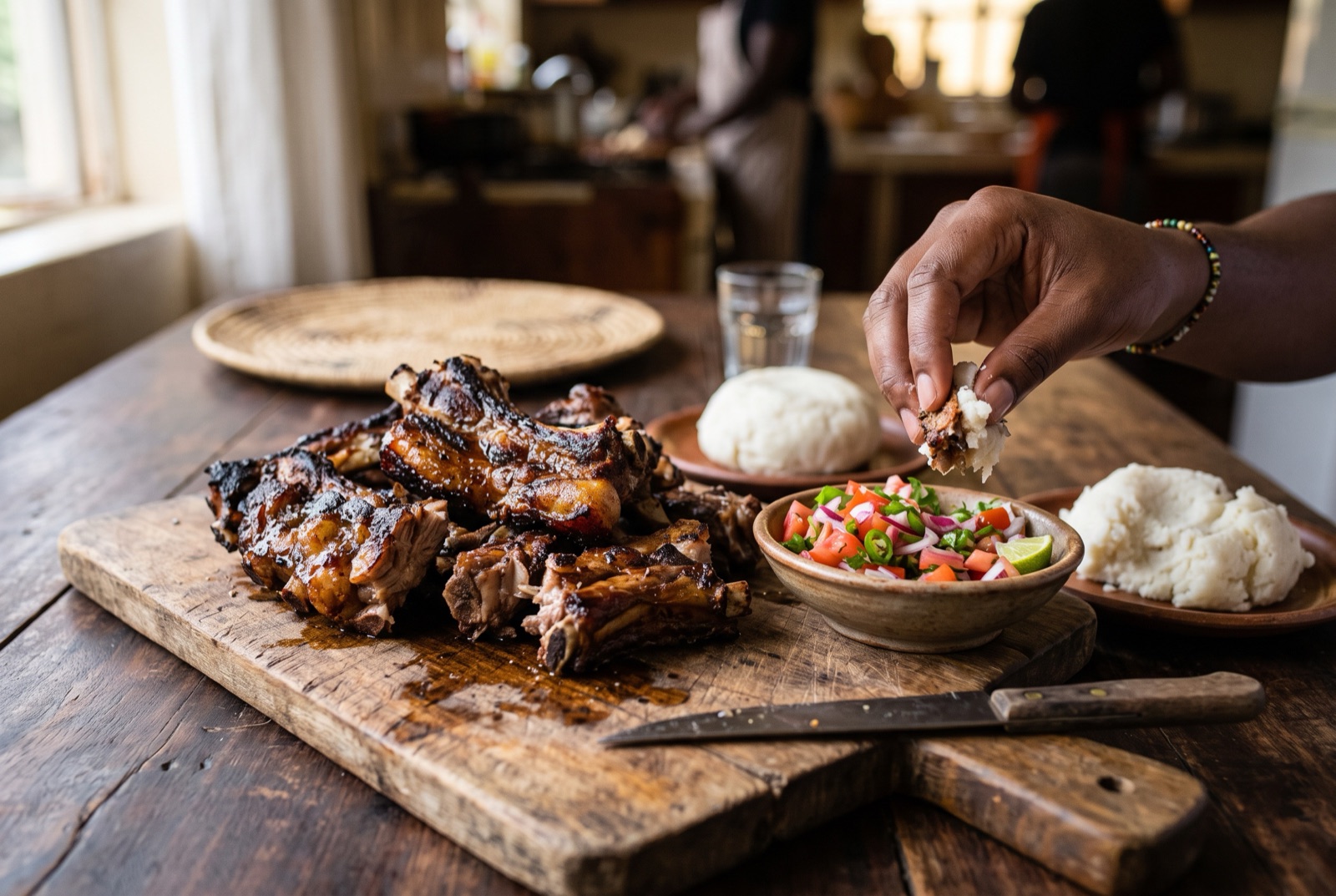
Kenya has 9 more dishes in the atlas — Githeri and Kenyan Chapati, and 7 more.
All Kenya recipes Beef chuck recipes Basmati rice recipes Onion recipes maindairy freenut freehalal friendlyRecipe by The DishRoute Kitchen · published August 20, 2026 · updated August 20, 2026