Mutura.
Kenyan Grilled Blood Sausage
Mũtura · say it: moo-TOO-rah
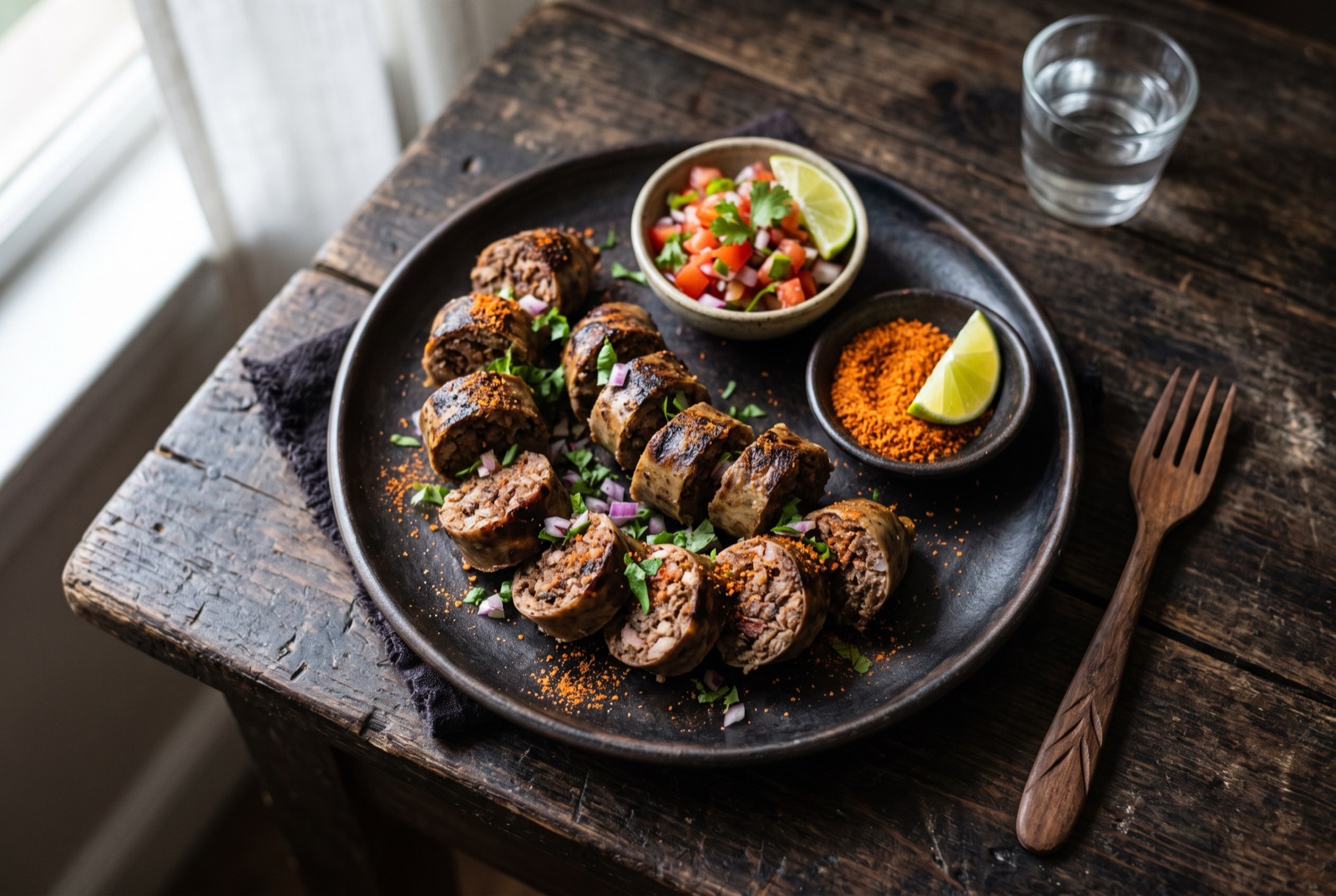
Mutura is a sausage made the old way: a length of cleaned intestine filled with minced goat or beef, chopped offal, onion, chilli and fresh blood, poached gently until it sets, then finished over charcoal until the casing crackles. Cut into thick coins, it tastes deeply savoury and mineral, with a coarse, almost crumbly interior rather than the springy bounce of a factory sausage, and a smoky, slightly chewy skin. It takes real work and squeamish cooks should be warned that it involves handling blood and intestine at every stage. Nairobi eats it standing up, from a roadside grill, with chilli salt and a spoon of kachumbari.

- Gate
- Kenya
- Prep
- 45 min
- Cook
- 1 hr 10 min
- Total time
- 2 hr 15 min incl. 20 min rest
- Serves
- 8
- Status
- Takes skill
- Nutrition / serving · estimated
- Calories 310 kcal
- Protein 26 g
- Carbs 4 g
- Fat 21 g
- Fiber 1 g
- Sodium 880 mg
Why this recipe works.
- Two-stage cooking — poach first, grill second — so the filling is safely cooked before the casing chars.
- Spells out how to clean and prepare natural intestine casing, which most versions of this recipe assume you already know.
- Gets the blood-to-meat ratio right, so the sausage sets firm instead of turning to a dark paste.
- Says plainly what a blood-free version is and is not, rather than pretending they are the same thing.
Ingredients.
13 itemsFor the casing
For the filling
To serve
Equipment
- Sausage stuffer or a wide funnel
- Large pot
- Charcoal grill
- Needle or skewer
- Heavy chopping board
Instructions.
Clean the casing
Turn the intestine inside out, scrape the inner wall with the back of a knife, then wash it in several changes of cold water with the salt and vinegar. Keep going until the water stays clear and the casing smells clean; this takes 20 minutes or more and cannot be rushed.
Mix the filling
Combine the minced meat, chopped liver and kidney, onion, garlic, ginger, chillies, coriander, salt and pepper in a bowl, then pour in the blood and mix with your hands until the mixture is uniformly dark red and loose enough to drop from a spoon.
Tip Fry a teaspoon of the mixture in a pan and taste it for salt before you stuff anything.
Stuff the casing
Tie one end of the casing and fill it through a stuffer or wide funnel, working the mixture down gently and stopping when the casing is about two thirds full. Tie off the open end and knot the coil into two or three shorter lengths.
Tip A slack sausage survives the pot; a tight one bursts within ten minutes.
Prick and poach
Prick the sausage every few centimetres with a needle and lower it into a pot of barely trembling salted water. Poach for 45 minutes, keeping the surface still, until the sausage is firm to the squeeze and a skewer pushed into the centre comes out hot with no red liquid.
Cool and firm up
Lift the coils out and leave them to cool for 20 minutes on a rack. They need to set properly before grilling — a warm, soft sausage tears on the bars and loses its filling to the coals.
Grill over charcoal
Cook the coils over medium coals for 12 to 15 minutes, turning often, until the casing tightens, blisters and takes on dark smoky patches. It should sound faintly crisp when tapped with tongs.
Slice and dust
Move the sausage to a wooden board and cut it into thick coins about 2 cm wide. Dust the slices with the chilli salt and serve straight from the board with kachumbari, eaten with toothpicks or fingers.
Tips from our kitchen.
- Order the casings and blood from your butcher a day ahead and use them the day you get them; neither keeps.
- Turn the intestine inside out, scrape it with the back of a knife, then wash it repeatedly in salted water with a splash of vinegar until the rinse runs clear and there is no smell.
- Fill the casing only about two thirds full. A tightly packed sausage bursts as the filling swells during poaching.
- Prick the coil in several places with a needle before it goes into the water so steam escapes instead of splitting the skin.
- Poach at a bare tremble, never a boil — hard bubbles tear the casing and squeeze the filling out.
- Let the poached sausage cool and firm completely before it touches the grill, or it will fall apart on the bars.
Substitutions.
- Fresh blood → Leave it out and add 100 ml stock to keep the filling moist
- The result is a spiced grilled meat sausage rather than mutura proper. It is worth making and many people prefer it, but the colour, mineral depth and firm set all come from the blood.
- Natural intestine casing → Wide hog casings from a butcher or sausage supplier
- Far easier to source and to clean, and they behave the same during poaching. The finished coin is slightly neater and less chewy than the traditional casing.
- Goat meat and offal → Beef mince with beef liver and kidney
- Beef is the common urban version. Keep the offal proportion the same, since it carries much of the flavour that distinguishes mutura from an ordinary sausage.
Variations.
- Mutura ya mbuzi
- Made entirely from goat — meat, liver and blood — which gives a stronger, gamier sausage than the beef version sold in most towns.
- Fried mutura
- Poached coils sliced and shallow fried instead of grilled, which some cooks prefer because the coins crisp evenly and nothing is lost to the coals.
- Mutura with potato
- A small amount of grated raw potato worked into the filling, stretching the mixture and making the texture softer and more binding.
Storage & reheating.
Poached mutura keeps 3 days refrigerated and is best stored before grilling, then finished over coals when you want to eat it. Grilled leftovers keep 2 days and reheat well sliced and fried in a dry pan until the edges crisp again. Cool it quickly after poaching rather than leaving it out — blood and offal sausages spoil faster than ordinary ones. It freezes acceptably for a month once poached and fully cooled; thaw it in the fridge overnight and grill from cold, never from frozen, so the centre reheats through.
Serve with
Kachumbari and a saucer of salt mixed with ground chilli, eaten with a toothpick straight from the board.
The story behind Mutura.
Mutura is Kikuyu in origin and is one of the clearest surviving examples of nose-to-tail slaughtering practice in Kenyan cooking. When an animal was killed for a family or a ceremony, nothing was thrown away: the intestines were turned inside out, scrubbed and used as casing, the trimmings and organ meat were minced, and the blood was collected rather than discarded. Making mutura was part of butchering rather than a separate recipe, and in rural areas it still is.
What has changed is where it is eaten. Mutura became urban street food, and by evening the charcoal grills appear outside butcheries and at the roadside across Nairobi estates and in towns countrywide. The vendor keeps a coil of it warm over the coals, slices off coins to order onto a chopping board or a scrap of paper, dusts them with a mix of salt and ground chilli, and hands them over with a toothpick. It is cheap, it is filling, and it belongs to the same after-work economy as roast maize and chips.
That popularity comes with a real public health caveat that Kenyan media raise regularly and that any honest recipe should repeat. Blood, offal and intestine all spoil quickly, and the dish is only as safe as the sourcing and the cooking. Casings have to be cleaned obsessively, the sausage has to be cooked all the way through rather than merely warmed on the grill, and nothing here should be prepared with meat of uncertain age. Made carefully at home with fresh material from a butcher you trust, mutura is no riskier than any other blood sausage — but it is not a dish to improvise with leftovers.
Questions, answered.
Where do I get intestine casing and blood?
From a butcher, ordered in advance. Halal and African or Caribbean butchers are the most likely to keep both, and any butcher who slaughters on site can usually supply intestine and fresh blood if asked a day ahead. Sausage suppliers sell cleaned hog casings, which are a practical substitute; blood is harder to source and in some countries its sale is restricted.
How do I clean the casings properly?
Turn each length inside out, scrape the inner surface with the back of a knife to remove residue, then wash repeatedly in cold water with plenty of salt and a splash of vinegar or lemon juice. Change the water until it stays clear and the casing has no smell beyond a faint meaty one. This is the longest part of the job and there is no way around it.
Can I make mutura without blood?
You can make a very good sausage without it, but it is a different dish. Blood binds the filling, sets it firm during poaching and supplies the dark colour and iron-rich flavour that define mutura. Without it, add extra stock or fat so the mixture stays moist, and expect something closer to a coarse spiced meat sausage.
Why did my sausage burst while cooking?
It was overfilled, unpricked, or the water was boiling. Filling expands as it heats, so leave the casing slack, prick it in several places before cooking, and keep the poaching water at a bare shiver with the surface barely moving. Tying the coil into shorter sections also limits the damage if one length does split.
Is mutura safe to eat?
It is, if it is made from fresh material and cooked all the way through. The risks come from old blood or offal, poorly cleaned casings and sausage that is only warmed on a grill rather than cooked. Poach it until the centre is firm and reaches at least 75°C, grill it afterwards, and buy from butchers you would trust for any other raw meat.
You might also like.
All recipes →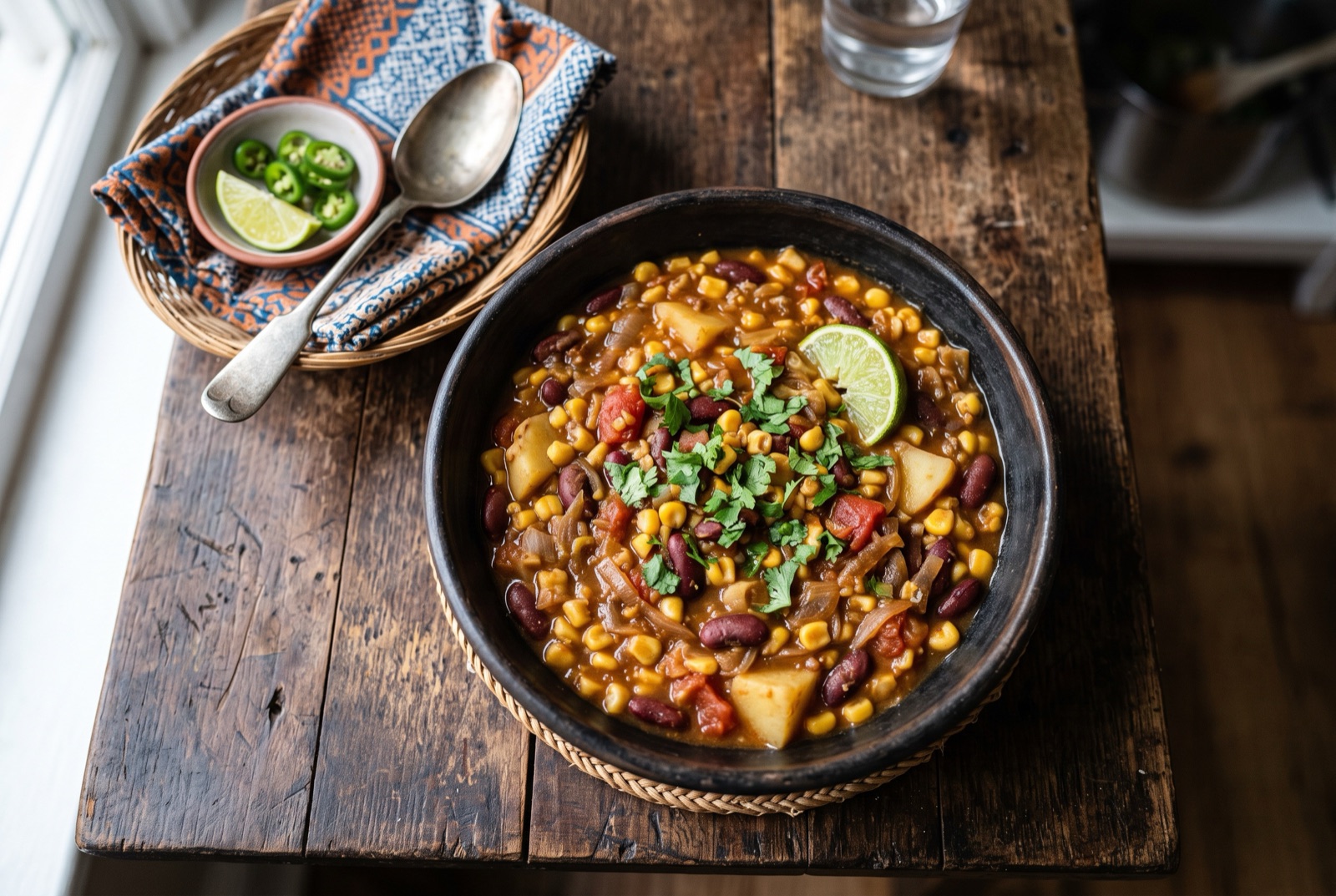
Keep exploring Kenya.
Kenya has 9 more dishes in the atlas — Githeri and Kenyan Chapati, and 7 more.
All Kenya recipes Ground beef recipes Onion recipes Green chili recipes street foodgluten freedairy freenut freeRecipe by The DishRoute Kitchen · published August 20, 2026 · updated August 20, 2026