Brown Stew Oxtail.
Braised Oxtail with Butter Beans
Brown stew oxtail · say it: brown stew OX-tayl
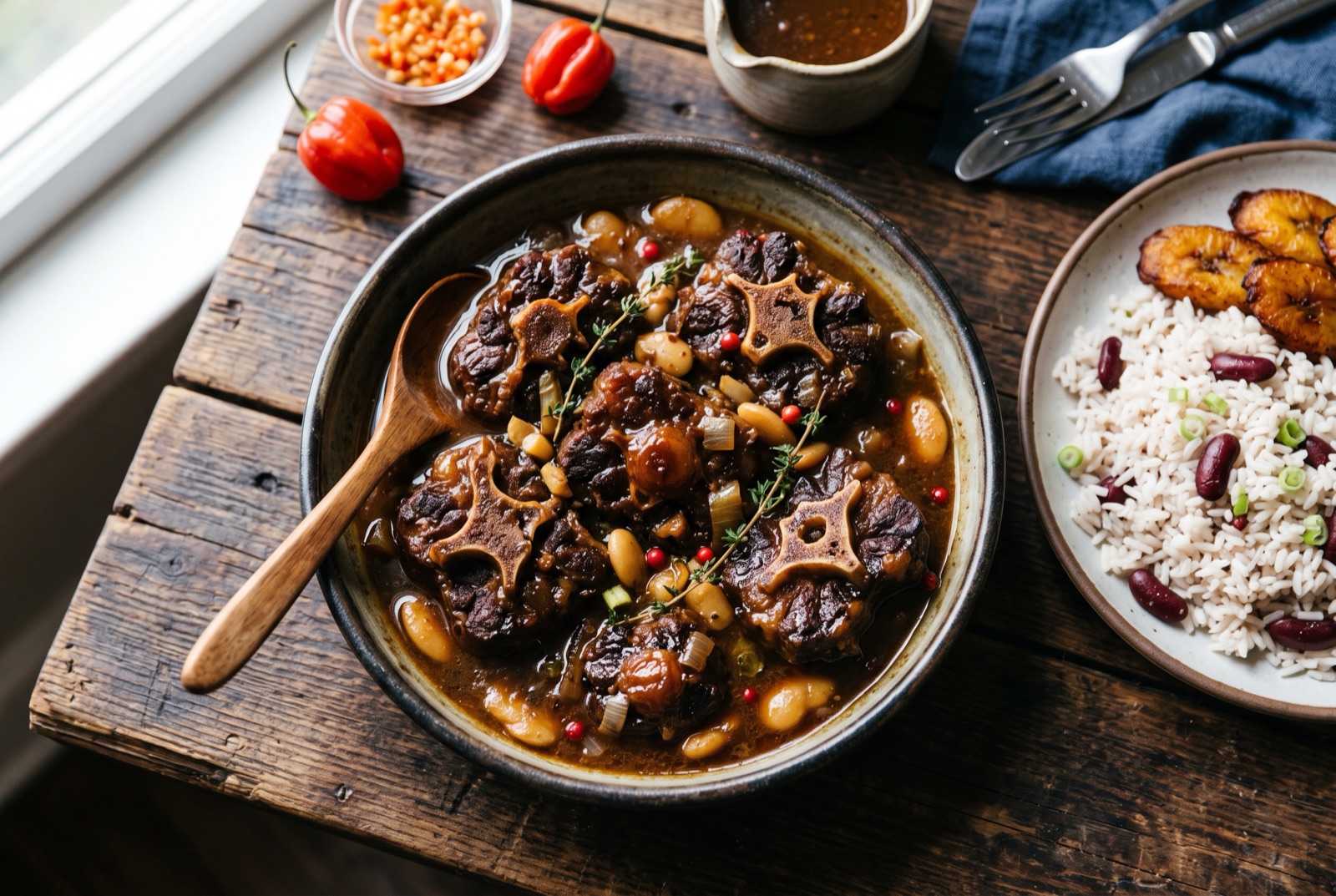
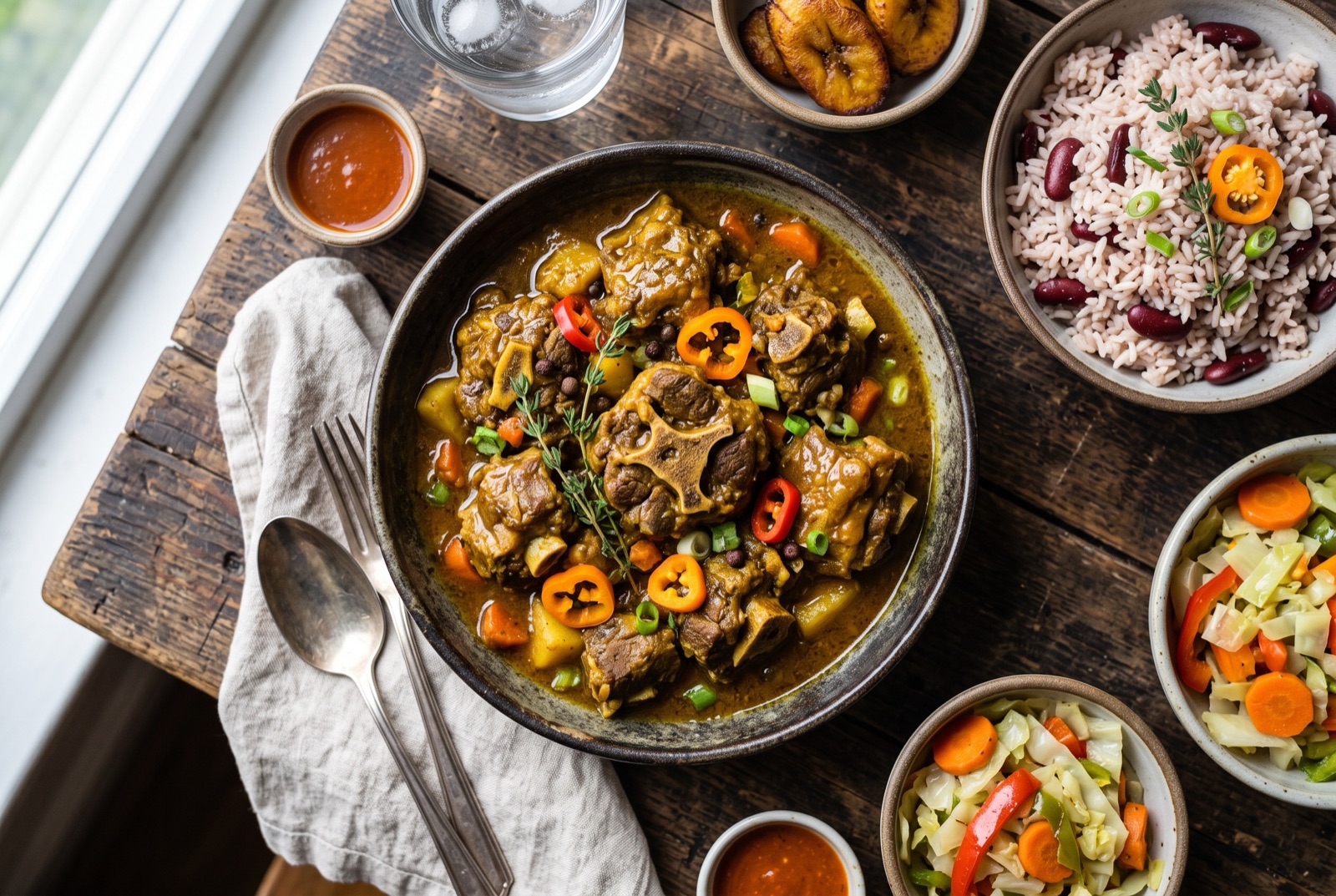
Brown stew oxtail is the richest thing in the Jamaican repertoire: fatty, bony tail sections browned in caramelised sugar and then braised for hours until the meat surrenders and the liquid turns into a dark, glossy gravy thick enough to coat rice. The flavour is beefy and slightly bittersweet from the burnt sugar, with the warm clove note of pimento running under it and butter beans breaking down at the edges to give the sauce body. It is not quick and it cannot be rushed — collagen only dissolves on its own schedule — but almost none of the three hours is active work. Get the sugar right, get the pot to the faintest possible simmer, and the dish essentially cooks itself into something that Jamaicans will happily argue is the best plate on the island.

- Gate
- Jamaica
- Prep
- 30 min
- Cook
- 3 hr 15 min
- Total time
- 7 hr 45 min incl. 4 hr rest
- Serves
- 6
- Status
- Takes skill
- Nutrition / serving · estimated
- Calories 640 kcal
- Protein 46 g
- Carbs 24 g
- Fat 38 g
- Fiber 5 g
- Sugar 8 g
- Sodium 1050 mg
Why this recipe works.
- A real burnt-sugar browning stage with a described colour and smell, not a vague instruction to "brown the meat".
- Three-hour braise timed so the butter beans go in late and thicken the gravy instead of dissolving to mush.
- A cold-fat skimming step that removes the greasiness most home oxtail suffers from.
- Clear guidance on trimming and on how much fat to leave, which is where oxtail most often goes wrong.
Ingredients.
18 itemsFor the meat
For the seasoning
For the pot
To finish
Equipment
- Heavy Dutch oven with a tight lid
- Tongs
- Fat separator or a wide spoon for skimming
Instructions.
Wash and season the oxtail
Rub the oxtail with the cut lime, rinse and pat dry. Toss with the soy sauce, scallions, thyme, garlic, allspice berries, black pepper and salt, then cover and refrigerate at least 4 hours or overnight.
Burn the sugar
Heat the oil in a heavy pot over medium-high heat, add the brown sugar and leave it without stirring until it melts, foams and turns dark mahogany with a faint wisp of smoke — about 2 to 3 minutes. It should smell like toasted caramel on the edge of burning.
Tip Have the meat within arm's reach. The window between dark caramel and acrid burnt is maybe fifteen seconds.
Sear in the caramel
Shake the seasoning off the oxtail pieces and lower them into the hot sugar in a single layer, standing back from the spitting. Sear 4 minutes per side until every piece is coated in dark glossy brown, working in two batches if the pot is crowded.
Build the pot
Return all the meat and its reserved seasoning to the pot with the onions, carrots, tomato paste and browning sauce if using. Stir for 3 minutes until the onions soften and the paste darkens against the bottom of the pot.
Braise for three hours
Pour in the stock so the oxtail is just covered, drop in the whole Scotch bonnet, and bring to a boil. Immediately drop the heat until only an occasional bubble breaks the surface, cover, and cook for 2 hours 45 minutes.
Tip Skim the surface fat every 45 minutes and top up with hot water if the meat pokes above the liquid.
Add the butter beans
Lift out the Scotch bonnet and the thyme stems, stir in the butter beans, and simmer uncovered for a final 20 to 25 minutes until the gravy has reduced, darkened and thickened enough to cling to a spoon.
Rest and skim
Take the pot off the heat and let it stand 15 minutes, then spoon the fat off the surface. Taste for salt — the soy sauce means it may need none — and check that the meat slips off the bone with a nudge.
Serve
Spoon the oxtail and beans over rice and peas with plenty of gravy, and warn anyone at the table that the small bones are worth picking up and gnawing. Serve with fried plantain on the side.
Tips from our kitchen.
- Buy thick centre-cut oxtail pieces rather than the narrow tip sections — the tip is mostly bone and gives you very little meat.
- Trim off the hard external fat but leave the marbling and the connective tissue. That tissue is what turns into the glossy gravy.
- Take the sugar right to the point where it foams dark and smokes faintly before adding the meat. Pale caramel gives you a weak, sweet gravy with no colour.
- Keep the braise at the barest tremble. A rolling boil tightens the muscle fibres and pushes the fat into the liquid as grease instead of body.
- If you have time, cool the stew completely and lift the solid fat off the top before reheating — it makes the difference between rich and heavy.
- Add the butter beans in the last 25 minutes only, so they hold some shape while still releasing starch.
Substitutions.
- Browning sauce → 1 extra tablespoon of sugar burnt darker, or 1 tbsp dark soy sauce
- Browning is a caramel concentrate sold in Caribbean shops. Extra burnt sugar gets the colour; dark soy gets colour plus savoury depth but adds salt, so pull back on the added salt.
- Butter beans → Canned lima beans or cannellini beans, drained
- Canned beans go in for the last 10 minutes only, since they are already fully cooked and will turn to paste.
- Oxtail → Beef short ribs or bone-in beef shank
- Both have the collagen needed for the gravy. Short ribs are ready around 2 hours 15 minutes rather than 3.
Variations.
- Brown stew chicken
- The same burnt-sugar method with bone-in chicken pieces, done in 45 minutes. The weeknight cousin of this dish and just as common on Jamaican tables.
- Oxtail with spinners
- Roll small ropes of flour dough between your palms and drop them into the pot for the last 20 minutes. They cook into chewy dumplings and thicken the gravy further.
- Pressure cooker oxtail
- Brown as written, then pressure cook 50 minutes at high pressure. Finish uncovered with the beans and reduce the gravy, which the pressure cooker leaves too thin.
Storage & reheating.
Oxtail is better on day two and keeps 4 days refrigerated. The cold gravy sets into a firm jelly, which is exactly what you want to see. Reheat slowly on the stove with a splash of water, breaking up the set gravy as it warms. It freezes for up to 3 months with no loss of quality — freeze the meat submerged in gravy. Do not reheat in a microwave on full power; the fat separates and the meat toughens at the edges.
Serve with
Rice and peas, fried plantain and steamed cabbage — the standard Jamaican Sunday plate.
The story behind Brown Stew Oxtail.
Oxtail was for a long time exactly what its name says: the tail of the ox, one of the cheap offcuts that plantation kitchens handed down rather than cooked themselves. Across the Caribbean and the American South, those discarded cuts — tail, foot, tripe, neck — became the foundation of some of the most technically demanding cooking in the region, because turning tough connective tissue into something luxurious takes far more skill and time than roasting a good steak. Jamaican brown stew oxtail is the clearest example of that transformation.
The browning technique is the signature. Sugar goes into hot oil and is taken well past golden, right to the point where it foams dark and starts to smoke, and the meat is dropped in at that moment. The bitterness of the near-burnt caramel is essential — it is what stops the finished gravy from tasting like a sweet sauce and what gives brown stew its mahogany colour. Bottled browning sauce, a commercial concentrate of caramelised sugar, is widely used alongside or instead of the sugar, and there is no purist consensus about it; plenty of excellent home cooks use both.
What is not negotiable is the butter beans and the timing. Broad, starchy butter beans — lima beans — go in near the end, where they partly collapse and thicken the gravy from within. The seasoning is the same island trinity of thyme, scallion and Scotch bonnet, with whole pimento berries rattling around the pot and often a splash of soy sauce or ketchup for depth and colour. Today oxtail is no longer cheap: demand from the Jamaican diaspora, and from Korean and Chinese cooking that prizes the same cut, has pushed it to steak prices. It has become an occasion dish, which suits it — it was always the plate people looked forward to.
Questions, answered.
Why is my oxtail still tough after two hours?
Because collagen has not finished breaking down, and the usual cause is heat that is too high rather than time that is too short. Oxtail needs a bare simmer, where a bubble breaks the surface only every second or two. If the liquid is boiling, the muscle fibres contract and squeeze out moisture faster than the connective tissue dissolves. Turn it down and give it another 45 minutes.
What is browning sauce and do I need it?
Browning is a bottled concentrate of deeply caramelised sugar, sold in Caribbean grocers, used across Jamaican cooking for colour and a faint bitterness. You do not strictly need it if you burn your own sugar properly, but it is insurance and most home cooks use both. A tablespoon of dark soy sauce is a workable stand-in for colour and depth.
How do I stop the stew from being greasy?
Trim the hard fat cap off each piece before cooking, and skim the surface with a spoon during the braise. The most effective method is to cool the finished stew completely, refrigerate it, and lift off the solid layer of fat that sets on top before reheating. This is why oxtail cooked a day ahead usually tastes cleaner than oxtail served straight from the pot.
Can I use dried butter beans instead of canned?
Yes. Soak them overnight, then add them to the pot after the first 90 minutes of braising so they get about 90 minutes of their own cooking time. Do not salt them heavily at the start, since salt slows the softening of the skins. Canned beans, by contrast, need only 10 minutes at the end.
Is oxtail supposed to be sweet?
Only faintly. The burnt sugar contributes colour and a bittersweet edge rather than actual sweetness, and if the finished gravy tastes sugary the caramel was pulled off the heat too early. The dominant flavours should be beefy and savoury, with pimento and thyme behind them and the sugar noticeable only as depth.
You might also like.
All recipes →
Keep exploring Jamaica.
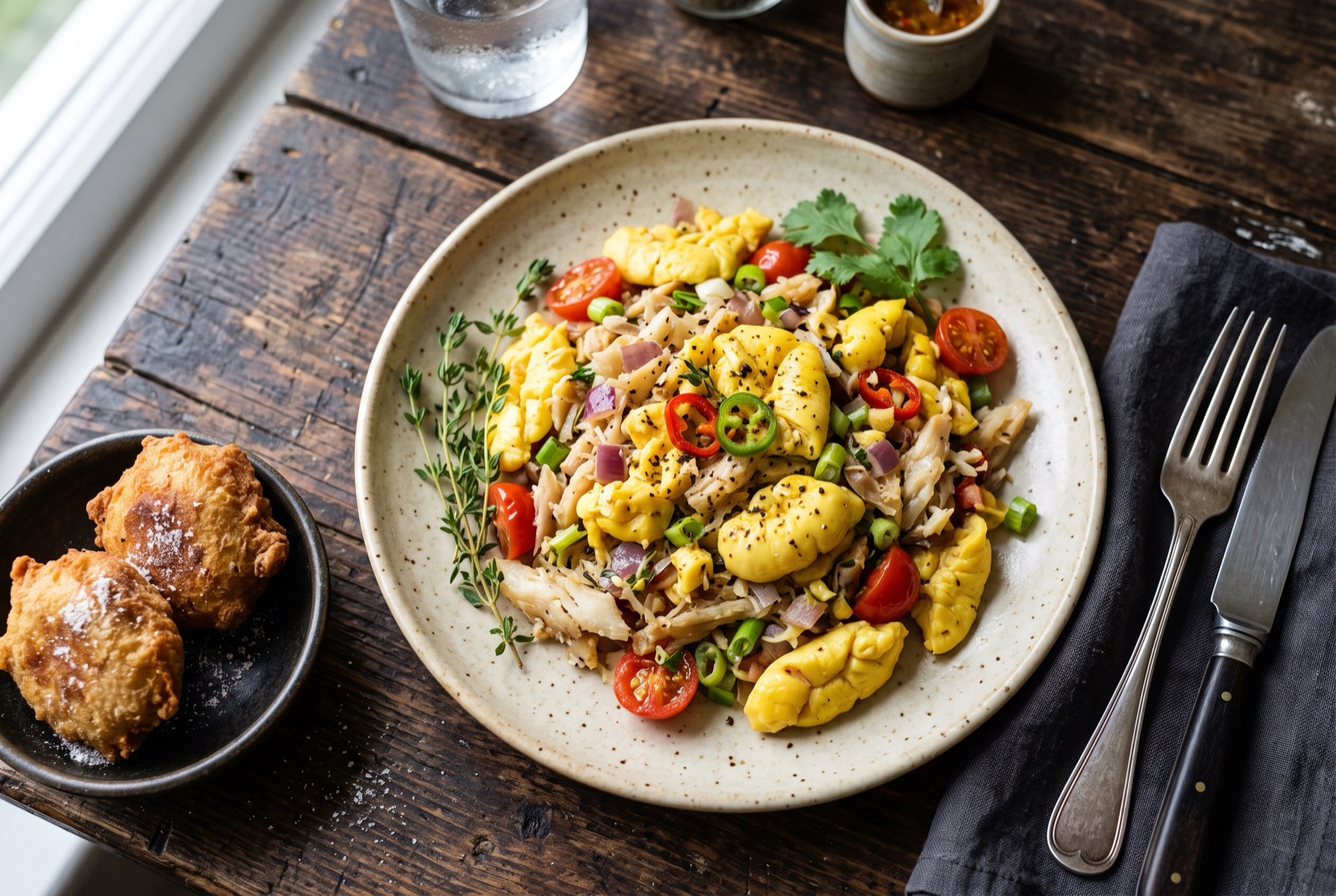
Jamaica has 9 more dishes in the atlas — Ackee and Saltfish and Curry Goat, and 7 more.
Recipe by The DishRoute Kitchen · published August 20, 2026 · updated August 20, 2026