Jamaica.
Jamaica
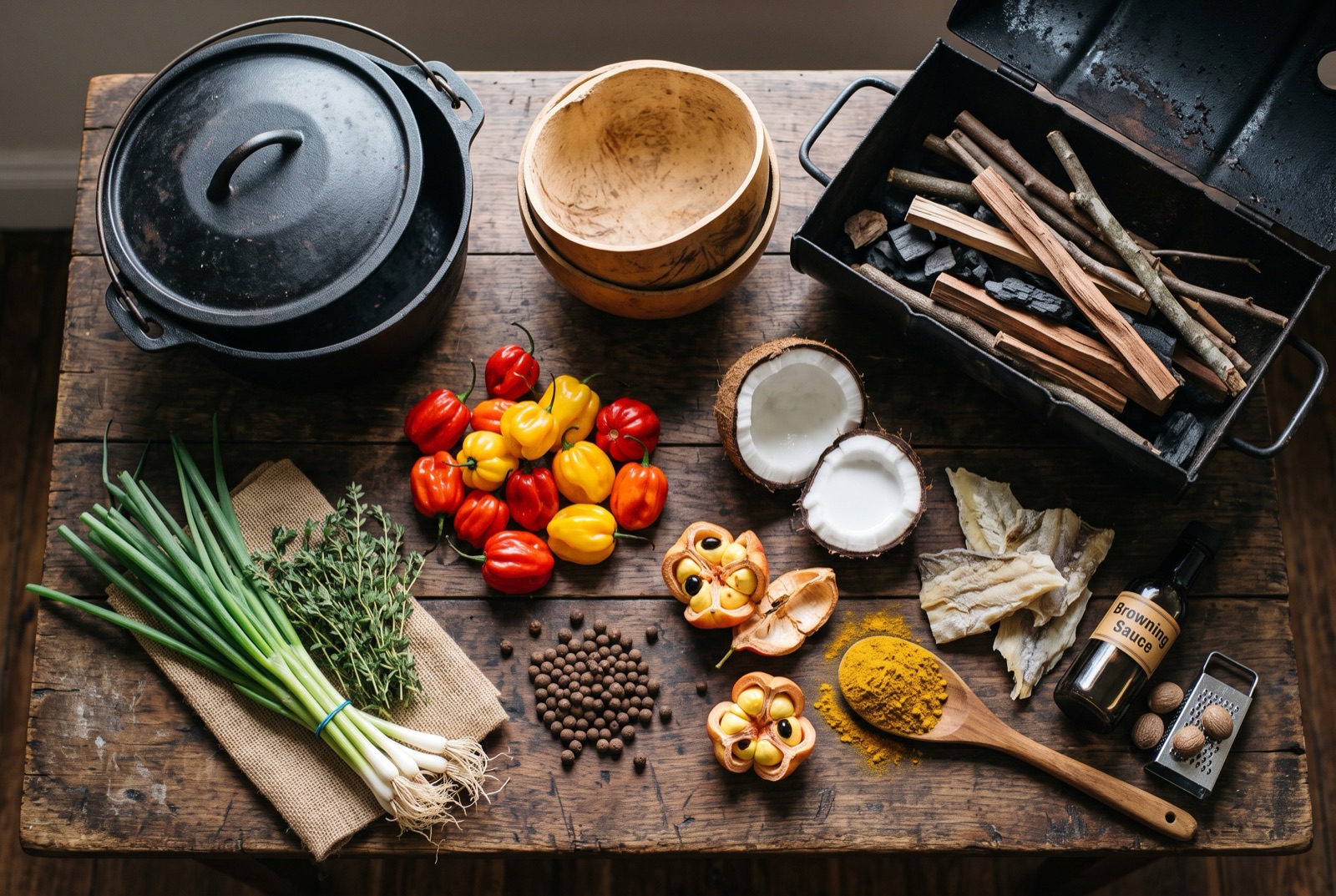
Jamaican cooking is built on a small set of aromatics used with absolute confidence: Scotch bonnet pepper, allspice berries the island calls pimento, fresh thyme on the branch, scallion bruised rather than chopped, and garlic and ginger behind them. Those five turn up in almost every savoury pot, which is why a jerk marinade, a pot of oxtail and a side of rice and peas taste like relatives without tasting the same. The second pillar is coconut — pressed into milk for rice, for stews, for porridge — and the third is fire management, since so much of the canon is either slow-braised for hours or hard-fried in a shallow pan of hot oil. Heat is present but usually controlled: a whole Scotch bonnet goes into the pot unburst so it perfumes without scorching, and cooks fish it out before it splits. It is a cuisine of African, Taino, British, Indian, Chinese and Iberian threads that stopped being separate a long time ago, and it is generous with seasoning in a way that leaves nothing tasting cautious.

- Continent
- North AmericaCaribbean
- Recipes in atlas
- 10
- Must-try dishes
- 3
- Pantry staples
- 10
Start with the classics.
Must tryThe dishes that explain the Jamaica kitchen fastest — if you cook only a few things from this page, cook these.
Inside the Jamaica kitchen.
Seasoning in Jamaica happens early and it happens by hand. Meat is rubbed the night before with salt, black pepper, thyme, chopped scallion, garlic, pimento and pepper, then left in the fridge so the marinade works into the muscle rather than sitting on it. Many cooks add a splash of vinegar or lime to "wash" the meat first — a habit inherited across the Caribbean, done in a bowl of water with citrus or vinegar before the seasoning goes on. By the time the pot is lit, the flavour is already inside the protein, and the cooking is mostly about texture.
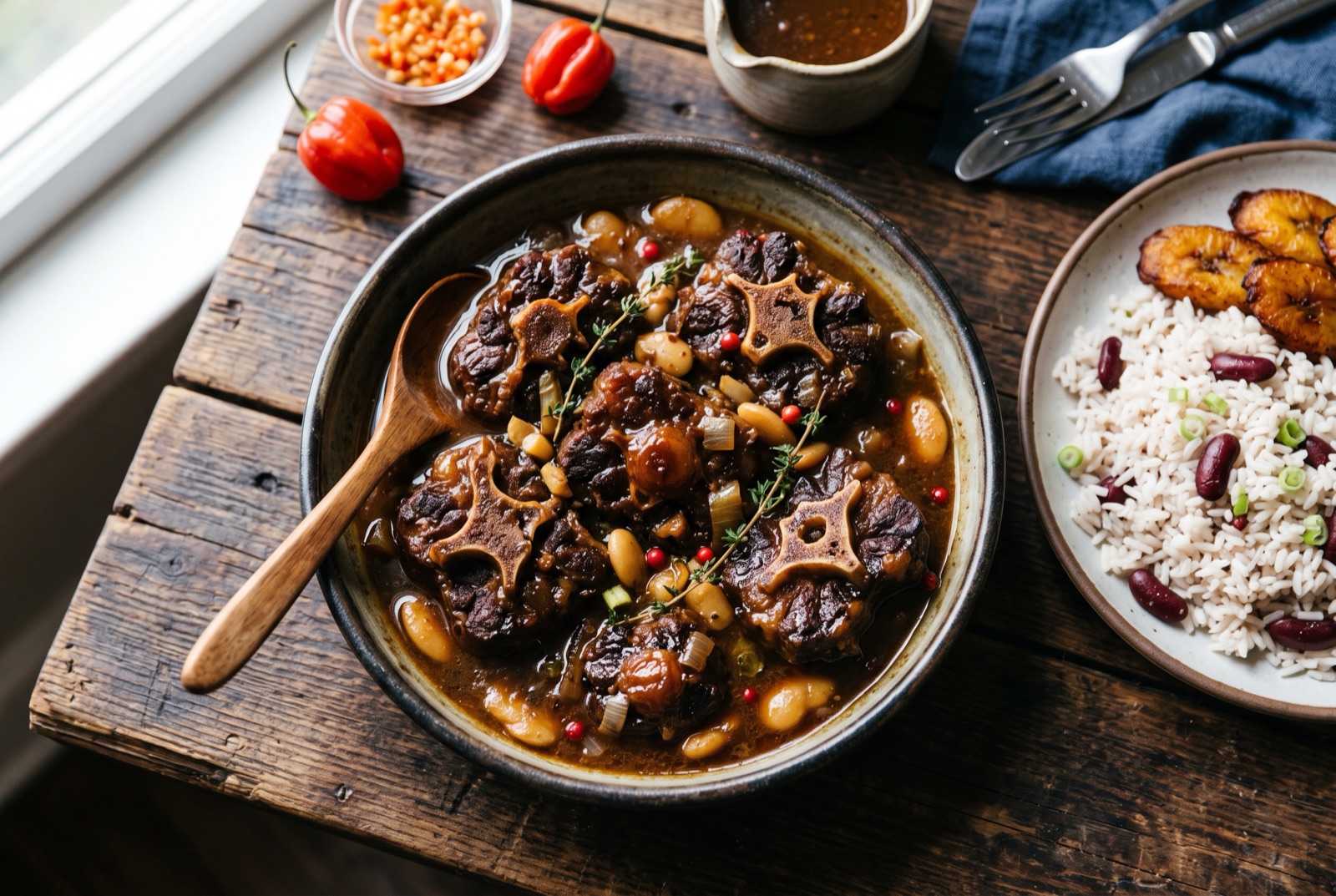
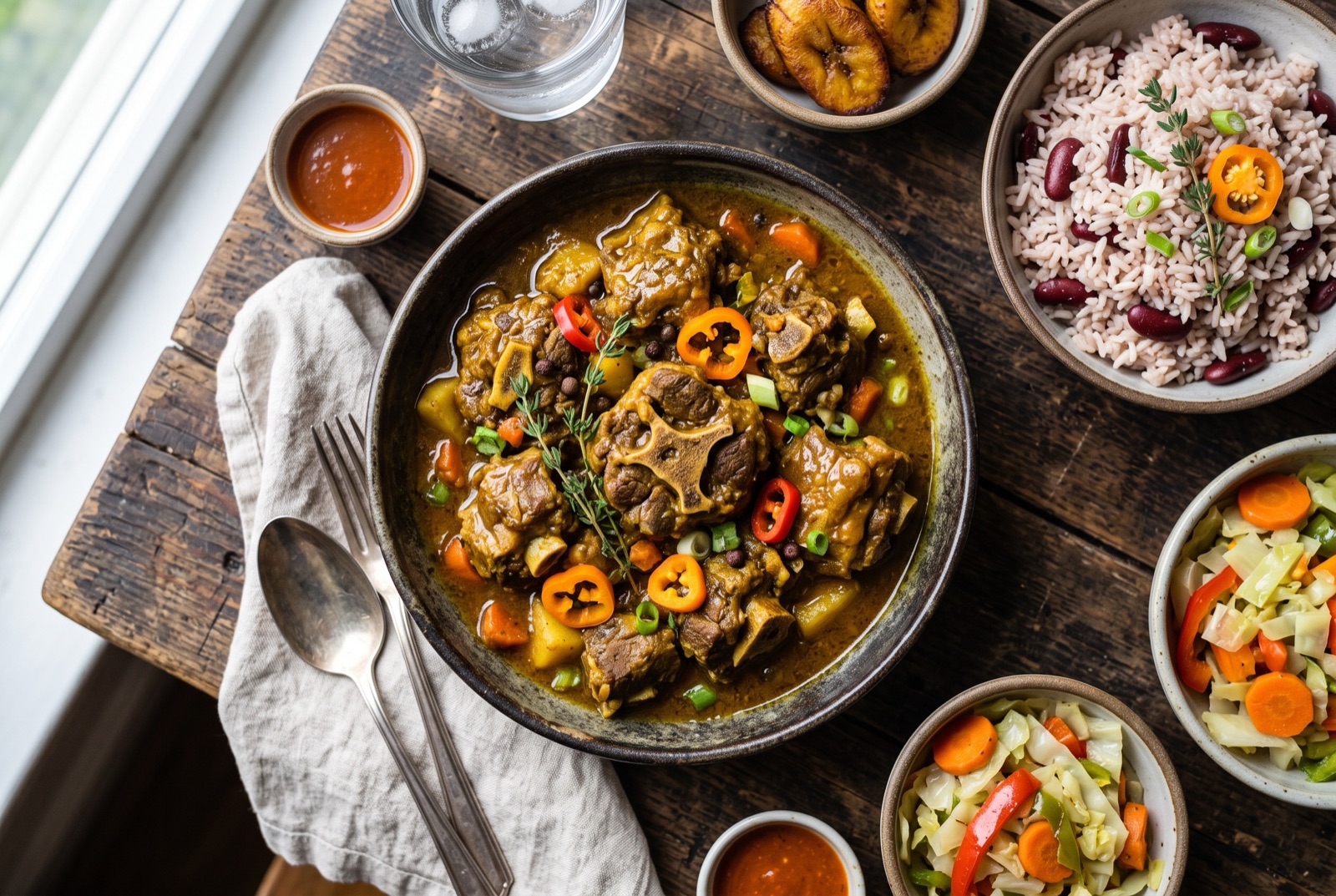
The two dominant savoury techniques are browning and slow braising. Brown stew — used for oxtail, chicken and fish — starts with caramelised sugar burned in oil until it is almost black and smoking, at which point the meat is dropped in and coated. That burnt sugar, sometimes reinforced with bottled browning sauce, gives the mahogany colour and the faint bitterness that keeps the finished gravy from being merely sweet. Curry works differently: Jamaican curry powder, heavy on turmeric and warmer than most Indian blends, is "burnt" in hot oil for a minute before the meat goes in, so the raw powdery edge cooks off. Both methods then need time — oxtail and goat want two to three hours until the collagen surrenders.
Frying is the other half of the repertoire, and it is shallow and hot rather than deep. Whole snapper is scored and fried until the skin crackles, then drowned in vinegar boiled with carrot, onion and pepper, which is escovitch — the local descendant of the Iberian escabeche that arrived with Sephardic Jewish settlers. Dumplings go into the same style of pan: fried dumpling for breakfast, sweet cornmeal festival to sit beside jerk, boiled spinners to thicken a soup. Bammy, made from grated cassava, is the oldest of them, a Taino flatbread that outlived the people who invented it.
A proper plate is starch-forward and built for sharing. Sunday dinner means rice and peas cooked in coconut milk, a stewed or curried meat, a vegetable side such as steamed callaloo or cabbage, fried plantain and often a slice of hard dough bread. Breakfast is savoury and substantial: ackee and saltfish, callaloo, liver, mackerel run down, served with boiled green banana, yam, dumpling and breadfruit — the group of starches called simply "food" or "provisions". Soup is a fixed institution, particularly on Saturdays, when red peas soup or cow foot soup carries the household through the day.
Regional variation is real but subtle on an island this size. Portland and the northeast claim jerk as their own through the Maroon communities of the Blue Mountains, and pimento wood still burns there. The south coast, especially Little Ochie in St Elizabeth, is where fish and lobster are cooked over open fires by the water. Kingston drives the patty shops, the Chinese-Jamaican and Indian-Jamaican influences, and the export version of the food. And the diaspora — London, Toronto, New York, Miami — has become a second home for the cuisine, where the patty and the jerk pan travel further than any menu on the island itself.
Signature pantry.
10 staplesThe ingredients this cuisine cannot function without.
- Scotch bonnet pepper
- pimento (allspice)
- fresh thyme
- scallion
- coconut milk
- ackee
- salt cod
- Jamaican curry powder
- browning sauce
- nutmeg
How people eat in Jamaica.
Breakfast is savoury and taken seriously — ackee, callaloo or mackerel with boiled provisions rather than anything sweet. The big meal is Sunday dinner, cooked slowly through the afternoon and served in one loaded plate rather than in courses, with rice and peas as the fixed anchor. Saturday is soup day in many households, a pot kept going for whoever passes through. Nobody portions out heat for you: the pepper sits at the table, and a whole Scotch bonnet in the pot is meant to perfume, not punish. Food is shared freely and plates are built generously, so refusing a second serving takes a few polite rounds. Beer, sorrel at Christmas, or a cold ginger drink usually stand beside the plate.
Regional kitchens.
Jamaica cooks 4 distinctly different ways depending on where you stand — here is what changes between them.
- R1Portland and the Blue Mountains
- The northeast is jerk country, tied to the Maroon communities who developed the method of seasoning and slow-smoking meat over pimento wood. Boston Bay is the address most associated with it.
- R2Kingston and St Andrew
- The urban kitchen: patty shops on every block, Chinese-Jamaican and Indian-Jamaican cooking, late-night fry fish and the restaurant versions of dishes that started at home.
- R3St Elizabeth and the South Coast
- Fishing villages where snapper, parrotfish and lobster go straight from the boat to an open fire, and where escovitch and roast fish are the default rather than a special occasion.
- R4St Ann and the North Coast
- Farming parish country — yam, breadfruit, ackee and pimento grow here — feeding the boiled provisions and porridges that anchor the island's breakfast table.
All Jamaica recipes.
10 recipes and counting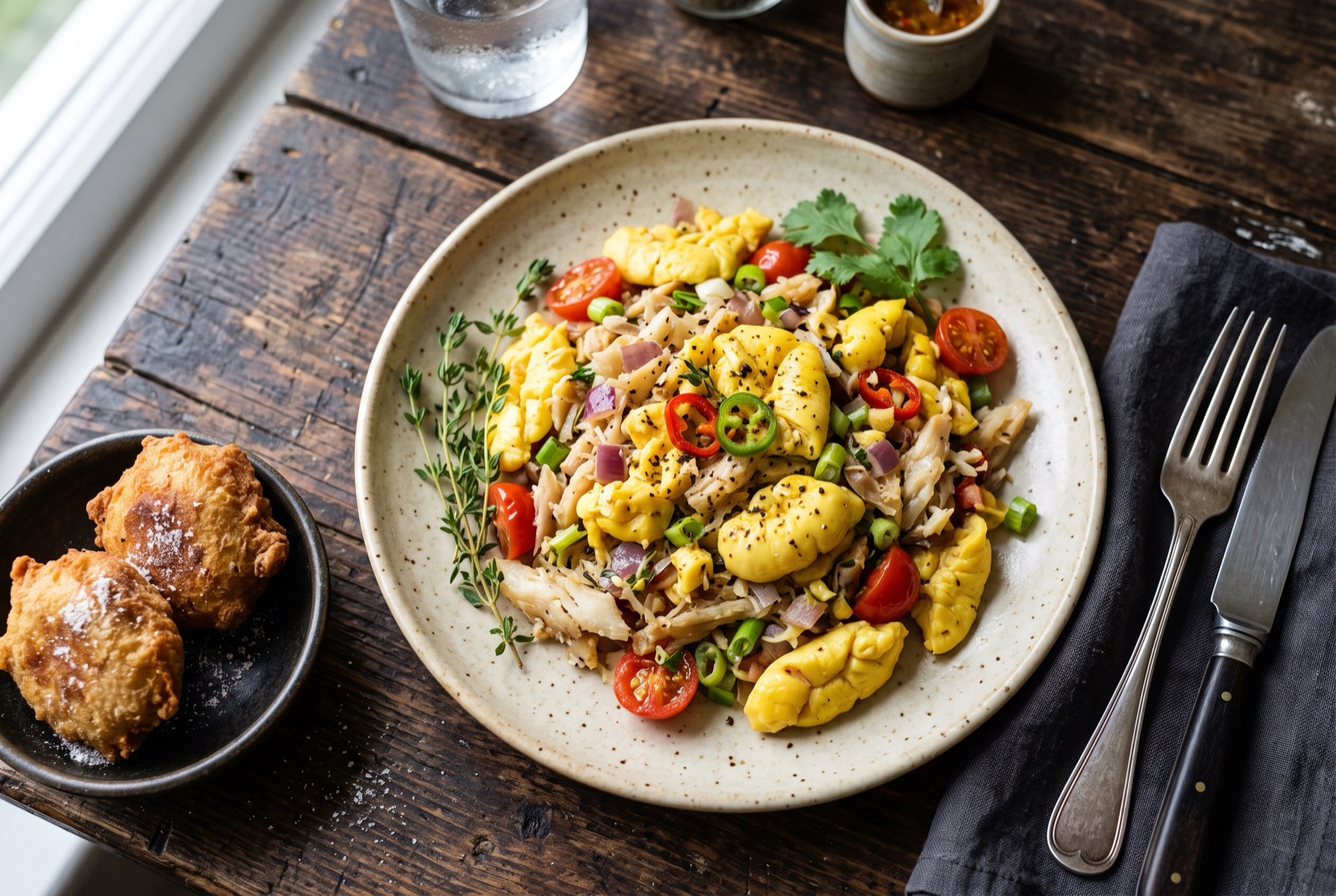
Jamaica12 hr 45 min
Ackee and Saltfish
Ackee Fruit with Salt Cod
Jamaica7 hr 45 min
Brown Stew Oxtail
Braised Oxtail with Butter Beans
Jamaica15 hr
Curry Goat
Jamaican Curried Goat
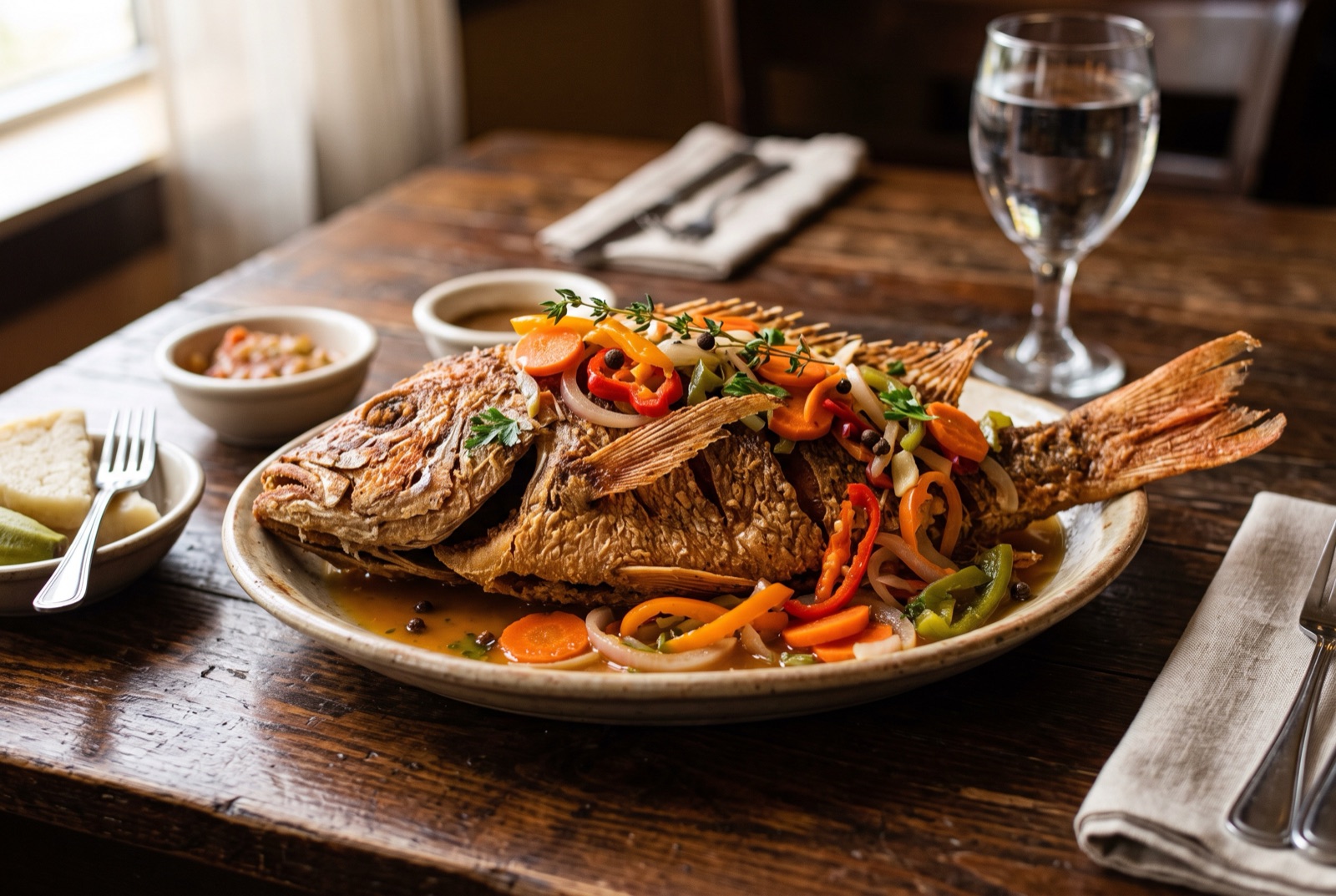
Jamaica1 hr 55 min
Escovitch Fish
Fried Fish in Pickled Pepper Dressing
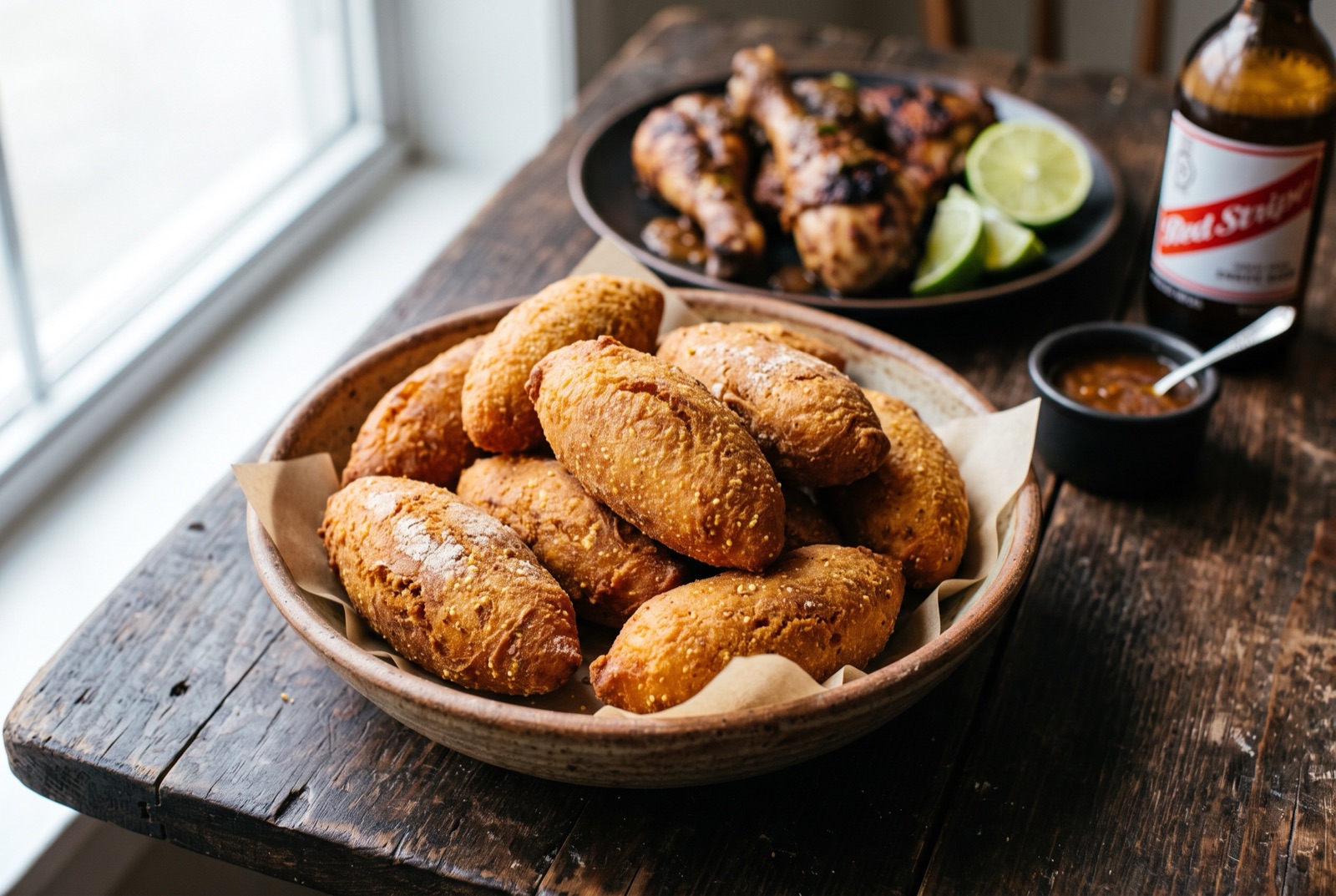
Jamaica50 min
Festival
Sweet Fried Cornmeal Dumplings
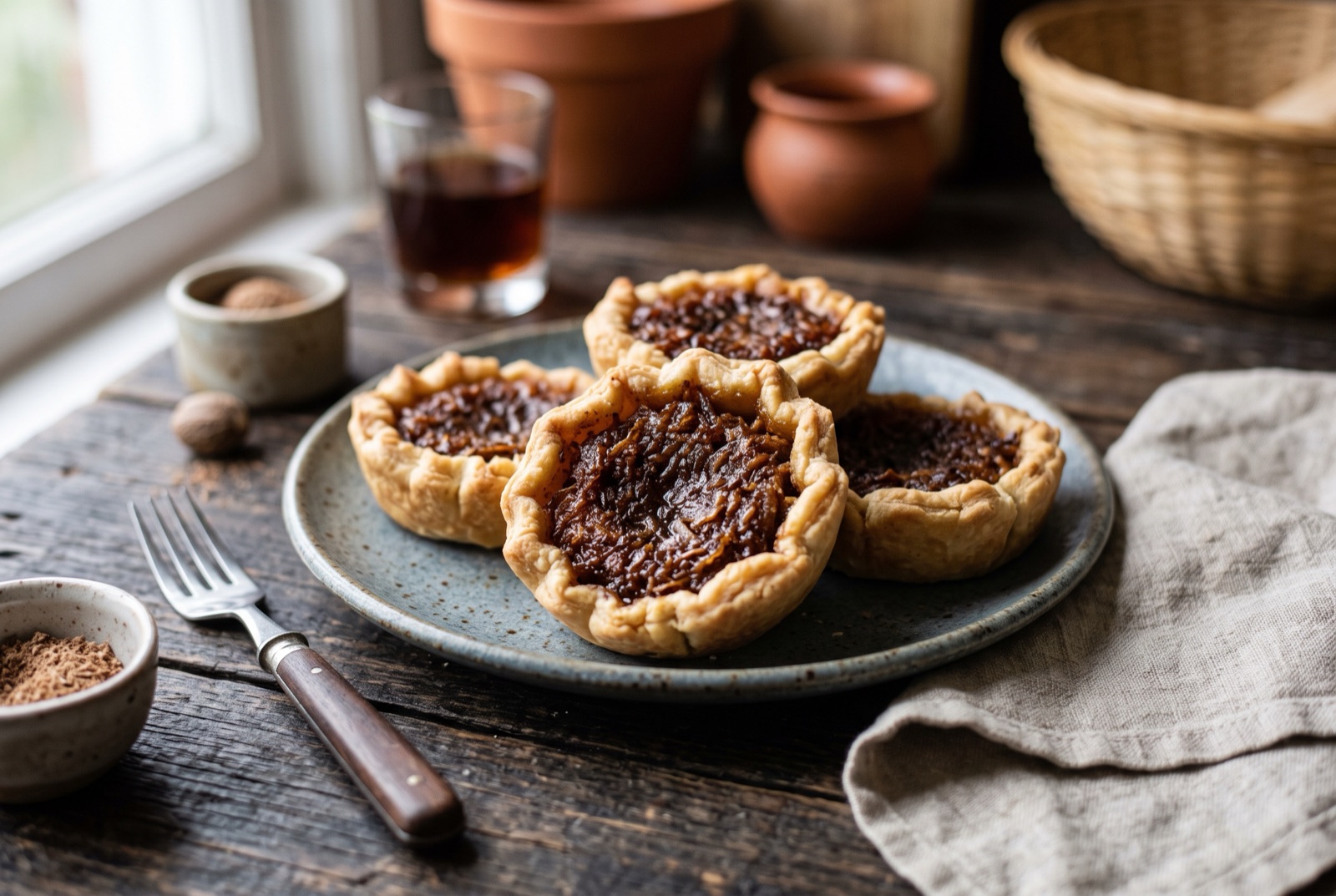
Jamaica2 hr 15 min
Gizzada
Pinch-Me-Round Coconut Tart
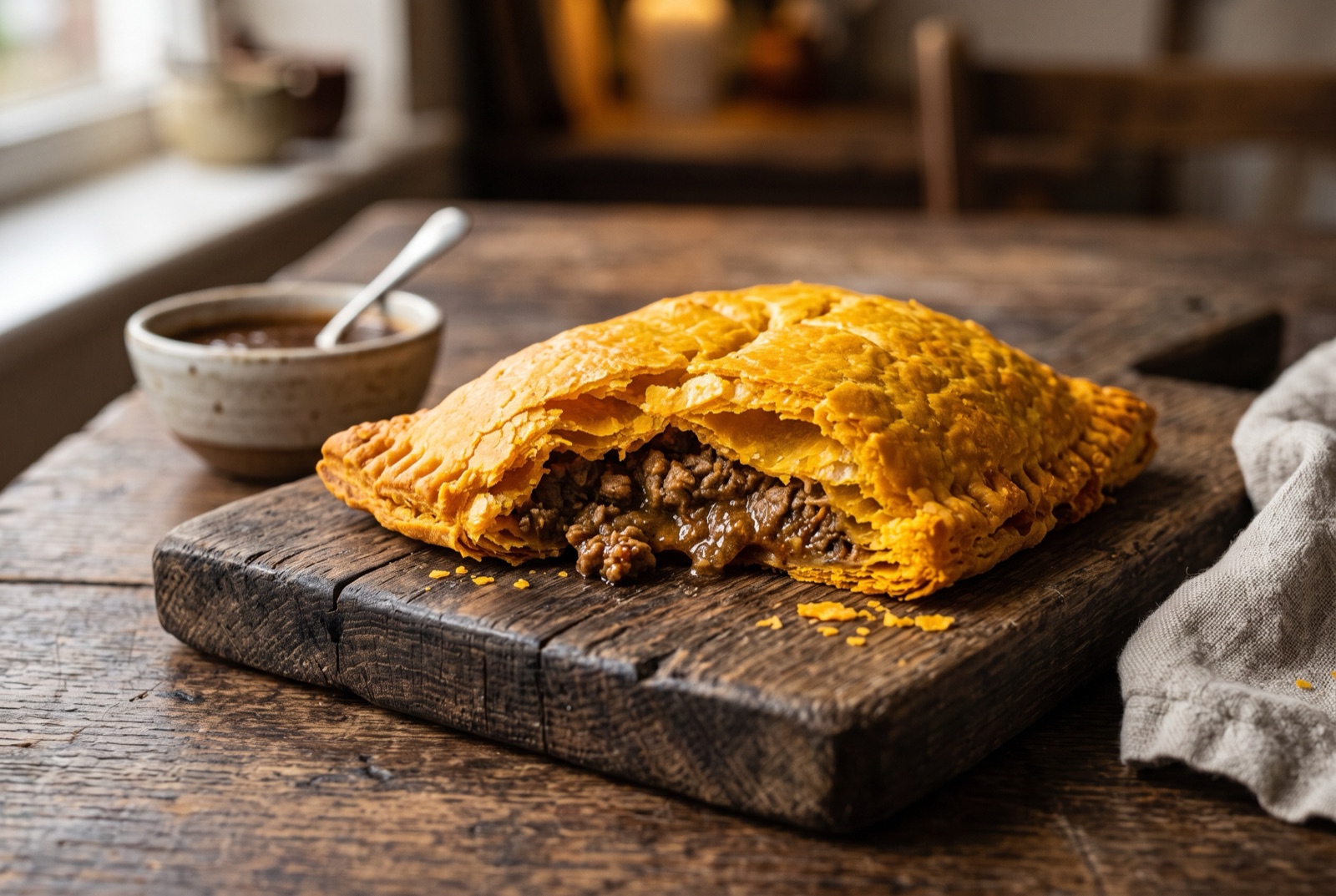
Jamaica3 hr 45 min
Jamaican Patty
Turmeric Pastry with Spiced Beef
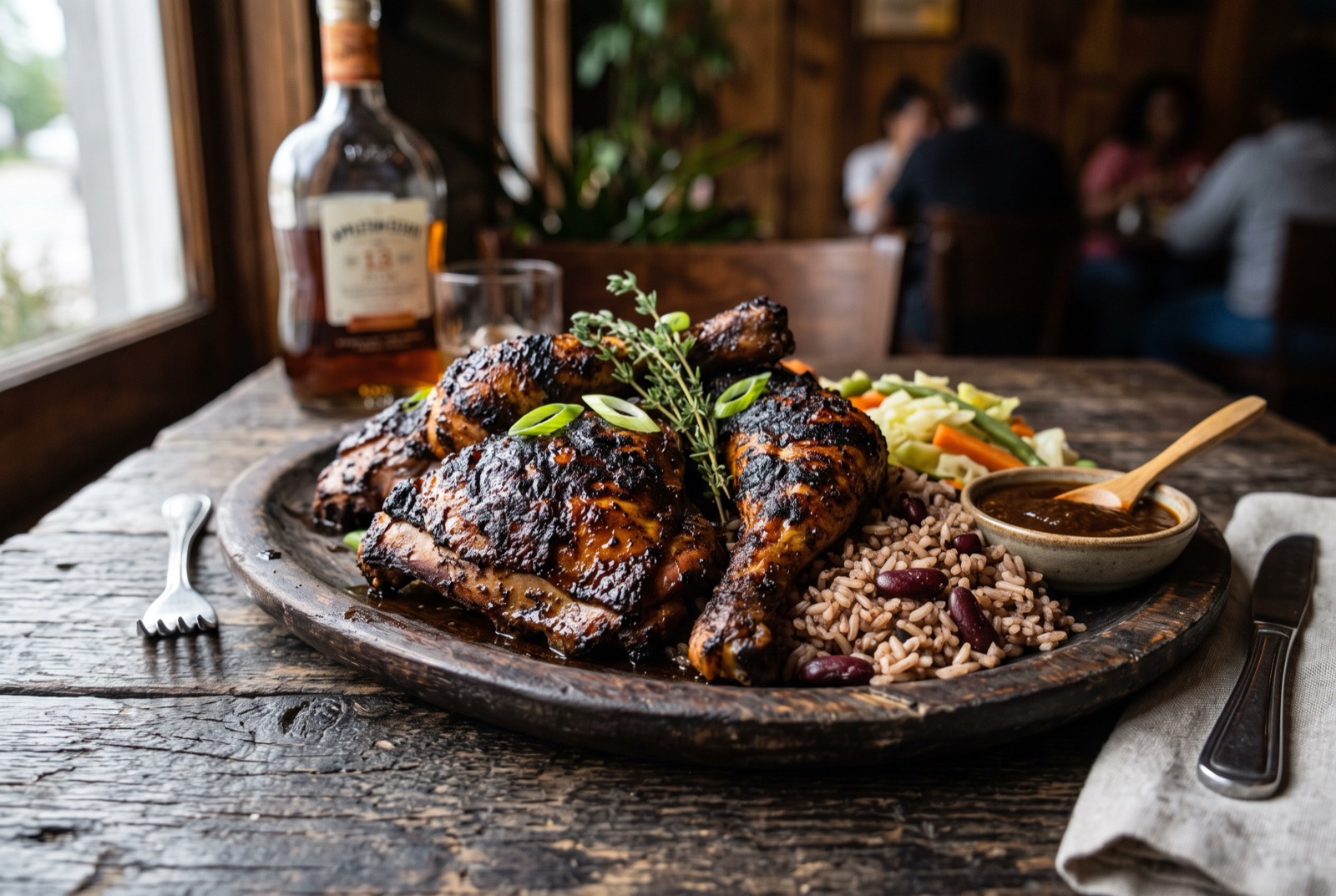
Jamaica9 hr 45 min
Jerk Chicken
Pimento-Smoked Spiced Chicken
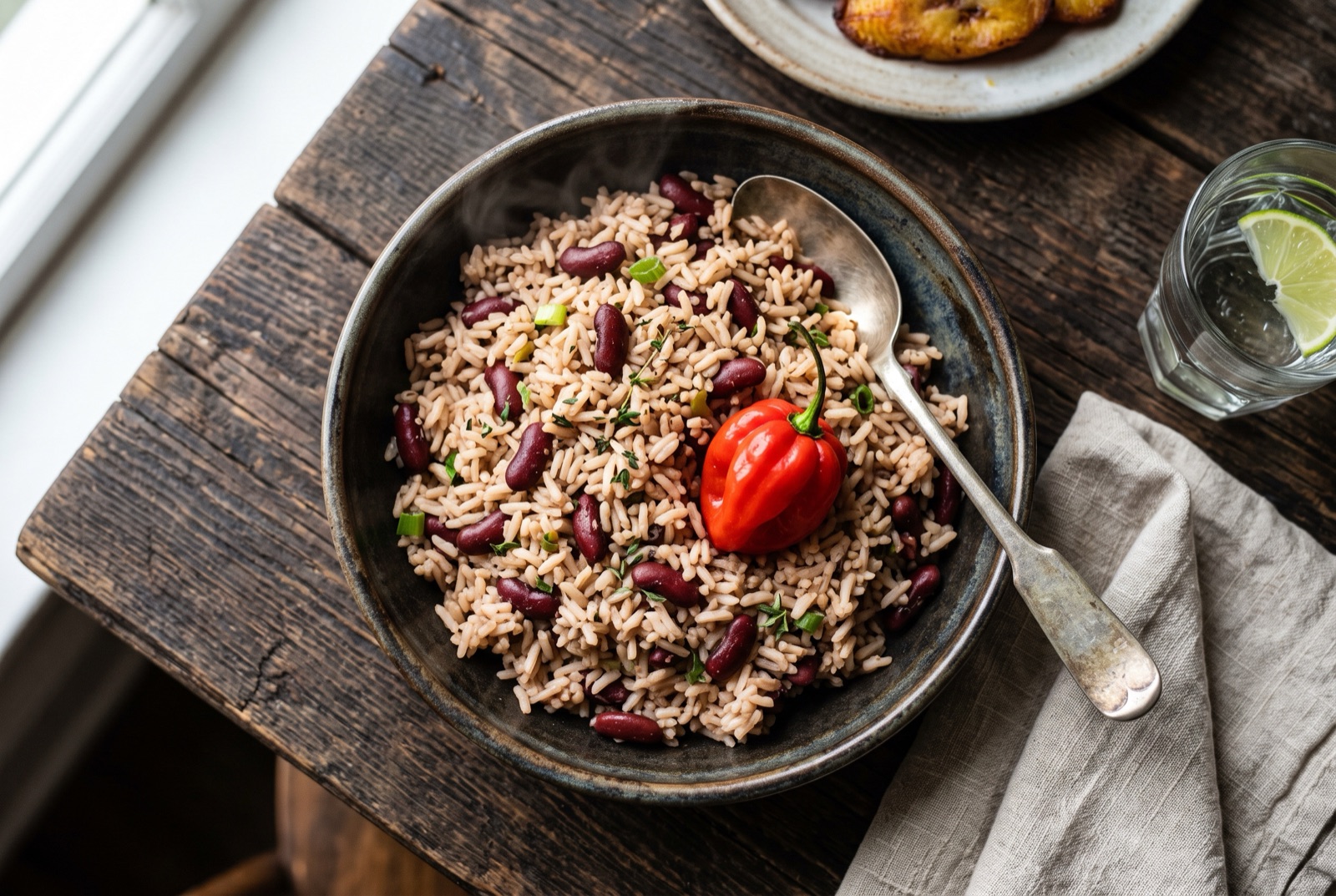
Jamaica9 hr 45 min
Rice and Peas
Coconut Rice with Kidney Beans
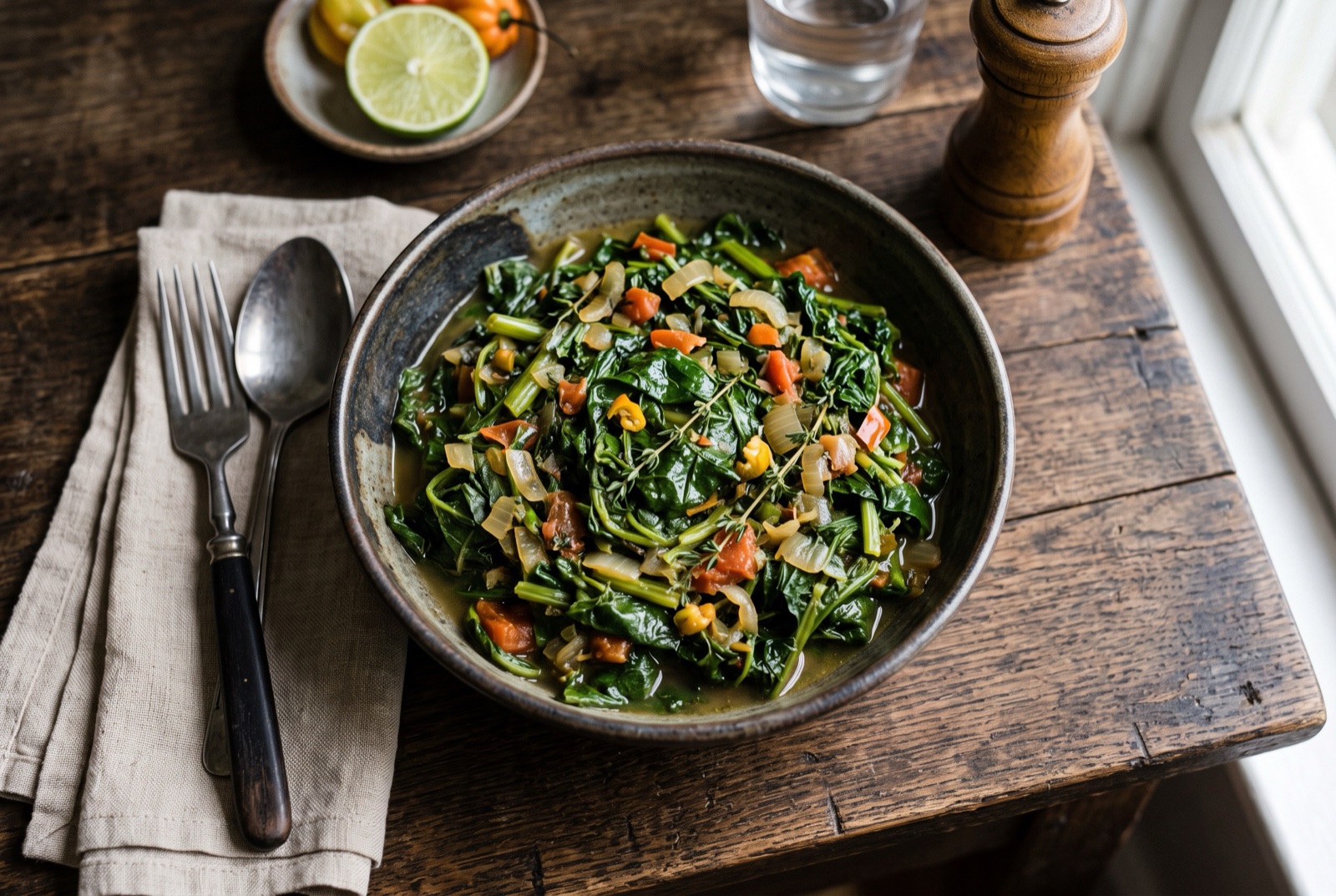
Jamaica30 min
Steamed Callaloo
Sauteed Amaranth Greens
Keep traveling.
Jamaica sits in Caribbean, and its kitchen shares borders as well as ingredients with Canada and Costa Rica.
 Canada
 Costa Rica