Gizzada.
Pinch-Me-Round Coconut Tart
Gizzada · say it: gih-ZAH-dah
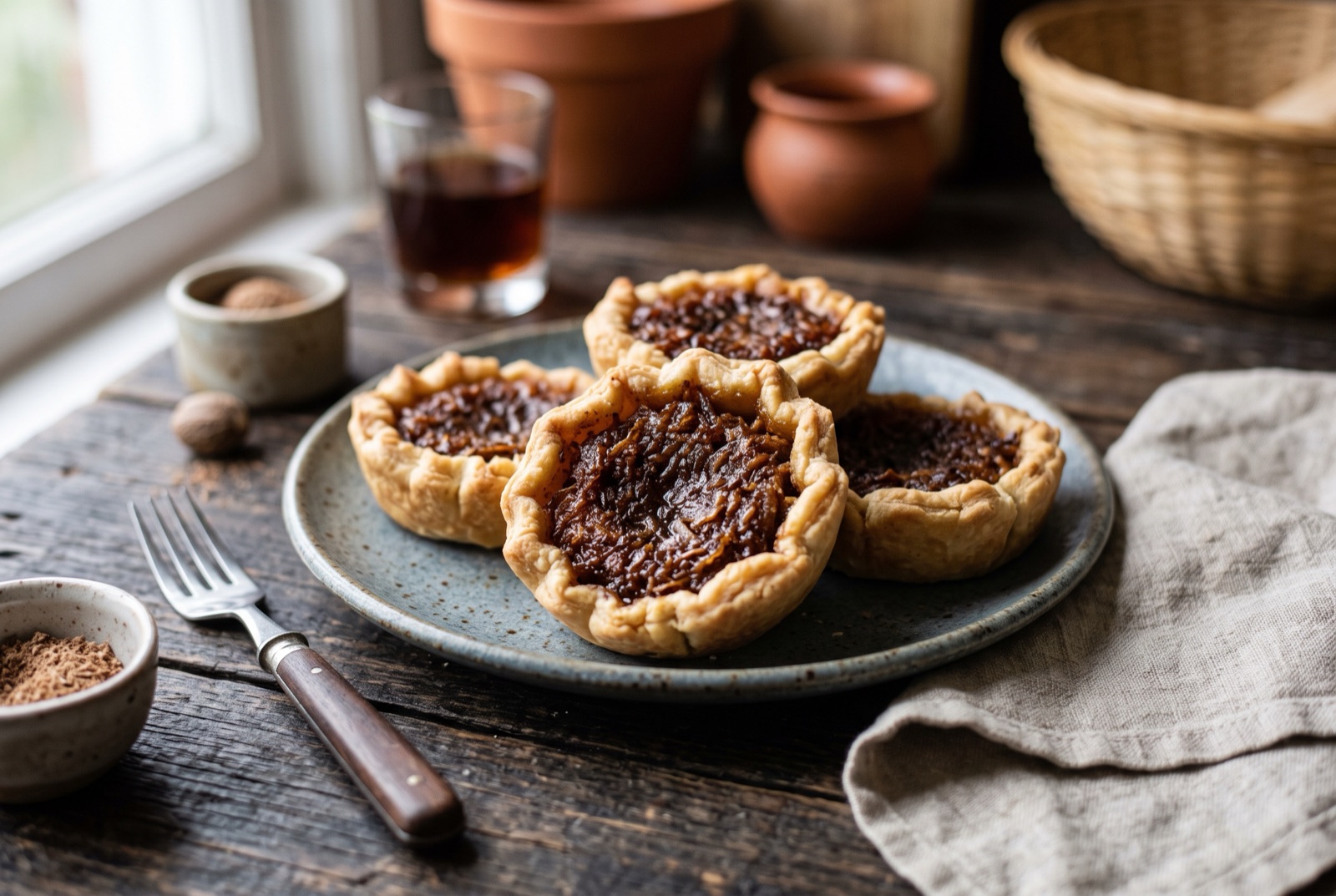
Gizzada is a small open tart with a hand-pinched pastry rim and a filling of grated coconut simmered in brown sugar syrup with nutmeg and ginger until it turns dark, sticky and chewy. The pastry is short and slightly salty, which is what keeps the filling from being cloying, and the texture contrast is the whole appeal: brittle crust, soft yielding coconut, and the deep molasses note of dark sugar underneath. Jamaicans call it pinch-me-round after the crimped edge, which is made by pinching the pastry between thumb and finger all the way around rather than pressing it into a tin. It is bakery food and market food, sold in cellophane bags beside grater cakes and bulla, and it keeps for days without losing anything.

- Gate
- Jamaica
- Prep
- 40 min
- Cook
- 45 min
- Total time
- 2 hr 15 min incl. 50 min rest
- Serves
- 12
- Status
- Medium
- Nutrition / serving · estimated
- Calories 380 kcal
- Protein 4 g
- Carbs 42 g
- Fat 23 g
- Fiber 4 g
- Sugar 26 g
- Sodium 190 mg
Why this recipe works.
- The filling is cooked on the stove first, so it sets to a chewy texture instead of weeping syrup into the pastry.
- A short, faintly salty crust that balances the sugar rather than adding more of it.
- Hand-pinched free-form cases with a described technique, so you need no tart tins at all.
- Uses fresh or frozen grated coconut with a workable route for dried, which most desiccated-coconut versions get wrong.
Ingredients.
14 itemsFor the pastry
For the filling
To finish
Equipment
- Rolling pin
- Heavy saucepan
- Baking sheets and parchment
- 10 cm round cutter or a bowl
Instructions.
Make the pastry
Rub the cold butter into the flour, sugar and salt until the mixture looks like coarse breadcrumbs with a few pea-sized lumps of butter still visible. Add the ice water gradually until it just holds together.
Chill the dough
Press the dough into a disc without kneading, wrap it, and refrigerate 30 minutes so the butter firms and the flour hydrates. It should roll out without cracking at the edges.
Cook the coconut filling
Bring the brown sugar and water to a boil in a saucepan, then add the grated coconut, nutmeg, ginger, cinnamon and salt. Simmer 15 to 20 minutes, stirring often, until the syrup has darkened and thickened.
Tip The filling is ready when a spoon dragged across the pan leaves a track that closes slowly rather than instantly.
Finish and cool the filling
Stir the butter into the hot filling until it melts and the mixture turns glossy, then spread it on a plate to cool to just warm. It will thicken further as the temperature drops.
Cut and pinch the cases
Roll the pastry to 3 mm and cut twelve 10 cm rounds. Lay them on lined trays and pinch the edge of each round up between thumb and forefinger all the way around, forming a crimped wall about 1.5 cm high.
Tip Work around the circle in small pinches rather than trying to pull the whole rim up at once, or it will tear.
Chill the shaped cases
Refrigerate the pinched cases for 20 minutes. Cold pastry keeps its crimped rim upright in the oven instead of slumping outward and letting the filling escape.
Fill and glaze
Heap the warm coconut filling into each case, mounding it slightly but keeping it below the top of the rim. Brush the pastry edges with beaten egg if you want a glossy finish.
Bake
Bake at 180C for 22 to 25 minutes until the rims are golden, the base is pale gold when you lift one with a spatula, and the filling bubbles gently at the edges.
Cool completely
Slide the tarts onto a rack and let them cool fully before eating — the filling is molten and will set to its chewy texture only as it cools. They are best after an hour and even better the next day.
Tips from our kitchen.
- Use fresh or frozen grated coconut if you can find it. Desiccated coconut works but must be rehydrated in warm water for 20 minutes first or the filling turns dry and sandy.
- Cook the filling until a spoon dragged across the pan leaves a track that closes slowly. Undercooked filling stays runny and soaks the base.
- Let the filling cool to warm, not hot, before it goes into the cases. Hot syrup melts the butter in the pastry immediately.
- Pinch the rim up to about 1.5 cm high. A low rim lets the syrup run out and weld the tart to the tray.
- Chill the shaped cases for 20 minutes before filling and baking — cold pastry holds its crimped shape in the oven.
- Bake until the filling bubbles at the edges and the pastry is pale gold underneath. Over-baking makes the coconut hard rather than chewy.
Substitutions.
- Fresh grated coconut → Frozen grated coconut, thawed, or 200 g desiccated coconut soaked in 200 ml warm water
- Frozen is nearly as good as fresh and sold in Caribbean and Asian shops. Desiccated must be rehydrated or the filling will be dry.
- Dark brown sugar → Light brown sugar plus 1 tbsp molasses
- The molasses is what gives gizzada its dark colour and slightly bitter depth, so do not use white sugar alone.
- Fresh ginger → 1/2 tsp ground ginger
- Fresh grated ginger gives a brighter heat that cuts the sweetness better, but ground is entirely traditional in home versions.
Variations.
- Rum gizzada
- Stir a tablespoon of dark Jamaican rum into the filling after it comes off the heat. Common in bakery versions aimed at adults.
- Plantain tart
- The same pastry folded around spiced sweetened plantain instead of coconut. The other classic Jamaican bakery hand pastry, often sold beside gizzada.
- Coconut drops
- The same coconut, sugar and ginger cooked without pastry and dropped in spoonfuls onto a tray to set hard. The simpler, older sweet the filling comes from.
Storage & reheating.
Gizzada keeps unusually well — 5 days in an airtight tin at room temperature, and the filling actually improves after a day as the syrup settles into the coconut. Do not refrigerate; the cold makes the pastry damp and the filling hard. They freeze for up to 2 months, baked and fully cooled, and thaw at room temperature in about an hour. Refresh a slightly soft one at 160C for 5 minutes to bring the crust back.
Serve with
Strong black coffee or Jamaican sorrel, and a second gizzada.
The story behind Gizzada.
Gizzada is generally traced to Jamaica's Portuguese Jewish community, descendants of Sephardim who fled the Iberian Peninsula after the expulsions and inquisitions of the late fifteenth century. Jamaica, under Spanish and then British rule, became one of the places where they settled in numbers, and Spanish Town and Port Royal held established congregations. The tart resembles Portuguese coconut tartlets — queijadas and their coconut variants — and the name itself is usually explained as a Jamaican rendering of queijada, though the linguistic path is not documented and the connection is inferred rather than proven.
What is certain is that the dish changed once it landed. Coconut replaced the cheese or almond of the Iberian originals, since coconut palms grow everywhere on the island and grated coconut is a cheap year-round ingredient. Dark brown sugar and molasses, both products of the sugar estates that shaped Jamaica's economy, gave the filling its colour and its bitter-sweet edge. And nutmeg went in heavily — Jamaica grows nutmeg, and the spice appears in a striking number of the island's sweets, from gizzada to grater cake to carrot juice.
The pinched edge is not decorative alone. Gizzada is a free-form tart made without a tin: the pastry round is placed on a tray and the rim is pinched up into a low wall, which holds the syrupy filling in place while it bakes and sets. Jamaican bakeries make them small, roughly the size of the palm, and sell them alongside plantain tarts and coconut drops. They are one of the very few Jamaican sweets that travel well, which is why they show up in every diaspora bakery and in suitcases leaving the island.
Questions, answered.
Why is gizzada called pinch-me-round?
Because of how it is made. The pastry is not pressed into a tin but rolled into a round, laid flat on a tray, and the edge is pinched up between thumb and finger all the way around to form a low crimped wall that holds the filling. The nickname describes that hand-pinched rim, and it is used interchangeably with gizzada in Jamaica.
Can I use desiccated coconut instead of fresh?
Yes, but it must be rehydrated first. Soak 200 g of unsweetened desiccated coconut in about 200 ml of warm water for 20 minutes and drain lightly before cooking it with the syrup. Used dry, it absorbs all the syrup during baking and the filling turns sandy and hard instead of chewy. Frozen grated coconut is the better substitute if you can find it.
Why did the filling run out of my tarts?
Either the filling was undercooked or the rim was too low. The syrup should be reduced on the stove until dragging a spoon through it leaves a track that closes slowly, which means it will set rather than flow. Pinch the pastry rim up to at least 1.5 cm, and chill the shaped cases before baking so they hold that height in the oven.
How sweet is gizzada?
Genuinely sweet — this is a sugar-and-coconut confection and it makes no apology for it. What keeps it balanced is the pastry, which should be short and lightly salted, and the nutmeg and ginger, which cut through the sugar. If yours tastes flat rather than rich, the usual fix is more salt in the crust and more freshly grated nutmeg, not less sugar.
Is gizzada really Portuguese in origin?
The connection to Jamaica's Portuguese Jewish community is widely accepted and the tart clearly resembles Iberian queijadas, with the name usually explained as a local rendering of that word. That said, the specific path is inferred from resemblance rather than documented, so it is fairer to call it a strong likelihood than a settled fact.
You might also like.
All recipes →
Keep exploring Jamaica.
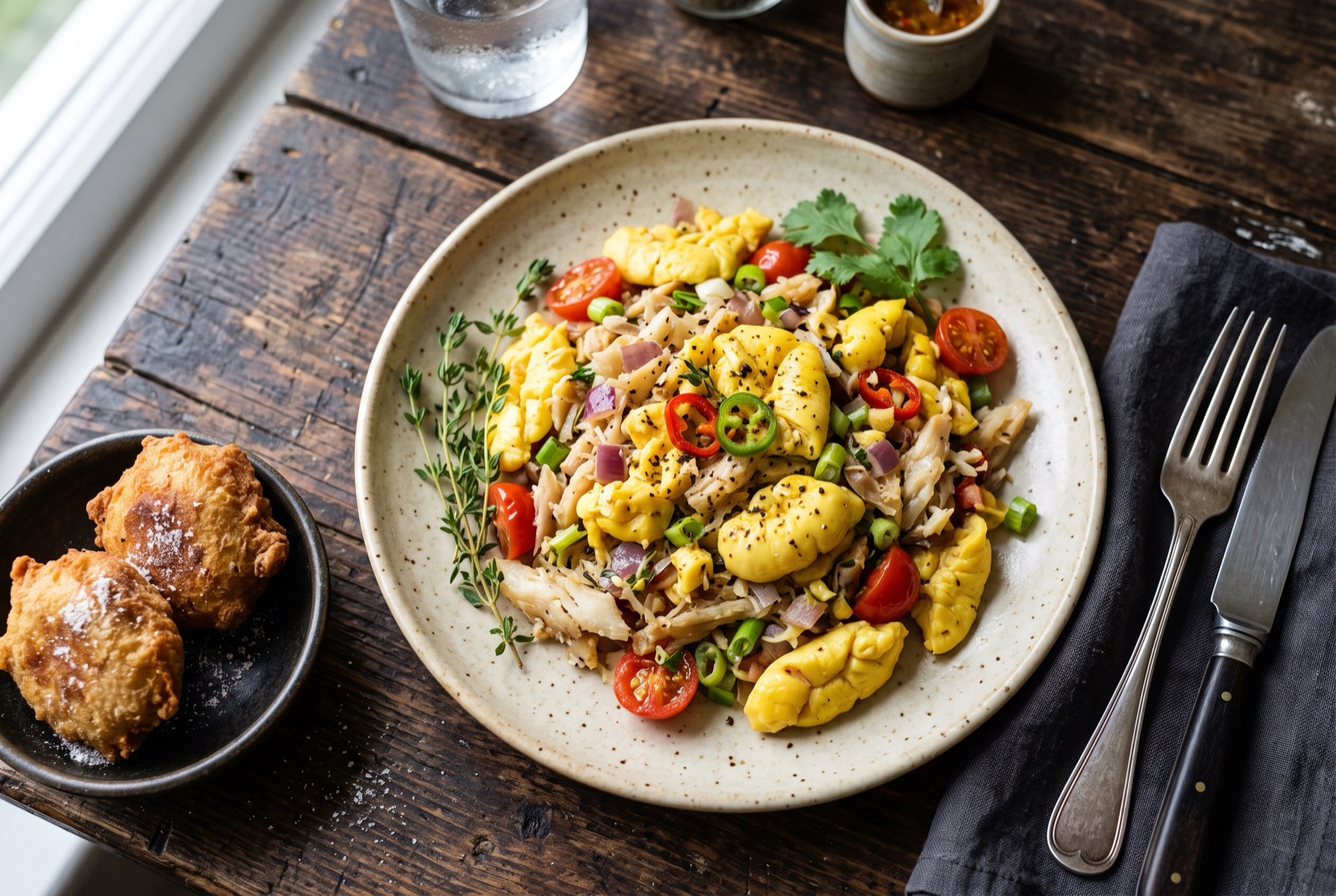
Jamaica has 9 more dishes in the atlas — Ackee and Saltfish and Brown Stew Oxtail, and 7 more.
All Jamaica recipes Coconut recipes Brown sugar recipes Flour recipes dessertsnackvegetariannut freeRecipe by The DishRoute Kitchen · published August 20, 2026 · updated August 20, 2026